
Marketing, You're Now on the Hook for Revenue
This learn article examines how B2B marketing is being measured against revenue, citing a 2026 B2BMX Insights benchmark report on revenue-based quotas, pipeline-influenced metrics, and joint brand and demand-generation campaigns, and advises marketers to trace their leads through to closed contracts.
A few days ago, I had dinner with a friend who works in B2B marketing. Halfway through the meal, he started venting.
He said that these days, when he reports to his boss, the first question is no longer "How many leads did you bring in this quarter?" but "How much revenue did you contribute this quarter?"
He said he suddenly felt like he didn't know how to do his job anymore.
I told him: you feel lost because the rules of the game have changed. And this time, they've changed a lot.
On my way back, I came across the 2026 benchmark report published by B2BMX Insights. A few numbers pinned me to the screen.
Let's take them one by one.
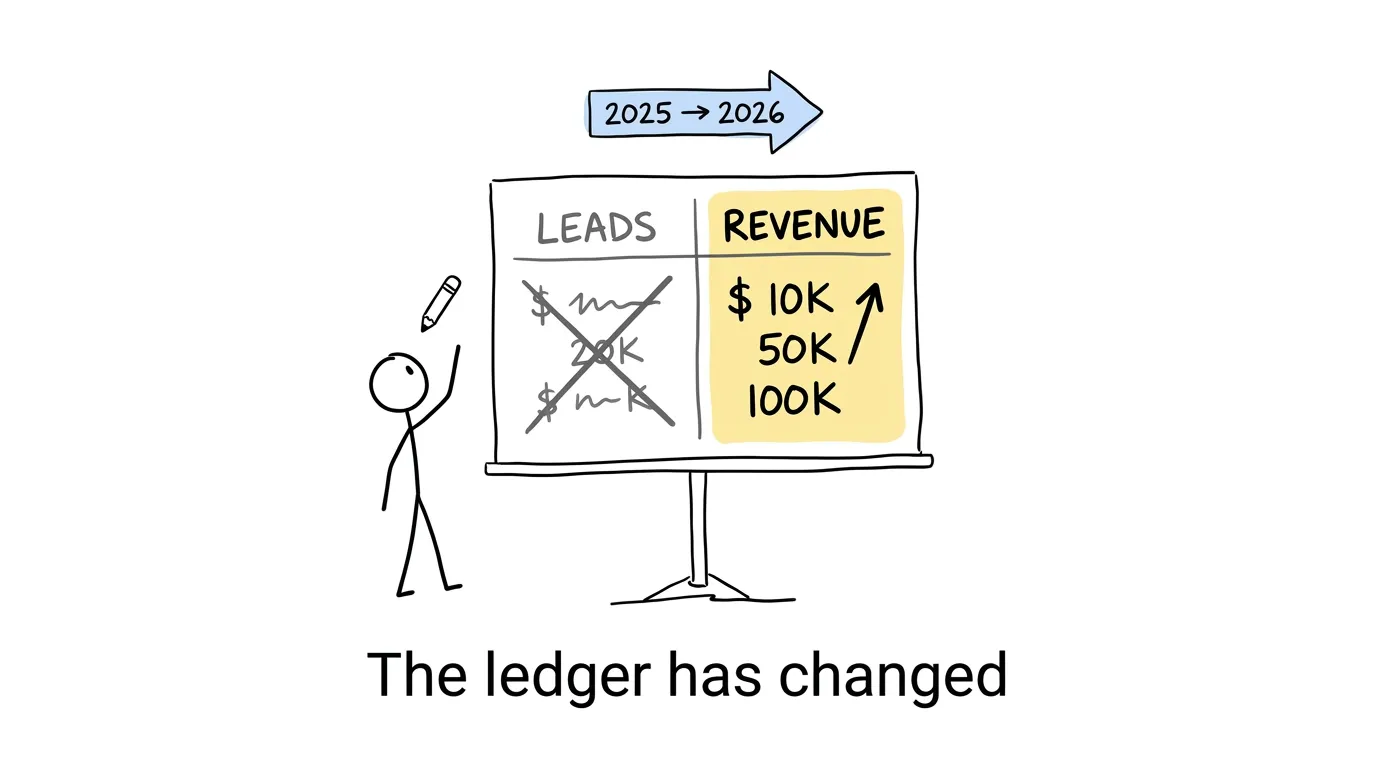
What Does "Carrying a Revenue Quota" Mean?
What does carrying a revenue quota mean?
It means revenue is now written into the marketing team's scorecard. Whether the marketing department is doing well is no longer measured by how many events you run, how much content you publish, or how long your contact list has grown — but by how many real, paying contracts you bring into the company.
The report gives this practice a name: revenue-based quota.
In 2025, 25.3% of companies operated this way. In 2026, 33.3%.
That's eight percentage points in a single year. Don't dismiss it as small. Remember, a quota is something the boss says out loud. One in three B2B companies now talks to marketing in the language of "revenue."
Marketing's calling is shifting from generating traffic to generating revenue.
The Measuring Stick Has Changed Too
When the metrics change, the measuring stick changes with them.
What numbers did B2B marketing love to report? MQLs and SALs — marketing qualified leads and sales qualified leads. In 2025, these were still the mainstream.
What about 2026? The number-one metric is now pipeline influenced — the pipeline you influenced — at 44%. Opportunity counts and lead counts have both been left behind.
What is pipeline influenced?
Here's an analogy from soccer. Midfielders used to be judged by how many dangerous passes they made. Now they're judged by whether they're involved in the goals. However beautiful your pass, if the ball doesn't go in, your name doesn't appear on the scoresheet.
The pipeline is every attacking move that leads up to the goal. Only if you influenced it do you count as part of the attack.
Put simply, the boss's message is one line: stop counting the process — show me results.
Brand and Demand Gen Are Now Eating from the Same Pot
There's another number in the report that I find especially interesting.
Brand teams and demand generation teams used to run on two separate tracks. Brand's job was making people remember you; demand gen's job was making people buy now. Each ran its own plays and reported its own numbers.
In 2025, 29.3% of organizations ran campaigns jointly across the two. In 2026, 41.7%.
Twelve percentage points more in a single year.
Why? Because the goals are now unified. Brand used to say, "I own the long term." Demand gen said, "I own the short term." The boss says, "You both own revenue." Once that's settled, why keep separate households? Everyone sailing on one ship navigates by one chart.
Once goals align, the organization pulls together on its own.
This Isn't Just a Big-Company Story
Some might say this is just big players with too much money on their hands.
Quite the opposite. In this survey, 52.8% of responding companies have annual revenue under $50 million, while those making over $1 billion account for only 19.4%. By industry, software and tech companies make up 44.4%, and business services and consulting 22.2%.
In other words, most of the companies carrying these new metrics forward are small and mid-sized businesses. The tighter the budget, the more carefully you have to account for what every dollar buys.
So What Should You Do?
If your marketing metrics are about to become revenue too, here are two things I'd remind you of.
First, translate your work into revenue. Take a lead you brought in and figure out for yourself how many opportunities and contracts it eventually became. If you don't do the math, the numbers tend not to look pretty when someone else does it for you.
Second, go sit with sales. Handing over the report isn't the end — follow that lead all the way down the pipeline.
Back to the friend from the beginning.
By the end of the meal, I told him: don't panic. Every piece of content and every event you've ever run was already influencing revenue — it's just that nobody kept the books that way before.
Now, the ledger has changed.
When the ledger changes, so do the eyes that read it.
Here's to your next report opening on page one — straight to revenue.
Continue reading
Related articles

What Is an AI Marketing Agent? From "Using AI" to "Delegating to AI"
A learn article explaining what an AI marketing agent is, how it differs from rule-based automation, and which repetitive tasks such as lead qualification, reporting, and campaign monitoring can be delegated while humans keep key decisions.
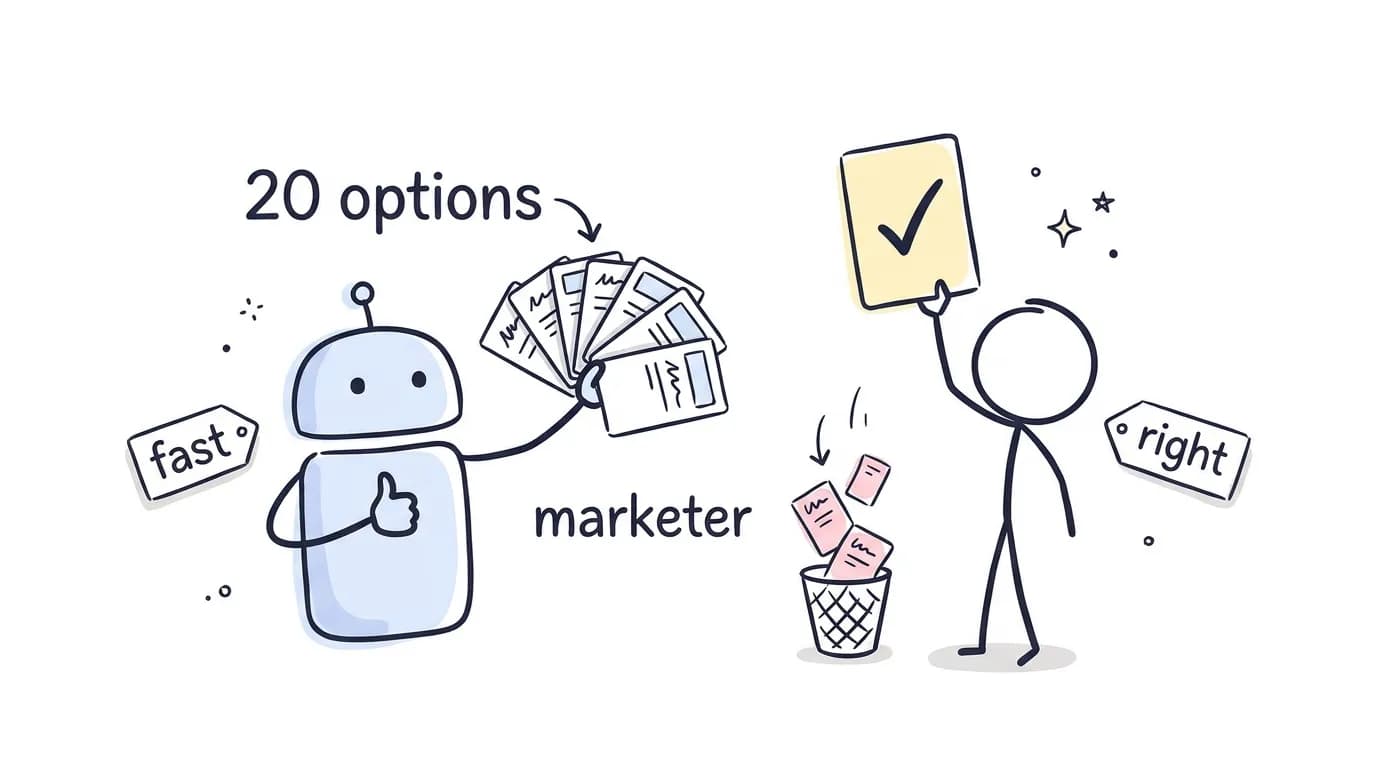
If AI Can Write the Copy, What's Left for Social Media Marketers?
A long-form guide on how AI reshapes social media marketing work, covering content creation, advertising, listening, community management, and data interpretation. It argues that AI accelerates production while humans keep strategy, judgment, review, and accountability.
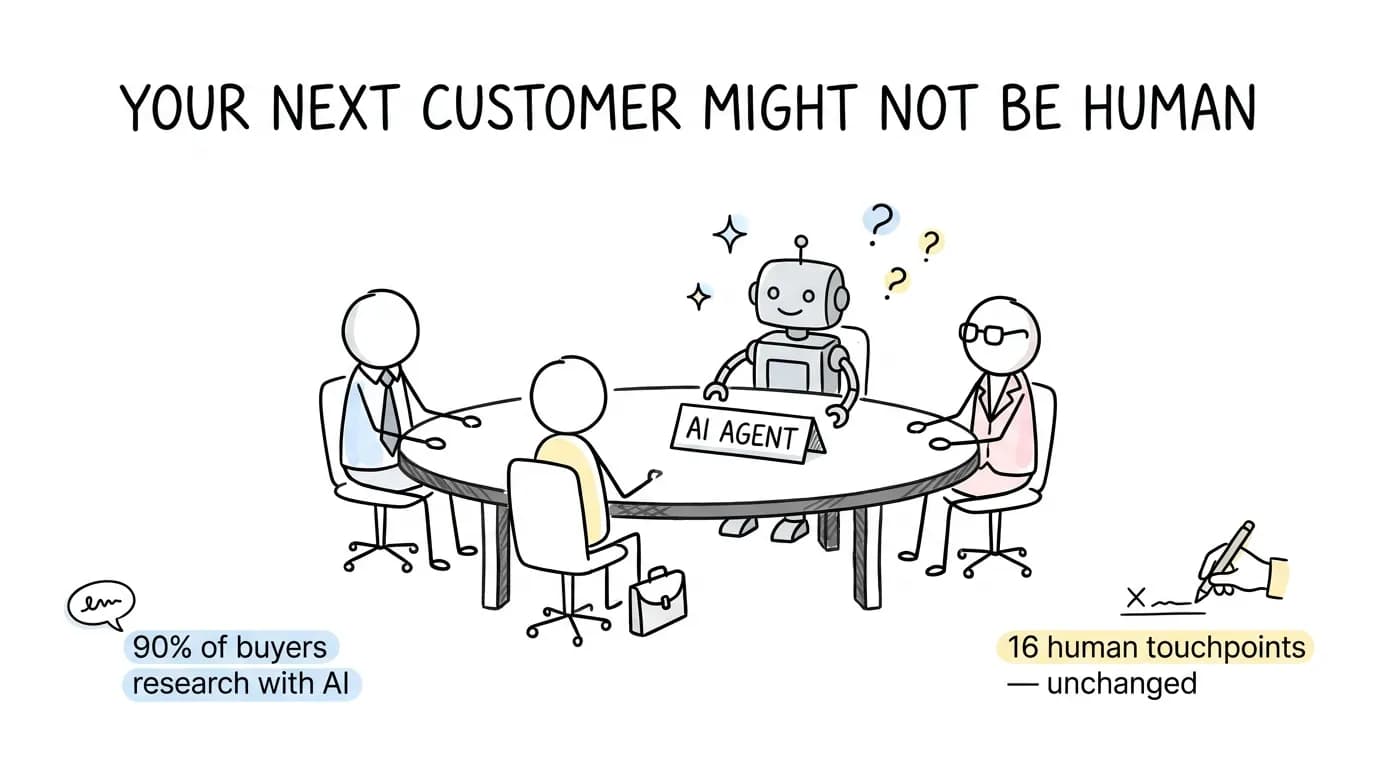
Your Next Customer Might Not Be Human: What Changes — and What Doesn't — in B2B Marketing, 2026
A long-form analysis of 2026 B2B marketing predictions covering AI agents joining buying decisions, visibility in AI answers, email filtering, trust, and first-party buying signals.