
Marketers, Stop Being Typists
This article recounts how a B2B SaaS marketer uses Claude, Cursor, and markdown 'skill' files for keyword research, programmatic SEO pages, cross-channel data analysis, and video generation, arguing AI should live inside the marketer's workspace instead of a separate chat window.
A few days ago, I had a video call with a friend who has spent more than a decade in B2B SaaS marketing. We talked for over two hours. After hanging up, I sat in my chair for a long time without moving.
I finally understood one thing: the job of marketing is being redefined.
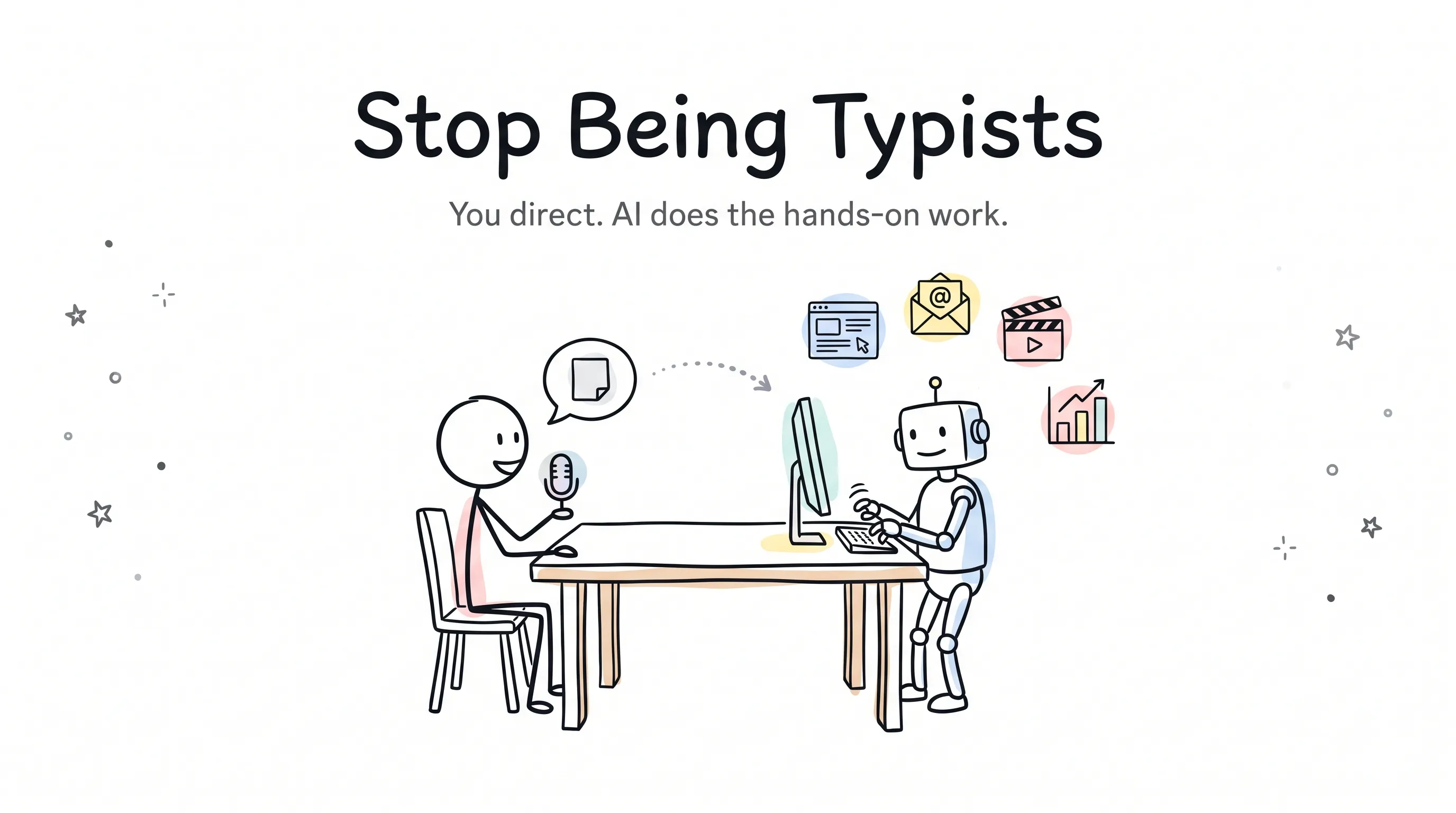
Let me start with his story.
In 2023, he was laid off. A week before that, he had just booked a coding bootcamp. This bootcamp was unconventional: fly to the suburbs of Atlanta, move into a stranger's home, and get locked in with nine other strangers who wanted to learn coding — for two weeks.
Why would a marketer go learn to code?
He said that across all his years in marketing, one thing always chafed: to make anything, he had to ask for help. Change a landing page? Wait for design. Build a website? Wait for engineering. Pull some data? Wait for an analyst. He was fed up with that life of waiting in line. So he gritted his teeth, paid his own way, took leave, flew over, and learned the hard way.
The real turning point happened at the bootcamp. Someone was showing off to him: "I found this code editor that has ChatGPT built right in."
That editor was called Cursor.
Why was that moment so pivotal? Think about it: before that, how did everyone use ChatGPT? Two windows open. Write your request in one, copy, paste it over. The AI replies, copy it back. Shuttling text back and forth until your hands give out.
Cursor is different. The AI lives inside your workspace. It knows every file in the project and everything you're doing.
He said something to me that I've never forgotten:
AI shouldn't be a website you go visit. AI should live where you work.
At the time, that insight belonged only to people who wrote code. Now it's marketers' turn.
What Is a "Skill"?
Later, he built an open-source project called Marketing Skills. It turns marketing methodologies into individual "skills" that AI can install and use. The project now has over 20,000 stars on GitHub.
What's a skill?
Simply put, it's a markdown file. It spells out: how many steps a task takes, what the standard is at each step, and what must never be touched. Once an AI loads this file, it stops guessing and starts working from the best practices you've spent a decade accumulating.
Here's an analogy. An AI is like a smart new hire — lightning fast, knows everything, except your business. A skill is that hire's onboarding manual. The better the manual, the faster they get up to speed.
Thirty Minutes to Do an Entire Consulting-Firm Project
Concepts alone are boring, so let me give you two examples he demoed live.
The first was keyword research. He hooked the AI up to a budget SEO data API, DataForSEO, then said: "Run keyword research for that form tool of mine."
Thirty seconds.
Out came a complete list: competitor comparison keywords, long-tail scenario keywords, monthly search volume, competition levels. One line jumped out: ten low-competition keywords adding up to 30,000 searches a month.
Then came his second instruction: "Invoke the programmatic SEO skill (programmatic SEO: mass-producing pages from keyword data to capture long-tail searches) and build the first ten pages."
A few minutes later, ten Next.js pages had actually sprouted. Clean URL structure, body copy, FAQ, call-to-action buttons — all there. Deploying? Push the code to GitHub, and Vercel deploys it automatically. Also just one sentence away.
Let's do the math.
In the past, this was the complete deliverable of an SEO consulting firm. Step one, an audit report. Step two, a keyword list — just these two steps alone were quoted at tens of thousands of dollars. Actually building hundreds of pages and launching them? Several months, minimum.
What does it cost now? He's on a Claude subscription: $100 a month, $2,400 a year — about 17,000 RMB.
That wouldn't even cover one decent team offsite.
Your Brain Wasn't Made for Switching Between Five Dashboards
The second example left me thinking about my own daily routine long afterward.
His company has an email verification product called TrueList. He fed the AI all three data sources: Google Search Console, Fathom analytics (a lightweight analytics tool), and keyword data pulled from Ahrefs. Then he said: "Cross-analyze this data for me — I can't make sense of it."
What did the AI do? It cross-checked every page against the three sources and delivered a report: which pages were performing well, which were quietly falling behind, and what it means when search data and analytics data diverge.
The report's final section: five key takeaways.
Why does this matter? Haven't you been asked by your boss: why is traffic down this month? On day three of the month, there's no way you could know. All you can do is mumble a vague "let me check." This used to be a question you could only guess at. Now, an AI can actually calculate the answer.
Even more ruthless: he had Claude turn this analysis into a weekly routine. Fresh data gets pulled and a report gets generated automatically every week — no one has to remember to open five dashboards.
Think about how we actually work: a glance at Google Analytics, a glance at Search Console, a glance at the ad platform — all while one brain brute-forces the back-and-forth. Your brain wasn't made for this.
I Don't Want to Log Into Anything Anymore
At this point in the conversation, he dropped a bombshell: "These days, I don't want to log into the dashboard of any marketing tool ever again."
Count how many doors you pass through to get anything done: log into HubSpot, two-factor authentication, wait for the phone code, get in, click the email tab, look at data. Every door wears away another layer of your enthusiasm.
His way now: "Upload the newsletter I just wrote to the email platform." "Pull down the survey data and run an analysis." As for how each tool's API authenticates and gets called, the AI figures it out. He even keeps a tool registry, documenting in advance how each tool connects and what it can do, ready for the AI to consult anytime.
What stunned me most was the video. He has no idea how to edit video. All he said was: "Use Remotion to make me a product launch video." Remotion is an open-source library that generates videos from code. A few minutes later, a perfectly presentable promo video came out.
Want changes? No dragging the timeline — just speak: "Hold an extra second at the beginning and the end, let it breathe." One second, done.
Email works the same way. Written in React, previewed in the browser, one look, say "send."
There's an analogy here that lands perfectly.
You've seen rally racing, right? The driver barrels into a corner at 200 kilometers per hour while the co-driver, clutching the pace notes, calls out: "In 30 meters, left turn, 5 degrees." The driver doesn't know the route — his only job is to drive the car well.
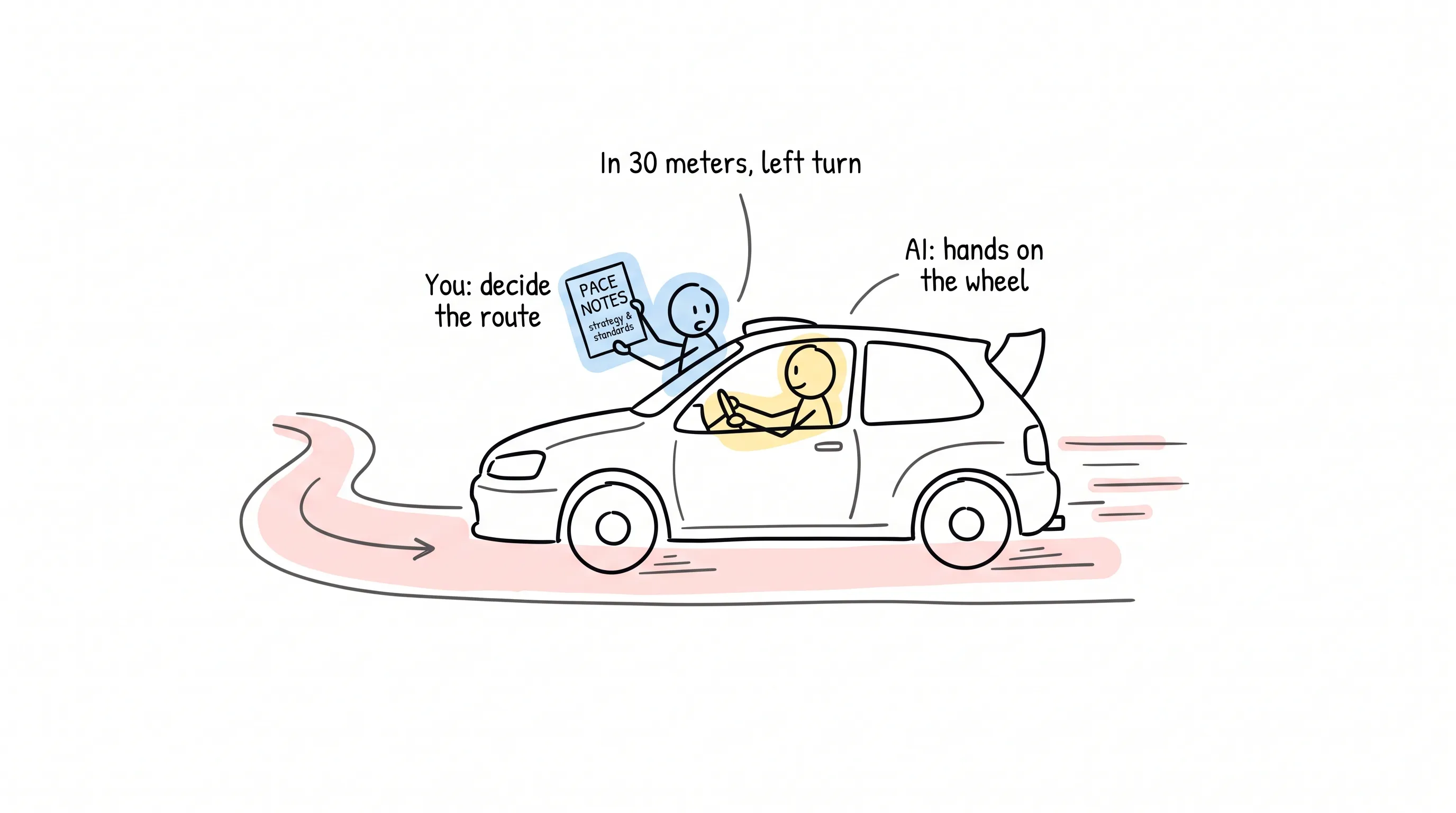
Today's marketer is the one holding the pace notes. Claude is the driver.
Where to go, what to do, and what the standard is — you decide. As for clicking buttons, dragging things around, exporting reports — that's what the hands on the wheel are for.
So, Will Marketers Lose Their Jobs?
That's probably the question you most want to ask — and the one I most wanted to ask him.
His answer made me a little more optimistic.
He's been bingeing an old show lately: Mad Men. In it, creative director Don Draper gets an idea, and then what? He calls in the copywriters to write the tagline, the artists to make the posters. Weeks of work, meetings, approvals — and finally physical posters get made and carried off to client meetings.
And today? We ditched pen and paper long ago. We use Google Docs, templates, and all kinds of online tools to fill in the blanks.
You probably think today is far more advanced than the 1960s, right?
His take: In a few years, we'll look back at ourselves copy-pasting in Google Docs the way we now look back at pen-and-paper posters.
Because AI has rewritten the creative process all over again. You get an idea, and there's no more waiting in line. Copy, design, web pages, video, email — one AI team handles it all. You play creative director; it handles all the execution.
Don't we always preach it? Marketers should test more and iterate more — make a thousand versions of one ad. Honestly, who has ever done it? Nobody. Because on the road to a thousand versions sit the pulled reports, the slide decks, the meetings, the alignment sessions — and just like that, your day is gone.
Now the grunt work has someone to do it. You can finally spend yourself on just the most creative part.
So don't panic. What gets replaced isn't the marketer — it's the "typist" part of the marketer.
This thinking even works inside companies. The payments company Ramp published a post saying they've accumulated 300 internal skills: whenever someone does a piece of reusable work, it gets packaged as a skill the whole company can call directly. Knowledge is no longer locked inside one person's head — it becomes infrastructure everyone can use.
How to Start?
The method is remarkably plain: assign yourself a project.
Actually build something, for real. Watching a hundred videos is useless — unless you get your hands dirty, you'll stay stuck at "looks impressive." Pick one task on your plate, hook up the data, and run it once. When you get stuck, ask the AI. It's that simple.
Oh, and one more detail. Before we hung up, I asked him: what does your workday look like now?
He said: "I barely type at my computer anymore. Most of my time is spent talking to the AI — by voice, like talking to a colleague."
I laughed when I heard that. Ad people sixty-plus years ago worked the same way: think of something, dictate into a tape recorder, and let the secretary type it up.
After one full circle, creative work is back to what it always was: the talkers do the talking; the hands-on work goes to someone else.
Except this time, that "someone else" is on call anytime and never asks for overtime pay.
Here's to your new workstation — where your only job is creative director.
Continue reading
Related articles

When AI Does the Creative, Mistakes Come in Batches Too
A learn article on the risks of using generative AI for marketing creative across brand, legal, compliance, and operational layers, with case examples and seven practices for review, rights clearance, documentation, and vendor governance.
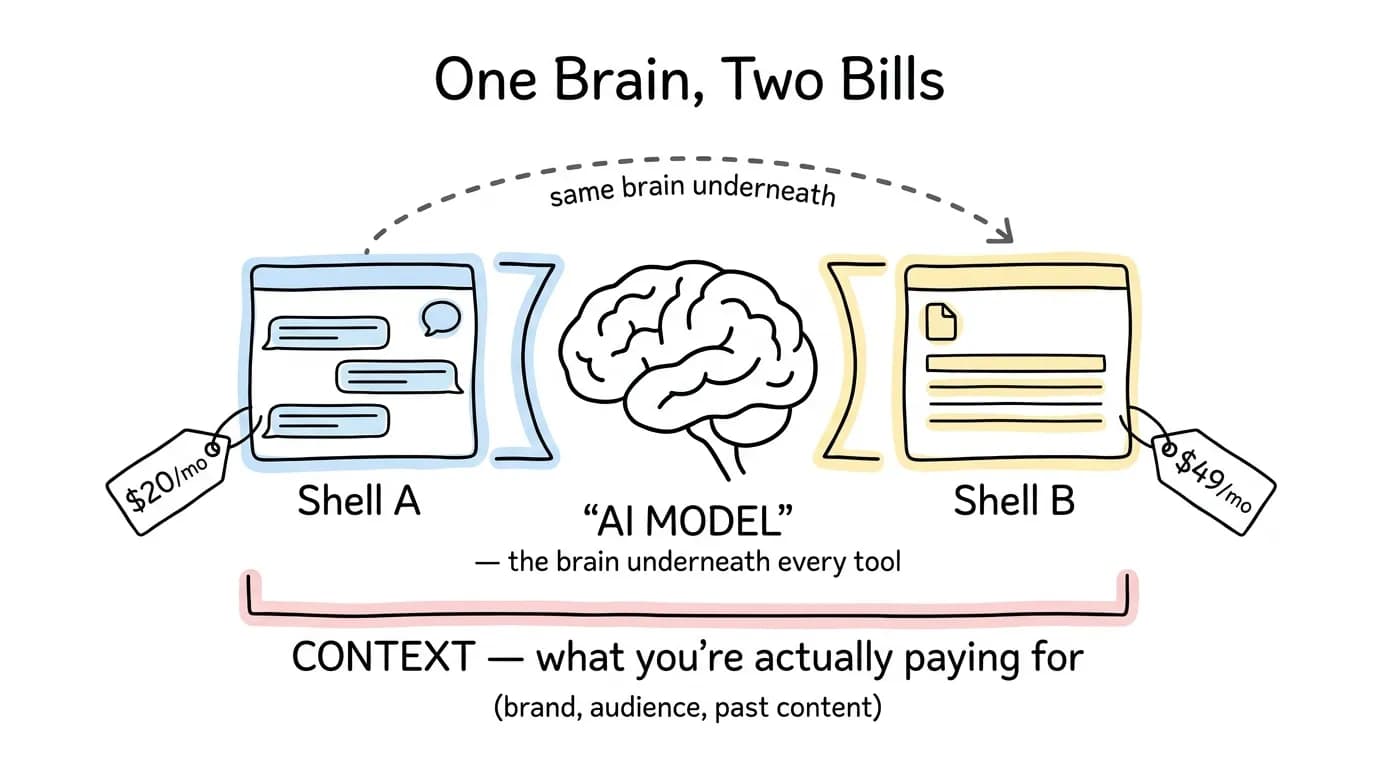
Which AI Should Your Startup Actually Use for Marketing?
A startup marketing guide explaining the difference between AI models and tools, sorting tools by job (writing, research, design, leads, email, video ads), and outlining a 30-day test plan for choosing them. It also covers generative engine optimization and budget trade-offs.
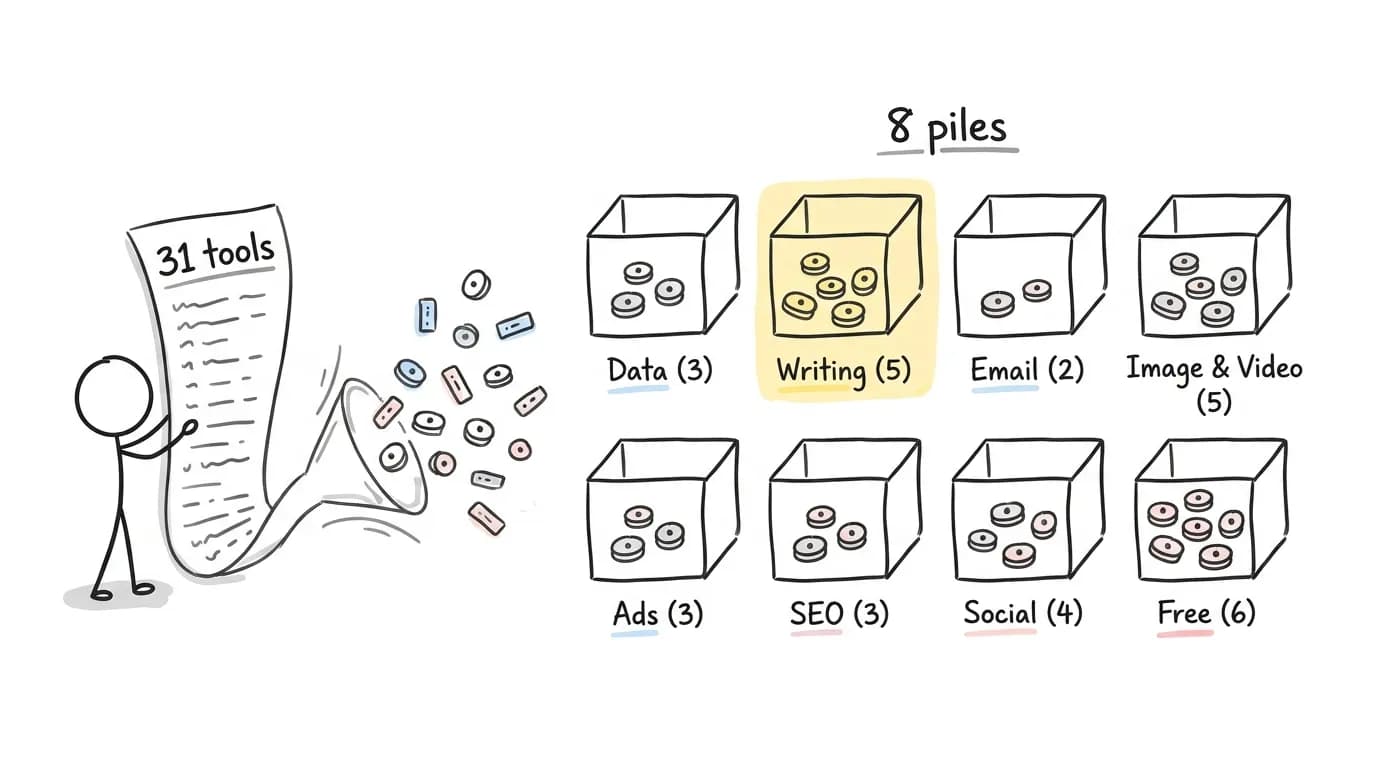
31 AI Marketing Tools, Reviewed One by One: How Exactly Should You Spend the Money?
A review of 31 AI marketing tools grouped into eight categories, covering data, content, email, video, ads, SEO, social, and free options, with guidance on choosing one strong tool for your most frequent task and testing free tiers first.