
Lately, the marketing world is busy with just one thing: how to get cited by AI
A weekly AI-marketing digest arguing that AI chatbots are becoming the new gateway: ChatGPT usage shifts, Google AI Mode ads expanding to new markets, Genie 4, and practical tactics for getting cited by AI, plus a data-based reality check on claims that SEO is dead.
Let me start you off with a set of numbers.
OpenAI regularly publishes usage statistics for its own products. In August, the two things consumer ChatGPT users did most were "looking up information" at 20.7% and "writing" at 20.6%.
A gap of 0.1 percentage points.
You might be thinking: it's only 0.1 of a point — what's the big deal?
But try looking at it from another angle: a product that got its start by "helping you write" is, for the first time, seeing time spent on information lookups nearly catch up to writing.
What does that tell us? It tells us AI's identity is changing. From a tool into a gateway.
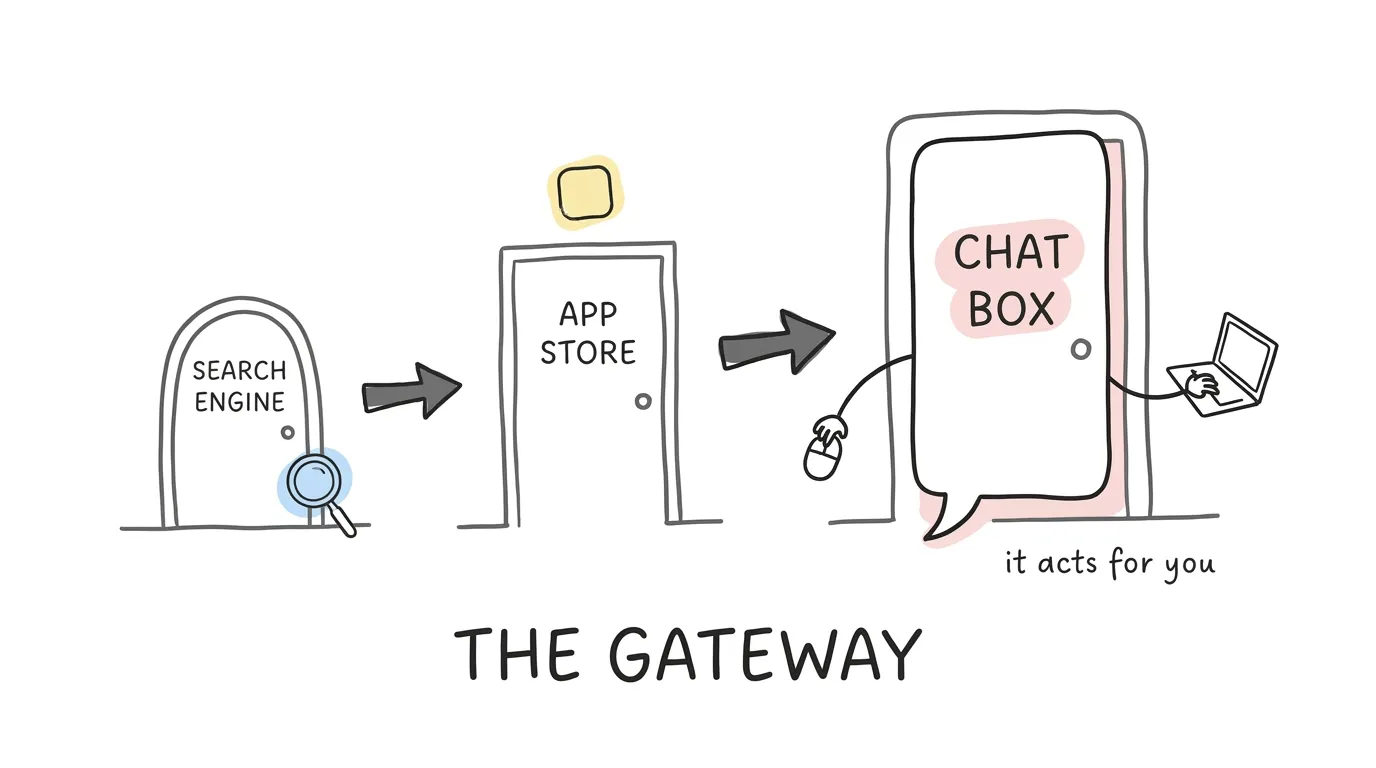
What's a gateway? It's the first place you open every day. The gateway used to be the search engine, then it was the app store. Now, it might be the chat box.
Oh, and September's numbers are out too: writing took the lead back, 21.4% to 20.2%. But hold that thought — that reversal is actually the most important piece of information in this entire piece. We'll get to it at the end.
The models are giving the gateway arms and legs
This week also brought a heavyweight release: OpenAI launched GPT-6.1 Terra, focused on speed and efficiency, squeezing three things into a single model — visual reasoning that sees the fine details, computer use that operates a computer with precision, and more natural writing. Plus, Pro, Enterprise, and Education users can already use it in ChatGPT Work and Codex.
What does "being able to operate a computer" mean? It means you say "organize this report into a spreadsheet and send it to the team," and it actually goes and clicks, fills things in, and sends.
See — the gateway isn't just changing location. It's growing arms and legs. It used to chat with you; now it does the work for you.
The money is already moving to the gateway
Now take a look at what Google did this week, and you'll understand just how real this "gateway" business is.
Google rolled out the ads inside AI Mode to more than ten new markets in one go: Australia, Canada, India, Kenya, Malaysia, New Zealand, Nigeria, Pakistan, the Philippines, Singapore. The official announcement also said that Brazil, Mexico, and the UK are coming next.
Why the rush?
The logic is simple. Ads follow attention. Wherever attention goes, the money has to follow. When users were on the search results page, ads lived on the search results page; now that users are inside AI's answers, the ads have to show up inside the answers.
That logic hasn't changed in twenty years. The only thing that's changed is the location.
The gateway itself is changing shape
There was one more piece of news this week that a lot of people didn't pay much attention to, but I think it deserves to be discussed on its own.
Google DeepMind released a new-generation world model, Genie 4 — a research preview, opened first to a small group of trusted testers. The interactive worlds it generates are the most realistic of any generation so far, you can even type mid-simulation to change the scene, and this version has added audio.
Whoa. This direction is both fascinating and deeply unsettling.
Think about it: if the gateway of the future is no longer a search box, not even Q&A, but an immersive world that shifts the moment you say a word — what happens to marketing? Where do a brand's shelves sit inside it?
I don't know the answer. But I think this question is far more important than "how do we buy ad slots."
The real anxiety for marketers: being cited
OK, back down to earth. Much of this week's hands-on content was really all answering the same question: how do I get AI to cite me?
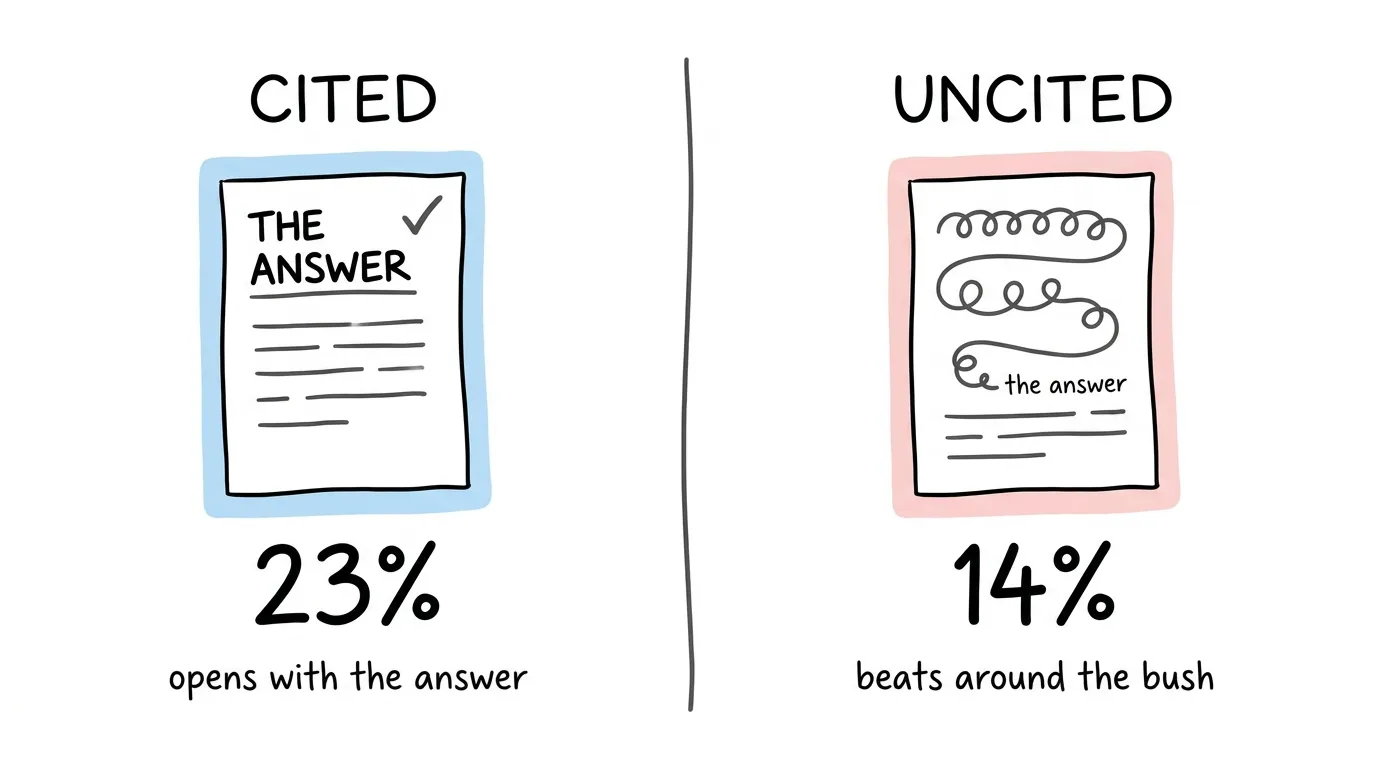
Someone analyzed 193,507 answers from ChatGPT, Google AI Mode, and AI Overviews, wanting to know what kinds of pages are more likely to be cited by AI. One of the conclusions really jumps out: 23% of cited pages open by giving the answer right away; of the uncited pages, only 14% do that.
23% versus 14%. Not a huge gap, but the direction is clear: before AI cites you, it first checks whether you get straight to the point.
E-commerce has been working on this too: how do you make category pages competitive? The idea is to thicken the pages out with product comparisons and buying advice, because category pages naturally catch commercial-intent queries.
Someone else went through server logs and offered a six-step framework: get the logs in hand first, identify which ones are verified AI crawlers, then check one by one where the crawlers are being blocked at the door. To put it bluntly: you might not be failing to get cited — you might just never have been seen.
At the brand level it's even more direct: your brand messaging has to say the same thing on every channel, or the LLMs won't learn it correctly. The concrete approach: audit how your company shows up across the entire web, build a single source of truth for brand messaging, pull the right marketing teams into the process, and then periodically ask AI: how is it describing us right now?
Prioritization is being managed too. One team built a companion worksheet for the Claude Skill to help you sort out: which kinds of third-party citations are worth fighting for, which ones to let go, which department handles each one, and how much marketing value and business value each is expected to bring.
The tools are catching up as well. Semrush launched an AI Visibility Index, trying to set a baseline for "who has the highest visibility in AI search." The PR crowd has their own rankings ready too: Finchling ranks the PR campaigns currently hot, by coverage volume and industry, and has added filters for campaign type and sentiment.
You'll notice that all of these things point to the same sentence:
In the era of AI search, citability is the new searchability.
But also, hold on: don't carve out a private dark web for AI
The article that hit me hardest this week was about how we're building a "shadow web" for AI.
What does that mean? It means brands have started manufacturing information specifically for agents — not web pages made for people to read, but instruction manuals for machines. The public web says one thing; what gets fed to the agents says another.
The person who wrote that piece offered one reminder: how many years did it take search engines to push down the problem of "optimizing for machines instead of people"? By doing this, are we inviting the old problem back exactly as it was?
I paused for a moment after finishing it. I really did.
Over these past few decades, the evolution of the search industry has been, in large part, a history of offense and defense between the content ecosystem and the rules of the game. If we open the AI era by charging straight into two sets of content, we may have to fight that battle all over again.
The anxiety is real
Someone surveyed 279 SEO and search professionals: 43.7% of them said they are more worried about AI than a year ago; 33% describe themselves as very or extremely worried.
What's interesting is the cross-country temperature gap. Of the 21 respondents in Germany, 15 were very or extremely worried. Out of 154 people in the US, only 43.
The samples are small, so don't over-interpret. But that temperature gap itself is telling: the same wave feels completely different depending on where you stand.
And then, the calm voices arrived
Some people have thrown a bucket of decidedly lukewarm water on the panic.
Someone pulled three years of data from the US and France to test whether organic traffic really is being eaten by AI. The conclusion was milder than expected: the declines are very uneven. Some industries, such as publishers, have indeed fallen hard and painfully; but for other industries and other countries, the picture is far more nuanced. Paid search is growing, and the referral traffic AI brings is, even today, still just a small trickle.
So "SEO is dead" — as of today at least — is still just a slogan with no data to back it up.
Finally, back to those 0.1 percentage points
Remember the numbers at the beginning? In August, looking up information hit 20.7%, nearly catching up with writing's 20.6%. In September, writing pulled back into the lead, 21.4% to 20.2%.
How should we understand this back-and-forth?
My read: this is oscillation, not replacement. The same person uses AI in the morning to look up an industry report, uses AI at midday to write the weekly report, and has AI help plan a trip in the evening. Looking up and writing take turns inside the same chat box.
But no matter what it's doing, as long as it becomes the gateway, every business has to line up all over again.
Oh, and there was also a little survey circulating in the community this week: using AI for your marketing work, roughly how much time does it save you? Under 10%? Around 30%? Or 60% and up? Pick one in your head — my guess is most people's answer will be quite a bit higher than a year ago.
Until next time — here's to making good use of your new gateway this week.
Continue reading
Related articles

It's 2026: Stop "Buying" AI Tools for Your Marketing Team — Start "Hiring" AI Agents
This learn article explains how AI agents differ from standalone AI tools in marketing, outlines three agent categories — build-your-own platforms, CRM-native agents, and vertical tools — and covers use cases across SEO, social media, advertising, and reporting, plus criteria for choosing one.

What Is GEO? How Your Brand Gets "Mentioned" in the Age of AI Search
An explainer on GEO (Generative Engine Optimization) for e-commerce and DTC brands: how it differs from SEO and AEO, why AI answers shape brand visibility, and eight practices covering question-focused content, consistent brand messaging, structured pages, external evidence, comparisons, and AI mention tracking.

AI Is Already Making Decisions for Your Customers. Are You on the List?
A learn article explains GEO (Generative Engine Optimization): why AI-generated answers now shape which brands customers see, and how SEO fundamentals, entity clarity, citable evidence, and monthly measurement affect visibility in AI answers.