
Is AI Here to Take Your Job — or Hand You a Lever?
An opinion piece for marketers on whether AI replaces jobs or acts as a lever, covering three angles: automating repetitive tasks, behavior-based personalization, and generative tools such as ChatGPT, Copilot, Gemini, and NotebookLM, with advice to master prompts, read data well, and keep judgment human.
A few days ago, a friend of mine who works in marketing invited me out to dinner. The first thing he said when we sat down: "It's over. AI is going to wipe us all out."
I told him, don't panic yet. Then I asked him a question: of all the emails you write, the data reports you build, the posters you design every day — how much of it is the part you actually enjoy?
He froze for a beat. Then he admitted: most of it, honestly, is repetitive grind.
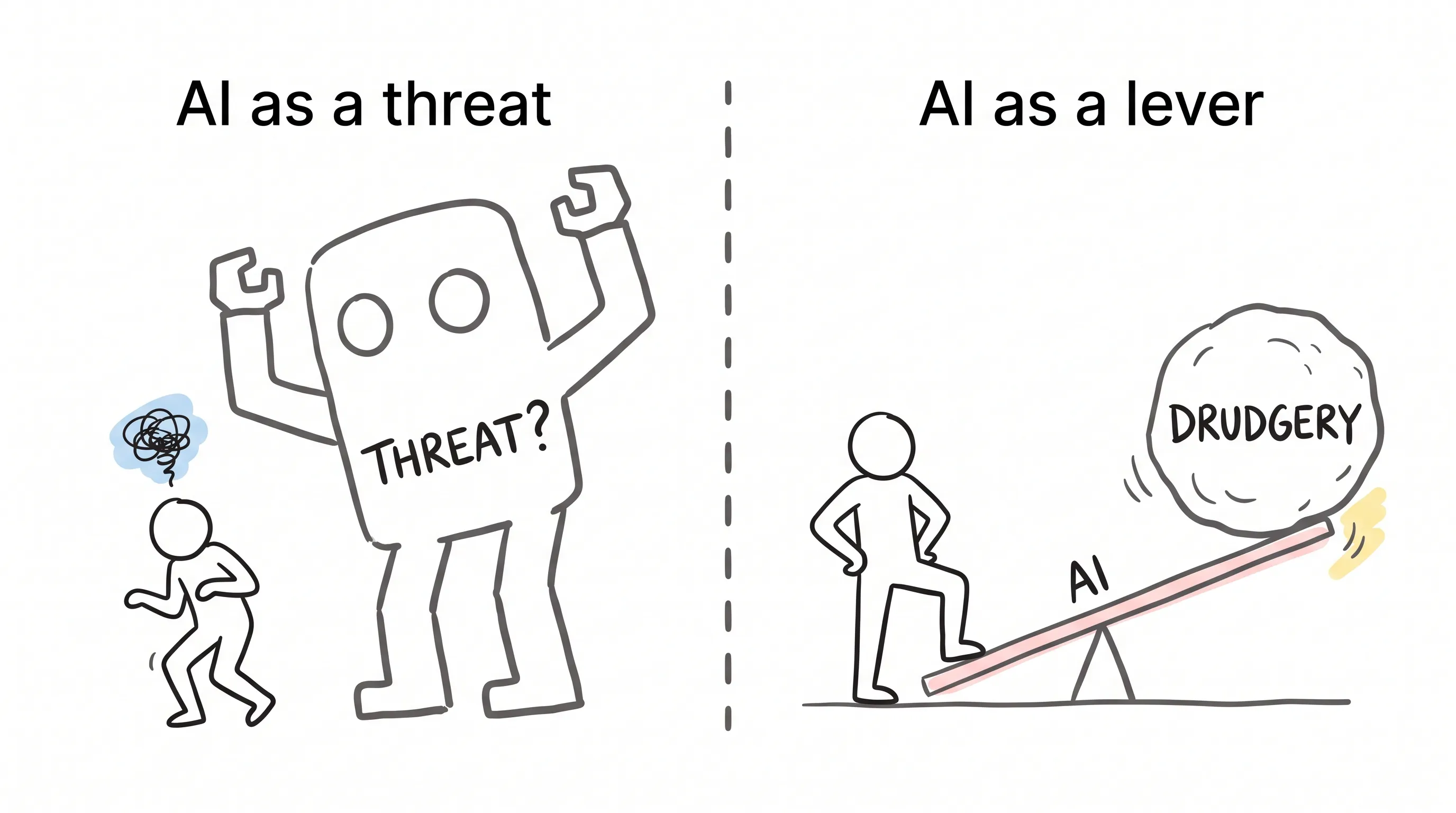
I said, then AI isn't after your job — it's after the drudgery.
Your job won't be replaced by AI. It'll be taken by someone who knows how to use AI.
By now, this line is practically a mantra in marketing circles. But most people just hit share without ever really thinking it through. Today, let's take it apart and run the numbers three ways.
First: The Time Account
What is an AI assistant? It's the kind of assistant that takes a few hours of work and compresses it into tens of minutes.
Writing copy, crunching consumer data, producing visual assets — these tasks share one trait: they're repetitive, formulaic, and data-driven. Which is exactly what AI does best.
Plenty of marketers have already embedded AI into their daily workflows. Some put it even more bluntly: without AI, they can barely get any work done.
Where is it being used, specifically? Four things:
- Handing off the repetitive, data-driven work — content scheduling, email, day-to-day CRM upkeep;
- Digging insights out of data that you can act on right away;
- Producing content quickly and reliably;
- Greeting users with AI customer-service chatbots.
And none of this is some cutting-edge trick. Platforms like Mailchimp and HubSpot, along with Gemini in Google Workspace, long ago baked AI into ad optimization and task automation. If you're not using it, your competitors are.
Second: The Personalization Account
How did marketing used to work? Demographics plus gut feeling. Ages 25 to 35, living in a first-tier city, loves shopping — then bet that they'll like your product.
And now? Algorithms watch user behavior in real time, learning as they watch, guessing as they learn.
We've moved from "guessing what a group of people want" to "predicting what this one person will want next."
One example and you'll get it. Why do Netflix, Spotify, and Amazon feel like they know you so well? They collect your viewing history and buying habits, then use algorithms to generate recommendations tuned to your taste. You're not being pushed content — you're being read like an open book.
The result: marketing can stop shouting at everyone and start delivering the right message, to the right person, at the right time. Users feel seen, feel valued — and conversion looks different.
Third: The Capability Account
After ChatGPT showed up in 2022, generative AI collapsed the barrier to content production. Give it a clear instruction, and within seconds out come articles, scripts, product descriptions — all in your brand's voice, no less.
A few of the go-to tools:
- ChatGPT: writing content, building strategy, powering e-commerce chatbots, even brainstorming alongside you;
- Copilot (Microsoft) and Gemini (Google Workspace): generating ideas, drafting marketing plans and blog posts, running tasks automatically;
- NotebookLM: feed it your documents, PDFs, and recordings, and it produces summaries and answers questions about that material. Think of it as reading your files first, then doing the work for you.
At this point, you might be wondering: if the tools are this powerful, what's left to be anxious about?
Good question. That's the real heart of it.
The more accessible the tools become, the wider the gap between those who use them and those who don't.
The bottleneck today is no longer whether AI can do the job — it's whether you know how to tell AI what to do. Plenty of teams adopted AI and saw barely any efficiency gain, because nobody put in the time to study how to write prompts, how to read the data, how to make personalization real.
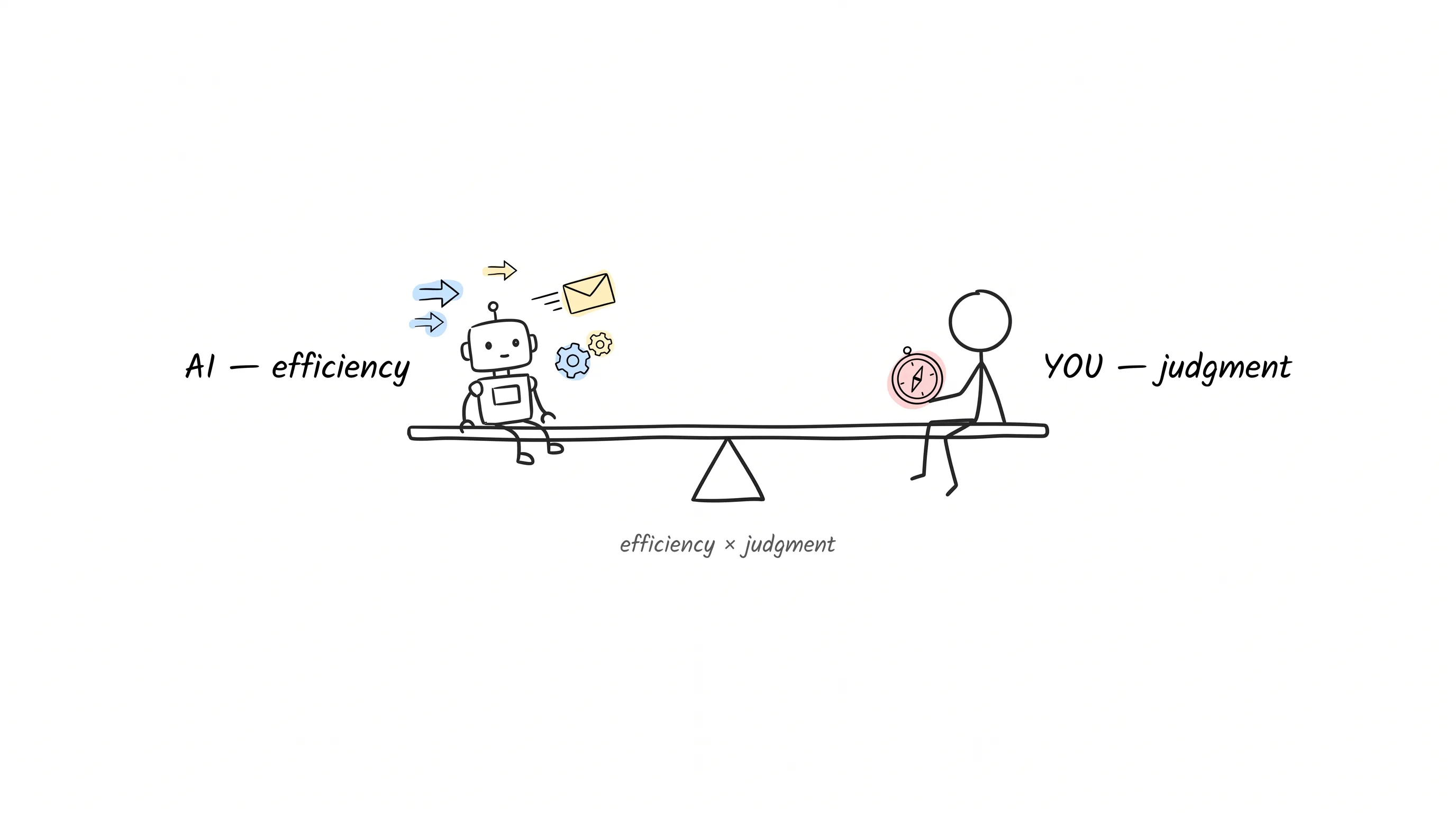
So my advice is concrete: put in the hours to master the tools, learn to interpret the data, learn to do personalization with precision. Then remember one rule: AI handles efficiency, you handle judgment. Decisions should be smart, principled, and built around the customer. That part, AI cannot do for you.
Back to my friend from dinner. Afterwards I asked him: so, do you still think AI is going to take you down?
He smiled and said: it won't be AI that takes me down — it'll be me refusing to use it.
Blunt, but true. Treated as a threat or treated as a lever, it's the same set of tools. The only difference is this: who's willing to put in the work to master it.
Here's to you becoming the one who wields the lever.
Continue reading
Related articles
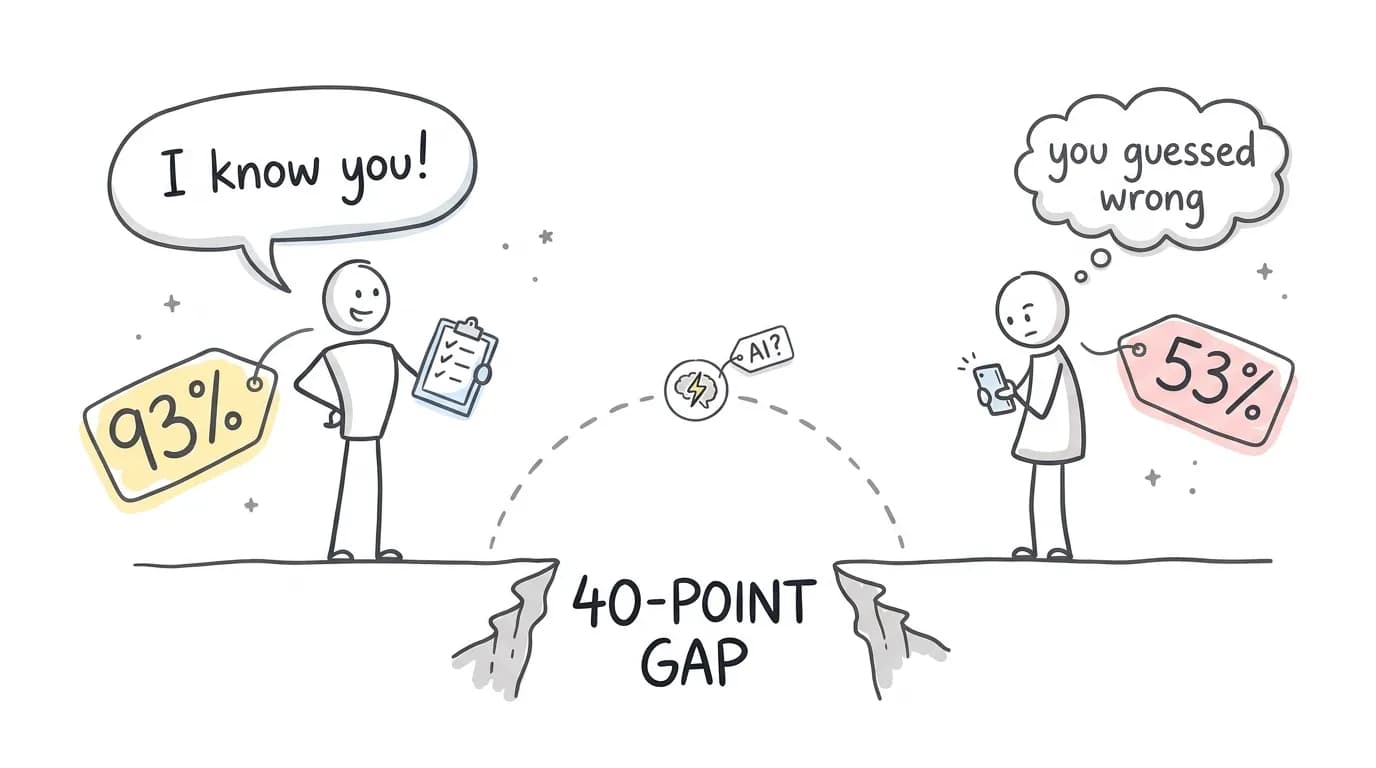
What Is AI Marketing Automation? It Starts With a 40-Point Gap
A learn article explaining what AI marketing automation is: how learning-based systems differ from rule-based automation, how AI decisioning optimizes message, channel, and timing choices, what data it depends on, and where it applies across the customer lifecycle.

It's 2026: Stop "Buying" AI Tools for Your Marketing Team — Start "Hiring" AI Agents
This learn article explains how AI agents differ from standalone AI tools in marketing, outlines three agent categories — build-your-own platforms, CRM-native agents, and vertical tools — and covers use cases across SEO, social media, advertising, and reporting, plus criteria for choosing one.

What Is an AI Marketing Agent? From "Using AI" to "Delegating to AI"
A learn article explaining what an AI marketing agent is, how it differs from rule-based automation, and which repetitive tasks such as lead qualification, reporting, and campaign monitoring can be delegated while humans keep key decisions.