
Influencer Marketing: A Business Headed Toward Nearly $200 Billion in Five Years
An analysis of the influencer marketing industry's projected growth to roughly $193.9 billion by 2032, driven by short video, AI creator selection, and improved attribution, with coverage of market segments, risks, and competitive landscape.
A few days ago, a friend of mine who runs a beauty brand invited me out for coffee. He had just gotten next quarter's creator campaign budget approved — the number was not small — but he said he felt uneasy: like the ground under him wasn't solid.
I asked, what's worrying you?
He said, the money is going out to creators, but what it's actually buying in return, he still couldn't say to this day.
I said, then today let me run the numbers for you. The business standing behind you is bigger than you probably imagine.
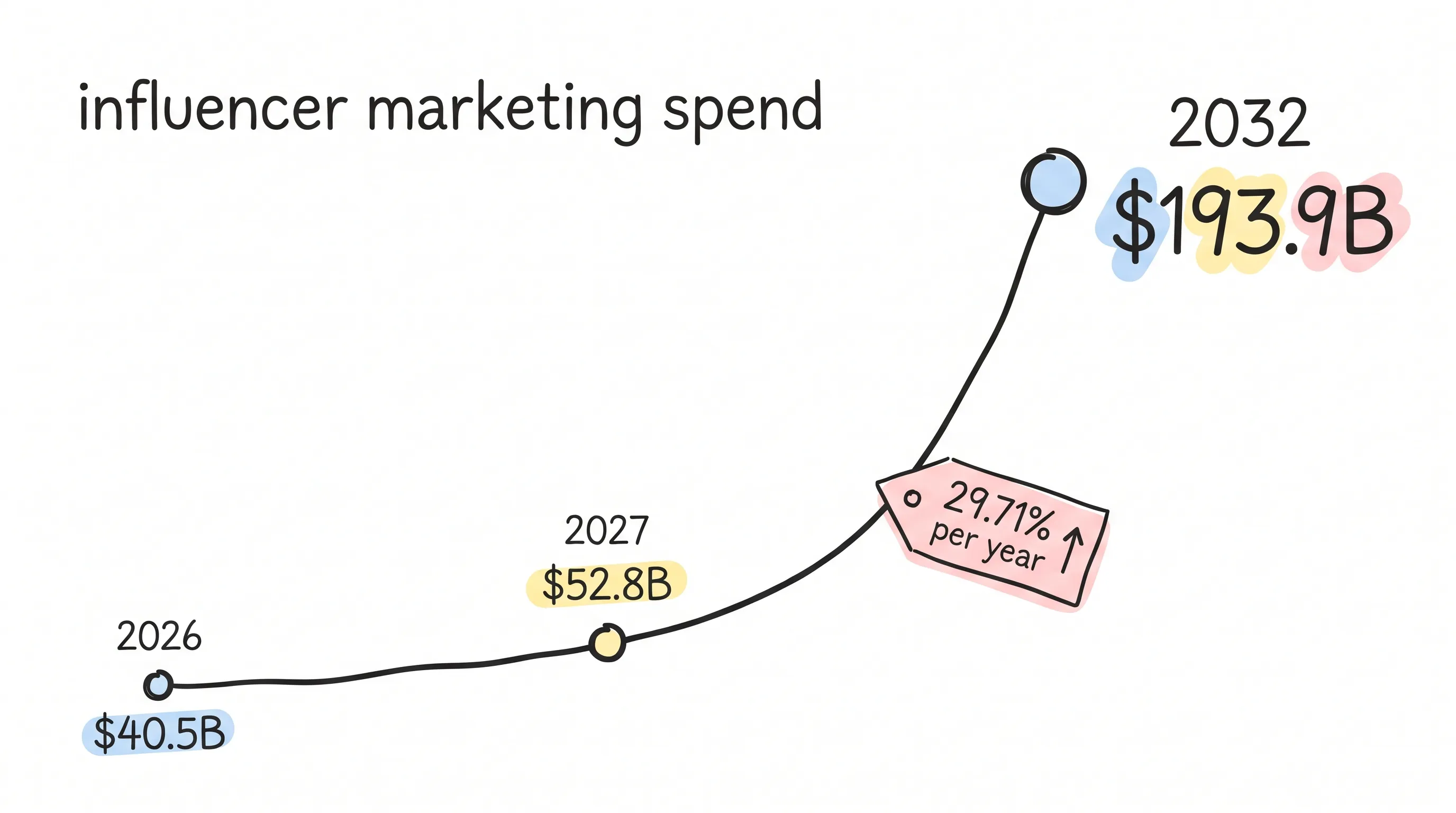
Mordor Intelligence has a report devoted to sizing this business. It gives one figure: in 2026, advertisers worldwide will spend roughly $40.5 billion on influencer marketing. By 2027, a projected $52.8 billion. And by 2032? A projected $193.9 billion.
Five years, nearly a fourfold increase. A compound annual growth rate of 29.71%.
Of course, the latter two figures are forecasts, not cash already slapped on the table. But even as forecasts, that slope is scary enough.
This is not a small reshuffle of budgets. It is a transfer of channel power.
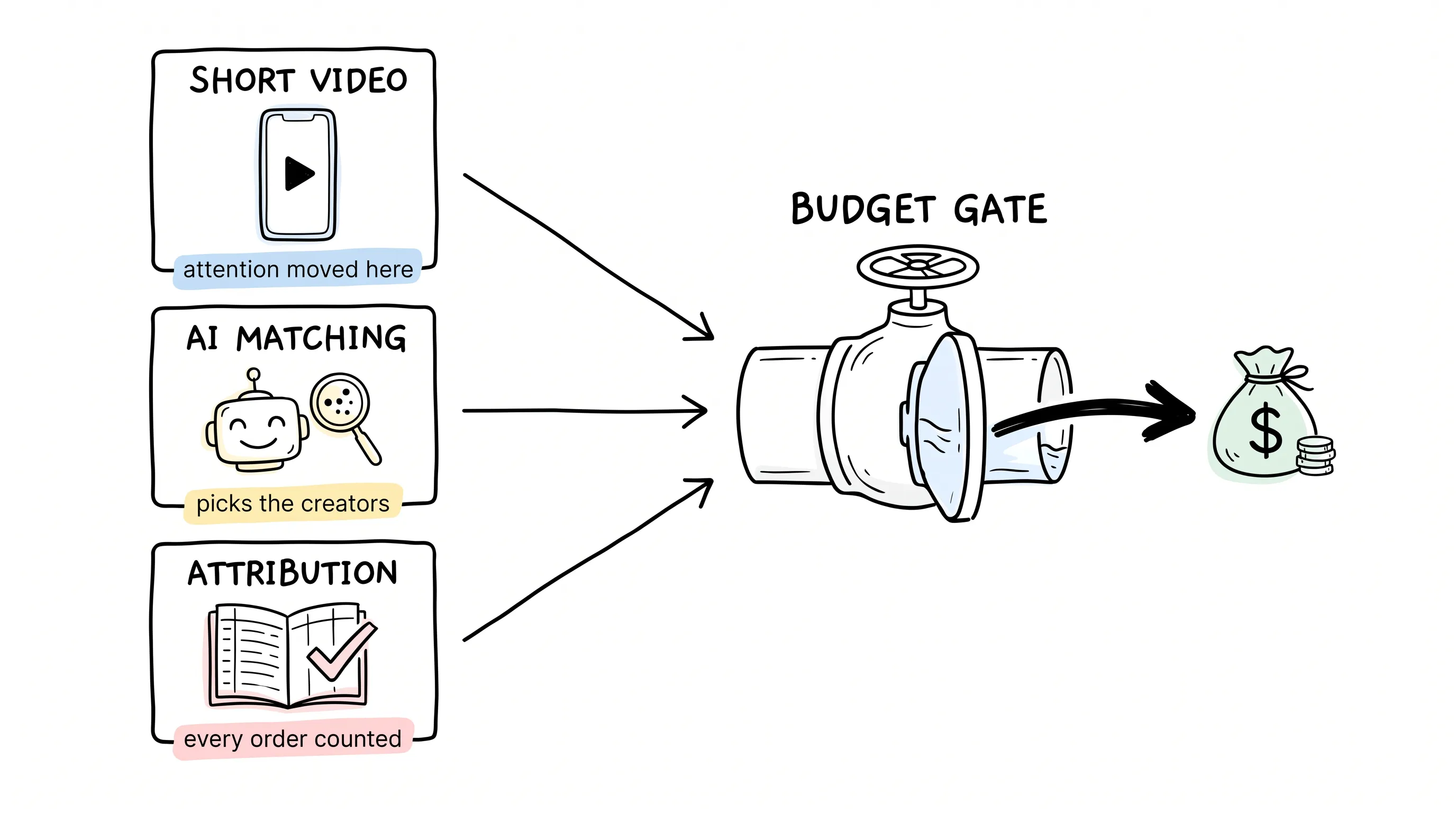
Why the surge? Let me break down three engines for you.
Engine One: Short Video Is Sucking Away the Budget
What does it mean for short video to eat brand budgets?
Think about it: the first step when a brand invests in creators is picking a platform. In 2025, a monitoring platform called AnyTag looked at data from Indonesia: 61.3% of influencer marketing campaigns there happened on TikTok. Instagram? 37.6%. Add those up and you get almost 99%.
In other words, if you want to run creator campaigns in Indonesia, these two pools are basically all there is. The other platforms aren't even worth a thought.
The report lists "short-video platforms dominating brand budgets" as the number-one driver, estimating that this one factor alone could lift the growth rate of the entire industry by about 9 percentage points.
Why? Because budgets follow attention. And attention has already moved, neatly and completely, into the vertical screen.
Engine Two: AI Has Started Picking Creators for You
The second engine is AI.
From July to August 2025, the Interactive Advertising Bureau (IAB) in the United States ran a survey: 35% of brand and agency buyers were already using AI to select creators.
35% doesn't sound that high? Then think one level deeper: where does picking people sit in influencer marketing?
It is the watershed for budgets. Whom the system recommends almost decides who gets the deal and who doesn't. What AI has its hands on is the choke point of the decision.
Creators used to be chosen through the relationship networks of middlemen. Now they are chosen by algorithms. Whoever's algorithm recommends more accurately — and can explain "why this person" — gets ahead first.
Engine Three: The Money Can Finally Be Counted
The third engine connects directly to my friend's frustration: attribution.
Starting April 2026, TikTok Shop did one thing in Thailand: it split store orders into two separate ledgers — what the store sold on its own, and what creators drove out the door — tracked separately, with an API opened up.
It sounds like a technical detail. It is actually a gigantic change.
Before, brands stared at total store sales and guessed: did creators actually drive purchases? How much? With no way to guess clearly, the only option was to spend on faith.
Now the system tells you directly which order a creator brought in.
You only dare to raise the stakes once you can measure. That is the iron law of advertising. Once attribution flows, the budget gate loosens.
So Who's Making Money in This Business?
That's the three engines. Now let's switch perspective: whose pockets is the money flowing into?
First, the creator layer.
What's a micro-influencer? A creator with 10,000 to 100,000 followers. In 2026, they take 39.52% of the entire market — the single biggest slice.
Why exactly the middle layer? In that IAB survey, 55% of decision-makers said their brands' collaborations concentrate on creators with 10,000 to 50,000 followers. The reasoning is plain: the audience is reachable, the content holds up, and the price doesn't hurt. Take all three, and you naturally take the biggest slice.
But the fastest growth belongs to the layer below. Nano-influencers with 1,000 to 10,000 followers are projected to grow at 34.4% a year, compounded, from 2027 to 2032 — the fastest in the entire industry.
How small are we talking? In negotiation data from September 2026, the median rate brands offered creators at this level was $150 per piece of content.
$150 — a bit over a thousand yuan. What does that mean?
You no longer have to bet on one top-tier mega creator. The same money buys dozens of "authentic recommendations from the neighbor next door." A survey in Brazil from August 2026 confirms it: 72% of creator followers prefer brands partnering with a group of small bloggers over splurging on one big star.
Trust is growing from the head down into the capillaries.
Now the platform layer.
Instagram is still the biggest table in the game: 28.77% share in 2026. Three billion monthly active users, two billion daily — Meta's own reported numbers. This is the main battlefield of influencer marketing, no suspense there.
But the fastest-growing is TikTok, projected at 36.2% compound annual growth. Two signals: CreatorIQ, an influencer marketing software vendor, says that from August 2025 to July 2026, 93% of its clients were using TikTok for influencer marketing; and TikTok itself says the number of creators earning its official rewards rose 90% in a year.
Clients are using it, and creators are pouring in. Push from both ends — it's hard not to grow fast.
Finally, the map.
North America is the largest market, at 34.1% in 2026. But the fastest-growing is Asia-Pacific, projected at 33.3% compound annual growth.
What makes Asia-Pacific fast? Here are three numbers. AnyMind Group tracked influencer marketing campaigns across 10 Asia-Pacific markets; the share of performance-based campaigns: 28.24% in 2023, 30.67% in 2024, 42.47% in 2025.
One step up each year. Brands in Asia-Pacific are no longer satisfied with "being seen." They want results. Awareness-driven campaigns are still the bigger share, but the balance is already tilting.
Don't Celebrate Too Soon — There's Something in the Water
At this point, it all sounds like good news. But everything has a flip side.
The first pitfall: fake followers.
In June 2025, the analytics firm Astatine.ai reported that suspicious followers and bot accounts are dragging down Indian brands' influencer campaigns — so much that ROI can't even be calculated.
The Indian consumer goods company Dabur responded by building engagement rate, cost per engagement, and cost per view into the evaluation of every major campaign.
But one line in the report cuts deeper: however detailed the reports, they cannot prove the followers are real.
Thicker data does not mean clearer water. Verifying followers is becoming a separate cost, kept outside the campaign itself.
The second pitfall: your measuring stick is gone.
Third-party cookies (the cross-site tracking scripts long used to follow users around the web) are leaving the stage. In August–September 2025, IAB Europe surveyed digital advertising agencies across Europe: 53% said attribution without cookies is a challenge; 48% said signal loss is a challenge.
The cross-channel ledger is getting harder to balance. A creator's credit is even harder to peel out of a pile of touchpoints.
The third variable: the referees have entered the field.
In the United States, the FTC's fake-review rule took effect in October 2024, explicitly banning the purchase of fake data to manufacture influence.
In Brazil, new rules from September 2026 put platforms on the clock: within 90 days they must have disclosure tools in place, so people selling products clearly say "this is an ad."
In the United Kingdom, legislation effective April 2025 pinned responsibility across the entire chain — brands, creators, intermediaries, and platforms.
In China, new livestream-commerce rules effective February 2026 require content review and identity checks before every stream, not one session skipped.
The report scored China's market low on regulatory attractiveness — not because it's forbidden to operate, but because there is simply too much to do before every livestream.
My take: traffic is no longer unclaimed land. The age of wild growth is over.
Competition: No One Wears the Crown Yet
So whose territory is this business today?
The answer: nobody's.
The report says market concentration: low. The leading players include Upfluence, Aspire.io, Later, NeoReach, and Traackr — but none has managed to unify the field.
Everyone is grabbing territory. In September 2026, Later folded Mavely — an affiliate e-commerce company it had acquired — into its platform, letting creators connect directly with major brands; the same month it launched a YouTube partnership API, already running across more than 300 campaigns and 70 brands, and able to split organic views from paid amplification. In October 2025, Upfluence launched a creator marketplace: brands post briefs, AI finds people and sends invitations, creators sign up.
Notice anything? Every one of these moves converges on "infrastructure."
Because this business is too fragmented. Whoever first fits the whole chain — finding people, signing contracts, overseeing content, tallying results — into their own product gets the chance to collect tolls from the entire industry.
Where's the opening? CreatorIQ's 2026 global survey surfaced brands' pain points: 27% said creator data doesn't connect with their own marketing systems; 26% said cross-team collaboration is a disaster.
Three paths are on the table: connect the data for brands, get internal collaboration under control for brands, or simply take over the whole thing.
My judgment: the biggest opening is the first one. It doesn't need to seize the whole campaign budget. Just plug creator data into brands' own systems, and you can occupy a spot in the long chain that no one can route around.
Back to That Cup of Coffee
That day, I sent all these numbers to my friend in one burst.
He replied with one line: so if I get in now, am I late?
I thought for a moment and answered him like this: the market growing to $193.9 billion is a forecast; whether you get to eat any of it is another matter.
The water is indeed rising. But there are sharks in the water (fake followers), and there are referees on the shore (regulators).
Rising water doesn't mean you rise.
Whether you finally swim out depends not on the water, but on your stroke.
And more than anything — even if your business is $150 at a time, may you earn every dollar in plain sight.
Continue reading
Related articles
Is Investing in Influencers Actually Worth It? I Broke Down These Dozens of Numbers and Ran the Math for You
A learn article that compiles industry data on influencer marketing, covering market size, ROI measurement practices, nano versus mega creator pricing and engagement, platform budget allocation, AI tooling, and ad disclosure compliance.
The EU Is Handing the Pause Button Back to You
The EU's draft Digital Fairness Act targets dark patterns, addictive design, undisclosed influencer ads, silent subscription renewals, and game spending by minors, while keeping dynamic pricing legal but banning drip pricing; fines could reach 6% of annual turnover.
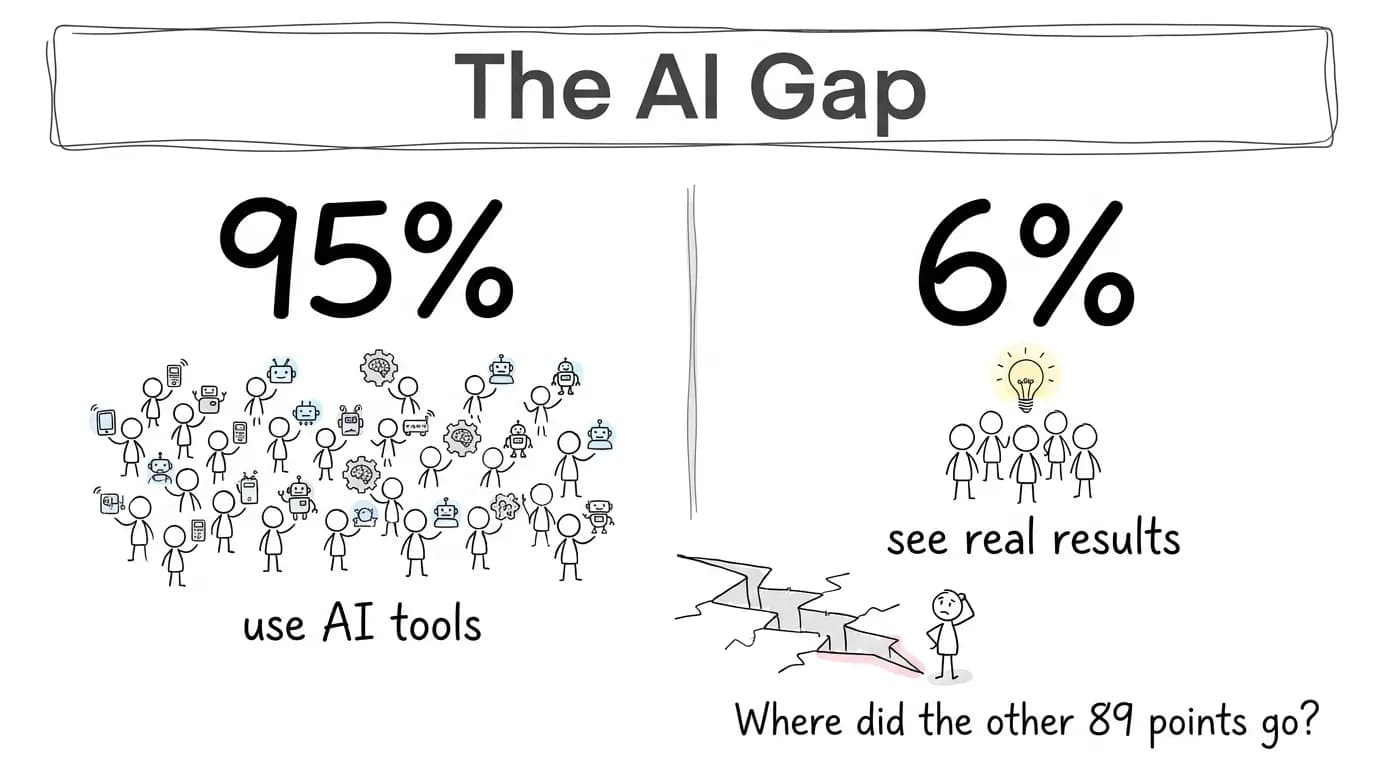
95% of Companies Use AI. Only 6% See Real Results. What's the Gap? Kolsquare's New Report Nails the Answer
A recap of a Kolsquare webinar on AI in influencer marketing, covering adoption gaps, AI-labeled content engagement, AI influencer limits, and generative engine visibility. It also outlines four practical moves for 2027 planning.