
I Tore Down 12 Major B2B Marketing Tools of 2026 — I Only Want to Remind You of One Thing
A review-style article breaking down 12 mainstream B2B marketing tools of 2026, organized around four capability areas: intent data, pipeline automation, ABM, and attribution.
A few days ago, a friend of mine who runs an industrial software company invited me to dinner. The dishes had barely hit the table before he started venting.
His company is pouring a big budget into marketing this year, buying a whole stack of tools. At the budget meeting, the CFO asked just one question: how does every dollar spent on these tools end up turning into orders?
The room went silent.
He told me: it's not that I couldn't answer — I didn't know where to start.
I told him: your question is really the question every B2B marketing team shares in 2026. The tools aren't the point. What matters is whether you can answer that one question.
After I got home, I took apart the 12 most talked-about B2B marketing tools on the market, from top to bottom. Today I'm sharing my notes with you.
What Exactly Is a B2B Marketing Tool?
First, let's get the concept straight. What is a B2B marketing tool?
It's software that helps go-to-market teams do three things: find buyers who are actively looking to buy, put your outreach in motion, and get a clear accounting of the results.
Sounds simple. But think about it: B2C marketing is casting a wide net; B2B marketing is fishing. In B2B, a whole committee usually has to sign off, and the cycle easily runs six months to a year. So the tools look nothing like their B2C counterparts.
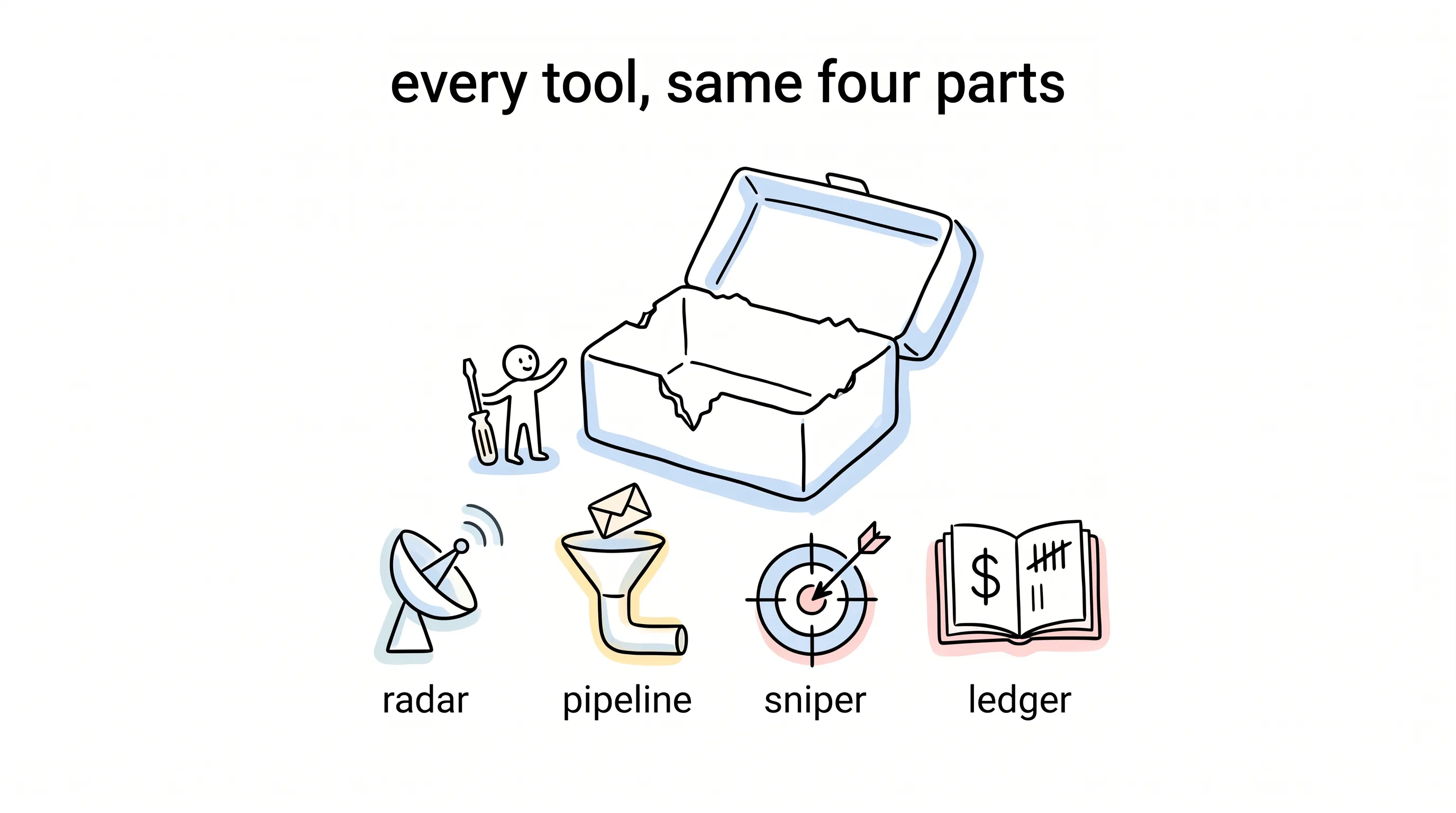
Break them open, and you mostly find four capabilities.
Radar. It finds out who's watching. Who's searching your keywords, who's quietly visiting your website, whose company has already entered a buying process. This is data intelligence and intent signals.
Pipeline. It automates customer nurturing. Sending emails, scoring leads, routing them to sales — no manual babysitting required.
Sniping. For a handful of high-value target accounts, concentrate your firepower and strike with precision. This is ABM (account-based marketing).
Ledger. Finally, tally it all up. Which touchpoint produced which opportunity, which channel drove which revenue.
Remember these four. Among the thousands of tools out there, every one is a permutation of these four things.
How to Pick Your Radar?
Where do you start? Let's start with the radar.
ZoomInfo — the heavyweight of this category.
First, the raw numbers: 500 million contacts, 100 million companies, 135 million verified phone numbers. The data network underneath it, called the GTM Context Graph, processes more than 1.5 billion data points every day.
Impressive!
Its most interesting design choice: it opens two separate doors — one for sales, one for marketing. Sales gets GTM Workspace, where AI summarizes account activity and suggests next steps; marketing and operations get GTM Studio, where they can build audiences and launch multi-channel plays without writing a line of code. And both sides are looking at the same data. Why that matters so much will become clear when we get to the ledger.
The case studies are strong too. Smartsheet used its form optimization and intent-based targeting and saw MQLs (marketing qualified leads) jump 84%, with an opportunity rate 26% higher. It has also been named to the Leaders quadrant for ABM platforms by Gartner two years running, in 2024 and 2025.
The downside? Enterprise pricing and a complicated rollout — you'd better have a capable operations team to service it. Smaller teams, think twice before jumping in.
Cognism — Europe's radar.
Its specialty is phone-verified mobile numbers, plus GDPR compliance, which makes it especially effective in the European market. Teams doing business in Europe should take a close look.
But North American coverage is thin. And its intent data comes from third parties rather than growing on its own, so the signal depth falls short.
How to Pick Your Pipeline?
HubSpot Marketing Hub — the comfort pick for mid-sized teams.
Drag, drop, and you've built emails, forms, and landing pages. The CRM is its own, so no data shuffling, and AI can even draft content for you. Fast to get started — that's its greatest virtue.
But watch out for two things: advanced automation sits behind top-tier plans with steep price jumps, and it has no intent data of its own — you'll need to bolt it on.
Pardot — now called Salesforce Marketing Cloud Account Engagement — the choice for Salesforce holdouts.
If your company already lives deep inside Salesforce, the two connect natively: scoring, nurturing, and reporting flow in one seamless motion, and you can use Einstein for predictive scoring.
But what if you're not? Then to use this tool, you first have to buy Salesforce. When the tool holds your ecosystem hostage, you'd better run that math carefully.
Adobe Marketo Engage — the heavy artillery for large enterprises.
Multi-step automation, complex segmentation, permission management across multiple regions and business units — it can handle all that heavy lifting.
The price: a steep learning curve and heavy administrative overhead. Some advanced capabilities require buying into Adobe Experience Cloud on top. Without a dedicated marketing operations team, you won't get it running at full power.
How to Pick Your Sniper?
A quick explanation first. What is ABM?
It flips "cast a wide net for leads" on its head: first pick out the few dozen big accounts you want most, then aim all your marketing firepower at those few.
6sense's signature skill is predicting the buying stage — using AI to judge whether a company is still "just browsing" or already "holding the money and picking vendors."
For teams with a clear target account list and mature ABM playbooks, it adds real firepower.
But note: it works on intent derived from modeling, not verified contact-level data. And it isn't cheap.
Demandbase welds "finding customers" and "advertising" into a single platform.
Once you've defined your target accounts, launch ads straight away — from identification to reach without ever switching tools. ABM teams with big ad budgets will feel right at home.
Flip it around: if your go-to play is outbound sales calls rather than buying traffic, it will feel awkward. Coverage outside North America is also thin.
The Remaining Five, Each With Its Own Specialty
ActiveCampaign — the value king for small teams. Flexible email automation, high deliverability, and a lightweight CRM built in. Starts around $15 a month. The downside: shallow reporting, and both B2B intent data and ABM require add-ons.
Semrush — an old friend for content and SEO teams. Keywords, competitors, site audits — the full kit. The most notable part: it has built AI search visibility tracking into the product — whether your brand gets mentioned or cited in AI search engines like ChatGPT and Google AI Mode. The search battlefield is shifting — and Semrush shifted first. Ruthless. The downside: it doesn't manage contacts or connect to a CRM; it's a dedicated tool for content teams.
Jasper — an AI writer, team edition. Many people use it as a chat box; that's a waste. Its true form is an entire content pipeline: customizable brand voice and style guidelines, no-code AI app building, and brand safety that holds up at scale. Starts around $39 a month. But a word of warning: it's only as good as the guidelines you feed it. It cannot replace strategic thinking.
Sprout Social — the social media manager. Publishing, listening, and analytics all in one platform, with especially fine-grained LinkedIn features — and the main battlefield for B2B teams is right there on LinkedIn. Employees can reshare and amplify company posts in one click too. Starting at $199 a month, it isn't cheap. But for teams serious about social, it's worth it.
Google Analytics — the foundation of your ledger. Free, event-level tracking, with conversions, funnels, and attribution modeling all included. But it has one fatal blind spot: it sees "people," not "companies." And B2B business runs on company-level data. So it has to be the foundation — it can't be the whole building.
The Real Make-or-Break Question: How Do the Numbers Add Up?
All right, the tools are done. Now back to the opening question: the CFO's question.
Most teams can quote their lead volume and cost per lead. Very few can draw a straight line from one specific touchpoint all the way to the revenue of one closed deal.
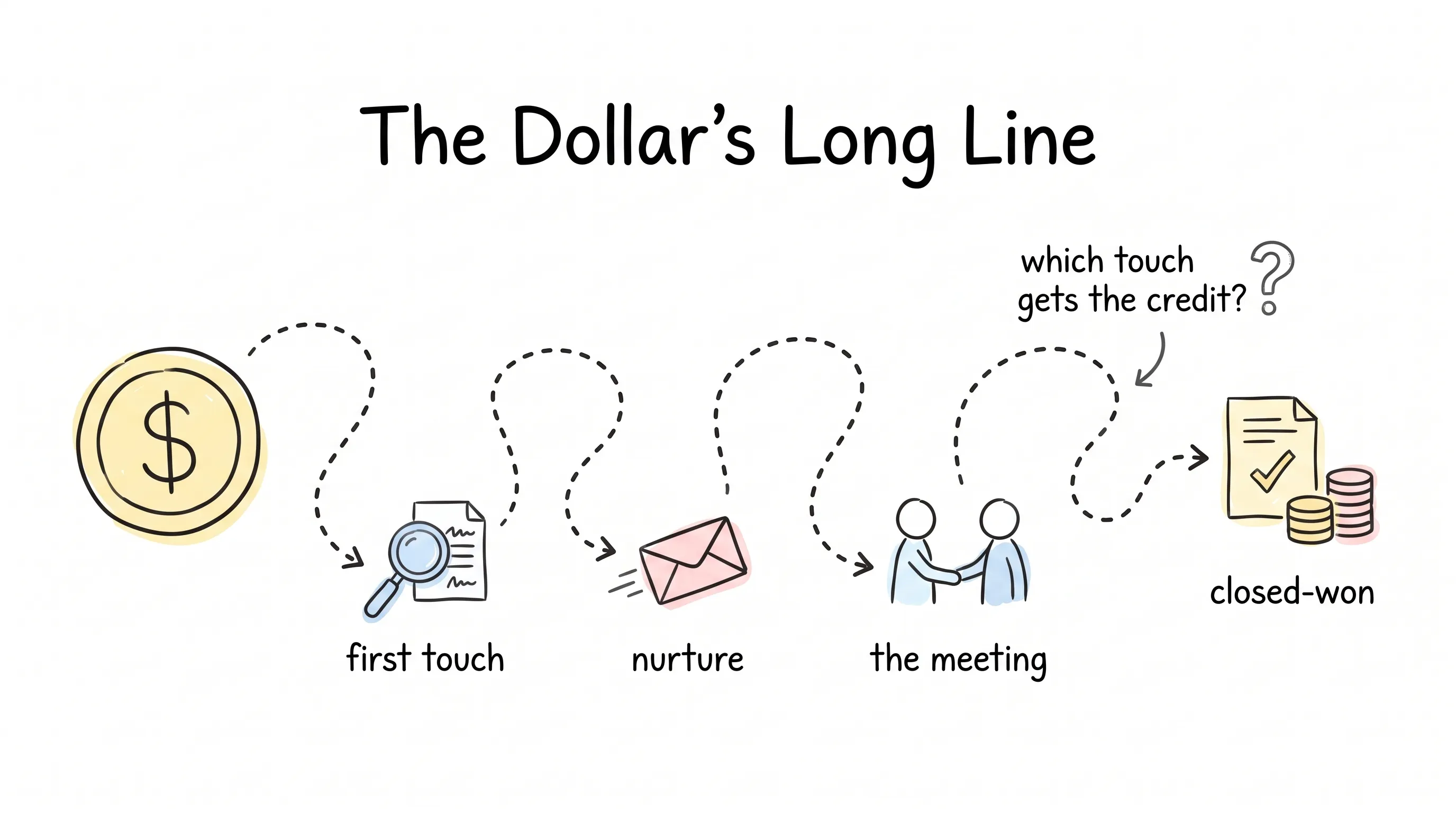
That gap is exactly where budgets get cut.
Why can't they draw it? On the ledger, attribution has three ways of being recorded.
First-touch attribution. Whoever brought the customer in first gets the credit. Simple — but between the moment a customer first sees you and the moment they buy, there may be six or eighteen months of long nurturing, and all of it gets wiped away.
Last-touch attribution. Whoever delivered the final kick gets the credit. Also simple — but every contributor who paved the road beforehand is forgotten.
Multi-touch attribution. Credit is spread across every touchpoint, weighted by engagement. Closest to the truth. But it demands clean data: two-way CRM sync, standardized event tracking, and tools that don't fight each other.
So when judging whether a tool makes the cut, don't count its flashy dashboards — ask four questions: Can it sync two ways with your CRM? Can it report up to the opportunity level? Can it measure engagement for each account? Can it close the loop all the way from campaign to revenue?
If it can't answer, what you've bought is a machine for showing off results.
This is why I made such a point earlier about sales and marketing seeing the same data. If data keeps separate books in two separate systems, attribution will forever be a muddled ledger.
If the data doesn't live together, the books will never reconcile.
There are ready-made examples. After Momentive plugged ZoomInfo's data layer into its lead routing process, response time dropped from 20 minutes to 60 seconds. After Redwood Logistics switched to intent-driven targeting, cost per click fell 99%, saving 25 hours a week.
Swap in the right tools, and the numbers take care of themselves.
How to Choose in 2026
Finally, four pieces of advice.
First: look at your play, then pick your tools. If your team runs an automated pipeline play, go look at HubSpot and Marketo. If you fight on real-time buyer signals, go look at data intelligence platforms like ZoomInfo. Not the other way around.
Second: integration is the lifeline. If a tool doesn't share data with your CRM, everything downstream suffers.
Third: look at total cost, not the sticker price. Implementation fees, training time, key features locked behind top-tier plans, per-contact overage charges — that's where the real money is. One more reminder: prices in this article reflect the market as of mid-2026; check the vendor's official site before you buy.
Fourth: press the attribution question from day one. Before you buy, ask the vendor: how does your platform connect marketing actions to closed-won revenue? The ones who walk you through a concrete workflow stay; the ones who just throw a dashboard at you — show them the door.
Oh, and one more small suggestion. AI has churned up the tool market so fast these past two years that you should re-audit your tech stack every six months. Even once a year is too slow.
A Final Word
At the end of that dinner, I asked my friend: so how do you plan to answer the CFO's question?
He said: I'm going to swap out the ledger first, then buy the radar.
I said: congratulations — you already know how to choose tools.
May every dollar of marketing budget you spend in 2026 be one you can account for — where it came from, and where it went.
Continue reading
Related articles
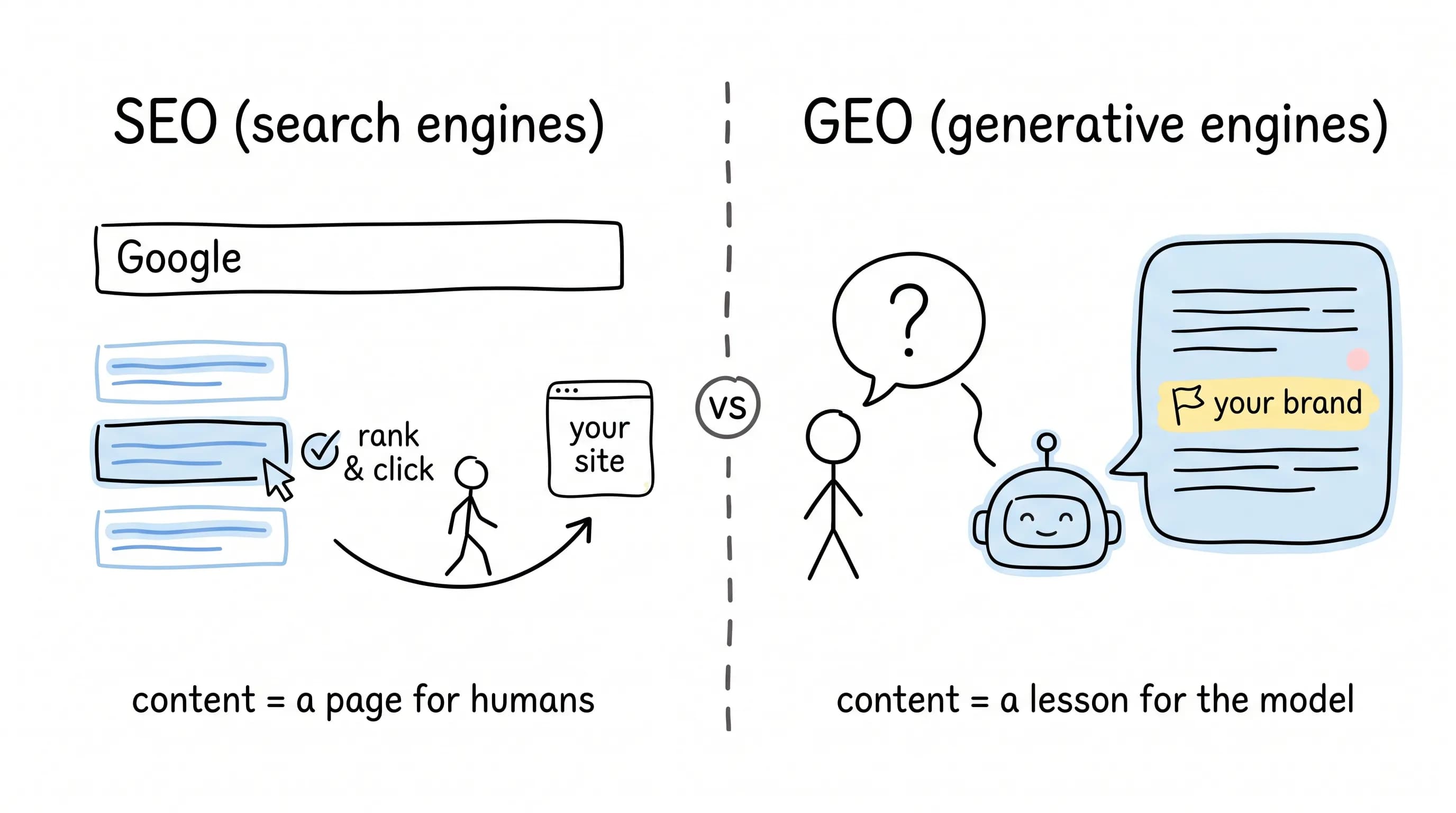
Does AI Know Your Brand? A Look at GEO, the New Craft
An explainer on GEO (Generative Engine Optimization): how AI engines like ChatGPT, Perplexity, and Gemini differ, how GEO goals and metrics diverge from SEO, and which SEO skills still carry over.
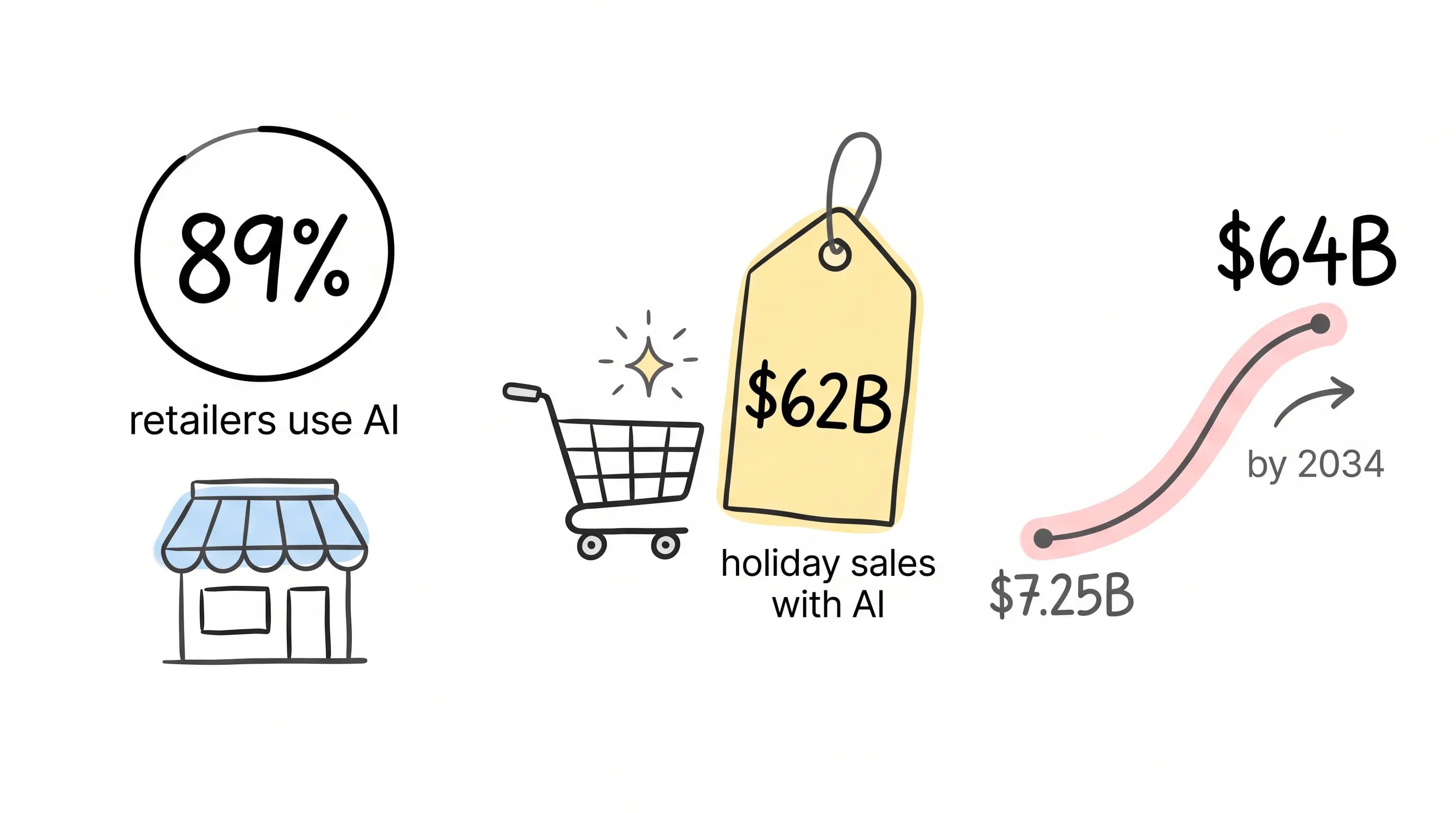
89% of Retailers Are Already Using AI. The Playbook for E-Commerce Has Changed
A learn article on AI in e-commerce: adoption context, use cases from recommendations, search, dynamic pricing, customer service, inventory, and fraud control, plus B2B applications, generative AI content, tool examples, pitfalls, and a six-step adoption path.
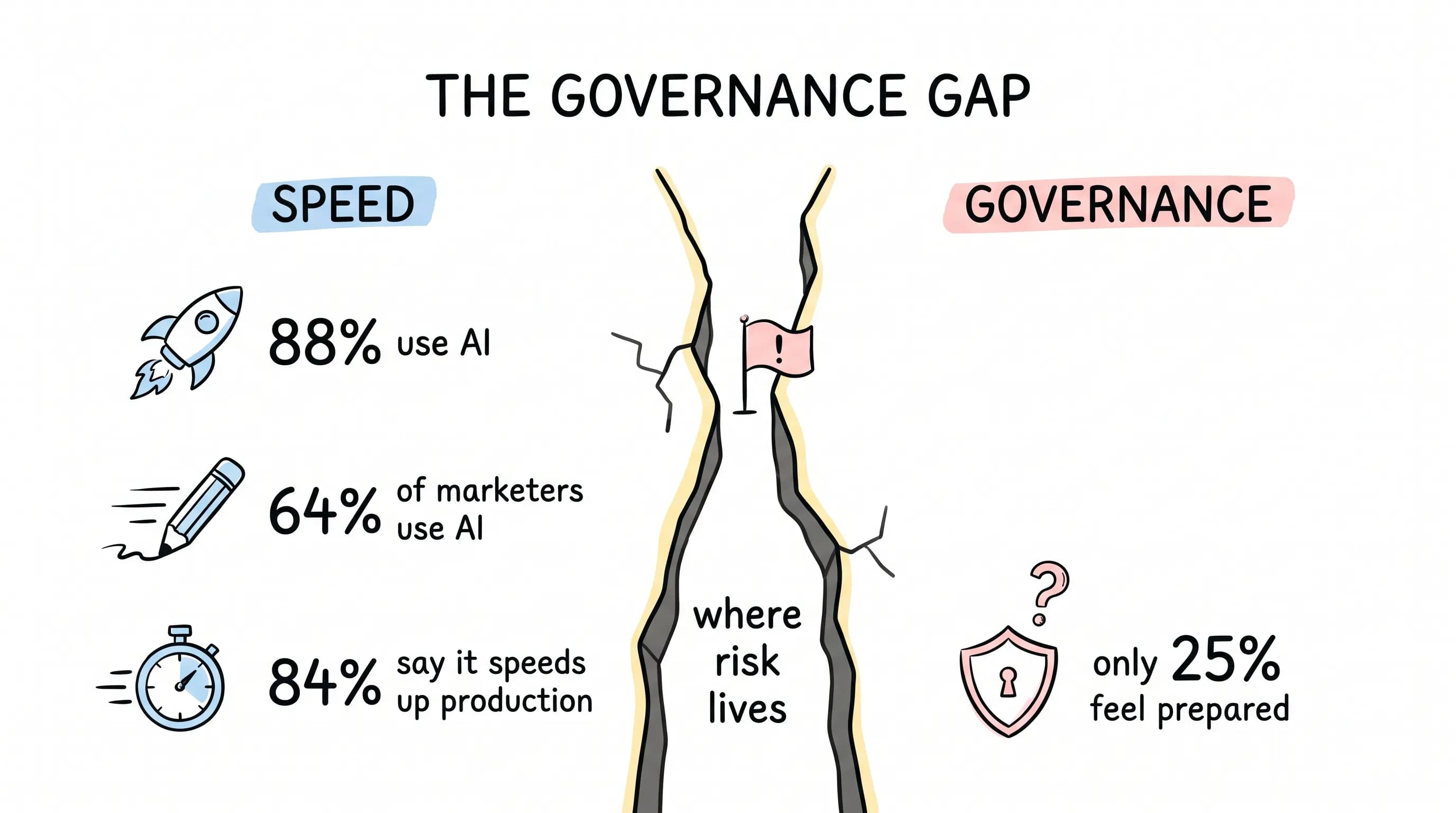
AI Makes Content at Lightning Speed — But Can You Answer "Who Approved This?"
This article looks at the gap between AI content speed and governance readiness in marketing teams, and outlines nine control points — prompt validation, brand guardrails, permissions, approval workflows, human review, versioning, IP checks, audit trails, and asset reuse — for brand-safe AI content.