
I Dug Through Twenty-Plus AI Marketing Companies and Found It All Boils Down to Five Things
This article reviews twenty-plus AI marketing companies and groups their work into five jobs: handling customer conversations, allocating ad budgets, reading consumer signals, executing campaigns, and matching brands with influencers. It argues AI takes over the actions while humans keep judgment.
A few days ago, a friend of mine who runs marketing for a living invited me out for coffee. He sat down and sighed before saying a word.
His boss had asked one question in a meeting: when is our company's AI marketing actually going to get going?
I told him: don't rush to "get it going" just yet. Answer one question for me first — what exactly is AI marketing?
He froze. A decade-plus in marketing, hearing AI, AI, AI every single day, and he had never seriously thought about what AI marketing actually meant.
We talked all afternoon. After I got home, I went back through twenty-plus companies that are using AI to do marketing today, and the picture got clearer with each one: there's nothing mystical about this. Break it apart, and everyone is doing the same five things.
Start with a number. 88% of marketers already use AI tools in their daily work, and what they want out of it is simple: to push engagement rates, conversion rates, and the like higher.
AI marketing isn't a trend. It's the daily routine.
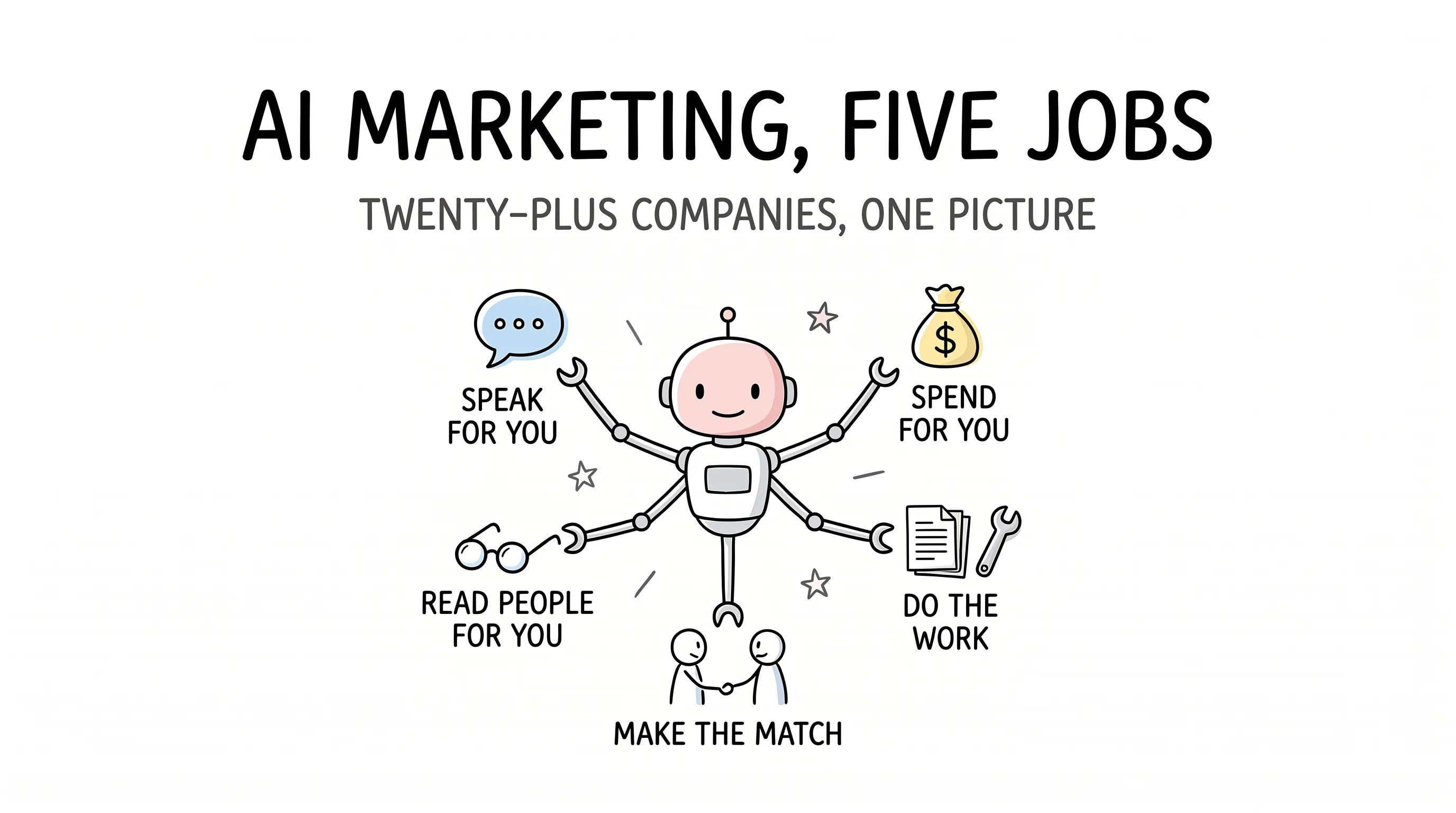
The First Job: Speak for You
What does "speak for you" mean? All those messages that a human would otherwise answer one by one — AI answers them for you.
Take one example. Real estate and healthcare are two industries that get floods of tenant and patient inquiries every day. A company called EliseAI uses AI agents to take on that workload: texts, emails, and phone calls, all of it. It doesn't just answer questions; it also runs the surrounding processes on autopilot — lease signing, resident operations, patient services.
Think of it as a leasing concierge that never sleeps. A tenant asks in the middle of the night whether rent can be pushed back a few days this month, and it replies in three seconds — without a hint of irritation.
Several other companies are in the same business.
Ada does customer-service automation, helping brands keep support running around the clock so sales reps stop burning hours on the same repeated questions. Runhappy is even more direct: generative AI agents chat with customers one on one, across every channel, in any language, in real time. EZ Texting works in SMS marketing, with a tool called AI Compose that drafts your texts and keeps the tone on-brand.
Yext takes a slightly different route. It stores everything a company knows in a database called a knowledge graph, and answers whatever users search for. And it takes care of the whole package on the side: SEO pages, business listings on third-party platforms, online review management.
Strip it down, and this whole category is doing what the customer-service department used to do. Except this customer service never needs a shift schedule.
The Second Job: Spend for You
Most of a marketing budget goes to ad placement. And that money has always kept a murky set of books.
Advertising history has an old line, from department-store pioneer John Wanamaker: "Half the money I spend on advertising is wasted; the trouble is, I don't know which half." More than a century later, advertisers still lose sleep over it.
What AI does is find that "which half."
Look at Google. Its Responsive Search Ads let marketers load up to 15 headlines and 4 descriptions at a time; the system mixes them, tests them on its own, and automatically allocates by region and budget. Paired with audience analysis powered by machine learning on Google Cloud, the targeting gets finer and finer.
Think about it: before you can finish a blink, an entire ad-slot auction is over. At millisecond speed, no human can touch this kind of trading — it takes machines. RTB House uses deep learning for ad buying and remarketing; eBay, Steven Madden, Audi, and Miinto are all clients. System1 does acquisition marketing, specifically helping brands pull in customers who arrive across various channels with clear purchase intent. Smartly is an AI social-media advertising platform used by Uber and eBay, handling campaigns, creative, and real-time data in one place.
GumGum watches the other end of the deal: where should ads run so the brand doesn't get embarrassed? Its visual AI platform, Verity, scans videos and images across platforms, judges the tone of the content, and keeps ads from showing up next to bad content. That's called brand safety.
Quantcast built its own engine, called Ara, that studies audience behavior in real time and helps teams adjust campaigns on the fly. And it holds itself to one rule: stay compliant throughout and respect user privacy. These days that's not a bonus point — it's the price of admission.
IBM's Watson is in the game too: finding audiences, picking creative, chatting one on one with target users. In a word, it helps companies put every marketing dollar where it counts.
The Third Job: Read People for You
What does "read people for you" mean? The things consumers don't say out loud but can't help showing — AI captures them for you.
Affectiva is the name to know here. Its field is Emotion AI: using sensors and cameras to watch consumers' genuine reactions as they take in marketing content — basically a polygraph for your ads. Where people laughed, where they frowned, it's all there in the data. When the team gets the results, they know exactly what to do: a segment that confuses people, fix it; a moment that grabs people, double down.
Is an ad good or bad? Don't argue it out in a meeting. Test it.
Invoca looks at a different entry point: the phone. Plenty of deals close on a call, yet calls used to be a black box — nobody knew which campaign produced them. Invoca uses AI to analyze calls in real time, attribute each one to a specific ad campaign, and then trains models to tell you where conversions actually happen.
ClickMint is more of a technical play. The company uses AI to diagnose UX telemetry, attribution data, and behavioral event streams, then picks out the highest-value conversion-rate optimization opportunities. What's underneath is pretty hardcore: reinforcement learning, causal inference, predictive analytics.
Salesforce's Marketing Cloud is the platform-scale play: it pools customer data on one side, records how users respond as they interact with campaigns on the other, and stitches it all into a complete user profile. Marketing teams can adjust content the moment things change.
Webflow also has an analytics product called Analyze that shows marketing teams how the website performs. But its bigger selling point is being AI-native: with zero code, marketing teams can build sites, run experiments, and personalize on their own.
The Fourth Job: Do the Work for You
The first three jobs are about "thinking." This one is about "doing."
Jasper gives marketing teams an agent workbench holding more than a hundred specialized AI agents, plus a content pipeline. You supply the strategy; it takes the campaign live. Operational complexity drops, visibly.
Movable Ink plays in email. It has one feature that stunned me the first time I saw it: an email can be changed after it's sent. The instant a recipient opens it, the content adapts to their behavior in real time. Its AI tool is called Da Vinci; it understands what users want, runs campaigns on its own, and optimizes every element inside the email — all in pursuit of a few more points of customer lifetime value.
Fluent's play is to build its own reach network: a stable of acquisition websites with traffic of their own, paired with targeted campaigns and opt-in surveys, to funnel target audiences to its clients. It claims monthly active users in the millions.
Digible works vertical markets: apartments, senior living communities, student housing. Its virtual assistant, Fiona, uses AI to advise clients on digital media and plan budgets.
Basis is the enterprise player, managing omnichannel digital advertising. Its signature feature is called Compass: it turns a client's single brief into a full draft media strategy, fast. Users can edit it online, or just keep chatting and let it keep revising.
The Fifth Job: Make the Match for You
What does "make the match for you" mean? It helps you find the right partner.
Influential is an influencer marketplace built on IBM's Watson. Its Market Intelligence recommends the right influencers to brands based on audience profiles, psychographics, and contextual data — brand safety factored in as well. Creative strategy, campaign optimization, paid media: all of it can be run on the platform.
Agentio belongs here too. It turns brand-creator matchmaking from a cottage industry into an automated pipeline: AI matches creators, then negotiation, bidding, and approval all run automatically. And once the deal closes? The results work like buying digital ads — you can see them and you can count them.
For the first time, influencer advertising has become a business you can actually do the math on.
The Question You Can't Dodge
At this point, my friend asked the ultimate question: so are marketers about to be replaced?
My answer is blunt: AI takes over the actions. Humans keep the judgment.
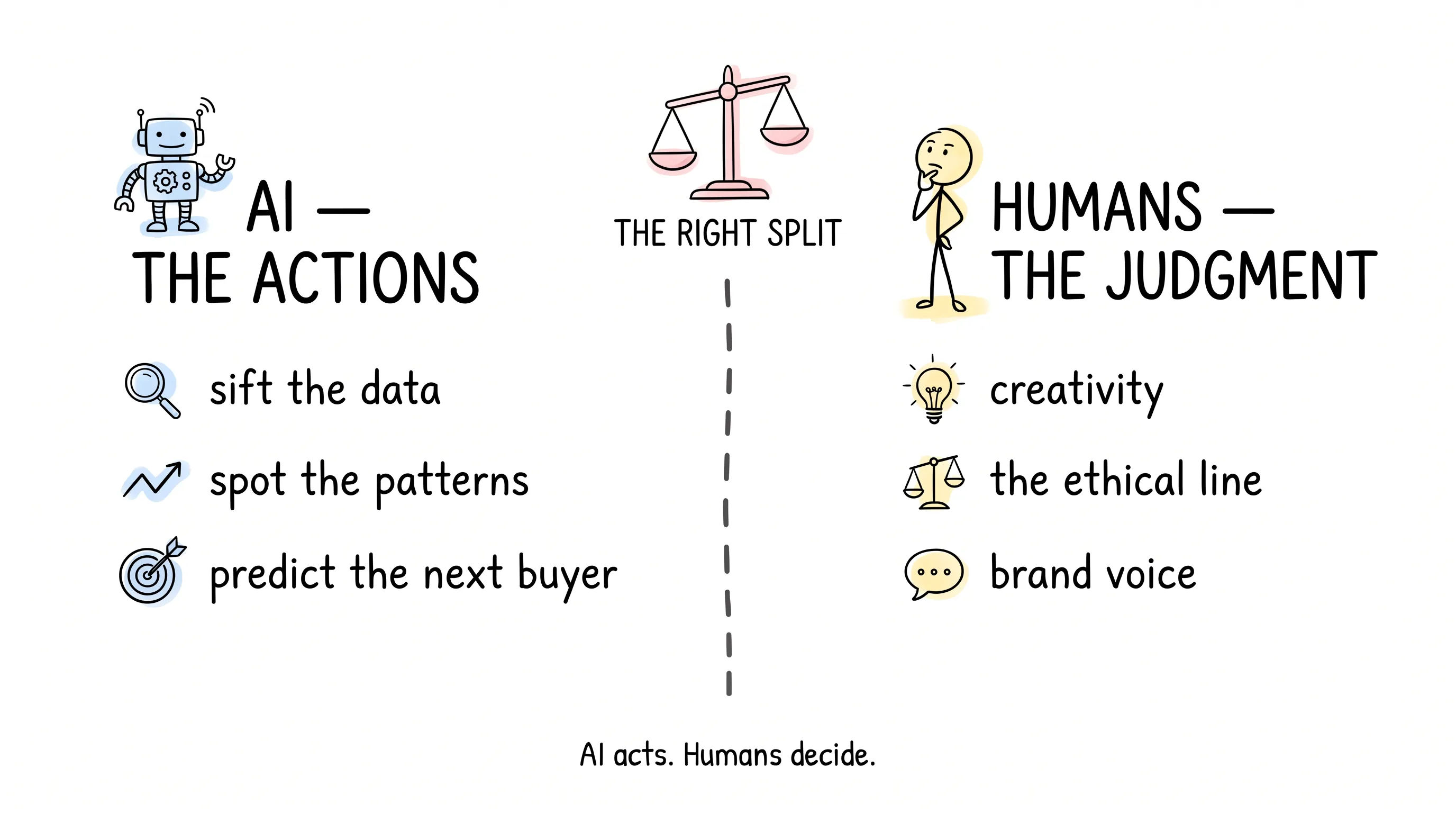
What is machine learning good at? Sifting data, spotting patterns, predicting who the next buyer is. What is natural language processing good at? Getting chatbots to understand people and reply properly. Both of those are actions.
But where should creativity go? Where does the ethical line get drawn? How does a brand's voice stay the kind people want to be close to? Those calls belong to humans. AI is there to pull you out of repetitive labor; the time it frees up, spend it experimenting — doing the things machines can't.
As we parted, I told my friend: go back and tell your boss exactly this — AI marketing doesn't need to be "gotten going." It got going long ago. What you need to figure out is which of these five things you're already doing.
Here's hoping you recover that wasted half of your ad spend sooner rather than later.
Continue reading
Related articles
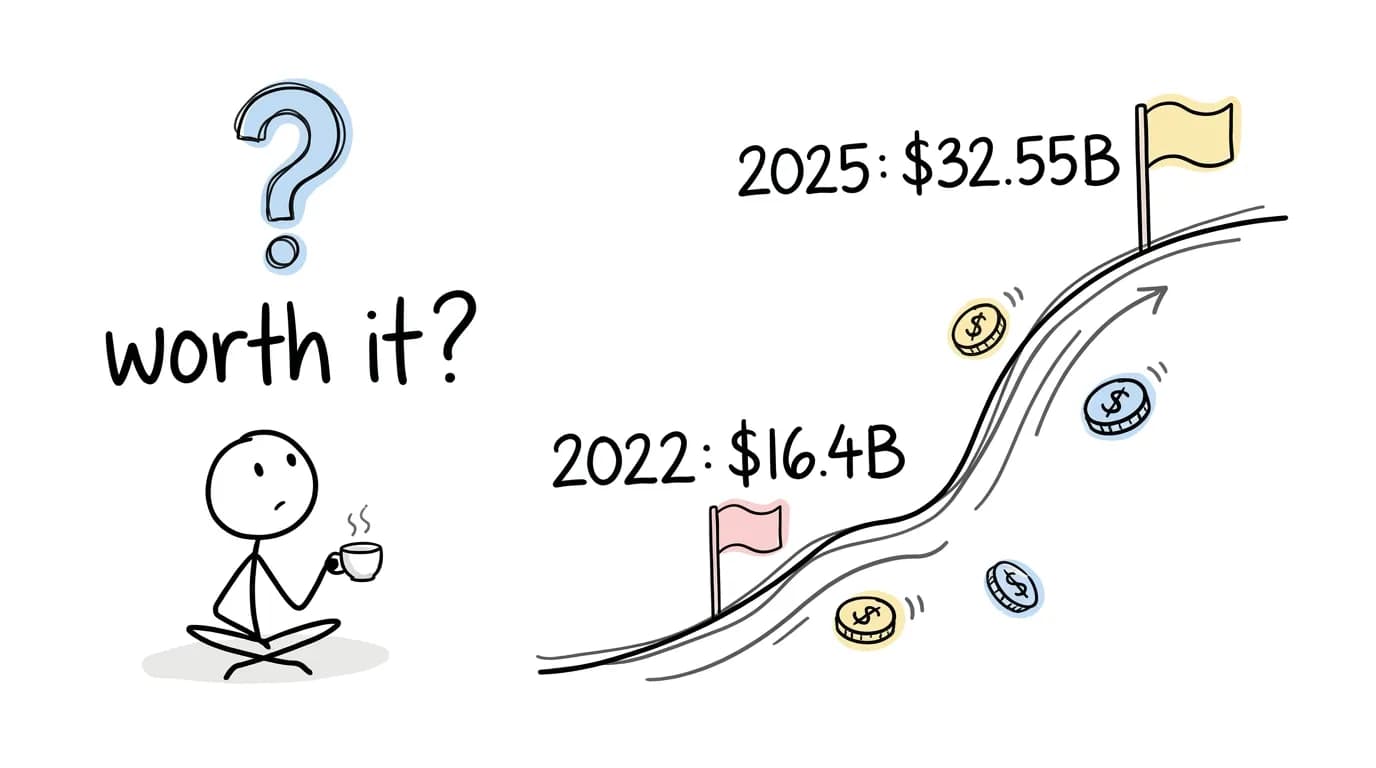
Is Investing in Influencers Actually Worth It? I Broke Down These Dozens of Numbers and Ran the Math for You
A learn article that compiles industry data on influencer marketing, covering market size, ROI measurement practices, nano versus mega creator pricing and engagement, platform budget allocation, AI tooling, and ad disclosure compliance.
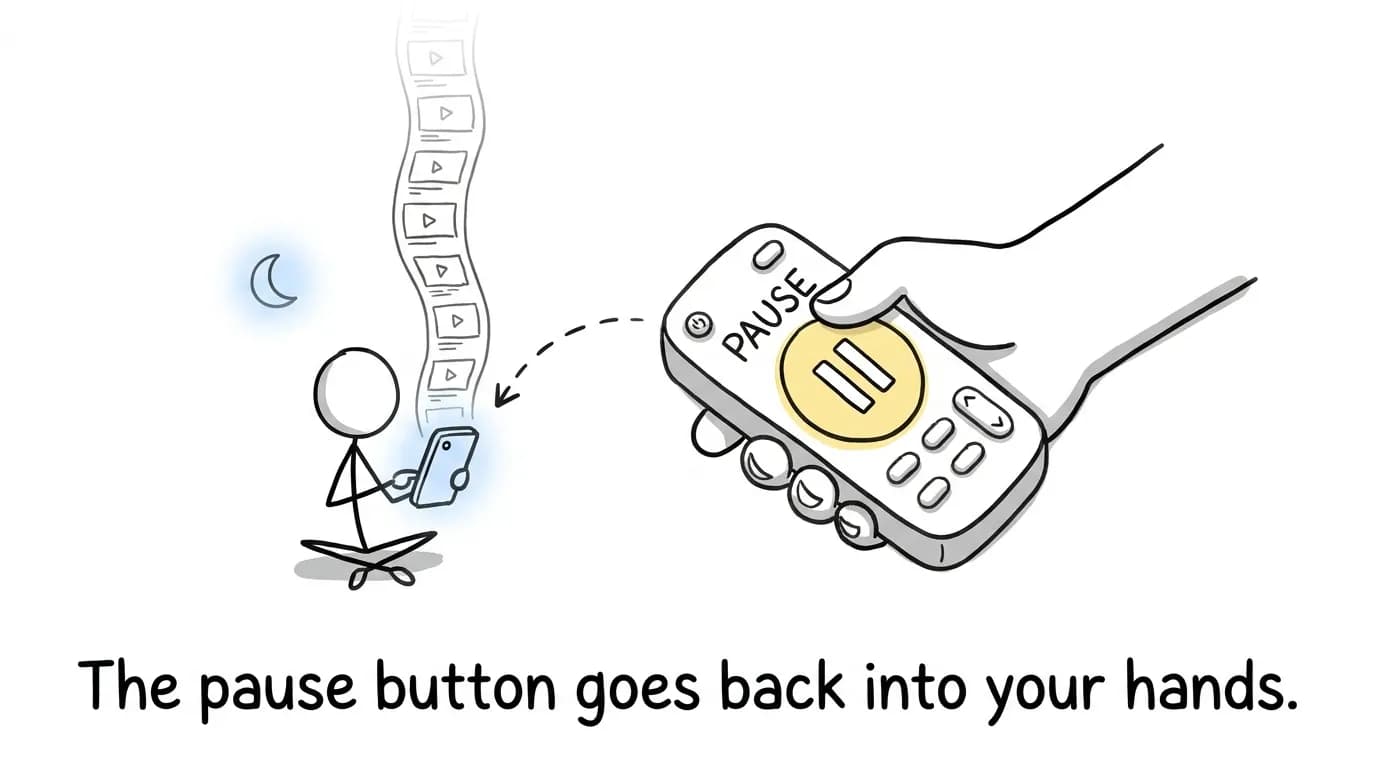
The EU Is Handing the Pause Button Back to You
The EU's draft Digital Fairness Act targets dark patterns, addictive design, undisclosed influencer ads, silent subscription renewals, and game spending by minors, while keeping dynamic pricing legal but banning drip pricing; fines could reach 6% of annual turnover.
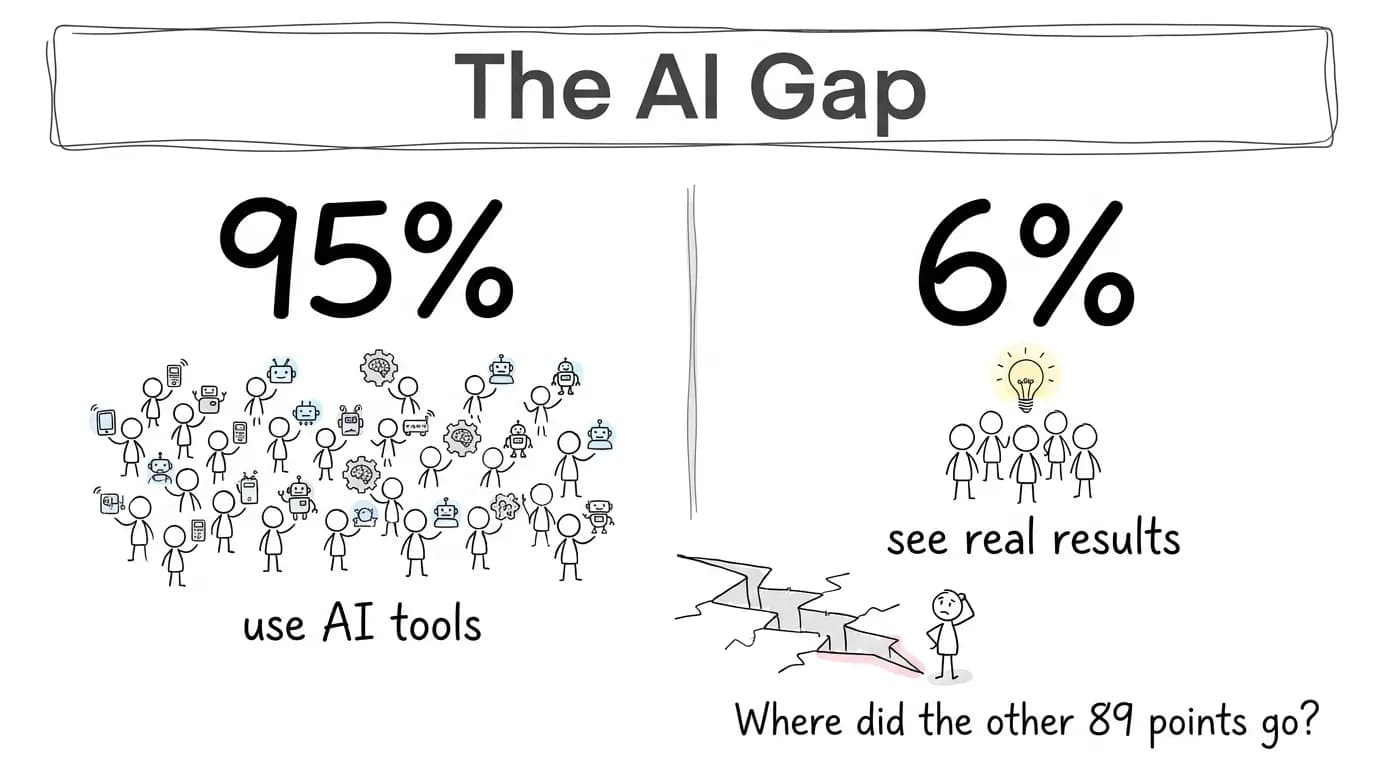
95% of Companies Use AI. Only 6% See Real Results. What's the Gap? Kolsquare's New Report Nails the Answer
A recap of a Kolsquare webinar on AI in influencer marketing, covering adoption gaps, AI-labeled content engagement, AI influencer limits, and generative engine visibility. It also outlines four practical moves for 2027 planning.