
How Many Steps Does It Really Take to Put AI into Your Marketing Department?
A bilingual learn article explains the seven-step MARK-GEN framework for building generative AI marketing content models, illustrated with apparel examples including virtual try-on (SVTON) and photo-to-video generation (FashionFlow), plus limits like cost, training time, and data workload.
A while back, a friend of mine who runs a womenswear e-commerce business invited me to dinner and spent the whole evening pouring out his troubles.
He runs an online clothing store. Sales are decent, but one number keeps him up at night: the return rate.
Buying clothes through a screen, customers never get to see how anything looks on a real person. The model photos can be gorgeous, but how it actually looks on you is another matter entirely. So after hesitating forever, they figure they might as well buy it and try it on at home. Doesn't fit? Return it.
I said: why not let customers "try" before they order?
He said: try? Through a screen? How?
I said: you can now. With AI.
He just stared.
Don't laugh. Behind this little story lies a topic much bigger than trying on clothes: when a company wants to truly install generative AI into its marketing department, where on earth do you start?
The Old Three Are Running Out of Road
First, let's look at what most companies' marketing actually runs on.
Social media. Search engines. Email.
True, these three are aging remarkably well. Content and ads on social media drive engagement; search engines are the front door to the internet for a lot of people; email is cheap, direct, and only mildly annoying.
But they share one fatal weak spot: content and channels are separate.
The channels are ready-made. The content has to be made by humans. Copy needs writers, images need designers, videos need an editing team. Want to make ten thousand versions for ten thousand customers? Do the math on that cost.
The trouble is, these roads themselves are getting harder to travel.
On social media, personalization is a double-edged sword. Push too vaguely and customers feel nothing; push too precisely and it starts to feel like spying. There's even a name for this: the personalization paradox. One widely circulated number: 72% of customers will say goodbye to a company for good the moment they feel their privacy has been violated.
Search engines aren't peaceful territory either. Someone once crunched the numbers: on a results page, 60 to 80 percent of people click on organic listings, while only 10 to 40 percent click the ads. Want to climb the rankings with SEO? Fine. But search engines keep changing their algorithms, so you have to keep adjusting along with them — expensive, and no guarantees.
The Old Three are all arts of getting customers to the shelf. But the content on that shelf is still production capacity carved out by hand, cut by cut.
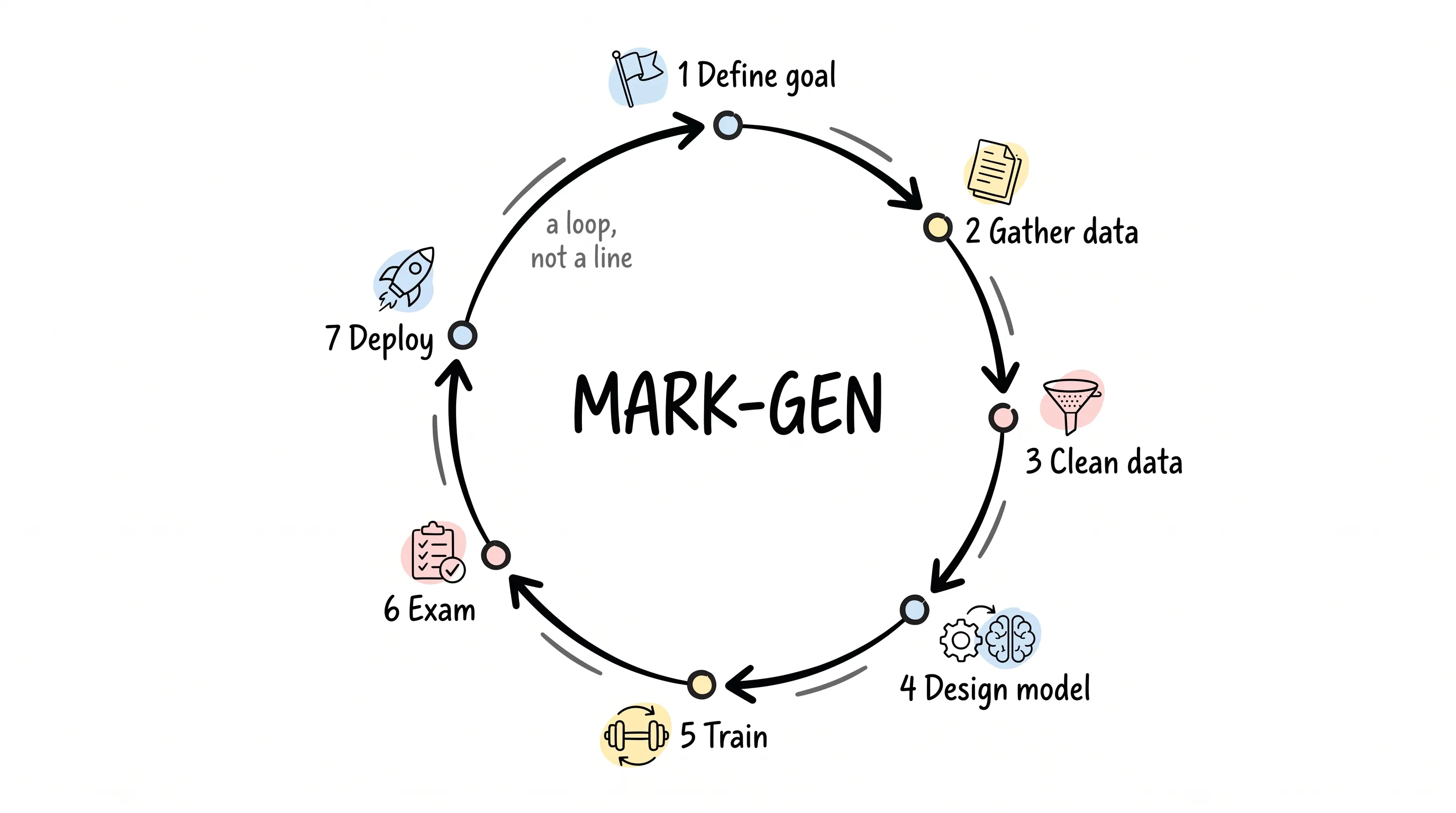
In 2024, a group of researchers set out to seriously answer this question. They proposed a framework called MARK-GEN. It answers exactly one question: if a company wants to raise its own AI that can produce marketing content, how many steps does it take?
Let me walk you through it. Seven.
What Is MARK-GEN? Seven Steps
Step one, define the goal. What do you want the AI to promote? What message do you want to send? Figure this out first — don't just start force-feeding the model.
Step two, gather data. If you want the AI to generate content that moves people, it has to have seen enough real examples.
Step three, clean the data. Raw data is dirty — videos, text, images all jumbled together. It needs filtering, organizing, and you have to carve out a slice to keep as the exam paper.
Step four, design the model. Write it from scratch, or stand on someone else's shoulders and adapt — either works.
Step five, train. Have the model do problems over and over, tune the parameters again and again, until the output starts looking decent.
Step six, exam time. Test it on new data it has never seen, to find out whether it actually learned the material or just memorized the answers.
Step seven, deploy. Wire it into the real business and measure the results.
Sounds like an assembly line? It isn't. The smartest thing about this framework is: it's a loop, not a line. If any step doesn't pass, you go back and redo it.
The researchers chose the apparel industry for their example. Why? Because fashion marketing depends so heavily on how a garment looks on the body — the toughest nut to crack in image problems. If you can crack this, every other industry is easier.
They ran two experiments. Let me tell you about them.
Story One: Letting Customers Try On Clothes From a Distance
Suppose you run an online clothing store. Pick any name — let's call it Clothing Ware.
In your hands is a virtual try-on model called SVTON. What can it do? Take a product photo of a garment and a photo of a customer, and "stitch" them together into an image of that customer wearing the garment.
Sounds simple. Inside, there are three layers of craft.
First, "read the person": figure out which parts of the body need to cooperate with the garment. Then, "reshape the garment": geometrically deform the garment image — bend it, scale it, shift it — so it fits the customer's figure, even painting in natural folds. Finally, "composite": merge person and garment into one image, with the bare arms filled in seamlessly, too.
Think about it. Does that sound like an AI tailor?
The data used to train it is a dataset called VITON: more than 16,000 professional model photos, each paired with its corresponding garment image. More than 14,000 went into training; about 2,000 were held out for the exam. The original version was later taken offline over copyright issues, and the community built a high-definition version called VITON-HD, with four times the resolution.
Once this system goes live, there are two ways to play it.
The first: advertising. After getting customers' consent to use their data, generate a "personal try-on image" for each customer, turn it into a banner ad, and place it on third-party websites. Think about it: a customer scrolls past an ad and sees themselves wearing that jacket. Is that click-through rate in the same league as a cookie-cutter model photo?
The second: on your own site. Build the try-on feature into your website. Customers upload a photo and pick clothes to try on themselves. Once they've seen it clearly on themselves, they place the order.
Run the numbers: when the try-on is true to life, wrong purchases drop, returns drop. Happy customers, repeat purchases rise. Fewer returns also mean less shipping back and forth, so the carbon footprint falls too. One small try-on model tugs at the ledger of the entire business.
How fine are the generated images? The texture and details of the clothes survive intact. Seriously impressive.
Story Two: One Photo Becomes a Video
A garment that just sits there won't move today's customers. It has to move.
Shoot a video? Hire models, rent a studio, schedule the shoot — by the end of the day, it's all money.
The second experiment in this framework used a model called FashionFlow to do something even bolder: take a single static product photo and generate a video straight from it.
It runs on diffusion models. What's a diffusion model? Picture it as "make a mess first, then clean it up": take an image and keep adding noise until it's completely unrecognizable; then train the AI to run the operation in reverse, washing the noise away layer by layer. As it washes, a brand-new image emerges. Apply that same logic to video, and the model can fill in what comes after a still photo, generating a smooth, coherent video that slowly shows off the garment.
A few years ago, the mobile photo-editing app Lensa went viral — the same diffusion logic underneath.
The training data is a dataset called Fashion: 500 videos for training, 100 for the exam, each one 300-plus frames, every angle, every body type, every fabric.
The most brilliant part: this model can hook into Story One. First generate the customer's personalized try-on image, then set it in motion. What the customer sees is themselves spinning around in that dress.
The research calls this kind of delight hedonic value. Put plainly: the customer finds it fun, finds it delightful. When it feels good, people are willing to pay.
Now for a Bucket of Cold Water
At this point you might be thinking: isn't this just a money-printing machine?
Hold on. The people who proposed this framework were perfectly clear about its limits themselves.
Slow. Training deep learning models takes weeks, often months. If your marketing has to chase trends and change daily, this playbook simply can't turn that fast.
Expensive. Training and running the models burns specialized compute like GPUs. Buying your own is very costly; renting servers is cheaper, but this bill never goes away.
And the grunt work is endless. The data stage alone eats 80 to 90 percent of the entire project's time. Those 16,000-plus images didn't fall out of the sky.
There's one more layer of risk: an AI-generated portrait isn't necessarily what "you" really look like. If the image doesn't resemble the customer — or worse, misleads them — you'll damage your own brand.
So treat this as heavy machinery. Don't use it as a Swiss Army knife.
Back to That Dinner
At the end of the meal, I told my friend both of these stories.
I said: your problem was never just the return rate. Your problem is that before placing an order, your customers have never truly "seen" the clothes on their own body.
Now, the framework exists. The open-source models exist. Even the code is sitting on GitHub.
He was still staring.
I suspect he was running a different calculation in his head: can my company afford to keep this thing fed?
I don't have the answer to that either. But one thing is certain: the war in marketing has moved on — from whoever owns more channels, to whoever has more content production capacity.
Channels, everyone has. Content capacity is what's splitting the field.
This is happening right now.
Continue reading
Related articles
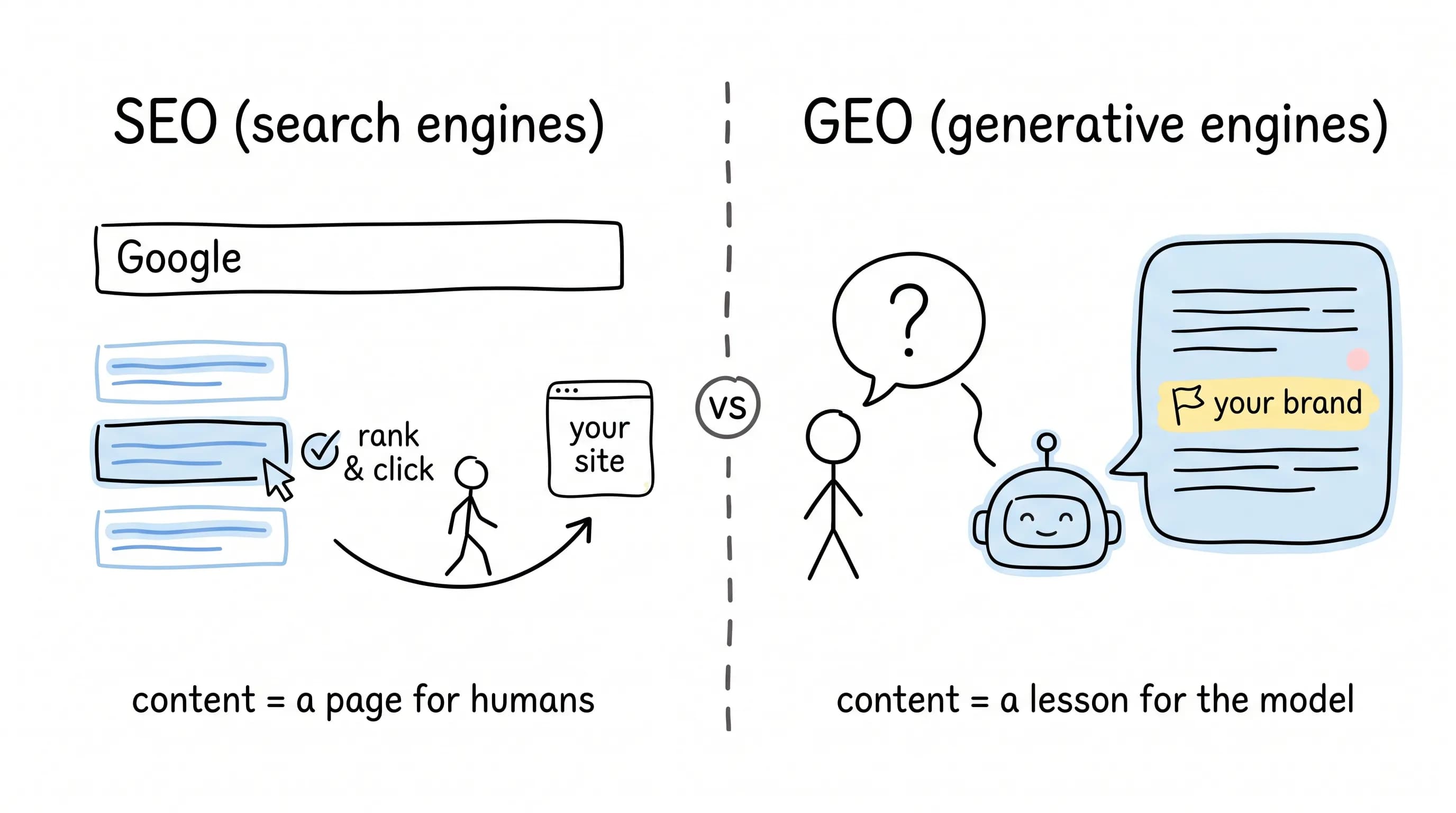
Does AI Know Your Brand? A Look at GEO, the New Craft
An explainer on GEO (Generative Engine Optimization): how AI engines like ChatGPT, Perplexity, and Gemini differ, how GEO goals and metrics diverge from SEO, and which SEO skills still carry over.
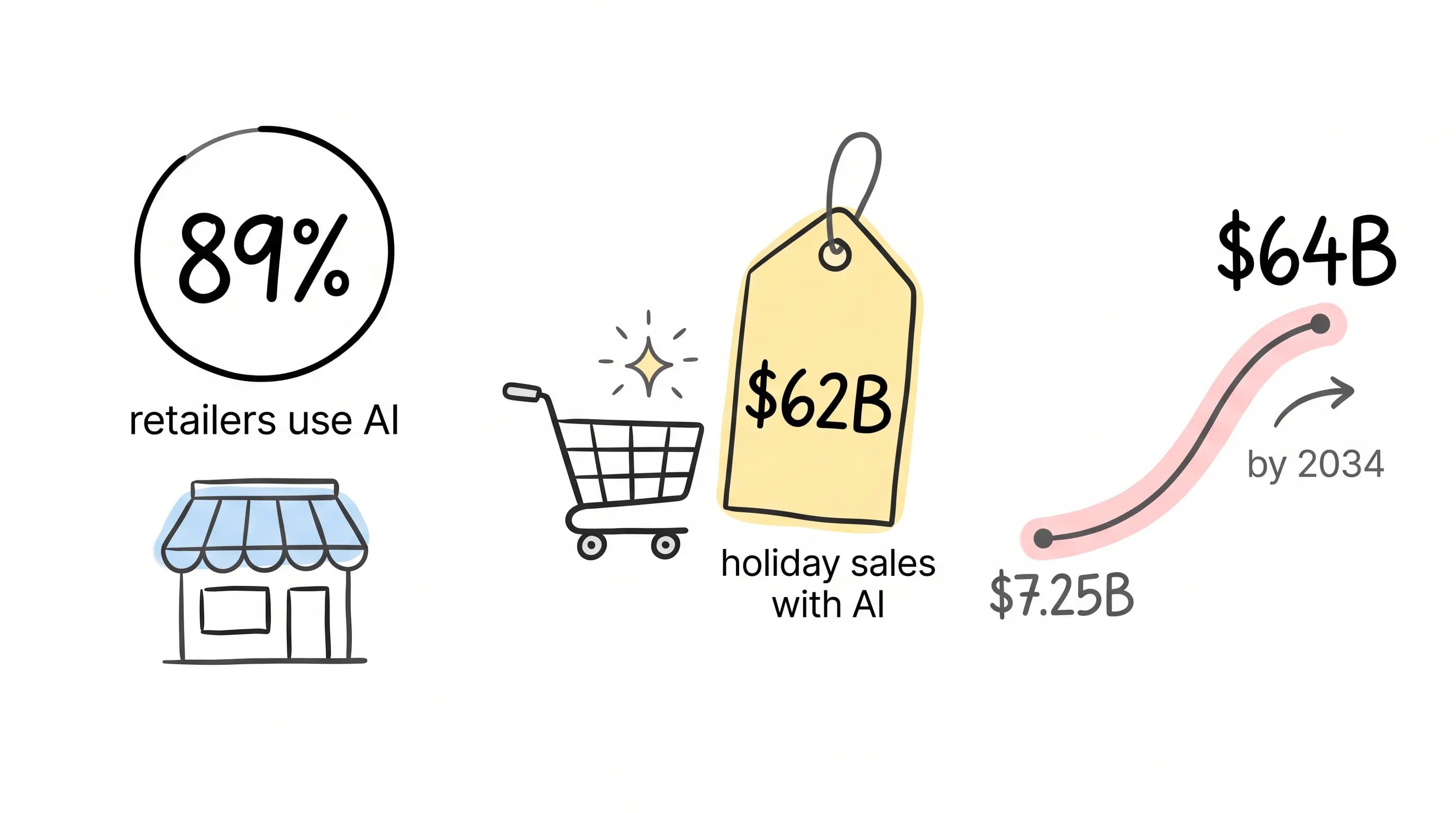
89% of Retailers Are Already Using AI. The Playbook for E-Commerce Has Changed
A learn article on AI in e-commerce: adoption context, use cases from recommendations, search, dynamic pricing, customer service, inventory, and fraud control, plus B2B applications, generative AI content, tool examples, pitfalls, and a six-step adoption path.
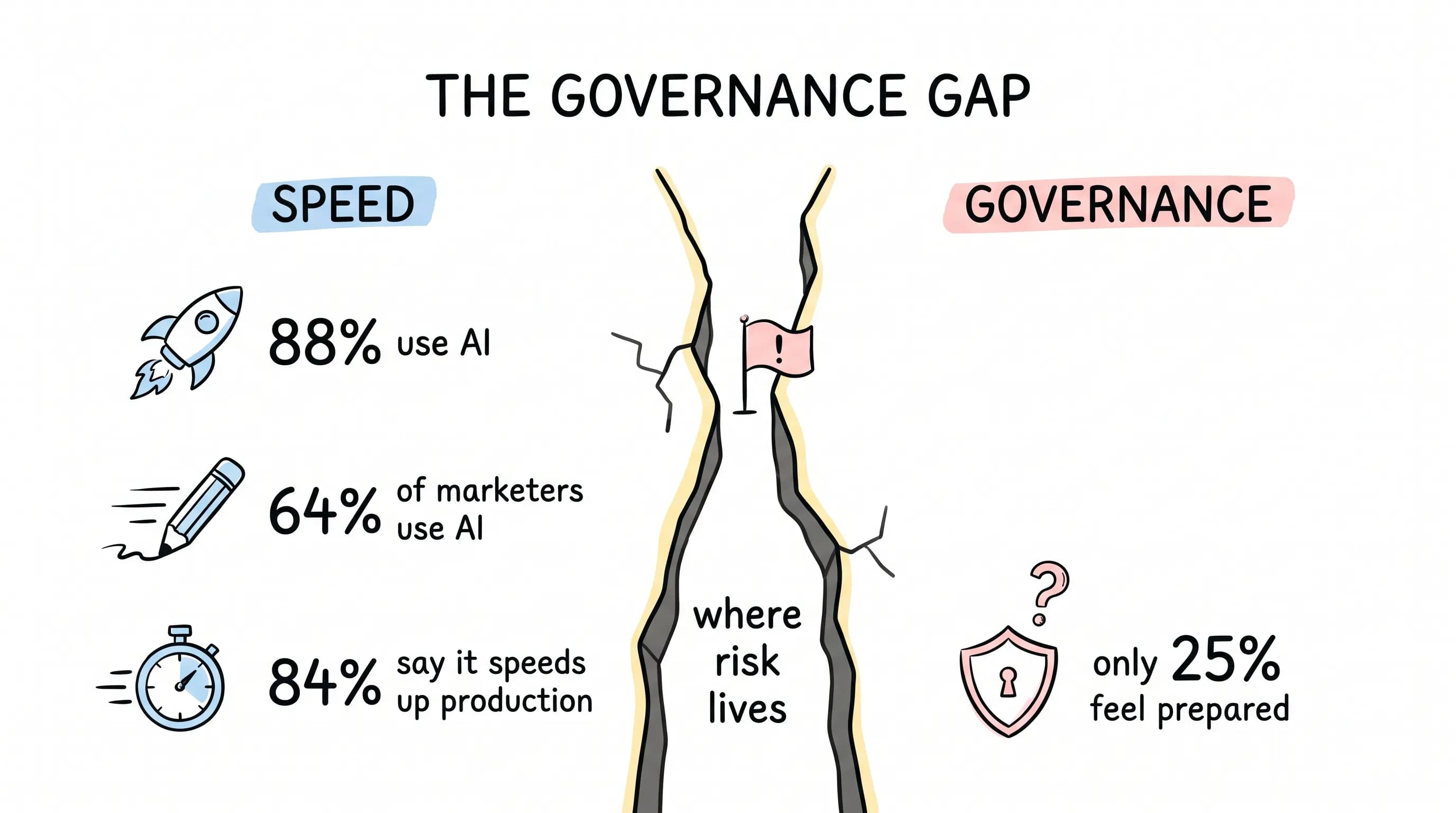
AI Makes Content at Lightning Speed — But Can You Answer "Who Approved This?"
This article looks at the gap between AI content speed and governance readiness in marketing teams, and outlines nine control points — prompt validation, brand guardrails, permissions, approval workflows, human review, versioning, IP checks, audit trails, and asset reuse — for brand-safe AI content.