
Has AI Rewritten the Rules of Search? Google's Answer: The Fundamentals Are Worth More Than Ever
A learn article relaying a Google executive's view that AI search has not overturned search fundamentals: SEO skills transfer to GEO, people-first content and first-hand expertise matter most, and ads should connect real content and data into AI systems to appear as answers in conversations.
A few days ago, I was browsing through the highlights of Rethink ROI 2026, a recent industry conference hosted by Google. The executive who runs its Search & Commerce business shared a judgment that came as a relief:
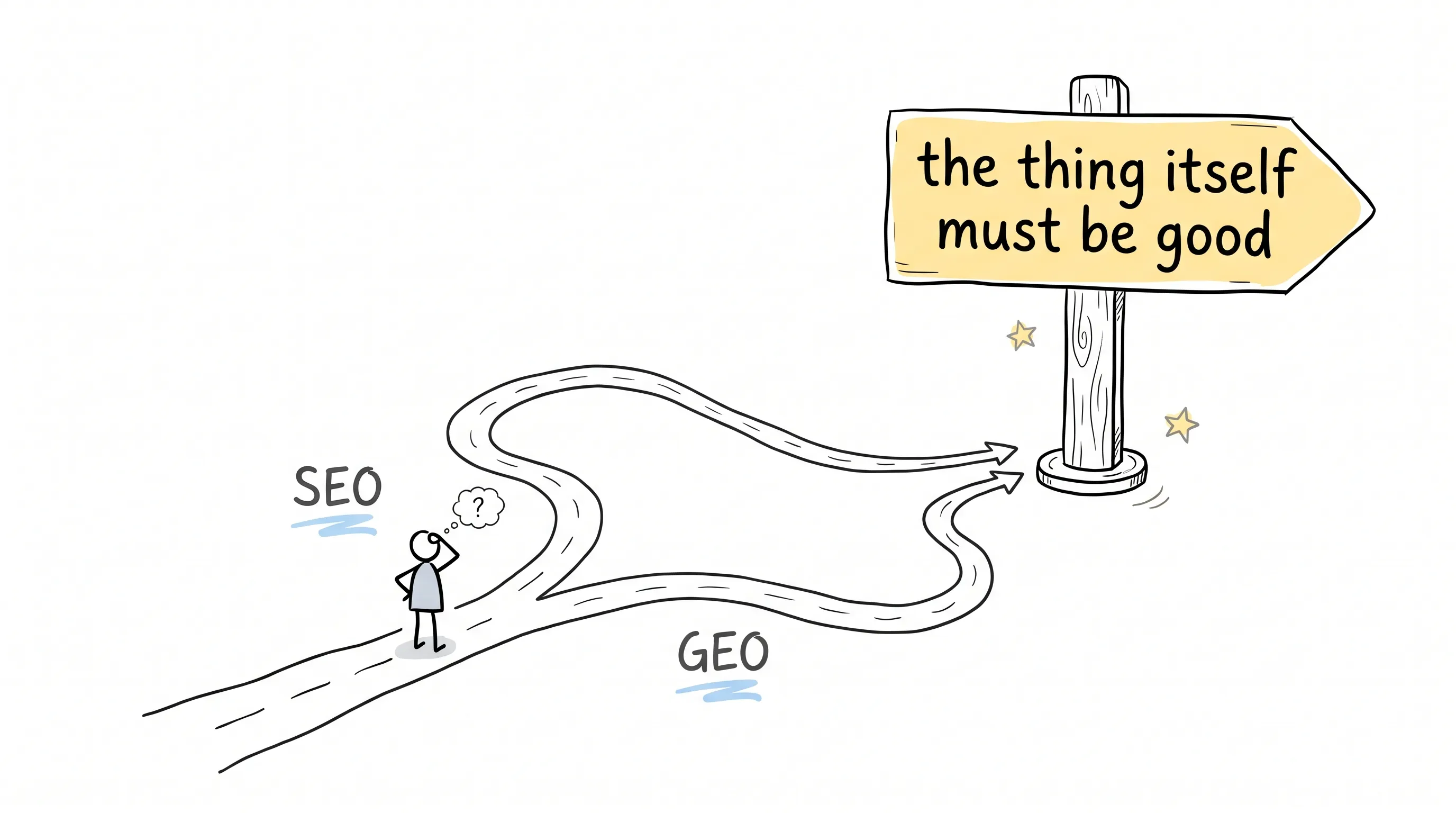
AI has not overturned the underlying rules of search. Whatever you did to win at search before is exactly what you do to win at AI search. The skills you honed in SEO transfer straight over to GEO.
What is GEO?
It stands for Generative Engine Optimization. Put plainly: in the past, you optimized content to rank near the top of a search results page. Now, users ask AI directly, and the AI goes and reads the web for them and sums it up. Whether your content can be found — and favored — by AI has become a discipline of its own. That discipline is called GEO.
Many people panic the moment they hear this: it's over — is everything I've built up in SEO now worthless?
Google's answer is exactly the opposite.
I pulled three takeaways from this conference. Let's go through them one by one.
1. AI Opens a Bigger Door
You might worry: if everyone now takes their questions to AI, who is going to look at my web pages? Could AI become the new gatekeeper, keeping brands locked outside?
The perspective Google offers is exactly the reverse.
The questions people ask in AI Mode are far longer than before, and the conversations go much deeper.
What does that look like?
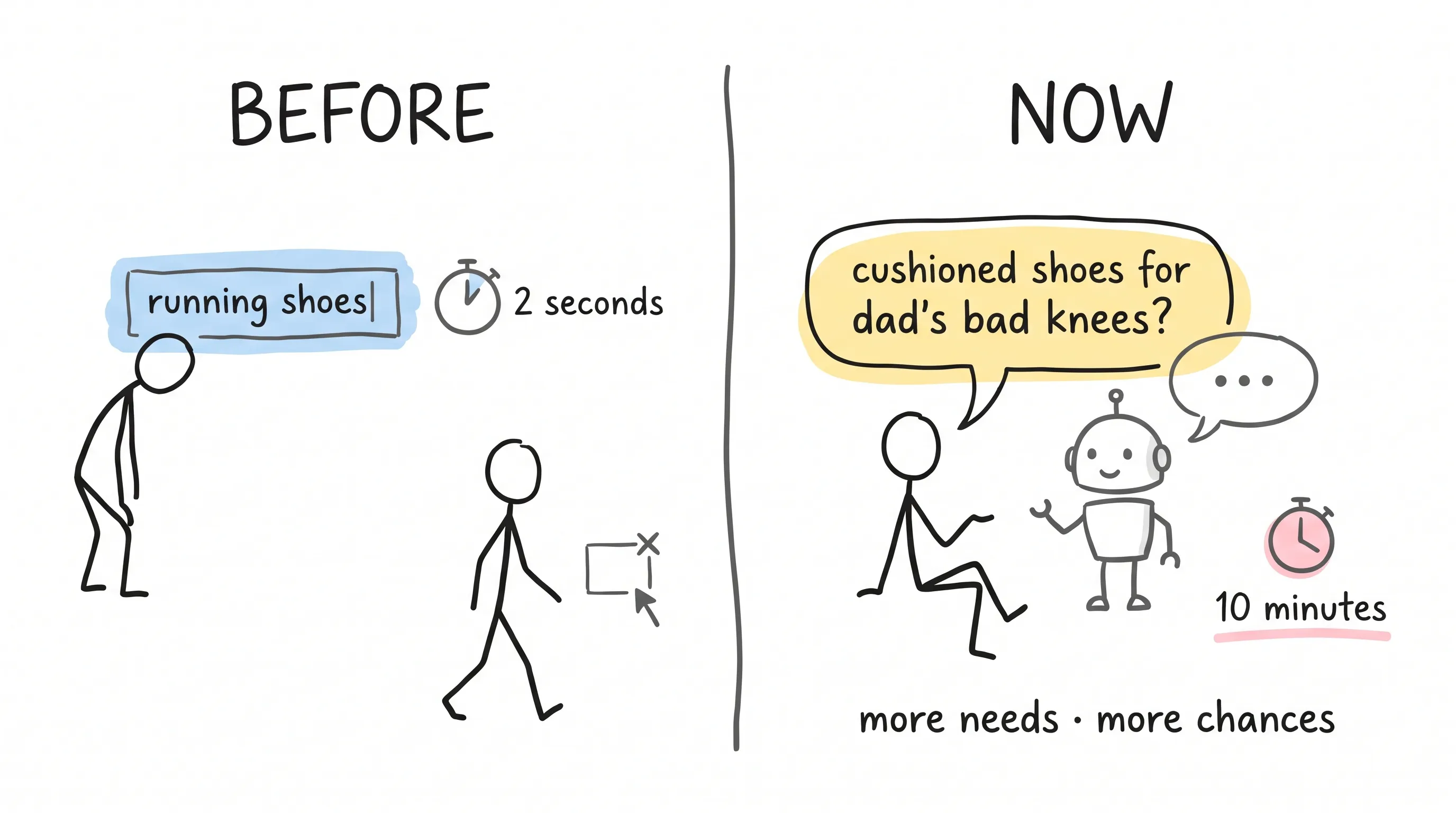
Before, you searched for "running shoes," a page of links popped up, you picked one and clicked through. The end. Now you might ask: This weekend I want to take my parents out for an easy walk in the countryside; my dad's knees aren't great — any shoes with good cushioning, a stable sole, and a look that isn't too "old"? And could you also recommend a gentle hiking trail?
Look at how many needs are packed into a single sentence.
And every one of those needs is a chance for you to be "remembered."
Before, a user lingered two seconds in the search box, clicked one link, and left. Now, they can chat with the AI for ten minutes, following the topic deeper and deeper. More touchpoints mean more ways to squeeze onto their "shortlist."
So don't treat AI as your opponent. It's the one who keeps building the mall ever bigger — with more stalls, the thing to fear is having nothing to sell.
2. Write for People, Not for Robots
This is the one I think most deserves to be pinned in a memo.
Google puts it plainly: the generative AI experiences it builds into search run on the very same ranking and quality systems as before.
In other words, the foundation hasn't moved.
So what works?
The pitfalls you've personally hit, your first-hand experience, your original judgment, and the professional know-how accumulated over the years. These are the things AI cannot fabricate — and precisely the raw material AI needs most.
And what doesn't work — or is even harmful?
Mass-producing templated, generic content, and seeding forums with mentions no real human could have written. As for the old tricks that flatter crawlers, Google said it outright: don't touch them.
I've always believed that when you try to fool the algorithm, there is still a person standing behind it.
At bottom, AI is out to find answers on the user's behalf — and it is even less capable of being fooled than the user is. Feed it the real thing, and it will remember you for the long haul. Feed it garbage, and it won't give your content a single glance.
3. Ads Must Learn to "Answer Questions"
The first two points were about content; this one is about advertising.
What did ads look like before? First set the budget and schedule, then define the audience, launch the creatives in one go, and wait. You set the tempo.
But now, the conversation between users and AI is real time, and needs surface on the spot. A static, manually run campaign can't keep pace with the user.
Google's answer: plug your genuine content and accurate data into its AI ad systems, so that your ads can show up right in the conversation — as the "answer."
Ads used to interrupt the show. Now they have to learn to live inside the conversation, as a useful answer.
Finally, Back to the Opening Question
Has AI rewritten the rules of search?
It has. But what changed is the road, not the signpost. The means of "getting found" keep shifting, while the foundational rule — "the thing itself must be good" — hasn't moved an inch.
My advice is one sentence: hammer your content and data fundamentals solid, and leave the amplification to AI.
You can't control which way the wind blows. What you can control is growing into a tree that can stand up to the wind.
And my wish for you: in an age when even AI can understand human language, may everything you write still sound unmistakably human.
Continue reading
Related articles

It's 2026: Stop "Buying" AI Tools for Your Marketing Team — Start "Hiring" AI Agents
This learn article explains how AI agents differ from standalone AI tools in marketing, outlines three agent categories — build-your-own platforms, CRM-native agents, and vertical tools — and covers use cases across SEO, social media, advertising, and reporting, plus criteria for choosing one.

What Is GEO? How Your Brand Gets "Mentioned" in the Age of AI Search
An explainer on GEO (Generative Engine Optimization) for e-commerce and DTC brands: how it differs from SEO and AEO, why AI answers shape brand visibility, and eight practices covering question-focused content, consistent brand messaging, structured pages, external evidence, comparisons, and AI mention tracking.

AI Is Already Making Decisions for Your Customers. Are You on the List?
A learn article explains GEO (Generative Engine Optimization): why AI-generated answers now shape which brands customers see, and how SEO fundamentals, entity clarity, citable evidence, and monthly measurement affect visibility in AI answers.