
Google's AI Has Changed the Rules of Content Distribution — How Do Cross-Border Sellers Adapt?
A learn article on how Google's AI filtering has changed content distribution for cross-border sellers, covering audience-specific writing, clear structure, long-tail keywords, traffic screening with fingerprint detection, and building authentic multi-channel content that AI systems recognize.
Let me start with something you've probably felt yourself.
Have you noticed that the old playbook — flood the channels with content, the more the better — has suddenly stopped working?
You keep writing articles, running ads, and stuffing in keywords. But the traffic just doesn't behave the way it used to.
Don't be so quick to doubt yourself. The rules really have changed.
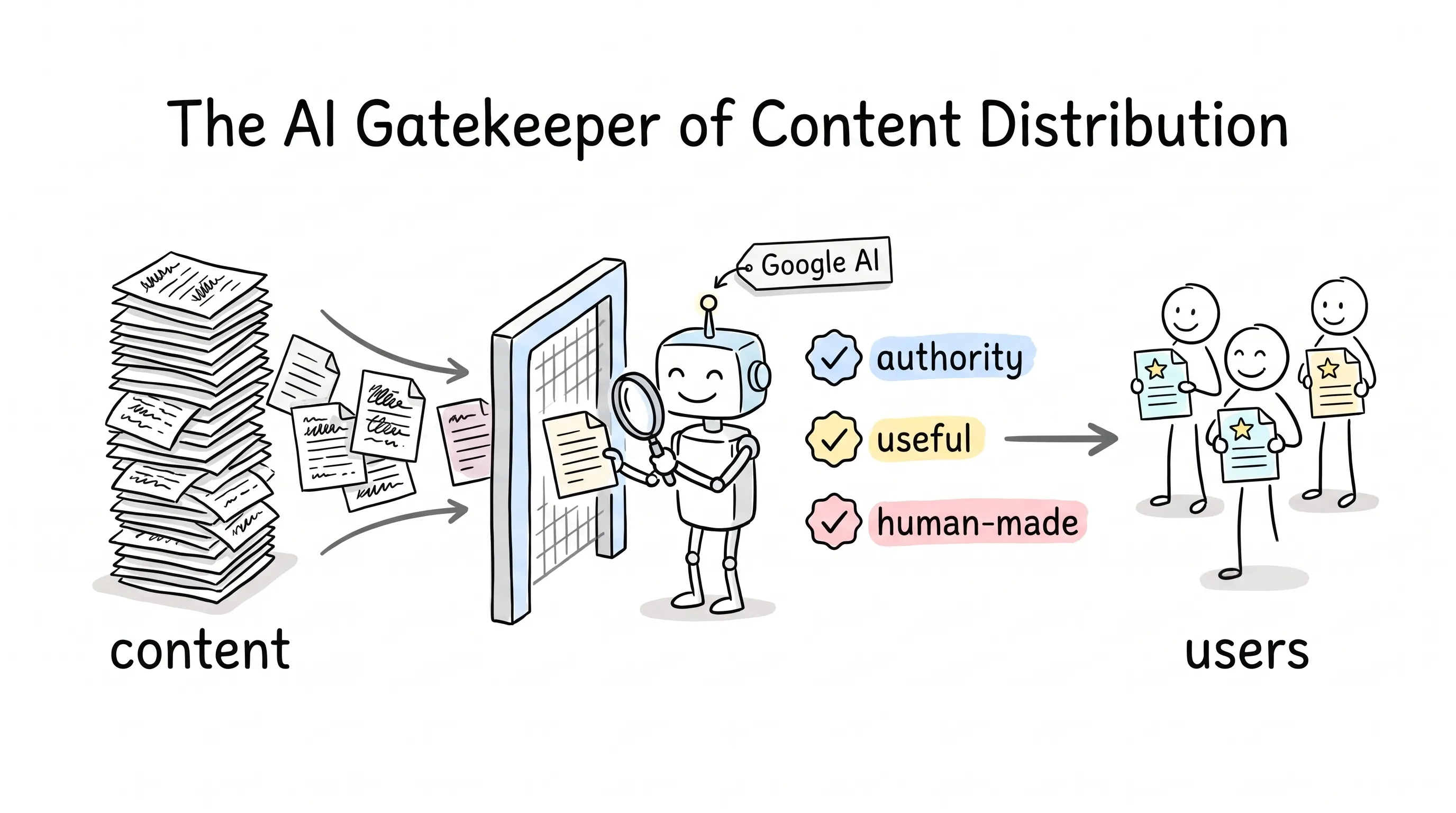
Google's AI didn't just change the search results page. Search rankings, ad recommendations, YouTube, Google Discover — behind them all runs the same machinery: algorithms learning user behavior, interests, and engagement habits, then filtering on users' behalf.
What does filtering on users' behalf actually mean?
It means the AI reads your content first, before your users ever see it. The AI's say in whether a piece of content deserves to be recommended now weighs far more than it used to.
So pages built on keyword stuffing are increasingly easy for it to spot: low value, less distribution. And the batch of translated content you've been shipping overseas — domestic articles republished abroad — is getting the same treatment.
When AI picks content, it looks for three things: authority, usefulness, and writing that feels like it was made for a real person.
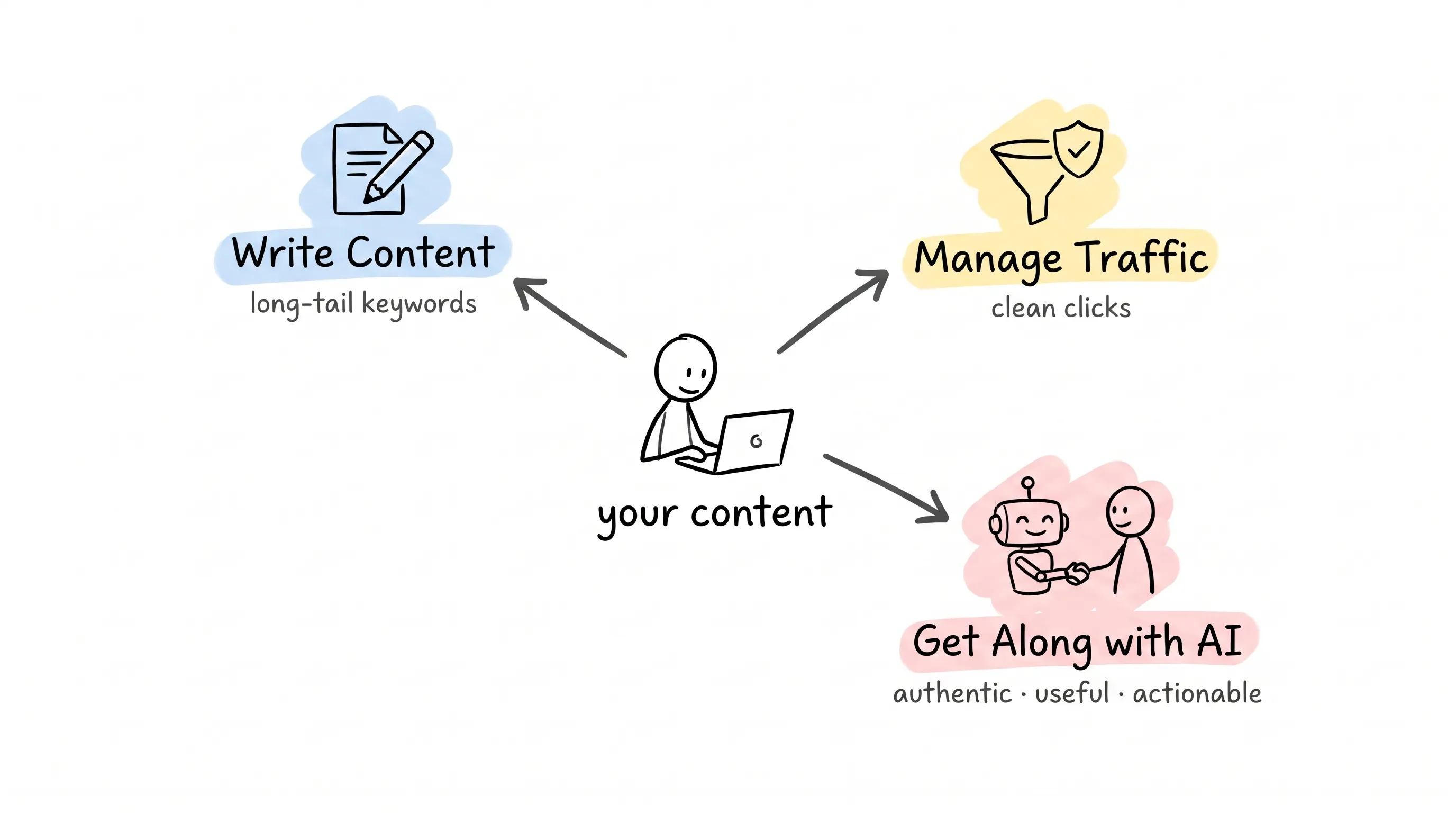
These three are exactly where many cross-border teams fall short. So what do you do? I've broken down the actionable areas into three parts: how to write content, how to manage traffic, and how to get along with AI.
How to Write Content
First, define your audience precisely.
Whatever market you serve, write for the people in that market. Language habits, visual style, which social platforms they hang out on — every country is different. What American users want and what German users want are not the same.
Second, get your structure in order.
AI recognizes well-organized, information-dense content far more easily. Break long articles into sections, put real substance in every paragraph, and use headings and lists to help readers grab the key points fast. The work isn't hard — most people just can't be bothered to do it.
Third, put long-tail keywords to work.
Head terms like "cross-border marketing" are a crowded free-for-all. The traffic that's actually easy to capture hides in the long tail: "how to run overseas ads for cross-border e-commerce," "how to optimize content for Google AI." The more specific the phrase, the fewer people search it — but the more real their intent.
How to Manage Traffic
Writing good content is only half the job. The other half is keeping the traffic you pay for clean.
What does keeping traffic clean mean?
When you run ads, not every click comes from a human. Competitors click, bots click, fraudsters click. Those clicks cost them nothing, but they drain your budget.
This brings us to a technical piece of the puzzle: browser fingerprint detection. It analyzes a visitor's device type, browser environment, and behavior patterns to help you tell real users from troublemakers.
There are plenty of tools for this job, and ToDetect is one of them. It mainly does two things: fingerprint analysis plus abnormal traffic detection — repeated clicks, malicious traffic — filtering out the dirty water for you.
While we're at it, here's the full toolkit — take what you need: for data and conversion tracking, Google Analytics; for long-tail keywords and competitor monitoring, SEMrush and Ahrefs; for email, Mailchimp; for design, Canva; for ad campaigns and remarketing, Google Ads.
Tools are dead; the ledger is alive: of every dollar of ad spend, how much actually landed on real humans? If you can't work out that number, your ROI is a muddled mess.
How to Get Along with AI
The first two parts are defense. There's a more fundamental one: making AI recognize your content.
The core comes down to three words: authentic, useful, actionable.
Start with authentic. Real customer stories, genuine feedback, honest accounts of what went wrong — these carry far more weight than polished marketing copy. AI is learning to judge originality and credibility, and this is the kind of content it trusts.
Then engagement. When people ask questions, leave comments, and download the resources you've prepared, every bit of dwell time and participation is a signal. AI reads these as "this content has value," and exposure follows.
Finally, channels. Don't fixate on Google Search alone. Social media, YouTube, email — spread across all of them, and your content becomes an ecosystem instead of a few lonely pages.
Running the Numbers
Here's an example. A home-goods seller focused on the European market did roughly this:
They used AI content tools to analyze what local users wanted, then wrote blog posts and product pages to match. Before launching ads, they used fingerprint detection to identify high-potential audiences and block low-quality clicks before they hit the budget. Then abnormal traffic detection helped shift budget toward genuine traffic. And they swapped head terms for long-tail ones — instead of shouting head terms, they went with specific phrases like "EU eco-friendly home recommendations."
The result: website traffic more than doubled, conversion rate rose by 40 percent, and marketing costs barely moved.
The numbers come from whoever told the story — take the magnitude as a signal, not a formula. But the direction it points is right: understand AI's taste, put technical tools to work, and even a small team can land precise punches.
Final Thoughts
Back to the opening line: the rules have changed.
Changed how? It used to be about who could flood more channels. Now it's about who writes more valuable content, who does the math more clearly, and who pivots faster.
Write content that's a bit more valuable, use technology a bit more cleverly, adjust strategy a bit more flexibly. Get all three together, and Google AI becomes an accelerator for you.
AI won't wait for you. But it doesn't shortchange those who understand it first.
Here's hoping that in the next reshuffle, you're standing on the side that gets accelerated.
Continue reading
Related articles

It's 2026: Stop "Buying" AI Tools for Your Marketing Team — Start "Hiring" AI Agents
This learn article explains how AI agents differ from standalone AI tools in marketing, outlines three agent categories — build-your-own platforms, CRM-native agents, and vertical tools — and covers use cases across SEO, social media, advertising, and reporting, plus criteria for choosing one.

What Is GEO? How Your Brand Gets "Mentioned" in the Age of AI Search
An explainer on GEO (Generative Engine Optimization) for e-commerce and DTC brands: how it differs from SEO and AEO, why AI answers shape brand visibility, and eight practices covering question-focused content, consistent brand messaging, structured pages, external evidence, comparisons, and AI mention tracking.

AI Is Already Making Decisions for Your Customers. Are You on the List?
A learn article explains GEO (Generative Engine Optimization): why AI-generated answers now shape which brands customers see, and how SEO fundamentals, entity clarity, citable evidence, and monthly measurement affect visibility in AI answers.