
Global scale and individual relevance: you used to have to pick one. Now the multiple-choice question has been answered
This article explains how AI resolves the tradeoff between global scale and individual relevance in marketing content, drawing on a remark attributed to Jung von Matt's chief innovation officer at a 2025 London forum, and argues that human judgment about local audiences remains the real bottleneck.
A while back, I came across the session notes from an industry forum. The forum was called FutureWeek Forum, held at BAFTA in London in April 2025. One claim in there stopped me in my tracks — I stared at it for a long time.
It came from a German creative agency, Jung von Matt, headquartered in Hamburg. The speaker was their Chief Innovation Officer, Max Lederer.
What did he say?
The biggest opportunity AI hands marketers is the ability to produce content that is highly creative and highly personalized at the same time, push it to a global audience, and still be relevant to each individual consumer.
That, he said, had never happened at this scale before.
Wow. On the surface, that sentence looks unremarkable. In fact, it unties a knot that has snared global brands for decades.
What knot?
First, think about the options a global brand used to have for producing content.
Path one: globalization. Headquarters produces one set of assets, translates it into dozens of languages, and pushes it worldwide. Easy, cheap, consistent branding. But when a young person in Brazil sees an ad with unmistakably Western aesthetics and stilted, translated-sounding copy, do they feel it's speaking to them?
They don't. They think: this is some foreign brand.
Path two: localization. Each market produces its own content — fluent in local memes, fronted by local celebrities, timed to local holidays. Relevant? Absolutely. Now run the numbers: say you need to cover 30 markets, each producing 10 decent campaigns a year. That's 300 sets of content. Budget times 30, team size times 30, delivery timelines times 30 too.
Most brands run out of steam by market number five.
So the old reality was: scale or relevance. Pick one.
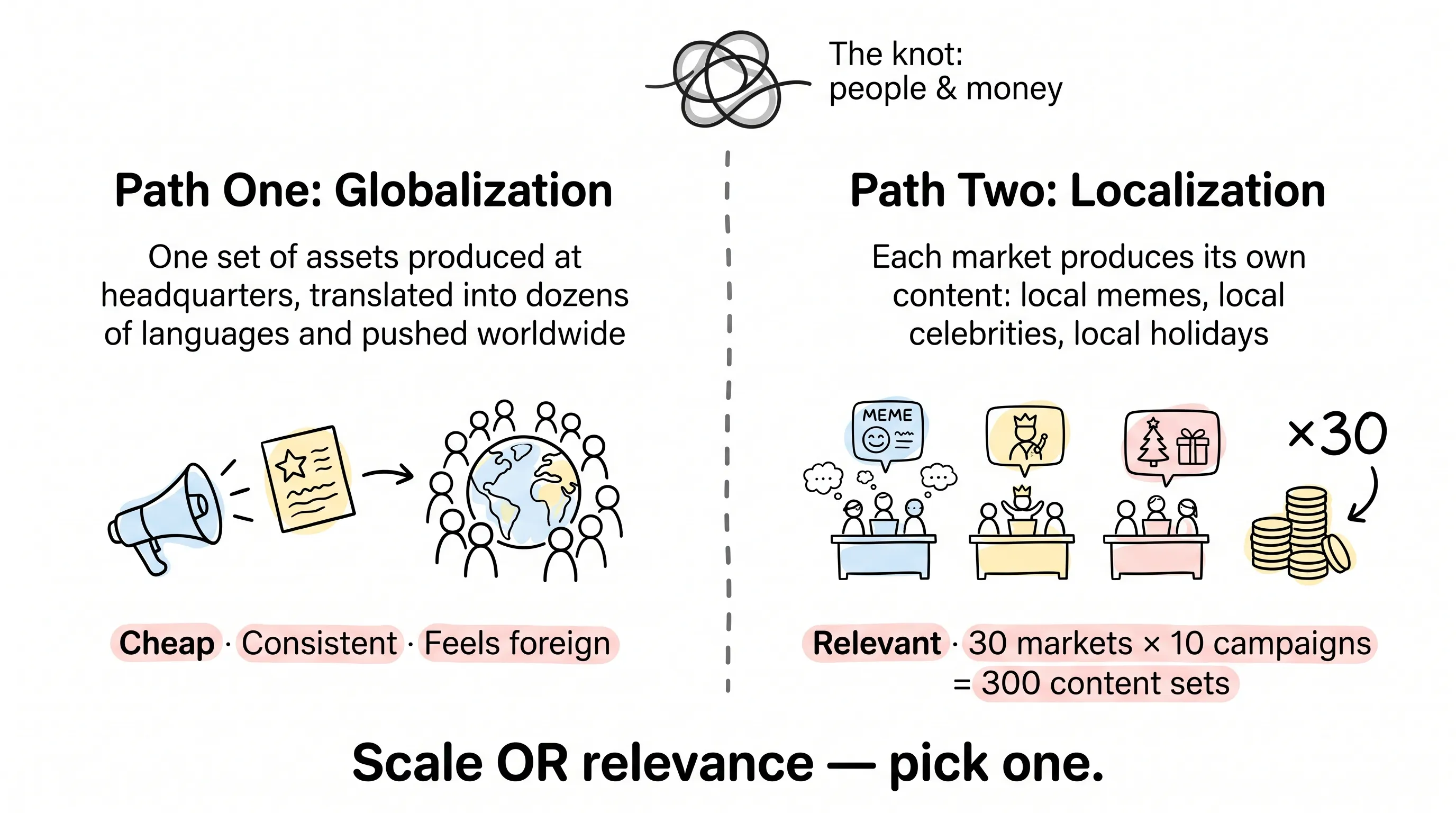
Why? Because behind both sits the same ledger: people and money. Content is produced by humans, and humans have a ceiling. Relevance demands headcount; headcount caps scale.
That's the knot.
And this is exactly where AI strikes.
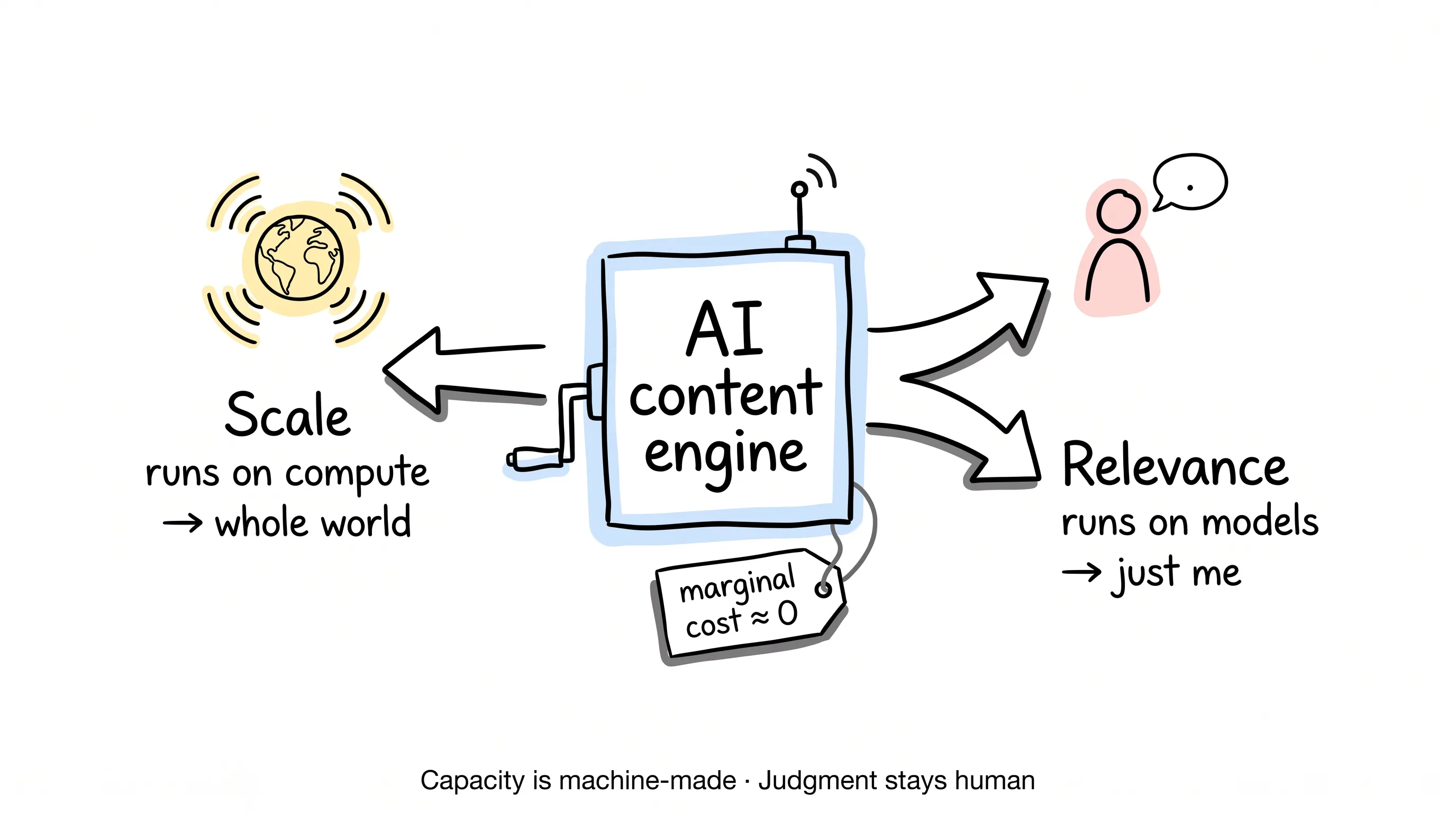
For the first time, the marginal cost of content production has been driven to nearly zero. Feed one creative framework into the machine, and it can fill in versions for dozens of markets: swap the language, swap the cultural references, swap the visual style — even swap the memes. Producing this used to take dozens of local teams on the payroll — and even then, just barely.
So what does that mean?
It means "speaking to the whole world" and "speaking to just me" can be two functions of the same system. Scale runs on compute; relevance runs on models. For the first time, brands don't have to choose.
Of course, don't celebrate just yet.
The tools are a level playing field; how you use them is not. Just because AI can mass-produce personalized content doesn't mean everything it mass-produces is good. Personalization with the wrong parameters is more embarrassing than no personalization at all — think of those mass emails with the recipient's name filled in wrong, only amplified ten-thousand-fold.
The real bar has shifted from "can you make it?" to "do you understand the local people?" Machines supply the capacity; judgment remains human.
So here's how I'd read Lederer's sentence more precisely: AI hasn't built your global market for you. AI has merely moved the dozens of local teams you could never afford onto a server.
Moved, yes. Whether you make good use of them — that's on you.
AI has turned in its answer on the multiple-choice question of scale versus relevance. The fill-in-the-blank section is the brand's to complete.
Continue reading
Related articles
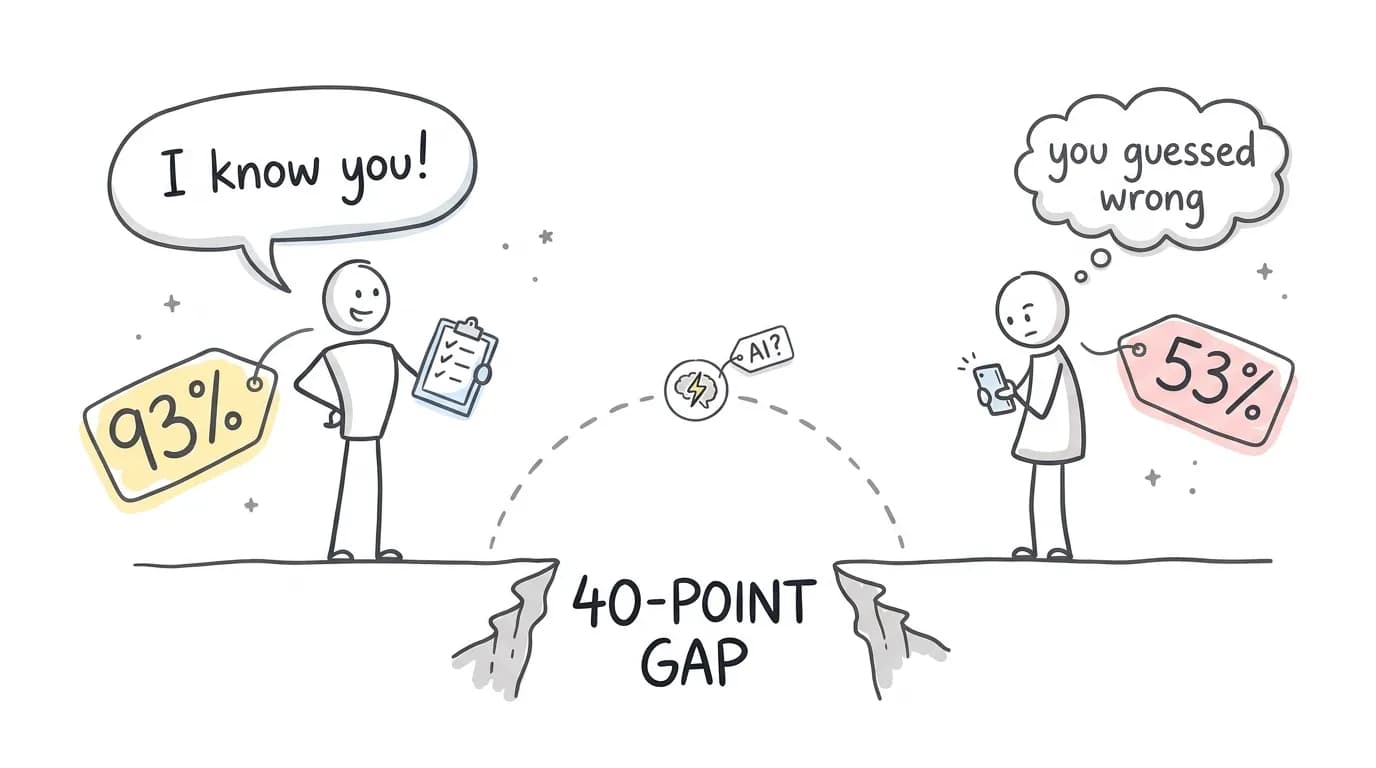
What Is AI Marketing Automation? It Starts With a 40-Point Gap
A learn article explaining what AI marketing automation is: how learning-based systems differ from rule-based automation, how AI decisioning optimizes message, channel, and timing choices, what data it depends on, and where it applies across the customer lifecycle.

It's 2026: Stop "Buying" AI Tools for Your Marketing Team — Start "Hiring" AI Agents
This learn article explains how AI agents differ from standalone AI tools in marketing, outlines three agent categories — build-your-own platforms, CRM-native agents, and vertical tools — and covers use cases across SEO, social media, advertising, and reporting, plus criteria for choosing one.

What Is an AI Marketing Agent? From "Using AI" to "Delegating to AI"
A learn article explaining what an AI marketing agent is, how it differs from rule-based automation, and which repetitive tasks such as lead qualification, reporting, and campaign monitoring can be delegated while humans keep key decisions.