
Generative AI Marketing: Three Stories, Three Ledgers
A learn article explaining what generative AI is and how marketing teams can use it, with case examples from Coca-Cola, HubSpot, and Sephora, five common use cases, notes on time, budget, and team morale, and risks like inaccurate output, bias, copyright, and privacy.
A while back, I had dinner with an old friend who works in marketing.
Before he even sat down, his bag slid off his shoulder onto the floor. He looked exhausted. His team? Five people. And what the boss wanted: WeChat official-account posts (articles published on WeChat, China's dominant messaging app), ad creatives, landing pages, client emails, short-video scripts — every single one, non-negotiable.
He said: It's not that I have no ideas. I have no time to think.
I asked, then why aren't you using generative AI?
He was taken aback: Doesn't that stuff just make the work sloppier?
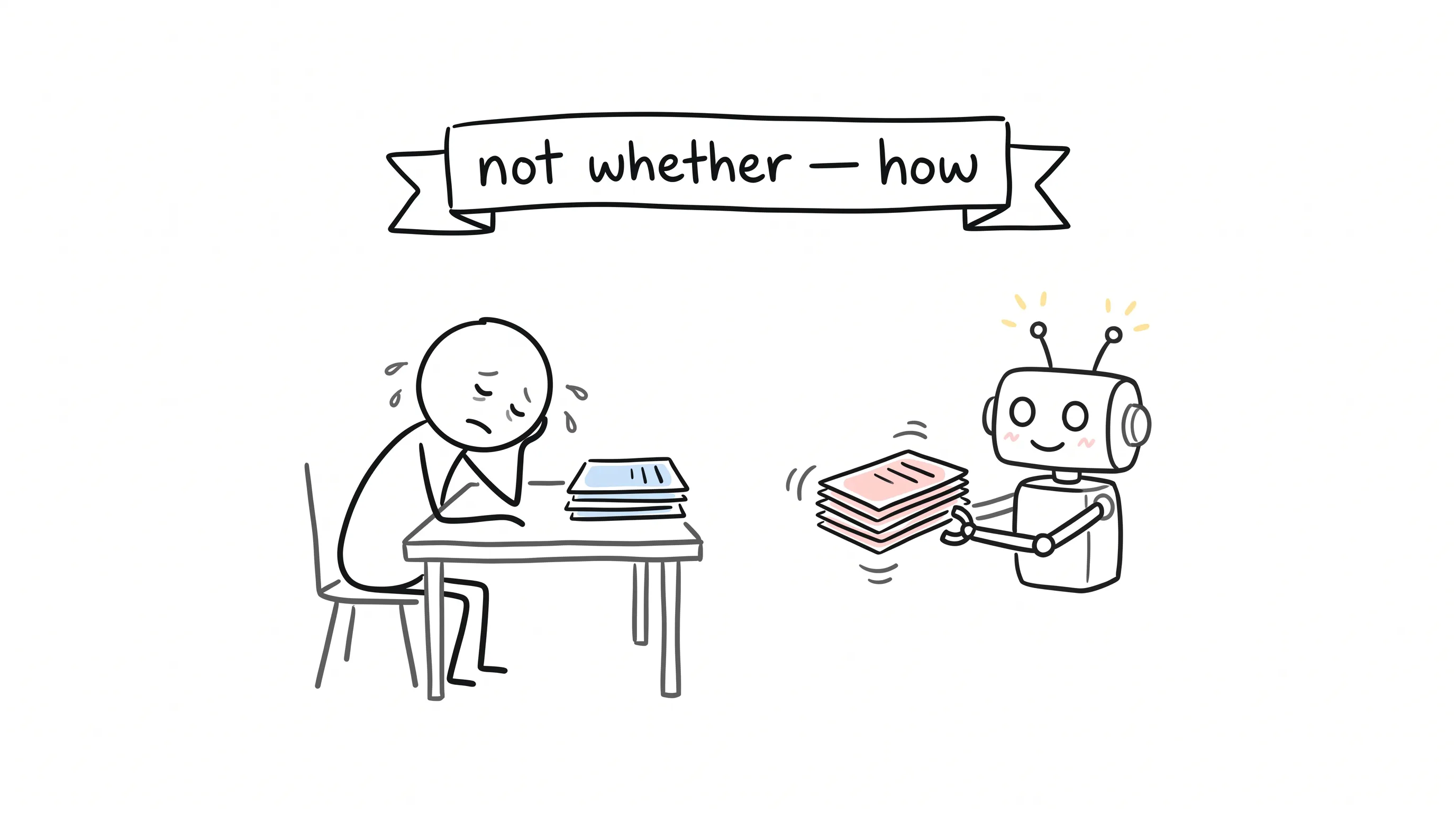
We talked for over two hours. Today, I've organized that conversation for you. Three stories, three ledgers, all making one thing clear: In marketing, generative AI is no longer a question of whether to use it — it's how.
First, What Exactly Is Generative AI?
AI used to recognize. Show it a photo, and it could tell you whether that was a cat or a dog.
Today's AI creates. Give it one sentence, and it hands you back an email, a poster, a video — even a voiceover that sounds remarkably professional.
Recognition is judgment. Creation is generation. One word apart, worlds apart.
Put it in a marketing context — what is it? Here's my analogy: It's like an intern who never gets tired, never complains, and understands your brand better the more you use it.
Note: intern. Not creative director.
Behind it sit two kinds of models. One handles text: large language models (LLMs), like GPT-4 — writing emails, headlines, and first drafts is their job. The other handles images and video: diffusion models, like Midjourney and Runway — feed them a few words, and they hand you an image fit for a billboard.
What do they grow on? Data. Your purchase records, search behavior, product reviews, and social media chatter are all its food. The more it eats, the better it knows which words can move which people.
Let Me Tell You Three Stories
Concepts alone tend to float away.
Story one: Coca-Cola.
A couple of years ago, Coca-Cola ran a campaign called Create Real Magic, built on DALL·E and GPT-4. Users created their own artwork featuring Coca-Cola elements, and the winning pieces went straight up on the big screens of Times Square and Piccadilly Circus.
Think about it: consumers around the world producing ad assets for a brand — and having a blast doing it. The creativity, the cost math — both beautiful.
Story two: HubSpot.
HubSpot built AI directly into its own CRM. When users write emails, calls to action, or social copy inside the system, AI helps draft them. Who benefits most? Small teams. Setting up a multi-channel campaign used to take days; now it's dramatically faster.
Story three: Sephora.
Many people assume beauty brands only started playing with AI in the last few years. In fact, back in 2016, Sephora built a chatbot on a messaging app called Kik to help users pick products and offer beauty advice. At the time, everyone dismissed it as a gimmick. Looking back, that was Sephora's first step toward weaving AI into the customer journey.
Impressive.
Notice: these companies never treated AI as a toy. They welded AI into their marketing assembly lines.
Five Jobs AI Has Already Taken Over
So what can it actually do? I've grouped the visible use cases into five categories.
First: writing. Mass-producing first drafts. Emails, ads, landing pages, blog posts — plus the job of trimming them down for social media. Tools like Jasper and ChatGPT build the skeleton; you do the polishing. The first draft may not dazzle, but it solves the most painful problem of all: the blank page.
Second: visuals. Not every team can afford a designer, and deadlines wait for no one. With Midjourney or Leonardo.ai, a few words in, and out come images, banners, storyboards. Sometimes you use them as-is; sometimes they're just a quick way to test an idea.
Third: reading people. Personalization left the "call the customer by name in an email" stage long ago. What users clicked, what they bought, which page held them for a few seconds — AI takes it all in, automatically sorts people into segments, and says to each exactly what it should hear. No more manually building a hundred groups.
Fourth: grunt work. Scheduling, building email flows, pulling reports. Nobody loves these chores, but AI doesn't mind. It won't make your creative better, but it will give you back the hours you spent clicking through dashboards all afternoon.
Fifth: trial and error. Five headlines, five landing-page variants — writing them by hand would break you; AI produces them in seconds. AdCreative.ai will even use historical data to tell you which direction is likely to perform better. For SEO, try Surfer SEO or Scalenut: keywords, structure, and competitor analysis delivered as you write. For voiceovers there's ElevenLabs and Murf — paste in a script and get a finished product in minutes, with accents and tones you can switch.
One line to sum up all five: AI has driven down the cost of "making" and freed up the time for "thinking."
The Three Ledgers
What exactly gets saved? Let me walk you through three ledgers.
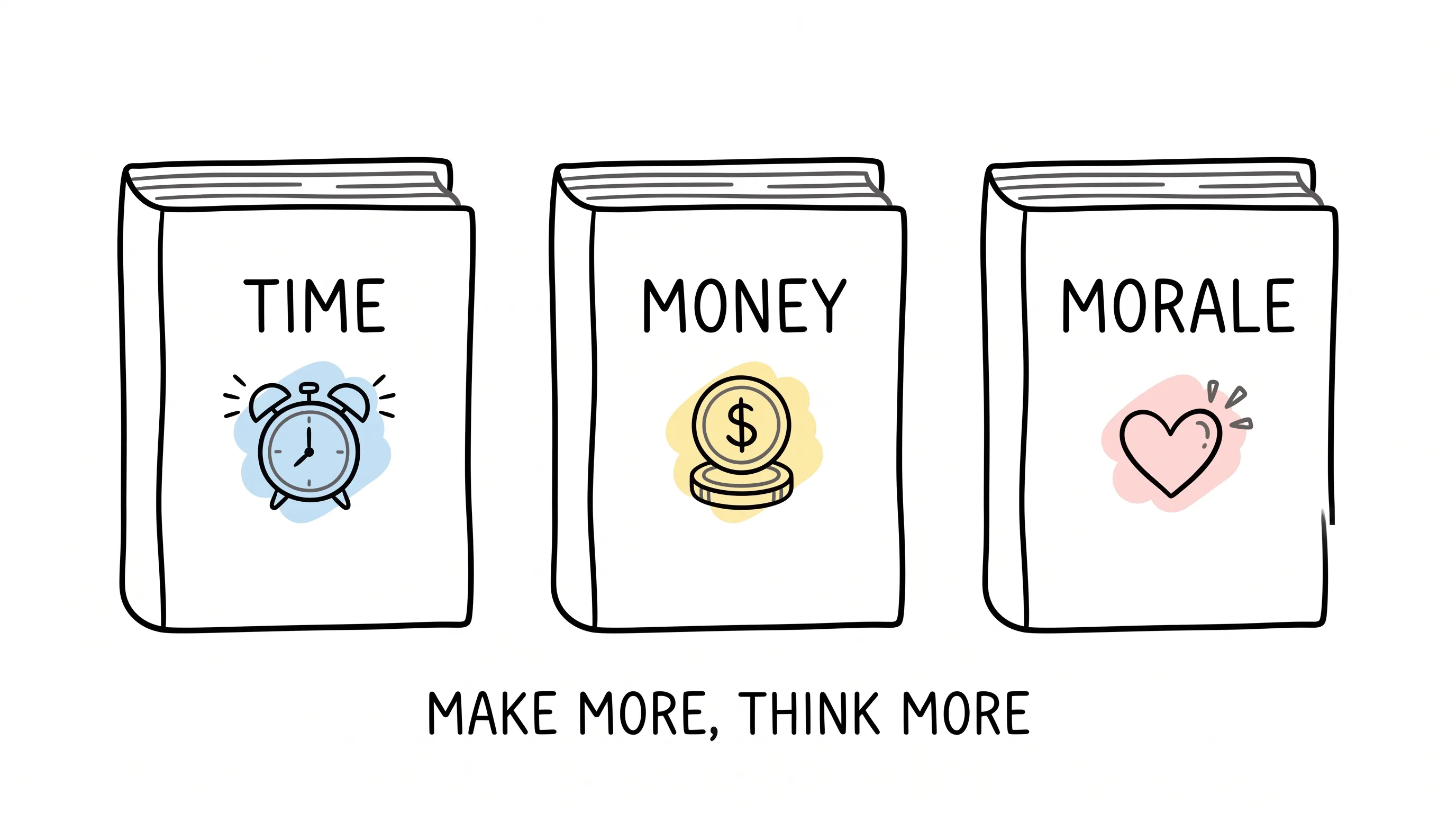
Ledger one: time. A decent article used to swallow most of a day, from grinding out the draft to endless revisions. Now AI gives you seventy or eighty percent, and you fix the last ten or twenty. Output goes up; you don't burn out.
Ledger two: money. Ad spending used to run on gut feeling, with half the budget paying tuition. AI helps you target the right people and pick the right timing. The budget stays the same, but the shots land truer, waste shrinks, and ROI moves with it.
Ledger three: morale. The easiest to overlook, and the most valuable. Your most expensive people used to spend their days reformatting, tagging, and exporting reports. Now those chores are gone, and they finally have time to think about next month.
Makes sense, right? But everything has a flip side.
Five Pitfalls, Each Deeper Than the Last
First: confident nonsense. Ask it for a statistic, and it may invent one on the spot — written remarkably smoothly. That fluency is exactly what makes it dangerous. Clumsy errors you can spot at a glance; fluent errors, you believe. So verify every claim before publishing. No exceptions.
Second: bias. AI learns from old data, and it swallows the old prejudices inside that data whole. With sensitive topics and diverse groups, you need to be extra careful.
Third: copyright. The rights to AI-generated images, music, and video may not be clean. Sort out ownership before launching a campaign — don't wait until the cease-and-desist letter arrives to remember this.
Fourth: privacy. Before you feed customer data to AI, stop. Is this platform compliant (GDPR and the like)? How is the data stored and used? If you can't answer clearly, don't feed it.
Fifth: unverifiable sourcing. The draft AI hands you cites a statistic; ask where it came from, and it can't tell you. The more evidence-driven your industry, the more lethal this becomes.
I've pinned these five on my wall: The easier the tool, the harder you must scrutinize.
Where to Start?
Don't tear everything down and start over, and don't get greedy.
Pick the smallest, most annoying task on your plate. Say, writing email subject lines. Let AI handle it for a week while you watch the numbers: did open rates move? Did conversions move? If it works, add another task; if not, switch tools — or pull the plug entirely.
AI is not here to make judgments for you. Judgment is always your job.
Back to That Dinner
Last month, that friend invited me to dinner again.
Still a team of five, and the workload hasn't shrunk — but he can leave the office on time now. He said one thing that stuck with me: I used to be on the road to somewhere, working, every single day. Now I can finally think about where I want to go.
That's what I wanted to say.
What generative AI gives marketers, in the end, is one thing: time. And how you use the time it saves determines whether the tool is using you — or you are using the tool.
May every minute you save go toward dreaming up something good.
Continue reading
Related articles

What Is AI Marketing Automation? It Starts With a 40-Point Gap
A learn article explaining what AI marketing automation is: how learning-based systems differ from rule-based automation, how AI decisioning optimizes message, channel, and timing choices, what data it depends on, and where it applies across the customer lifecycle.

It's 2026: Stop "Buying" AI Tools for Your Marketing Team — Start "Hiring" AI Agents
This learn article explains how AI agents differ from standalone AI tools in marketing, outlines three agent categories — build-your-own platforms, CRM-native agents, and vertical tools — and covers use cases across SEO, social media, advertising, and reporting, plus criteria for choosing one.

What Is an AI Marketing Agent? From "Using AI" to "Delegating to AI"
A learn article explaining what an AI marketing agent is, how it differs from rule-based automation, and which repetitive tasks such as lead qualification, reporting, and campaign monitoring can be delegated while humans keep key decisions.