
Gen AI Will Reshape Marketing — But First, Clean Up Your Kitchen
This article explains how marketers should approach generative AI: it breaks marketing AI into five capability types, argues data governance must come first, and covers risks across data, models, and outputs, plus use cases in intent tracking and localization.
A few nights ago, deep into the night, a friend of mine who runs a marketing department sent me a WeChat message.
"I'm done for. My boss asked me to use AI to write our quarterly review. I wrote it and handed it in, and he circled two numbers in it. Both were made up."
I asked: how did you feed it the brief?
He said: I just threw the requirements straight in.
I said: then who's to blame?
This little episode taught me one thing: the problem isn't that Gen AI is hard to use — it's that you haven't earned the right to use it well.
Today, let's talk about how marketers should actually deal with Gen AI.
First, Figure Out Which "AI" You're Actually Talking About
Before we discuss Gen AI, we need to get the terms straight. These days everyone says "AI" this and "AI" that, but they are not really talking about the same thing.
The AI used in marketing, broken open, is five kinds of capability.
What is automation AI? It's machines doing the repetitive work for you. Scheduled reports, batch-editing spreadsheets. Mechanical, but it saves headcount.
What is perception AI? It helps you read things out of data you already have. You have behavior records from ten thousand users; it's the one that tells you what's hiding inside them.
What is predictive AI? It looks at trends, finds patterns, and computes a "here's roughly what happens next."
What is prescriptive AI? It goes a step further: it doesn't just tell you "what will happen," it suggests "what you should do next."
And what is generative AI? You throw it a prompt, and it grows something new. Writing copy, making images, writing code — that's all its work.
Impressive!
Generative AI is the youngest of the five, but it has the loudest voice. Why? Because in the early 2020s, the Transformer architecture delivered a breakthrough: machines, for the first time, truly learned to generalize — absorbing patterns from oceans of data, then growing new content that carried the same flavor. ChatGPT and Midjourney, the names you hear every day, both grew out of this wave.
What did marketers first use it for? Writing copy. In one 2025 survey, 48% of marketers were already using AI to generate content. Sound familiar? You're in good company.
But honestly, using Gen AI only to write copy is like hiring a Michelin-starred chef and having him cook instant noodles every day.
Its real value lies somewhere else.
The Math: Why Everyone Is Piling In
IDC has forecast that Gen AI investment in marketing will rise from $16 billion in 2025 to $143 billion in 2027.
Two years, nearly a ninefold jump.
Why? Because marketing is half creativity, and the other half is dirty work: collecting data, cleaning data, organizing data, and then turning the data into plain language. What Gen AI can genuinely help you with is precisely that second half.
In the past, if you wanted to figure out "which channel brings in the highest-quality customers," you needed a senior data analyst on the team. Now, you ask it a question in plain language, and it collects the data, scrubs it clean, and runs the numbers for you.
Gen AI is kicking down the door to advanced data analysis.
For marketers, this is a big deal.
But Everything Has a Flip Side
Back to my friend's late-night WeChat message.
Where did he go wrong? He treated Gen AI as an all-knowing employee, and forgot the most basic rule: every dish it serves is cooked with the ingredients you gave it.
Here's an analogy.
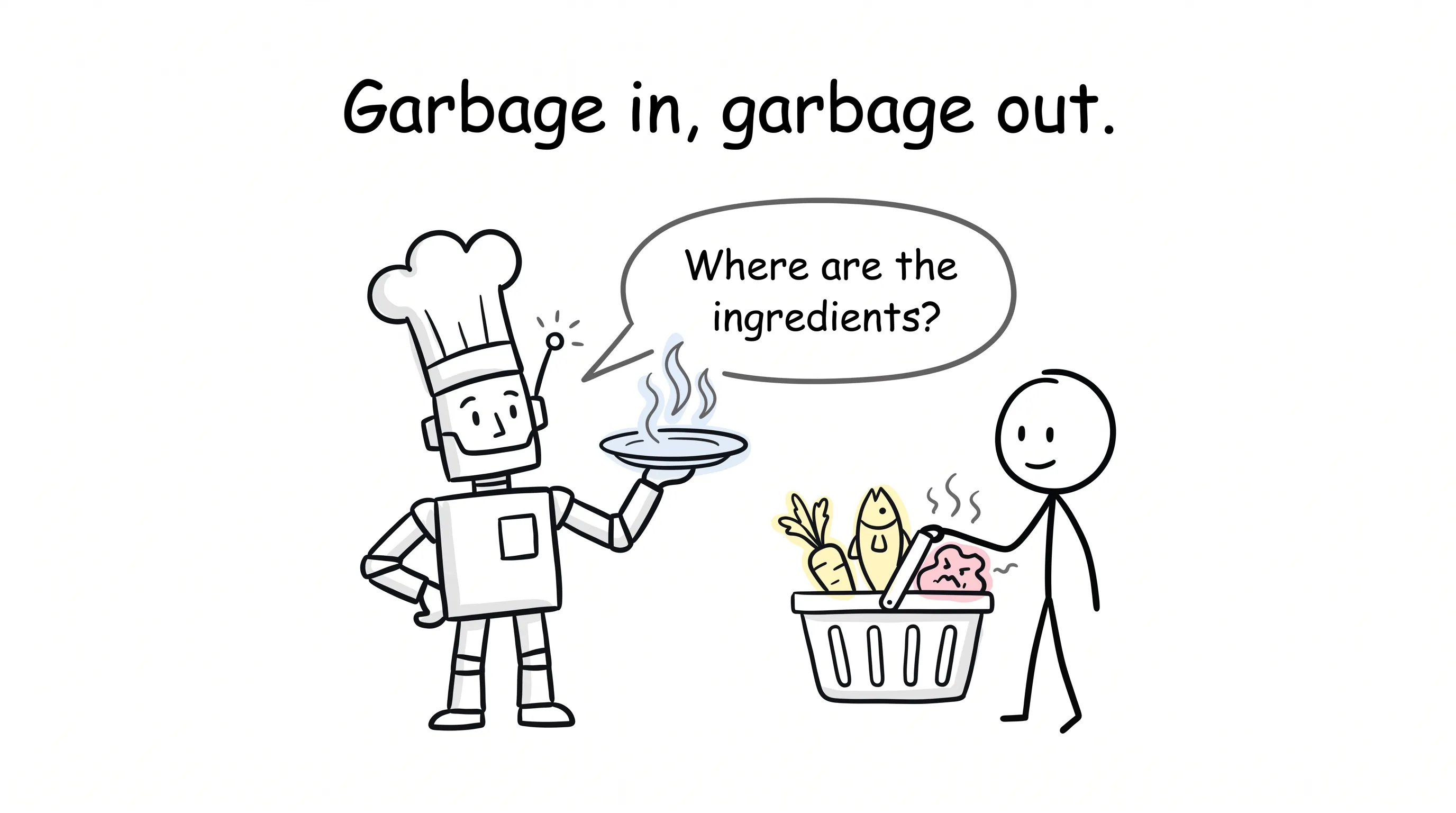
Gen AI is like a chef with astonishing skill. The craft is real. But the first thing it says when it walks into your kitchen is: where are the ingredients?
Bad ingredients, bad dishes. That has nothing to do with skill. As the old saying goes: garbage in, garbage out. Rotten in, rotten out.
So when you look at Gen AI's risks, don't stare at the dishes — inspect the kitchen. Walk through it, and there are three trouble spots.
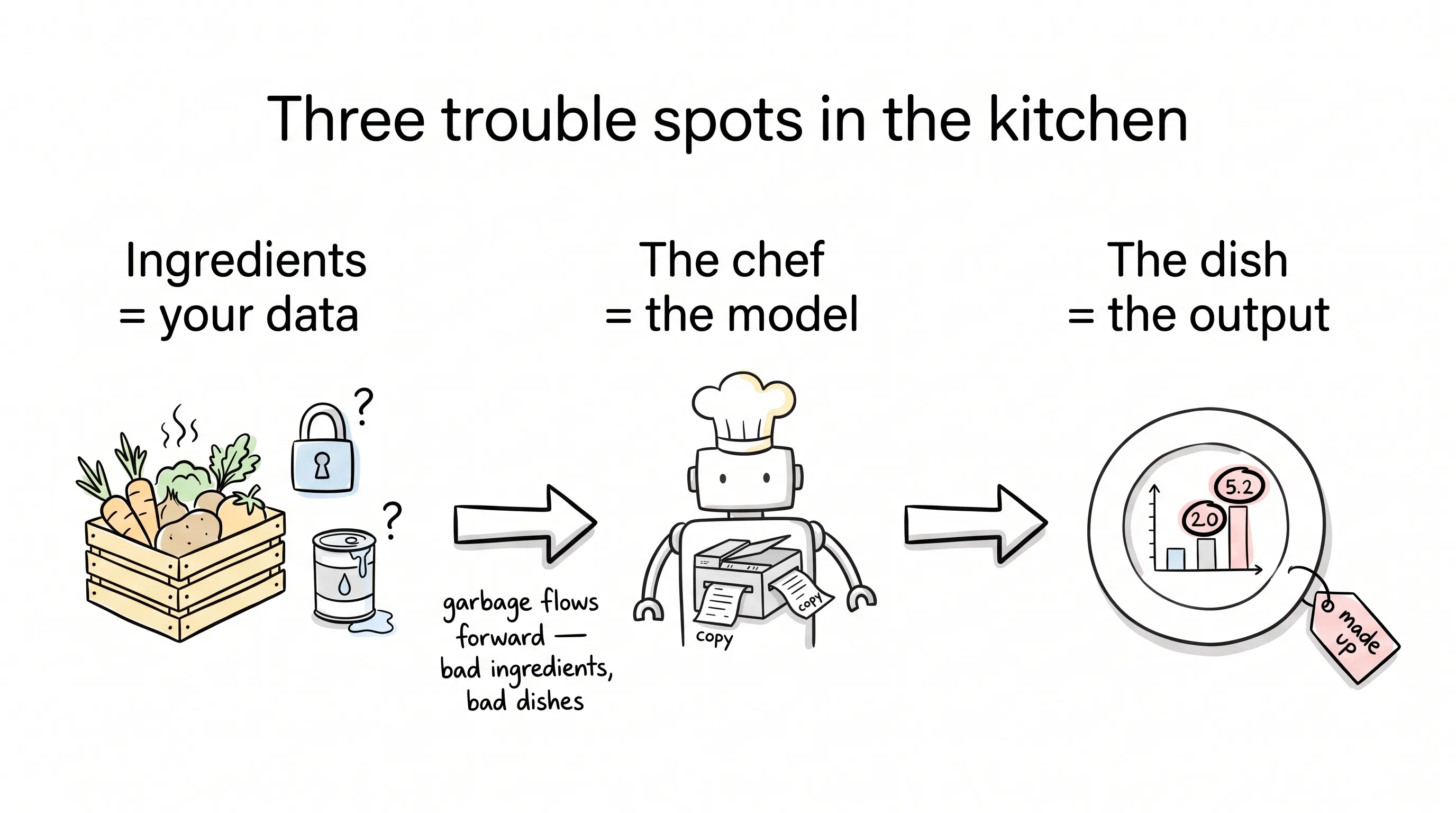
The first spot is the ingredients, that is, the data you feed in. Is it secure? Does it carry anyone's private data? Is it clean? What you feed in is what grows out. If this spot collapses, everything downstream collapses with it.
The second spot is the chef itself, that is, the model. The model learns from its training data. If the training data holds bias, toxicity, and passive-aggressive snark, it picks them up exactly as they are. It has no morals; it only has imitation.
The third spot is the dish served on the table, that is, the output. If the first two spots slip, the dish that comes out may leak your trade secrets, may "collide" with something someone else holds the copyright to, or may deliver, with a perfectly straight face, a number it simply invented.
The two fake numbers my friend's boss circled belong to the third spot.
Ask the companies around you that are preparing to adopt AI what worries them most. Nine out of ten, the answer is the same: data privacy and security. That concern ranks first, and I think the ranking is spot-on. Because the first two spots decide the third — and the roots of the first two run straight into the data.
Before You Open a Restaurant, Settle Three Things
So what do you do? The answer is simple, and thoroughly unsexy: get data governance right first.
The term "data governance" sounds like consultant jargon. Stripped down, it means answering three questions:
- Who is using this tool? Which data can they touch, and which can they not?
- Have you ever faced the questions of privacy and security head-on?
- Is your data itself good enough quality to feed to an AI?
It's the same logic as opening a restaurant. You've hired a Michelin-starred chef — you still have to figure out first: who gets the storeroom keys, whether your suppliers are clean, and how fresh the ingredients are.
A team that rushes into Gen AI before its data is under control isn't embracing new technology. That's throwing rotten lettuce into the kitchen and then waiting for the food to taste bad.
Will It Take My Job?
By now you're surely asking the ultimate question: will Gen AI take my job?
My answer: that's the wrong question.
Gen AI is a tool. It doesn't start itself, doesn't decide on its own what to do, and doesn't even know whether it did the job right. With nobody standing beside it, watching and nodding, it can't even tell that it just messed up.
Put bluntly, tools don't take jobs — people who master the tools do.
Don't believe it? Look back. When the calculator appeared, did accountants disappear? No. The abacus users disappeared. When Excel spread, did finance people disappear? No again. The ones who could only build spreadsheets by hand disappeared.
When Gen AI arrives, what shrinks is the purely repetitive stages of the work. At the same time, it will create more new roles that don't exist today. Marketing was already being asked to "move users in real time, with personalization, across every channel" — but without the right tools in hand, that's like sending you onto the battlefield empty-handed. Gen AI fills exactly this gap. Even CRM and SEO, corners AI rarely touched before, are starting to feel its reach.
Where will it show up first? I'd bet on two areas.
One is intent tracking. Users ask, search, click — behind every action is intent. Gen AI can pipe those intent signals into automated media buying and content production, letting you know "what this person actually wants at this very moment" — and it gets sharper the more you use it. Once conversational intelligence spreads, teams can even work backwards from each person's weak spots to design training and coaching.
The other is localization. For the same campaign, users in Shanghai and users in Chengdu care about different things; what someone scrolls past at noon and what they scroll past at midnight are different moments too. Gen AI can generate modular content and offers in real time, so every scene gets the version that's right for it. In the past, this meant staffing a localization team so big it was scary. Now, one person plus the tools is enough.
Back to That Late Night
So what happened to my friend?
He spent a week sorting through the definitions, sources, and access rights of every number he had, then fed it all in again. This time, the boss didn't circle a single number. He replied with one word: "Solid."
He told me: the AI didn't change; what changed is what I gave it.
Adverity's CEO Alexander Igelsböck once said something to this effect: technology will first become ever more friendly to marketers, and marketers will in turn become ever more fluent in data.
Man, is that well put.
First we shape the technology — then the technology shapes us.
And may you be the one who preps the ingredients first.
Continue reading
Related articles

When AI Does the Creative, Mistakes Come in Batches Too
A learn article on the risks of using generative AI for marketing creative across brand, legal, compliance, and operational layers, with case examples and seven practices for review, rights clearance, documentation, and vendor governance.
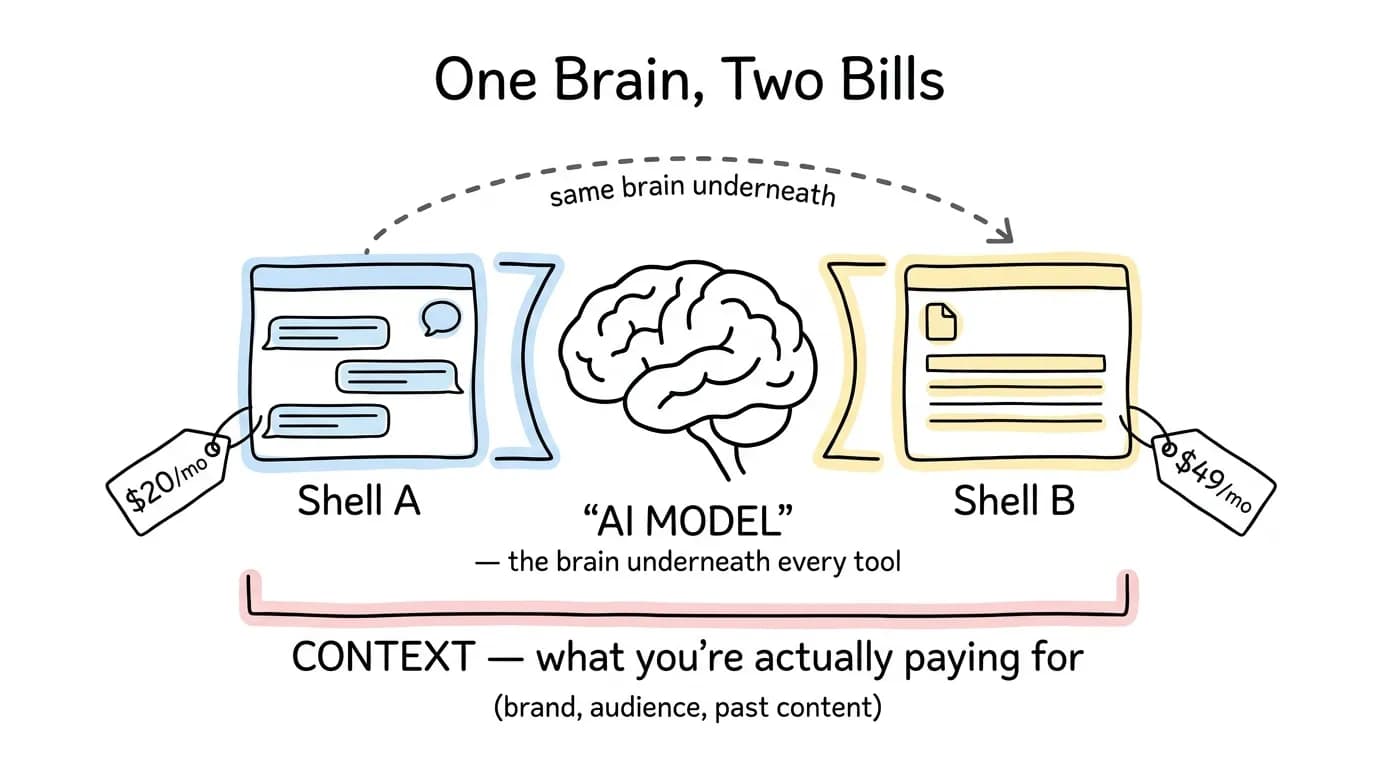
Which AI Should Your Startup Actually Use for Marketing?
A startup marketing guide explaining the difference between AI models and tools, sorting tools by job (writing, research, design, leads, email, video ads), and outlining a 30-day test plan for choosing them. It also covers generative engine optimization and budget trade-offs.
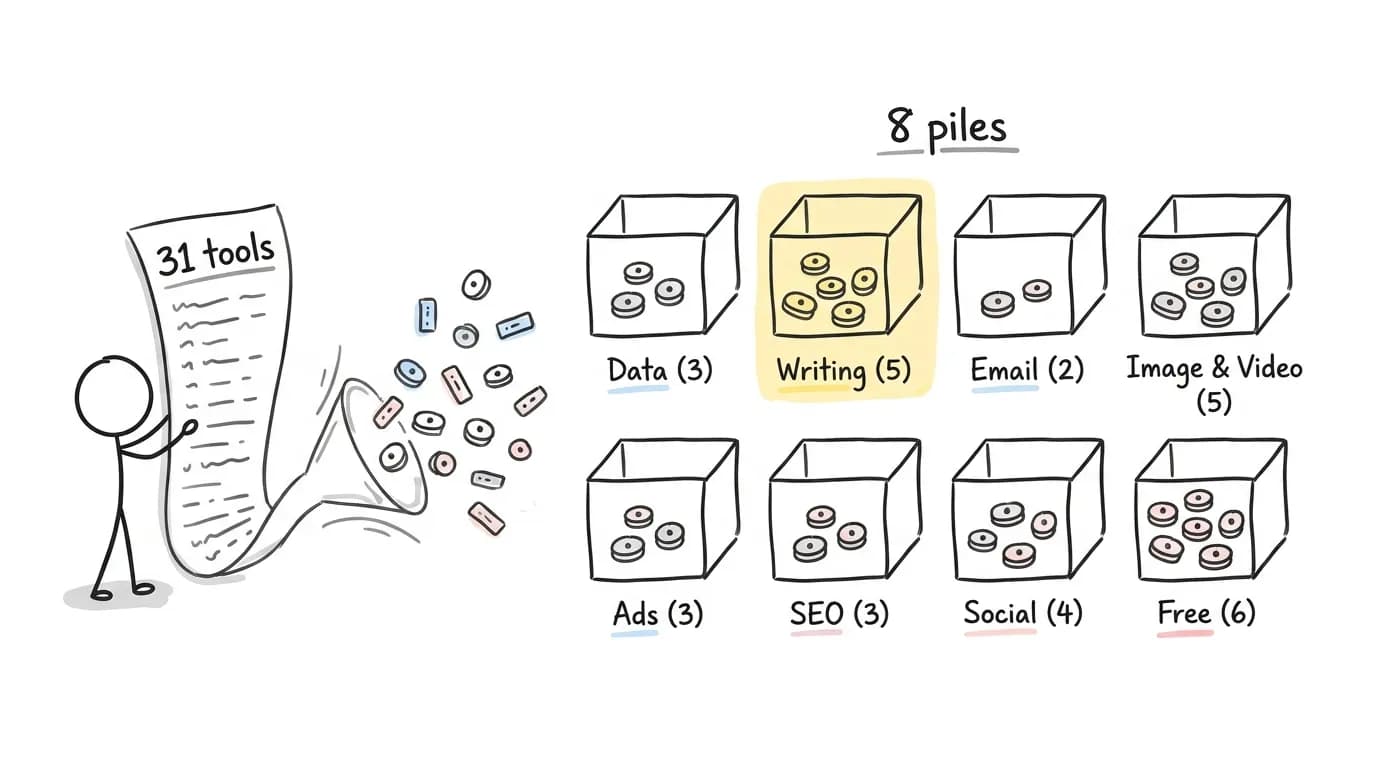
31 AI Marketing Tools, Reviewed One by One: How Exactly Should You Spend the Money?
A review of 31 AI marketing tools grouped into eight categories, covering data, content, email, video, ads, SEO, social, and free options, with guidance on choosing one strong tool for your most frequent task and testing free tiers first.