
Europe's AI Influencer Market: Big Patches of the Map Are Still Blank
An analysis of Europe's AI virtual influencer market, arguing the region remains largely unserved outside a few agencies and that EU rules such as GDPR and the AI Act can favor local players. Covers cited market size estimates, regional gaps, multilingual personas, and early-mover considerations.
A few days ago I came across an industry roundup on Europe's AI influencer market, and one number in it made me stop for a moment.
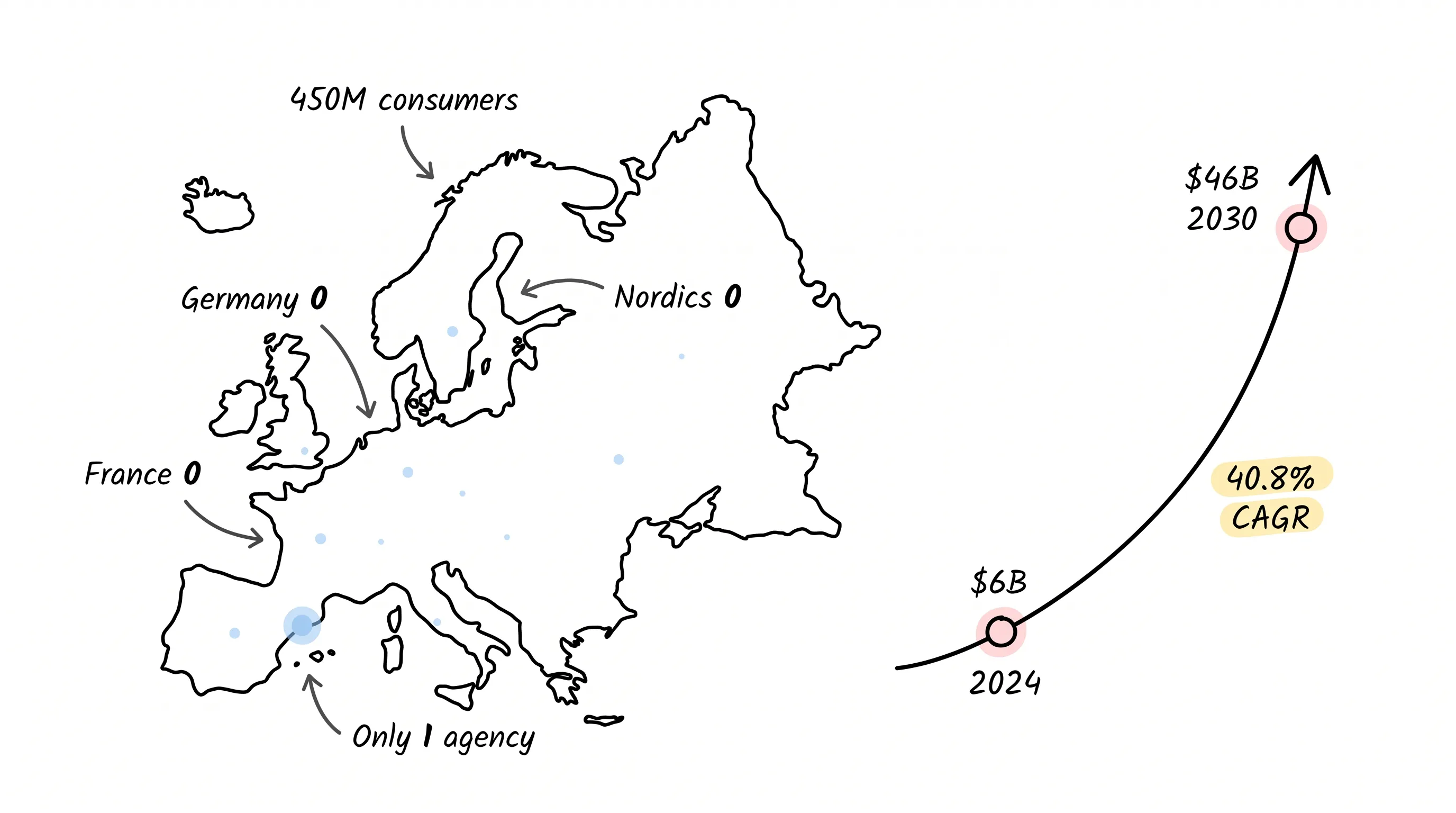
The virtual influencer business was a global market of roughly $6 billion in 2024. The forecast cited in the roundup projects $46 billion by 2030. A compound annual growth rate of 40.8%.
Good grief. 40.8 percent.
But what really stopped me wasn't the growth rate. It was something else: a market this size, and Europe's map is still almost entirely blank.
Where Everyone Else Has Gone
What is a virtual influencer? A "person" built with AI. No real human anywhere in it — but there's a persona, a face, a daily life, posting away on social media with convincing regularity.
The playbook here has been proven for years. Brud, in Los Angeles, created Lil Miquela: 2.7 million followers. Aww Inc, in Tokyo, built Imma, with a fan base of 400,000-plus. The best money-maker of all is Barcelona's The Clueless — their Aitana López pulls in €15,000 a month.
A Spanish girl who doesn't exist, earning fifteen thousand a month. Impressive.
The problem: across the whole of Europe, the only dedicated agency with a name you can point to is that one shop in Barcelona.
Germany has none. France has none. The Netherlands, Belgium, the four Nordic countries — none. 450 million consumers, several of the world's strongest markets by purchasing power, supporting exactly one player.
That isn't a gap. That's a mine sitting out in plain sight, and nobody has bothered to dig.
Compliance Isn't a Barrier — It's a Moat
Many European marketers hear "AI influencer" and their first reaction is: what about GDPR? What about the AI Act?
I'd argue they have the direction backwards.
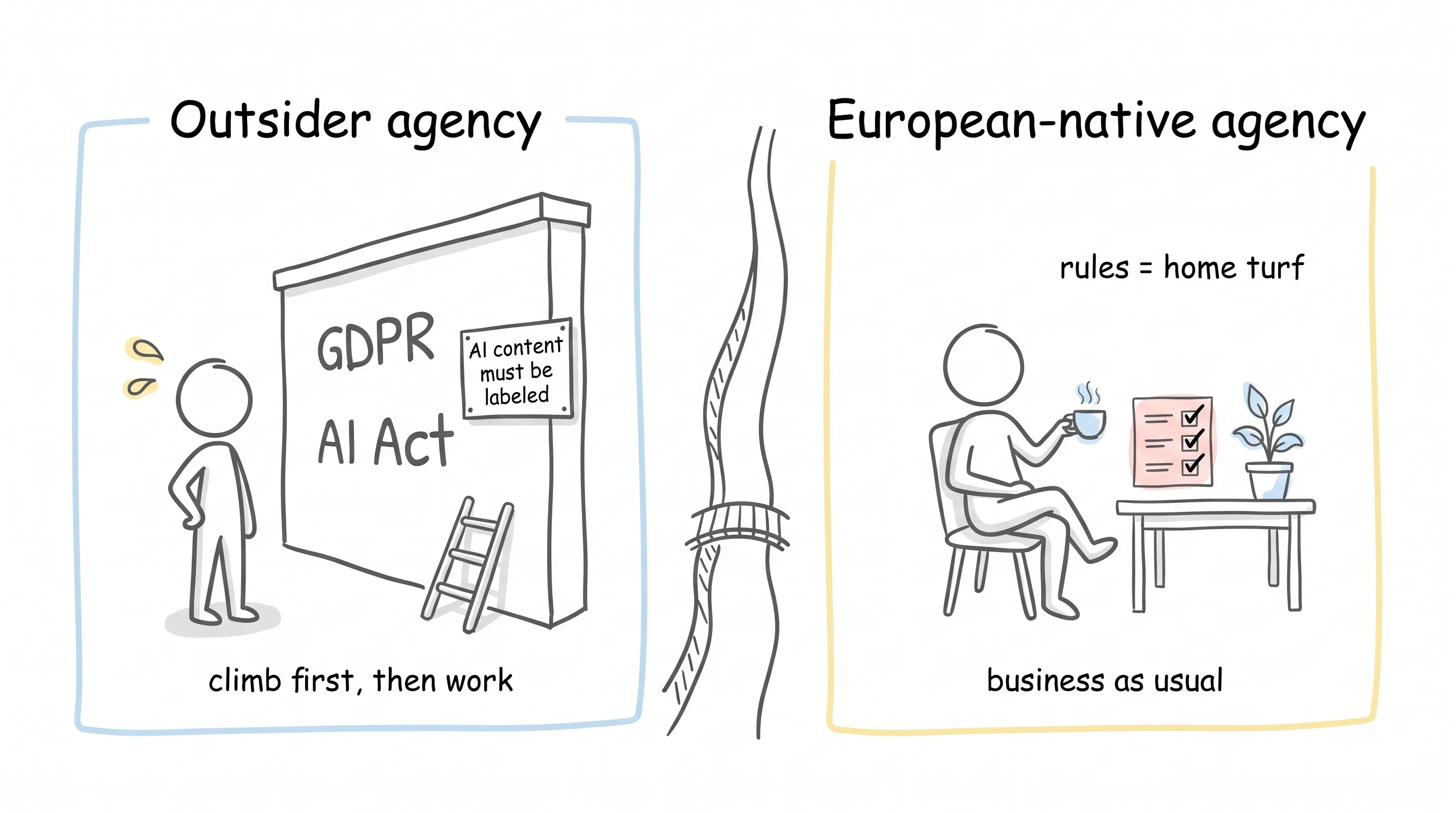
Think it through: for a US agency to run campaigns in Europe, what does it have to do? Play catch-up on GDPR, hire lawyers to handle data localization, build the whole consent-and-deletion apparatus from scratch. Nothing but catch-up work. And catch-up work costs money and time.
A European-native agency, meanwhile? It has lived inside these rules from day one. What outsiders see as red tape, they grew up knowing as the rules of the game.
The EU AI Act has been phasing into enforcement since 2025: AI-generated marketing content must be transparently labeled, technical documentation kept on file, risk assessments carried out, human oversight put in place. For agencies that have always been upfront about "this is AI," none of that is a new demand — it's simply business as usual. For outsiders, it's a wall: climb it first, then get to work.
To put it plainly: the stricter the rules, the bigger the edge for whoever already lives inside them.
Lay the Numbers on the Table
Run the math region by region and you'll get even more restless.
Germany, Austria, Switzerland: 100 million consumers, €18 billion-plus a year in digital ad spend, with the eurozone's largest economy in the middle of it. Dedicated AI-influencer agencies: zero.
Netherlands, Belgium, Luxembourg: 29 million people, internet penetration above 95%, a dense cluster of multinational headquarters. Zero.
The four Nordic countries are the ones shortchanged hardest. The most digitized places on earth, and the table where influencer marketing is played most fluently anywhere. Zero.
France: 68 million people, €11.3 billion a year in digital ad spend. Zero.
These figures are laid out in that very roundup. It was written by AIFLUENCE, a Brussels agency that specializes in homegrown European AI influencers. One small wrinkle: the people shouting "almost nobody in Europe" happen to be AIFLUENCE themselves — a bit like shouting "how come nobody's grabbed this seat?" moments after sitting down. But the math itself, I think, holds up.
Culture Is the Hurdle — Where AI Is Actually the Strength
At this point someone will say: can't the big US agencies just come in with money?
Not that simple. An AI influencer is not just a pretty face. A persona that lands in Munich falls flat in Amsterdam. French beauty aesthetics, Italian ones, German ones, Nordic ones — those are fundamentally different logics.
Two AI creators on AIFLUENCE's roster are interesting here. One is Elena Voss, a Swiss-Italian persona — one foot in southern Europe's warmth, the other in Nordic restraint. The other is Marco Silva, Portuguese, who boxes, talks functional training and real food, aimed at southern Europe and the entire Portuguese-speaking world.
And there's an underrated lever: language. German has more than 100 million speakers, French 80 million, Spanish stands behind a global half-billion, and Portuguese connects through Portugal to Brazil's 260 million. Once an AI content pipeline is up and running, each additional language costs almost nothing at the margin. The EU has 24 official languages — in theory, a single creator could cover them all.
That is precisely something you can only do from inside Europe.
The Window Is Still Open, but People Are Already Walking Through
Don't assume this vacant lot stays vacant. Brud has let it be known it's looking for European partners. The deep-pocketed, AI-strong agencies of Asia are also studying the EU compliance framework.
By the time they actually arrive, what will the early movers be holding? Partnerships with real performance data behind them, content frameworks already tuned, compliance infrastructure already built, plus a genuine local human touch. Add one more line to the ledger: early-stage partnership pricing is usually far cheaper than it becomes once the market heats up.
The late movers are left with nothing but the chase.
Looking back, the most valuable thing in this market isn't the technology, and it isn't the compute. It's "being there."
Being there — inside the rules, inside the culture, already sitting in the seat while the map is still blank.
Technology can be bought. Personas can be built. "Being there" can't be patched in.
Here's to you finding your own empty seat early, too.
Continue reading
Related articles
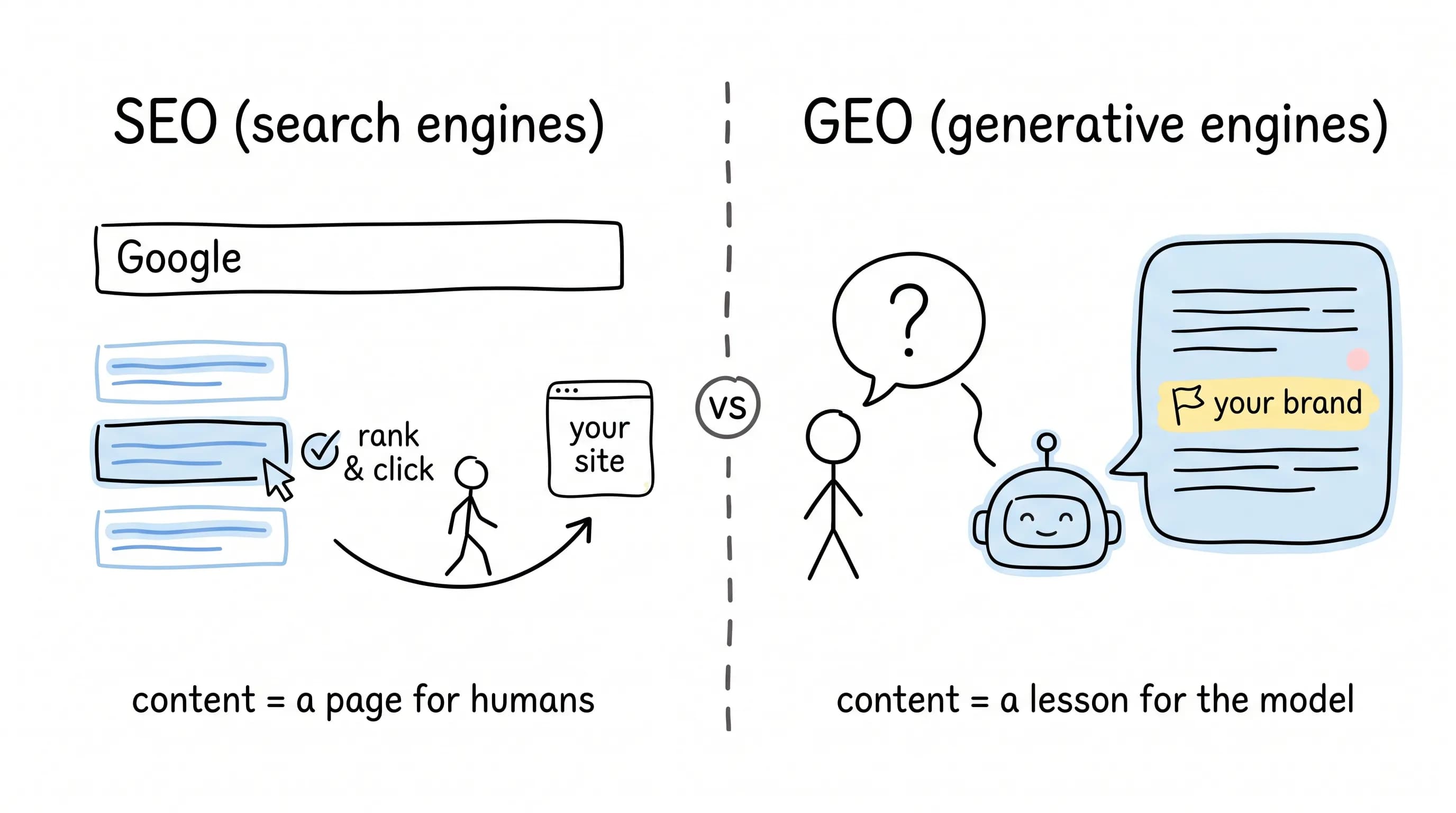
Does AI Know Your Brand? A Look at GEO, the New Craft
An explainer on GEO (Generative Engine Optimization): how AI engines like ChatGPT, Perplexity, and Gemini differ, how GEO goals and metrics diverge from SEO, and which SEO skills still carry over.
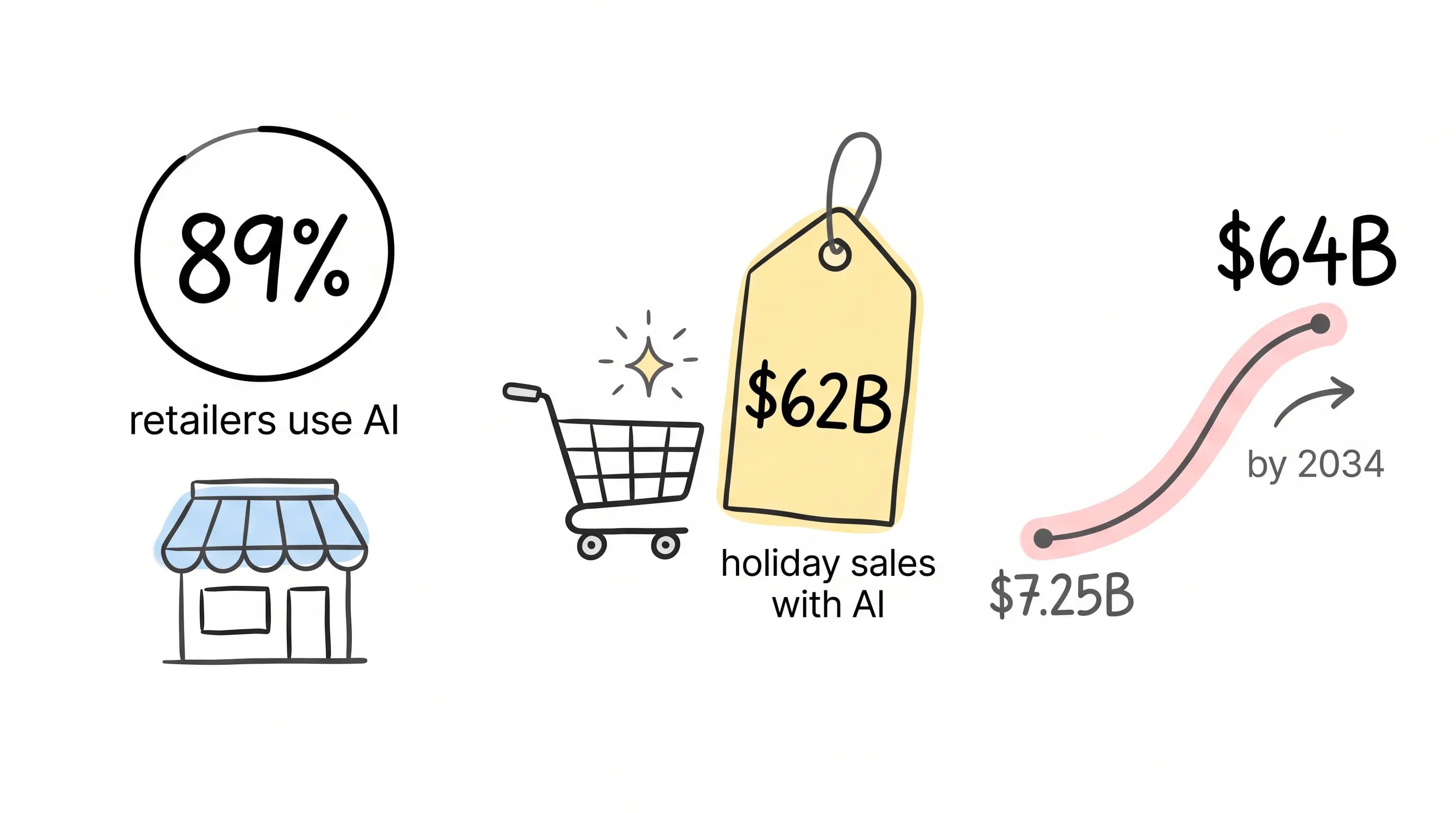
89% of Retailers Are Already Using AI. The Playbook for E-Commerce Has Changed
A learn article on AI in e-commerce: adoption context, use cases from recommendations, search, dynamic pricing, customer service, inventory, and fraud control, plus B2B applications, generative AI content, tool examples, pitfalls, and a six-step adoption path.
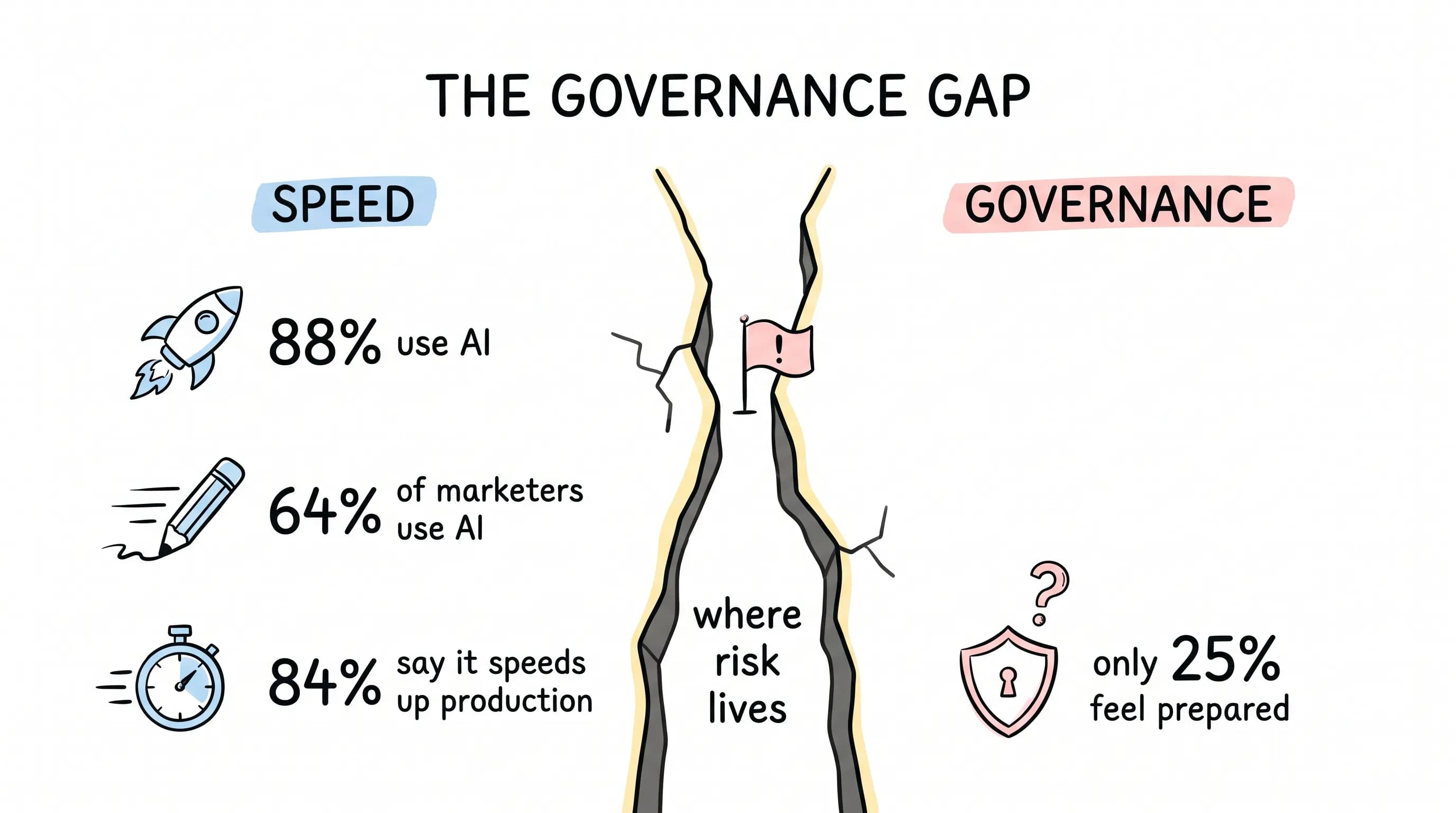
AI Makes Content at Lightning Speed — But Can You Answer "Who Approved This?"
This article looks at the gap between AI content speed and governance readiness in marketing teams, and outlines nine control points — prompt validation, brand guardrails, permissions, approval workflows, human review, versioning, IP checks, audit trails, and asset reuse — for brand-safe AI content.