
Decision-Making Power Is Being Shoved Back into Your Hands
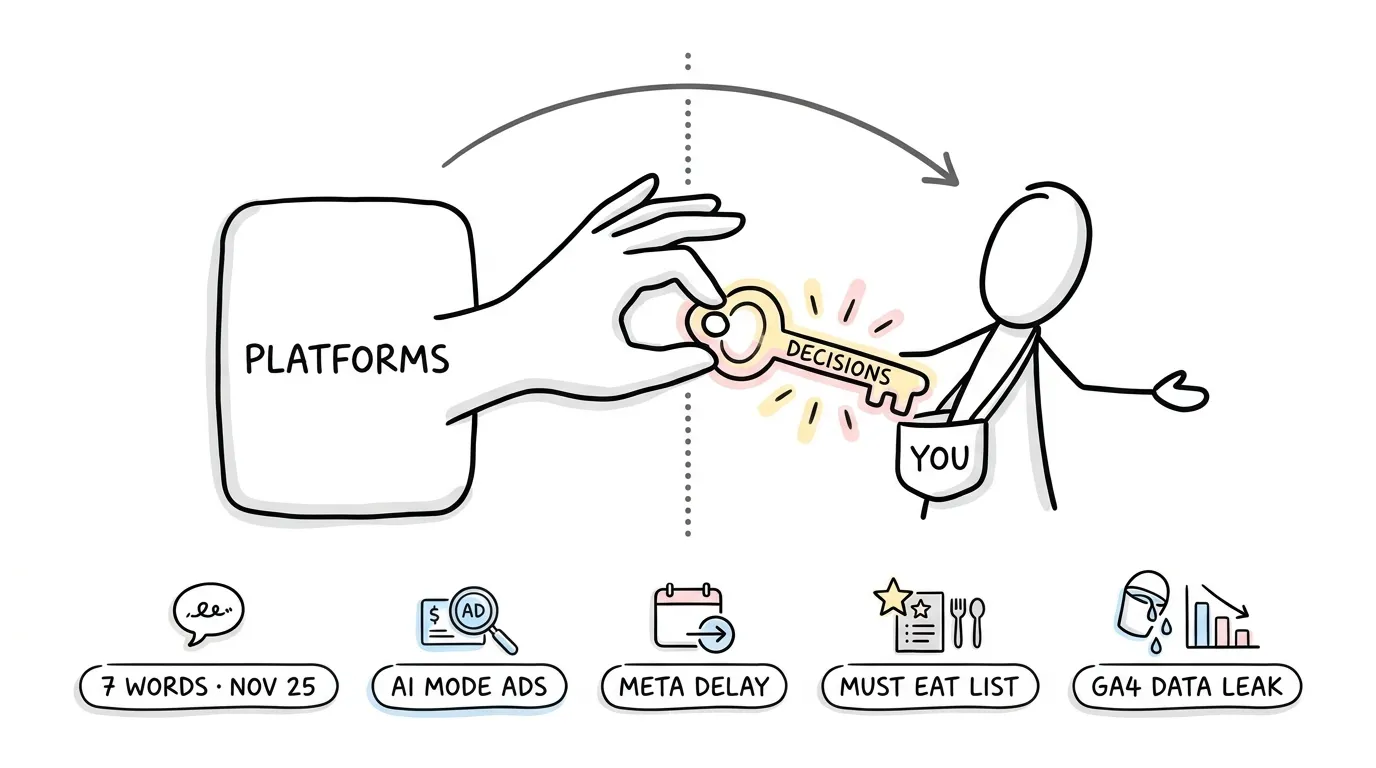
A learn article reading five late-October marketing items as one trend: platforms shifting decision-making back to marketers. It covers the FCC's seven-word SMS opt-out rule, ads in Google AI Mode follow-ups, Meta's delayed AI liability terms, TikTok's pay-free Must Eat restaurant list, and a GA4 order-tracking audit.
A few days ago, I went through the batch of marketing news from late October.
When I finished, I sat back in my chair and went blank for a moment.
On the surface, it looked like one unrelated thing after another: a new rule, a delay, a new ad placement, a ranking list, an audit. But behind all of them hid the same move.
The platforms are moving decision-making power out of their own hands and into yours.
Having it in your hands is an opportunity. Whether you catch it is up to you.
Let me walk you through four things, plus one leaky report. Once you've heard them, you'll get it.
One: Seven Words, All of Them Count
First, a question: how do users unsubscribe from your marketing text messages?
You'd probably say: they reply "stop."
Wrong.
At the end of October, the new rule from the FCC (Federal Communications Commission) in the United States was officially published, taking effect on November 25. The rule says that if a user replies with any one of seven words — stop, quit, end, revoke, opt out, cancel, unsubscribe — that counts as a formal withdrawal of consent.
Note: any one of them.
Even if your message only says "reply T to unsubscribe," and the user replies with a single word, quit, you must honor it. And the new rule gives you at most 10 business days to make it happen.
Think about what this means for any business that relies on SMS to bring in customers. Before, you could still say, "The user didn't follow the instructions, so it doesn't count." Not anymore.
When a user wants to leave, one word is enough.
Two: Your Ads Are Already Rolling into AI for You
The second thing is about Google.
On October 28, Google announced that the follow-up questions in AI Mode can now show ads. Starting in the United States.
What's a follow-up? It's the question a user asks right after reading the AI's answer. "Which shops around this price can repair it?" "Are they open on weekends?"
The sentence you should pay the most attention to is this one: existing Search ads, Shopping ads, and Performance Max (Google's automated campaign type) campaigns are all eligible by default.
What does that mean?
You don't have to do a thing, and your ads are already rolling into AI's follow-up questions.
Sounds like free exposure? Hold the celebration. That same day, Google itself admitted that ads in AI Mode earn less than regular search ads. Its search revenue growth slowed to 12%, down from 17% the quarter before.
It's like a landlord listing a brand-new apartment for rent, desperate to fill it, but charging less than the old rooms. You're already living in the house; how you do the math on this one is up to you.
Oh, and some people have posted screenshots showing ads appearing inside Bing's AI answers too. Microsoft has said nothing. Until it's officially confirmed, treat it as a test — don't jump to conclusions.
Three: Meta Delayed, but AI Keeps Editing Your Ads
The third thing is Meta.
Meta's revised advertising terms were originally set to take effect on October 30. One clause in the new terms is particularly eye-catching: for ad content generated or modified by its AI features, the liability falls entirely on the advertiser.
Good grief — entirely on the advertiser.
The terms were pushed back to November 20. Then on October 28, Meta put out word that the consultations might drag past November 20.
Plenty of people saw the word "delay" and breathed a sigh of relief.
My advice: don't.
All that was delayed is the signing. The AI editing your creative — that never stopped for a single day.
Open your account today, and the Advantage+ features are still moving your assets around. Do you know what it changed? Would you dare put your name on the copy it generated?
The terms will come back, sooner or later. And what you'll be signing for is whatever is running in your account today.
Four: A List That Money Can't Buy Into
The fourth thing is my favorite one.
TikTok launched a dining guide called Must Eat. It started with restaurant rankings for three places: New York, Los Angeles, and the San Francisco Bay Area.
Where do the rankings come from? From more than 40 million posts, reviews, and comments.
The real point is in the rules:
Restaurants cannot pay to get on the list.
Strong.
Think about it: over the past decade or so, how did local restaurants get seen by more people? By spending money. Buying rankings, buying recommendations, paying influencers for visits. Now TikTok says: my list recognizes exactly one thing — whether customers genuinely want to film you, post about you, and praise you.
This hands "whether you can be found" back from the budget department to the product itself.
Whether your food is good, whether your service deserves a video — that's the new ticket in.
Five: And That Leaky Report
Those four things are platforms moving decisions into your hands. This report cuts deeper. What it says is: the decision you're holding right now may already have been made on leaky data.
At the end of October, a public audit matched the real orders of eight UK e-commerce sites, one by one, against the numbers recorded in Google Analytics 4.
You won't be able to sit still when you see the results.
One store: in the 2024 holiday season, GA4 captured about 80% of its orders. By 2025, only about 40%.
Another store: 2,215 real orders happened over five weeks. How many did GA4 record?
Zero.
Yes — not a single one.
If orders are like this, bookings, sign-ups, and leads probably can't escape either. If you're adjusting budgets against a dashboard that's missing 60% of the picture, the more "refined" your adjustments, the further off you go.
How to Catch It
Four things. Four pieces of decision-making power, all piled in front of you. How do you catch them? My advice is four steps.
-
Send each of the seven words — stop, quit, end, revoke, opt out, cancel, unsubscribe — to your own phone number, one by one, and test them. Before November 25. If any of them doesn't work, fix it today.
-
Open your search terms report and find those long, question-shaped queries. Price, opening hours, how to get started — can your landing pages answer them?
-
Open your Meta account and look at what the AI changed. Any change you wouldn't put your name on, turn off.
-
Take four weeks of real orders, bookings, or leads, and lay them side by side with the numbers in your analytics tool. If the gap is big, fix the data first, then talk budgets.
See, the decision-making power has been moved back to you. But it won't turn itself into results.
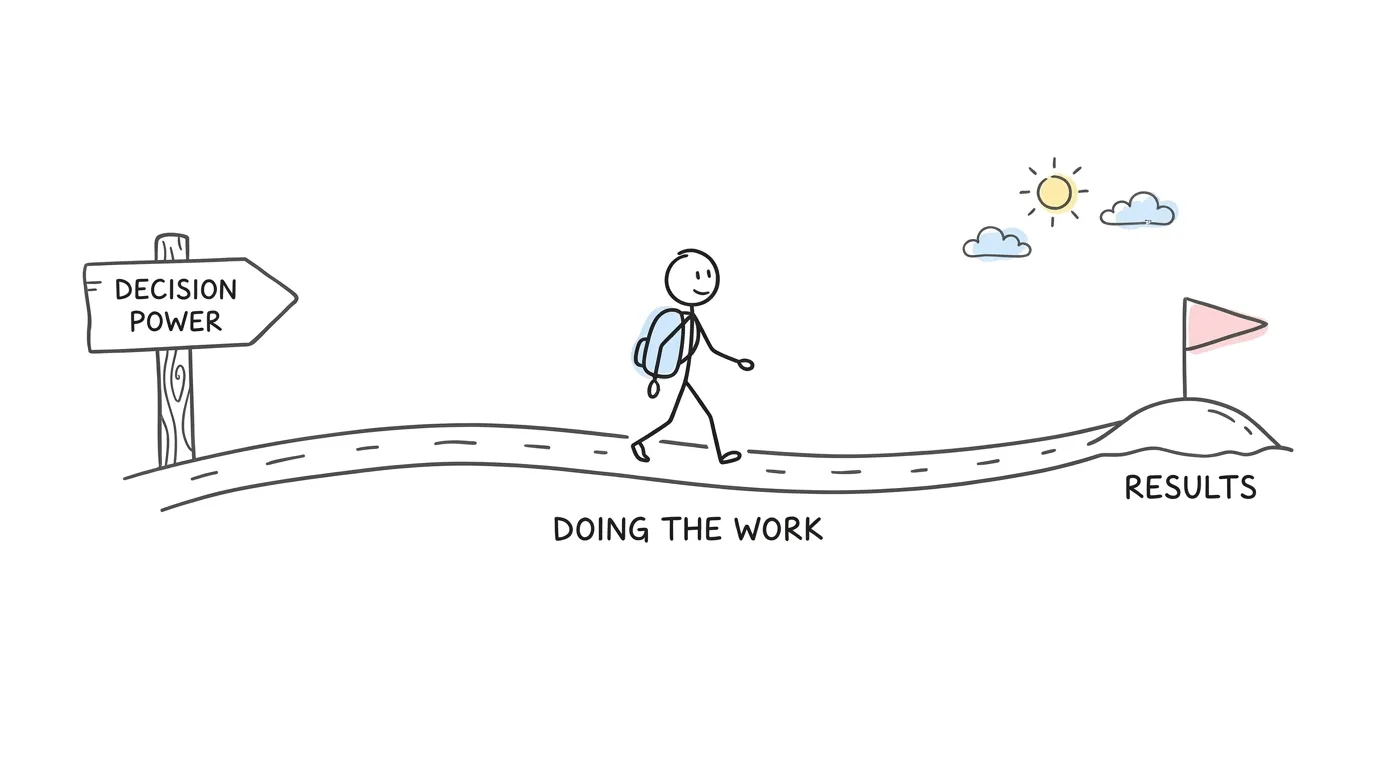
Having the decision-making power in your hands and having the results land in your pocket are separated by a stretch of road. That road is called doing the work.
Here's hoping you catch it — and finish the walk.
Continue reading
Related articles

What Is GEO? How Your Brand Gets "Mentioned" in the Age of AI Search
An explainer on GEO (Generative Engine Optimization) for e-commerce and DTC brands: how it differs from SEO and AEO, why AI answers shape brand visibility, and eight practices covering question-focused content, consistent brand messaging, structured pages, external evidence, comparisons, and AI mention tracking.

AI Is Already Making Decisions for Your Customers. Are You on the List?
A learn article explains GEO (Generative Engine Optimization): why AI-generated answers now shape which brands customers see, and how SEO fundamentals, entity clarity, citable evidence, and monthly measurement affect visibility in AI answers.

Google Is Stuffing Ads Into AI Search: These Recent Stories Are Really One Story
A news roundup linking recent AI marketing stories—Google adding ads to AI Mode, Amazon's Ads Agent, ChatGPT image updates, a UK startup tracking brand mentions in AI answers, and an AI ransomware warning—arguing that control over ad data and visibility is shifting toward platforms.