
Cross-Border E-Commerce Advertising: Where Does the Money Actually Go?
An explainer on cross-border e-commerce advertising: why AI-driven ad costs keep rising, and how planning, compliance, precision targeting, and private traffic channels shape where ad spend actually goes.
A few days ago, a friend of mine who runs a cross-border e-commerce business invited me out for coffee. The first thing he said when we sat down was: Man, ad costs have gone up again.
He said he'd tried everything. He ran ads on Google, on Facebook, on TikTok too. He spent plenty of money, but the orders barely budged.
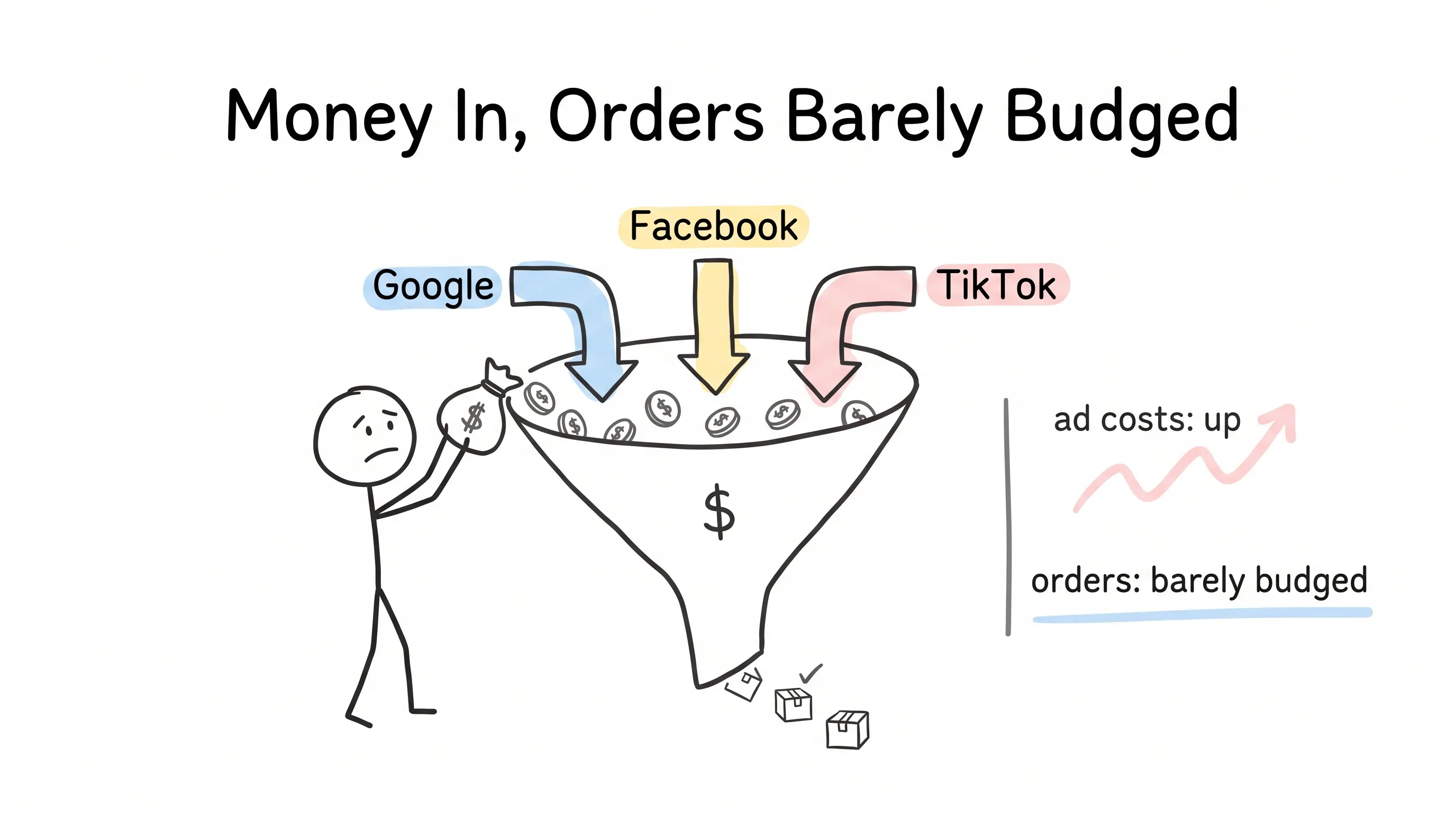
I told him we needed to sort this out from the beginning.
First, Let's Be Clear: What Is Cross-Border E-Commerce Advertising?
So what is cross-border e-commerce advertising?
Put simply, it's the commercial advertising that sellers in cross-border trade put out in order to sell their goods.
That may not sound like anything special. But it has one defining trait: the audience lives almost entirely online. So this kind of advertising goes out almost exclusively through digital channels, and it falls into two broad categories. One is on-platform: ad slots inside e-commerce marketplaces. The other is off-platform: ads on overseas media platforms like Google, Facebook, and TikTok.
Many sellers stop right here: open an account, top it up with money, push the ads out, and hope for the best.
And that is exactly where the problem lies.
Do Your Homework Before You Spend
Running ads is not buying lottery tickets. It takes planning first.
Planning what? Let me count the ways.
First, take stock of your own assets. Where does your website rank in search results, how much have you sunk into paid ads, and how complete are your product listings on the marketplace?
Then look at your competitors. Which channels are they advertising on? How well is it working for them? How are their pages laid out?
Then get clear on who your buyers actually are. Gender, age, income, spending habits — build the profile layer by layer. Oh, and there's one group that's easiest to miss: people who don't buy for themselves, but sway what others buy.
Next, set your goals and choose your media. For media there's one principle: spend the least money to put together the best mix.
Finally, measure the results — psychological, economic, social. Your evaluation criteria must map one-to-one to your goals, and they have to be measurable. A metric you can't measure might as well not exist.
Think about it: what does this whole process resemble?
It's like reviewing your troops before a campaign. Provisions, enemy intelligence, morale, orders, routes, and battle honors — not one can be missing. Miss any one of them, and you fight the battle blind.
AI Made Advertising Smarter — So Why Isn't It Saving Money?
The biggest change in cross-border advertising these past two years is that AI has arrived.
Creative? AI can generate it. Audiences? AI can draw the circle. Performance? AI can tune it on its own. Smart recommendation systems read a person's browsing behavior, guess what they want to buy, and place the ad right in front of their eyes. Social media became the main battlefield. AR and VR let people "touch" the goods before they place an order. Livestreaming became a new growth engine. Search engines, content platforms, and social media now fight as one tangled battlefield — and the playbook has completely changed.
Ad delivery is getting smarter and more precise, with data doing all the talking.
Sounds like a good thing, right?
But.
Advertising got smarter, and costs went up instead. Why?
Think about it: when AI tools are in everyone's hands, you can target precisely, and so can everyone else. The efficiency gap gets erased. When everyone gets stronger, no one has. And in the auction, prices rise. The efficiency you saved, the platforms claw back through bidding.
Making things worse still is privacy. In recent years governments everywhere have been tightening the screws on data protection. Platforms can see less data, and an accurate user profile costs far more to obtain than it used to.
And there's a trap many only recognize after stepping in it: models trained on the domestic market often fail to adapt overseas. Audience habits differ, platform ecosystems differ, and so do the laws. Marketing is not mathematics. Mathematical formulas work everywhere; marketing does not.
So What Do You Do?
The answer has three layers.
Layer one: compliance. Advertising laws differ from country to country — that's reality. First build up your internal review process; there are now smart moderation tools that can help. Don't skimp on this money — it's survival money. One violation, and everything you earned before may be lost to it.
Layer two: precision. Use machine learning to analyze user behavior data, and run localized analysis market by market. Real-time bidding, pay-per-click, demand-side platforms — these methods make every cent land more accurately. And remarketing, which wins back the people who looked but didn't buy, often converts better than acquisition.
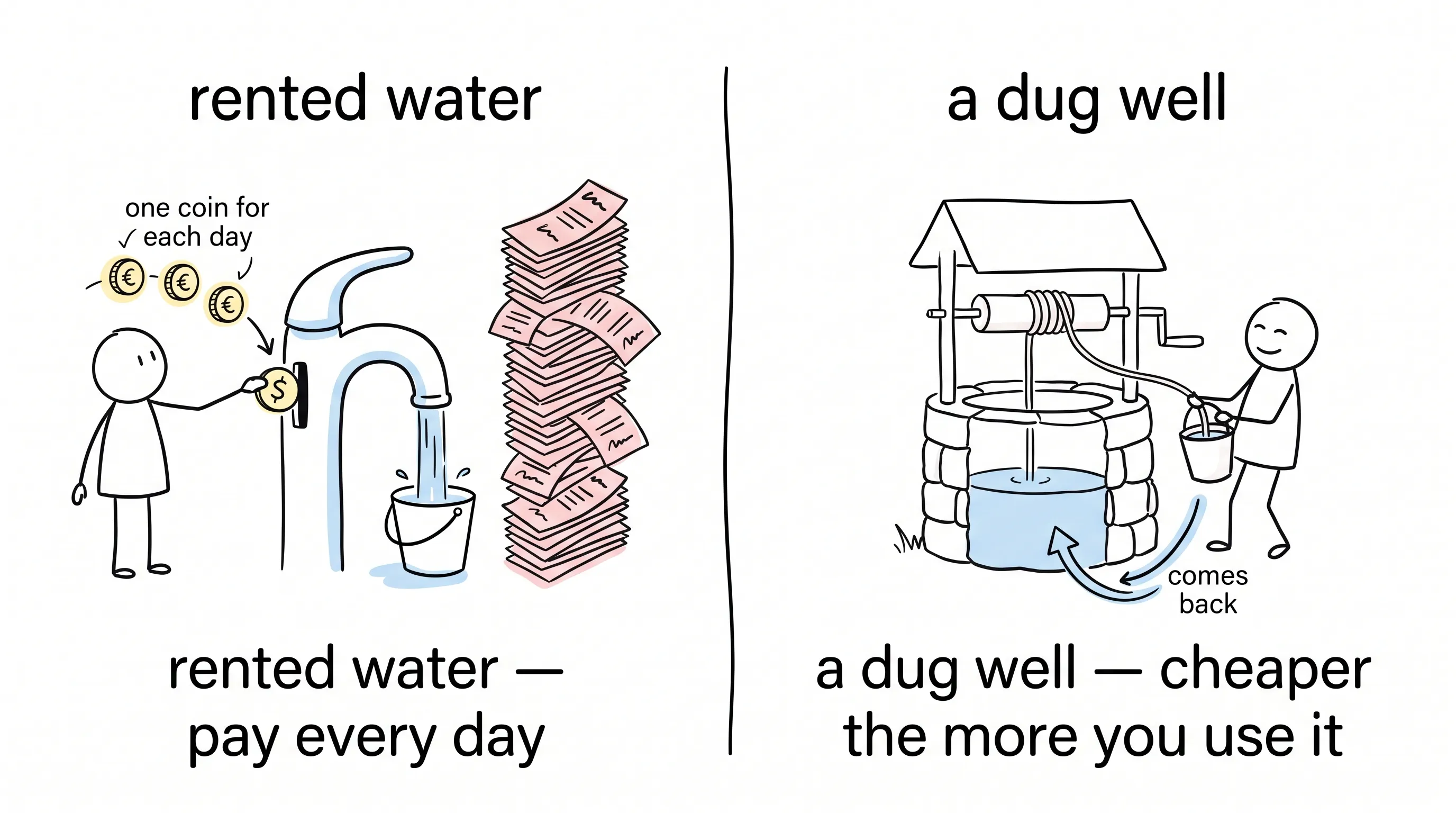
Layer three: your own channels — private traffic (audiences you build yourself, like email lists and follower communities, that you can reach without paying for ad placement every time). Let's do the math: winning a new customer costs money every single time; keeping an existing one costs you next to nothing. The same budget, spent on acquisition, is a one-shot deal; spent on making people come back to you, it trickles back steadily.
Buying traffic is renting water; building private traffic is digging a well. Rented water has to be paid for every day; well water gets cheaper the more you use it.
Back to That Cup of Coffee
When we finished our coffee that day, I asked him one question: your old customers — how many? How's your repeat business?
He froze for a second and couldn't answer.
Going forward, ads will get more interactive, more experience-driven, and delivery will keep getting smarter. These are all trends. But trends are everyone's trends — they are not your moat.
When everyone knows how to run ads with AI, running ads stops being valuable; what's valuable is turning the ad money you spend into customers who stay.
Here's my wish for you: don't spend all your money on rented water.
Continue reading
Related articles

What Is AI Marketing Automation? It Starts With a 40-Point Gap
A learn article explaining what AI marketing automation is: how learning-based systems differ from rule-based automation, how AI decisioning optimizes message, channel, and timing choices, what data it depends on, and where it applies across the customer lifecycle.

Marketing Automation Is Shifting from "You Do It" to "You Say It"
This article explains how marketing automation is shifting from rule-based platforms that merely execute toward AI agents that plan, create, publish, and review campaigns, covering delegable tasks, underlying technologies, tool categories, adoption steps, and risks such as privacy and automating without strategy.

Rankings Are Taking a Dive, Customers Are Sprinting Ahead: This November, I Re-Ran the Numbers on AI Search
A learn article on how AI search reshapes marketing measurement, covering reported mismatches between rank-tracking tools and live Google results, ChatGPT's business profile test, single-page visitors as high-intent leads, and CRO plus GA4 tracking verification practices.