
Buyers Are Asking AI Now — So How Do You Pick a B2B Marketing Automation Platform?
A guide to choosing a B2B marketing automation platform, covering HubSpot, Marketo, Pardot, ActiveCampaign, 6sense, and Clay, and how buyer research is shifting from search engines to AI answers. It also discusses generative engine optimization and content that AI systems may cite.
A while back, a friend of mine who runs B2B SaaS came to me. He had just been promoted to head of marketing, with a budget in hand, and the first question he asked me was: which marketing automation platform should I pick?
He had already drawn up a shortlist: HubSpot, Marketo, Salesforce's Pardot, ActiveCampaign. All familiar faces.
I asked him back: what problem are you buying a platform to solve?
He said: send emails, score leads, hand leads to sales.
I said: none of that is urgent. First answer me one question — how is your buyer finding vendors today?
He stopped short.
Buyers Have Changed Where They Ask
What does it mean that buyers have changed where they ask?
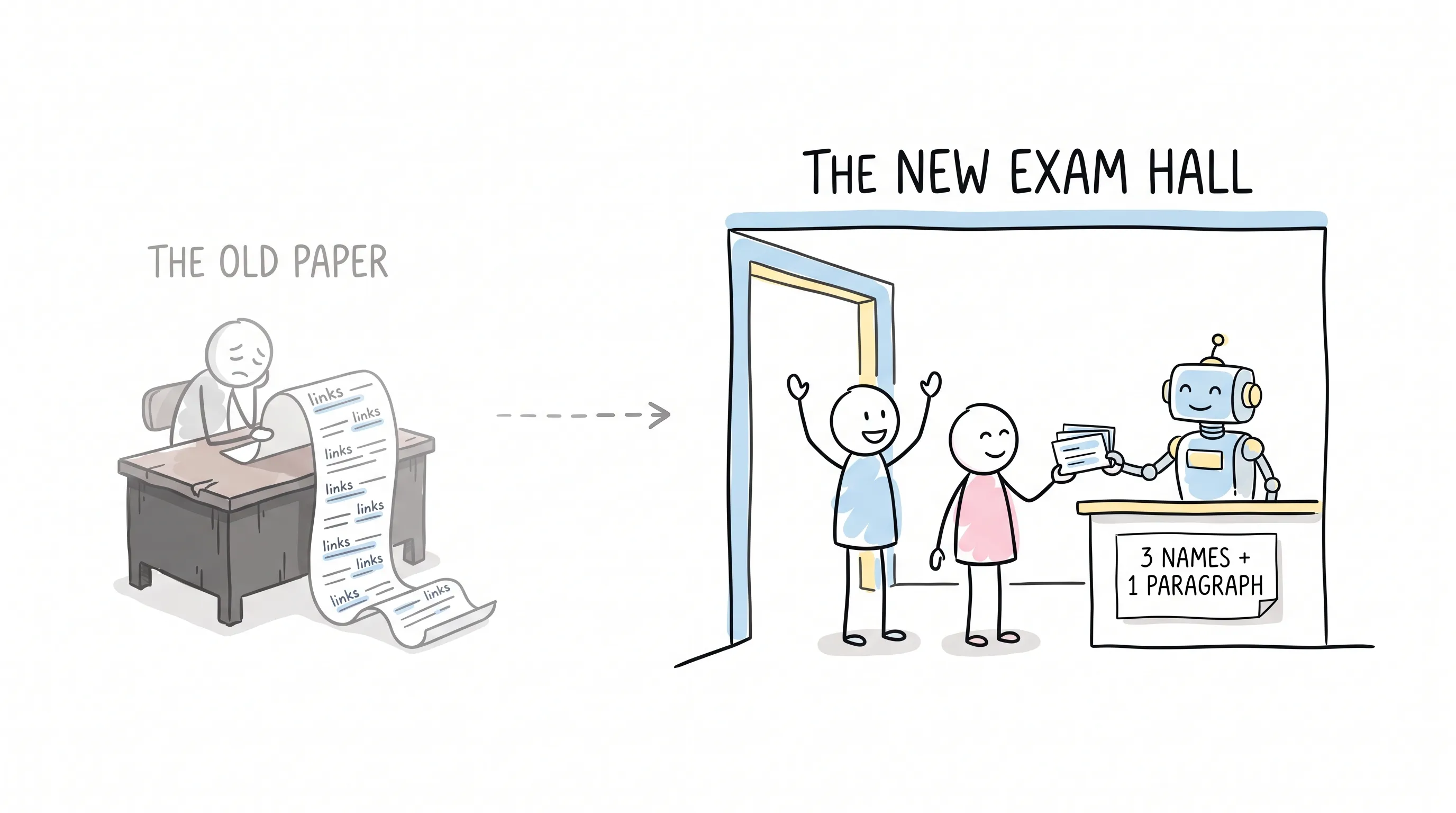
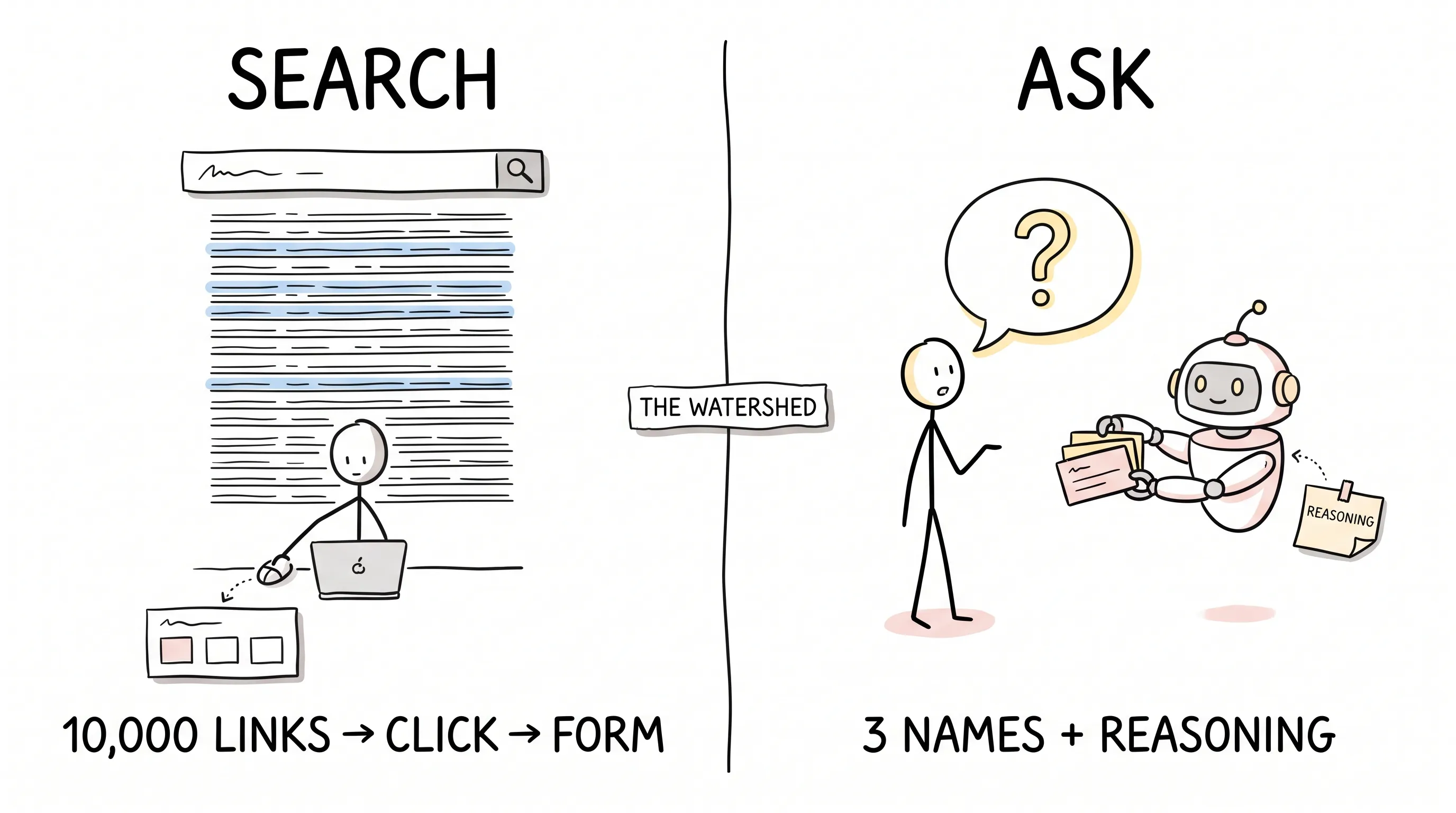
Three years ago, the path buyers took to find tools was fixed: open a search engine, type in keywords, flip through pages of blue links, click through to a website, fill out a form. That whole generation of marketing automation platforms was built around that path: email flows, landing pages, forms, scoring, lead routing.
Now, more and more buyers don't search. They just ask.
Ask whom? ChatGPT, Perplexity, and Google's AI Mode.
"Recommend a few CRMs that suit a mid-size manufacturer."
The AI doesn't hand them ten thousand links. It gives them three names, plus a paragraph of reasoning.
Think about what that means.
It means if your brand isn't among those three names, you don't even qualify to compete for the deal. The buyer never sees you. It isn't that you rank low — you simply aren't there.
Buyers have moved to a new exam hall, and most B2B content is still answering the old paper.
Can the legacy platforms help with this? I took apart the books of each of the mainstream players and found they almost all share the same blind spot.
The Mainstream Platforms: Each Has Its Strengths, and Each Has Its Age
Start with HubSpot.
It's the lowest-friction of the legacy platforms. Its native CRM puts data and marketing under one roof, no middleware required. In public statistics from February 2026, its installed base ranks among the leaders of the global marketing automation market. Enterprise plans start at a few thousand dollars a month.
Sounds good, right?
But its AI content tool caps customers at roughly 50 prompts, and the content it produces often fails to so much as carry the brand name. AI won't cite content like that. HubSpot can watch your competitors' visibility inside AI, but it can't create your own.
One can read the leaderboard; the other can get you onto it. Two different things.
Now Marketo and Pardot — the enterprise heavyweights.
Marketo's annual fee starts in the tens of thousands of dollars for mid-size customers, more for large enterprises; implementation services are billed separately, and you basically can't do without a Marketo-certified expert. Without one, configuration backlog piles up within months, and implementation itself usually takes several weeks.
Its signature strength is deep object-level integration with Salesforce, a fit for large enterprises with complex buying committees. If you've already bet heavily on Salesforce, the money isn't wasted.
Same story for Pardot. Its Einstein scoring requires the Enterprise edition, a per-user monthly add-on, and a certain volume of historical won leads as a foundation. Stitch multiple Salesforce systems together and the integration points multiply — any one of them can fail silently, and data quality can quietly rot for weeks without anyone noticing.
The deeper the bet, the tighter the lock-in. Depth is its moat — and its shackles.
What about ActiveCampaign? A good choice for mid-size teams: friendly pricing, granular behavioral automation. But closed-loop revenue attribution means building your own middleware. And it doesn't produce content that AI answers would use.
I wouldn't call any of these three bad. They were the great tools of the previous era.
6sense and Clay are two different kinds of animals — worth clearing up while we're here.
6sense lives on intent data: it finds the accounts entering a buying cycle, from oceans of signals, before they ever visit your website. For long-cycle enterprise ABM, use it as a supplement to your existing platform, not a replacement. One footnote: some articles have pinned the DocuSign success story on 6sense, but public records show DocuSign was using Demandbase, Mintigo, and the like. When you're choosing, don't let case-study storytelling lead you astray.
Clay, at a few hundred dollars a month, is a data enrichment and outbound orchestration tool: waterfall enrichment across a pile of data sources, then passes scored leads into the CRM. It's a good data pipeline, not a content engine.
All right, that's the roundup. Notice anything? Not one of these platforms is producing "content that AI answers are willing to cite."
That's the watershed.
A New Species: Treating AI Answers as the Primary Channel
While researching all this, I came across a relatively new player: AI Growth Agent. What it does is unlike every platform above.
Those platforms, at their core, "send your emails and manage your leads" for you; this one "answers the AIs" for you.
Four concrete things.
First, it maps the full universe of questions. A new account starts with 300 to 400 queries; mature customers cover 1,600 or more; the system runs 3,000-plus searches every week to refresh that map. Compare that with the legacy platforms' AI features, which cap you at a few dozen prompts.
Second, it produces "living" content. The engine can generate 2 to 50 articles a day, with a monthly ceiling of about 500; content is verified against original sources, and when the world changes, the articles update themselves — they don't rot the moment they're published.
Third, it goes live in a week. After signing, professional journalists interview you and write your brand manifesto; from that, the engine generates a content topology and the first batch of articles, and within a week an optimized owned site is standing. Content gets indexed in as fast as 10 days. Customers don't need to keep a certified expert on staff, sign an agency, or field a technical team.
Fourth, pricing is a flat monthly fee. Not billed per prompt, no credit caps, not billed per article — and the content it produces belongs to the customer. In the first 12 weeks, customers' AI citations and mentions grow by several thousand on average, with impressions on a visible climb.
I looked into the technical details on purpose, because that's where you're most easily fooled. Schema, robots.txt, sitemaps, llms.txt, Blog MCP, /.well-known/ agent discovery — everything that lets AI crawlers actually read your site is auto-configured by the engine. The only thing customers do on their side is use a reverse proxy to mount the blog on a subdirectory of the main domain. And the auditing is anything but vague: Google Search Console serves as an independent third-party ledger; bot analytics watches even the crawler ChatGPT uses to pick its citation sources; add UTM parameters, and the data flows back into the customer's own analytics stack.
Honestly, the moment I saw it even generates llms-full.txt automatically, one sentence formed in my head: now that's preparing for the new exam.
Then, Let's Do the Math
You can't choose a platform on features alone. You have to run the numbers.
First, an open secret in this industry: for enterprise platforms, the sticker price is usually less than thirty percent of total cost. Overage fees, implementation fees, mandatory premium support — they routinely double the first-year bill.
For a mid-size SaaS company, a decently configured marketing automation setup runs $15,000 to $25,000 a year. That's before implementation, integration maintenance, and the internal staff hours to manage it.
Now a more granular example: a mid-size B2B syncing 5,000 contacts monthly between its CRM and marketing platform through Zapier pays $299 to $599 a month in task usage alone — not counting the labor of maintaining field mappings.
How much does integration hurt? A 2026 ABM benchmark survey (Demand Gen Report) put a number on it: 47% of respondents said MarTech integration is the top obstacle to adopting AI; second was lack of internal expertise, at 42%.
The price of the platform is the ticket; the cost of running it is the bill.
And the traps of the legacy stack are mostly buried outside the bill.
Forrester ran a content saturation analysis in September 2025: for B2B content aimed at buyers already in the solution-comparison stage, the median organic traffic is declining. Meanwhile, B2B companies that deployed Answer Engine Optimization (AEO) before Q2 2025 had, by Q3, already captured a meaningful share of category citations.
The window exists. But it is narrowing.
Beyond that, there are a few hidden traps. One at a time.
Prompt caps. Monitoring tools let you watch only a handful of keywords; the rest of the query universe stays dark by default.
Content decay. Content from the old workflow gets published and then abandoned — no self-updating mechanism.
Silent lead leakage. A large share of MQLs are handed from marketing to sales and never followed up. Scoring models look at opens and clicks, not real purchase intent.
Attribution gaps. Chris Golec, founder and CEO of Channel99, has said that in a typical software purchase the buyer journey contains hundreds of touchpoints, and click attribution covers only a small slice of them.
Three Real-World Pictures
All theory and no cases is dull. Here are three.
The first is Breadless, an American healthy fast-food franchise brand. After bringing on AI Growth Agent, it saw ChatGPT cite its website several thousand times a month, with search impressions rising sharply within six months. Its internal team has no technical roles at all — schema, technical SEO, publishing, all done by the engine.
The second is Exceeds.ai, a company that measures AI adoption. It didn't want to staff a content team or sign an agency. Today most of its traffic comes from generated content, and Perplexity, ChatGPT, and Google AI Mode all recommend it on a steady basis.
The third is a PR agency. Using AI Growth Agent's Search Intelligence, they look at their client's query universe from any competitor's perspective: which domains, which URLs won which questions — all laid out. Then they turn Content Topology into a battle map of "what to write, what to pitch." Not one engineer hired, not one SEO specialist brought on.
Oh, and one more type of reader is quietly growing: AI crawlers. They read your website, learn your narrative, and then answer questions on behalf of millions of buyers. Whoever tells their story to the AI first is participating in training the next generation of models.
So — How Do You Actually Choose
After all that, here's a clear route.
If what you want is email flows, lead scoring, CRM attribution, the legacy platforms are still good tools. Early teams under $5M ARR with no dedicated RevOps: look at HubSpot Professional — native CRM, low implementation barrier. $5M to $30M ARR, already heavy on Salesforce, complex buying committees: evaluate Marketo or Pardot seriously, and budget for the expert you'll have to keep. Running enterprise ABM with the budget to buy intent data: put 6sense alongside your existing platform.
But if what you want is what the AI says when it mentions you, coverage of the full query universe, content that doesn't rot the moment it goes out — then the legacy platforms aren't even sitting in that exam hall. They're a different species.
And as I bring this to a close, I keep coming back to that friend from the beginning.
Later I told him: don't rush to pick a platform. Answer one question first. Will your next buyer click a blue link, or ask the AI first?
His answer decides the answer to the platform question.
May your brand always be the name that gets spoken out loud.
Continue reading
Related articles

It's 2026: Stop "Buying" AI Tools for Your Marketing Team — Start "Hiring" AI Agents
This learn article explains how AI agents differ from standalone AI tools in marketing, outlines three agent categories — build-your-own platforms, CRM-native agents, and vertical tools — and covers use cases across SEO, social media, advertising, and reporting, plus criteria for choosing one.

What Is GEO? How Your Brand Gets "Mentioned" in the Age of AI Search
An explainer on GEO (Generative Engine Optimization) for e-commerce and DTC brands: how it differs from SEO and AEO, why AI answers shape brand visibility, and eight practices covering question-focused content, consistent brand messaging, structured pages, external evidence, comparisons, and AI mention tracking.

AI Is Already Making Decisions for Your Customers. Are You on the List?
A learn article explains GEO (Generative Engine Optimization): why AI-generated answers now shape which brands customers see, and how SEO fundamentals, entity clarity, citable evidence, and monthly measurement affect visibility in AI answers.