
Before You Spend on Influencers, Learn to Do the Math
A learn article explaining influencer analytics tools: how they differ from social analytics, five tool categories from conversion tracking to brand safety, and three questions for choosing one.
A few days ago, an old friend who runs an e-commerce business invited me out for tea. He'd spent nearly a million on influencer campaigns. I asked him: did you make money?
He paused, then said: the reach was pretty good.
I said, I asked whether you made money.
He went quiet.
I've been seeing scenes like this more and more lately. I came across one data point recently: 80% of people go search Instagram before buying something, and nearly half are willing to trust influencer recommendations on TikTok. Influencer marketing stopped being an experiment a long time ago — it's standard equipment now.
But most brands spend on influencers with their eyes closed.
The money goes out, the content goes live, and the numbers look great: hundreds of thousands of views, thousands of likes. And then? How much product moved? Which creator drove it? Nobody knows.
Where's the problem? You're missing one thing: influencer analytics tools.
What exactly is an influencer analytics tool?
Put simply, it turns creator partnerships from black magic into arithmetic. Who a creator's followers are, whether they're real, how the content performs, how many clicks it brings, how many conversions, how much money — every line of it, accounted for.
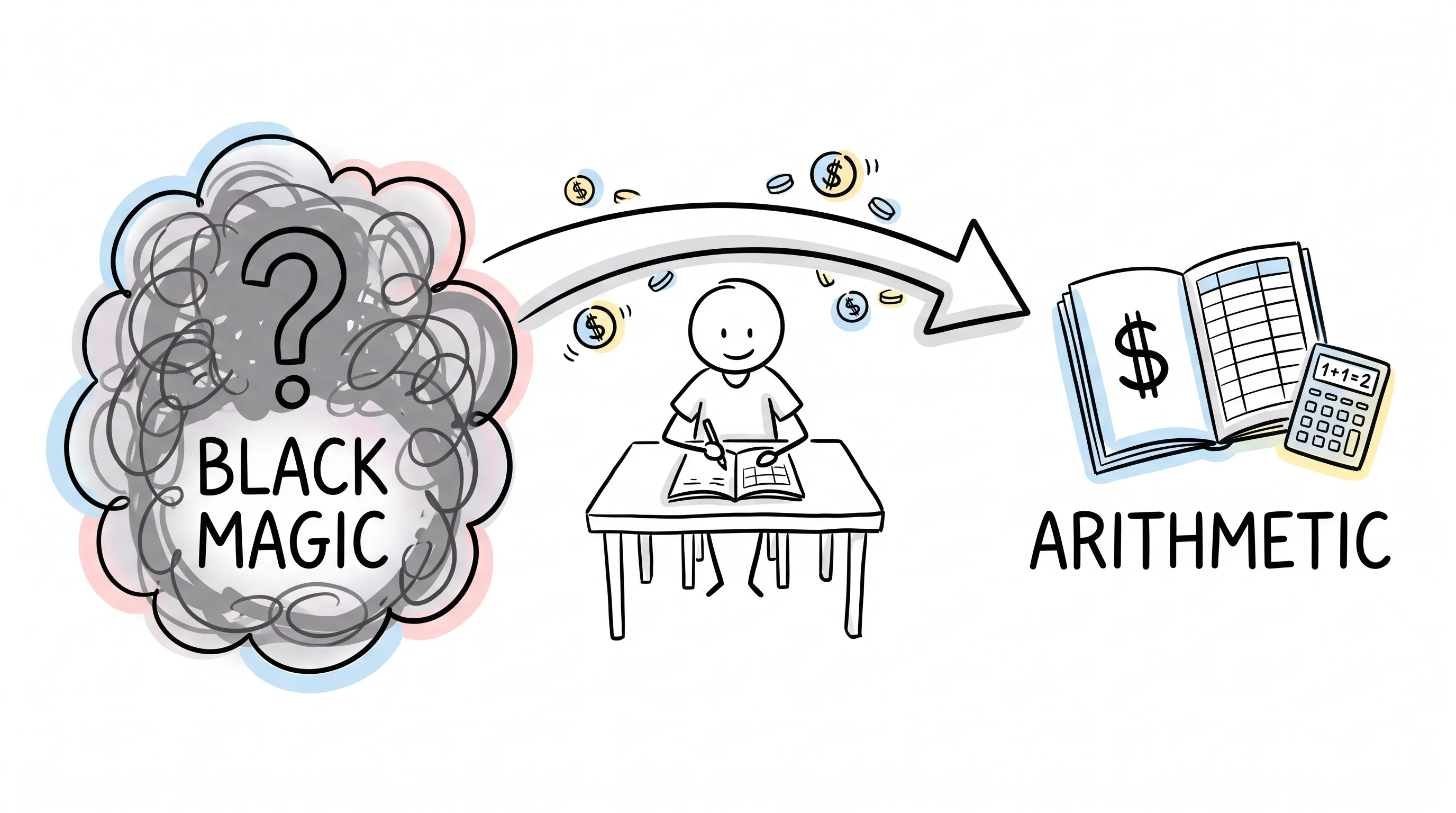
While we're at it, let's clear up a common confusion: this is not the same thing as ordinary social media analytics. Social analytics keeps the books on your own accounts; influencer analytics looks at other people's followers — and whether a given collaboration was worth it.
Most campaigns fail before the review meeting
Think about it: at what point is an influencer campaign's fate sealed?
Not at the review. At the moment you pick the creator.
Pick the wrong creator, and no matter how good the reach looks afterward, the clicks, conversions, and sales will still be ugly. By the time you do the quarter-end review, the money's already spent — and you don't even know who to hold accountable.
That's why the best influencer analytics tools on the market all push upstream: they see through the person before you've spent a single dollar. Once creator selection is on solid ground, the rest of the ledger finally has something to add up.
The scariest thing about putting money into influencer marketing is a bill you can't even add up.
The tools out there, sorted into five buckets
The tool names are endless, and every feature list runs longer than the last. Don't panic. Sort them by what you're missing, and it's five buckets.
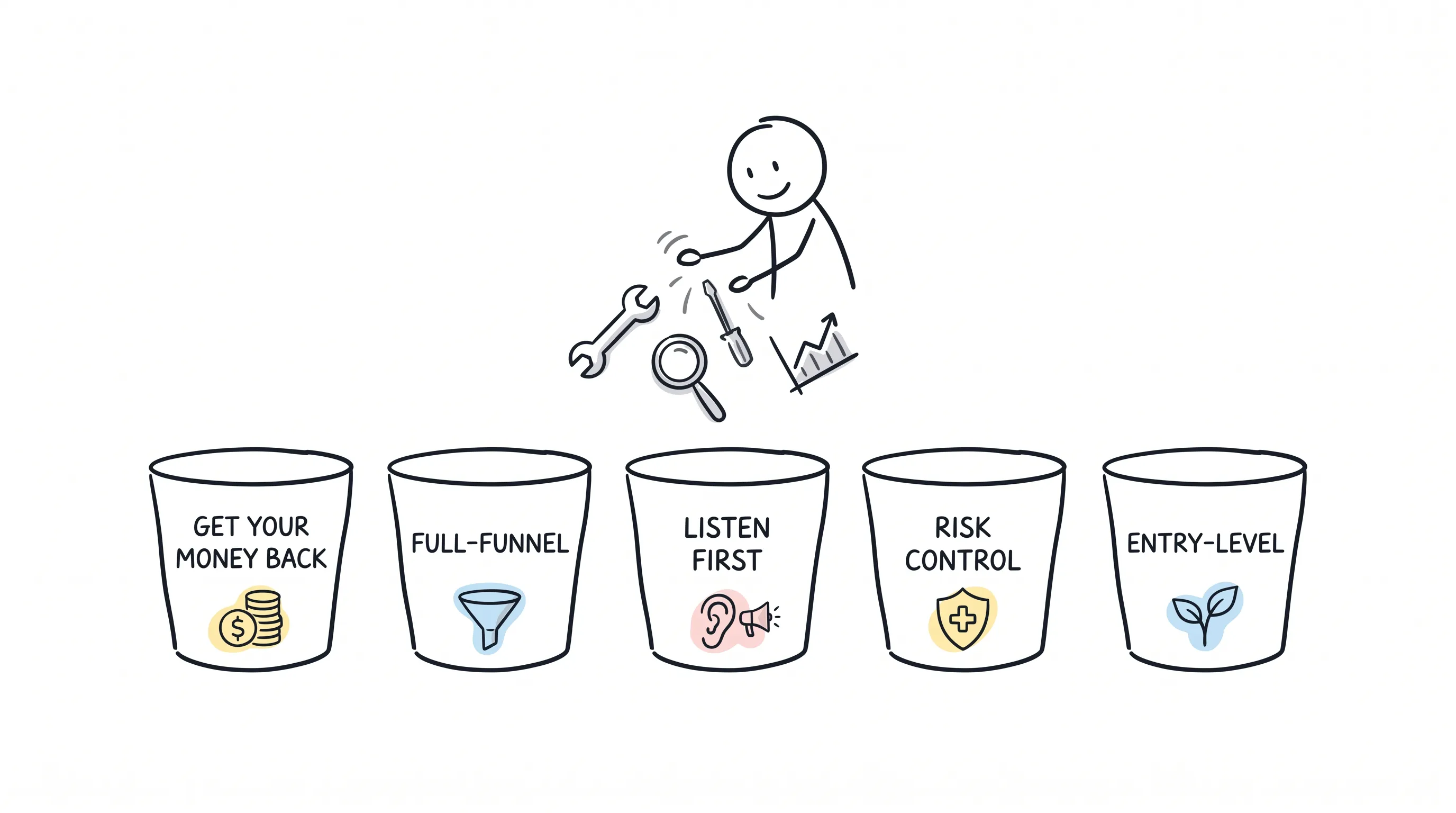
Bucket one: the ones that help you get your money back
The headline act here is Upfluence.
Its positioning is interesting: it doesn't think of itself as an influencer database so much as a creator marketing platform built around business results. Its database holds 12 million-plus creators, and at the selection stage, AI has already screened audience profiles, engagement quality, and brand fit.
But the real firepower comes later: exclusive links, affiliate tracking, promo codes, Amazon Attribution — welding creator activity directly to sales. Clicks, click-through rate, conversions, add-to-carts, revenue, commissions, average order value, CPA, per-creator ROI — all visible on one dashboard.
And there's one play I particularly like: mining creators from your own existing customers. It connects to Shopify, WooCommerce, Magento, BigCommerce, Amazon, and various CRMs, and sweeps through your customer list — who actually has influence becomes obvious at a glance. By Upfluence's own numbers, these "customer-creators" are 7x more willing to collaborate, and their rates can run half as much.
Let's do the math. Marriott Bonvoy used it for a multi-market travel creator campaign: over 11 million cumulative reach, 489 pieces of content published, 2.68 million engagements, cost per view of 2 cents, cost per engagement of $0.30. Another brand, Afnan, used a creator-driven affiliate commission model to generate more than $50,000 in sales over five months.
Pricing is custom-quote and not cheap. Best for e-commerce — especially if you want creator spend and your sales ledger speaking the same language.
On the same path is Creator.co. Four hundred million-plus creator profiles, filterable by audience composition, engagement quality, and content style. Its strength is the "chain of evidence": after a campaign, deliverables, approvals, payments, content performance, campaign costs, and sales results all live in a single workflow. For Shopify affiliate campaigns it auto-generates creator-specific links and tracks clicks and conversions through Impact, with data refreshed daily. It also connects to GA4, pulling conversion events off your website so you can view them against the campaign calendar.
There's a trap here worth calling out. For GA4 data to become "creator-level attribution," the prerequisite is that your own UTM tags, exclusive links, and promo codes are used with discipline. The tool can do the accounting, but the rules of the ledger are yours to set.
Bucket two: full-funnel artillery for big brands
The standard-bearer is Linqia's Resonate platform, built with Fortune 500 clients in its sights.
Its approach is the closed loop: organic and paid traffic sit in one dashboard, up top are impressions and engagement, below connects conversion and cart value, and in between sits third-party brand-lift research — did awareness actually rise, did purchase intent actually rise? A third party measures it, leaving no room for self-reported numbers. Multi-touch attribution and marketing mix modeling line up as well.
Let's do the math. Three Olives Vodka used it to launch a rosé vodka: first, PerformanceMatch technology selected creators across lifestyle, fashion, and culture — all piling on at once, producing 100-plus pieces of content; then PerformanceLift ran multivariate testing to pick the best-performing assets for paid distribution. Finally, third-party firm Dynata verified the results: brand awareness up 27%, purchase intent up 10%, average engagement rate of 27%, and more than 200 million combined paid and organic impressions.
Pricing is by inquiry. Big brands with big budgets and boards to answer to — this is your category.
The other one is Brandwatch, which grew out of consumer intelligence; influencer marketing software is one piece of its map. Its AI assistant is called Iris, pulling conclusions out of oceans of data. Its signature play is "scale."
Insta360 used it to manage more than 4,000 creator partnerships and 60-plus campaigns a year. A performance report used to take 5 hours; now it's generated in one click — reporting speed up 90x, cost per view pressed down to $0.0004. One viral hit pulled 680 million views, and earned a Streamys Brand of the Year nomination.
Bucket three: the ones that help you listen first
The standard-bearer is Brand24. Strictly speaking, it's a media monitoring tool, watching more than 25 million online sources — anyone mentioning your keywords, anywhere, gets caught in real time.
Applied to influencer marketing, the approach runs in reverse: listen first, then invest. Who's already talking about your category, about your brand, unprompted? Whose followers overlap with your target customers? Is the talk around you positive or negative? Map it all first. It maintains two ranked lists — "most active authors" and "most influential authors" — and when you cross-reference them, the people who are both active and influential become your shortlist. You can also set up a dedicated monitoring project per creator, to see whether they typically generate praise or criticism.
Let's do the math. Global66, a Latin American fintech, had used it to turn 18% of its negative sentiment into positive feedback by March 2024. Piwik PRO, which makes privacy-focused analytics, monitored keywords like "Google Analytics alternatives" to find out who in the industry really has the right to speak — and along the way caught the questions its own platform users were asking.
Starting at $199 a month, affordable for brands big and small.
Bucket four: the ones that keep risk pinned down
The standard-bearer is Viral Nation — technology built by a veteran influencer marketing agency. Two pieces.
CreatorOS is the data platform, handling ROAS, ROI, word of mouth, and sentiment in one sweep, with attribution modeling built in-house. Launched in 2023, it evolved from the company's older product, Influsoft.
Secure is the brand-safety tool, using AI to run historical audits on creators — you can scroll all the way back to a creator's first post. Whether the content used copyrighted audio, whether it meets your brand standards — all checkable, and you can define a set of risk scores against your own policies.
The logic is plain: the more collaborations and the bigger the roster, the higher the odds of stepping on a landmine. Larger teams should understand this category first.
Bucket five: entry-level picks for small teams
Tight budget, testing the waters first? This group is for you.
Modash, founded in 2018, 300 million-plus creator profiles covering Instagram, TikTok, and YouTube. Fake-follower rate, engagement rate, audience profiles — all checkable. The most frictionless part: it can track content without creator authorization. Give it keywords, hashtags, or @mentions, and it automatically collects the content and the data. It also connects to Shopify, so promo codes and sales are visible right inside the platform. From $99 a month.
Promoty, $95 a month, a creator database of 190 million-plus, focused on tracking the performance of Instagram posts and Reels.
ClickAnalytic, $149 a month, more than 250 million profiles, with discovery and analytics in one.
Social Status has a free version, with paid plans from $9 a month, specializing in Instagram — it aggregates creator posts and Stories into one dashboard for total reach and total engagement.
Keyhole, $189 a month, strong at hashtag tracking, able to roll multiple creators' data into a single report.
ON Social specializes in Instagram: 125 million-plus creators with over a thousand followers, more than 27 filter dimensions, scanning the tags and keywords across a creator's most recent 150 posts, finding people against more than 1.3 million semantic topics, and even calculating audience overlap between creators — so you don't sign three people whose followers turn out to be the same crowd.
What does AI do in all this? Exactly three things
Someone surveyed influencer marketing practitioners: 48.7% already use AI as part of their routine, with natural language processing the most-used application at 50.4%; roughly 37% already use AI to select and match creators; over 70% of marketers believe that across many marketing tasks, AI outperforms humans.
So what is AI actually doing? I'd sum it up as three things.
First, understand sentiment. Natural language processing reads the comments and tells whether the audience genuinely loves it or just clicked like out of politeness.
Second, predict performance. Historical data projects a creator's next showing, so you have a reference answer before you spend the money.
Third, optimize in real time. The campaign is running, data comes back live, and when a piece of content breaks out, the budget follows immediately — no waiting for the wrap-up report.
AI won't decide for you whether to invest in creators, but it will pull you out of the late nights spent flipping through spreadsheets.
How to choose? Ask three questions
Selection checklists are a dime a dozen online, eight or ten items long. In my experience, three questions are enough.
One: what are you after? If it's brand-building, weight the depth of reach, awareness, and sentiment measurement; if it's selling, prioritize conversion tracking, affiliate, and e-commerce integrations.
Two: is the data deep enough — and is it real? Fake-follower detection, audience authenticity — if these two don't pass, all the beautiful numbers upstream are hollow.
Three: can it plug into your existing pipeline? Shopify, GA4, CRM, affiliate networks — if it connects, the data is alive; if not, you've just added one more island dashboard.
One more plain-spoken note: mind the price, and mind whether anyone actually supports you. Small teams shouldn't jump straight to enterprise grade. Start cheap, and first get your own little ledger straight.
Back to that friend from the beginning
Later, I sent him the Marriott case numbers: cost per engagement of $0.30.
His first reply was: what's mine?
You see? That's where things start getting better — with that one question.
The second half of influencer marketing isn't a contest of who can find creators — it's a contest of who can do the math.
May every dollar you spend be one you can account for.
Continue reading
Related articles
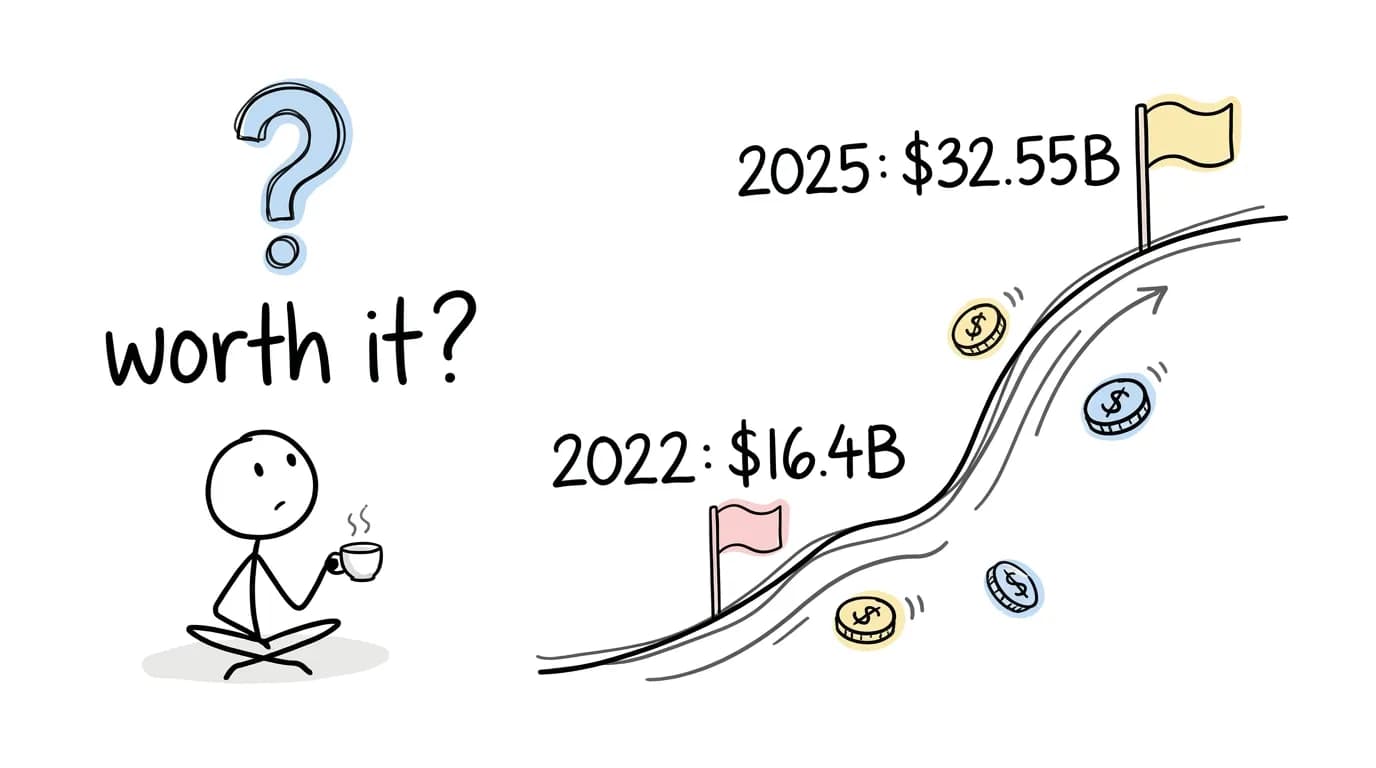
Is Investing in Influencers Actually Worth It? I Broke Down These Dozens of Numbers and Ran the Math for You
A learn article that compiles industry data on influencer marketing, covering market size, ROI measurement practices, nano versus mega creator pricing and engagement, platform budget allocation, AI tooling, and ad disclosure compliance.
The EU Is Handing the Pause Button Back to You
The EU's draft Digital Fairness Act targets dark patterns, addictive design, undisclosed influencer ads, silent subscription renewals, and game spending by minors, while keeping dynamic pricing legal but banning drip pricing; fines could reach 6% of annual turnover.
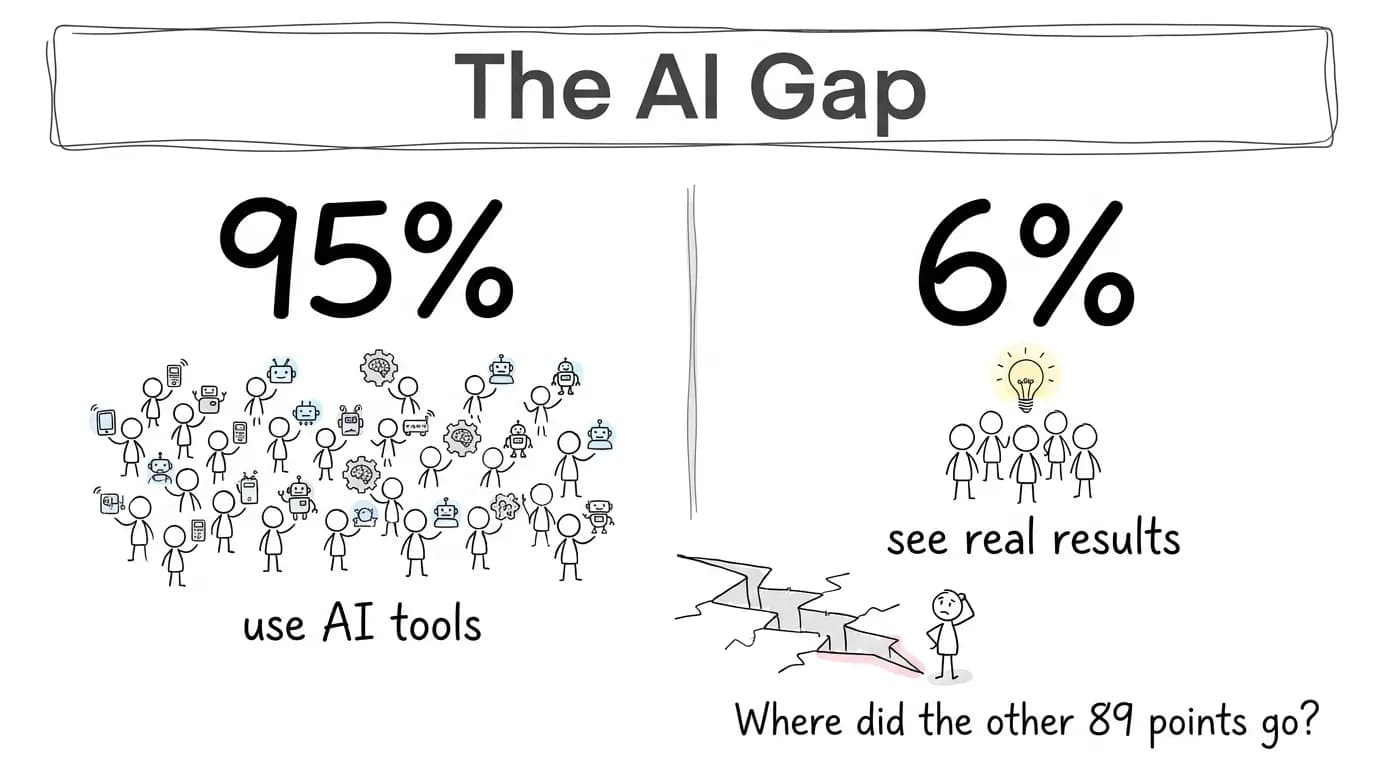
95% of Companies Use AI. Only 6% See Real Results. What's the Gap? Kolsquare's New Report Nails the Answer
A recap of a Kolsquare webinar on AI in influencer marketing, covering adoption gaps, AI-labeled content engagement, AI influencer limits, and generative engine visibility. It also outlines four practical moves for 2027 planning.