
Before You Pay for Loyalty, Ask Four Questions
An article on what separates a real loyalty program from a promotion and four questions to answer before spending: whether the product retains users on its own, who actually signs up, whether customers buy often enough, and what failure looks like — with a case of shifting rewards from the fourth order to the second.
A while back, I moved my files from one cloud storage service to another.
The files moved just fine. The trouble was only beginning.
Every link I had ever shared still pointed to the old account. A colleague clicks one — it won't open. Every single one had to be resent. Every sharing setting had to be reconfigured. An entire afternoon, gone.
The moment the move was done, one thing suddenly became clear to me:
That is what real retention looks like.
It never gave me a single point.
What Exactly Is a Loyalty Program?
Let's get the concept straight. What is a loyalty program?
The customer buys again and again; the brand throws in something extra. The most common form is points: bank them now, redeem them later. The more elaborate ones stack on a membership tier, or perks only members can touch.
Sounds lovely. But there's a trap here that's remarkably easy to fall into:
Calling a discount a loyalty program.
Twenty percent off for everyone today, no threshold, walk in and it's yours. That's not a loyalty program — that's a promotion. Nothing wrong with promotions; run them when it's time to run them. But you have to know what you're doing. A true loyalty program promises a future reward the customer has to earn. Miss the threshold, and there's nothing.
The math on those two things is completely different.
The Question Nobody Asks
Most of the loyalty programs I've seen over the years begin the same way: a competitor launches one, so a meeting gets called. A few weeks later, your program has a name and a slide deck too.
Lots of fanfare.
But almost no one in that meeting asks the deadliest question: What will this program get customers to do that they wouldn't otherwise do?
That one question is worth every dollar of consulting fees.
Why do I say that? Let me tell you about a client of mine.
This client had a points program that had been running for years. The time came to approve the budget for the next round of tiers and benefits. Most owners sign right here and move on. But asking hard questions up front is harder — and worth more: what has this program actually done for us? How much went out, and how much business came back?
They ran the numbers. And the numbers were ugly.
7 out of every 10 points were too small to ever spend. 9 out of every 10 customers had bought only once.
And this program didn't pay out a reward until the 4th order.
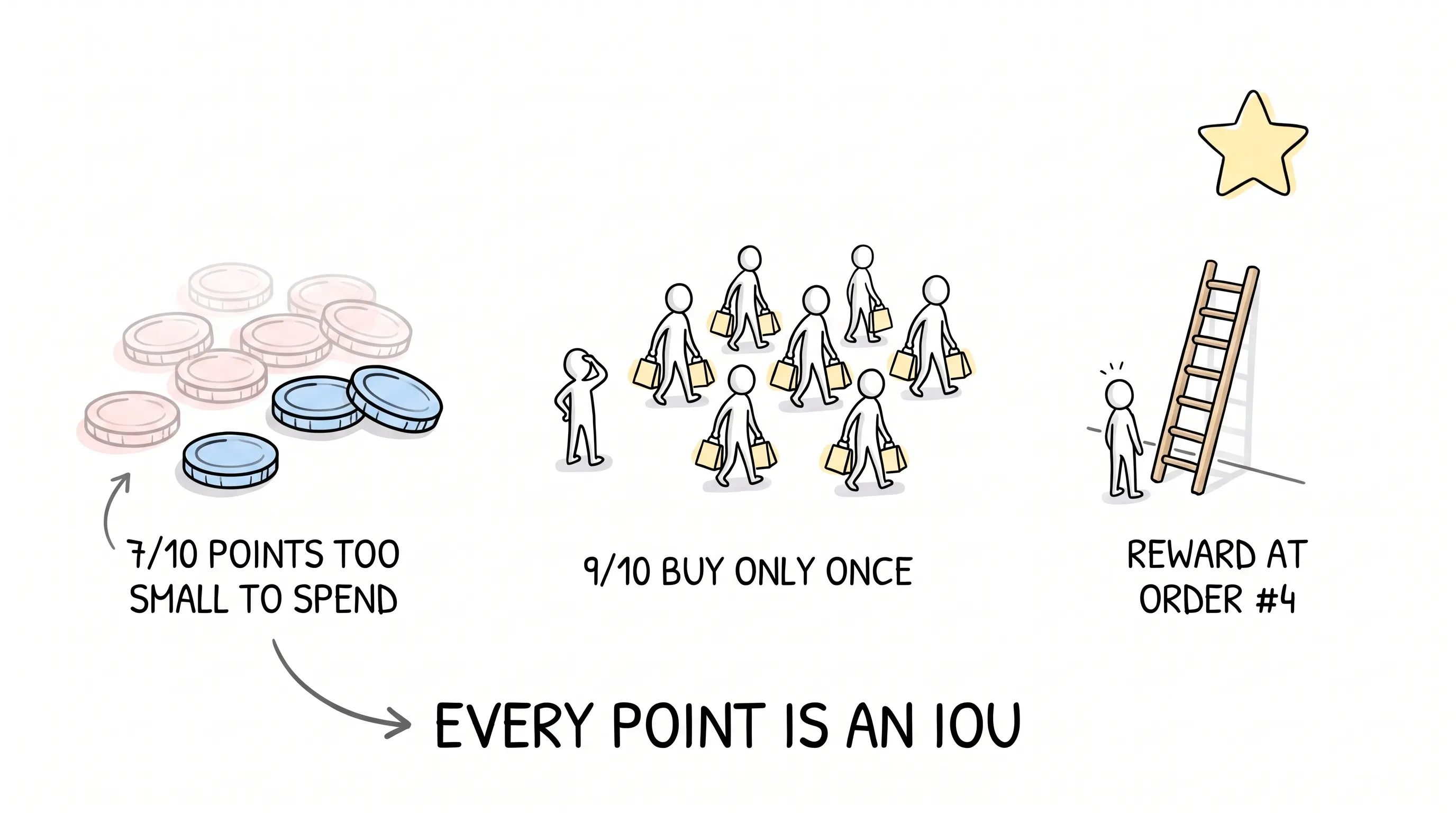
What does that mean in practice? The reward was hung at a height almost nobody could reach. Meanwhile, every point on the books was an IOU — cash you had to keep in reserve, in case a customer ever actually came to redeem.
I asked just one question: what if we took the same budget and used it to push the one-time buyers toward a second order?
Finance ran it. On paper, roughly 7 times the return of the program as it stood.
Staggering. Not a cent of new spend — just a change of direction. The firepower later shifted from the 4th order to the 2nd.
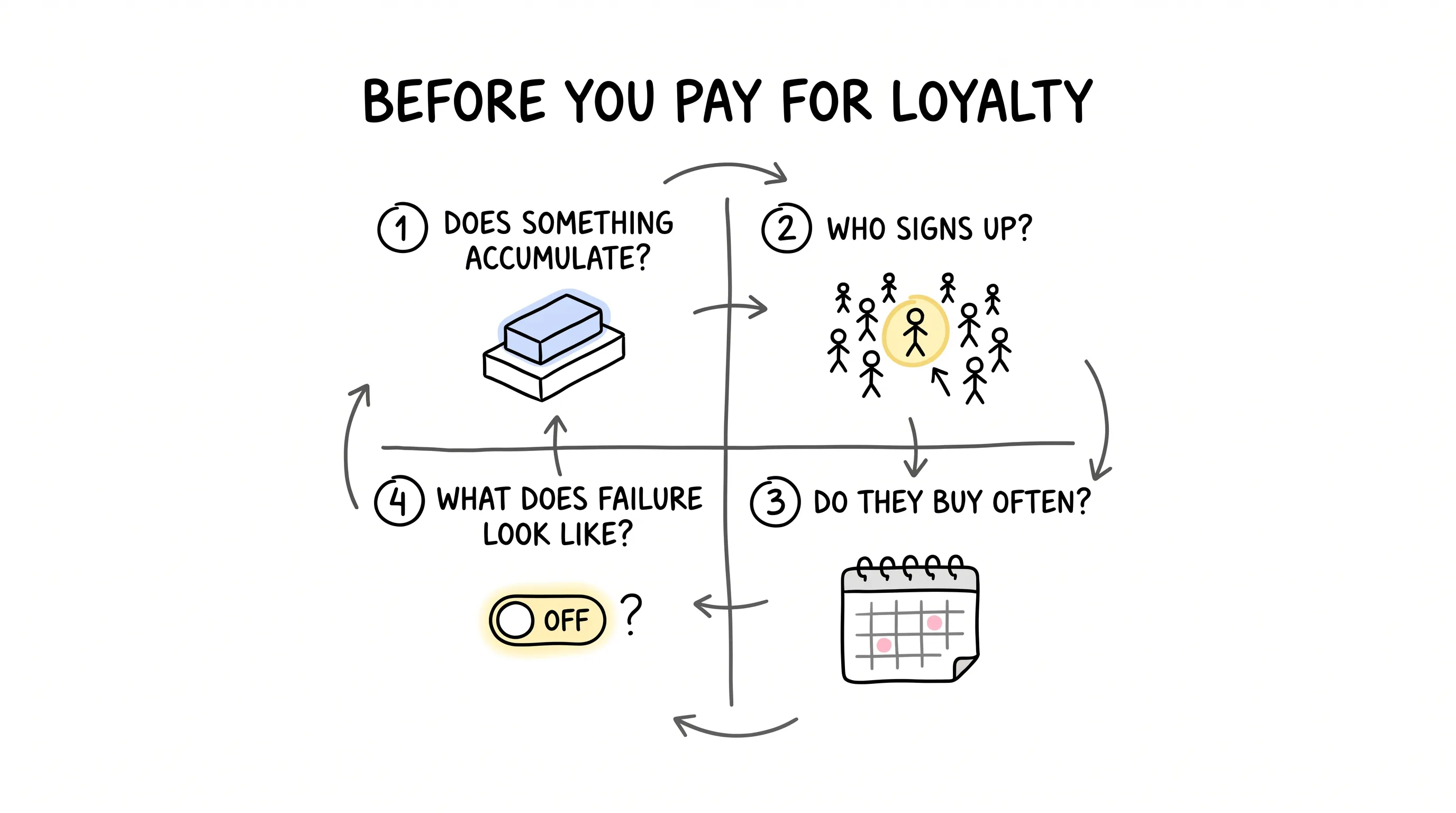
Before You Spend, Ask Yourself 4 Questions
So does that mean no one should ever build a loyalty program? No. For some products, you absolutely should.
The key is to get four questions answered before you start.
1. Does Your Product Let Something "Accumulate"?
Think about it: what's the difference between a customer who has been with you for two years and one who signed up yesterday?
The answer has to be something they'd lose if they left. Note that "they already know how to use our product" doesn't count. Knowing how to use it — switch to another one, and they've learned it inside two weeks.
If every purchase is a one-off — the customer walks out the door, or signs for the package, and the experience is over — then between purchases, nothing accumulates.
What can you do in that case? Start by reducing friction. Keep the customer's purchase history on file, so the second and third purchases go smoother. But that's a thin reason — so thin the customer won't feel it; you'll have to throw in something extra.
Now look at the other kind of product. Remember the hassle at the start of this piece? With that cloud storage service, the files moved, but the links didn't, the sharing relationships didn't, and neither did the habits I'd built up over years of use. It never gave me a single point.
When the product retains people on its own, don't pay to retain them again. Piling a loyalty program on top of it means the company pays customers to keep doing what they were going to do anyway.
Flip it around: if nothing sticks between two purchases, then a loyalty program has a real job to do.
2. Who Signs Up?
The answer: your best customers.
And that's exactly the trouble. Six months later you look at the data, and members' numbers simply look better than non-members'. But you never stopped to ask the obvious question: would they have looked better anyway?
Daniel McCarthy, an associate professor of marketing at the University of Maryland, once took apart Blue Apron's public data from that era: six months after signing up, 70% of customers were gone — and the ones who stayed were always the ones most likely to stay. I made a point of asking him what this means for loyalty programs.
He said loyalty programs often claim credit for loyalty that already existed. The customers most inclined to stay are precisely the ones most inclined to sign up; and if you only look at the members who survived, the bias just gets amplified.
My client was a living example. Nearly every member in the program came from that one frequent buyer in every ten. The program spent money to reward a behavior that already existed.
Nor does that mean the money is thrown away. For this crowd, you can deepen the relationship — let them see, plainly, that they're being treated well. But go in with clear eyes: this is existing loyalty, not new growth.
3. Does Your Typical Customer Buy Often Enough?
9 out of 10 customers bought once and never came back. A points balance, to someone who is never coming back, is just a string of digits.
Now think about the things people buy only once or twice a year. I'm like this myself: I bought something, needed to replace it a year later, and stood in the store completely unable to remember where I'd bought it the first time.
For this kind of customer, making the reward pool bigger does nothing. No reward is big enough to buy back someone who can't remember you.
Two things actually work.
First, put the reward at the moment the customer is deciding. Take what you were going to give anyway and move it to the second order, so it can be used on the spot. Second, don't disappear between purchases. Every so often, send a small, immediately usable coupon. Something like Starbucks: a five-dollar coffee coupon once a quarter — low cost, and frequent enough. Customers come to associate the little gift naturally with "the next purchase."
4. What Does Failure Look Like?
This one is the most counterintuitive — and the one that saves you the most money.
Before launch, decide in advance: at what result do I shut the program down?
McCarthy offers one piece of advice: hold some customers out of the program as a control group. I couldn't agree more. You have to be able to calculate whether the program is producing incremental lift, or just the organic purchases that would have happened anyway.
And if you can't calculate it? Then you'll never find a reason to turn it off. A program that never needs shutting down is usually a program nobody ever truly understood.
The Budget Didn't Change. The Aim Did.
Back to my client.
The budget stayed the same budget. All that changed was where the reward aimed: from the 4th order to the 2nd; from the 10% who were already frequent buyers, to the 90% whose behavior still had room to move.
Should you invest in a loyalty program? You can. But at the next meeting, try opening with this: "We could do this — and I know exactly which group it pays off for."
And if the group on the slide deck isn't the same as the group you know it pays off for — and it usually isn't — then you'd better be ready to answer one question: why.
Spend the loyalty budget on the people who aren't loyal yet. The people who already are — just treat them well.
May every dollar you spend buy a new repeat customer. Not reimburse the ones who were already coming back.
Continue reading
Related articles
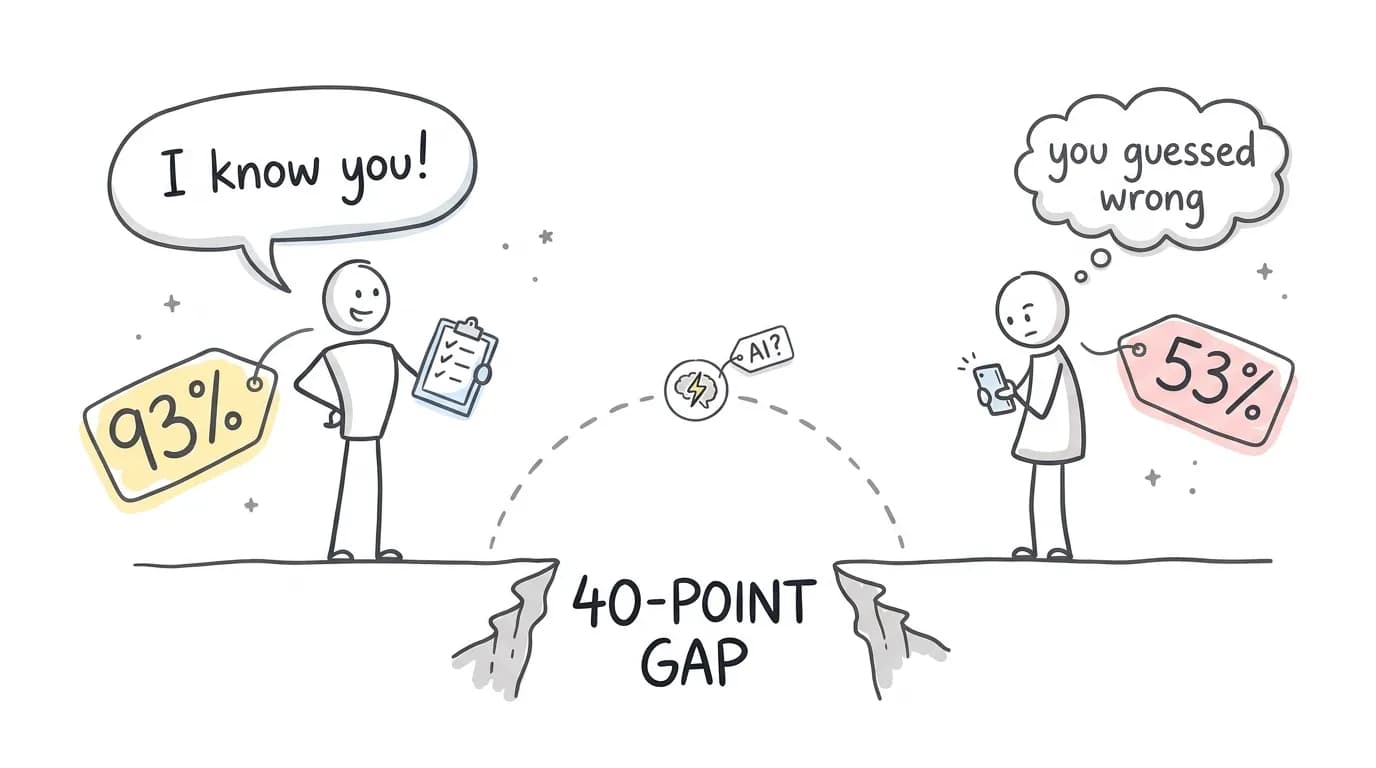
What Is AI Marketing Automation? It Starts With a 40-Point Gap
A learn article explaining what AI marketing automation is: how learning-based systems differ from rule-based automation, how AI decisioning optimizes message, channel, and timing choices, what data it depends on, and where it applies across the customer lifecycle.

Marketing Automation Is Shifting from "You Do It" to "You Say It"
This article explains how marketing automation is shifting from rule-based platforms that merely execute toward AI agents that plan, create, publish, and review campaigns, covering delegable tasks, underlying technologies, tool categories, adoption steps, and risks such as privacy and automating without strategy.
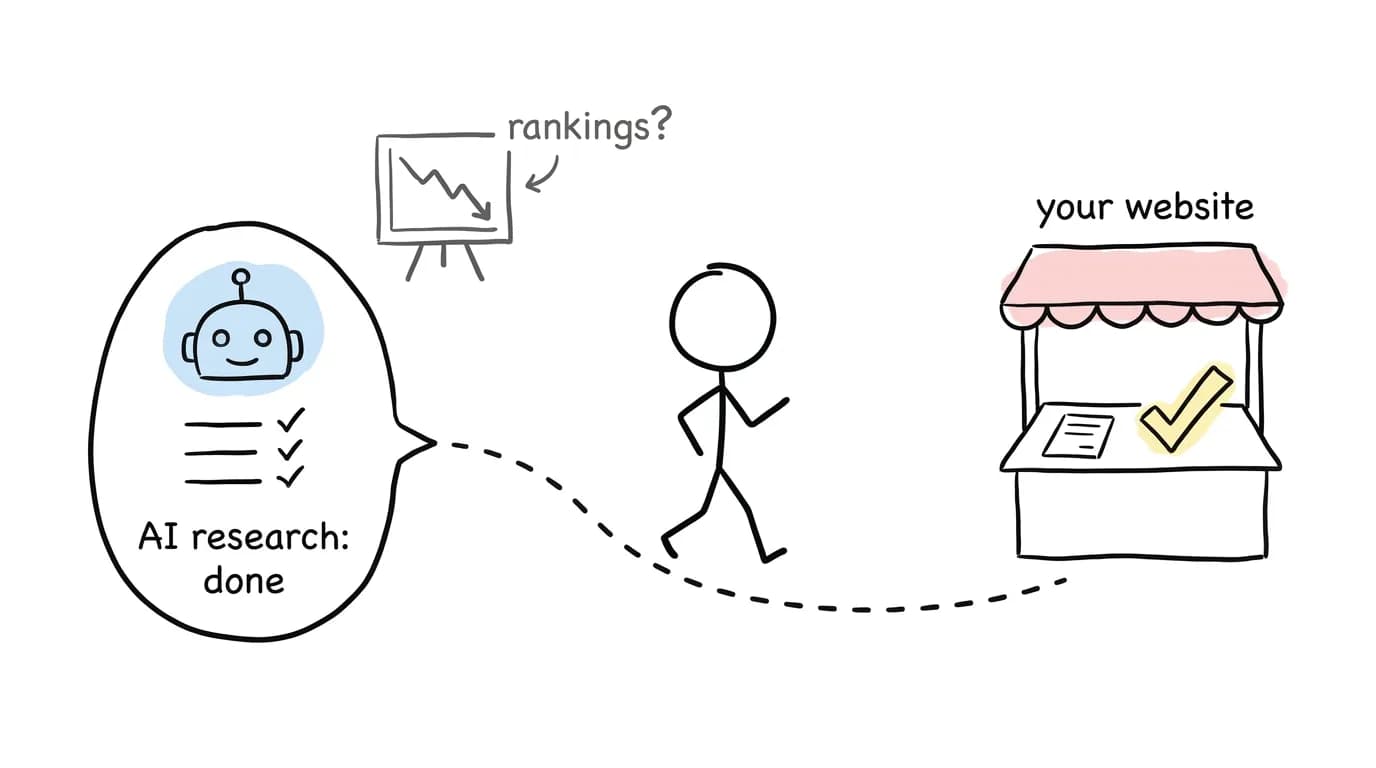
Rankings Are Taking a Dive, Customers Are Sprinting Ahead: This November, I Re-Ran the Numbers on AI Search
A learn article on how AI search reshapes marketing measurement, covering reported mismatches between rank-tracking tools and live Google results, ChatGPT's business profile test, single-page visitors as high-intent leads, and CRO plus GA4 tracking verification practices.