
Are Sales and Marketing Aligned? 82% of Bosses Say Yes. 65% of Frontliners Are Shaking Their Heads.
A summary of an enterprise ABM roundtable with Snowflake, Datadog, and Unisys leads on sales-marketing alignment, covering six actionable practices from account-list syncing to signal-based prospecting and shared revenue goals.
A few days ago, I came across a transcript of a roundtable discussion, and the more I read, the more interesting it got.
At the table were the ABM (account-based marketing, marketing and sales jointly pursuing a short list of high-value accounts) leads of three companies: Snowflake, Datadog, and Unisys. All players who have taken key-account marketing to the enterprise level. The topic they discussed sounded anything but sexy: how sales and marketing actually align.
First, the conclusion. The three didn't agree on everything, but on one thing their answers were remarkably uniform:
Alignment is not a kickoff meeting. It's not a shared spreadsheet. Alignment is an operating discipline you run every week.
What is alignment, anyway? Isn't it just a meeting, a group chat, a synced-up spreadsheet?
It really isn't.
Grab any marketing executive and ask: are sales and marketing aligned? Most likely they'll say, yep, we're good. Then go find someone on the front line doing the actual work and ask the same question. The answer changes immediately.
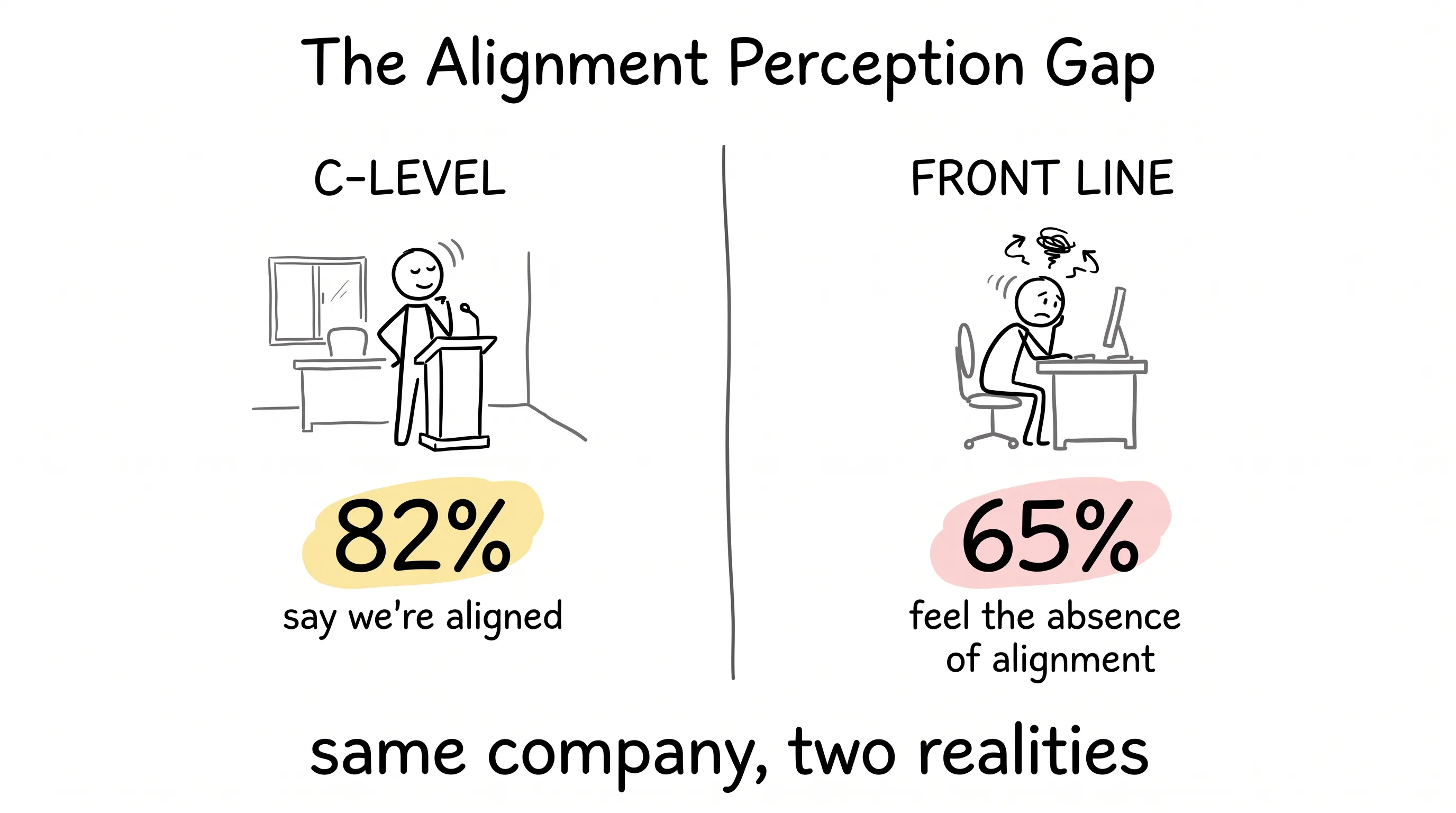
In 2024, Forrester ran a survey on sales-marketing alignment. 65% of sales and marketing practitioners said they could clearly feel the absence of alignment among their leaders. Meanwhile, 82% of C-level executives believed their teams had long been marching in step.
Sit with those numbers for a moment.
The bosses all think they're aligned. The front line is shaking its head.
So what did this roundtable actually produce? I've broken it into six moves — all immediately actionable, all usable this quarter.
The first move: align the lists before you talk about battle
The most common alignment failure happens before the first shot is fired.
What does that mean?
Marketing and sales each hold a target-account list, each assuming the other's is identical to their own, each assuming they share the same ICP (ideal customer profile). Nobody has ever sat down and compared them line by line. By the time the mismatch surfaces, several campaigns are already out the door, and the money has gone to the wrong accounts.
Snowflake's ABM lead offered a few refreshingly ruthless practices.
Two weeks before launch, pull the deals sales is actually working from the CRM and compare them, line by line, against marketing's target-account list. If there's a discrepancy, sit down with the sales leader and thrash it out face to face. Don't just fire over a spreadsheet. A spreadsheet doesn't resolve disagreements — it just files them away.
Then write down, in black and white, the ICP both sides have nodded yes to. And write down who has the authority to change it.
One more thing many people never think of: alignment has a shelf life. A leader changes, the strategy pivots, territories get redrawn — every single time, it should trigger a re-review of the list.
The last one is a reminder for the folks in marketing: dozens of people are competing for any salesperson's attention. If your first visit gave them nothing useful, step back, sharpen your value, and only then knock a second time.
The second move: don't hand off — relay
This part I especially love, because the analogy is dead-on.
The inbound playbook can live with an MQL (marketing-qualified lead, a lead marketing has judged ready for sales) handoff: marketing tosses the lead to sales, and everyone goes home. ABM cannot. In ABM, "handoff" shouldn't exist as a KPI at all.
So what should it look like?
Like soccer. Marketing and sales on the same pitch, passing the ball back and forth until it hits the net. No baton pass at midfield.
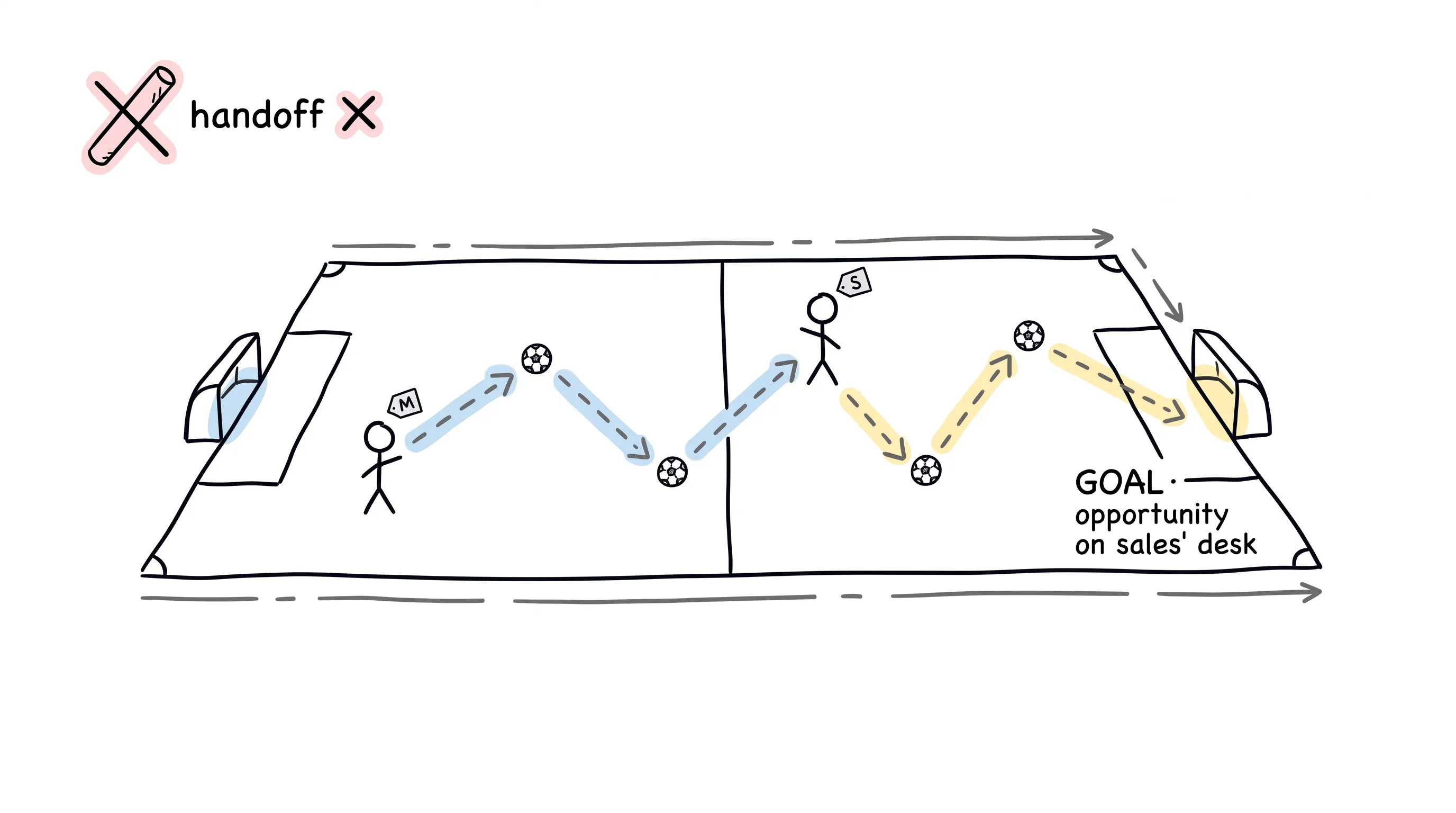
The principle behind it takes one sentence: marketing carries every step forward until sales doesn't have to lift a finger.
Never say "time for sales to follow up." Ask instead: can this step be done for them? Mapping the buying committee — marketing does it. Reaching the executives — marketing does it. Laying the ground with programs — marketing does it. Keep going until an opportunity is sitting squarely on sales' desk.
Even at that point, don't toss it over and walk away. What you deliver is a package: what we've done in this account; where those actions show the account stands today; and what I recommend next — which executive to approach, what to say, which actions to propose.
Note the word: "recommendations," not "requests." Nobody wants one more request landing in their inbox. And assume the other side already has the context — they've almost certainly noticed the stir; they were just busy closing another deal.
So when does this play count as a win?
When sales, while celebrating, @-mentions you without being asked.
When a salesperson says, "There's no way we close this deal without marketing," you're no longer standing across from the sales team. You're on the team.
The third move: deliver signals, not data
The third topic is signals.
Today, anyone can buy third-party intent data (external signals suggesting which companies are in buying mode) from the same handful of platforms. What you have, your competitors have too. Raw intent data has become a commodity.
That's why sales couldn't care less what you bought. They care about one thing only: what your signal work ultimately outputs.
Dump a pile of raw data on sales and let them read it and figure it out themselves? Per the Snowflake lead, that's ABM from a decade-plus ago.
So what's the right way? Here's the critical split.
Use "matching signals" to decide who enters ABM and how much to invest in each. Use "action signals" to decide what to do each day.
What are action signals? Movements tied to a specific person and publicly observable. Someone took a new role. An executive publicly talked up a new initiative. The company announced a project.
This kind of signal is worth the most in enterprise markets.
Picture it: an enterprise salesperson manages 35 accounts that barely change year to year. You run over and say: "Sir, we detected no intent in your patch this year — nothing for you to do for now."
Could you actually say that with a straight face?
Person-level signals are different. Look hard enough, and every account has an entry point.
Then pull all the signals into one place: third-party intent, first-party intent, campaign performance — one unified view. Marketing works on top of it. What sales receives is a recommendation, not a raw data feed.
You can go one layer deeper: overlay intent data with white space (unexplored opportunity inside accounts you already own) analysis and competitors' renewal cycles. Intent becomes one piece of the puzzle, not the whole picture.
A single signal is noise. Multiple signals converging on the same account at the same time — that's what deserves sales' attention.
The fourth move: don't talk tiers, talk which two you must win
This section is a vivid lesson for everyone practicing ABM.
Tell a salesperson: "Your account is in the 1:few tier (ABM's middle tier, where a handful of accounts get coordinated campaigns)." You'll likely get a blank stare.
Because in a salesperson's world, tiers don't exist. Only accounts do.
How you talk about tiering decides whether sales sees ABM as an ally or as a rationing system.
The roundtable's approach: skip the tier explanation and ask a better question directly. Of your 30 accounts, which two must you win? The kind where, without those two, this year's number is in jeopardy.
Once sales names them, marketing makes a promise: these two accounts, we fight them together with you — extra weight on top of the standard demand programs.
What about the 1:many tier? Reframe it: it's the foundation. Even at the bottom-most layer, ABM roughly doubles marketing's investment. The higher tiers are gravy — nothing to fight over.
One particularly clever detail: deliver the tier assignments to sales leadership, not to the front line. When leaders and revenue ops make the call, ABM never becomes the villain withholding resources in a one-on-one.
But the Unisys lead added a dose of reality: this play presupposes an enterprise-grade sales leadership you can align with. In a small team, ABM might be one person. In that case, win the front-line battles first — rack up victories one rep at a time — and trade those upward for management's endorsement.
So how do you allocate specifically? With a scorecard tied to must-win revenue. Meanwhile, reserve part of your 1:1 capacity for big bets: deals that may be small, but are dream logos with enormous white space.
Finally, for the very largest customers, flip the approach: many-to-one. Some enterprise buying centers rival another company's entire account list. Don't spread out — run multiple campaigns inside one account, prioritized by revenue potential and timing window. Chase this year's number, not deals that might close two years from now.
The fifth move: treat sales as your customer — serve them on their turf
Put simply, it's one sentence: you pour enormous effort into studying external buyer profiles — have you ever studied your internal customer?
The internal customer is sales.
Almost nobody does that homework on sales. Think about their day: body in the office, mind with the customer, soaking in the inbox all day long. And the marketing folks? Soaking in Slack and Teams, coordinating internal stakeholders.
Two people, living in two worlds. That's why so much enablement sinks without a trace.
So where do you find sales? Where they already are: email. Searchable, forwardable, already part of their day. Never make them log into a new tool and study a new dashboard just to read your account brief. They won't do it.
The brief's contents must be far broader than a "marketing activity list." What sales wants is the full account picture: the partner and alliance landscape, who we already know inside the account, recent leads and event attendance, intent movements, where the white space lies, and who to prioritize — with what cadence.
One more easily missed layer: sales treats ABM as the window through which they see everything marketing does. They don't distinguish — and don't want to distinguish — between your ABM programs, your in-person events, and your growth campaigns. So you need to know every channel touching your accounts well enough to answer questions on the spot.
AI can lend a hand here too. Hook an agent up to the CRM, and a single prompt can assemble an account brief at exactly this level of detail. But remember: that's a starting point, not a finished product. A human must go through it before anything goes out.
The sixth move: use AI where it isn't sexy
At the roundtable, nobody could escape one question: how are you using AI?
All three leads answered with striking agreement: don't use AI for flashy tricks — use it for grunt work.
Unisys has no shortage of AI tools. The filter comes down to a single question: does this tool help deliver the campaigns and data that move pipeline, win rates, and revenue? If not, set it aside.
Datadog put it more interestingly: they're still not wowed by AI-first creative. The real gains are all on the operations side. Analytics dashboards that once meant filing a ticket and waiting in a queue now pull themselves in minutes; data moves faster between systems; campaigns launch earlier. The goal is for the team to spend time creating, not clicking.
But Datadog left one word of caution: before you walk into a meeting with a dashboard, check the math inside it first.
AI has also changed the cost structure of "customization." A few years ago, roughly half of Datadog's ABM campaigns were generic industry plays with a new name slapped on. Now, nearly every account can get its own dedicated angle — a project the company is pushing forward, or an initiative its CEO has publicly discussed.
But here's the counterintuitive part.
At Unisys, an ABM campaign used to take three months from preparation to launch. Now, two weeks. Sounds wonderful? Every one of your competitors can now launch one in two weeks too.
When everyone is fast, no one is. And buyers are being bombarded harder than ever.
The smarter use case sits with Snowflake. Built on their own platform, they made a small tool: it analyzes sales call recordings and recommends personalized gifts for the ABM team. One VP mentioned on a call that he was hosting a barbecue gathering for Memorial Day. The tool's suggestion: send a grill set. An API connects straight to a gifting platform, and the gift automatically queues itself for review.
Think about how this used to be done? Going around asking salespeople, one by one, what their customers like.
The ROI math is crisp: every hour AI saves doesn't go toward producing more of the same homogeneous stuff — it gets reinvested into 1:1 work, new channels, and new messaging aimed at new lines of business.
Two more practical tips.
When renewing a vendor, ask one extra question: do you have an API? An MCP server? Can our agent only look up your data, or can it actually get work done on your data?
One more thing: email, the default channel, is failing. Executives have started using AI assistants to filter their inboxes. What the Snowflake team is experimenting with are the routes beyond email: out-of-home ads, gifts, executive breakfasts.
The last thing: prove alignment with one shared number
As the roundtable wound down, the moderator asked: how can marketing sit as an equal with sales, instead of playing the support department?
The answers wound around and came back to one word: proof.
What Datadog looks for is this kind of story: a contact whose very existence sales had no idea of, surfacing through ABM, and finally turning into a real, tangible opportunity. They also run split tests between ABM and the standard marketing engine, putting the difference in account impact directly on the table.
When you can slap those on the table, "does marketing deserve a seat" stops being a debate topic.
One step deeper, to the root: set shared goals. When sales and marketing carry the same number, marketing isn't "supporting" sales' goal. Both sides are running toward the same target.
So how do you know you've arrived? Datadog's phrasing is especially clever: it's like product-market fit.
It's not you seeking out sales. It's sales coming to knock on your door.
And from then on, you never have to pitch your marketing department again.
Back to the numbers we opened with. 82% of bosses think they're aligned; 65% of the front line is shaking its head. The day those two numbers flip, don't rush to celebrate — go ask sales first: this quarter's must-wins, which two?
These are the six moves I broke out of a transcript of an enterprise ABM roundtable. Not necessarily all correct — but every single one of them, you can start trying this quarter.
Continue reading
Related articles
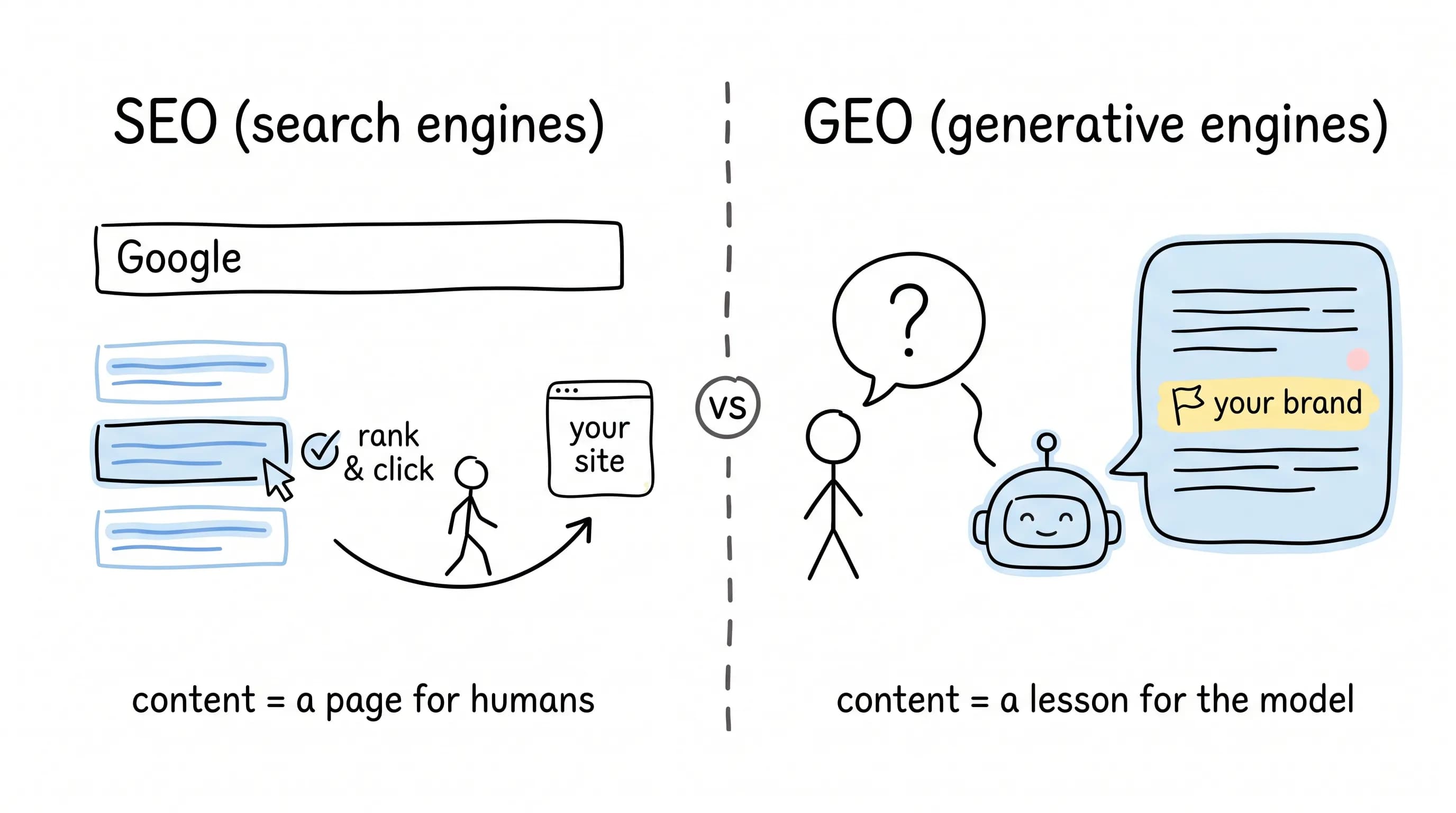
Does AI Know Your Brand? A Look at GEO, the New Craft
An explainer on GEO (Generative Engine Optimization): how AI engines like ChatGPT, Perplexity, and Gemini differ, how GEO goals and metrics diverge from SEO, and which SEO skills still carry over.
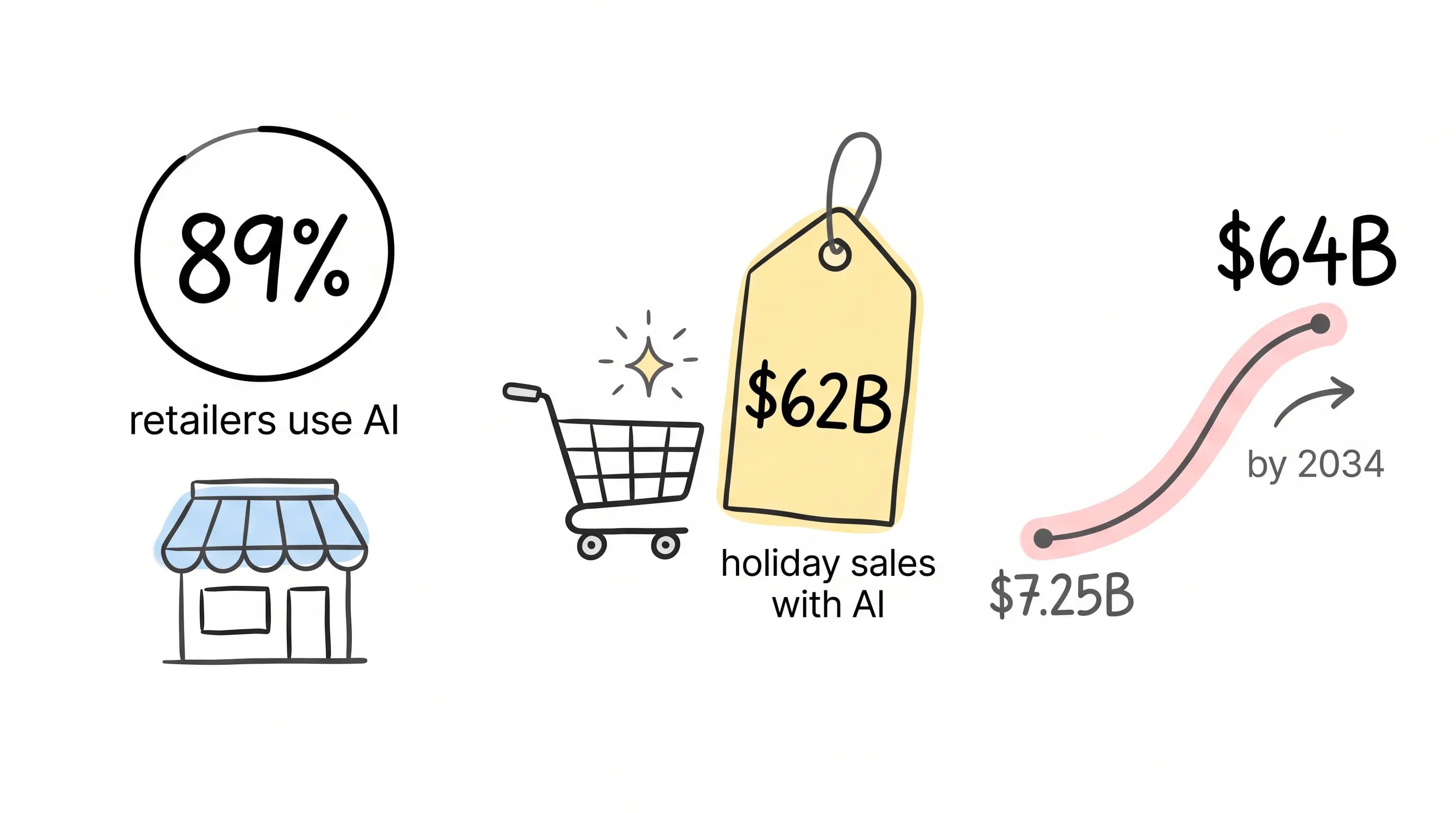
89% of Retailers Are Already Using AI. The Playbook for E-Commerce Has Changed
A learn article on AI in e-commerce: adoption context, use cases from recommendations, search, dynamic pricing, customer service, inventory, and fraud control, plus B2B applications, generative AI content, tool examples, pitfalls, and a six-step adoption path.
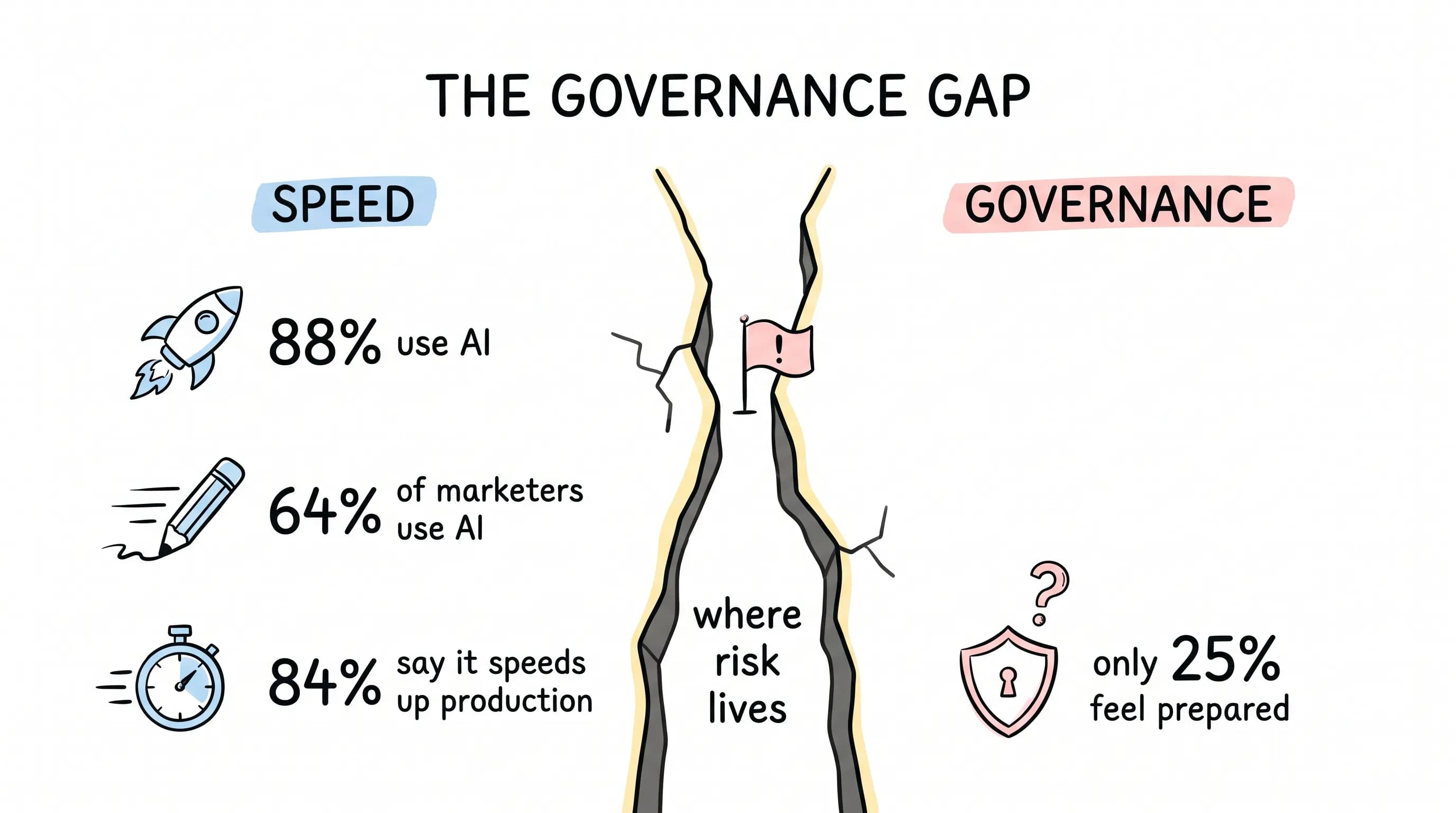
AI Makes Content at Lightning Speed — But Can You Answer "Who Approved This?"
This article looks at the gap between AI content speed and governance readiness in marketing teams, and outlines nine control points — prompt validation, brand guardrails, permissions, approval workflows, human review, versioning, IP checks, audit trails, and asset reuse — for brand-safe AI content.