
AI Puts Itself to Work: 8 Shifts in Marketing Automation for 2026
A learn article outlines eight shifts in marketing automation for 2026, including AI moving from assisting to autonomously planning and executing campaigns, greater reliance on zero-party and first-party data, unified customer data across channels, shoppable video, and keeping human judgment in the loop.
A few days ago, a friend of mine who runs an e-commerce business invited me to dinner. He runs an apparel brand, and his entire marketing department is one person: himself.
I asked: can you keep up?
He said he could. Building email flows, testing different versions, picking the send times — all of that now belongs to AI. He looks at the data, makes the calls, comes up with the ideas.
Wow. I remember two or three years ago, this workload would have meant hiring two people.
After dinner, I went back and dug through this year's industry discussions. Early in the year, 13 leading voices in marketing automation were all asked the same question: what's changing in 2026. I spread all 13 answers out on the table, and the more I read, the clearer it got: these changes aren't arriving one by one. They're arriving in whole waves.
I count eight. Let me take them one at a time.
1. Has AI Moved from Copilot to the Driver's Seat?
What does "AI copilot" even mean?
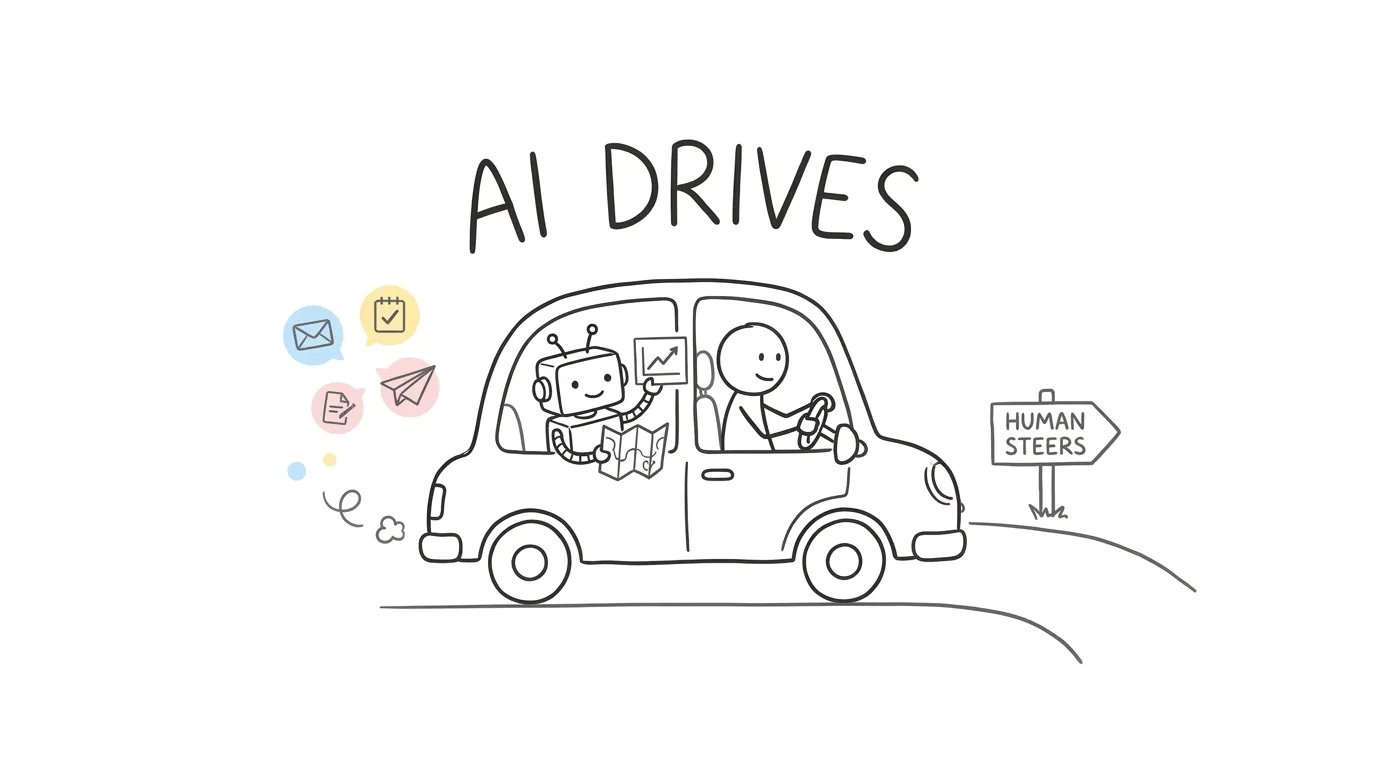
It means AI doesn't do the work for you — it does the work with you. You set the direction, it builds the flows; you come up with the creative, it tests the versions; you say "send it," it picks the moment. The steering wheel stays in human hands.
David Visser, CEO of the New Zealand e-commerce agencies Zyber and Unlocked, predicts that in 2026 AI will finally take over the heavy lifting, freeing marketers to focus on creative, strategy, and community. Stefan Milicevic, strategy director at Underground Ecom, took it a step further: AI will watch retention curves on its own, spot where they start to slip, and proactively recommend triggers, delays, and messaging angles.
What does that mean in practice?
A brand can look after tens of thousands of customers at once, and every one of them still feels that one-to-one, "they remembered me" feeling.
This isn't some far-off vision. Zach Scheimer, who runs marketing at apparel brand Criquet Shirts, says his marketing department is just him — and having Klaviyo's AI assistant analyze his flows and suggest adjustments based on results is already part of the daily routine.
So here's my read: AI gets the work done; people decide which work is worth doing.
The copilot has changed. There's still a human behind the wheel.
2. One Step Further: AI Clocks In on Its Own
However good a copilot is, it still waits for instructions.
What's really worth watching this year is something else: automation that is starting to plan on its own, execute on its own, and improve on its own.
Zac Fromson, co-founder of Lilo Social, says marketing automation is shifting from "workflows that run on a schedule" to "systems that optimize themselves" — planning, running, and tuning campaigns in real time, across channels.
Ben Zettler, founder of Zettler Digital, puts it even more bluntly: automation won't just trigger a message anymore — it will generate and evolve on its own. The brands that win will be the ones that have trained AI to understand their voice, not the ones that write the best prompts.
Joe Hsieh, founder of Retention Commerce, offers an endgame picture: AI takes a customer's entire history with the brand and generates a message that feels hand-written for that one person.
Every touchpoint becomes a real-time conversation, not a scheduled broadcast.
If it really gets that far, what work is left for marketers? Hsieh and Zettler give a refreshingly practical answer — three things.
First, feed the machine. Product details, customer photos, founder stories, buyer reviews — take the material that explains "why your product deserves to win" and organize it into data AI can actually read. The more complete a brand's digital footprint, Hsieh says, the better its personalization engine runs.
Second, change how you play. Swap manual A/B testing for continuous optimization, and let the system keep running small tests and making small tweaks.
Third, keep people in the loop. However fast the technology runs, Zettler reminds us, somebody still has to stand guard and stop the things that shouldn't go live.
At this point you might be thinking: AI runs on data — so where does that data come from?
Now that's the right question. Which brings us to shift number three.
3. You Can't Take Data Anymore — You Have to Trade for It
Start with an uncomfortable question: how did you get the customer data you're sitting on?
The old approach was to record everything you could. Cookies, tracking pixels, third-party sources — scrape whatever was within reach.
But the wall on that road has already been built. EU regulators get stricter every year, Apple's privacy rules get tighter every year, and users' tolerance for being tracked gets lower every year.
Christian Nørbjerg Enger, chief product officer at Segmento, predicts that personalization from here on will have to run on zero-party data and first-party data.
What's zero-party data?
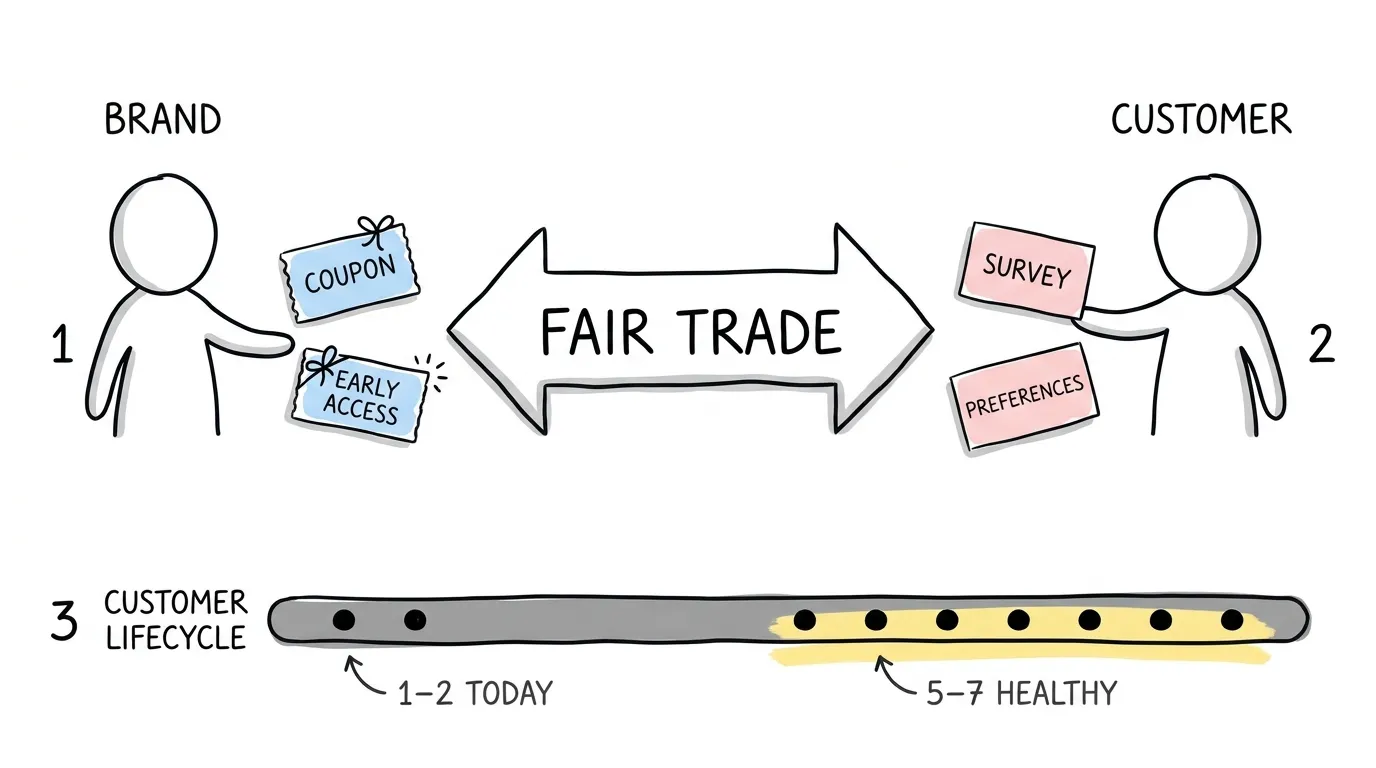
Simply put: the things users tell you themselves. The surveys they fill out, the preferences they pick, the quizzes they take. Not something you guessed — something they handed you.
Marika Tselonis, retention director at Kulin, offers an analogy I particularly like. She says the brands that break out this year won't necessarily be the ones with stronger AI — they'll be the ones with better ingredients: rich, consent-based data that knows not just what customers did, but what they want.
Even a Michelin-starred chef needs good ingredients.
In the privacy era, data isn't taken — it's traded for.
Trade how? Tselonis runs the numbers: most brands have only one or two zero-party data collection points, when a healthy setup is five to seven, spread across the entire customer lifecycle. A survey for a coupon; preferences for early-bird access to new launches. One thing in, one thing out — a fair trade.
She puts the stakes in the sharpest terms:
The gap in 2026 won't be between brands that use AI and brands that don't. It'll be between brands rich in data and brands that guess at their customers.
Blake Imperl, senior VP of marketing at Digioh, is doing different math: acquisition costs keep climbing and cookies can vanish overnight, so smart brands will put their quiz data and preference data to work, turning them into personalized journeys that actually convert.
4. Nobody Should Have to Reintroduce Themselves at Every Store
You've got the data. Next question: do those data sets know each other?
You've surely been here before. You've bought from a brand's app three times, and then you open one of their emails and it still starts with "Dear customer."
It doesn't know you.
Why? Because the data is scattered. Email in one pile, SMS in another, the website in a third, the physical store in a fourth. Every pile holds half of you.
Ashley Ismailovski, director of email marketing at SmartSites, puts it bluntly: fragmented data caps how accurate your automation can ever be; connected data is what buys you sharper segmentation, better-aimed messages, and measurement you can actually trust.
Criquet Shirts's approach is worth copying. Scheimer uses Klaviyo's AI to figure out each customer's most active channel; a story that starts in email picks up on the website, with direct mail layered in. Wherever the customer goes, the experience follows.
However a customer walks in, they should always meet the same brand.
5. Move the Checkout into the Content
The fifth shift is about fewer clicks.
Consumer patience is wearing thin. Between the video someone scrolls past and the order they place, every extra hop loses another wave of buyers.
Ismailovski is betting on shoppable video: purchase points embedded right in the video, so you can buy while you watch — the impulse doesn't have to wait.
Think about your own late-night shopping. That video that made your heart skip — every extra page it makes you open is one more moment to come back to your senses.
Impulse has a shelf life.
Tselonis adds a fair word for the old guard: static email isn't dying, but content that moves delivers a noticeably better experience — and a noticeably better conversion rate.
6. The Wedding Day Isn't the Best Day of the Marriage
For the sixth shift, I want to borrow a marriage metaphor.
The day the deal is signed is like the wedding day: lively, solemn, everyone smiling their best.
But the marriage itself — the day-to-day — comes after.
Mike Kumlin, senior manager of marketing technology at ButcherBox, oversees exactly this. Don't make customers hunt for support, he says — support should grow out of the journey itself: when a customer has a rough interaction, the system offers a graceful way back on its own; and based on a set of behavioral signals, it speaks up first, at the right time.
Support can't just be the last item in the nav bar.
7. Skip the Embroidery — Get the Conversation Right
The seventh shift may be the most counterintuitive of the eight.
AI can now hand-write a message for each individual person — so why are some voices saying "hold off on chasing extreme personalization"?
The one sounding the alarm is Michael Pattison, global strategy director at Klaviyo. His reasoning: staying relevant across the whole journey matters more than being one-to-one on every channel.
Let me put that in plainer terms: rather than embroidering every single letter, make sure you're showing up at the right door at the right time, saying the right thing.
Because today's consumers are impossibly distracted. People have never been this scattered, Pattison says, and no single channel can hold them.
Personalization is the icing on the cake. Relevance is the cake itself.
And no one wants icing on a cake that isn't there.
8. The Stronger the Tech, the More Real Is Worth
The last shift is also the one I most want to tell you about.
In an era where AI content is everywhere, "feels human" has become a scarce commodity.
Kumlin says customers are getting shrewder — they can tell at a glance whether you're real. An off-target recommendation destroys more trust than you'd imagine.
Fromson's summary: the winning brands fuse AI's precision with human sincerity.
Thread these eight shifts together and you find they're really one story: machines are taking away everything that can be automated, and what's left is all human work. Judgment, taste, sincerity, dealing with people.
Back to That Dinner
As we finished up, I asked my friend: with AI doing all the work, are you worried?
He said: worried about what? I used to spend all day tweaking flows. Now I finally have time to think about what I want to talk to my customers about next quarter.
That's the whole answer.
Technology runs the fast part; people decide what counts as right.
In 2026, may your AI carry all the heavy lifting — and may every minute it frees up go to the things only you can do.
Continue reading
Related articles

What Is an AI Marketing Agent? From "Using AI" to "Delegating to AI"
A learn article explaining what an AI marketing agent is, how it differs from rule-based automation, and which repetitive tasks such as lead qualification, reporting, and campaign monitoring can be delegated while humans keep key decisions.

Marketing Automation Is Shifting from "You Do It" to "You Say It"
This article explains how marketing automation is shifting from rule-based platforms that merely execute toward AI agents that plan, create, publish, and review campaigns, covering delegable tasks, underlying technologies, tool categories, adoption steps, and risks such as privacy and automating without strategy.

When AI Does the Creative, Mistakes Come in Batches Too
A learn article on the risks of using generative AI for marketing creative across brand, legal, compliance, and operational layers, with case examples and seven practices for review, rights clearance, documentation, and vendor governance.