
AI Picks Your Influencers: Machines Score, Humans Decide
A guide to using AI for influencer discovery, vetting, prediction, and monitoring in marketing campaigns, with human judgment kept as the final decision step. It also covers fake-follower risks, FTC disclosure rules, and virtual influencer considerations.
A few days ago, an old friend of mine in consumer goods came to me to vent.
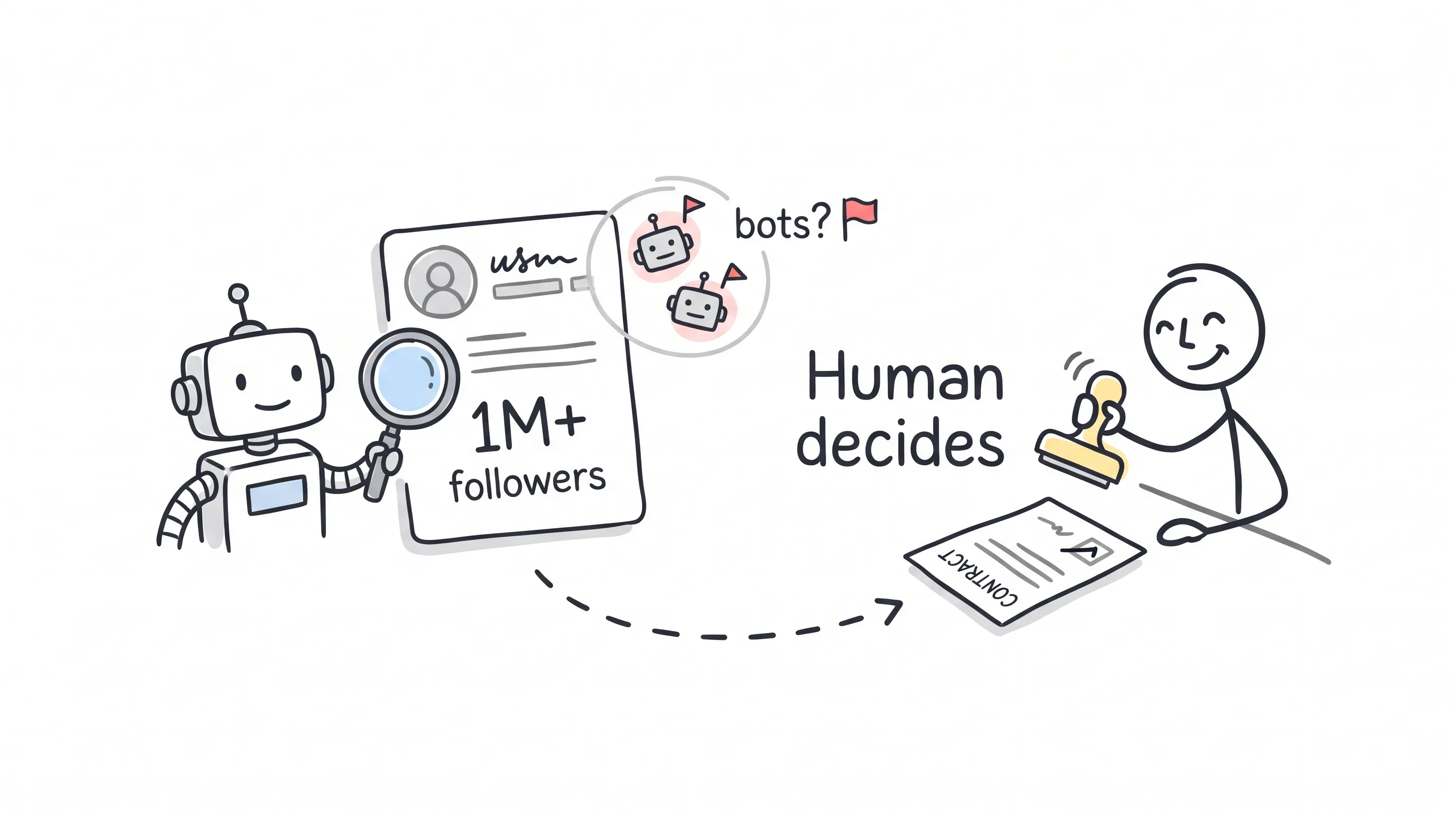
Last year he hired an influencer with beautiful follower numbers. The bill stung, and the results broke his heart. A million-plus followers, tens of thousands of likes, a comment section buzzing with activity. How many sales did it actually produce? He gave me the number, and I froze when I heard it: less than a rounding error of what he'd spent.
When he dug into it later, a big chunk of that influencer's followers were bots. The bought kind.
All I could say was: that's a tuition fee you never had to pay. Because what happened here can be caught in advance by AI — and it's now explicitly covered by the law. Let's walk through the whole thing from the top.
The Four Jobs AI Can Do in Influencer Marketing
What do we mean by AI's place in influencer marketing? Put simply, it's useful in four spots: find the right people, vet them, predict results, monitor execution.
Finding means letting tools sweep the major platforms to see whose content and whose followers actually match your brand. Vetting means checking whether this influencer is a real person with real followers, or all polish on the outside with nothing underneath. Predicting means taking their historical data and audience profile to estimate what this partnership will most likely deliver. Monitoring means that once the campaign is running, you pull data together across platforms and see what needs adjusting.
But these four jobs share one thing in common: the tools produce a shortlist, a score, a report — the final call always belongs to a human.
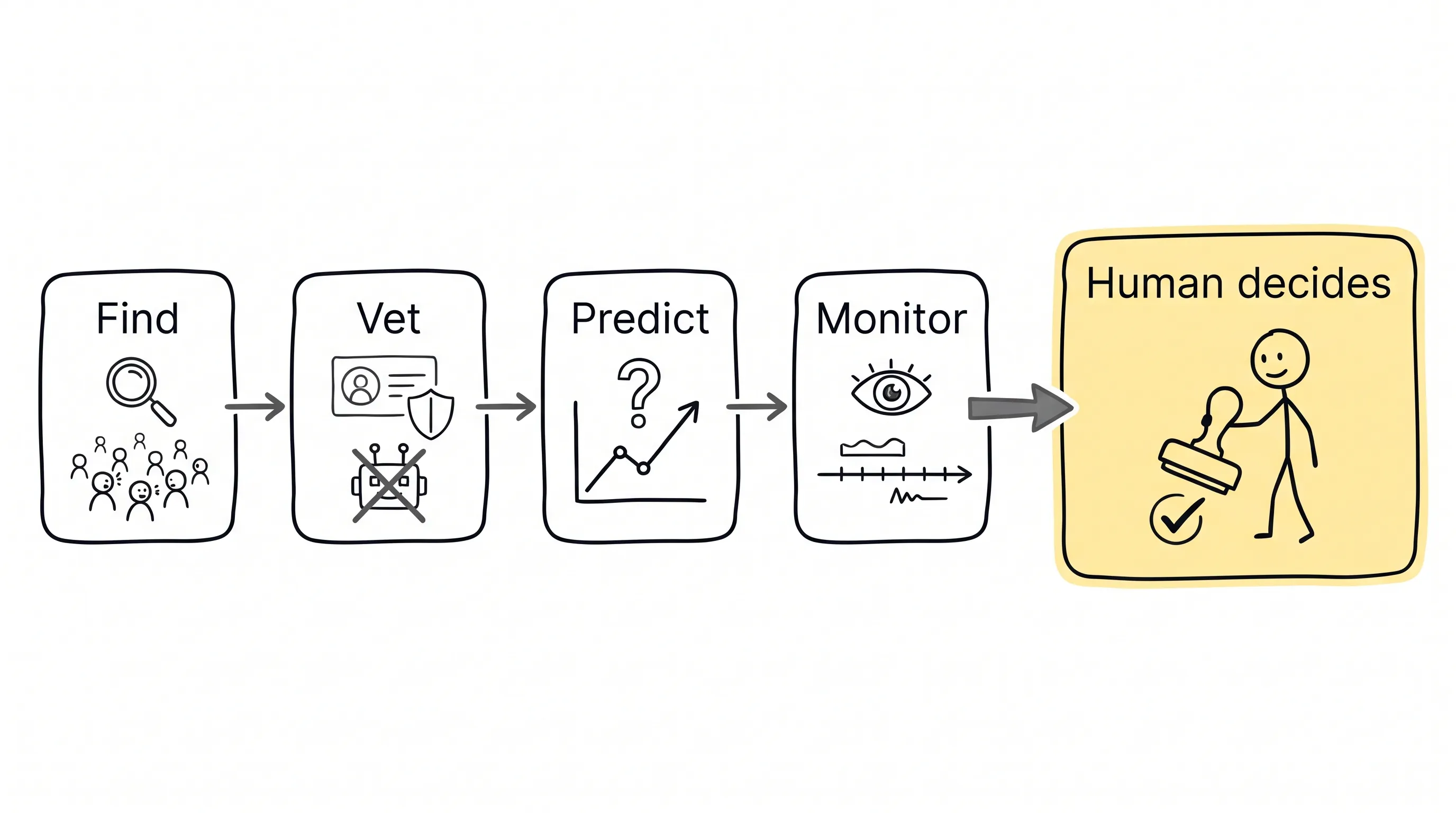
Why? Because a tool can score and rank, but it doesn't know your brand. Whether an influencer's values fit yours, whether their past deals were clean — machines can't make those judgments. A score helps you queue up candidates; it can't sign a contract for you.
Buying Fake Followers Has Changed in Nature
First, the most dangerous part: vetting.
What are fake followers? Accounts bought or manufactured to inflate an influencer's follower count. Bot accounts, stolen accounts — all of it. They represent no real potential customers whatsoever.
In the past, falling for fake followers meant at worst money down the drain. But from 2024 on, this stopped being just a budget problem.
In August 2024, the U.S. Federal Trade Commission (FTC) issued its rule on fake reviews, publishing it in the Federal Register (the U.S. government's official journal of record) in late August of that year. The rule explicitly bans buying and selling fake social media influence metrics. What does that mean? If you knew — or should have known — that those followers or view counts were fake, and bought them anyway to dress up your image, pass off influence, and use them commercially — that's illegal.
And here's the part that stings even more: the rule also bans testimonials from people who don't exist, including fake reviews generated by AI.
Think about what that means. Buying followers has been upgraded from "wasted budget" to "crossing a red line." From this point on, verifying influencers isn't just a way to save money — it's a compliance action. Every fake influencer you catch protects more than one ad spend.
How Does AI Help You Screen Out Fake Influencers?
So what does AI actually look at?
It compares what an influencer publishes, how their followers behave, and the shape of their follower-growth curve against what real audiences should look like. Where things don't line up, there's a red flag.
Three signals are worth checking with your own eyes.
First: followers grow fast, but content quality and posting frequency can't possibly support that growth.
Second: an account has been quiet for a long stretch, then likes suddenly explode.
Third: the comment section is stacked with nearly identical copy-paste comments.
Wait — fast growth doesn't necessarily mean fake, right?
Right. If an influencer has one piece of content blow up, followers will spike too. So AI gives you leads, not verdicts. Any score, any red flag, should be treated only as a prompt to go look closer — before signing, a human has to review every flagged account.
Here's another trick most people don't know: have AI analyze the content the influencer has actually published. You can buy followers; you can't buy content. Someone who genuinely knows fitness and someone faking it produce very different writing — run a language analysis and it shows. Follower counts can't reveal expertise; content can.
Predicting Results: Probability, Not Promise
Step two: predicting.
AI can take an influencer's track record, follower makeup, content format, and posting times, and estimate "what will most likely happen." But know its limits: the model feeds on historical data. New platform features, product categories you've never run — it hasn't seen them, so it can't predict them well.
So the right use of prediction is ranking, not wishing. Use it to rank candidate influencers, then design a test plan around that ranking and let real results do the talking.
While we're here, one thing many people miscalculate. What's a micro-influencer? Typically a creator with 10,000 to 100,000 followers. Their audiences are small, but sharply focused — a room full of exactly the right people. So against mega-accounts with followings in the tens of millions, don't compare reach; compare cost per conversion. A mega-account's exposure is an ocean; a micro-influencer's following is a well. For conversions, the well is worth more.
Virtual Influencers: Can You Use Them?
You might be thinking: since real influencers' numbers come with so much padding, why not just use AI virtual influencers?
Lil Miquela, Imma, Shudu — these virtual humans have already worked with fashion and lifestyle brands, and on the surface it all looks lovely.
But trust has a ceiling. In beauty, health, food, financial services — categories where what consumers buy from you is trust of the "safe to eat, safe to put on my face" kind — most people hesitate when the recommendation comes from a digital avatar.
So the steadier play is: virtual humans behind the scenes, real humans up front. Use AI personas for creative testing and idea incubation; hand the public-facing campaigns to real people.
By the way, that FTC rule also puts a gate here: no comment, no testimonial, may pretend to come from a real, existing person. However polished the fictional persona, it can't be used to pose as a real customer saying nice things.
Disclosure: Brands Can't Dodge This
One more thing that's easy to overlook: disclosure.
The rules don't loosen just because content is AI-assisted. Whenever there's a material connection, it must be clearly disclosed. The FTC's Endorsement Guides and its influencer disclosure guidance spell out exactly where disclosures go and how to verify them. And the responsibility for monitoring your own creators lands on the brand. No dodging that.
The trouble is, each major platform has its own — frequently changing — labeling rules for AI-generated content. So before anything goes live, check each platform's current policy. Don't let last month's memory stand in for today's policy.
In practice, it comes down to three things: write disclosure requirements and AI-usage rules into creator contracts; keep records of how AI was used in every piece of content; and leave a human review step on every recommendation AI gives you.
Want to Adopt AI? Do It in This Order
Finally, if you plan to bring AI into your influencer marketing, order matters. You can't take it all in one bite — validate one step at a time.
Step one: pilot the finding-plus-vetting part on a single campaign, and compare the results against your old manual process. Step two: add prediction, and reconcile its estimates against actual outcomes to see how accurate it is. Step three: let AI help with topic ideas, posting times, and draft copy — but the influencer's own voice leads, AI plays support. Step four: bring in cross-platform dashboards so attribution (which campaigns actually drove sales) gets clear. Step five: automated optimization comes last, and decisions on budget and strategy must be approved by a human.
On the tools market: creator platforms like CreatorIQ, Upfluence, Modash, and Meltwater Klear all offer finding and workflow features. When choosing one, don't judge by the length of the feature list — judge by whether it connects to your attribution system. A tool that can't plug in is a data silo, no matter how pretty its dashboards.
Back to That Friend from the Beginning
He's switched his approach now: before signing anyone, he has tools run the follower profile and content track record first; anything flagged red gets a human check before price talks even start. Disclosure clauses are locked into his contracts. And this time the same budget went to several vertical micro-influencers with 10,000 to 100,000 followers each.
I can't promise results yet. But at least this time, every dollar went to a real, existing person — and the real, existing followers behind them.
May your next influencer pick go like this: the score is only a lead, and the final call is always yours.
Continue reading
Related articles
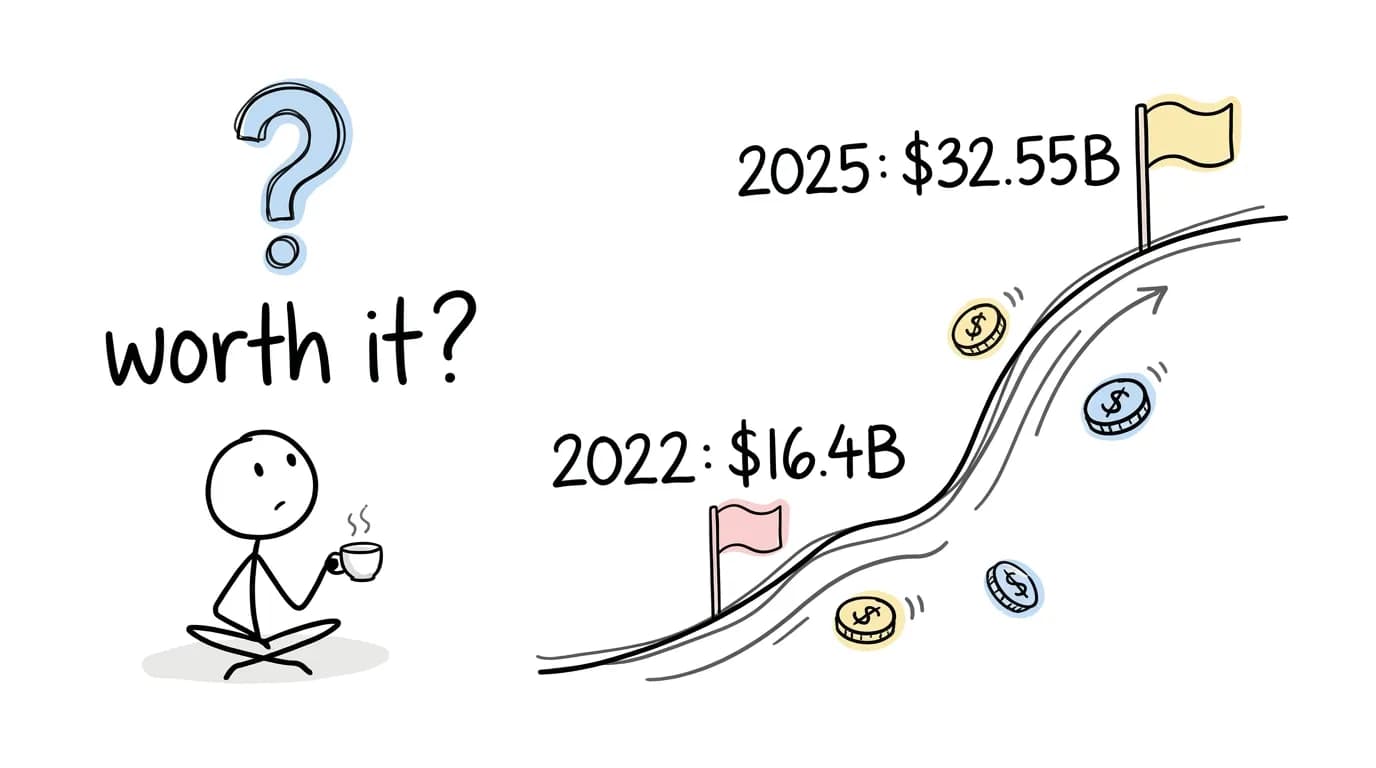
Is Investing in Influencers Actually Worth It? I Broke Down These Dozens of Numbers and Ran the Math for You
A learn article that compiles industry data on influencer marketing, covering market size, ROI measurement practices, nano versus mega creator pricing and engagement, platform budget allocation, AI tooling, and ad disclosure compliance.
The EU Is Handing the Pause Button Back to You
The EU's draft Digital Fairness Act targets dark patterns, addictive design, undisclosed influencer ads, silent subscription renewals, and game spending by minors, while keeping dynamic pricing legal but banning drip pricing; fines could reach 6% of annual turnover.
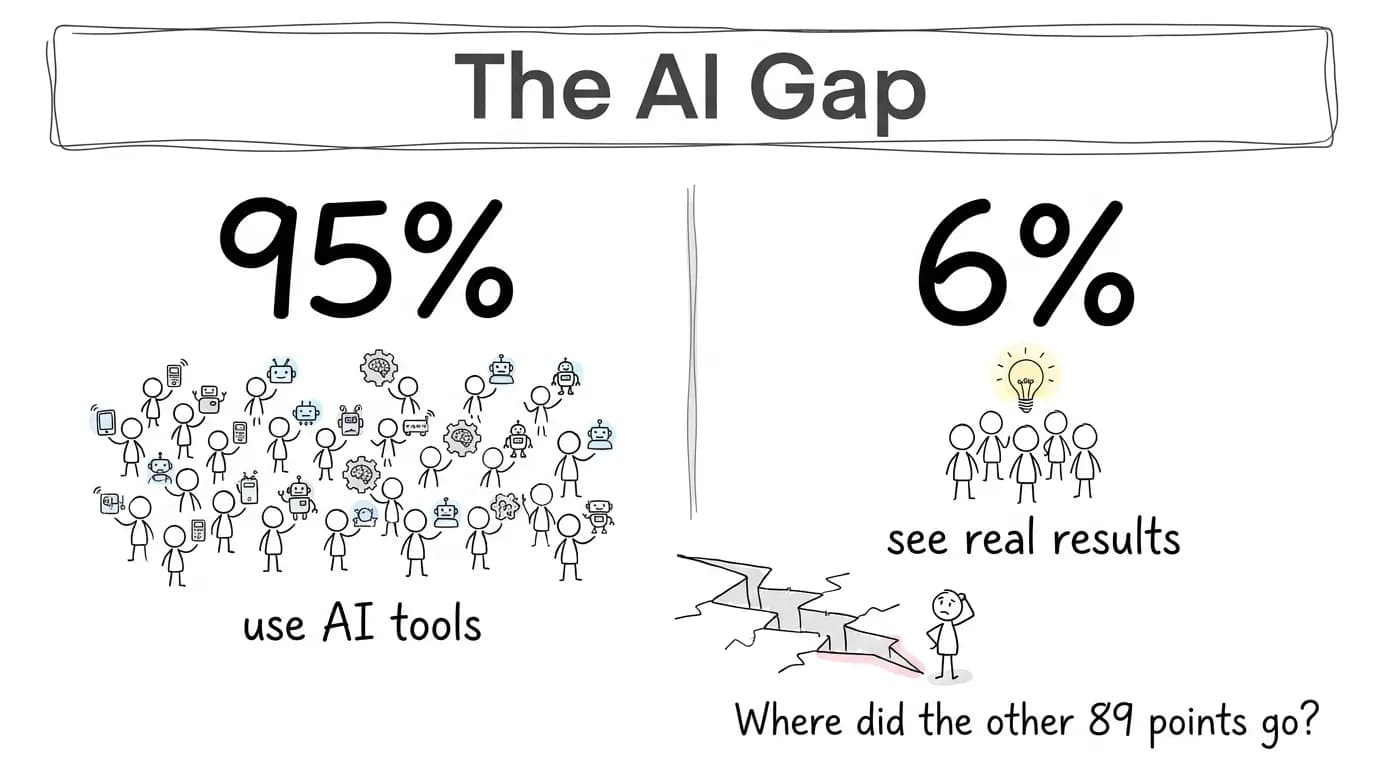
95% of Companies Use AI. Only 6% See Real Results. What's the Gap? Kolsquare's New Report Nails the Answer
A recap of a Kolsquare webinar on AI in influencer marketing, covering adoption gaps, AI-labeled content engagement, AI influencer limits, and generative engine visibility. It also outlines four practical moves for 2027 planning.