
AI Moved the Front Door of Shopping. Microsoft Advertising Pulled Up a Seat Early.
A learn article on Microsoft Advertising's November updates: ad slots beside Bing AI Overviews, the Discover feed on Edge, Xbox Video for Brands, AI Max URL inclusion, AI content labeling controls, an MCP server for ad accounts, and a bidding model upgrade, framed around shopping moving from search links to AI chat.
A few days ago, I asked AI to pick a birthday present for the kid at home.
One sentence covering my budget and the kid's interests, and it handed me three options — plus a friendly reminder about the shipping deadline.
I stared at the screen for a few seconds, and suddenly it hit me: the front door to shopping has moved.
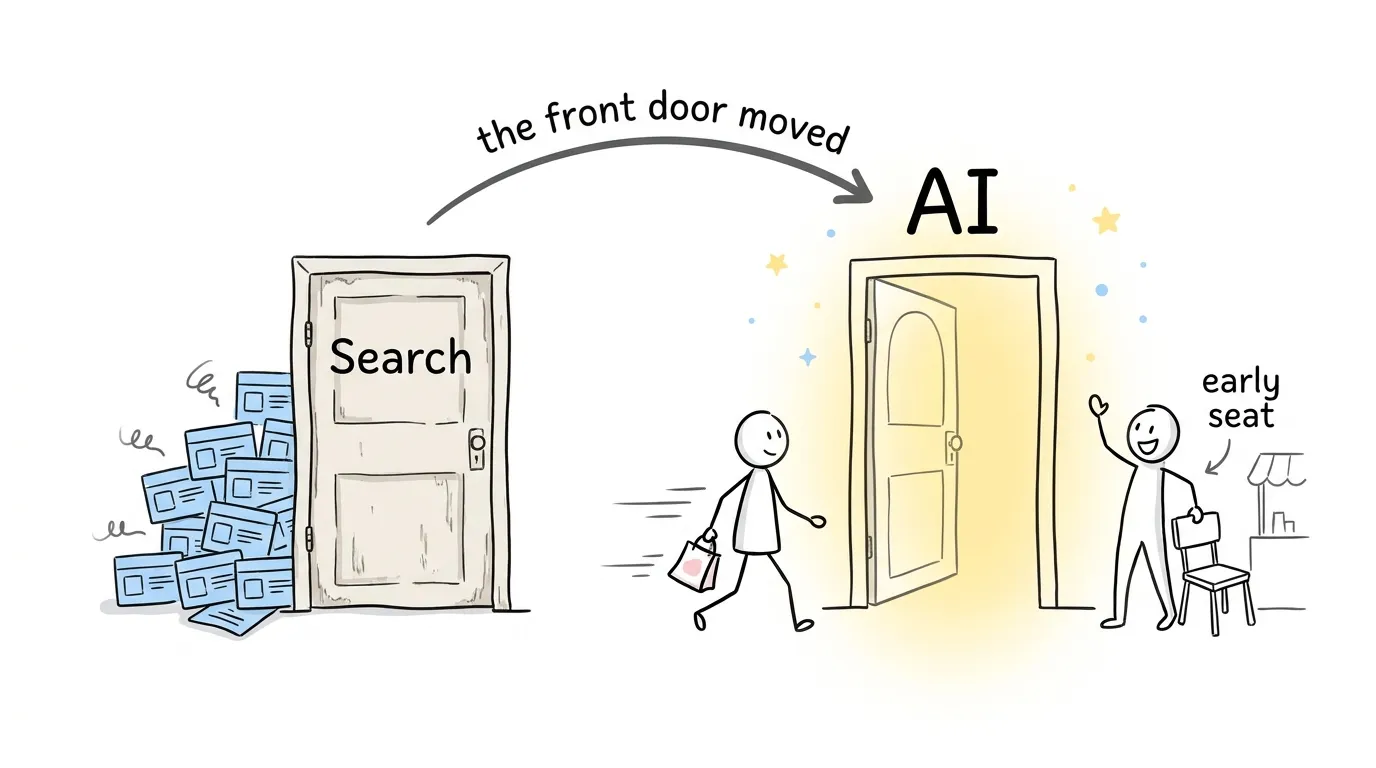
We used to call this "search." You opened a box, typed a few words, and dug through a pile of blue links yourself. Now? You just ask, and you get one answer.
In July, Microsoft ran a holiday shopping survey of 1,024 US consumers: 76% plan to use conversational AI for gift ideas. Australia: 74%. UK: 70%.
Good grief. Three out of four.
Your customers are already asking AI for directions. So where does your ad stand?
Microsoft Advertising's November updates answer exactly that question. Broken down, it's really two sentences: your customers have moved to three new places, so your ads have to follow; and the more automated AI gets, the tighter you need to grip the steering wheel.
Places first.
What Are AI Overviews? Search Changed Its Face
Ask Bing, "Three days in Snowdonia National Park in Wales — how should I plan it?"
It doesn't throw ten links at you. It hands you an itinerary, plus a few tips. That answer is an AI Overview.
Before, you fought for a spot in the list of links. Now, you fight for a spot beside the answer.
Microsoft has opened up that spot. Your hotel ad can sit right next to that itinerary.
Think about it: someone specifically asking "how do I spend three days in Snowdonia" — what does that tell you? It tells you they're very likely actually going. Serving them a hotel at that moment beats targeting someone who searched "cheap hotels Wales" by a mile.
Because the AI's answer voices the need the user never typed out.
Even better, there's no separate campaign to build. Your existing Performance Max and AI Max campaigns can run straight in. Open in all markets except mainland China.
The results are on the books. Microsoft's internal data, December 2024, global Edge users: after chatting with Copilot, purchase activity rose 21%.
AI chat isn't small talk. It's pushing people to decide.
Discover: A Feed That Isn't So Crowded
The second place is called Discover.
Microsoft's new AI content feed lives on the new tab page of Edge for desktop, and in Windows too.
Think about what the new tab page means: you open your browser dozens of times a day, and this is what you see every time.
What did that page look like before? A feed stuffed to the brim, ads and content stepping on each other, no one standing out.
Discover takes a different approach. The page splits into three zones: want to quickly know what happened today — news; want something with weight — editor-picked stories; want to go deep on a passion — dive in. AI works behind the scenes, tuning everyone's feed to their taste.
Behind it stand serious publishers, plus a creator network of more than 3,500. News depth meets creator energy.
So what do advertisers care about most? Crowding.
Microsoft's internal data from last month (October), here's the math:
Ad count per page: 35% lower than the old MSN.
Viewability: 35% higher.
Click-through rate: 8% to 12% higher.
One-third fewer ads, and performance goes up. Infuriating, right?
Discover is live in the US, Canada, UK, Australia, and India. To get in, talk to your Microsoft Advertising account team.
Xbox: The Minute Before the Game Starts
The third place might surprise you: gaming.
Earlier this month, Microsoft launched something new: Xbox Video for Brands.
Before a player starts a cloud gaming session, a full-screen, non-skippable video ad plays. There's a clever design touch: watching that ad can help the player unlock in-game perks; and once the game starts, not a second of interruption.
Picture the scene: someone with their feet up, controller in hand, just waiting for the game to load. For that minute — where are their eyes?
TV advertising's nightmare is the viewer getting up for a bathroom break. Here, there's no bathroom, and the door's shut.
Already running premium video or connected TV? Your creative is ready-made; move it over. Already advertising on Xbox? This is one step closer to the moment they hit "play."
The Steering Wheel
More places, more AI — and a new question follows: when it makes its own calls, does that make you uneasy?
This month, Microsoft Advertising shipped three things. Let me take them one by one.
Draw the Runway for AI Max
Last month, Microsoft added "copy guidance" — you can tell the AI, in plain language, which direction your ad copy should go.
This month, it added URL inclusion — plainly put, "designated URLs": you tell the AI which pages on your site can serve as landing pages, and where the copy material should come from.
An example. You run a home goods store, and for the holiday shopping season you want customers landing on your gift guide pages. Add those pages to your inclusion list. AI Max will send the relevant traffic there — and pull ad copy straight off those pages.
Trust in automation is earned through control.
Put a Label on AI Content
AI-generated images, AI-generated video — the efficiency is real. But there's a landmine buried here: several countries are drafting laws that may make labeling mandatory for certain AI-generated content. No label, and you're out of compliance.
Microsoft Advertising's AI content transparency controls are now fully rolled out this month. Which image, which video is AI-generated — you declare; a visible watermark — you choose; and for managing at scale, go through Ads Studio, or the API and product feed.
Note one detail. Microsoft itself provides AI detection signals — but they're for reference only.
At the end of the day, whether you declare or not, the responsibility is yours — not Microsoft's.
Product Ads, Multimedia Ads, Audience Ads, Display, video ads, and assets inside Performance Max are all covered. For how far each specific format is supported, check the documentation.
Plug Your Ad Account into Your AI Assistant
The third thing is, personally, the most interesting: the Microsoft Advertising MCP server.
Open for testing since July. What does it do? It connects your Copilot, ChatGPT, or Claude straight to your Microsoft Advertising account.
Then you can ask it the way you'd ask a colleague: "How did my holiday campaign do this week versus last?"
Which creative is performing best? Anything wrong with conversion tracking? Where is the policy review at? Just ask.
No more juggling eight tabs, hunting for data and stitching the answer together yourself.
The Auction System Swapped in a New Engine
Microsoft also announced something this week that I want to pull out on its own: the biggest auction model upgrade in a decade is starting to roll out at scale.
Advertisers already using Maximize Conversion Value or Target ROAS saw, on average, 10% more conversion value per click, according to internal data from August.
Ten percent — without spending one extra dollar.
Where's the upgrade? CPA and ROAS goals are hit more consistently than before. When you adjust your targets, it responds nearly twice as fast. And within a day, your budget spreads more evenly.
A Few Last Words
Looking back, this wave of updates looks like a grab bag of small tweaks, but it comes down to one sentence:
Ads have to grow wherever customers discover and decide.
The front door moves every few years. Portals to search, search to feeds, and now it's AI chat's turn. Every time it moves, some people grumble about "how good things used to be" — and some quietly pull up a seat by the new door and pocket the early-mover gains.
Guess who moves in first this time?
Here's wishing you're always the one who moved in early.
Continue reading
Related articles

What Is GEO? How Your Brand Gets "Mentioned" in the Age of AI Search
An explainer on GEO (Generative Engine Optimization) for e-commerce and DTC brands: how it differs from SEO and AEO, why AI answers shape brand visibility, and eight practices covering question-focused content, consistent brand messaging, structured pages, external evidence, comparisons, and AI mention tracking.

AI Is Already Making Decisions for Your Customers. Are You on the List?
A learn article explains GEO (Generative Engine Optimization): why AI-generated answers now shape which brands customers see, and how SEO fundamentals, entity clarity, citable evidence, and monthly measurement affect visibility in AI answers.

Google Is Stuffing Ads Into AI Search: These Recent Stories Are Really One Story
A news roundup linking recent AI marketing stories—Google adding ads to AI Mode, Amazon's Ads Agent, ChatGPT image updates, a UK startup tracking brand mentions in AI answers, and an AI ransomware warning—arguing that control over ad data and visibility is shifting toward platforms.