
AI Just Redrew the Division of Labor in Social Media Marketing
This learn article explains how AI redistributes social media marketing work: automating repetitive tasks like first drafts, repurposing, scheduling, and data pattern analysis, while humans keep judgment, brand voice, and crisis communication. It also covers platform AI features and a five-step adoption path.
A few days ago, I caught up over tea with a friend who runs restaurants.
He single-handedly manages the social media accounts for three locations. Picking photos, writing copy, replying to comments — all of it falls on him. Midway through our chat, he pulled out his phone to show me: at 1:17 a.m., he was still editing the next day's post.
He asked me: "AI's been hyped forever — can it actually get work done for me?"
My answer: yes. And at a lot of companies, it already is.
But first you have to get clear on one thing: which tasks to hand it, and which tasks you must never hand it, no matter what.
That dividing line matters a hundred times more than "whether to use AI at all."
What Is AI Social Media Marketing?
Put simply: hand the repetitive, pattern-driven work in social media operations to machines, and keep the work that requires judgment, an understanding of people, and a feel for the brand in human hands.
It's that simple.
You might be thinking: isn't that just hiring an assistant who types faster?
It's actually more than that.
The old marketing workflow scattered people across tools: topic research in one place, copywriting in another, formatting somewhere else, publishing in yet another, and then analytics in a fifth. By the end of the day, not much real work had gotten done — but plenty of shuffling had.
The biggest change AI brings is pulling those scattered steps together.
It can look at your past few hundred posts and see which topics always draw engagement; turn the half-formed ideas you dictate into a readable first draft; break one long article into several formats for different platforms; and alert you on its own when your numbers suddenly move.
Notice what these tasks have in common.
They all follow patterns, and they all repeat.
And patterns and repetition are exactly what machines are best at.
The Real Ledger Is the Time You Save
Let me run the numbers for you.
Say a social media manager spends 1 hour a day hunting for topics, 2 hours writing copy, and 1 hour on formatting and scheduling, then burns a full day at month's end reconciling reports. Over a month, repetitive labor alone eats up nearly 80 hours.
Once AI takes over the first drafts, the repurposing, and the scheduling, the same workload will most likely fit into 30 hours.
50 hours saved.
So here's the question: what are you going to do with those 50 hours?
Some people use them to publish more posts. That's handing the time the machine saved you straight back to the machine.
Smart people use them to study their customers, sharpen their strategy, and chase the angles nobody else has thought of.
Saving time only lowers your costs. Spending it well is what actually makes you money.
So What About the Content? Can You Actually Use What AI Writes?
Yes. On one condition: publishing what AI writes straight away is asking for trouble.
Why do I say that?
AI output is almost never grammatically wrong — but it is often so smooth and safe that it's boring. It doesn't know your positioning, has no sense of your boundaries, can't grasp what customers actually worry about, and might, with a perfectly straight face, invent a selling point you don't even have.
Two industries need to watch out.
Healthcare. Publishing AI-generated health claims without human verification is a recipe for disaster.
Finance. Any statement involving money, returns, or profits needs an extra pass of human review.
So the reliable approach has always been clear: AI builds the bare shell; humans do the finishing work.
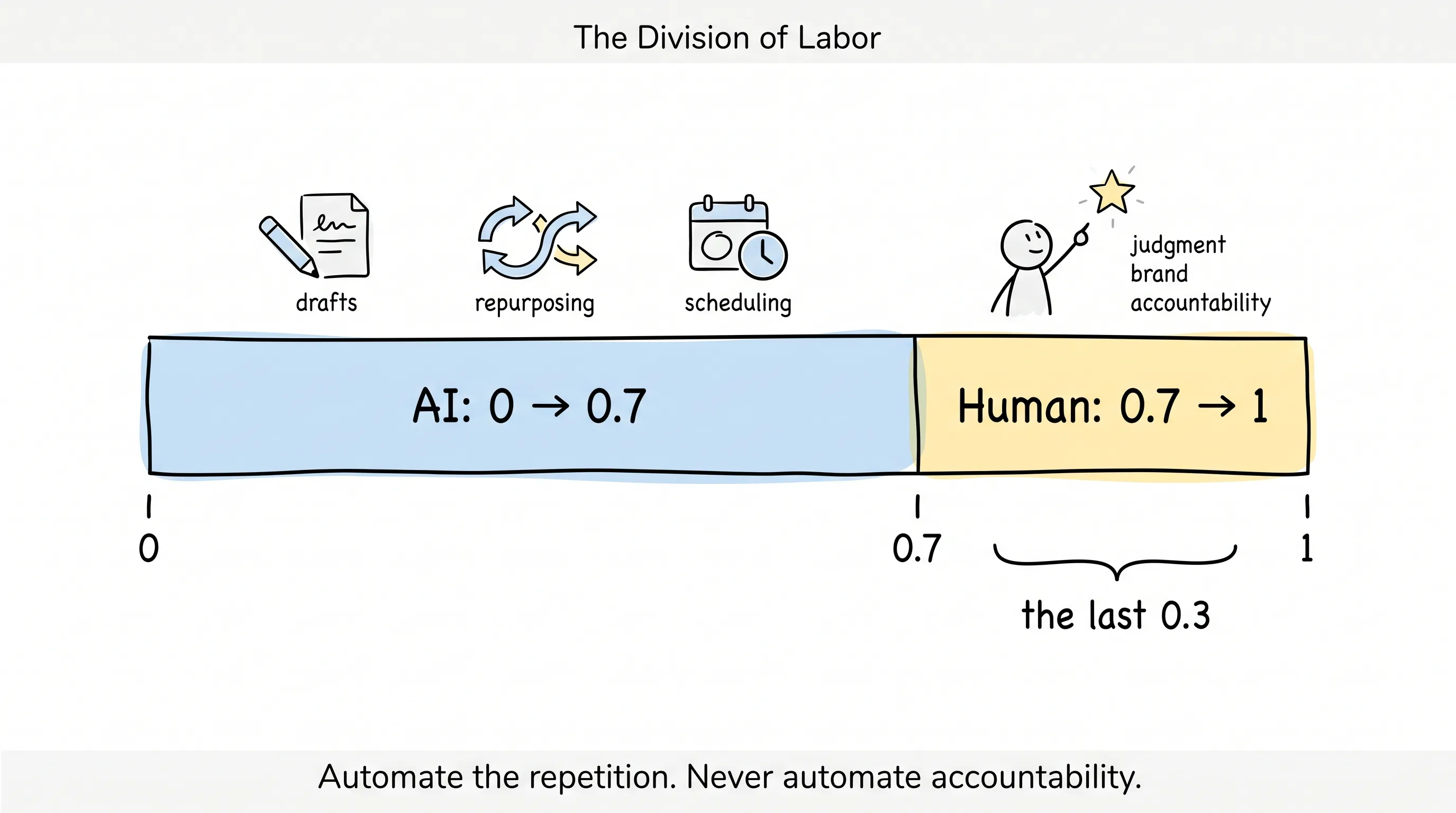
AI covers 0 to 0.7; humans cover 0.7 to 1. That last 0.3 is where your brand, your judgment, and your accountability live.
Oh, and one more thing AI is really good at: one draft, many uses.
That long article you sweated over — it can split into a handful of short posts, a carousel outline, a short-video script, a set of Q&As, a section for an issue of your newsletter, even a discussion topic to toss to your followers.
One long article, seven formats. You've only ever used one of them — how much value are you leaving on the table?
One reminder while we're at it: don't take the same content and paste it across platforms as-is. On LinkedIn, the logic has to be laid out airtight; on Instagram, the pictures do the talking. The machine can generate the variants, but which face each platform gets is a human decision.
When It Comes to Data, AI Is Genuinely Strong
I recently saw how a fitness account operates, and it was a textbook case.
This account tried two kinds of content. One was high-octane motivational quotes; the other was practical material like "the 5 training mistakes beginners make most." The result: the practical posts consistently crushed the motivational ones on saves and shares over the long run.
Could a human have spotted that pattern? Yes. But it would take a long time digging through backend analytics.
AI can dredge the pattern out of a few hundred historical posts in minutes.
Or take a software company that reviewed its own historical data and found three iron rules: tutorial content brings in saves, posts about customer pain points bring in comments, and product demos bring in website visits.
Makes sense, right?
Once you've found the patterns, build your content system around them — instead of waking up every morning and deciding off the top of your head, "what should I post today?"
But — pay attention to this but.
AI digs up the patterns; whether to use them, and how, is a human call.
Data won't tell you where the company's center of gravity should shift next. It won't tell you which kind of traffic looks lively but doesn't actually make money.
And don't let AI drag you into chasing metrics at random. For brand awareness, watch reach, views, and completion rate. For engagement, watch comments, shares, and saves. For lead generation, watch form submissions and cost per lead. For direct sales, watch conversion rate and ad return. Different goals mean completely different numbers to watch.
The people who try to watch everything end up understanding nothing.
Oh — there's one more signal I think is worth singling out.
In 2026, a Google Analytics update added a dedicated new traffic channel called AI Assistant, which identifies visits coming from AI assistants so you can compare them with traditional sources like search and social.
Sit with that for a second.
If even the statistics tools are carving out a special lane for AI, what does that tell you? It tells you that the way people discover things has already been migrating toward AI.
Going forward, analyzing your traffic by search and social alone may genuinely not be enough anymore.
The Platforms Are Moving Faster Than You
You think AI is just your tool?
The platforms made their move long ago.
Meta has stuffed AI into nearly every step — creation, editing, translation, recommendations. What strikes me most is the translation feature on Reels, which has rolled out to cover Hindi, Bengali, Tamil, Telugu, Marathi, and Kannada, plus French, German, Japanese, and Korean.
What does a lower barrier to entry look like?
Multilingual content used to mean building a separate production pipeline for every market. Now you shoot one Reel, the machine translates it into a dozen-odd languages, and you reach audiences that used to be flat-out out of reach.
Impressive. For small teams, cross-market communication has never been this cheap.
That said, I have to pour half a bucket of cold water on this.
Translation solves language; it doesn't solve culture. Memes, humor, tone, local taboos — machines still can't quite nail those. If you're serious about going deep in a market, a human still has to be there.
Meanwhile, platform personalization is going deeper too. Meta itself has said that users' interactions with AI are now taking part in deciding which content and ads get recommended on its platforms. Translated into plain words: generic content aimed at everybody is running out of room to survive.
What wins from here on is understanding specific audiences.
Tools: More Is Definitely Not Better
At this point in the conversation, someone is surely heading to the app store for a downloading spree.
Stop.
First, a cautionary scene. One company uses one AI for writing copy, another for making images, another for scheduling, yet another for analytics, and still another setup for replying to comments. Five tools, five logins, no data flowing between any of them.
The result? Employees burn a large chunk of every day moving information from system A into system B.
This is workflow fragmentation. The efficiency the tools stacked up gets eaten right back up by all the shuffling.
So the right mindset for choosing tools is connection, not collection. A small, connected set usually beats a big pile that tries to do everything.
The test is plain: after you put this stack in place, is your content more consistent? Are people freed up to do real work? Did quality drop?
If you saved time but quality fell, the workflow is built wrong. If posts went up but engagement died, you're using volume to paper over the problem.
Some platforms on the market are already moving toward "connected." TheViralMarketing, for example, manages planning, scheduling, automation, and analytics on a single line, treating social media operations as one continuous pipeline rather than a heap of loose manual chores.
When it comes to tools, pick by the results they deliver, not by the name they've made.
Some Tasks You Must Never, Ever Hand to AI
I've spent all this time on what AI can do. Now for the most important part.
Some tasks must not be automated. No matter what.
Which ones?
Crisis PR. When something actually goes wrong, thousands of angry users are on the other side of the screen — a templated reply is gasoline on the fire.
Sensitive complaints. A customer in the heat of anger wants to be treated like a person, not processed like a ticket.
Major statements. Big brand moves and anything touching law and regulation — not a single word of it should be decided by a machine.
Controversial topics. Politics, positions, public incidents — don't let AI anywhere near them.
In one sentence: Automate the repetition, but never automate accountability.
That sentence is worth writing down and pinning in your team chat.
There's also a hidden trap: brand voice.
If every post carries a whiff of generic AI copy, users can't tell you apart from the competitor next door. Distinctiveness is one of a brand's most valuable assets.
So feed your brand's information to the AI: who you serve, what personality you have, which words you habitually use, which topics must never be touched. And after feeding it, before anything goes out, a human still has to go through it.
So, Will Social Media Managers Lose Their Jobs?
I'm guessing that's what you most want to ask.
My call: no. But the role will put on a different face.
History has actually answered this one already. When Excel showed up, did finance people lose their jobs? No. What got retired were hand-cranked calculators and paper ledgers — and the people who could do financial analysis became more valuable, not less.
For social media managers, AI will most likely follow the same script.
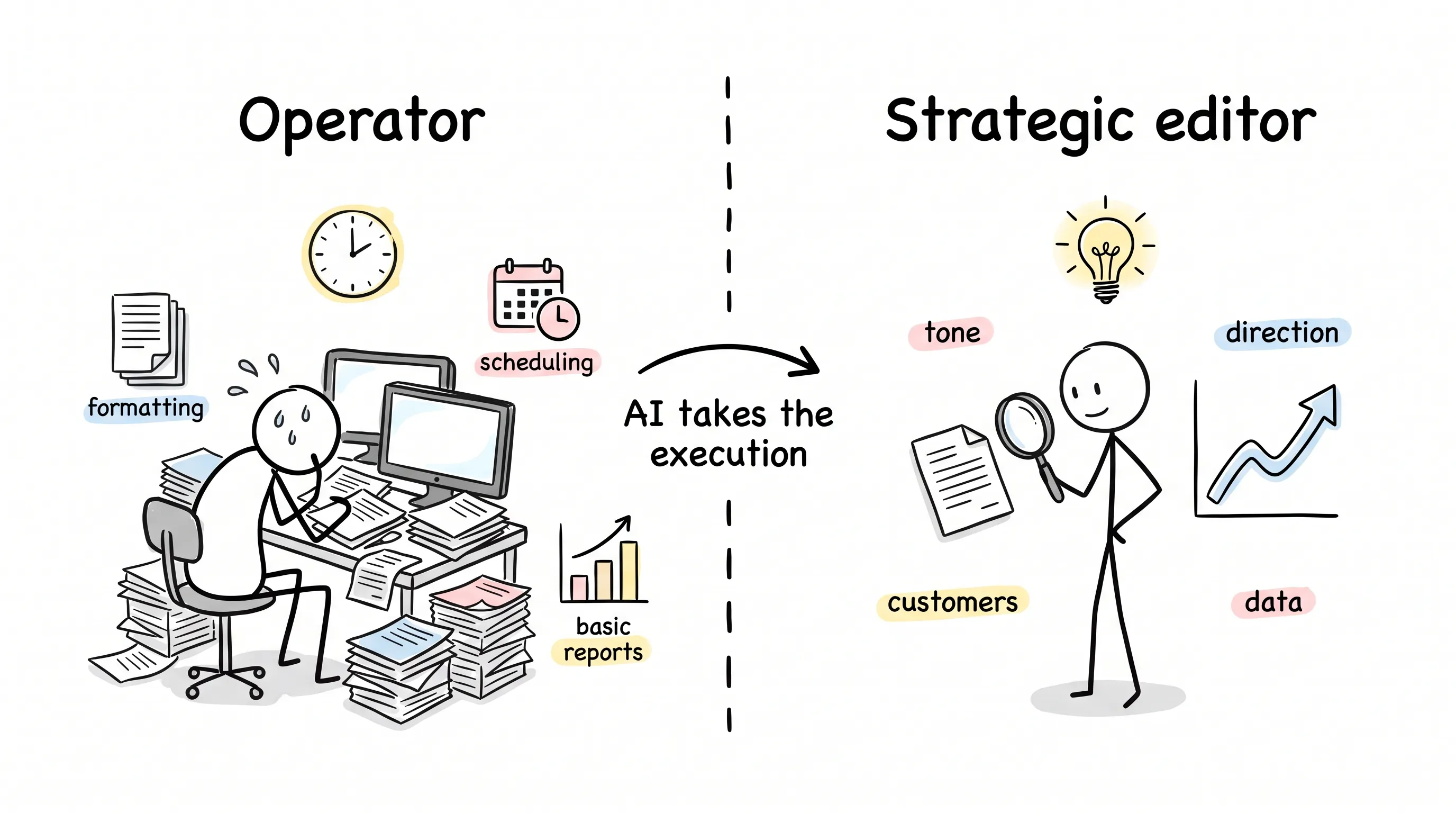
What gets compressed is execution: formatting, moving content around, format conversion, basic reports.
What gets amplified is judgment: setting the tone, picking the direction, reviewing content, understanding customers, reading the people behind the data.
One line to sum it up: from operator to strategic editor.
If most of your current work is execution, don't panic — but don't stand still either. Move toward the judgment end.
How do you start? Don't overreach. Five steps.
Step one: find the most painful point in your workflow. Is it that first drafts just won't come, or that there's no time for scheduling? Treat the worst pain first.
Step two: bring AI into one stage only — say, topic selection plus first drafts.
Step three: set the rule — every single piece of AI output must pass through a human before it goes out.
Step four: run the numbers. How much time did you save? Did the metrics change? Write it down.
Step five: once it runs smoothly, expand to the next stage. If you want to make it easy on yourself, look at foundations like TheViralMarketing that connect topic selection, scheduling, approval, and data, and see whether one fits your process.
Don't hand the whole account over to the machine on day one. That's using your brand as a lab experiment.
Finally, Back to My Friend
After that conversation, my friend in the restaurant business went home and experimented for a month.
He didn't build any complicated system. He did exactly one thing: he fed the twenty-odd questions customers ask most, along with his own answers, into the AI, and had it turn them into topics, copy, and short-video scripts. His one daily job: review.
After a month, for the first time ever, the account never missed a posting day.
And in his words, the things he published were more "written by a human" than the posts he used to grind out through late nights.
Why?
Because that content had been growing inside his ten-plus years of business experience all along. The AI just helped him turn the experience into words.
That might be the whole secret of social media marketing in the AI era: machines can amplify your experience, but they can't replace your experience.
Judgment first, then automation. Get the order backwards, and everything just spins its wheels.
Here's wishing you judgment that no AI can ever take away.
Continue reading
Related articles
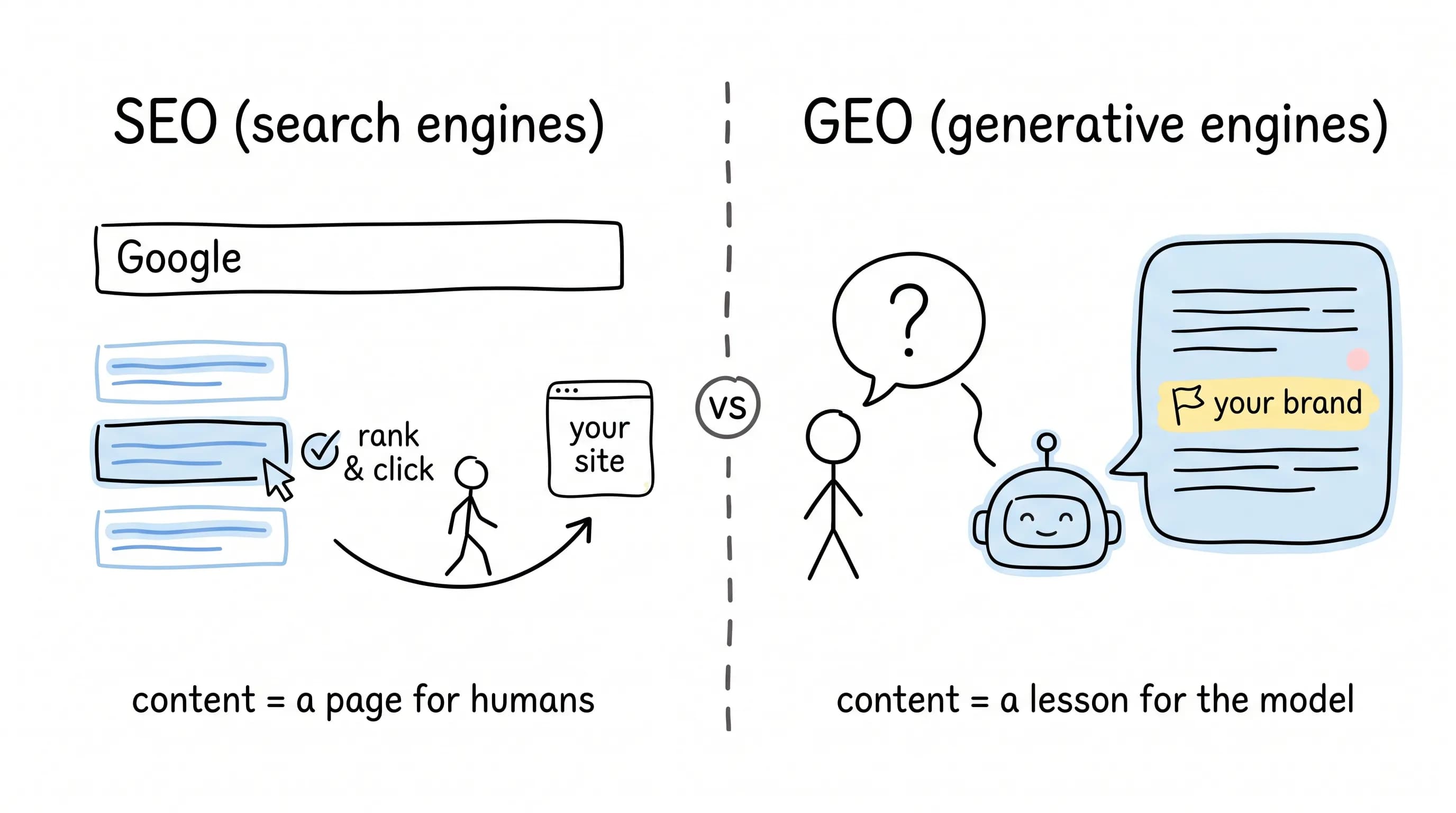
Does AI Know Your Brand? A Look at GEO, the New Craft
An explainer on GEO (Generative Engine Optimization): how AI engines like ChatGPT, Perplexity, and Gemini differ, how GEO goals and metrics diverge from SEO, and which SEO skills still carry over.
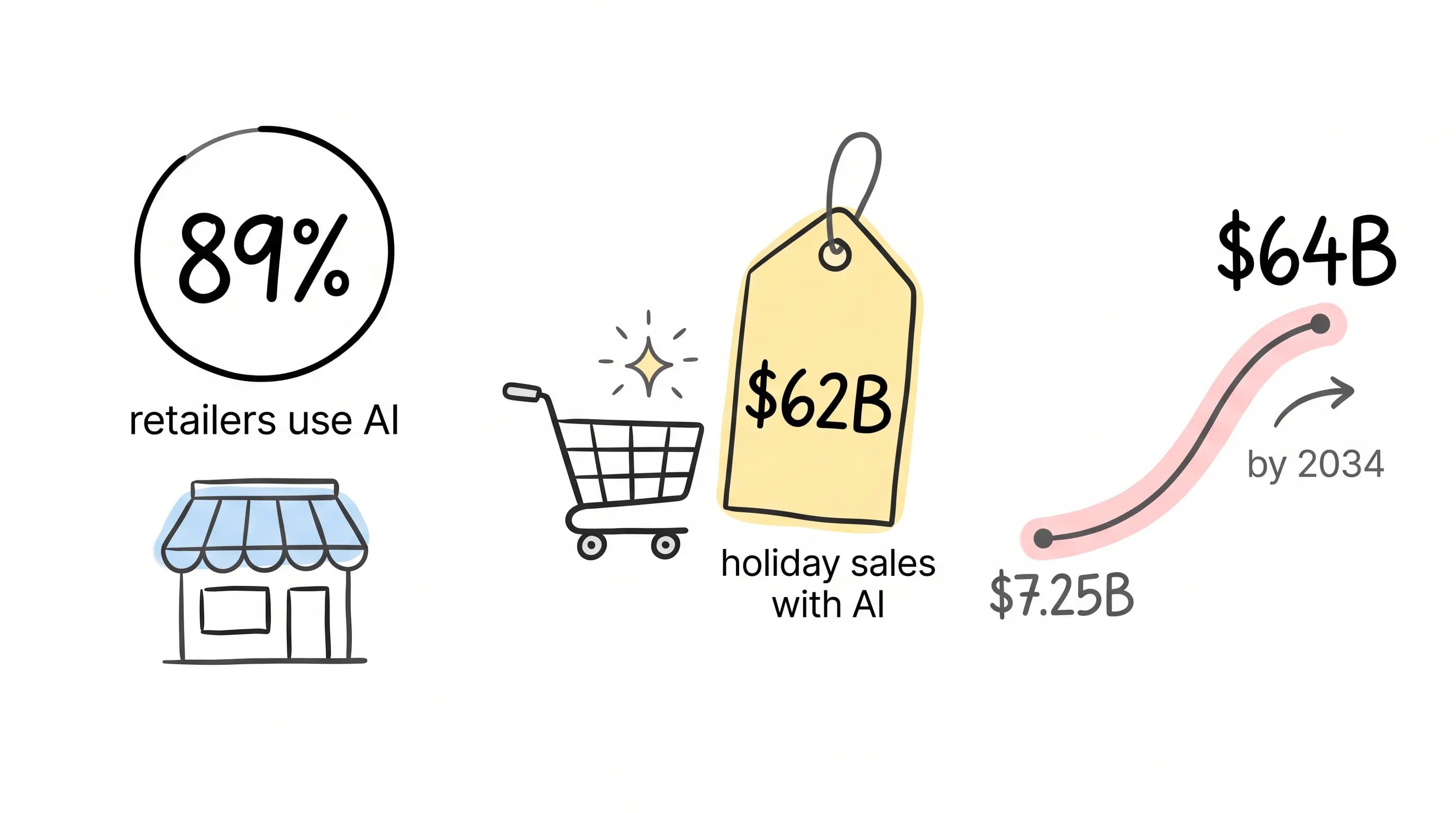
89% of Retailers Are Already Using AI. The Playbook for E-Commerce Has Changed
A learn article on AI in e-commerce: adoption context, use cases from recommendations, search, dynamic pricing, customer service, inventory, and fraud control, plus B2B applications, generative AI content, tool examples, pitfalls, and a six-step adoption path.
AI Makes Content at Lightning Speed — But Can You Answer "Who Approved This?"
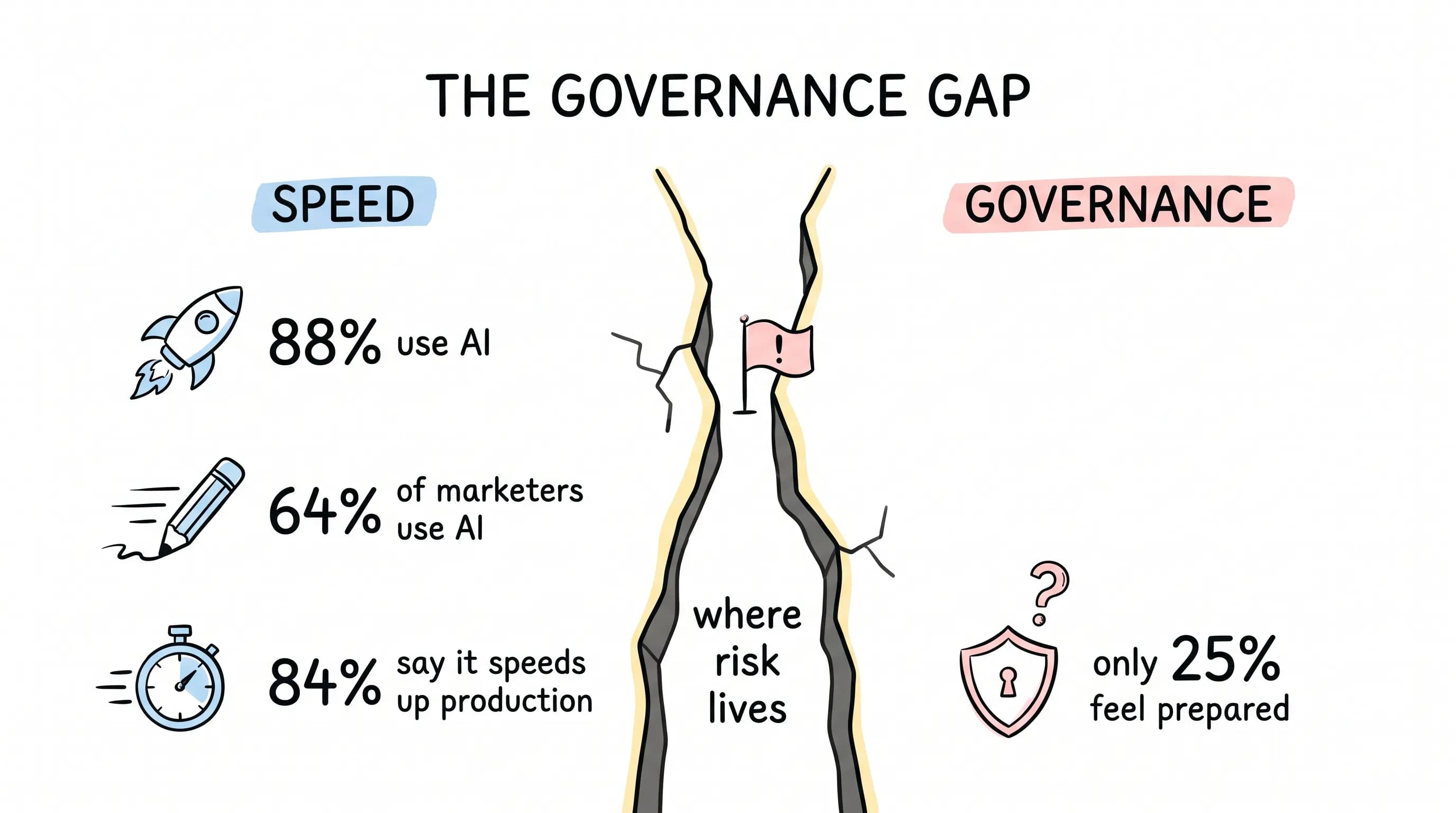
This article looks at the gap between AI content speed and governance readiness in marketing teams, and outlines nine control points — prompt validation, brand guardrails, permissions, approval workflows, human review, versioning, IP checks, audit trails, and asset reuse — for brand-safe AI content.