
AI Is Saving You Money on Going Global. Then What?
A learn article on using generative AI for multilingual marketing localization when going global, citing a McKinsey report that AI adoption can cut operating costs by up to 40%, with brand examples, while stressing that cultural nuance and cross-market data compliance still require human oversight.
A while back, a friend of mine who runs an overseas expansion business came to me to unload his frustrations.
They needed to roll out one set of marketing materials across a dozen-plus countries. Hiring local teams to write copy: expensive and slow. Raw machine translation: so stiff it felt like chatting with someone in telegraphese. He asked me — is there any way out of this?
I told him there was. And over the past two years, things have moved faster than most people realize.
What Is Content Localization, Anyway?
A lot of people assume localization is just translation.
It isn't. Translation swaps out the words; localization speaks to what locals actually feel.
Take "limited-time offer." Translated literally, the grammar is fine — but a local's first reaction might be "here comes another one trying to take my money." A writer who knows the market will reframe it, so the line sounds more like "we saved this little deal for you."
That's localization. And it's expensive — expensive because it takes people who truly know the market.
Now, generative AI has knocked that barrier down.
Multilingual content can be generated at scale. For ad campaigns across different markets, AI can predict which regions will respond to which appeals. Even compliance checks in each market can get a first pass from a machine.
How well does it work? Look at the numbers.
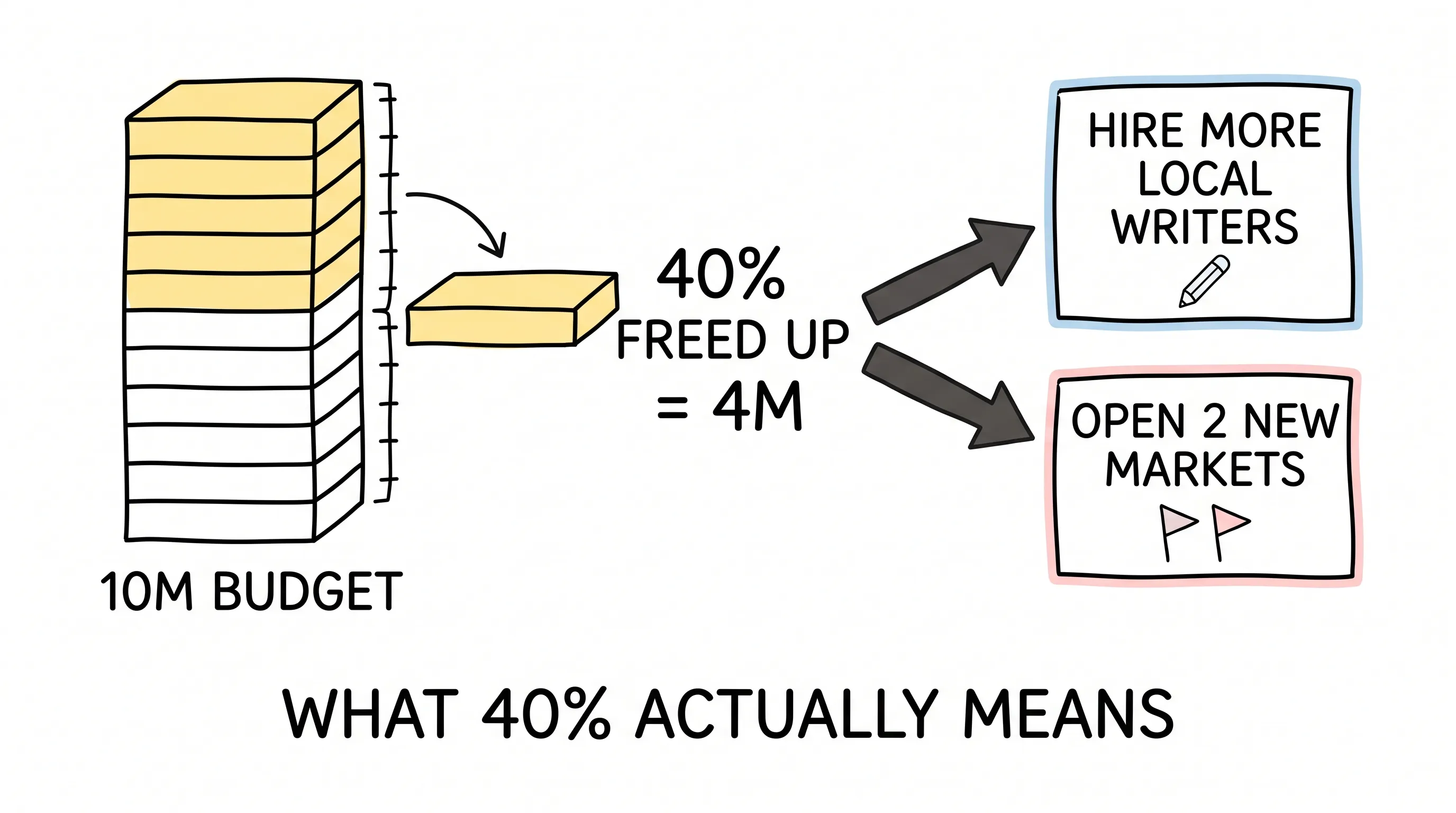
McKinsey published a global tech report in 2024 noting that companies adopting these AI tools can cut operating costs by as much as 40%.
What does 40% actually mean? Think about it: on an annual marketing budget of 10 million, used well, you could free up 4 million. That alone would be enough to hire a few more local writers — or open up two new markets.
In other words, it changes the math on going global.
People Are Already Doing This
Enough with the theory — here are two brands you already know.
Xiaomi is using it to batch-generate multilingual content and roll it out across multiple markets at once. SHEIN uses AI to predict what consumers in different regions prefer, deciding where to point both the merchandise and the content. Even compliance checks — work that used to sit with legal teams reviewing line by line — are increasingly getting a first pass from AI.
Traditional playbooks simply can't compete with that kind of efficiency.
But There's Always a Flip Side
My friend was excited after hearing all this, and asked: so eventually, could marketing departments run on machines alone?
I said, hold on. There's one thing machines still haven't solved.
Cultural nuance.
Here's what I mean. AI learns from training data — whatever's in the data is what it knows. But the real taboos in a market, the boundaries of its humor, which jokes land and which don't — those live in locals' everyday lives, and they don't necessarily make it into the data.
You can get AI to say something smoothly in thirty languages. That doesn't mean it knows the same sentence will make people uncomfortable in a particular market.
Efficiency goes up, but the risk of blowing up doesn't disappear — it just changes shape.
So here's the real question: how do you balance automation with human creativity?
My take is simple, six words: AI handles speed; humans handle accuracy.
AI makes sure content goes out fast and wide. Humans keep watch: is this right, should we say it, will it wreck the brand if it lands badly? Get the division of labor clear, and the efficiency is yours. Get it wrong, and the 40% you saved may go straight out the door with one spectacular blow-up.
And there's a bigger issue than blow-ups: data.
To predict user preferences, AI has to consume data. Whose data? How was it collected? Once you have it, is using it across markets even compliant? Data rules differ from country to country — what's a compliant use in market A may be a violation in market B.
In cross-border campaigns, data ethics isn't a nice-to-have — it's the price of admission.
Back to My Friend
In the end, he didn't cut his local team. He reshuffled the roles instead: machines scale the volume, people make the calls.
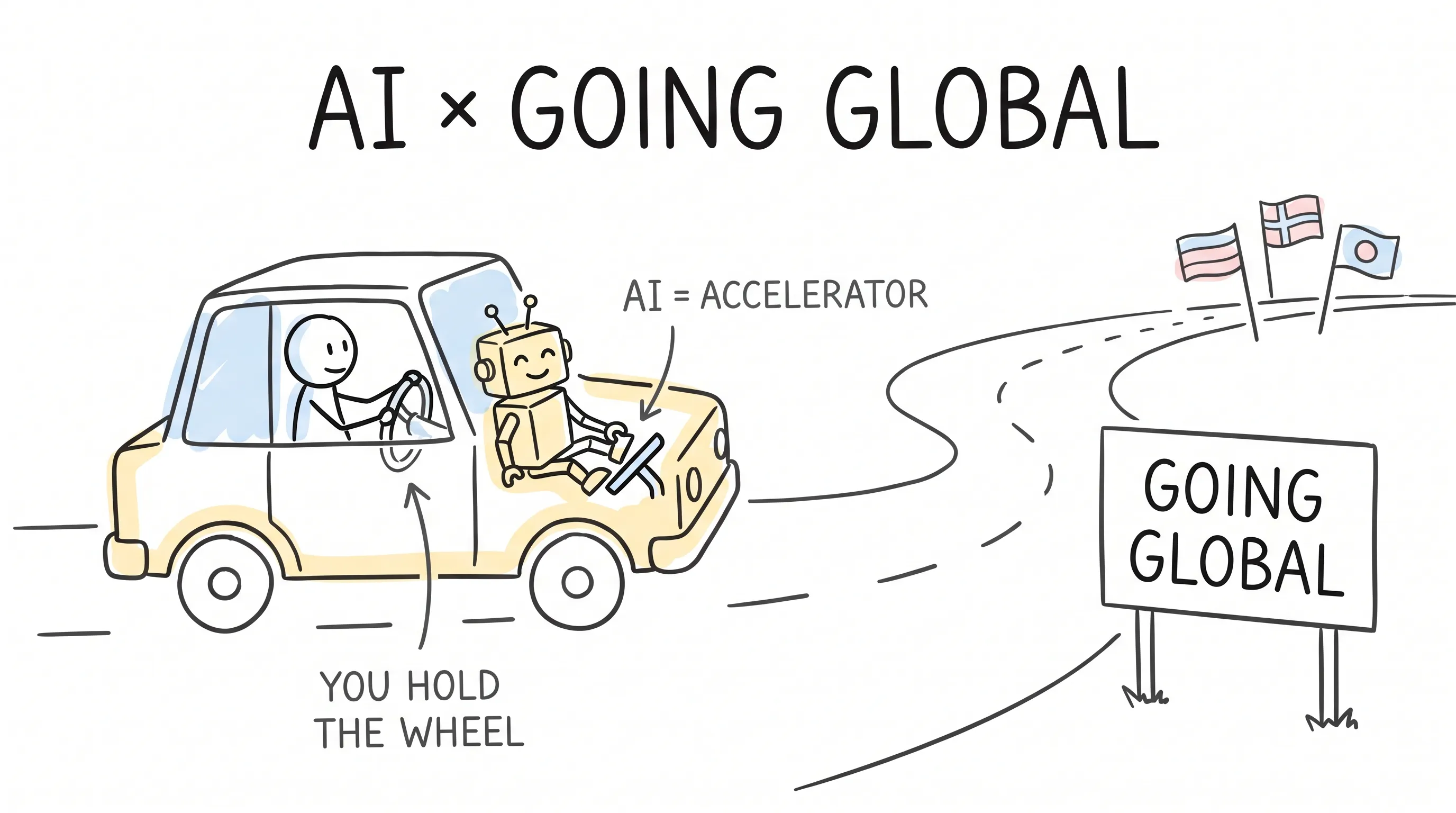
He said something to me that I've never forgotten: the faster the tool, the more the steering wheel stays in your own hands.
AI really is the biggest variable to hit going-global marketing in years. It's cheap, fast, and tireless. Used well, it's your accelerator. Just don't hand the steering wheel over.
Here's wishing you smooth sailing overseas — and no crashes.
Continue reading
Related articles
What Is AI Marketing Automation? It Starts With a 40-Point Gap
A learn article explaining what AI marketing automation is: how learning-based systems differ from rule-based automation, how AI decisioning optimizes message, channel, and timing choices, what data it depends on, and where it applies across the customer lifecycle.

It's 2026: Stop "Buying" AI Tools for Your Marketing Team — Start "Hiring" AI Agents
This learn article explains how AI agents differ from standalone AI tools in marketing, outlines three agent categories — build-your-own platforms, CRM-native agents, and vertical tools — and covers use cases across SEO, social media, advertising, and reporting, plus criteria for choosing one.

What Is an AI Marketing Agent? From "Using AI" to "Delegating to AI"
A learn article explaining what an AI marketing agent is, how it differs from rule-based automation, and which repetitive tasks such as lead qualification, reporting, and campaign monitoring can be delegated while humans keep key decisions.