
AI Is Remaking Marketing, All Over Again
A learn article on how AI is reshaping marketing, covering generative content, hyper-personalization, predictive planning, voice and conversational entry points, algorithmic ad placement, and customer-journey mapping, with discussion of privacy, creativity, cost, bias, and talent risks.
A few days ago, I had dinner with a friend who runs an e-commerce business.
He told me about something small: this year, his company added a question to the written test for hiring operations staff — use AI tools, on the spot, to put together a media buying plan.
I asked, what if your seasoned operators can't use AI?
He said, then they don't pass.
That one line stayed with me the whole ride home. It's 2026 — what exactly has AI turned marketing into?
Today, let's take this apart, piece by piece.
First, Look at the Numbers
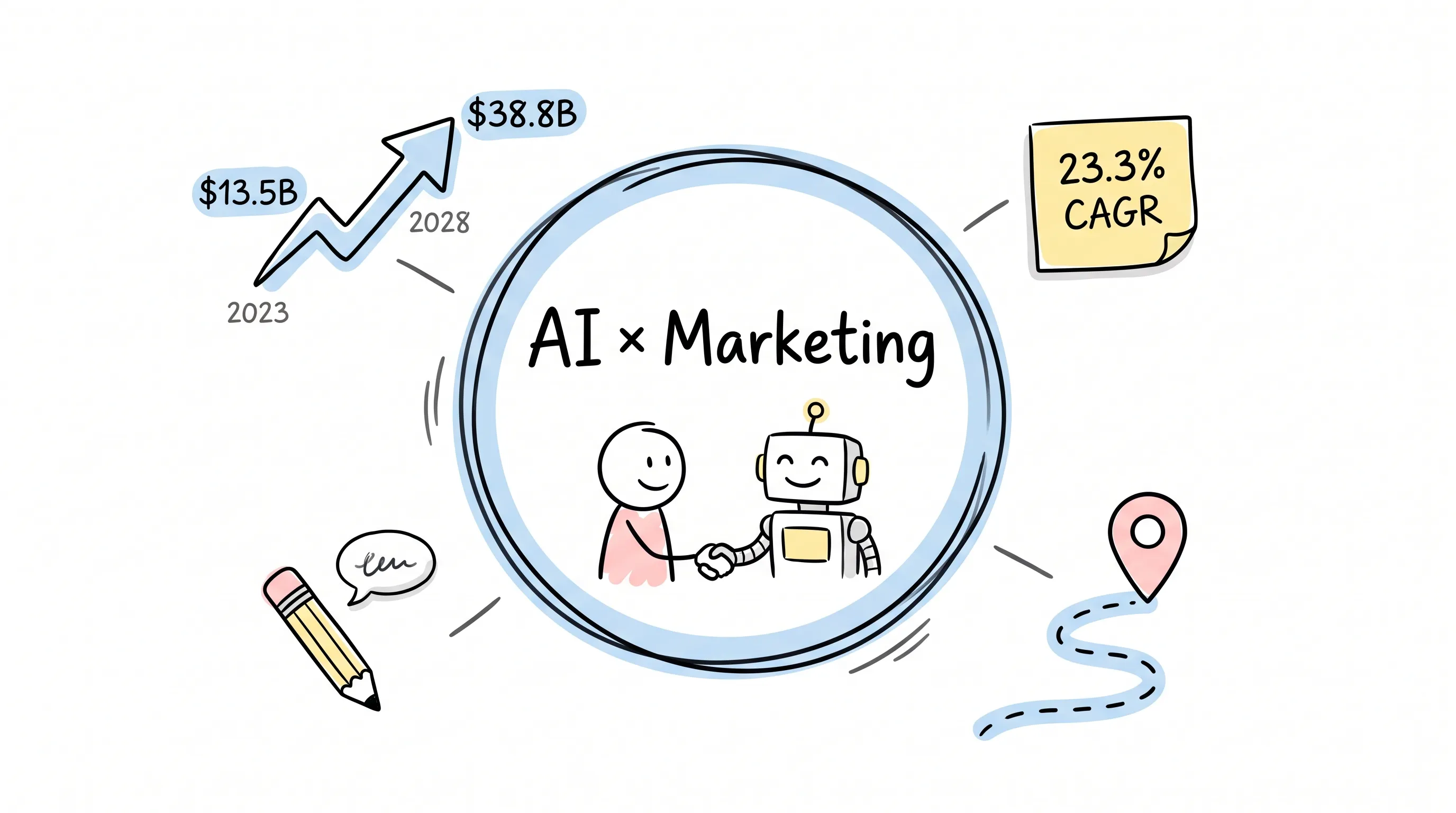
MarketsandMarkets, a research firm specializing in market sizing, ran the numbers a few years ago: the global AI analytics market stood at 13.5 billion USD in 2023 and is projected to reach 38.8 billion USD by 2028.
What does that mean? A compound annual growth rate of 23.3%.
And what does that mean?
It means this stopped being a "new trend" a while ago. A trend is something still growing — this market has already grown into a jungle. Marketing's money and work are migrating to AI at scale.
This isn't moving a few suitcases. It's moving house.
What Exactly Has AI Been Doing for Marketing?
Where to begin? At the end that's changing fastest: content.
Content: The Game Has Changed
What is generative AI? It's AI that can write articles, ad copy, and product descriptions on its own — generate images, cut video.
A content team used to grind out five tweets a week, half-dead by the end of it. Now: fifty in half a day, with humans only picking and polishing.
HubSpot ran a survey, and a few numbers stopped me cold when I first saw them: 52% of marketers are already using generative AI to produce content; 50.7% use AI to write marketing emails; and 68% say long-form content with AI involved has brought them tangible returns.
More than half of marketers have already made their move.
And you're still hesitating over whether to give it a try?
Personalization: Precise Down to "One Specific Person"
What is hyper-personalization?
Advertising used to be like shouting into a town square — one message per person, identical for everyone. Now AI reads your browsing history, purchase records, and how long you linger, and pushes you the very thing you had just thought about searching late last night.
The shows your streaming service recommends, the products e-commerce sites push at you — a recommendation engine is doing the math behind all of it.
The slogan the industry chanted for years — "a thousand people, a thousand faces" — has now sharpened to "one specific person, one specific message."
Marketing: From Rearview Mirror to GPS
What is predictive marketing?
Driving while watching the rearview mirror means looking at the past; watching the GPS means looking ahead.
AI chews through mountains of historical data and works out two things: which group of people is most likely to buy, and where the budget should go. Placements used to run on gut feel; now they run on models. Before the report even comes out, it already knows how next quarter will most likely unfold.
Every dollar of mis-spent ad budget you save is profit.
The Mouth Becomes the New Front Door
People used to buy things by "searching": open the search box, type keywords.
Now they "ask": talk straight to the phone — "find me something cheaper, and it has to arrive tomorrow."
Voice search is rising, and conversational AI customer service is on call 24/7. Your content has to learn to "answer questions," not just "be found."
This is a new wave of entry-point migration. And every entry-point migration redistributes traffic all over again.
Ad Placement: Hand It to the Algorithm
Video is still the headliner of traffic — that hasn't changed.
What has changed is placement itself. On Instagram, Facebook, LinkedIn, YouTube — bids, targeting, creative combinations — the algorithm is watching and adjusting. The marketer's hands have moved from "operating every step" to "setting the rules and checking the results."
The Customer Journey: From Black Box to Map
What is the customer journey?
From the moment someone stumbles onto your ad while scrolling, to searching for you, to comparing prices, to placing an order, to repeat purchase — it's a complete road.
That road used to be a black box. Money goes out, people vanish, and you can't tell which stretch they leaked from. Now AI strings every touchpoint together into a map, and you can see exactly which stretch is leaking.
Plug that stretch. Fix that stretch.
But There's Always Another Side
Don't get excited just yet. AI has dug plenty of pits in marketing.
Here are the few I care about most.
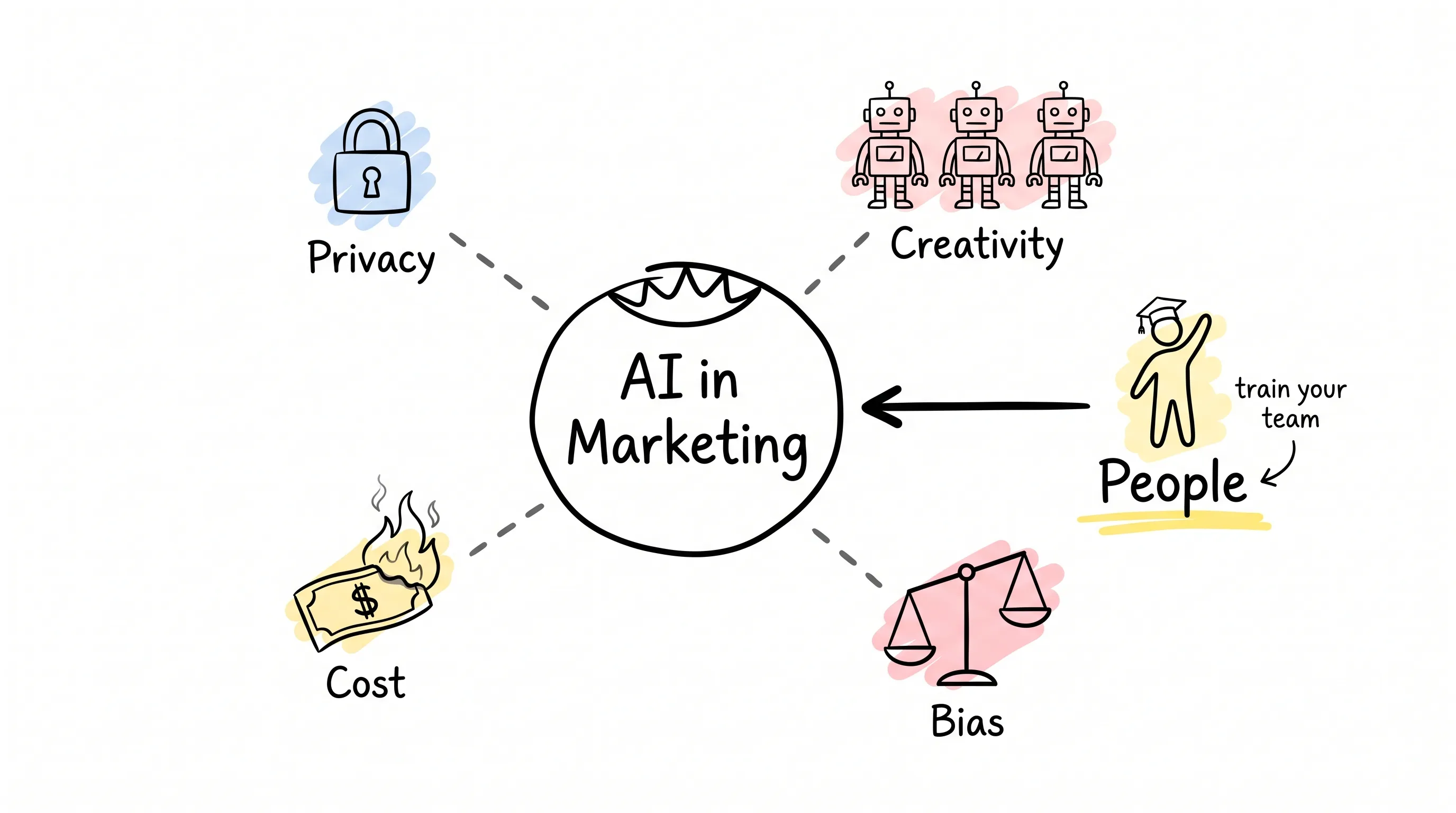
The first pit: data. The smarter AI gets, the more data it eats; the more data it eats, the closer the privacy landmine slides to the fuse. Consumers care more and more about what you did with their information. One data breach collapses brand trust ten times faster than you built it. Compliance isn't a cost — it's the foundation.
The second pit: creativity. AI can write copy that is "perfectly fine," but not copy that warms your heart. When the whole industry runs on the same model, everything starts to look alike. Users' eyes will tire. Machines handle volume; humans handle that one flash of brilliance.
The third pit: money. Software, compute, training, hiring — all of it is investment. Small teams especially need to think it through: skip AI and you may be left behind; adopt it recklessly and you may burn cash for nothing. Jog first, then sprint.
The fourth pit: bias. Models are what they're fed — feed them skewed data, and the output skews. Discrimination showing up in ad targeting isn't science fiction; it has happened. Someone has to keep watch and audit regularly.
The fifth pit: people. Marketers who know how to use AI are in short supply. That's also the opportunity: one of the best investments of 2026 is sending your team to learn. If the people layer never gets filled, none of the other pits can be dodged.
Finally, My Own Take
One more number from the HubSpot survey: 67% of marketers believe that by 2030, AI will reshuffle marketing's roles and workflows.
My judgment is blunter than that: the variable here isn't "whether," it's "how fast."
Back to that dinner. My friend's test question wasn't really testing how skilled you are with AI.
It was testing: are you willing to put down the old tools and upgrade yourself.
AI has remade marketing. But one thing hasn't changed — those who understand people win.
Those who understand AI and people win faster.
May you be the latter.
Continue reading
Related articles

What Is GEO? How Your Brand Gets "Mentioned" in the Age of AI Search
An explainer on GEO (Generative Engine Optimization) for e-commerce and DTC brands: how it differs from SEO and AEO, why AI answers shape brand visibility, and eight practices covering question-focused content, consistent brand messaging, structured pages, external evidence, comparisons, and AI mention tracking.

AI Is Already Making Decisions for Your Customers. Are You on the List?
A learn article explains GEO (Generative Engine Optimization): why AI-generated answers now shape which brands customers see, and how SEO fundamentals, entity clarity, citable evidence, and monthly measurement affect visibility in AI answers.

Google Is Stuffing Ads Into AI Search: These Recent Stories Are Really One Story
A news roundup linking recent AI marketing stories—Google adding ads to AI Mode, Amazon's Ads Agent, ChatGPT image updates, a UK startup tracking brand mentions in AI answers, and an AI ransomware warning—arguing that control over ad data and visibility is shifting toward platforms.