
AI Is Dragging Marketing Back In-House — but This Time, the Test Has Changed
An opinion piece reviews three waves of marketing in-housing and argues the AI-driven third wave is a proof problem, with boards demanding demonstrable results from AI investments.
A few days ago, a friend of mine who is a CMO came to vent to me.
He said that nowadays, his boss opens every meeting with the same question: how is marketing doing with AI? Can we pull back all the work we've outsourced to agencies and do it ourselves?
I said, what's bothering you about that? Isn't this exactly the influence you've always wanted?
He said, you don't get it. The companies that pulled agency work in-house last time — do you know what happened to them?
One question, and it stopped me cold.
Back home, I dug through a decade-plus of the marketing industry's thrashing history, and the more I read, the more unnerved I got. Today I'm passing that unease on to you.
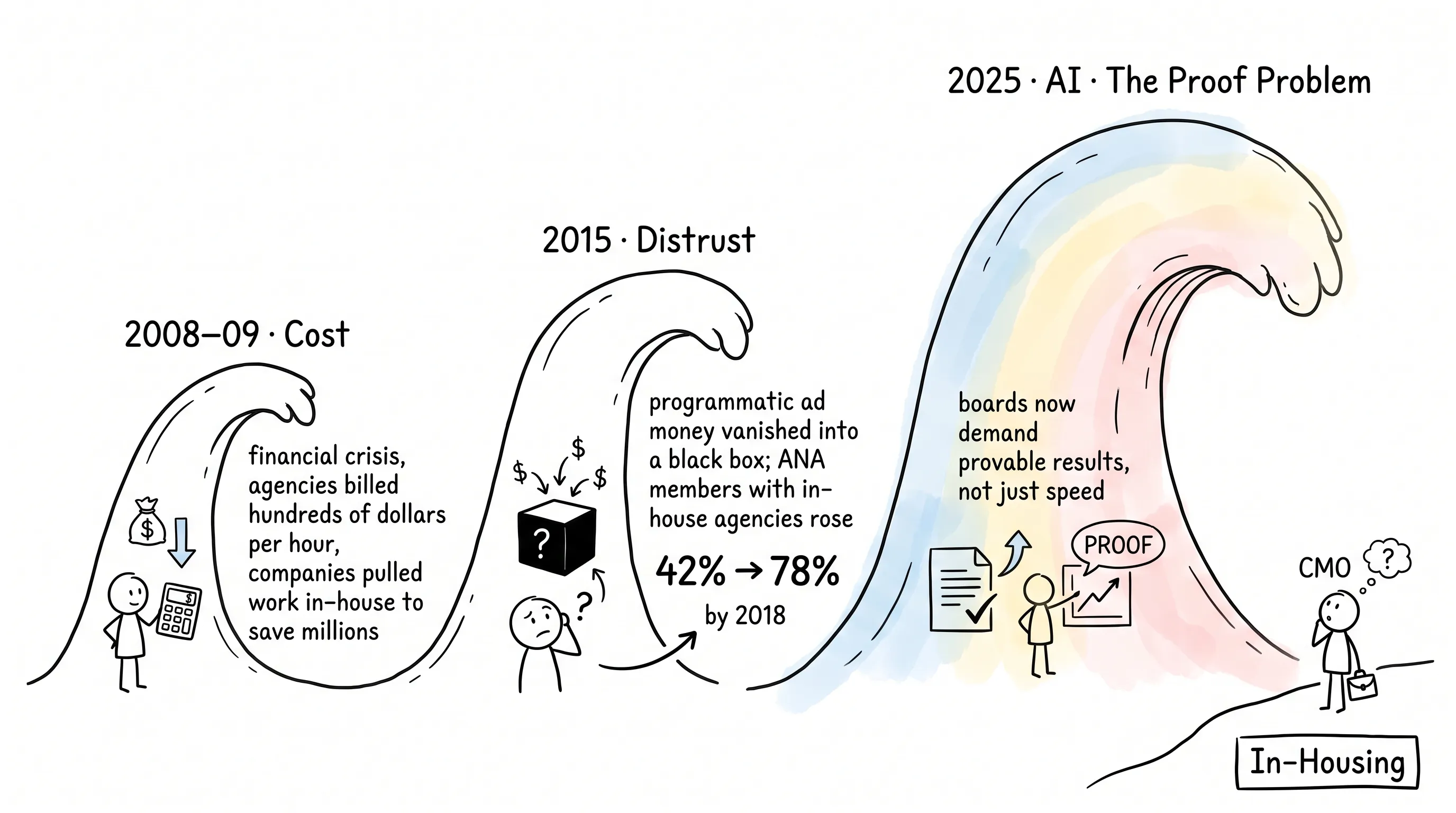
This Is the Third Round of In-Housing
What does in-housing mean?
It means taking the work you once handed to outside agencies — making content, placing ads, managing media — and bringing it inside the company, building your own team to do it yourself.
Sounds perfectly sensible, right? The money stays in your hands, the people sit within your line of sight, efficiency has to go up.
But here's the thing: the marketing industry has already done this twice.
The first time was in 2008 to 2009. The financial crisis hit, budgets got slashed, companies were fighting to survive. Companies like Intel ran the numbers: agencies bill by the hour, several hundred dollars an hour — if I bring this work in-house, I save millions a year.
So they pulled it in.
The second time came around 2015, in the wave of digitalization. The reason was different this time: distrust. Programmatic ad money went out the door — where did it actually flow? The ledgers of the platforms and the agencies left CMOs more and more baffled. If you can't reconcile the accounts in your own head, you just start keeping your own books.
The results were staggering. According to the ANA (Association of National Advertisers), the share of its member companies with in-house agencies climbed from 42% to 78% by 2018.
In under two years, it doubled. Tell me that trend isn't ferocious.
Ferocious. But.
What Happened to the Companies That Pulled Work Back In?
This is where my friend's question really bites.
The companies that brought the work in-house quickly discovered three bills they had never accounted for.
The first bill was talent.
The CMO's plan was beautiful: I'll pay above-market salaries and poach the agency's best creative minds.
And they did poach some.
Then, especially visible in B2B — these people couldn't stay. They got bored.
Think about what it's like to work at an agency: this week you serve a startup, next week you run a Fortune 500 rebrand. A new dish every day.
Inside a brand? The same dish, every day. Even the best chef starts questioning his life choices after three straight years of braised pork belly.
A lot of the poached talent drifted back to agencies within a year.
The second bill was status.
The in-house team came inside, but there was no seat for them at the boardroom table.
What did they gradually become? Order-takers. Other groups in marketing filed requests, and they executed — repetitive production work.
Creativity needs influence, and influence lives at the table, not under it.
The third bill was cost.
This one is the most ironic. Looking at the agency's hourly rates, the CMO believed he was saving millions.
But he forgot: the agency's software licenses, tech stack, and tooling were spread across dozens of clients. Build it in-house, and one company shoulders all of it alone.
The money he saved on rates came straight back out the door in license bills.
So what's the lesson of the first two waves?
It isn't that in-housing was wrong. It's that the promise of efficiency outran the reality of capability.
You only moved the people doing the work — not the culture, the status, and the true cost behind it. The same failure, at a new address, happened all over again.
Hold on to that line, because the third wave has already arrived.
The Third Wave: AI Pushes Everyone Back to the Starting Line
This time the rationale is harder: AI.
Generative AI turned writing content, building ABM (account-based marketing) programs, and producing creative assets into something an internal team can do alone. Agentic AI is then eating up the drudgery in the workflow, one chore at a time.
Boards read these stories and can't sit still. The boss claps the CMO on the shoulder: look, they're doing it faster and cheaper with AI — we're going all in too.
So CMOs began frantically pulling work in-house. If AI can do it all, who needs agencies?
On the efficiency front, AI's report card has no flaws. Content ships faster, campaigns launch earlier, the grunt work is gone.
But let me ask you a question:
Was efficiency what CMOs promised their boards?
No. What they promised was always results.
That's where the trouble starts.
Duke University's 2026 CMO Survey asked marketing executives to grade their own marketing technology on a 7-point scale. Guess how that turned out?
Not a single category scored above 5. Including "ROI gained from marketing technology."
The tools are all running. The grades are failing.
Here's one that stings worse. Comviva's 2026 global CMO survey: 86% of marketing leaders have been asked by their boards to prove the AI money was worth it. And of those, only 16% are confident they can produce clear business evidence to make the case.
86% get called to defend. 16% can answer.
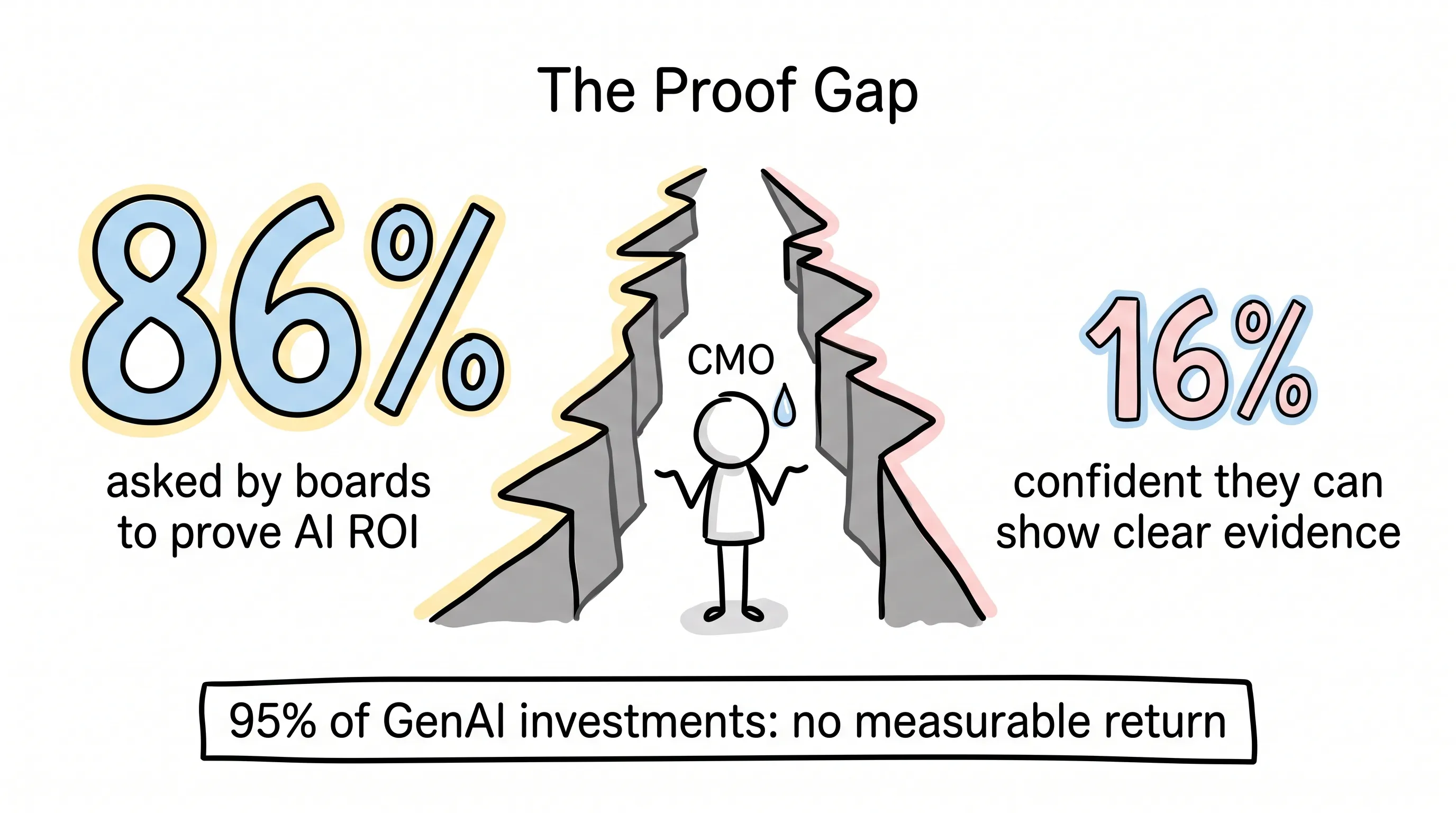
My God. What does that mean? It means most of the CMOs aggressively pushing AI inside their companies can't say what all that pushing actually bought.
This isn't a talking-points problem. It's an accountability gap splitting open in real time.
And the heaviest hammer comes from the 2025 MIT NANDA report, "The GenAI Divide: State of AI in Business 2025." They found that 95% of enterprises saw no measurable return on their generative AI investments.
For this, companies have already poured in $30 billion to $40 billion.
Thirty-plus billion, 95% flushed away.
What made me sit up straighter was a detail in the report: which department spent the most?
Sales and marketing. Precisely because it's the easiest place inside a company to tell a story and get a project greenlit.
Meanwhile the operations and finance pilots — less money, less attention — actually delivered better returns.
Marketing got the biggest slice of the AI budget and produced the thinnest evidence.
This Isn't a Talent Problem, and It Isn't a Trust Problem
Put the data side by side and the picture comes clear.
The money is spent. Confidence is sliding. The proof of performance still can't be produced.
Now you see why the third wave has a different root cause than the first two.
The 2009 wave failed on talent and culture. The 2016 wave failed on distrust of vendors.
This one? This one is a proof problem.
And the proof problem has a particularly nasty trait: it doesn't vanish just because your tools got stronger. The stronger the tools, the harder the board pushes — you're this powerful, so where exactly are the results?
So the very question CMOs once aimed at their agencies — "Where is your value? Show me the data" — is now coming back, word for word, from the board into the CMO's own hands.
The wheel turns. Full circle.
Did Intel, which pulled its media business in-house in the first wave, get it wrong? No — the reasoning of that moment made sense then. Were the 78% of ANA members in 2018 wrong? Nor were they.
They simply failed to answer three questions before pulling the work in: Can the culture be built? Can the team earn its seat at the table? Is the true total cost fully counted?
AI didn't change that math. AI just turned it into an extra-credit question — with more points on the line and a far harsher penalty for failure.
My CMO friend later sent me another message. He'd worked it out: he won't rush to pull work back in. First he's making himself a list — for every AI investment, which provable business result does it map to, and what data will back it up.
I said, right. That's exactly how it should be done.
AI has made everyone work faster. But don't forget:
Fast was never the promise. Good is.
And the CMOs who figure this out first are the ones who won't become the third case study in the industry's third reprint of the same failure catalog.
Here's hoping you're the one who figures it out first.
Continue reading
Related articles
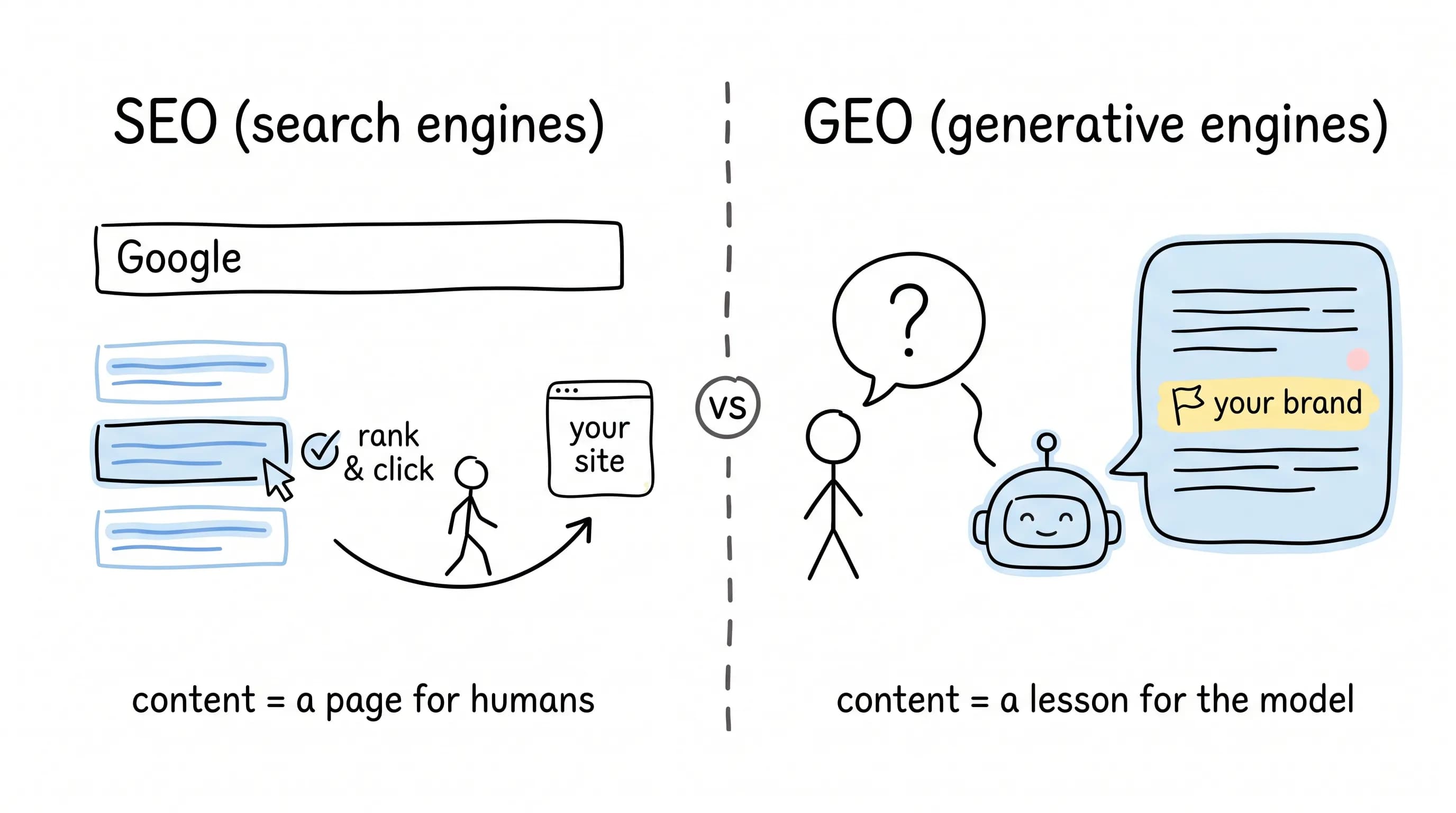
Does AI Know Your Brand? A Look at GEO, the New Craft
An explainer on GEO (Generative Engine Optimization): how AI engines like ChatGPT, Perplexity, and Gemini differ, how GEO goals and metrics diverge from SEO, and which SEO skills still carry over.
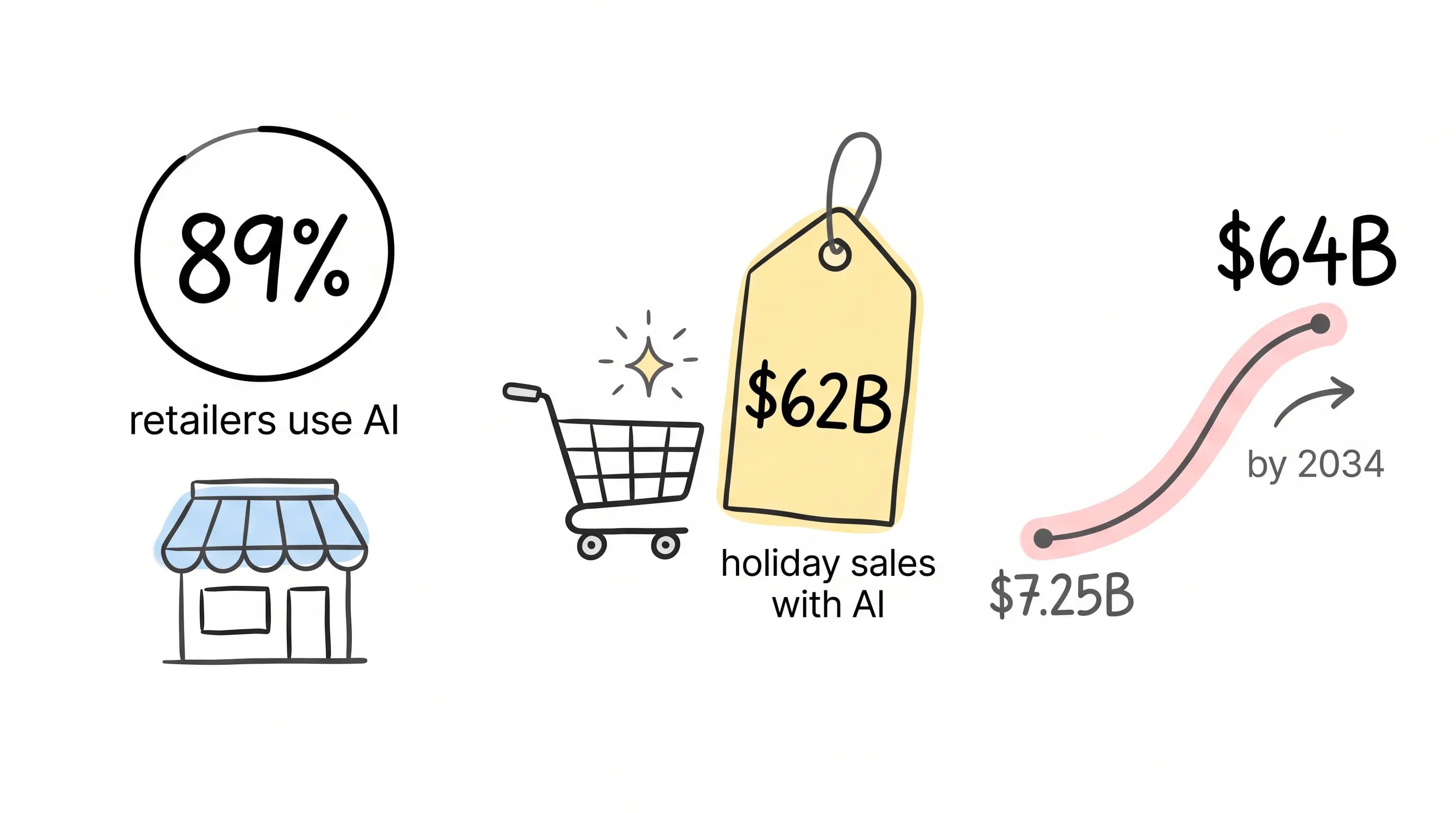
89% of Retailers Are Already Using AI. The Playbook for E-Commerce Has Changed
A learn article on AI in e-commerce: adoption context, use cases from recommendations, search, dynamic pricing, customer service, inventory, and fraud control, plus B2B applications, generative AI content, tool examples, pitfalls, and a six-step adoption path.
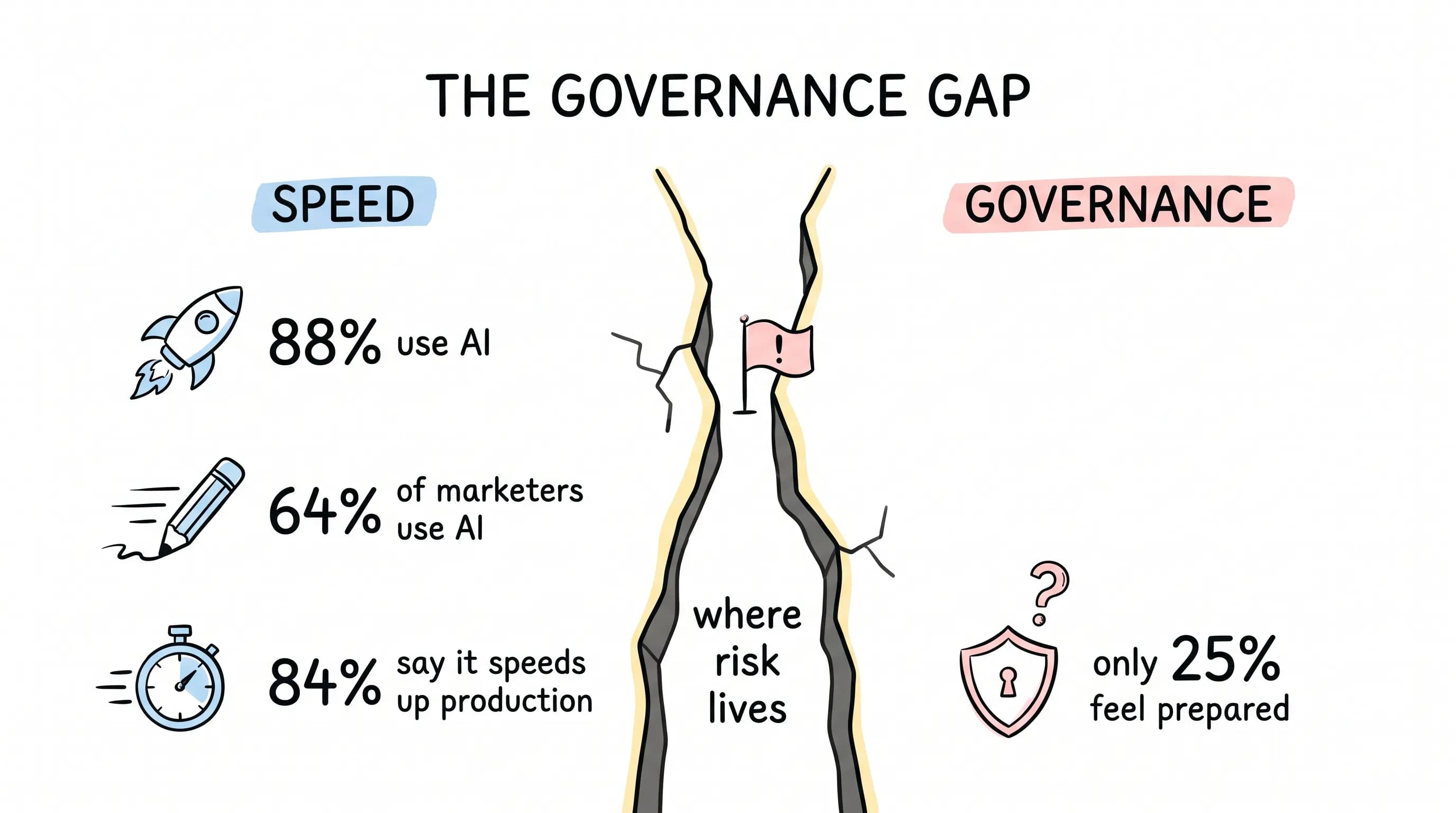
AI Makes Content at Lightning Speed — But Can You Answer "Who Approved This?"
This article looks at the gap between AI content speed and governance readiness in marketing teams, and outlines nine control points — prompt validation, brand guardrails, permissions, approval workflows, human review, versioning, IP checks, audit trails, and asset reuse — for brand-safe AI content.