
AI Is Already Running Ads for People — So Why Won't I Hand Over the Keys Just Yet?
A commentary on five August AI-ad developments: ChatGPT's default Maximize Results bidding without CPA guarantees, Pinterest's 96% non-brand searches, Grok's layered image editing, xAI's Grok Bot ad agent beta, and AI-driven holiday shopping. Its stance: AI can execute, but humans keep the final call.
The other day, a friend who runs ad campaigns asked me: can AI actually manage my ad accounts now?
I told them this: the five things that came out of the AI-advertising world this August happen to piece together an answer. Back then they were five separate news stories. Now, halfway through the peak season, looking back, the thread running through them is crystal clear.
Let's take them one at a time.
First, OpenAI: A New Default, An Old Problem
This August, OpenAI added a new bidding strategy to ChatGPT's advertising console called Maximize Results. The platform bids and adjusts bids for you automatically, spending your budget toward whatever campaign objective you pick.
Sounds great, right? Hold on. Two details deserve your close attention.
Detail one: for newly created ad groups, it's already the default option. In other words, you might do nothing at all — and automation quietly clocks in anyway.
Detail two: OpenAI's own documentation states it plainly — this strategy does not guarantee your CPA, CPC, or ROAS (ROAS = return on ad spend). It guarantees exactly one thing: that it will spend toward your objective within your budget.
What does "no CPA guarantee" mean? It doesn't promise that your cost per order stays under any ceiling. It just charges forward — wherever it lands is where it lands.
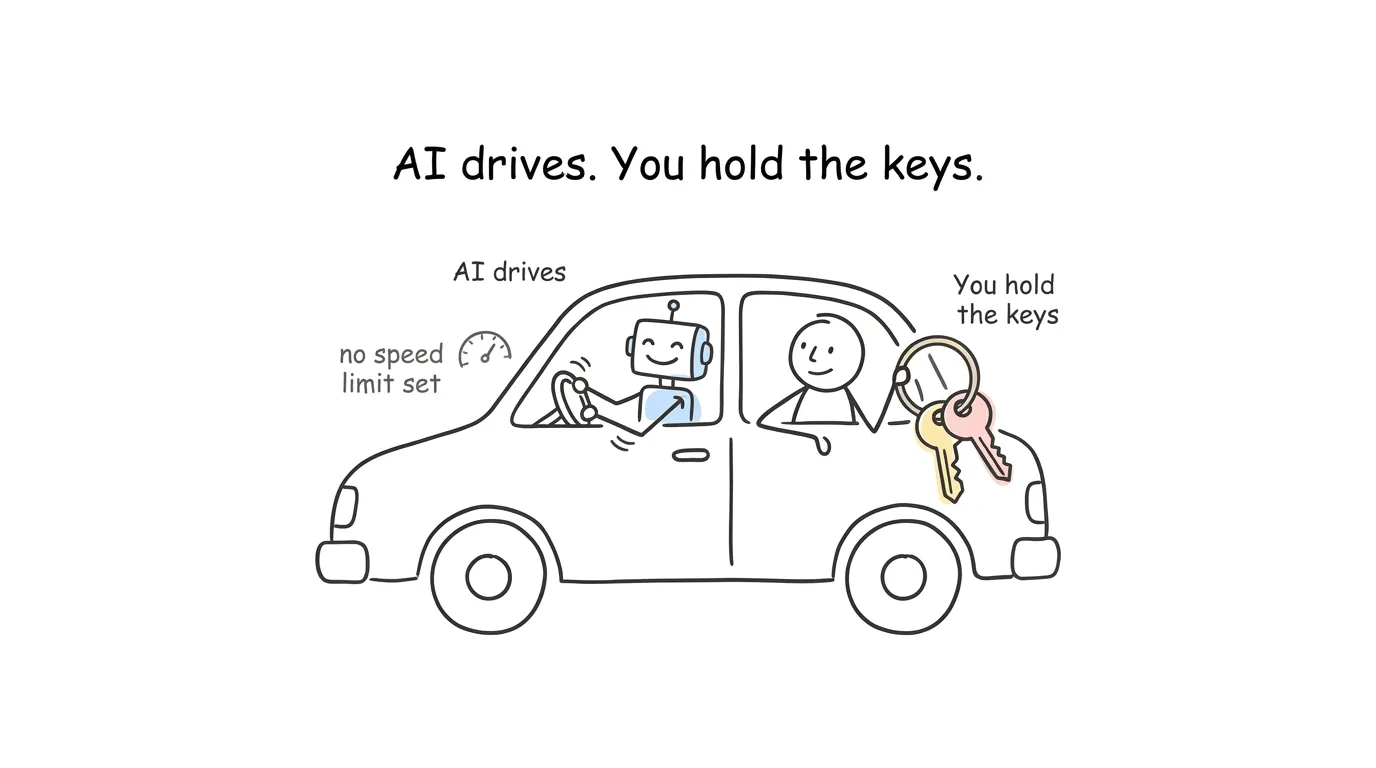
Anyone who has run campaigns knows the weight of that sentence. A volume-chasing strategy with no cost guardrail is like driving with cruise control on and no speed limit set. The direction is right; nobody's watching the speed.
So what do you do? My advice comes down to one thing: don't trust it with real money on its own. Keep one set of manually managed ad groups and run them side by side with it for a few weeks. Daily spend, clicks, conversions — give them a quick scan every day. The day it drifts off course, switch it off.
Default is not the same as correct.
Next, Pinterest: The Number 96%
In early August, Pinterest released its Q2 earnings. Revenue in its largest market grew 18%, and monthly active users reached 640 million. That was the 12th consecutive quarter of users hitting new highs, and the company set a growth target of 13% to 15% for Q3.
Good earnings are nothing unusual. What's unusual is the number behind them.
Pinterest itself disclosed: of all the text searches users type on the platform, 96% contain no brand names.
Ninety-six percent. Let that number sink in.
What does it mean? What people search on Pinterest is almost entirely questions like "how do I style a small balcony." No brands, no model numbers — just an idea that hasn't grown its answer yet.
I ran a tiny sample test of my own. I asked the person in my household what they actually search on Pinterest. The answers were all: an idea, a style, a project not yet started. Not one brand name.
My sample size is one, I know. But it lines up perfectly with the official data.
This tells you Pinterest is not a cash register. It's a living room where ideas are brewing. Users don't come here to comparison shop and check out — they come to slowly grow a vague notion in their heads into a concrete want.
And catching that vague notion is exactly what AI is best at. Pinterest's Performance+, plus the measurement capabilities that came with its acquisition of tvScientific, plus an AI assistant that helps users move from casual browsing to serious research — the whole stack is aimed at the "intent still fuzzy" stage.
So the takeaway for advertisers is direct: don't treat Pinterest as a shrunken version of your brand-term search play. Put budget into broad categories and broad interests, and let AI connect that not-yet-formed idea to your product.
Showing up while people are still dreaming beats showing up while they're comparing prices — and it's far cheaper.
Grok's Image Model: Turning "Rerun Everything" into "Fix One Layer"
On August 7, xAI released Grok Imagine Image 2.0, an image generation and editing model positioned as a designer-grade layout tool. Officially, it ranked second on the Arena leaderboard on both the text-to-image and image editing tracks. Multi-image reference editing takes up to 5 images, with 9 aspect ratios and 15 ready-made templates.
But what really made my eyes light up was something else: layering.
What is layering? When it produces an image, the title is its own layer, the background is its own layer, the product shot is its own layer, the icons are their own layer. Each layer is handed to you separately, and each can be edited on its own.
If you've ever used Photoshop, you get it instantly. It turns "generating an image" into "handing you a PSD file (a Photoshop working file)."
In the old days of AI image generation, nine times out of ten, one bit of text would look off and the whole thing seemed wrong. What could you do? Rerun the whole thing and roll the dice. Now you touch only that one layer and leave everything else alone.
Everyone in creative work knows: one-and-done output is a myth; revise, revise, revise is the daily reality. So this feature doesn't just save a few minutes — it spares you the morale cost of a full redo.
Of course, there's one pit I have to flag. I tested it myself: subject and composition were fine, but the text inside the images — on backgrounds, on screens — came out as "characters" nobody could read. The concept landed; the letters were a mess, and a human still has to clean them up.
So my go-to for image work is still ChatGPT's image model. I trust it more when it comes to getting in-image text right on the first pass. But Grok's layering capability earns a spot in the toolbox, dedicated to iteration and revision work.
As for tool selection: treat leaderboards as a reference, nothing more. Which tool feels right depends on how your work actually gets done.
And Now the Fiercest One: an AI That Claims to Manage Ads Fully on Its Own
Also in August, xAI launched an early beta of Grok Bot. This thing is intense: it ships with its own dedicated cloud computer, can log into your various tools and websites, picks up tasks by itself, works by itself, runs 24/7 — and keeps going even when your own computer is shut off. Among its official flagship use cases, paid media management is written right there in plain sight. It isn't cheap: $120 to $300 per seat per month. In the demo, it saves a task as a routine to run the same way afterward.
Sounds like it just wrote the entire ad-optimizer job description in one go?
Hold on. I went through its product page looking for words like approval workflows, action logs, permission guardrails. I didn't find much — just one vague phrase about "user control."
That's the real point. The problem isn't the AI itself; it's that once you hand things over, nobody has clearly answered who backstops the fallout and how you assign blame when something goes wrong.
My stance hasn't changed: trust, but verify. Let it pull data, assemble reports, watch for anomalies — the grunt work it does faster than any human. But there's one line I draw hard.
Let AI be your assistant, not your manager.
This really isn't new. A few decades ago, when spreadsheets came out, people said accountants would disappear. And what happened? Spreadsheets changed how the work got done — but every number that mattered, people still checked themselves. The tools got upgrades; the hand signing off never changed.
Finally: The Peak Season Happening Right Now
At Google I/O this past May, Google reported two numbers: AI Overviews passed 2.5 billion monthly active users, and AI Mode — live for only about a year — also topped 1 billion monthly users. Back then, it sounded like some far-off macro story.
Now look at some numbers up close. Data from eMarketer and Similarweb shows 37.1% of consumers plan to rely more on AI for holiday shopping this year, with uses tightly clustered: comparing products, hunting for lower prices, asking for gift ideas.
And what really made me sit up straight was this comparison: conversion rates for shopping-related queries on ChatGPT have climbed to 7.1%. Paid search? 7.8%. A year ago, a wide gulf sat between them. Now they're almost neck and neck.
What does that mean? The AI channel stopped being "a new channel worth watching" a while ago. It is generating orders right now.
Another shift this year: consumers are acting earlier and comparison shopping more widely. The road from first scroll to actual purchase has gotten longer.
The peak season is already underway, and what needs doing boils down to two things. First, how visible your product is under AI's nose — that needs real budget behind it; it can't be a token experiment. Second, the foundation of your product data — full inventory, accurate prices, clear descriptions — needs fixing right now; that's your ticket to entry, the thing that makes AI willing to recommend you. Oh, and one more thing: the road got longer, so your nurturing cadence has to stretch with it — don't bet the whole budget on one breakout moment.
Back to the Question We Started With
Can AI actually run your ads?
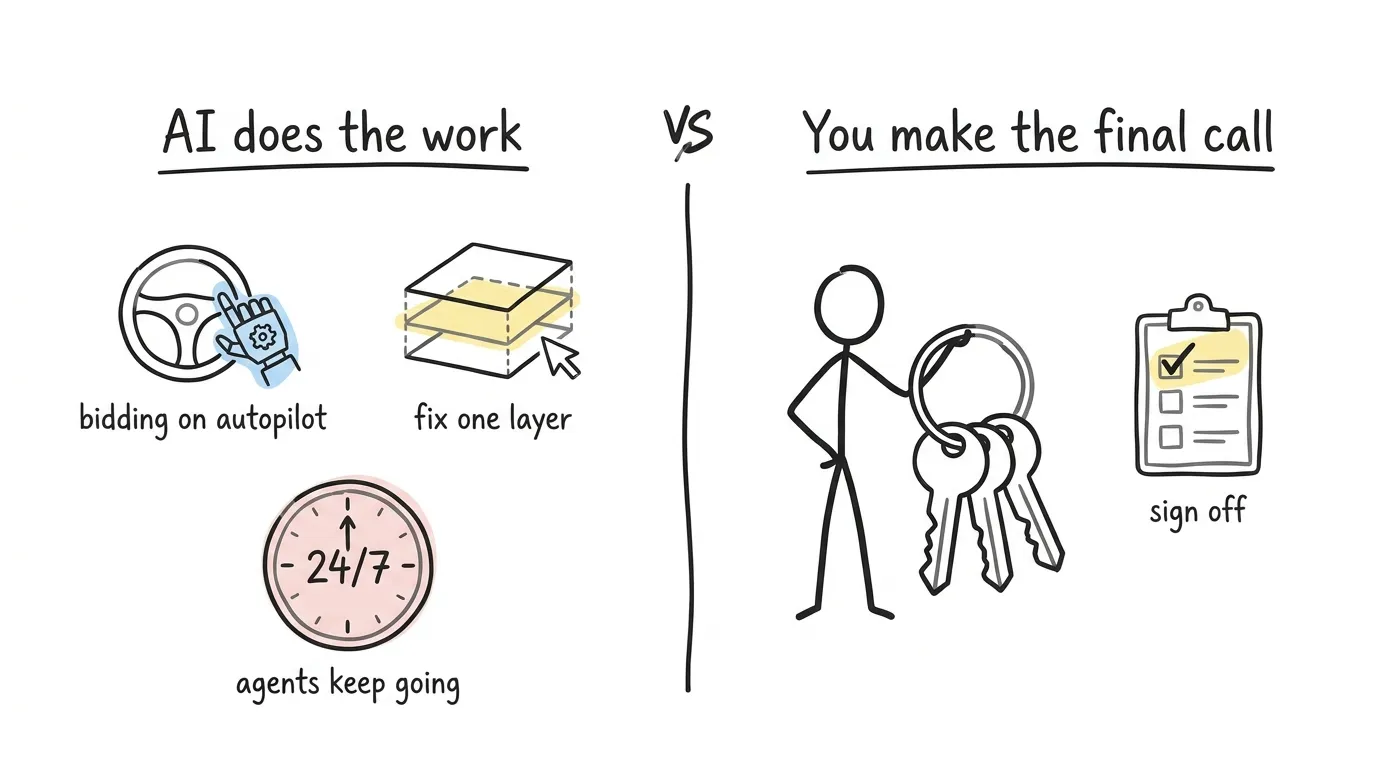
My answer is the sentence those five stories piece together: it can do the work now, but it isn't ready to make the final call.
Bidding can run on autopilot — the cost guardrail is yours to watch. Images can be edited layer by layer — the text is yours to proofread. Agents can work around the clock — the accountability is yours to carry. Meanwhile, on the other side, consumers are already using AI to compare and buy. If you don't show up, the orders go to whoever does.
So for the weeks that remain this year: put the budget where it belongs, fix the data that needs fixing, keep a close eye on what needs watching. Then let AI get to work with confidence.
Just remember — the keys stay in your hand. Don't hand over the whole ring.
Here's to a great selling season this year.
Continue reading
Related articles

What Is GEO? How Your Brand Gets "Mentioned" in the Age of AI Search
An explainer on GEO (Generative Engine Optimization) for e-commerce and DTC brands: how it differs from SEO and AEO, why AI answers shape brand visibility, and eight practices covering question-focused content, consistent brand messaging, structured pages, external evidence, comparisons, and AI mention tracking.

AI Is Already Making Decisions for Your Customers. Are You on the List?
A learn article explains GEO (Generative Engine Optimization): why AI-generated answers now shape which brands customers see, and how SEO fundamentals, entity clarity, citable evidence, and monthly measurement affect visibility in AI answers.

Google Is Stuffing Ads Into AI Search: These Recent Stories Are Really One Story
A news roundup linking recent AI marketing stories—Google adding ads to AI Mode, Amazon's Ads Agent, ChatGPT image updates, a UK startup tracking brand mentions in AI answers, and an AI ransomware warning—arguing that control over ad data and visibility is shifting toward platforms.