
AI Influencers Are Already Landing Prada Campaigns. Here's Why I Say They Won't Replace Humans
The author argues AI influencers will not replace human creators: AI is likely to absorb product-only visual content, while trust and personal influence remain human assets. The piece covers virtual influencer history, market forecasts, and openly-AI persona strategies.
Late one night a few days ago, I was scrolling Instagram and came across a set of photos: a polished-looking young woman at the Australian Open, watching the matches, dressed with care, a Birkin on her arm, looking completely at ease. More than two hundred thousand followers.
I almost believed it.
She isn't a real person. She's an AI-generated persona, run behind the scenes by actual humans.
I put my phone down, and one question surfaced: Will AI influencers replace human influencers, or won't they?
If you make content in 2026, you can't dodge this question. I went through every piece of research I could find, and I went through my own judgment too. Today I'm laying it all out for you.
This Is Bigger Than You Think—But Not as New
What is an AI influencer, exactly?
It's an algorithm-generated face that posts content, grows a following, and lands brand deals just like a real person.
Many people assume this is a new species that only emerged in the past couple of years. Wrong.
Ten years ago, in 2016, a virtual influencer had already debuted: Lil Miquela. She wasn't AI-generated back then—she was made with CGI, a face that looked like it had walked out of an animated film. A decade on, she has gathered millions of followers, released singles, and landed Prada campaigns.
Back then, a TV host even went out of their way to interview her, treating the whole thing as a curiosity piece. If you go back and watch that interview today, it feels exactly like the moment ChatGPT first arrived and everyone shouted "robot." What we called a robot then, we call a friend today.
So what about now?
Now, TikTok and Instagram already host thousands upon thousands of AI influencers. The overall market is valued in the billions of dollars. One report predicts that by 2030, that number will rise to $45 billion.
Forty-five billion. You read that right.
Some Say Human Influencers Are Finished
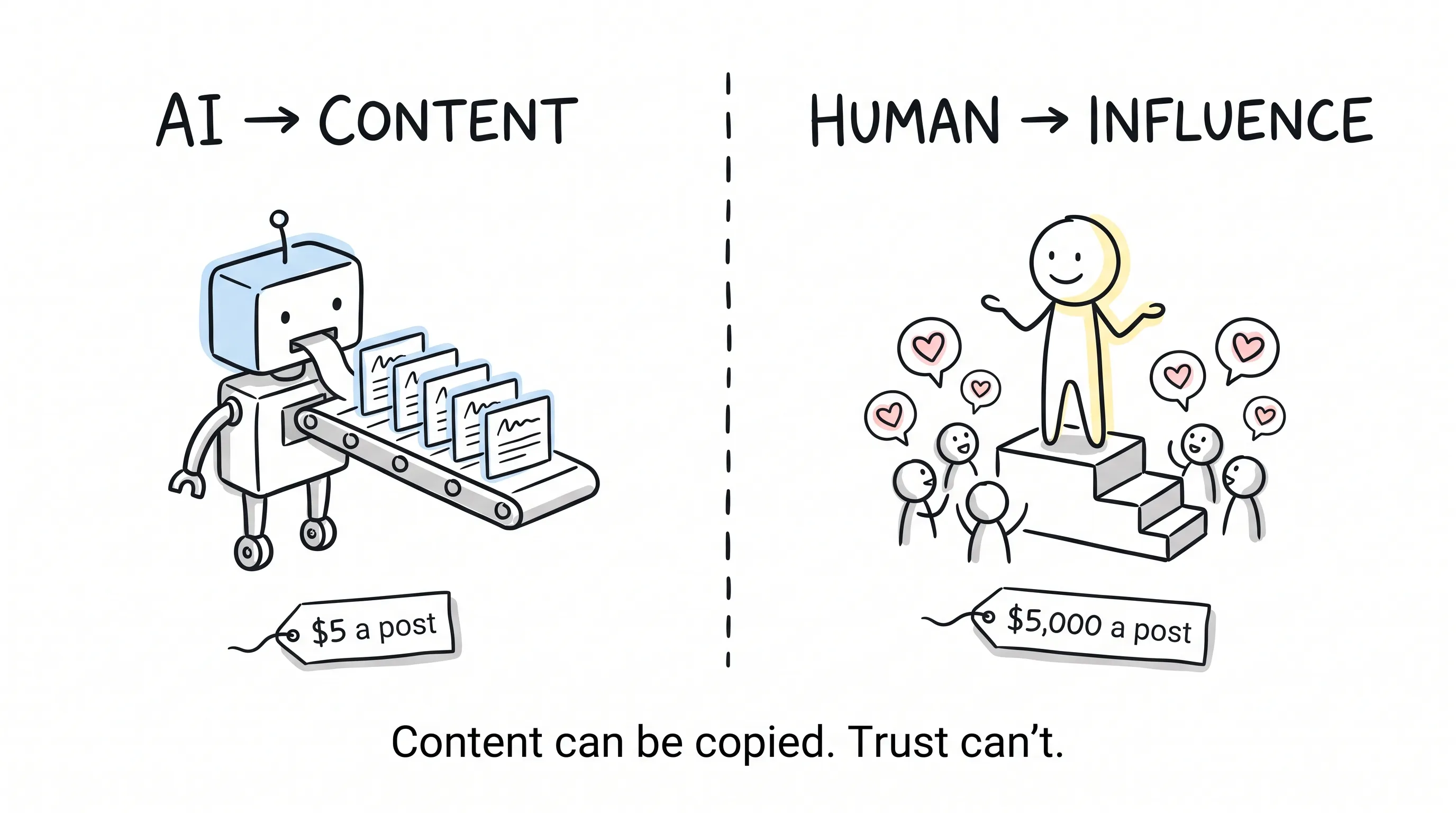
On this question, Gary Vee has made some big pronouncements. He says human influencers can't compete with AI, because AI is cheap. For a post on an account with the same following, a human quotes five thousand dollars—AI gets it done for five.
There's another layer to his logic: brands are fed up with humans. They pay a fortune to sign them, and then the content that goes live doesn't meet the brief. And the moment the six-month exclusivity window ends, the creator takes a competitor's deal the very next day. So what will a brand do? Just build its own influencer—obedient forever, never breaking a contract.
He added one more line: within ten years, the entire influencer industry will take a massive hit.
On the surface, the logic closes up perfectly—airtight.
But I disagree.
First, Tell the Two Jobs Apart
The reason I disagree is that this argument misses one crucial distinction.
There are really two kinds of people making content.
The first kind is called an influencer. Take Alix Earle, who built millions of followers by sharing her real life. She talks about her acne, her breakups, college, starting a business. Her followers aren't watching for her content—they're watching for her. When brands come to her quoting millions of dollars a post, they aren't buying production quality.
They're buying the trust of the crowd behind her.
The second kind is called a UGC creator. No face on camera, likely barely any following. The job is shooting product material for brands, handing it over, and letting the brand run it as ads. Whether the content is any good has nothing to do with who they are.
See the difference?
What's expensive has never been the content. It's the influence.
Content can be mass-produced. Influence can't. You can't conjure a ten-year life story out of thin air, and you can't manufacture the kind of trust that comes from followers watching someone walk all the way from battling acne to building a business.
AI can generate content. AI cannot generate "this person is worth trusting."
So Who Does AI Eat?
That said, don't celebrate too early.
AI can't eat the influencer, but it will eat something else: all the content that isn't bound to influence.
Product ad images, voiceover clips, those meticulously polished product mood shots. With Gemini, Midjourney, or any AI tool you happen to pick up, you can generate a lip balm ad that passes as real within minutes. How real? If it got published, you might not be able to tell.
My take: from here on, virtually all product-only visual content—anything that doesn't involve a real person's image and influence—will most likely be handed to AI. Billboards, in-feed ads, splash screens, all of it.
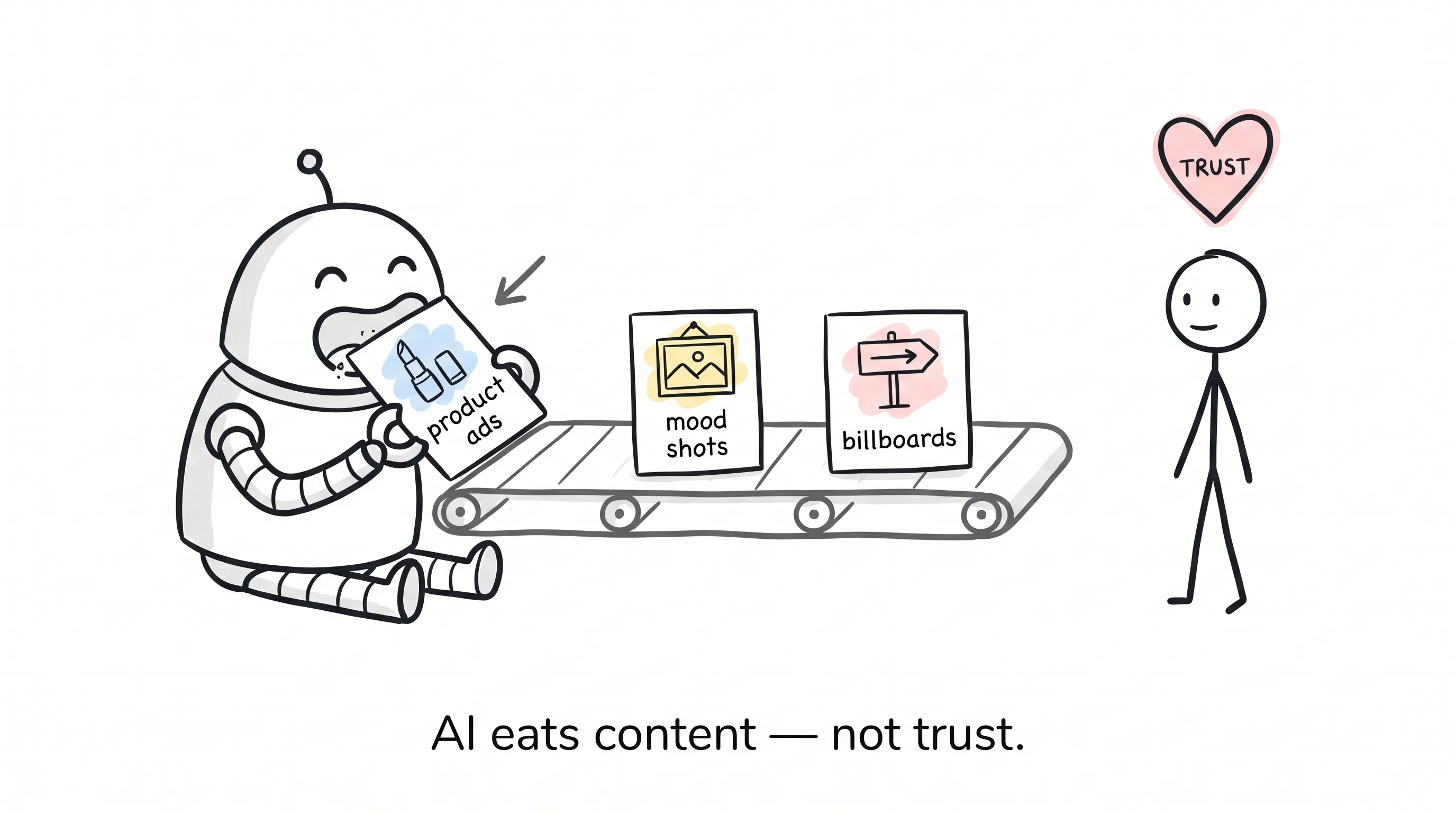
I don't like it. But I believe it's going to happen.
What about influencers? I think they're on a different path: coexistence.
History has run this exact script before. When celebrities crowded onto TikTok, the whole internet pushed back—everyone shouting "nobody follow them." And today? Nobody thinks it's a problem. Same with ChatGPT when it first came out—resistance, panic, cries to ban it. Now? Odds are it's installed on your phone.
Every time a new species enters the arena, there's a period of resistance. Right now, we're standing inside the AI influencer's period of resistance. Look back half a year or a year from now, and what feels eerie today may well feel routine.
What the Winning AI Influencers Will Look Like
There's one more angle most people haven't thought through.
Behind every AI influencer there is also a real human team running things. So the ones that ultimately break out most likely won't be AI pretending to be human.
They'll be the openly AI ones: we all know it's AI, and we like it anyway.
Two forms come to mind.
One is "new faceless content." Some people carry heavy stories they need to tell—a divorce, a serious illness, a career pivot—but don't want to show their faces. In the past, their only option was not to post at all. Going forward, they can build a virtual persona, say plainly that it's a character, and tell their true experiences through that mouth. Followers follow the story, and along the way they watch the character get sculpted, bit by bit. This is a space that hasn't been opened up yet.
The other is the brand mascot. Build a brand an AI character with a vivid personality—a little sharp-tongued, a little out of bounds—dropping into podcasts as the comic sidekick, or running its own separate account. Everyone knows it's fake, and everyone knows who's behind it, so they end up liking the humans behind it too.
Notice what these two forms have in common: no pretending.
AI influencers that pass themselves off as human won't go far. The ones playing it with open cards are the ones with a real shot.
Who's Making Money on This Right Now
While we're at it, three groups are already cashing in on this track.
The first group sells courses. They'll teach you to build an AI influencer from zero and make tens of thousands of dollars a month. I don't recommend it. I went to Reddit specifically to see what people who bought those courses had to say, and the feedback was nearly unanimous: useless.
The second group grows their own AI influencers and lands sponsored deals. Some people really have pulled it off, but it's not as easy as you'd think.
The third group runs AI content factories, using AI to mass-produce UGC material and sell it to brands. What this group is chewing on is exactly the market AI is set to swallow, the one I talked about earlier.
The track is still early, but it will move fast. How fast? I don't know.
One Last Honest Word
Back to the question from the beginning: will AI influencers replace you?
My judgment is clear: no. It will carve out a new track and run alongside yours. What it truly replaces is the content that carries no trust.
And for human creators, this is actually a reminder:
"Being human" itself is becoming your hardest asset.
Your real experiences, your real flaws, your real emotions—algorithms can't sculpt them. The further along we go, the more they're worth.
Next time that "girl" at the Australian Open shows up on your feed, you'll probably smile to yourself. Then get on with your day.
AI can't tell your story for you.
Continue reading
Related articles

When AI Does the Creative, Mistakes Come in Batches Too
A learn article on the risks of using generative AI for marketing creative across brand, legal, compliance, and operational layers, with case examples and seven practices for review, rights clearance, documentation, and vendor governance.
Which AI Should Your Startup Actually Use for Marketing?
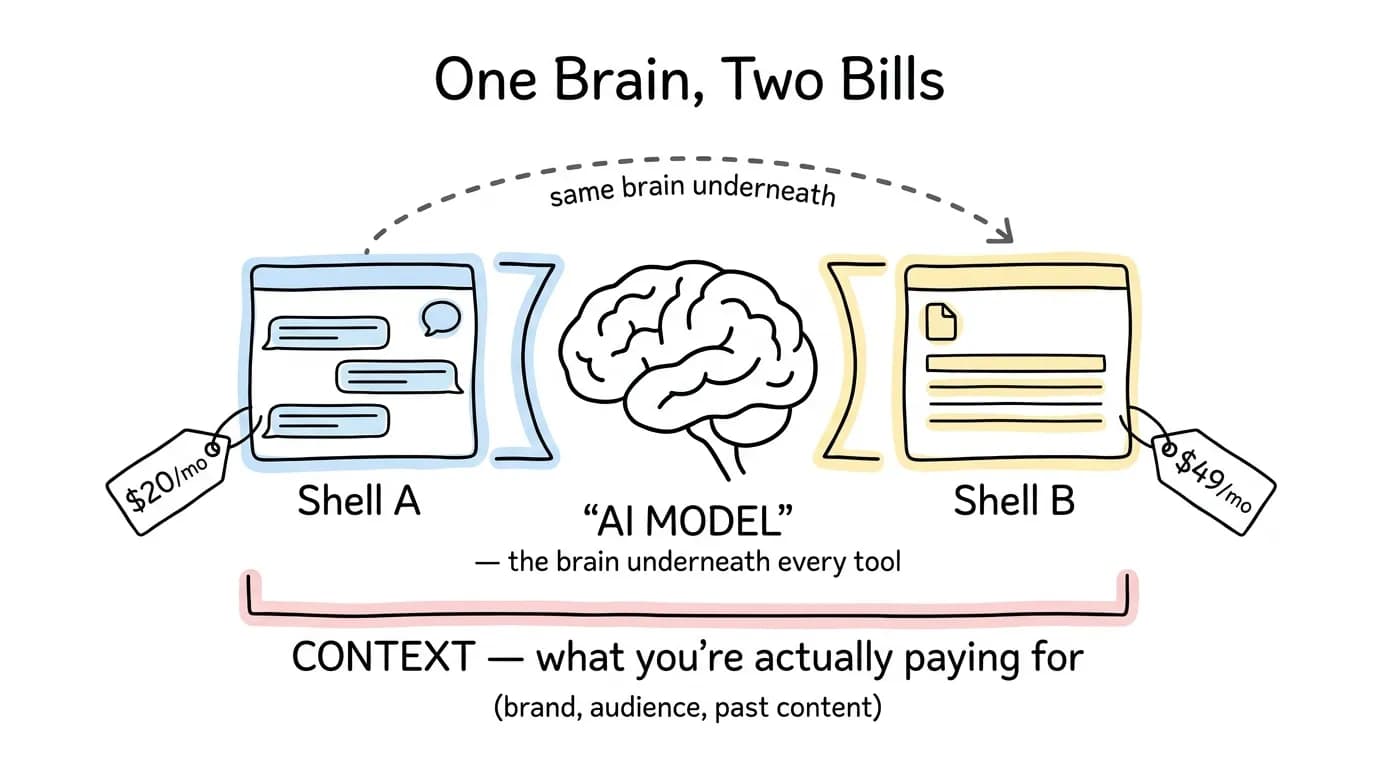
A startup marketing guide explaining the difference between AI models and tools, sorting tools by job (writing, research, design, leads, email, video ads), and outlining a 30-day test plan for choosing them. It also covers generative engine optimization and budget trade-offs.
31 AI Marketing Tools, Reviewed One by One: How Exactly Should You Spend the Money?
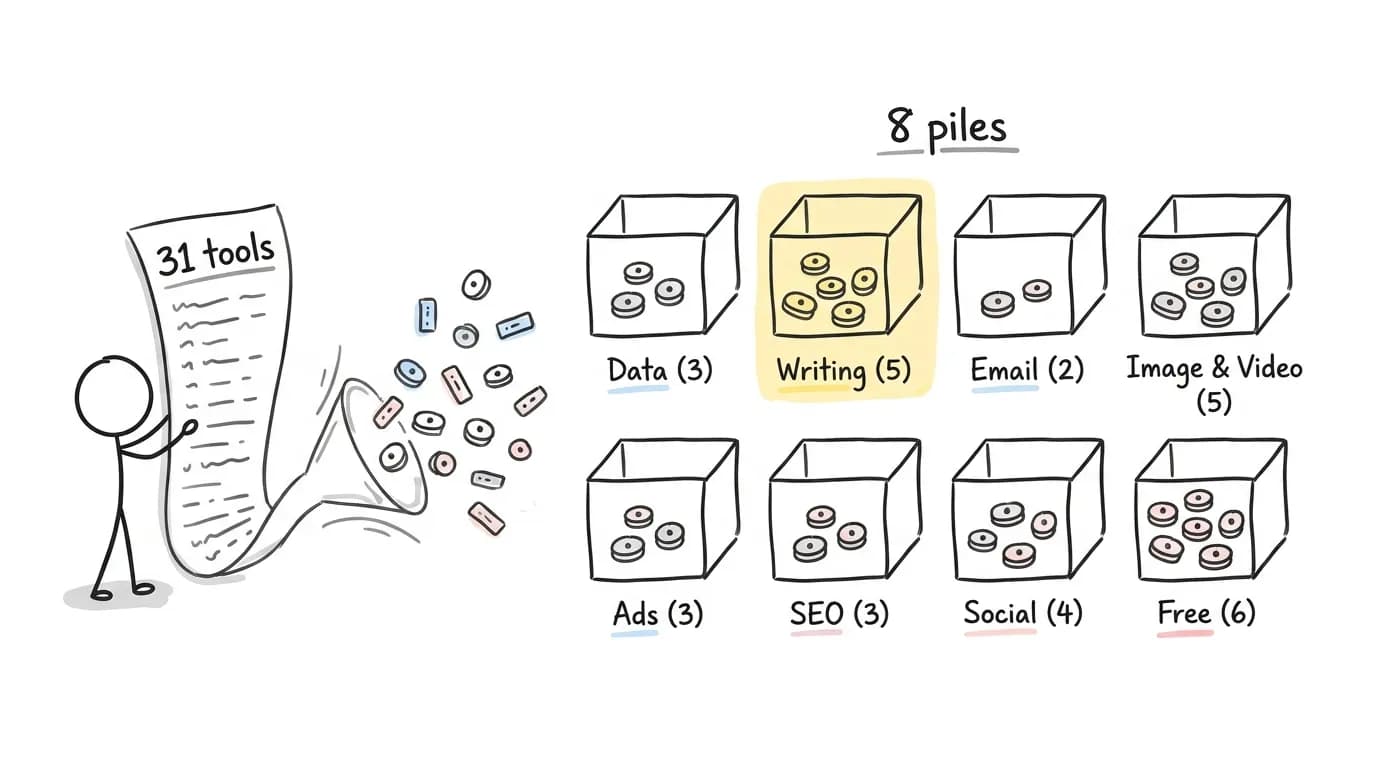
A review of 31 AI marketing tools grouped into eight categories, covering data, content, email, video, ads, SEO, social, and free options, with guidance on choosing one strong tool for your most frequent task and testing free tiers first.