
AI Has Done Half of Marketing's Work — and the Half That's Left Is Worth More
An analysis of how AI is taking over execution-heavy marketing tasks like content creation, data analysis, and customer interactions, while leaving judgment, strategy, and authenticity to marketers. It also reviews trends in UGC, podcasts, case studies, SEO, chatbots, and personalization.
A few days ago, an old friend of mine who works in brand marketing asked me out for coffee.
The first thing he said when we sat down: "It's over — the marketing department is done for." AI writes the copy, AI cuts the videos, AI makes the graphics, even customer service has been swapped out for bots. "Tell me, what are people like us supposed to do?"
I told him not to panic yet. I've been leafing through a stack of industry reports lately — HubSpot's, Gartner's, Adobe's — several hundred pages combined. And having read them, I actually think marketing has never been more interesting a business than it is right now.
Why?
Because for all the upheaval, there's only one throughline: AI has taken over the "executing" and left us the "judging."
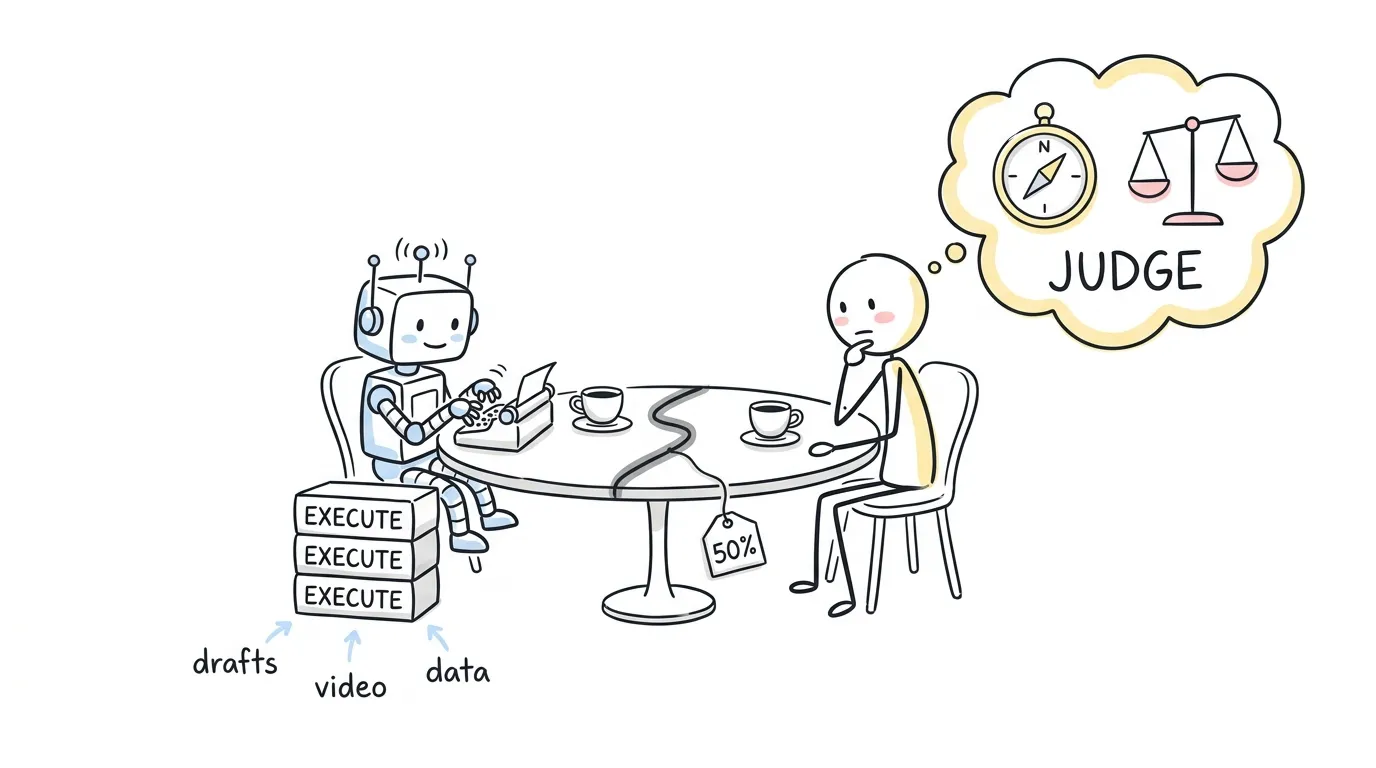
Get that throughline, and there's nothing left to panic about.
What does "AI taking over execution" actually mean?
It means the jobs with a standard set of moves are being handed to machines, one after another.
Content creation, for one. In its 2026 State of Marketing report, HubSpot gives a number: 80% of marketers already use AI for content creation. The more interesting number is the one behind it — 68% of teams say they've taken the time they saved and put it into strategy, into actually engaging with their users.
Think about what that means.
It means what AI has taken off marketers' hands is exactly the part they least wanted to do: grinding out drafts from dawn to dusk.
Now look at data analysis. That used to be the analyst's exclusive territory. Anthropic and Asana's Work Innovation Lab put out a report called the State of AI at Work, and 30% of the workforce is already using generative AI for data analysis.
Thirty percent — what does that mean? Roughly speaking, of every three offices, there's one where somebody has AI looking at the data for them.
And here's the one that bites harder. Gartner predicts that by 2028, 60% of companies will use agentic AI to take over customer interactions. What is agentic AI? Think of it as an AI employee that doesn't need you hovering over it and gets the work done by itself. At that point, the marketer's role changes: not the person doing the work, but the person managing the AI that does it.
Adobe's numbers confirm this too: 89% of companies have already laid the technical foundation and are just waiting to put generative AI to work; 63% believe it can free employees up to do more creative things.
So, back to my friend's anxiety: will the marketing department be cut in half?
My judgment: yes. The half that gets cut is the execution half.
Wherever people are, that's where marketing is
Execution has been handed to the machines — so where did people's attention go?
To scrolling short-form video.
TikTok, YouTube, Instagram — what people scroll through these days runs a few minutes, sometimes just a few seconds. HubSpot's report has another number: 75% of marketers already use AI for media production. Why so fast? Because when it comes to the volume of short-form video, human hands simply can't keep up.
But.
Machines can mass-produce videos for you; what they cannot manufacture is "authentic."
What is authentic? The kind of content users shoot themselves — that's authentic. The trade calls it UGC, user-generated content. It looks like influencer posts, but the essence is completely different: influencer content is a paid collaboration with the merchant; UGC is users posting spontaneously, and the merchant hasn't spent a single cent.
Put plainly, it's the word of mouth the older generation talked about, relocated onto the internet.
Gartner has a statistic I particularly like: more than 80% of consumers believe UGC improves their experience of discovering products and trusting brands. Eighty percent. However much you spend on advertising, it may not match one casual clip a real user shot on their phone.
So what are a lot of brands doing? Building communities — bringing their longtime users together and treating them like friends.
Why? Because the more AI-generated content there is, the more "fake" the internet becomes. When fake things are everywhere, real things become valuable. Gartner also says that "authenticity" is now the third most important value for American consumers.
The more advanced AI becomes, the more expensive sincerity gets.
The Things Everyone Declared Dead Are Doing Just Fine
Every year's trend roundup declares a batch of "relics" dead. But several sets of numbers from 2025 tell a different story.
Podcasts. Edison Research's survey says 55% of Americans listen to podcasts every month. In one month, more than half the country lends its ears to podcast hosts. With attention that high-quality, on what grounds would advertisers give it up?
Case studies. A long-standing staple in the B2B world. A 2025 survey by the Content Marketing Institute found that 75% of B2B marketers had used case studies and customer stories in the past 12 months, and 53% said the tactic really works. Old, but it works.
SEO. This is the one truly worth a closer look.
Gartner predicts that by 2028, organic search traffic to brand websites will fall by half. By half! Because search engines themselves have changed — AI hands you the answer directly, and users stop clicking links.
So is SEO dead?
In Conductor's 2025 State of SEO report, 91% of respondents said SEO has a positive effect on site performance.
A contradiction? No. What has changed is how people search: before, you only optimized webpage text; now you have to do video search, image search, even voice search. However the search engines make sense of the world, your content has to exist in a form they can read.
What died was never SEO — it was the SEO that bet everything on one move.
Chatbots are the same. Grand View Research projects that the global chatbot market will grow at a compound annual rate of 19.6% from 2026 to 2033. When they run into a problem, users are increasingly too lazy to file a ticket — a couple of lines to a bot and it's resolved.
Personalization: Great Ambitions, Missing Ingredient
People have been talking about personalization for a good decade now.
After AI took off, this suddenly gained a new dimension of imagination. Machines recommending products, AR letting you "arrange" a set of furniture in your living room before ordering — all of that is already reality.
Adobe asked around in its 2026 AI and Digital Trends report: 80% of respondents say AI is the key tool for making personalized recommendations; 56% plan to use AI to deliver more personalized experiences.
Sounds great all around, right?
But only 39% of respondents hold unified, connected data.
Out of ten companies, six want to do personalization, and only four have anything to cook with.
Why is that? Because data is becoming harder to come by. Apple and Google are both phasing out third-party cookies (trackers that follow people across other websites), so the old road of accumulating data by tracking other people is no longer passable. From now on, the competition is over first-party data: the portion users willingly leave with you.
So in the years ahead, whoever gets their own data sorted out first will be the first to deliver real personalization.
That is my judgment.
Back to that cup of coffee
When I finished saying all this, I asked my friend: so what are you panicking about?
The execution work, AI does for you — that's a good thing. In the past, your team spent half its time being machines; now they can finally be people. What you should really be thinking about is: once the machines take over the assembly line, are the people on your team a group who can make judgments and understand users?
Trends have never been a list you can copy down and use. A trend is a mirror: it shows you where users are heading, and you lay your road in that direction.
Back to his original line: will the marketing department be cut in half?
Yes. But what gets cut is the half a machine can do. The half that remains is worth more than it has ever been.
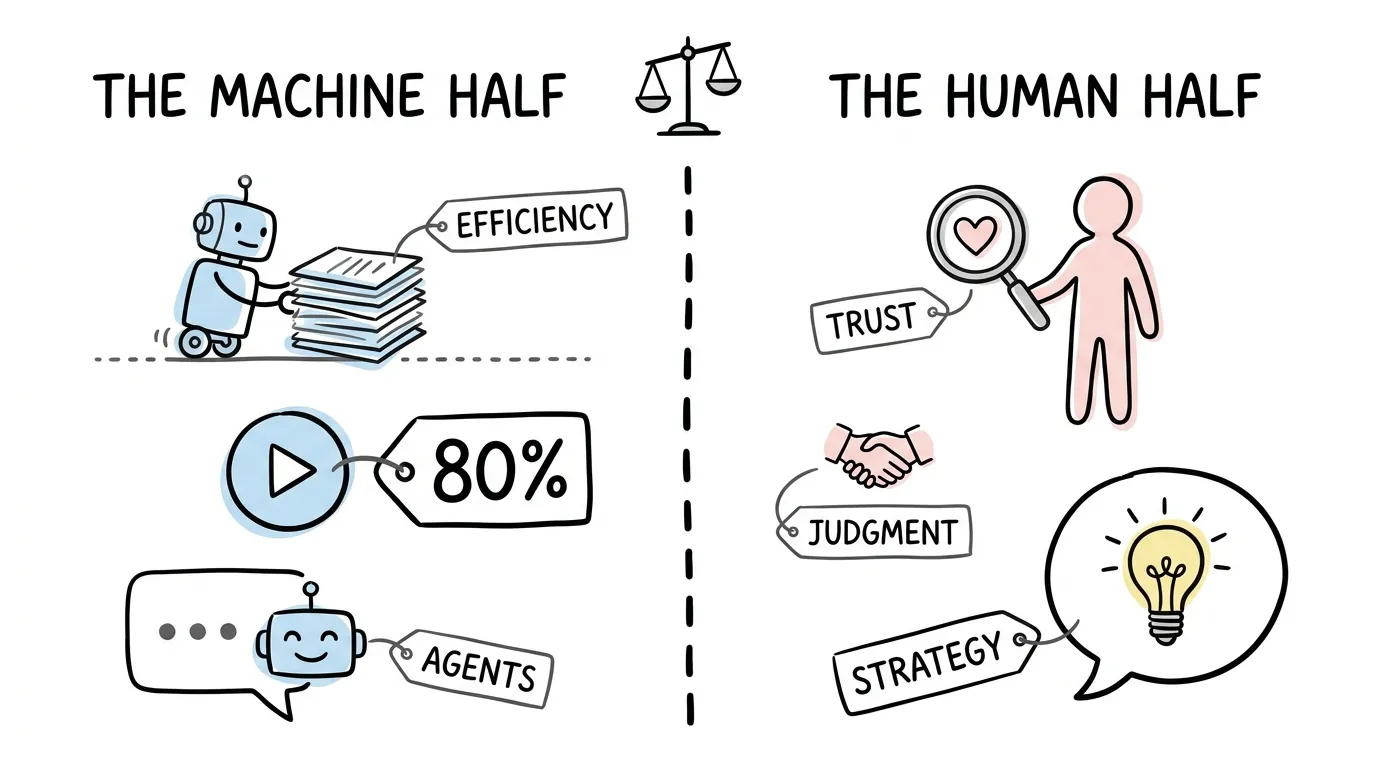
What AI takes away is efficiency; what people keep is trust.
That's my feeling — not necessarily right. But the next time anxiety strikes, try asking yourself: in my work, which part is the machine's, and which part is mine?
Get clear on that question, and next year's trend reports won't rattle you nearly as much.
Continue reading
Related articles

When AI Does the Creative, Mistakes Come in Batches Too
A learn article on the risks of using generative AI for marketing creative across brand, legal, compliance, and operational layers, with case examples and seven practices for review, rights clearance, documentation, and vendor governance.
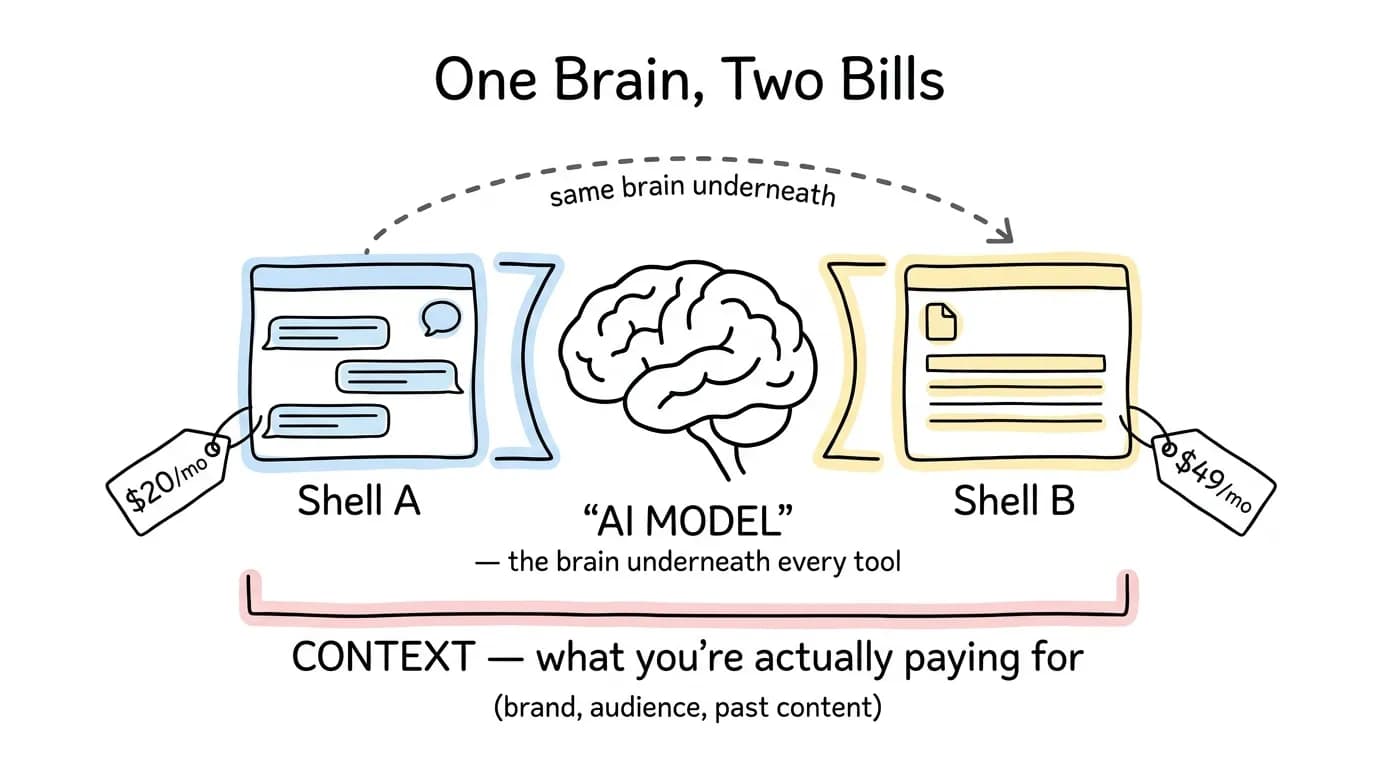
Which AI Should Your Startup Actually Use for Marketing?
A startup marketing guide explaining the difference between AI models and tools, sorting tools by job (writing, research, design, leads, email, video ads), and outlining a 30-day test plan for choosing them. It also covers generative engine optimization and budget trade-offs.
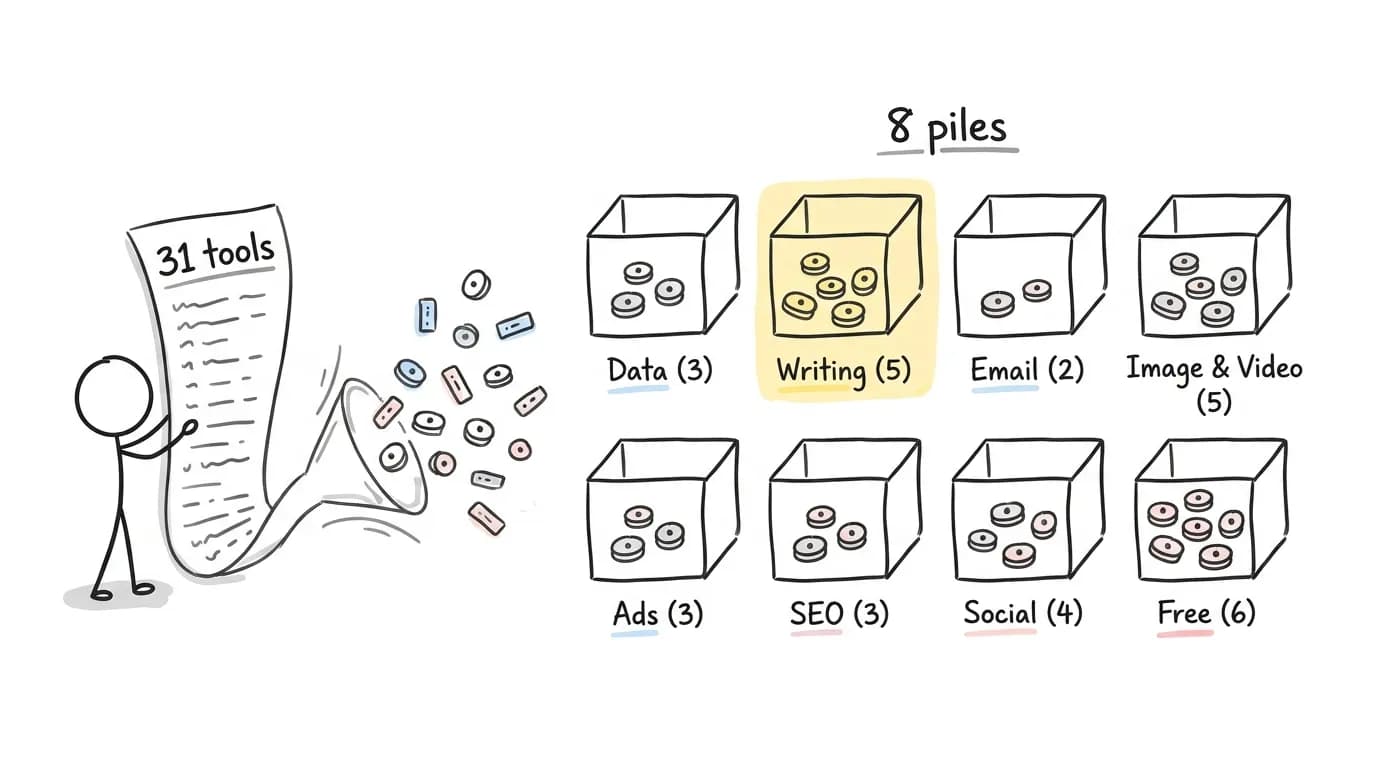
31 AI Marketing Tools, Reviewed One by One: How Exactly Should You Spend the Money?
A review of 31 AI marketing tools grouped into eight categories, covering data, content, email, video, ads, SEO, social, and free options, with guidance on choosing one strong tool for your most frequent task and testing free tiers first.