
AI Has Arrived in Influencer Marketing. The Question That Remains: How Will You Use It?
A learn article on how AI is reshaping influencer marketing, covering platform AI tools for video and dubbing, agency workflows that pair AI analysis with human creativity, audience-first creator selection, and cross-border market entry.
A few days ago, I had dinner with an old friend who works in brand marketing. Halfway through the meal, he put down his chopsticks and asked me: "Do you think AI is going to take my job?"
I asked, what brought this on all of a sudden?
He said that lately his screen is full of claims that AI is about to transform marketing — and his half of the world, influencer marketing, looks like the most dangerous place to stand.
I didn't answer right away. First, I showed him two numbers.
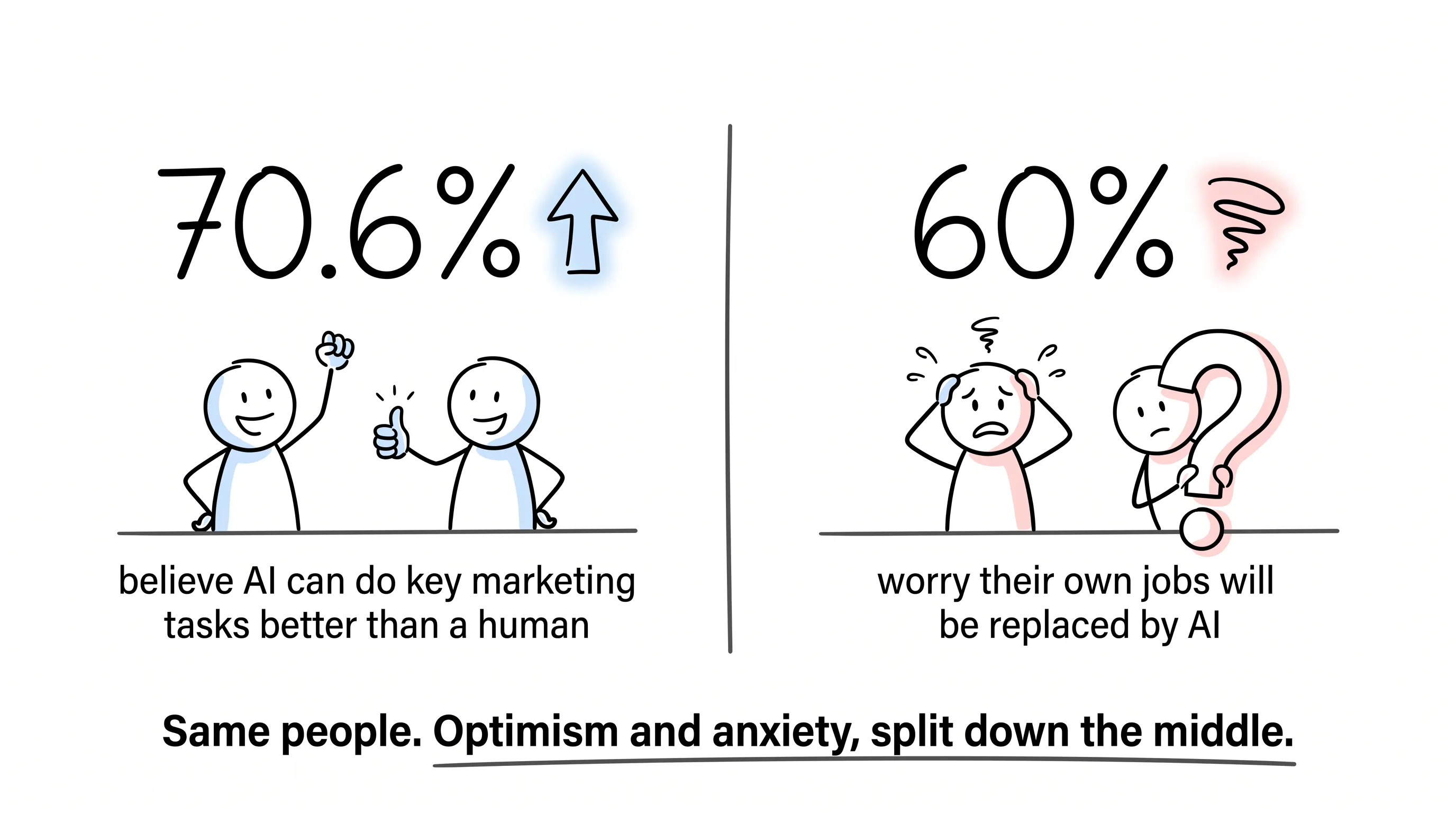
HypeAuditor, an influencer data platform, ran a survey: 70.6% of marketers believe AI can do many key marketing tasks better than a human can. At the same time, nearly 60% worry that their own jobs will one day be replaced by AI.
See — seven in ten think AI is powerful; six in ten are afraid of it. And these are one and the same people.
Optimism and anxiety, split almost evenly down the middle.
But later I told him: anxiety is useless. Because the question has already changed.
What does "the question has changed" mean?
The Question Stopped Being "Whether to Use It" a Long Time Ago
Influencer marketing was long treated as a passing fad, something you couldn't count on. And now? It is a genuine billion-dollar industry. A 2025 industry forecast estimates that by 2027, this market will exceed $30 billion.
The market is already that big, and AI is charging into every industry. You can't hold it back, and you don't need to.
So only one real question remains:
Since everyone is using it, who will use it better?
Everyone wields the same tools; how you use them decides who wins. So how is this battle being fought right now? Let me take you to the front lines.
The Platforms Have Already Made Their Move
Start with the platforms. Today the major platforms are basically all using AI to make content — text, images, video, all of it.
TikTok has a tool called Symphony Creative Studio that lets brands and creators use AI to generate videos fitted to whatever is trending right now. What used to require a professional team, equipment, and lighting now takes one person.
YouTube moved even earlier: in 2024 it launched automatic dubbing, now covering hundreds of thousands of channels. What does that mean? Your videos get automatically translated and dubbed into multiple languages, reaching viewers who can't understand what you're saying.
See the pattern? Platforms are quickly driving the cost of "making content" and the cost of "crossing languages" toward zero.
Once costs drop, competition shifts from "who can make it" to "who makes it better."
So how are brands and agencies using it? Let me tell you about a real playbook.
Let AI Do the Grunt Work; Keep People for Creativity
There's a company called HypeFactory that specializes in influencer marketing. The way they use AI is very typical.
They let AI take over most of the analytical work. Why? Because finding the right influencer by hand is too slow, and AI is naturally good at sifting people out of huge datasets.
With analysis handed off to AI, people are freed up to do the things AI isn't good at: creative strategy and trend research.
They even use AI to study the current state of influencer marketing in a given industry — get a feel for the market first, then make a move.
Hearing this, you might say: isn't this just the workers being displaced by machines?
No. Look one level deeper: what AI takes over is the "manual labor"; people's "mental work" is actually being set free.
But there's a premise hidden here, and many brands get it backwards.
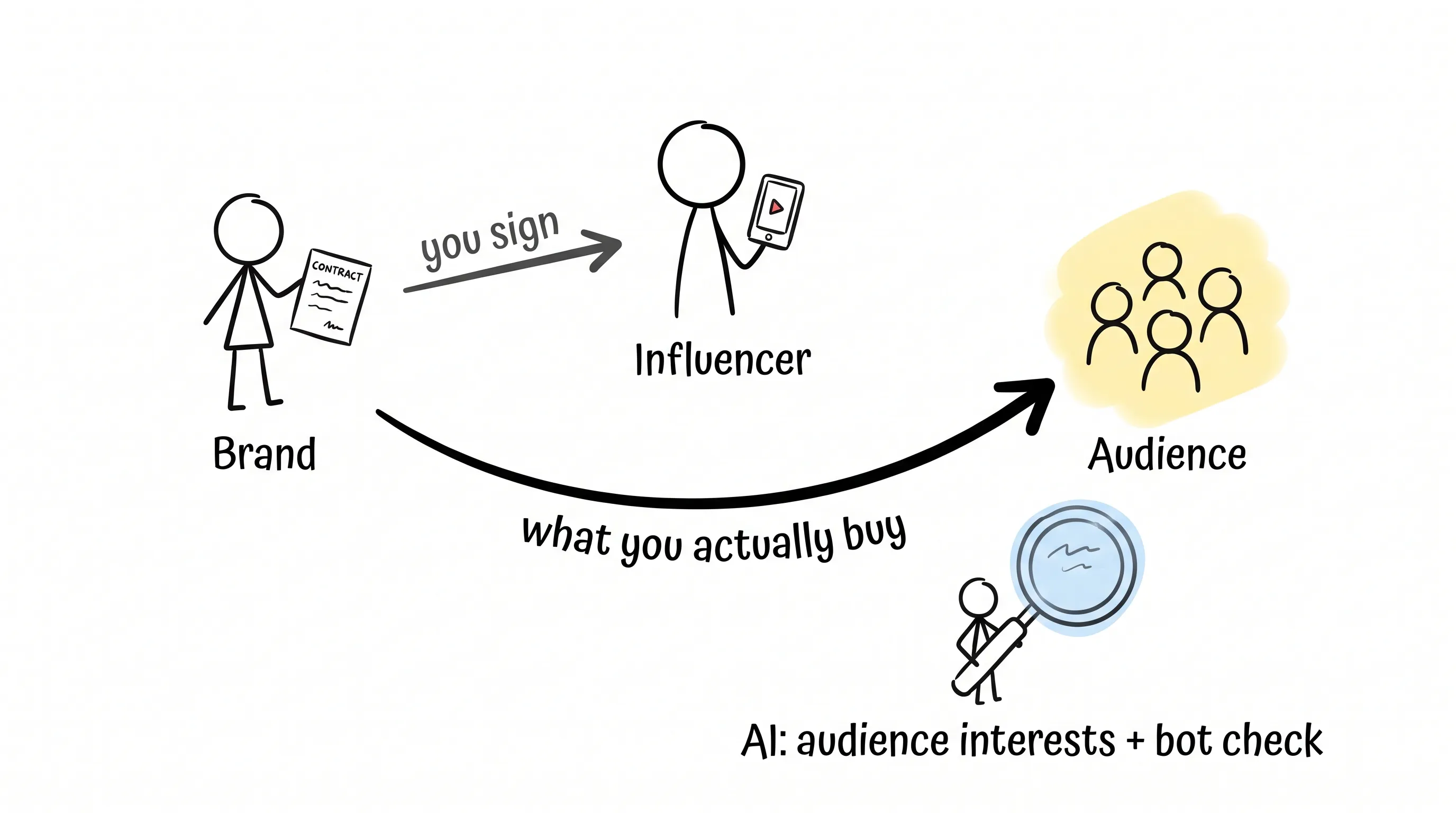
You Sign the Influencer — You Buy the Audience
When many brands pick an influencer, they look at the person: follower count, content niche, whether the tone fits.
HypeFactory's view is: chosen this way, you've picked the wrong anchor. The center of gravity of the decision should move from the influencer themselves to the audience behind them.
What is the audience?
When an influencer posts a video, what actually creates value for a brand is not the video itself — it is the group of people watching it. That group's interest profile and spending power are what decide whether this campaign works. An influencer's follower count is a bit like a store's foot traffic: a good-looking number doesn't count; how many people actually walk in and pay does.
And this is exactly what AI is good at analyzing. What the audience in each market is interested in, how a product fits into those interests, what posture a brand should take when it enters — AI can sift all of it out of massive amounts of data.
Sifting like that produces two results: first, the match between brand and influencer improves markedly; second, the bots hiding inside follower counts are exposed. Plenty of "million-follower" accounts show their true colors the moment AI shines a light on them.
You sign the influencer; what you're really buying is the audience behind the influencer.
Once you think this through, the way you evaluate influencers will be completely different.
That said, influencers themselves may understand AI better than many brands do.
Influencers, of All People, Are the Least Willing to Let AI Ghostwrite
Guess how influencers use AI? Mass-producing content with it?
Quite the opposite.
These creators are indeed using AI, but only at the edges: testing which cover image gets more clicks, which title font looks better. The core content, they don't let AI touch.
Why? Their logic is clear-headed: once you automate the core content, the content loses its soul, and the connection with the audience breaks.
That connection is the influencer's lifeline. Fans follow you because they're fans of you as a person, not because your production is polished.
Production can be handed to AI. "You" cannot.
AI can help you produce faster, but it can't help you be more like "you."
I think this group of creators may understand AI more deeply than many marketers do: it's a power tool, not a ghostwriter.
The Real Hurdle Is Inside People's Heads
So is there no resistance at all? Of course there is.
The interesting thing is, the biggest resistance isn't in AI itself, but in people's attitude toward AI.
Brands that are new to influencer marketing especially tend to carry a preconceived notion: a creator must be locked into one specific content niche, and outside that circle it doesn't count as a match.
But audiences aren't that single-minded. Someone who loves watching food videos may also love tech reviews. If you insist rigidly on "is the niche the right fit," you'll miss a huge stretch of potential audience.
AI, matching by "audience overlap," can find creators with completely different vibes but heavily overlapping audiences. Your reach opens up all at once.
So you see, what blocks brands is often the assumptions in their own heads.
What truly limits you is not the tool — it's what you believe the world looks like.
One Layer Further Out: AI Is Tearing Down the Walls Between Countries
There's one more trend worth talking about on its own.
Going forward, AI analysis will cover more and more platforms. Wherever there is competition, there will be AI.
The more interesting change is happening on those small local platforms. Take South Korea and Japan: besides the big-name apps like TikTok, X, and Instagram, small local platforms are also very active. In the past, if a brand wanted into these markets, it either spent heavily or simply couldn't get in.
With AI, the play has changed. Use AI to analyze a market's data and study what the locals are talking about, and even a small budget can play in global markets.
Where is the biggest upside in all this?
In the fact that AI is tearing down the walls between countries. Once the walls come down, brands and businesses alike get a real shot at going global.
Back to That Dinner
Later, when the meal was nearly finished, I told him about HypeFactory's playbook: AI takes over analysis; people are kept for creativity, strategy, and judgment.
I said, what you should really care about is that your peers are using AI to double their efficiency.
Worrying that AI will replace you and using AI to take work away from others are two completely different stances.
May you be the latter.
Continue reading
Related articles

When AI Does the Creative, Mistakes Come in Batches Too
A learn article on the risks of using generative AI for marketing creative across brand, legal, compliance, and operational layers, with case examples and seven practices for review, rights clearance, documentation, and vendor governance.
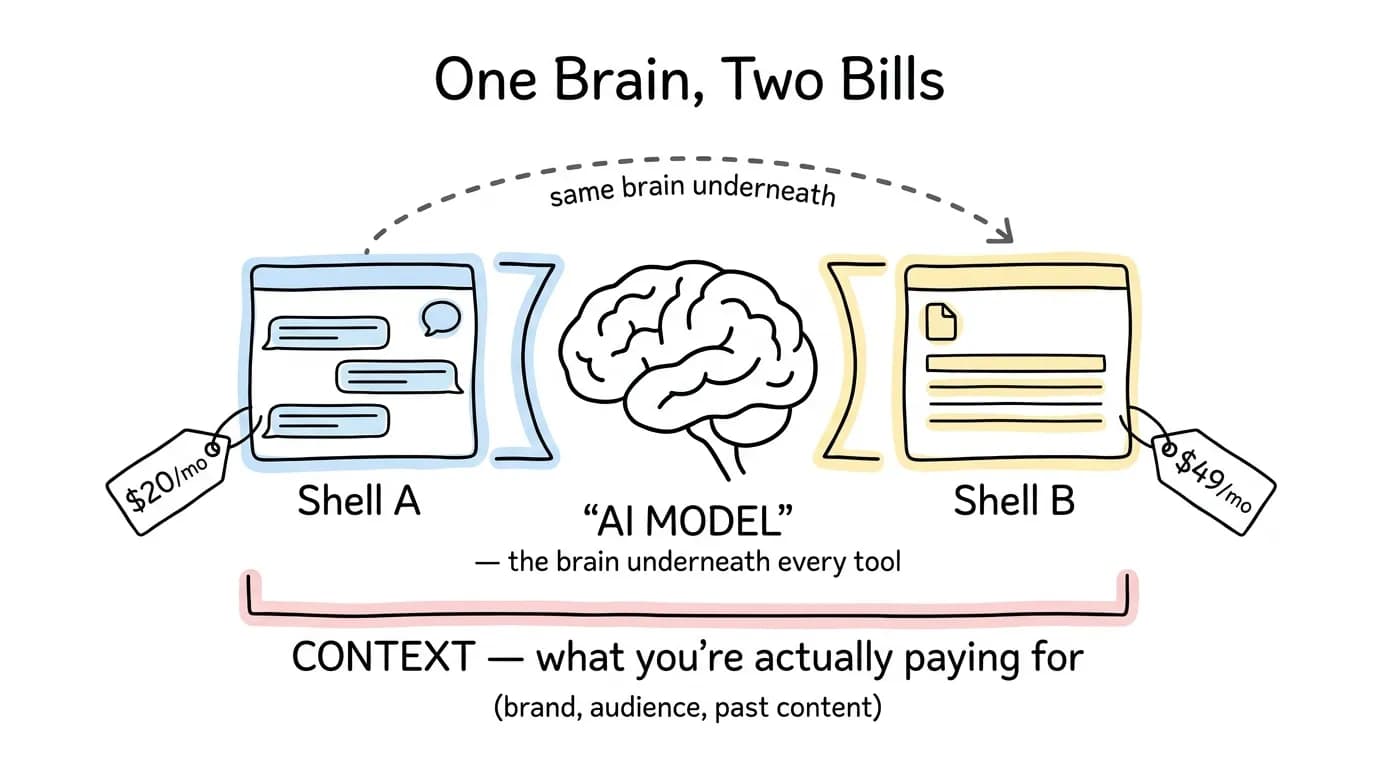
Which AI Should Your Startup Actually Use for Marketing?
A startup marketing guide explaining the difference between AI models and tools, sorting tools by job (writing, research, design, leads, email, video ads), and outlining a 30-day test plan for choosing them. It also covers generative engine optimization and budget trade-offs.
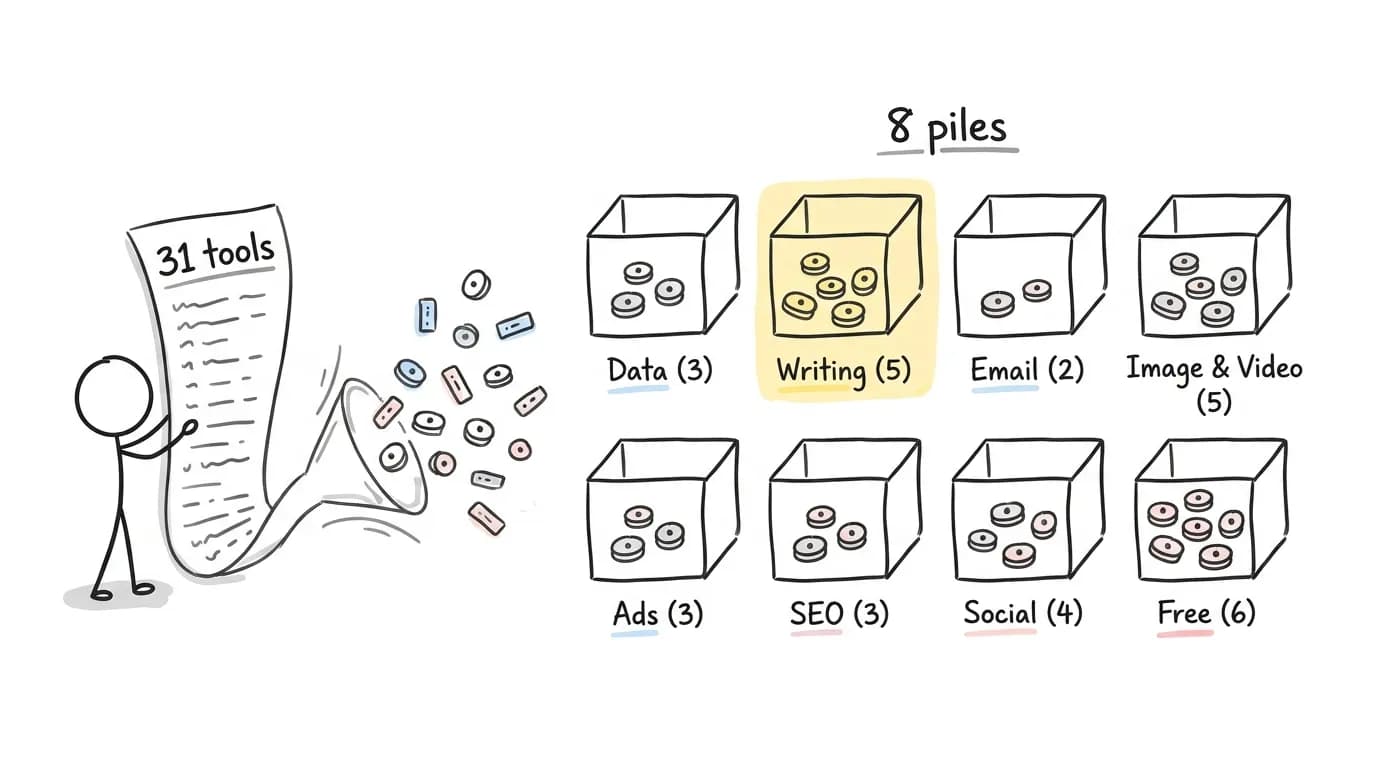
31 AI Marketing Tools, Reviewed One by One: How Exactly Should You Spend the Money?
A review of 31 AI marketing tools grouped into eight categories, covering data, content, email, video, ads, SEO, social, and free options, with guidance on choosing one strong tool for your most frequent task and testing free tiers first.