
AI Content: Some Grew 100x in a Year, Others Worked Hard for Nothing
A case-study roundup on AI content marketing, covering Adore Me, Tomorrow Sleep, Otto's Grotto and others, arguing outcomes depend on the system around the tool—structured material, voice rules, human sign-off—plus a section on earning citations in AI answers.
A couple of days ago, a friend of mine who works in content came to vent.
He told me his team had gone all-in on AI. They used to produce 20 pieces a month. Now they produce 20 a day. Output is up thirtyfold.
And the result? Traffic hasn't budged.
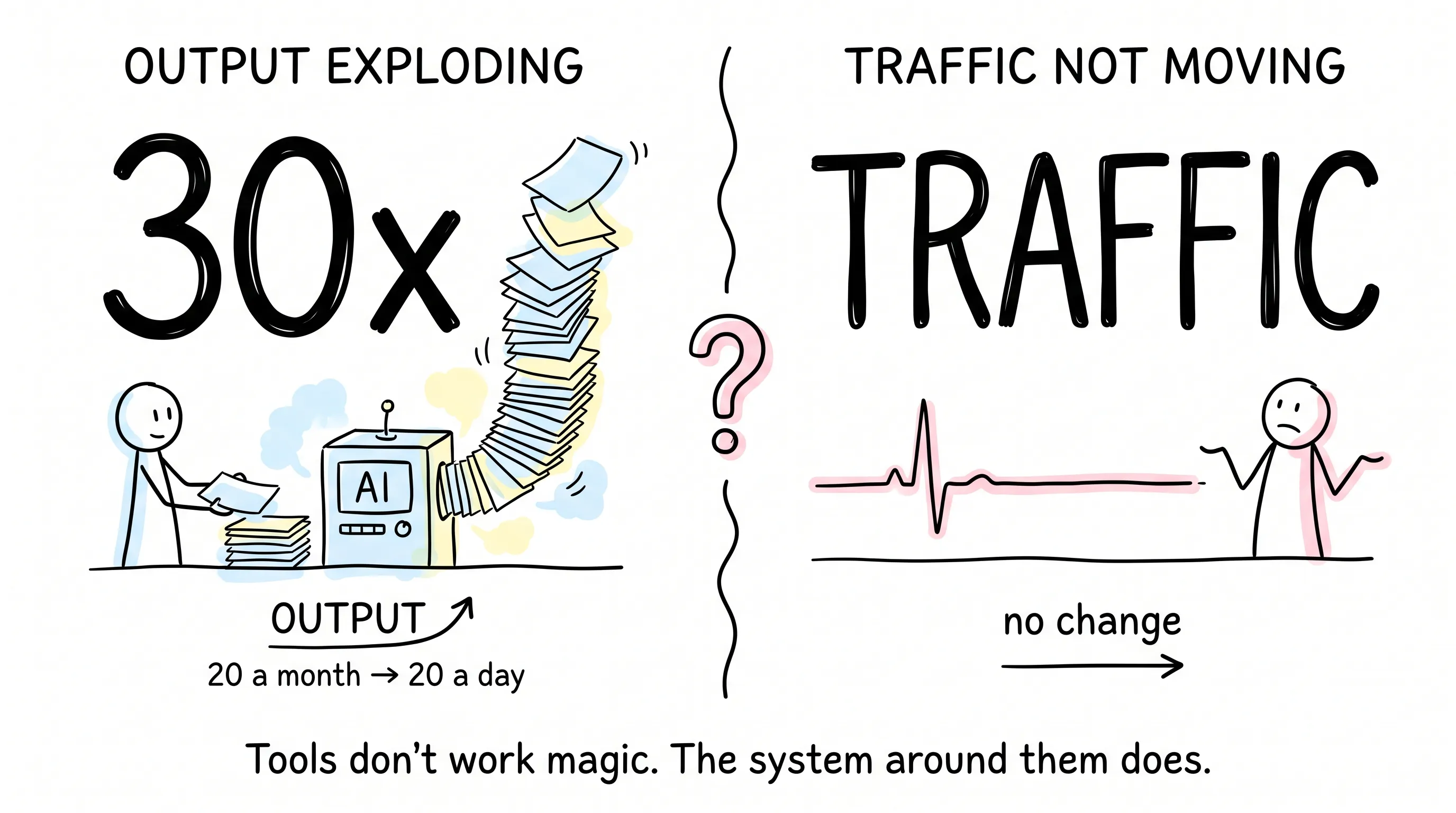
So he asked me: can AI actually write, or not?
I told him he was asking the wrong question.
Whether AI "works" was never the question. The question is what kind of system you put it in.
Put bluntly: tools don't work magic. The process you build around the tool does.
Not convinced? Let me tell you a few true stories. Every one of them comes with numbers to back it up.
Story One: 20 Hours Becomes 20 Minutes
There's an underwear brand called Adore Me. Direct-to-consumer (DTC) — no department store counters.
The company had a very practical headache: product descriptions to write, copy in multiple languages to write, stylist notes to write. If humans wrote all of it, they'd have to keep hiring. And hiring drives costs up.
They did not just "open up an AI and start writing."
They used Writer's AI Studio to build a few "AI employees," one agent, one job: the first one writes search-engine-friendly product descriptions; the second handles Spanish translation; the third writes stylist notes. And once a note is written, a human polishes it, signs off, and only then does it go out.
So what happened?
Writing time for stylist notes dropped 36%. Product descriptions used to take 20 hours per batch. Now? 20 minutes.
That's not a typo. Twenty hours, down to twenty minutes.
Non-branded organic search traffic grew 40%.
Impressive!
But notice — the most important thing here isn't how clever the AI is.
It's that exactly one AI owns each task, and after the AI finishes, a human has to sign off before anything gets published.
What Counts as a "Case Worth Copying"?
Before story two, let's get our definitions straight.
What is an AI content marketing case? It's a company that used AI to solve one specific content problem — product descriptions they couldn't keep up with, rankings that wouldn't move, production that was too slow — and got a measurable result out of it.
The key phrase is "measurable."
Don't come at me with buzzwords like "empowerment" or "efficiency gains." Twenty hours becoming 20 minutes, traffic going from 4,000 to 400,000 — those are numbers.
For any case without before-and-after numbers: listen for fun, but don't take it seriously.
Story Two: 100x in One Year
There's a mattress brand called Tomorrow Sleep. They entered the market in 2017. The product was genuinely good, but their content strategy was a mess. They published articles nobody read.
Then they used a content intelligence platform called MarketMuse to do two things:
First, find high-value topics. Second, look at which keywords competitors had already claimed, then find the gaps nobody had taken.
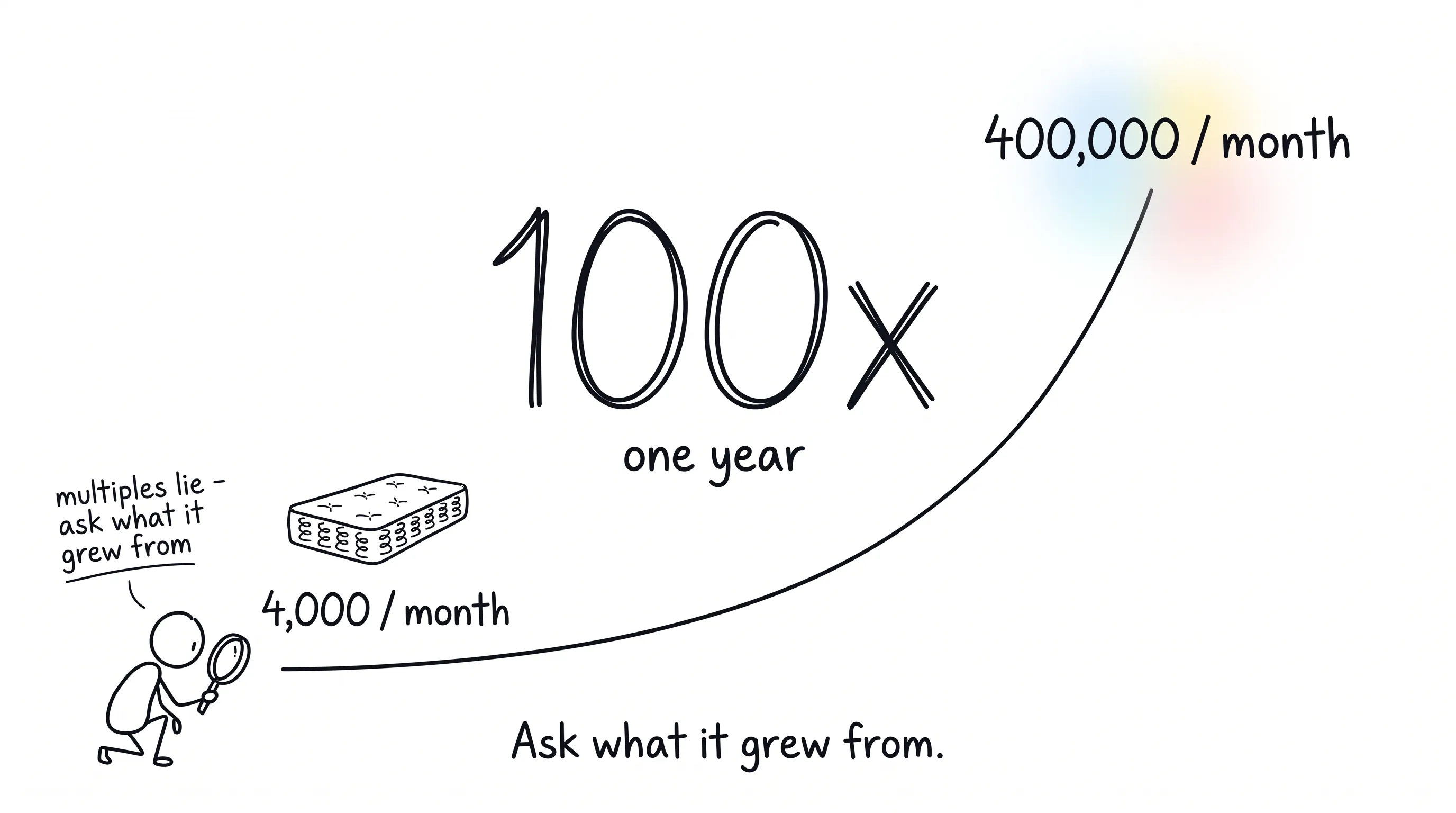
Within a year, organic traffic went from 4,000 a month to 400,000.
One hundred times.
But hold on — before you get excited, let me pour some cold water on this.
Going from 4,000 to 400,000 is 100x. Going from 400,000 to 440,000 is only 10%.
Multiples lie. Small bases double easily.
A brand-new company starting from zero and an established brand that already ranks well are simply not comparable. So from now on, whenever you see any "explosive growth" number, ask one question first: what did it grow from?
There's one more detail in this case. On several high-value keywords, the mattress rookie outranked the industry veteran Casper — and even grabbed a featured snippet (the boxed answer Google pins to the very top of its results).
The rookie beat the veteran on precise topic selection, not on budget.
Story Three: A One-Person Sticker Shop
The first two stories were about companies. This one is about a single person.
In Indiana, USA, there's an online store called Otto's Grotto that sells stickers. The owner is Therese Waechter — and it's basically just her.
She hired no copywriter and no developer. Product descriptions, hashtags? AI. Code changes for her Shopify storefront? She asks AI for those too. She calls it "vibe coding" — writing code by feel, with AI there to catch her when she falls.
In 2024, her revenue more than doubled.
Her site got more capable, too. And through all of it, she never hired a single developer.
Honestly, what moves me most about this story is precisely how unsexy it is.
No million-dollar budget. No celebrity endorsement. Just one person using AI as an on-call copywriter, a translator, and a programmer who doesn't draw a salary.
How Should a Small Team Run the Numbers?
Here's another one: Amarra, a formal-dress wholesaler in New Jersey. Small team, even smaller room for trial and error.
They used ChatGPT to write product descriptions and cut content production time by 60%. They added an AI inventory system and reduced overstock by 40%. And 70% of customer service inquiries are now handled by bots.
Let's do the math.
For writing product descriptions, an AI tool might cost a few dozen dollars a month. That 60% of time saved? Those are real human hours.
So when you evaluate whether an AI tool is worth it, don't stare at the subscription fee.
First calculate what the portion of human labor it replaces is worth per month.
Here's a sense of scale. A few tools on the market right now: ChatGPT is free to use, with an advanced tier at $20 a month; Jasper starts at $39 a month and is built for high-volume marketing copy; Surfer SEO starts at $79 a month and handles content optimization; Writer goes enterprise, priced on request.
Prices will change; the order of magnitude won't. Compare the price against the labor you save, and you've got your answer.
The Trap Even Big Companies Fall Into
You might be thinking: these companies all made it work, so just copy them, right?
Not so fast. First, a story of a crash-and-burn.
Coca-Cola used AI to produce a batch of holiday ad assets. Speed was real — thousands upon thousands of pieces right out of the gate. The result? The visuals got publicly roasted: mediocre, no human touch.
Fast, yes, genuinely fast. But more content doesn't mean better content.
Why do even big companies stumble? The common mistakes boil down to five:
- No structured source material — you let the model improvise, and it starts making things up.
- AI drafts go straight to executives for review. Executives have no time to proofread. Low-risk editors should see them first.
- You only count how many pieces got produced, not how many are actually usable and publishable.
- The brand voice guidelines are written so vaguely the model can't get a read on them.
- You chase output volume before any quality-control process exists.
All five mistakes are really the same mistake.
Build the gate before you hit the gas.
One company, BILL, did the reverse: before scaling up AI content output, they set the rules first. Built a governance framework, defined accuracy standards. Only once the rules were in place did they turn up the volume.
Slow? Yes. But the problems never get pushed downstream.
Big companies also have a signature move worth mentioning.
Unilever manages hundreds of brands. They built a platform called U-Studio that analyzes the performance of their own historical content and uses it to predict how new creative will do once it goes out. On several projects, production costs dropped by about 30%, and some planning timelines were cut in half.
The essence of this play: feed the AI your own data so it has something to stand on. Ask it to guess out of thin air? It can't guess your customers.
Your historical data knows what your customers respond to.
The New Battleground: Getting Cited by AI
There's another shift a lot of people still haven't registered.
Content used to be about ranking on search engine results pages. Now? More and more people ask ChatGPT or Claude directly, or just read the AI-generated answer sitting at the top of the search page.
If the answer is handed to you, who's scrolling through ten pages of links?
So a new make-or-break line has appeared: will these AIs cite your brand?
How do you get cited? AI tends to cite brands that show up in trustworthy sources. Media coverage, guest posts — sources like these all count in your favor.
And here's a seriously underrated little move: put clear FAQ sections in your content, paired with FAQPage structured data. Traditional search engines can read it, AI can read it — you're essentially hand-feeding the answer over.
In most AI content case studies out there, nobody is seriously doing this yet. The low-hanging fruit is still hanging on the tree, unpicked. Whoever reaches out first, keeps it.
Want to Copy the Homework? Pass Three Checks First
You've read through the cases, your blood is up, and you're ready to go big.
Answer three questions first:
- Do you have an organized, verified library of source material?
- Are your brand voice guidelines specific enough? Specific enough that a model can execute them.
- Before AI output goes out, is there one clearly accountable person who owns it?
If you can't answer even one of the three, don't scale up yet. Fixing that gap beats switching to any new tool.
When you're ready to move, start with these five steps:
- Pick one highly repetitive content task — say, product descriptions.
- Gather your material: past content that performed well, brand guidelines, standout examples.
- Use that material to "feed" the AI. A vague one-line prompt won't get you anywhere.
- Set an explicit checkpoint before anything gets published.
- Track only one or two metrics — say, month-over-month organic traffic, or production time per piece — and review them once a month.
Finally, Back to My Friend
Remember the friend from the beginning? Output up thirtyfold, traffic didn't budge.
You can answer his question for him now.
He bought the tool but never built the system. No structured material, no voice guidelines, nobody keeping watch. The AI ran at full speed and produced nothing but mediocrity — just faster.
Meanwhile, Adore Me, Tomorrow Sleep, and that one-person sticker shop all did the exact same thing right: they embedded AI inside a system with material, rules, and gates.
Tools, anyone can buy.
Systems are where the gap opens up.
Here's to becoming the one who builds the system.
Continue reading
Related articles
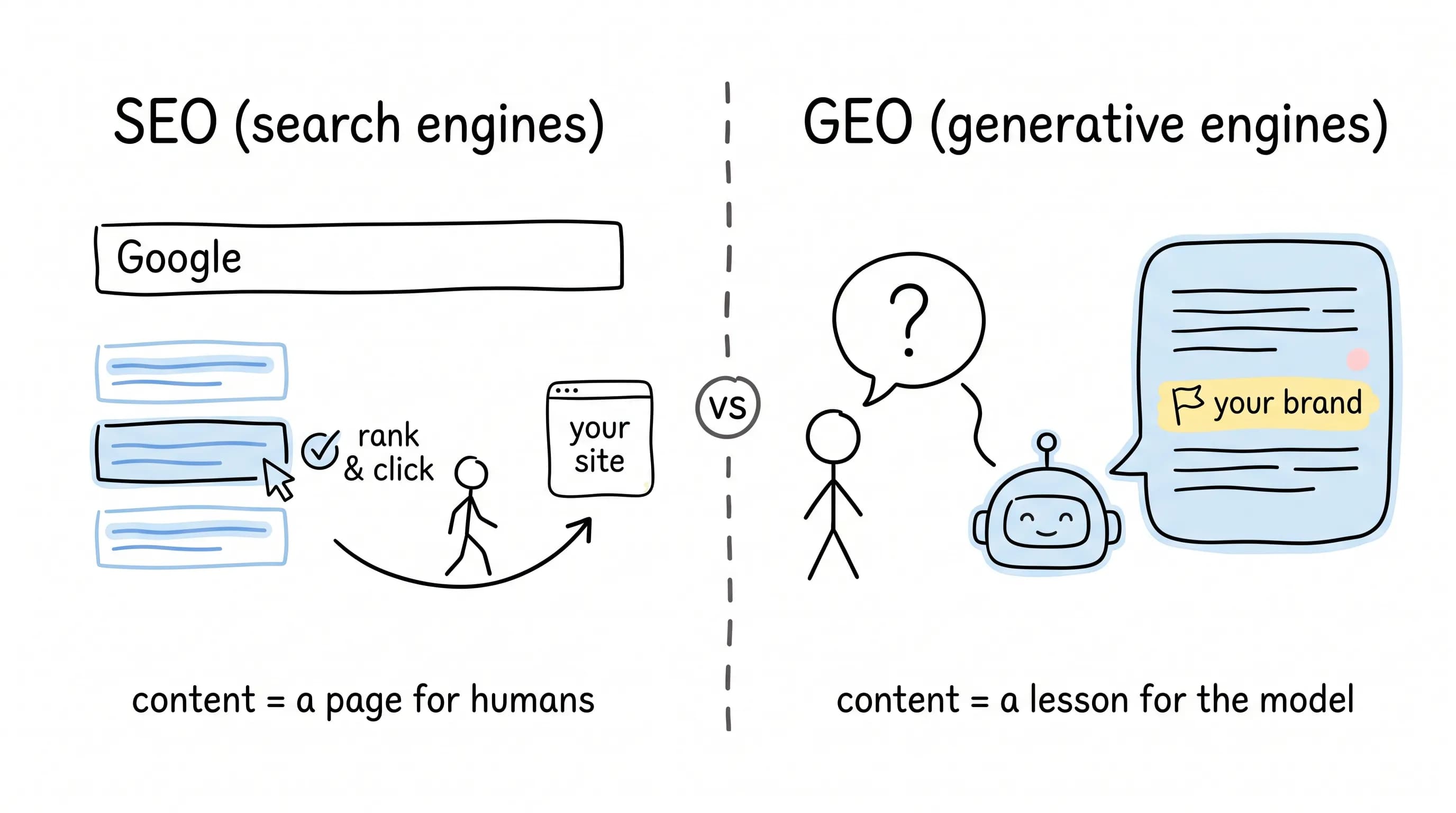
Does AI Know Your Brand? A Look at GEO, the New Craft
An explainer on GEO (Generative Engine Optimization): how AI engines like ChatGPT, Perplexity, and Gemini differ, how GEO goals and metrics diverge from SEO, and which SEO skills still carry over.
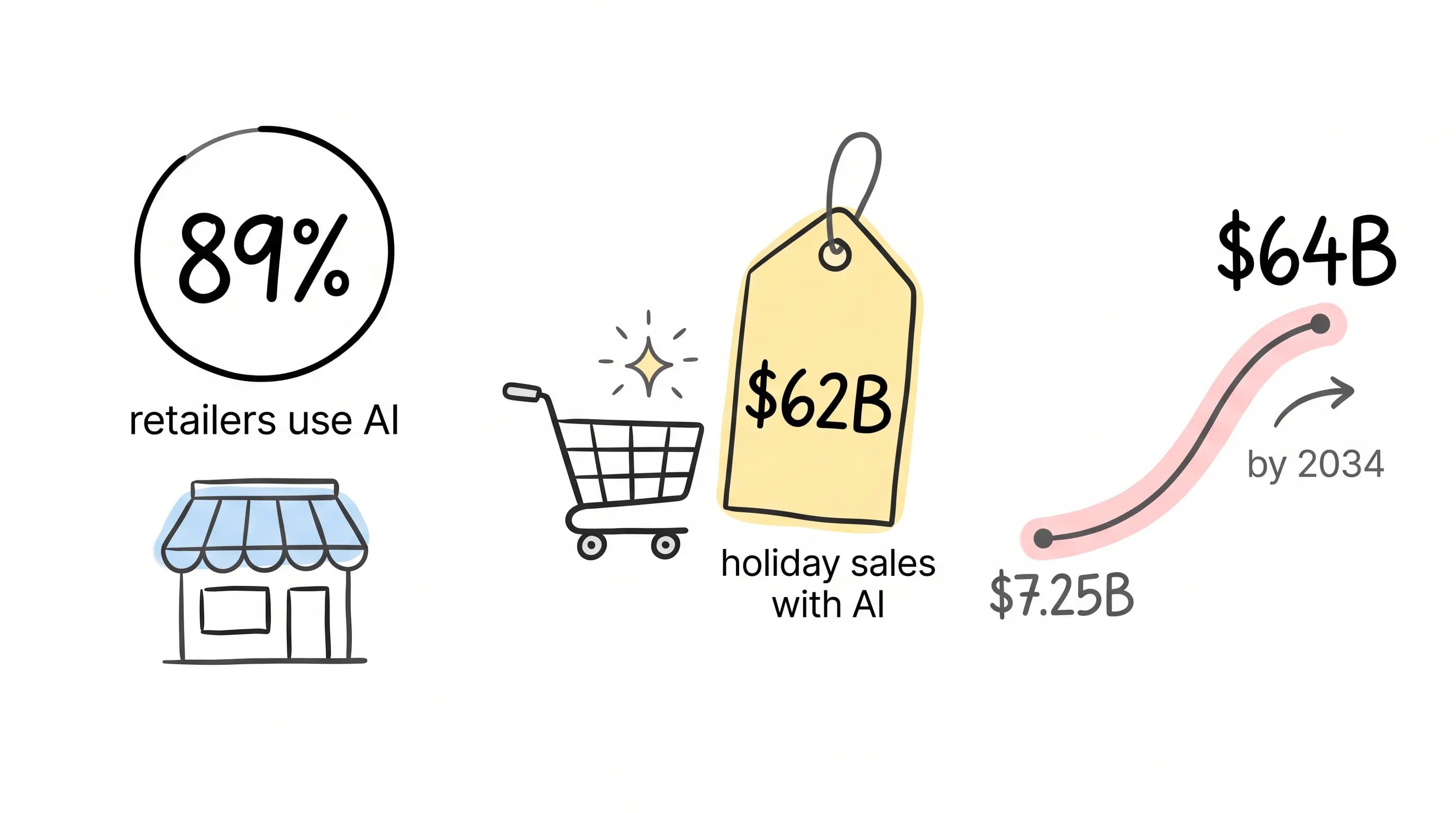
89% of Retailers Are Already Using AI. The Playbook for E-Commerce Has Changed
A learn article on AI in e-commerce: adoption context, use cases from recommendations, search, dynamic pricing, customer service, inventory, and fraud control, plus B2B applications, generative AI content, tool examples, pitfalls, and a six-step adoption path.
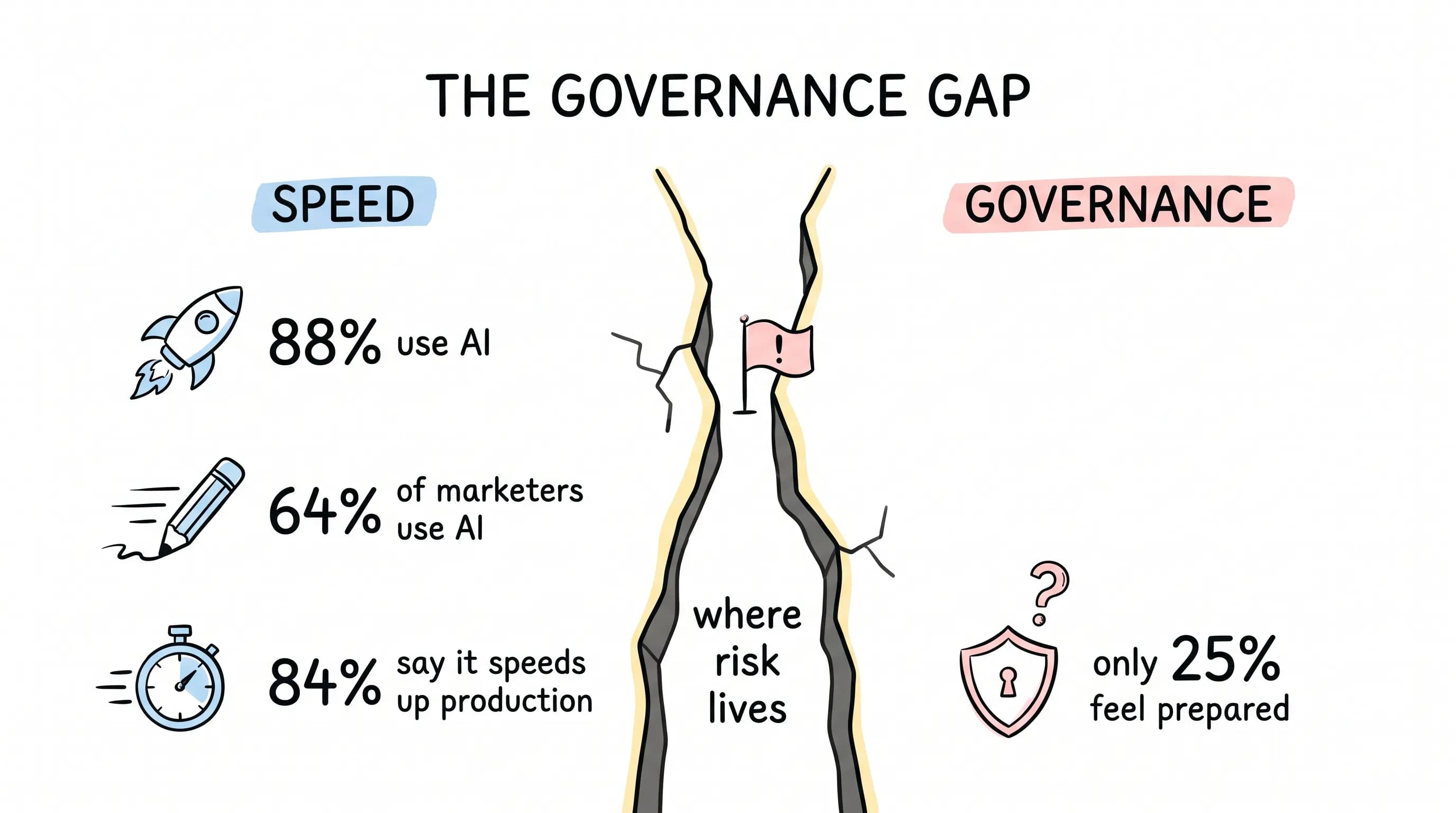
AI Makes Content at Lightning Speed — But Can You Answer "Who Approved This?"
This article looks at the gap between AI content speed and governance readiness in marketing teams, and outlines nine control points — prompt validation, brand guardrails, permissions, approval workflows, human review, versioning, IP checks, audit trails, and asset reuse — for brand-safe AI content.