
AI Agents Are About to Run Your Ads — KNOREX Built the Outlet First
A learn article explains how AI agents could take over cross-channel ad execution and why API infrastructure matters, covering KNOREX's February Ads API release, its compatibility with Amazon Ads' MCP Server and the AdCP standard, and what this shift means for advertisers and campaign operators.
A couple of days ago, a news item popped up in my feed. I sat there and read it several times over.
KNOREX — an ad tech company listed on NYSE American (ticker: KNRX) — released something this past February called the Ads API. The official line: it's the infrastructure that underpins "AI-native, cross-channel advertising automation."
Sounds like a mouthful. Let me translate.
Here's the plain version: AI used to help you think through how to run your ads. Now it's starting to run them itself.
Start With a Media Buyer's Daily Routine
Picture the scene.
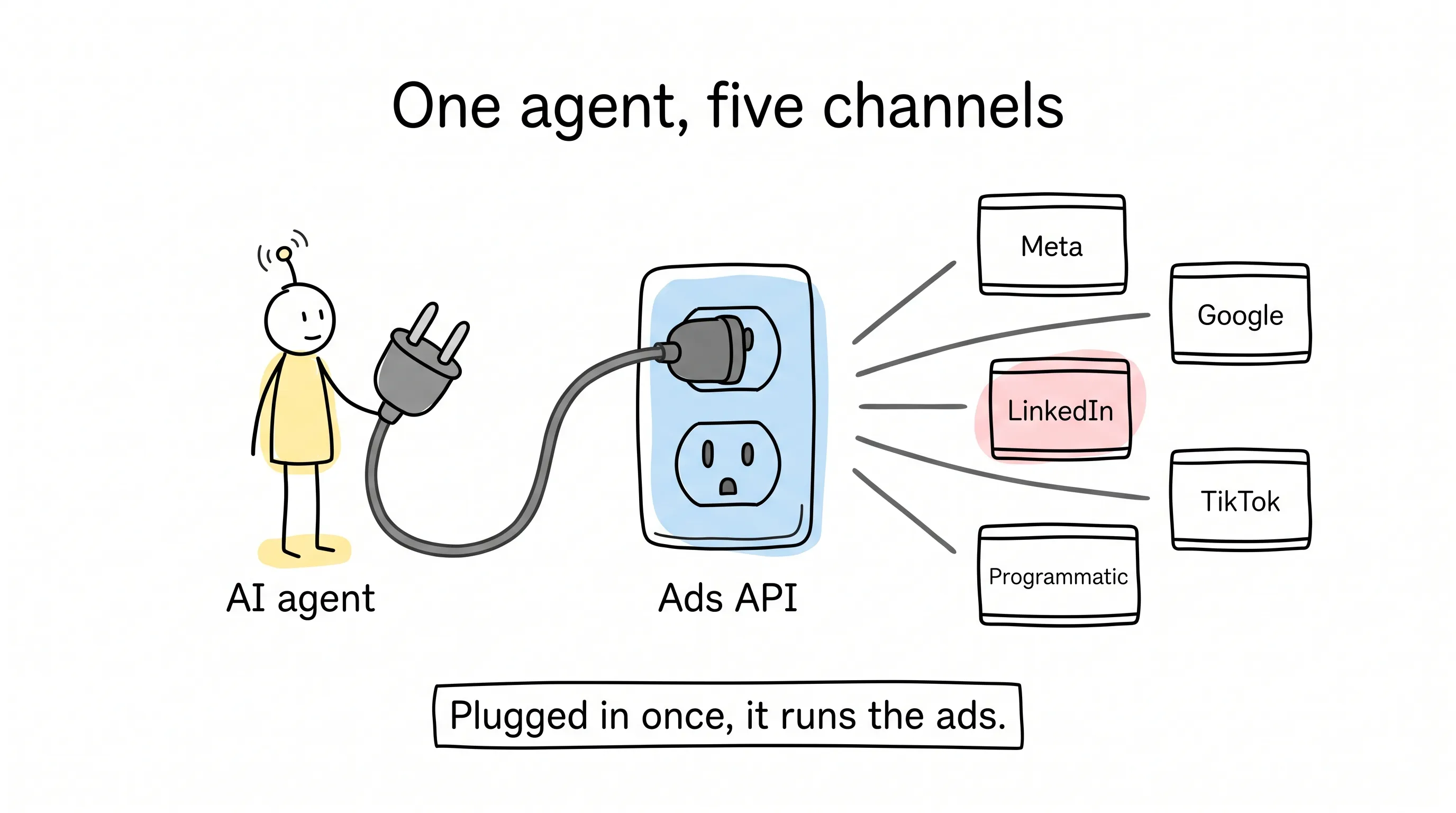
You're the person running advertising at your company, with five channels in your care: Meta, Google, LinkedIn, TikTok — plus a pile of programmatic placements.
Every morning you open the Meta dashboard, check yesterday's numbers, nudge the budget. Then you switch to Google and nudge again. Then TikTok. LinkedIn. And over on the programmatic side, a whole stack of bidding strategies is waiting for you.
Five dashboards, five sets of logic, five report formats. You're a firefighter sprinting between five fires.
Exhausting? Sure. But exhaustion isn't the real problem.
The real problem is that your role in this process looks more and more like a courier's. Check the numbers, move the budget, tweak the bids, export the reports. None of it takes inspiration — just quick hands and patience.
And this is exactly the kind of work AI agents do best.
So What Is an AI Agent?
By now you've heard all the buzzwords: AI, large language models, agents. Concepts flying everywhere.
So what is an AI agent?
Here's an analogy. Ordinary AI is like a brilliant consultant: you ask, it answers, the ideas are excellent — but you're still the one doing the work. An AI agent is different. It's like an employee you've hired. You hand it a goal — "keep customer acquisition cost under 30 yuan" — and it reads the data on its own, makes its own calls, and adjusts the ads by itself.
You don't have to look over its shoulder at every step.
That's what "agent" means: it sees for itself, thinks for itself, acts for itself.
Imagine this actually running at scale — the job of ad buying is about to be redefined.
But.
There's a very practical catch here: no matter how smart an AI agent is, its hands have to be able to reach inside every ad platform.
If the Hand Can't Reach In, Everything Else Is Talk
What's an API?
Think of it as a standardized plug. If you want outside software to operate a platform, the platform has to expose a standard interface. Plug in, and only then can data flow and commands go through.
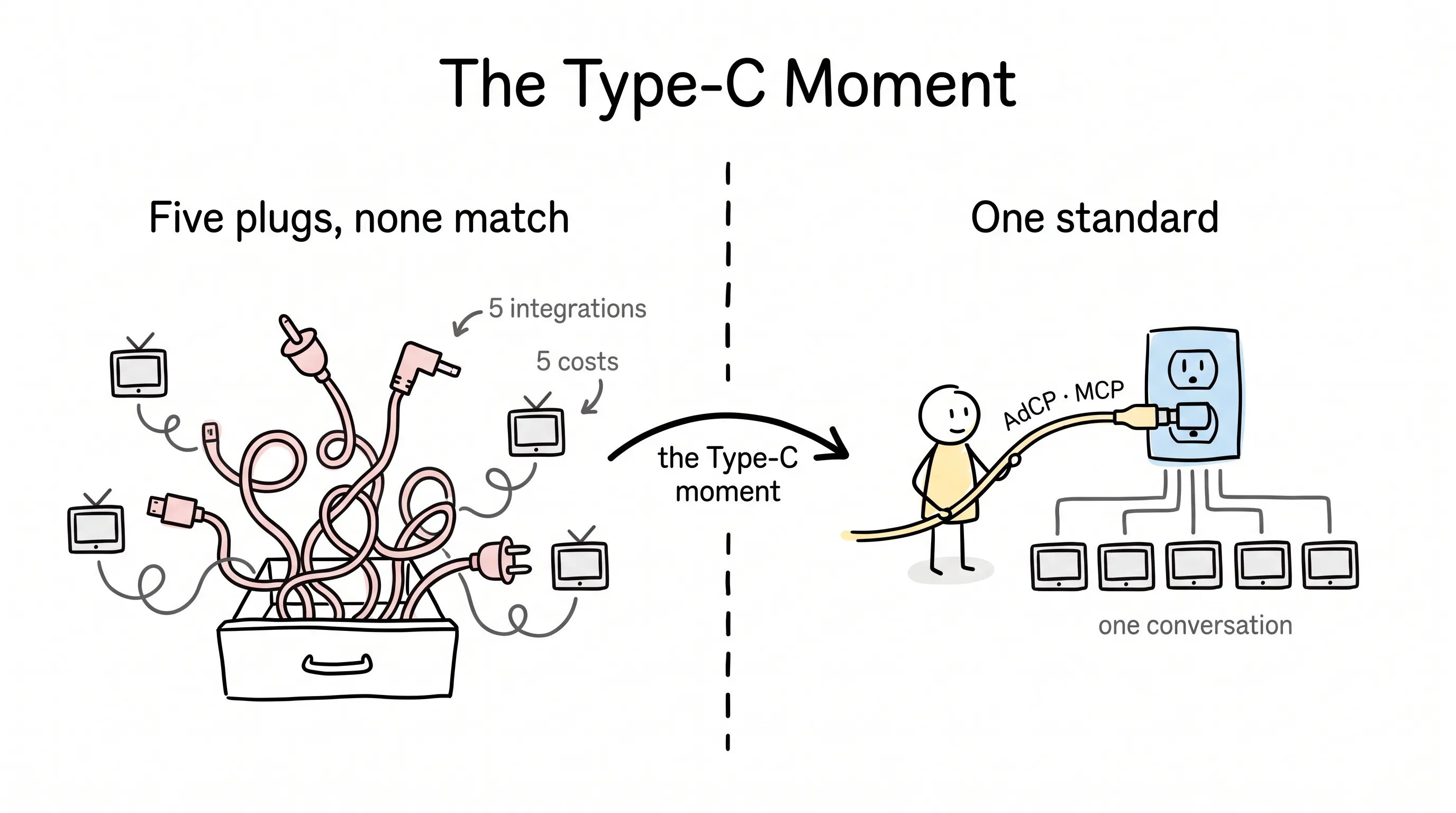
The trouble used to be that every platform had its own plug — and none of the shapes matched.
You want an AI agent working across five platforms at once? That means five separate integrations. Five integrations mean five sets of development costs, plus five sets of maintenance costs.
That's exactly what the Ads API KNOREX just released is built to do: merge five cables into one.
Plug an AI agent into it, and the agent can work across Meta Ads, Google Ads, LinkedIn Ads, TikTok Ads, and programmatic advertising: create ads, adjust budgets, change bids, pull channel data into one place for analysis, generate reports. In a word, it takes over the campaign operator's entire daily routine.
And this shipped in February — it's not vaporware. Three partners are already using it in production: two in the United States, one in Southeast Asia. Developers, agencies, and enterprises can all build their own structures on top of this one line.
The Even More Interesting Part: Two More Details
First, it's compatible with Amazon Ads' MCP Server.
Think of MCP as the universal adapter of the AI era. If another AI agent wants to tap KNOREX's advertising capabilities, no custom development is required — it just "says so" in natural language and connects. That skips a whole pile of one-to-one integrations and the maintenance that trails after them.
Second, it supports an open standard called AdCP.
AdCP — a common protocol for advertising. Its ambition: get every ad platform speaking the same language, so an AI can work across platforms with a single conversation.
It reminds me of phone charging ports. A decade-plus ago, every brand had its own connector, and your drawer filled up with cables. Then everything converged on Type-C, and one cable ruled them all.
The advertising industry may be heading for its own Type-C moment.
Whoever defines the interface holds the industry's master switch.
What's the Foundation Under This Business?
You might be wondering: who is KNOREX, and what makes it the one to pull this off?
The company was founded back in 2009 and has been steeped in programmatic advertising for over a decade. Its flagship platform, KNOREX XPO, is a cloud-based advertising operating system: social media, search, connected TV, video, audio, display, and native advertising, all the way out to digital out-of-home screens — every discipline gathered under one roof. Its operations span five countries: the United States, Vietnam, India, Malaysia, and Singapore.
Abhishek Kumar, KNOREX's VP of Product and Engineering, has a take I largely agree with: AI agents taking over cross-channel advertising isn't some modest feature upgrade — it's another structural shift in digital advertising. Once we reach that point, scalable infrastructure stops being nice-to-have and becomes a must.
How big is this game? By industry forecasts, global digital ad spend will top $740 billion in 2026.
In a $740 billion market, the execution layer is switching from "humans clicking mice" to "agents running on their own." The wire connecting agents to platforms is your ticket aboard the next ship.
Finally, Back to You
If you're an advertiser, this wave of change is most likely good news for you: execution costs drop, and optimization gets even more diligent.
If you're a campaign operator, my advice: don't panic, but don't pretend not to see it either. Repetitive execution will belong to the agents sooner or later; strategy, taste, and judgment about human nature still live with you — for now. Move upstream.
If you build products, remember the story of the charging port: the day a unified interface arrives, the old order gets reshuffled.
Back to that news item from the beginning — the one I kept rereading.
Releasing an API sounds utterly unremarkable. But no matter how smart AI agents get, they still need somewhere to plug in.
Platforms will keep changing; outlets don't get swapped out every day. Whoever builds the outlet well catches the first wire of the next era.
And one last wish for you: may you always think one step ahead of your AI agent.
Continue reading
Related articles
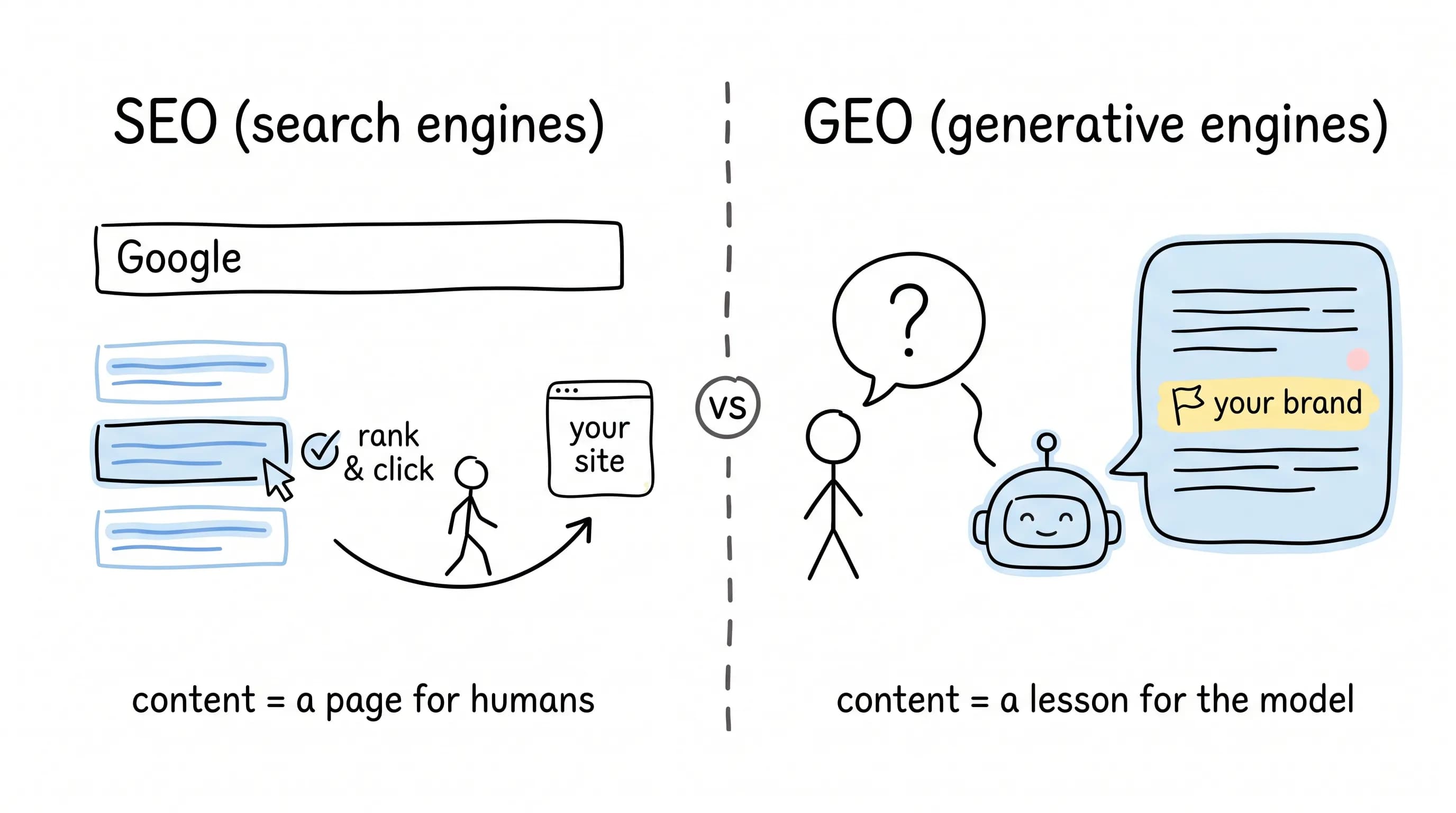
Does AI Know Your Brand? A Look at GEO, the New Craft
An explainer on GEO (Generative Engine Optimization): how AI engines like ChatGPT, Perplexity, and Gemini differ, how GEO goals and metrics diverge from SEO, and which SEO skills still carry over.
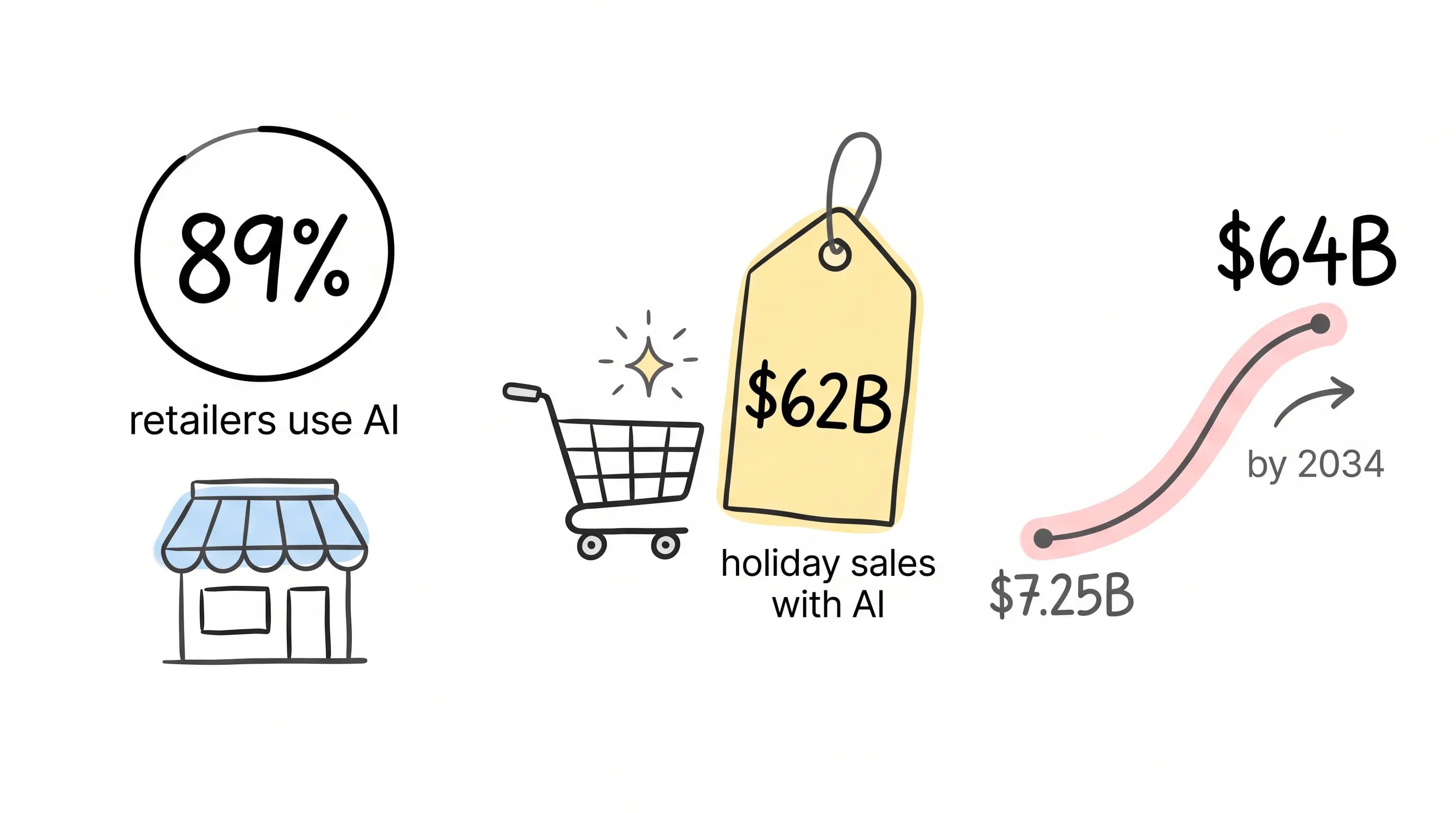
89% of Retailers Are Already Using AI. The Playbook for E-Commerce Has Changed
A learn article on AI in e-commerce: adoption context, use cases from recommendations, search, dynamic pricing, customer service, inventory, and fraud control, plus B2B applications, generative AI content, tool examples, pitfalls, and a six-step adoption path.
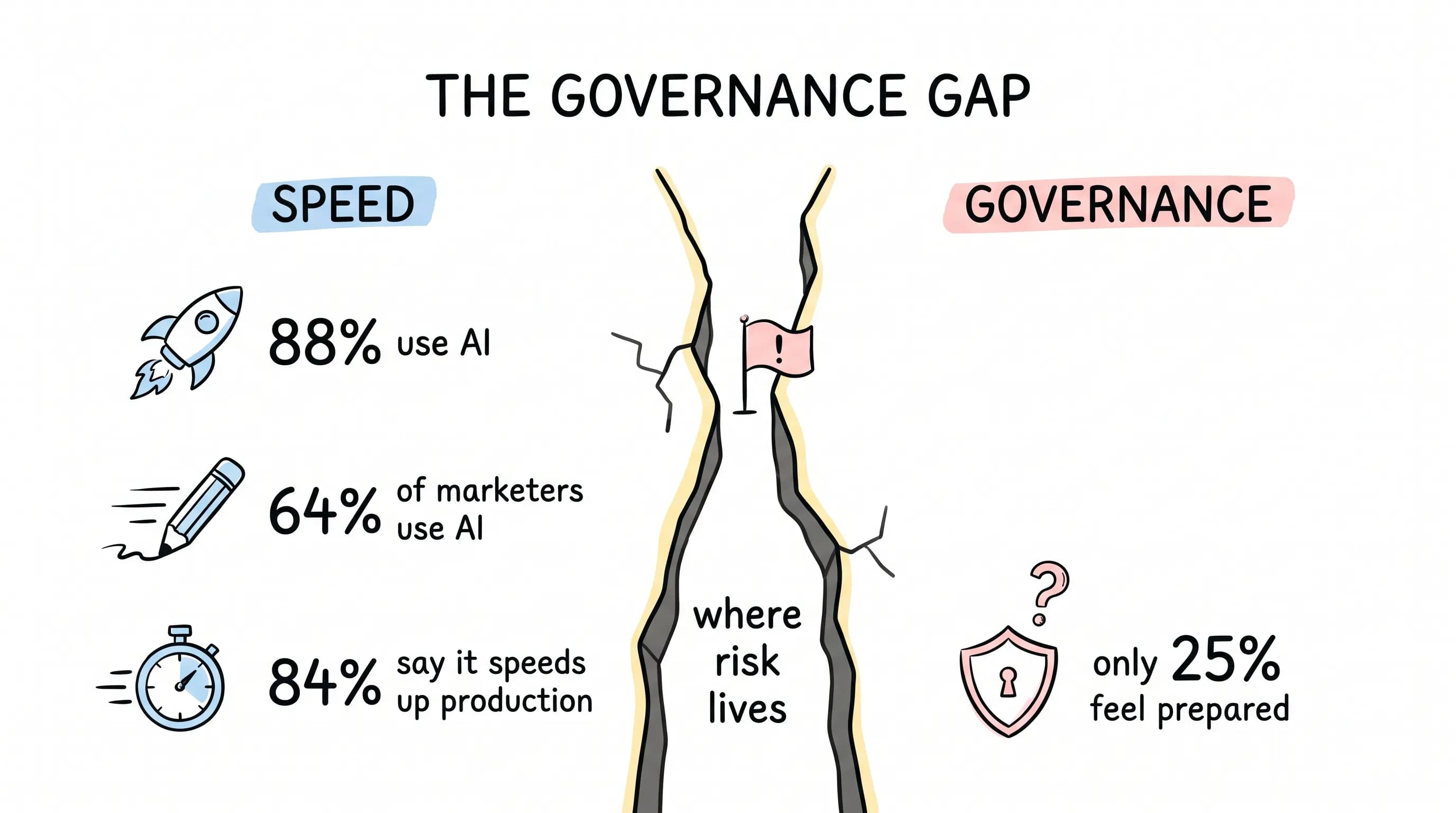
AI Makes Content at Lightning Speed — But Can You Answer "Who Approved This?"
This article looks at the gap between AI content speed and governance readiness in marketing teams, and outlines nine control points — prompt validation, brand guardrails, permissions, approval workflows, human review, versioning, IP checks, audit trails, and asset reuse — for brand-safe AI content.