
AI Advertising Is Rewriting the Rules — Will Google and Meta Become Obsolete?
An analysis of how AI advertising shifts media buying from manual optimization to automated, predictive systems, and whether Google and Meta face pressure from AI-native ad platforms. It also covers the limits of automation, including privacy, over-reliance, and algorithmic bias.
A few days ago, a friend who runs ad campaigns vented to me.
Three years ago, he said, when he hired media buyers, the job was mostly picking keywords, running A/B tests, watching the numbers in the small hours, and manually adjusting bids. And now? The system does all of that on its own. He just sits there, no longer sure what he's supposed to be doing.
I said, congratulations — what you've run into isn't a tool upgrade. It's a change of game.
What do I mean? Let's break it down.
First, a Question: What Exactly Is AI Advertising?
When many people hear "AI advertising," they assume it means "using AI to write a few lines of copy."
Not even close.
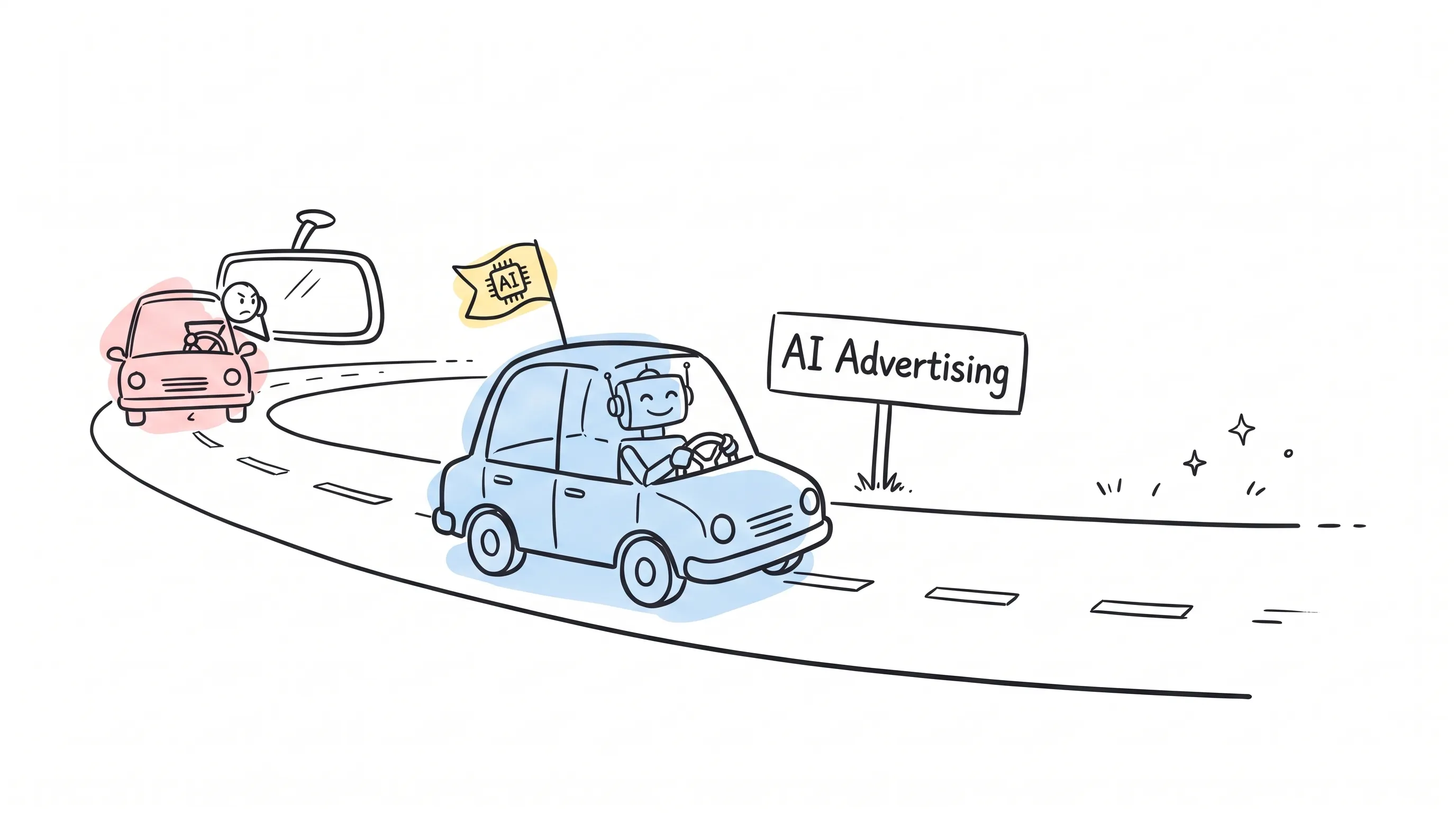
What is AI advertising? It's advertising shifting from "you tell it how to run" to "it learns how to run on its own."
Traditional Google Ads and Meta Ads, however finely tuned, are essentially you in the driver's seat: you pick the audience, you write the creative, you adjust the bids. Data is just a dashboard for you to look at.
AI advertising is the reverse. It learns from every click, every pause, every swipe, then makes its own guess: this piece of content, at this moment, on this platform, is most likely to convert this person.
Before, humans operated the machine. Now, the machine is learning to drive itself.
That's the most fundamental difference.
Looking in the Rearview Mirror, or at the Navigation?
Some ask: where is AI advertising actually better than traditional media buying? One analogy and you'll get it.
Manual optimization of the past was driving by the rearview mirror. Whoever won the last round of A/B tests got a bigger budget the next round. You were always making decisions based on what had already happened.
AI-driven buying is driving by the navigation. It predicts what's ahead: it can forecast how a piece of creative will perform before it ever goes live, and it knows where the budget should move before a dollar is spent. Plenty of AI systems can run predictive models before a campaign even starts, estimating roughly what results this budget can buy.
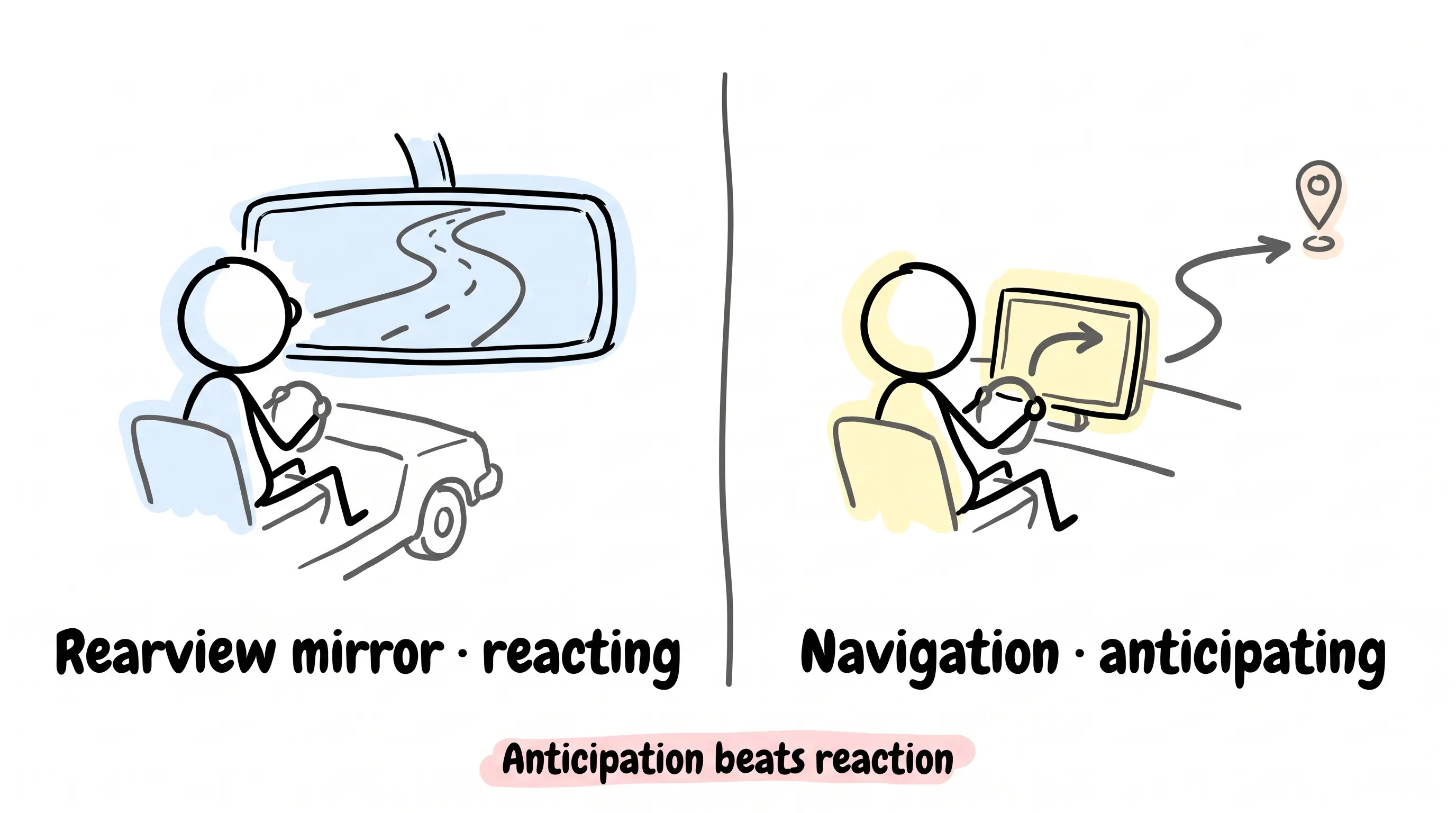
One is reacting; the other is anticipating. Anticipation always beats reaction.
Now consider three changes already underway, and you'll see how deep this shift goes.
First: from buying clicks to buying outcomes. Old systems optimized click-through rate — how many people scrolled past, how many clicked in. Today's AI platforms optimize purchases, lead generation, repeat purchases. What you're paying for has changed.
Second: creative that grows on its own. A video creative used to be locked in the moment it was shot. Now the system swaps the cover, the opening, the copy in real time, depending on who's watching. One ad, a thousand viewers, a thousand versions.
Third: the platforms are connecting. Google has Google's data, Meta has Meta's data — each one a walled garden. Programmatic advertising, through AI-driven trading platforms, lets a single ad flow and bid automatically across thousands of networks, apps, and devices.
What is programmatic advertising? Put simply, it's a stock exchange running in milliseconds: every millisecond, the system matches "this ad slot" with "this person," weighs who is most likely to convert, and closes the deal on the spot.
Here's my own read: in this new game, the most valuable asset has shifted from ad inventory to data and the ability to learn.
So Will Google and Meta Become Obsolete?
That's the question in the title. My answer is clear: they won't become obsolete, but they will be forced to evolve.
Think about it — Google and Meta are themselves the world's largest AI companies. Advertising happens to be the battlefield where their AI is strongest: Meta's recommendation systems, Google's smart bidding, both racing to pile on AI these past few years.
The ones in real danger aren't them. They're the advertisers still stuck in the manual era.
That said, the challenge is real. In 2025, a new generation of independent ad platforms is grabbing territory: The Trade Desk in programmatic, Amazon Ads with its e-commerce data, plus a wave of AI-driven DSPs (demand-side platforms, the systems brands use to buy ads programmatically). What they offer brands is straightforward: more transparent data, more flexible control, and freedom from being locked inside one giant's walls.
Meta, for its part, has visibly shifted its weight toward Reels, dynamic creative, and cross-platform integration between Threads and Instagram. Google is rolling out smart bidding and automated creative assets across search ads at scale.
In other words, the giants aren't standing still. But for the first time, a crowd of "AI-native" challengers is looming overhead.
It's not that Google and Meta have become obsolete — it's that "manual media buying" as a job is disappearing.
If Machines Are This Strong, What Are People For?
At this point, some people must be panicking: as a marketer, am I about to lose my job?
Quite the opposite.
What does automation take over? Data, bidding, A/B tests. Machines genuinely do these better than humans — no matter how late you stay up watching the numbers, you can't outwatch one.
What it can't take over is the strategic judgment behind "why this audience at all," the instinct that "this story doesn't move people," your real understanding of and empathy for users.
Think about it: can an algorithm that never truly knows its users write a brand story that warms the heart? It cannot.
Machines make sure every dollar is spent in the right place; humans decide where to spend it.
AI handles efficiency. Humans handle meaning.
Of Course, It's Not All Perfect
After all this praise, a bucket of cold water is due — otherwise I'd sound like I'm selling a course.
AI advertising has at least three problems without good answers today.
Data privacy. The smarter the AI, the more it consumes; the more it consumes, the warier users get, and the tighter regulators clamp down. This road will keep testing everyone's sense of proportion.
Over-reliance. Hand everything to the machine, and once the algorithm gets it wrong, you won't even know where it went wrong. A driver who never watches the road is lost no matter how smart the steering wheel is.
Algorithmic bias. Models are what they're fed. Whatever bias is in the data, the model learns that bias — fast, and quietly. This one needs human eyes on it, always.
None of these three is a purely technical problem. All three are human problems.
One Last Thing
Back to that friend from the beginning.
Near the end of our chat, he asked me: so what kind of people should I be hiring from now on?
Hire people who can ask good questions, I said. The media buyer of the past was valuable for executing fast; the marketer of the future will be valuable for judging well: knowing what to let the machine learn, keeping it from drifting off course, and making the calls where it can't compute.
Tools will keep changing. This question never will.
AI advertising isn't the future. It's the present. The only difference is that some people are already using it, and some are still hesitating.
Here's wishing you an earlier day when you hand the repetitive work to machines, and spend the time you save on the things only humans can do.
Continue reading
Related articles
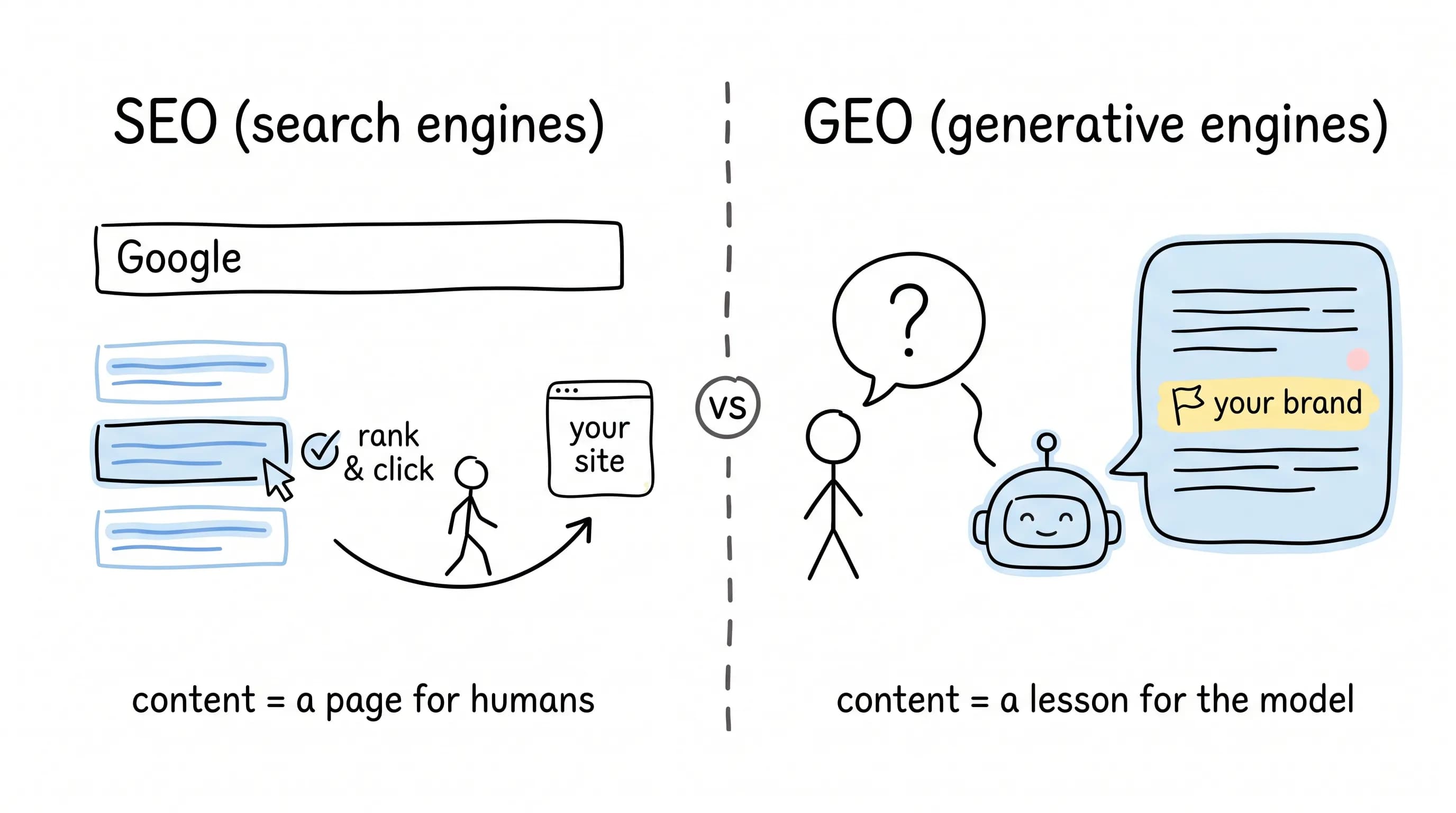
Does AI Know Your Brand? A Look at GEO, the New Craft
An explainer on GEO (Generative Engine Optimization): how AI engines like ChatGPT, Perplexity, and Gemini differ, how GEO goals and metrics diverge from SEO, and which SEO skills still carry over.
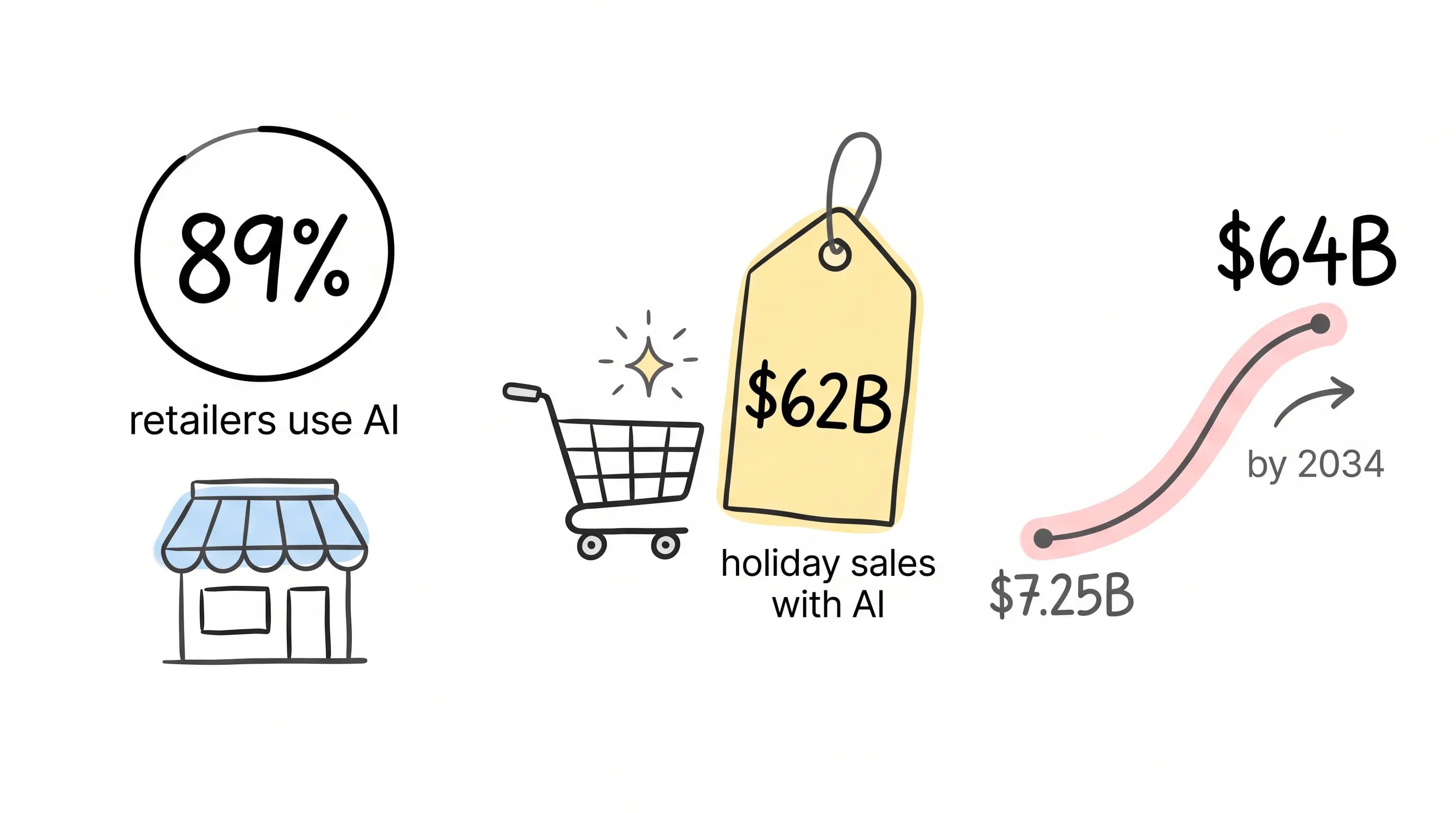
89% of Retailers Are Already Using AI. The Playbook for E-Commerce Has Changed
A learn article on AI in e-commerce: adoption context, use cases from recommendations, search, dynamic pricing, customer service, inventory, and fraud control, plus B2B applications, generative AI content, tool examples, pitfalls, and a six-step adoption path.
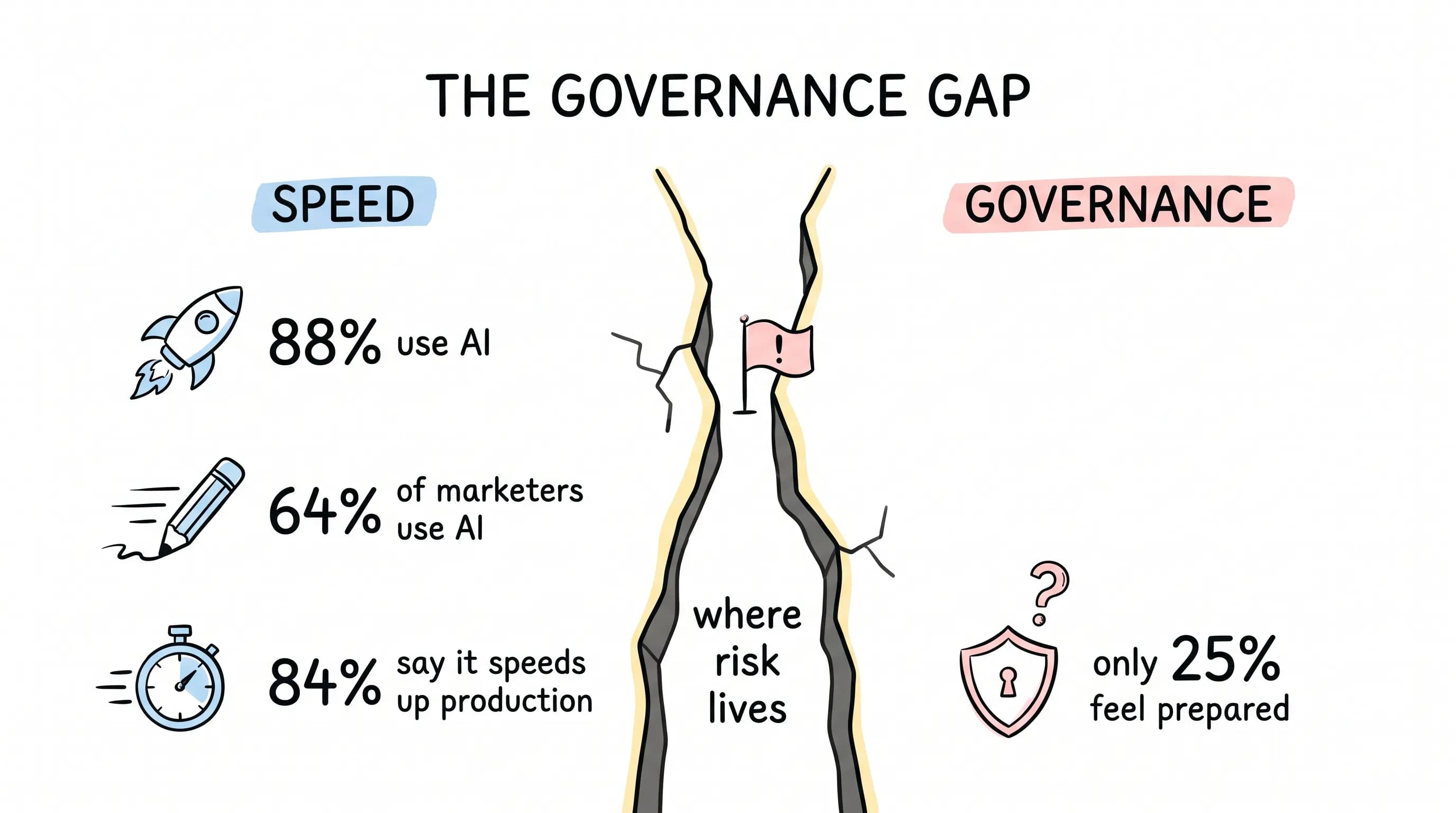
AI Makes Content at Lightning Speed — But Can You Answer "Who Approved This?"
This article looks at the gap between AI content speed and governance readiness in marketing teams, and outlines nine control points — prompt validation, brand guardrails, permissions, approval workflows, human review, versioning, IP checks, audit trails, and asset reuse — for brand-safe AI content.