
Ads in AI Mode Have Arrived in Australia
A roundup of recent Google Search changes relevant to Australian advertisers and site owners, including ads in AI Mode, ranking data reliability, spam guidance, AI review snippets, and robots.txt AI preferences.
Last week, a friend of mine who runs a cross-border e-commerce business in Australia took me out to dinner. Halfway through the meal, he pushed his phone across the table: "Look at this. Now when I search on Google, I just chat with it directly — and halfway through the conversation, ads start showing up in the answer."
I told him: nothing new here.
What's new is that since the end of October, this has officially rolled out across Australia and New Zealand.
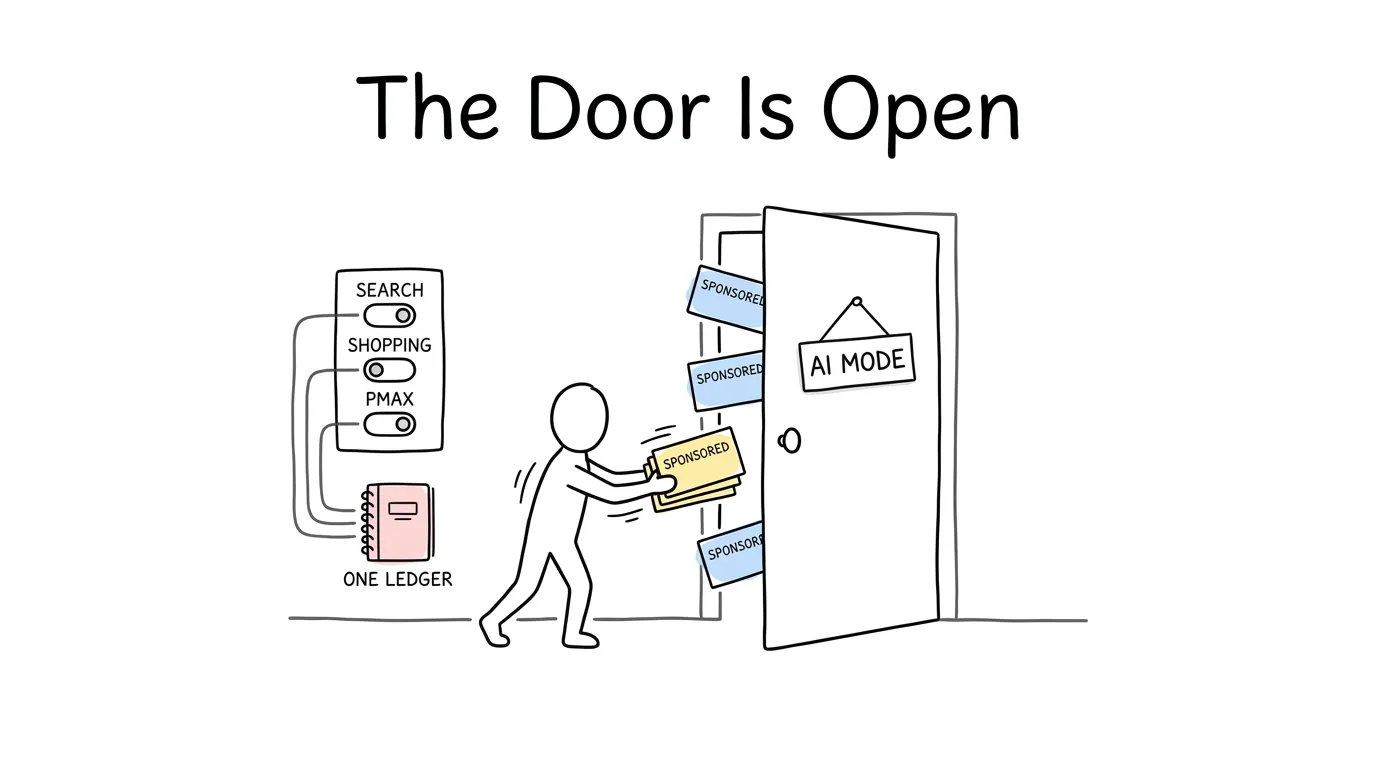
The Door Is Open, but There's No Separate Switch
On October 28, Google announced that it is expanding ads in AI Mode to ten new markets, with both Australia and New Zealand on the list. The ads are labeled "Sponsored" and run through the same auction as before. Your existing Search, Shopping, and Performance Max campaigns participate automatically, as long as they meet the eligibility conditions.
What is AI Mode? It's the conversational mode inside Google Search. Instead of typing in keywords, users ask their question in a full sentence, and the AI gives a long answer complete with cited sources. Ads are embedded right inside that answer.
Sounds like a good thing?
Hold on. There's one detail that many people haven't caught up with yet.
You can't advertise only in AI Mode, and you can't opt out of AI Mode alone either.
It is folded into the broader Search pool. Where you used to advertise on the search results page, an extra door has now opened — but that door has no independent switch. It switches on with everything else and off with everything else, and the money flows into the same ledger. Reporting is aggregated, so you can't work out "how many orders AI Mode alone brought in."
So what do you do? Here are a few moves you can copy directly:
- Before the expansion reaches you, run a quality check on your negative keywords, brand controls, and conversion data. In AI Mode, users arrive with a complete sentence, not three keywords. The matching logic is different now, and loose targeting burns money even faster.
- If you're in retail, go verify the prices, inventory, and landing pages in your Merchant Center. When a user asks in the conversation "how much is it, do you have it in stock," and you can't answer, your ad spend is wasted.
- Do the overall math. Has overall lead quality gotten better? Have profits changed? Watch that. Don't fantasize about isolating AI Mode's individual return — there is no such column in the data.
And one more thing, the most important one: don't add budget just to "show up in AI."
That's one sentence of advice — yet plenty of people can't resist.
The Thermometer Is Broken, and You're Still Taking the Medicine on Its Word
The second story is less buzzy than the first, but I think it's more worth watching.
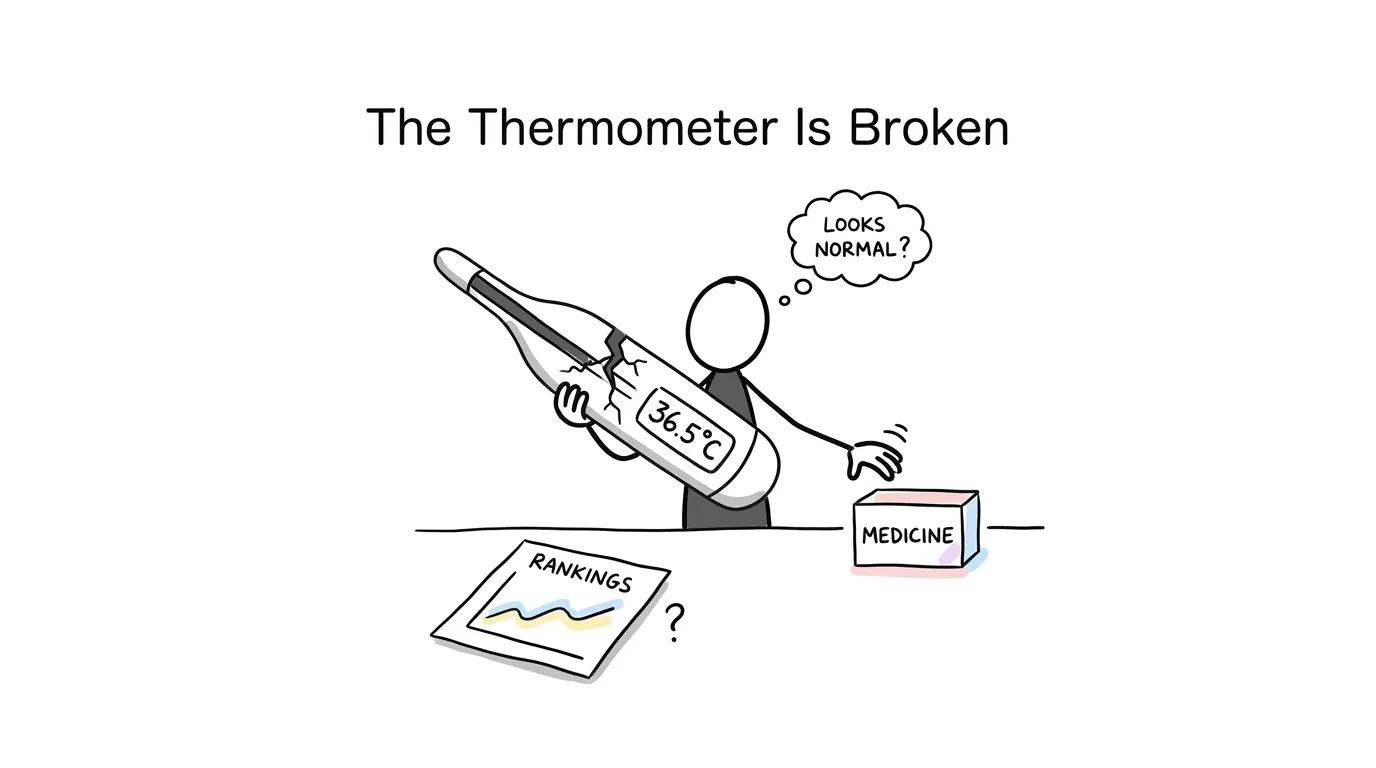
On October 27, Semrush issued a statement: they found that when you request Google Search in an automated way, the results you get back look perfectly normal — but they may differ from what real users see. Irrelevant pages, for example, can get mixed into page one.
What does that mean?
Here's an analogy. You take your temperature every morning to decide whether to take medicine. Then suddenly one day, the thermometer itself breaks — but it still displays a perfectly normal 36.5°C. You keep taking your medicine on its word, and might even convince yourself you've recovered.
Ranking data is the thermometer for many companies' marketing teams.
Semrush says they have already switched data sources, added verification, and re-collected the suspicious data. But Google has not publicly confirmed that "anti-bot measures caused the anomalous results" explanation.
So the practical conclusion for agencies in Australia comes down to one sentence: verify before you send the report out.
If rankings suddenly rise, don't rush to say "our SEO work last month did well"; if rankings suddenly drop, first go to Search Console and look at impressions and clicks. For suspicious data, re-test from a few different Australian locations and devices. And there's another trap to watch out for: if several tools all use the same data vendor, their "cross-validation" isn't real — it's one vote, not several.
The Junk Piled Up in Your Backyard — the Search Engines Wrote It All Down
The third story is about the backyard of your own website.
On October 26, Google updated its spam-fighting guidance, aimed at every platform where "users can generate content on your site": directories, forums, membership sites, and sites offering public generation and sharing tools.
Put plainly, Google's point is one sentence: for every page on your site that can be publicly accessed, you have to think clearly — is it meant to be found in search, or only meant to be shared?
A lot of websites' backyards look like this today: users casually create a page, upload a file, leave a comment, and then AI tools mass-generate a pile of outputs on top. Nobody manages it, and all of it gets indexed. By the day you discover a pile of queries completely unrelated to your business showing up in Search Console, the fire is already spreading.
What to do?
Go through all the URLs involved in submissions, registrations, previews, and generated outputs. Anything that doesn't need to be found in search, add noindex. Note: you have to allow crawling, otherwise Google won't be able to read your noindex directive. Review suspicious submissions and throttle mass bot sign-ups. One more reminder: noindex is not access control — confidential content should still go behind a login.
Someone Else Writes Your Ad Copy, and You Can't Change It
The fourth story is about reviews.
Docs published that same day, October 26, confirm: Google can display AI-summarized positive review snippets inside search ads. For English-language ads, Australia is explicitly on the list.
Now this gets interesting. Someone else writes your ad copy, and you can't change it.
Google aggregates reviews from across the web, the AI picks and summarizes them, and they go straight into your ad. When do they show? Only when Google predicts it will improve performance. Can the wording be changed? No. Sensitive categories like pharmaceuticals? Not included.
If you run a local service, retail, or restaurant business, add "review accuracy" to your ad QA checklist. When a snippet appears, record it; if the wording is misleading, or reviews from someone else's business get pinned on yours, appeal it. Keep your business information consistent across the major platforms. Keep collecting real reviews as usual, but never trade perks for reviews, and never block negative ones. On performance, watch leads and conversions, and don't assume it will automatically bring a lift.
Training and Citation Are, From Now On, Two Separate Decisions
The last story has the longest time span, and it may cut the deepest.
On October 30, Google announced: it plans to support expressing "whether my content may or may not be taken by AI for training" inside robots.txt. The format comes from the IETF's AI Preferences working group, and Google targets support within 2027.
What is robots.txt? A sign posted at a website's entrance, telling crawlers what may come in and what may not. Before, every company put up its own sign. Now, the idea is to have the whole industry use the same one.
But there's a detail worth writing down with a pen: if you have explicitly set Google-Extended directives, they take precedence over Google's reading of that universal sign. And Google has tied "allowing Google-Extended" and "whether you can be cited in Gemini" together. If you create content, draw yourself a diagram to keep these layers straight.
Microsoft announced its own training and grounding preferences at almost the same time. What is grounding? Plainly put, it's an open-book exam. Training is "learning it into your brain"; grounding is "during the exam, flipping through your book on the spot." Microsoft's setup lets you set a combination: your content can be cited inside its own products, but third-party services are barred from cracking the book.
A few dates I'd suggest putting on the calendar right now:
- December 15, 2026: Microsoft's interim transition settings open, for sites already using NoArchive or NoCache.
- February 1, 2027: Microsoft begins honoring the new preferences on fresh crawls.
- March 1, 2027: if you want to keep the restrictive effect of the old directives, that's the migration deadline.
- Within 2027: Google rolls out that universal sign.
What this really means for publishers with exclusive content: "whether to give AI training access" and "whether to give AI citation access" are, from today, two decisions that must be made separately. Microsoft also said these preferences don't affect a page's inclusion in traditional search — crawling continues as before, on the same terms.
Three Small Items for the Watchlist
First, AI auto-replies on Google Business Profile. From October 29, more merchants are receiving pilot invitations; the feature answers routine customer questions and hands complicated ones to humans. Whether Australia is fully opened up hasn't been confirmed yet. Invited merchants should first check whether their profile information is accurate and whether the human handoff is smooth, then decide whether to turn it on.
Second, Gemini traffic attribution still comes up short. Some people have found that UTM tags in citation links get dropped, and what it reports as the source doesn't match between web and iOS. So just treat the identified Gemini traffic as a partial sample. Direct traffic whose origin you can't explain — don't lump all of it into "brought by AI."
Third, as of early November, in Google's official ranking history, the most recently confirmed update is still September's spam update. As for those late-October rumors about ranking volatility, first cross-check them against your own first-party data before drawing conclusions.
Finally
Back to that friend from the beginning. By the end of the meal, he asked me: so what is the one thing I should do right now?
I told him: tonight when you get back, open your existing search ads and look at how they perform in AI Mode. Don't look at how much money was spent — look at whether the leads are good.
The door is already open. The point is not to stand at the doorway peering in; it's to get your own household's accounts in order first.
Here's my wish for you: every time the rules change, you see clearly one step ahead of everyone else.
Continue reading
Related articles

It's 2026: Stop "Buying" AI Tools for Your Marketing Team — Start "Hiring" AI Agents
This learn article explains how AI agents differ from standalone AI tools in marketing, outlines three agent categories — build-your-own platforms, CRM-native agents, and vertical tools — and covers use cases across SEO, social media, advertising, and reporting, plus criteria for choosing one.

What Is GEO? How Your Brand Gets "Mentioned" in the Age of AI Search
An explainer on GEO (Generative Engine Optimization) for e-commerce and DTC brands: how it differs from SEO and AEO, why AI answers shape brand visibility, and eight practices covering question-focused content, consistent brand messaging, structured pages, external evidence, comparisons, and AI mention tracking.

AI Is Already Making Decisions for Your Customers. Are You on the List?
A learn article explains GEO (Generative Engine Optimization): why AI-generated answers now shape which brands customers see, and how SEO fundamentals, entity clarity, citable evidence, and monthly measurement affect visibility in AI answers.