
A Full Year of Diligent Publishing — So Why Not a Single Deal?
A bilingual learn article on why consistent publishing without a content strategy fails to generate leads. It covers buyer-stage content, topic clusters, AI as a drafting assistant, AI search signals, and measuring conversions over traffic.
Let me start with a true story.
There was a software company that made content. Two blog posts a week, without fail, for an entire year. Traffic was indeed growing, and keyword rankings too. On the surface, everything was getting better.
Until one day, in a management meeting, someone asked a question: of all these readers, how many have become leads?
The room went quiet.
Nobody could answer. Because from start to finish, no one had ever connected content to the business. The posts went out, the traffic came in, and then? There was no "then."
A full year of publishing, and it all looked the part. But look closely: what they had was a busy blog, not a useful blog.
Diligence was never what was missing. Strategy was.
This story is not rare at all. Today I want to talk with you about what a real content strategy is, where AI should actually be used, how to read traffic, and a playbook you can actually put to work.
What is a content strategy?
What is a content strategy?
Many people assume it's a publishing calendar. A pricing article on Tuesday, a customer case study on Thursday — every slot filled.
Wrong. A calendar is only execution.
Content strategy means that before you write your first word, you've thought through four things: Who is this for? What outcome do you want to influence? Which topics are worth the investment? And after it goes out, what counts as success?
A calendar tells you when to publish what. Strategy tells you why you publish this.
Calendars manage execution; strategy manages decisions. A company with a calendar but no strategy is like a school with a class schedule but no educational goals. The classes are packed, and nobody knows why these classes are being taught.
By the way, don't confuse SEO strategy with content strategy. SEO is an input to content strategy — it tells you what people are searching for. But which topics are worth writing, and where to steer readers after they finish reading — that is strategy's job.
Who is your content actually serving?
So you might ask: content marketing — what exactly is it marketing?
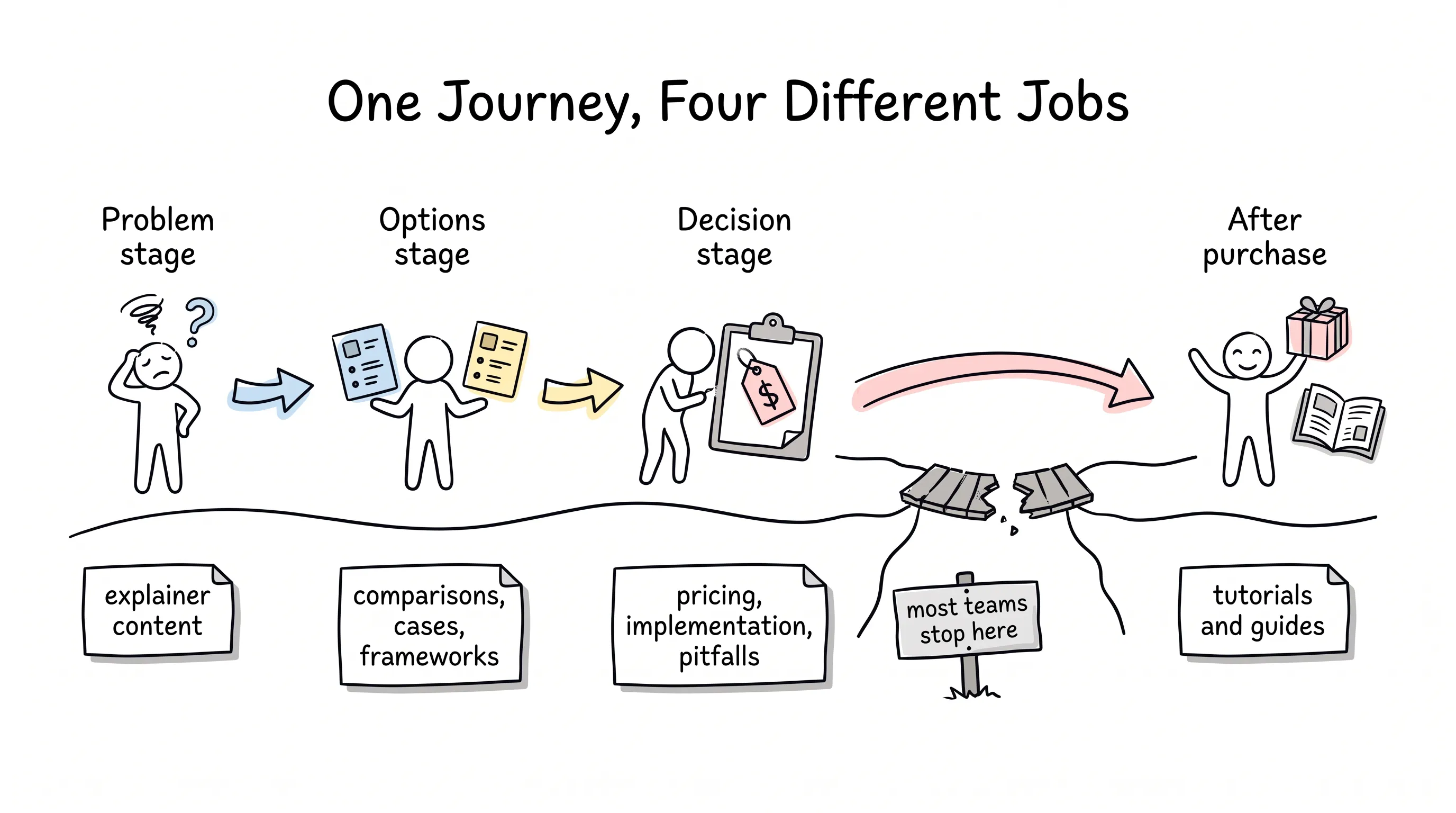
My answer: at different stages, content should do different jobs.
Think about it. Someone who has just realized they have a problem searches "what is going on here," not "which vendor is best." If you rush up with a pitch at that moment, it's like handing a patient a surgical contract the second they walk into the clinic — you'll only scare them off. At this stage, explainer content that makes the problem clear is the hard currency.
Once they've confirmed the problem, they start weighing "what are my options." That's when comparison articles, case studies, and method frameworks come in handy. Help them form their own judgment of "what counts as good" before they ever compare vendors.
When they're truly ready to choose, they want to see hard details: how you charge, how long implementation takes, where the pitfalls are.
And there's one stretch most people ignore entirely: after the purchase.
Many companies stop writing the moment the deal closes. What a waste. Existing customers are often your cheapest source of repeat purchases. Tutorials, advanced guides, onboarding material — this after-sales content is protecting money you've already paid a cost to win.
Which tactics actually work?
Content marketing has plenty of tactics on paper, but the ones that truly separate winners are just a few. None of them is mysterious; the hard part is doing them consistently.
First, start from the problems in your customers' mouths, not from a keyword list.
Keyword tools tell you what people are searching for, but not why they're searching. The topics truly worth writing about usually hide in sales calls, support tickets, and negative reviews — customers describing real problems in their own words. Get the real problem first, then work backward to keywords. Get the order backwards, and you'll end up with a pile of articles that are technically optimized and emotionally dead.
Second, build topic clusters, not one-off posts.
Write a single article on "email deliverability," and you're fighting for a spot against thousands of similar articles online. But if you take that theme and write a set of interlinked articles — the basics, common mistakes, tools, troubleshooting — readers and search engines both conclude: these people really know their stuff. Sometimes a few connected articles on one small theme carry more force than dozens of scattered posts.
Third, don't write only the top of the funnel (the awareness stage, where readers are still educating themselves).
Most blogs pile up mountains of explainer content, while decision-stage content sits at roughly zero. But honestly, comparison pages, pricing breakdowns, and implementation guides — all that unsexy content — often convert far better than viral explainers. The least glamorous pages are frequently doing the most valuable work.
Fourth, use your own first-party material.
A small survey run on your own customers, first-hand lessons from your own mistakes, an opinion backed by real data. These live far longer than the generic advice that's been copied a hundred times around the web. It doesn't need to be a grand production — even a single internal data point is enough to make an article irreplaceable.
Fifth, look back and refresh old posts.
Old articles quietly expire: when a competitor publishes a better version, your rankings slip. Updating the case studies and filling in the missing pieces is often faster and cheaper than writing a new article from scratch — and the old post already has a foundation, so it recovers quickly.
What about AI?
You can't talk about content today without running into one topic: AI.
I've seen teams use it brilliantly, and teams that turned it into a mess. What's the difference?
In one sentence: AI is a decent research and drafting assistant, but it cannot replace judgment.
First, the work it genuinely can do. You have a pile of messy notes; it sorts them into a first-draft outline. A report dozens of pages long; it compresses it into a summary so you can dig deeper. One headline; it hands you ten variants to test in one go. Turning long articles into social posts and email drafts — the kind of work that used to drain people — it does briskly.
Now where it fails. It doesn't know your customers and can't produce the details only you would know. It has no trustworthy opinion of its own. Worse, it can state falsehoods with a completely straight face, without carrying any "I might be wrong" signal.
Many teams stumble exactly here: they let AI generate the whole piece, fix the typos, and publish. It reads smoothly, but every line could appear on any competitor's blog. Nothing is wrong, and nothing is said.
The division of labor that actually works is this: the arguments, the cases, and the judgments that must hold up are written and vetted by people who know the field; AI assists around that core; and before publishing, another person must have checked the facts.
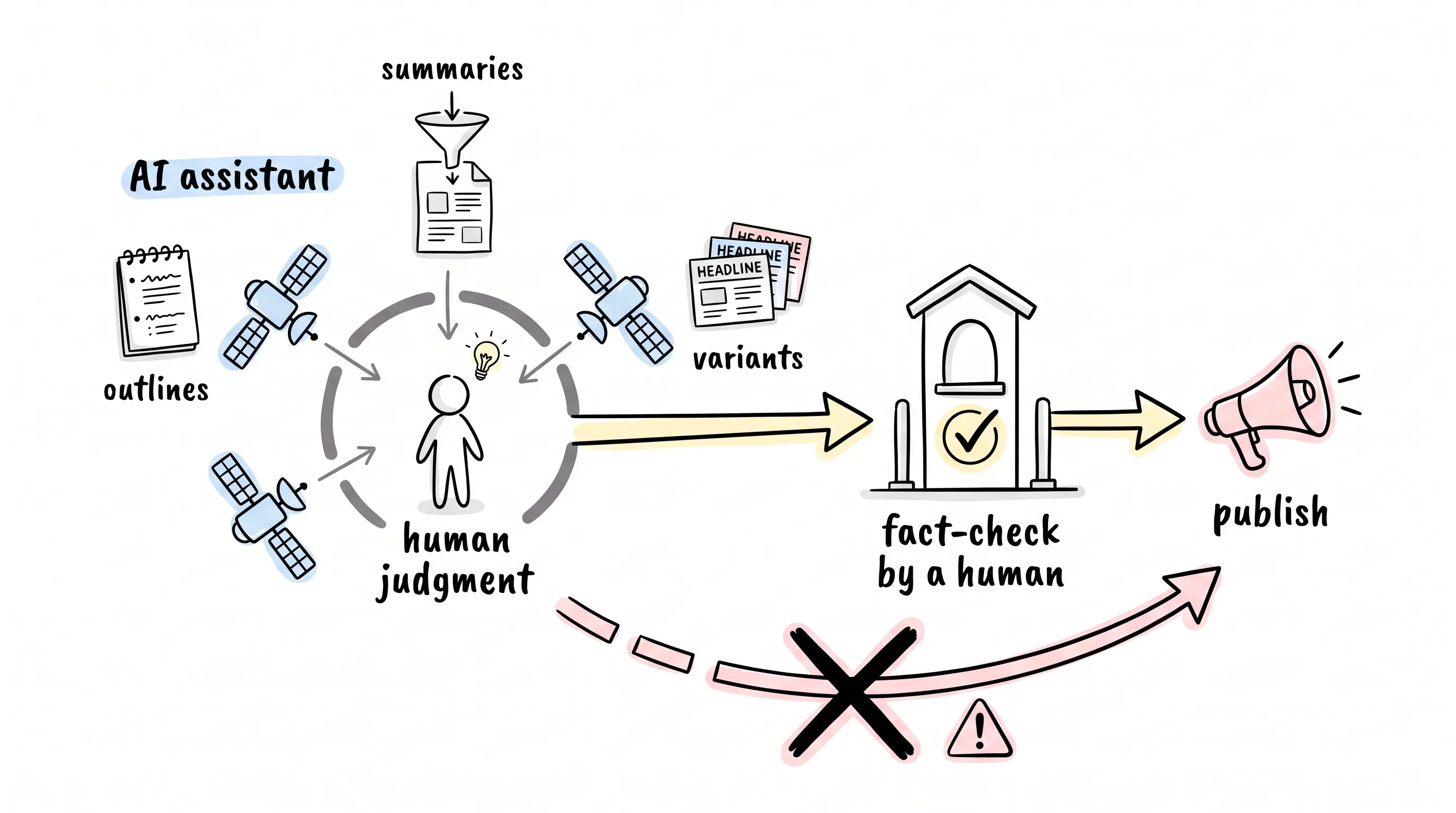
Skip that step, and errors and empty talk will be formally published under the company's name.
Search has changed. What about content?
These past two years there's another change you can't dodge: more and more people go straight to AI for answers.
Let me be blunt first: nobody can guarantee that your article gets cited by an AI. Whoever promises that, hand on heart, is selling you snake oil.
But some signals work in both traditional search and AI answers.
Topical depth. A site that goes deep on one theme and wires it into one coherent whole is simply more credible than a site that has "one article, and nothing beside it."
Search intent. Figure out whether someone searching this term actually wants a definition, a comparison, or a tutorial. Rank high but fail to catch the searcher's real need, and the ranking is wasted.
First-party details. Real cases, numbers from real practice, pitfalls that only someone who has done it could write. This kind of thing cannot be convincingly faked, and the real thing cannot stay hidden.
Put plainly, it comes down to one sentence: write content that is genuinely useful, structure it crystal-clear, be specific rather than empty. Whether a human or a machine is reading in the future, you won't lose out.
Traffic: the easiest metric to measure, and the most useless one
At this point, we should talk about how to judge whether content works.
Many companies' first reaction: look at traffic.
Traffic is indeed easy to measure. But a page that received ten thousand visitors may not match a single buyer persona, while another quiet little page quietly influenced three big deals. Those two numbers answer different questions.
The numbers truly worth your time are the ones tied to the business: how many leads it brought in, how high the conversion rate runs on your conversion pages, and how many times content played a supporting role in a closed deal (that is, assisted conversions).
Here's a blunt truth: content attribution is a messy ledger by nature. One person reads three of your articles over two months, then finally fills in a form. The vast majority of tools credit only the last one. That's not fair. But that's no reason to stop looking at data altogether — the right posture is to watch the long-term trend, and never treat any single number as the whole truth.
An example with real texture
One example will make this real.
A mid-sized accounting software company — the product was fine, but the blog had been silent for over a year. The team didn't reach for a keyword tool first; they started by talking with sales and support.
One conversation, and the real problems came out: customers kept mixing up two pricing tiers; how to handle multi-currency invoices surfaced in nearly every deal that fell apart.
See? Vivid, concrete pain points. Not guessed.
So they built a topic cluster around these two points: a plain-language pricing guide, a detailed breakdown of multi-currency invoicing, a head-to-head comparison with two competitors on the same feature, plus a switching and implementation guide. Every piece interlinked, each covering one stop on the decision path.
Publishing was spread over six weeks, rolled out bit by bit. The pricing guide went to the email list; the comparison page went straight into the hands of sales, usable in deals being negotiated right now.
Three months later, the review: traffic for this topic cluster was, frankly, mediocre.
But sales mentioned one detail: on calls, customers would bring up that comparison page unprompted. "I've read it." The customer had already been influenced before the call ever happened.
That outcome sounds far less sexy than "leads tripled." But it's real, and it is fruit the strategy grew on its own.
The "small mistakes" that eventually snowballed into big holes
Let me point out a few mistakes everyone is making and nobody thinks matter:
Publishing to fill the calendar; watching keyword volume while ignoring intent; writing explainers but never decision content; publishing AI-generated drafts as-is; letting old articles rot untouched; no internal links between articles; treating traffic as the only metric; and never promoting articles after writing them.
Taken alone, none of these is fatal.
But stretch the timeline out to a year, and these small habits snowball into a content library that looks very busy and contributes nothing to the business.
How much should you invest?
People often ask: how much money should go into content marketing?
Honestly, there is no universal percentage. Anyone who gives you a standard number is being lazy. How much to invest depends on your business model, how brutal competition in your industry is, how large a content foundation you already hold, and how many people internally can actually do the work.
One more reminder: don't budget for writing alone. Research takes time, experts get pulled in, graphics need to be made, and once it's published someone still has to promote it and someone else to track the results. Companies that budget only "someone writes the blog" usually end up with articles nobody promoted, nobody measured, nobody updated — which wastes the writing budget too.
Also, be honest with yourself about the timeline. Content is a long-term asset, not a lever that pays off the moment you pull it. If you need revenue this quarter, put money into paid ads first — they work fast, even though the moment the money stops, the water stops too. Think it through, then put the budget into content.
And don't let "you need to build a department" scare you. Two or three people running two or three tactics solidly for a year beats five tactics each done halfway. What stalls most companies is never headcount; it's attention. As for the strategy itself, one serious review per quarter is enough; the day-to-day numbers deserve a glance once a month.
A closing word
Back to that software company from the opening, the one publishing twice a week.
Did they ever find their answer? I don't know. But what they were missing, I know very clearly: not traffic, not output — the round of "thinking it through" that comes before the first word is written.
Content marketing, stripped down, is just this: write for one specific person, solve one real problem, keep doing it, then look at the results honestly.
The hard part was never understanding. It's discipline. Discipline in not chasing whatever the competitors published last week; discipline in daring to revise — even cut — content that isn't performing.
Diligent content cannot cure strategic laziness.
Wishing you both diligence and strategy.
Continue reading
Related articles
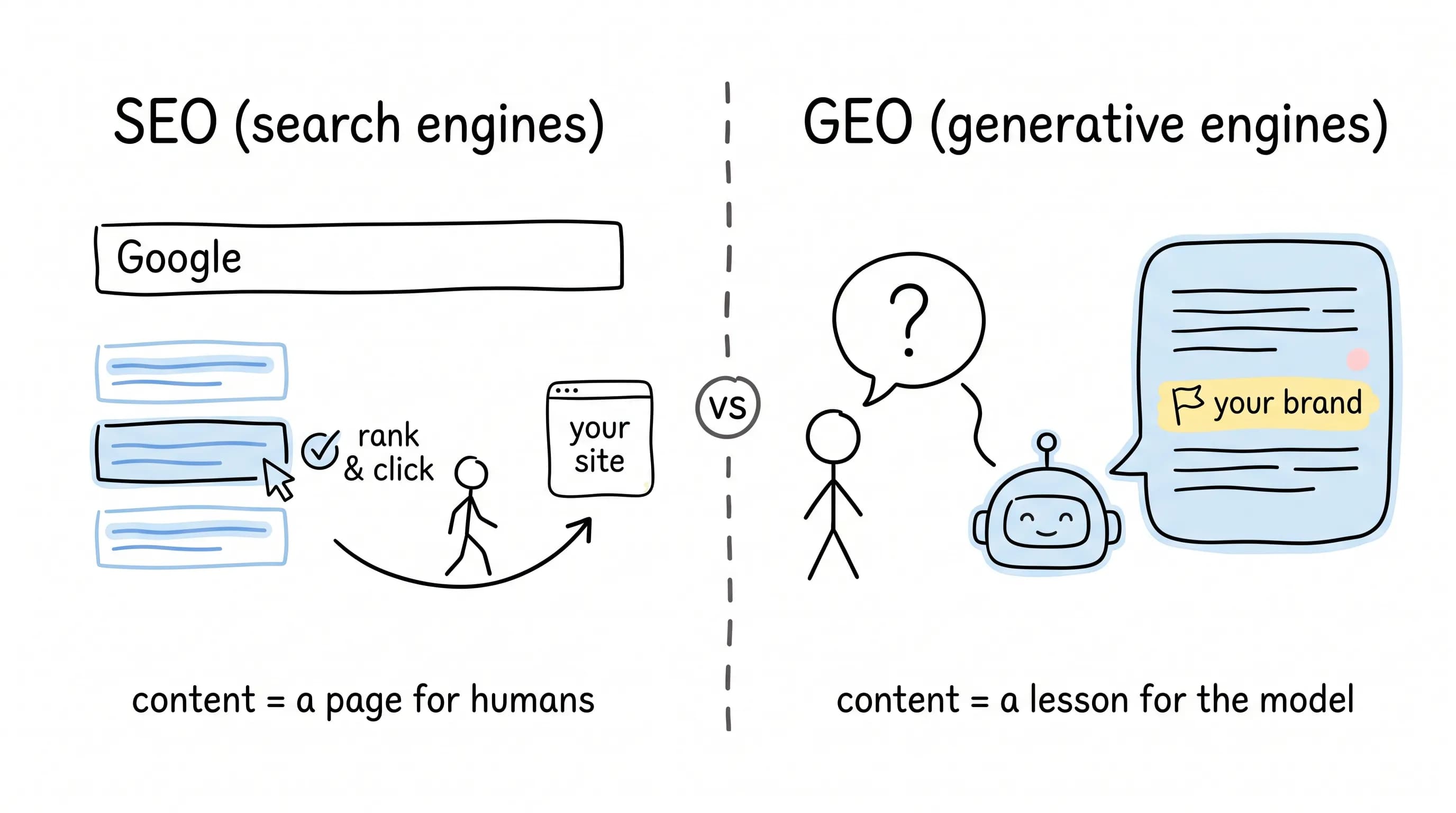
Does AI Know Your Brand? A Look at GEO, the New Craft
An explainer on GEO (Generative Engine Optimization): how AI engines like ChatGPT, Perplexity, and Gemini differ, how GEO goals and metrics diverge from SEO, and which SEO skills still carry over.

89% of Retailers Are Already Using AI. The Playbook for E-Commerce Has Changed
A learn article on AI in e-commerce: adoption context, use cases from recommendations, search, dynamic pricing, customer service, inventory, and fraud control, plus B2B applications, generative AI content, tool examples, pitfalls, and a six-step adoption path.
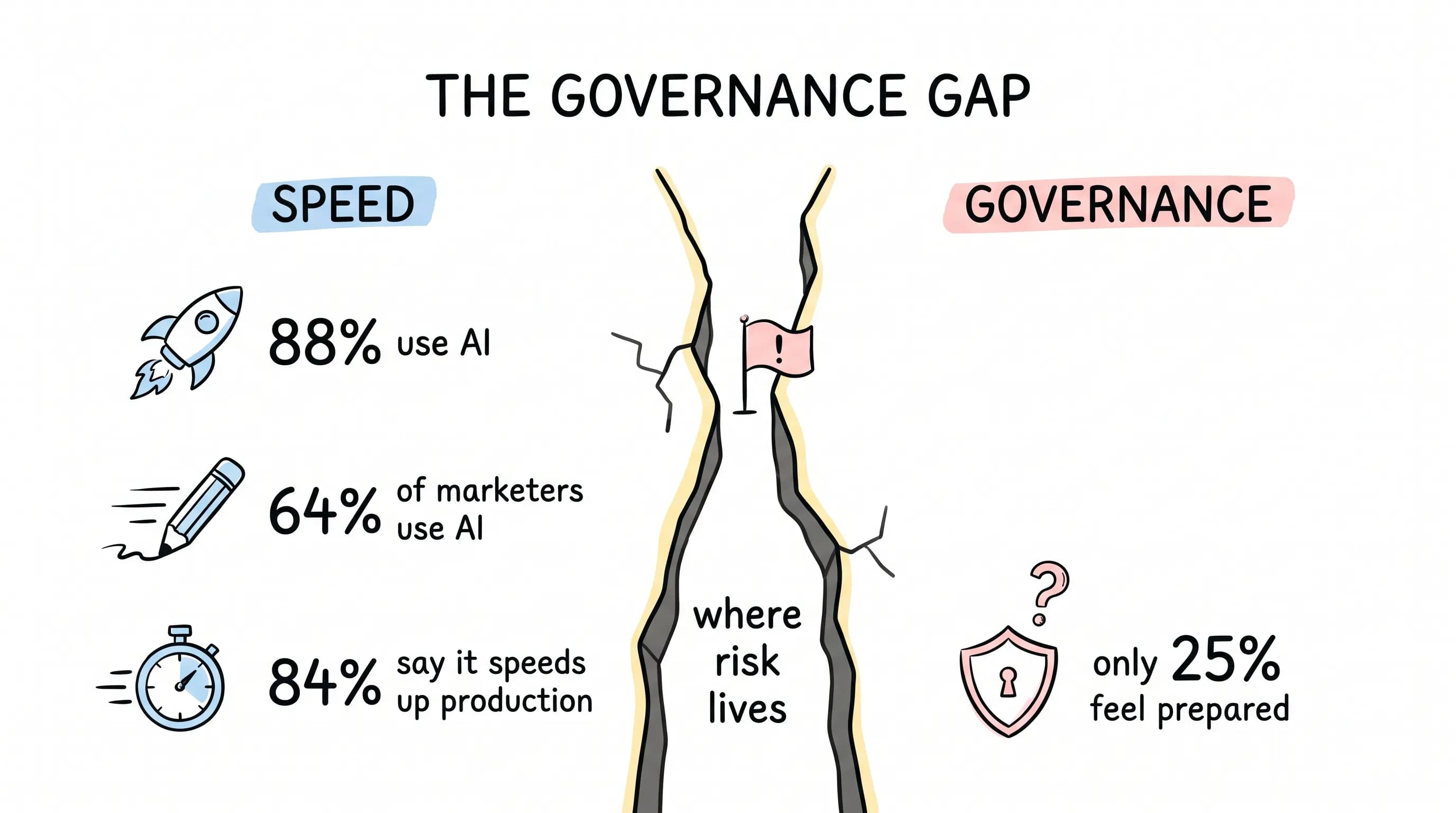
AI Makes Content at Lightning Speed — But Can You Answer "Who Approved This?"
This article looks at the gap between AI content speed and governance readiness in marketing teams, and outlines nine control points — prompt validation, brand guardrails, permissions, approval workflows, human review, versioning, IP checks, audit trails, and asset reuse — for brand-safe AI content.