
A Friend Asked Me: Can We Just Stop Doing SEO?
A learn article exploring whether SEO is still necessary as AI answers shape buying research, introducing GEO and how brands can stay visible, accurate, and correctly described in AI-generated responses.
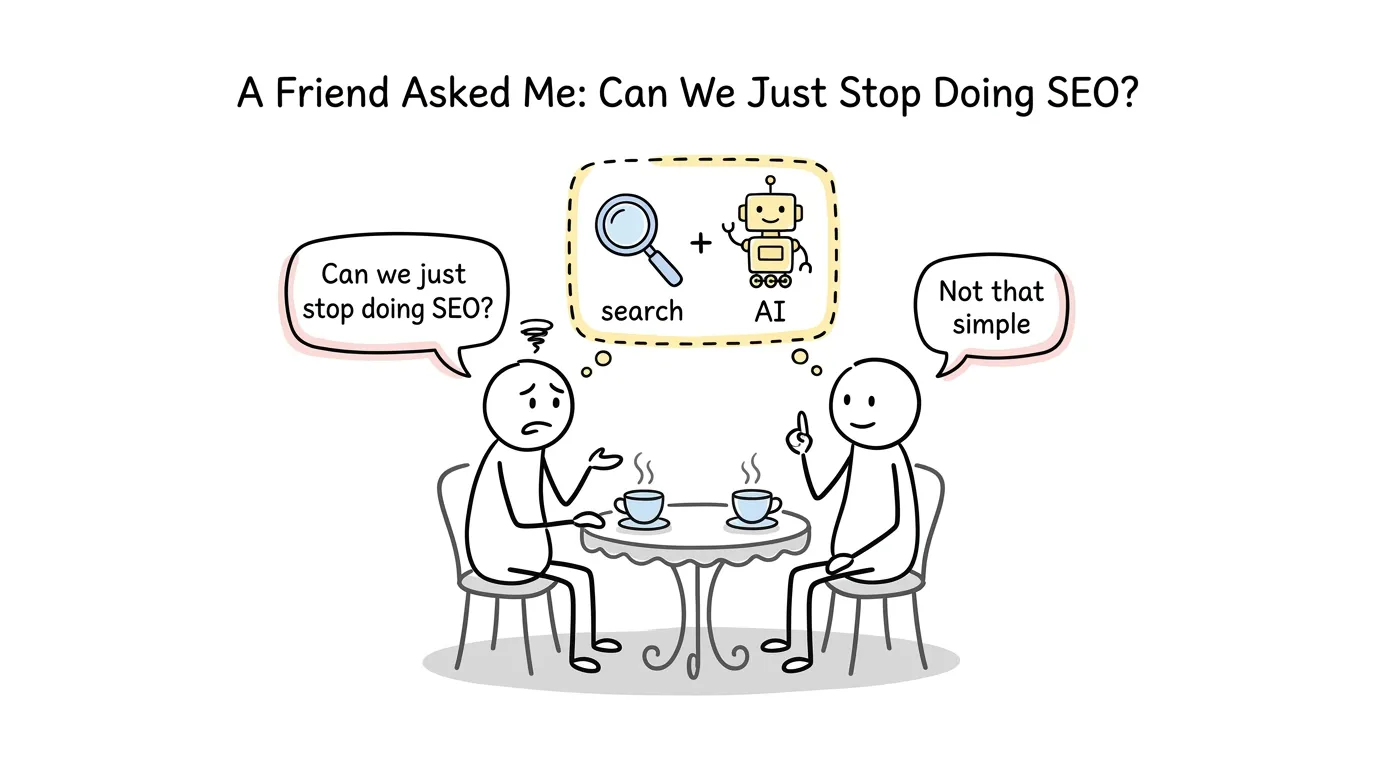
A few days ago, an old friend of mine who runs an e-commerce business invited me out for tea. His first words as we sat down: "SEO — can we just stop doing it?"
I said, why the sudden question?
He said, everyone's asking AI before they buy anything now. You ask ChatGPT "which running shoes give me the best value," and it lays out the answer for you, comparisons done and all. Who's going to dig through the tenth blue link on a search engine anymore?
Sit down first, I said. It's not that simple.
Let's Look at a Few Numbers First
In the second half of 2025, research teams overseas ran several rounds of consumer surveys. Put the numbers side by side, and they get interesting.
72% of people use AI tools regularly. 43% use them every day. 62% are willing to trust AI's brand recommendations. 51% say AI is already influencing what they buy.
Sounds like search engines really are dying?
Not so fast. The same batch of surveys held two more numbers: 70% of people still open a search engine first when researching a new product, and 42% mix AI summaries with traditional search results.
Spot the catch?
AI didn't steal search. AI grew inside it.
People are walking two roads at once: for a quick answer, they ask AI; when it's time to actually spend money, compare prices, and read reviews, they go back to search. So the real question is:
When AI starts summarizing answers for users, is your brand in its answer?
What Is GEO?
Time to bring out today's main character: GEO.
What is GEO? Generative Engine Optimization. Simply put: making sure your brand gets mentioned, cited, and described correctly in AI's answers.
Some call it AI SEO, some call it LLMO. The naming debate rages on, but whatever you call it, underneath there's only one job.
I came across a discussion of this by an agency called Gen3 Marketing, with one line put especially bluntly: while the whole world argues over what to call this thing, they only care about one thing — how to get their clients found.
Exactly. What you call it doesn't matter. What matters is that AI says your name.
SEO Is Dead? Google Itself Disagrees
The judgment "SEO can retire now" rests on one big false premise: that AI search is a brand-new set of rules.
It isn't.
First, a fun fact: Google has said publicly that AI will not eliminate the need for SEO. You heard that right — in the father of search engines' own words.
Why? Because AI doesn't conjure answers out of thin air. It picks content from across the web, picks sources, picks signals it can trust. And whether a site is discoverable, authoritative enough, and clearly structured — those are exactly the judgments SEO has been polishing for over a decade.
A 2025 study is also worth pondering: brands dominate Google's AI Mode, yet struggle in AI Overviews. And a large chunk of AI visibility is still held up by SEO fundamentals.
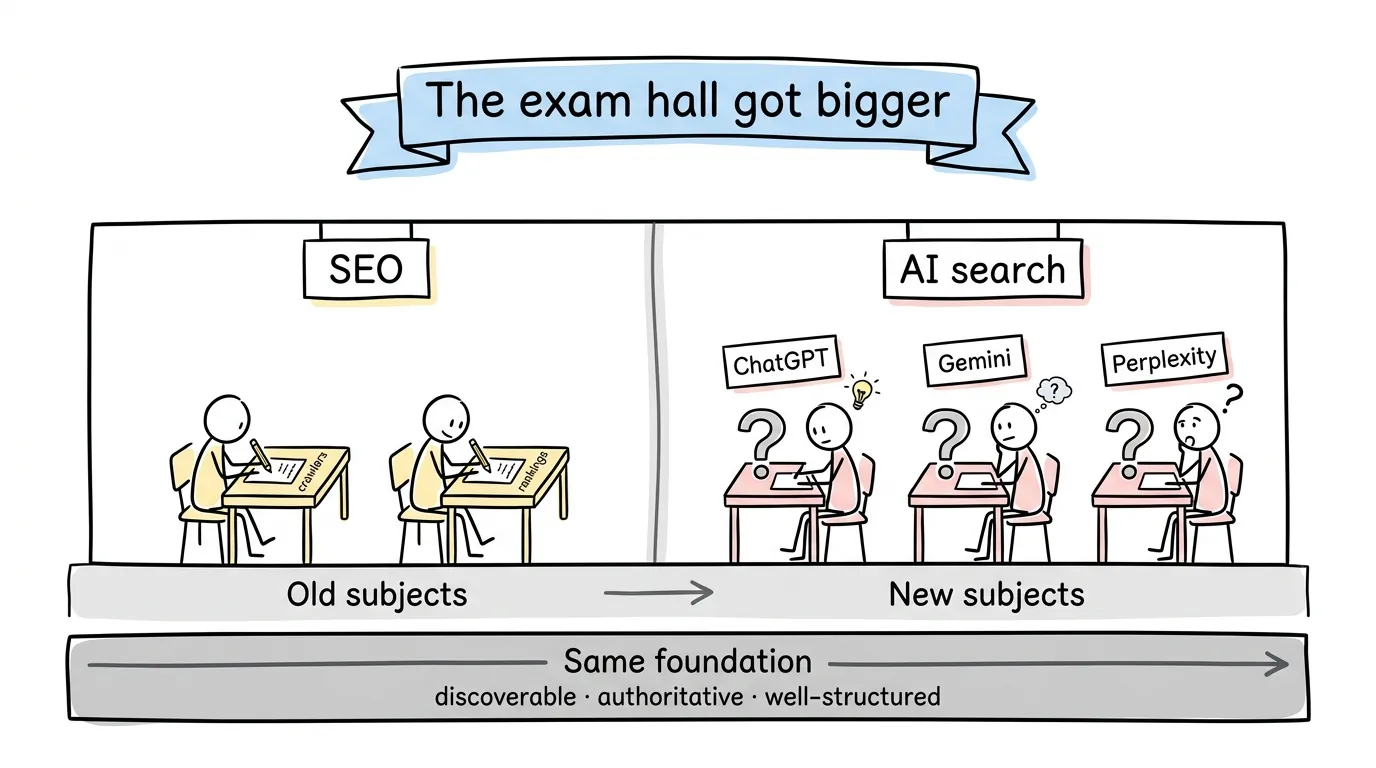
So what's really happening is not that SEO died — the exam hall got bigger. You used to optimize for crawlers; now you also optimize for the "talking search engines": ChatGPT, Gemini, Perplexity.
Same foundation, a few new subjects on the test.
Where Does AI Copy Its Answers From?
So who does AI actually trust? Figure that out, and you know where to put your effort.
It trusts authority. AI comes wired to favor authoritative sources. Get credible media to cover you, to mention you — even with no link, even just your name, AI keeps score. That's why "performance PR" has caught fire again these past two years: publish stories that get cited, not press releases.
It trusts your own content. FAQs, in-depth guides, industry insights — high-intent, clearly structured material is exactly what AI loves to cite. The content team at Gen3 Marketing has a rule: every piece is either written by a marketing expert or revised by one. Sounds harsh, but in the AI-search era, that's the floor.
It also trusts others speaking for you. Affiliate content and influencer posts currently have a moderate effect on your AI presence, and they're slow to show results. But they handle two things: reputation and reach. When AI weighs "what do people think of this brand," those voices are evidence.
One case I've always remembered. A brand called Good Chop did nothing dramatic — just carefully re-optimized old content that already ranked, and traffic, sales, and AI visibility all rose together.
A lot of the answers aren't on new land. They're on ground you've already taken.
The Most Overlooked Rule: Don't Let AI Get You Wrong
Everything above is about getting mentioned. But there's one thing that matters even more than being mentioned.
Being misrepresented.
Gen3 Marketing splits its services into three parts, and I suspect precisely for this reason: the first, presence and visibility — tracking your key queries so you show up in AI's answers; the second, perception and reputation — watching how AI and users actually talk about you; the third, accuracy and relevance — making sure what AI says about you is correct and current.
The first two are bonus questions. The third is the one you flunk on.
When AI introduces your brand with a price from three years ago, or puts your product in a category it doesn't belong in, users have no idea it's AI's fault. They'll just think: oh, so that's how it is.
If AI doesn't mention you, that costs you a point. If AI gets you wrong, that costs you negative points.
Back to My Friend
Halfway through the tea, he asked: so where do I start?
I said, three steps.
First, take stock: go ask the major AIs — ChatGPT, Gemini, Perplexity, Claude — who you are and what you do, and see how they answer, and whether they get it right. Then shore up the fundamentals: the basics of SEO — structure, entities, content clusters, not one of them skippable, because AI takes all these signals in. And finally, don't fight alone: get PR, affiliates, and influencers speaking together. The more consistent your brand's voice across the web, the easier it is for AI to piece together the correct you.
He listened and said, got it. Not quitting — just a few more subjects to make up.
Right. This exam was never cancelled; it just added new questions. The ones who start cramming early are always calmer than the ones who walk into the exam hall and only then discover the syllabus changed.
Wishing you the day, sooner rather than later, when AI speaks your brand's name — clearly, and correctly.
Continue reading
Related articles

It's 2026: Stop "Buying" AI Tools for Your Marketing Team — Start "Hiring" AI Agents
This learn article explains how AI agents differ from standalone AI tools in marketing, outlines three agent categories — build-your-own platforms, CRM-native agents, and vertical tools — and covers use cases across SEO, social media, advertising, and reporting, plus criteria for choosing one.

What Is GEO? How Your Brand Gets "Mentioned" in the Age of AI Search
An explainer on GEO (Generative Engine Optimization) for e-commerce and DTC brands: how it differs from SEO and AEO, why AI answers shape brand visibility, and eight practices covering question-focused content, consistent brand messaging, structured pages, external evidence, comparisons, and AI mention tracking.

AI Is Already Making Decisions for Your Customers. Are You on the List?
A learn article explains GEO (Generative Engine Optimization): why AI-generated answers now shape which brands customers see, and how SEO fundamentals, entity clarity, citable evidence, and monthly measurement affect visibility in AI answers.