
A 40% satisfaction lift is hiding somewhere in your customer journey
A learn article on AI-driven customer experience: how machine learning, real-time behavioral tracking, and content integration combine to personalize the journey, why industry figures like a 40% satisfaction lift shouldn't become KPIs, and a rollout starting with recommendation slots.
Start with a scene you've certainly lived through.
You looked at running shoes three times on an ecommerce site. You didn't buy. The next day you open it, and the homepage is recommending hiking backpacks.
That's the current state of most "digital experiences": big money spent on websites, apps, mini-programs — and at every touchpoint the customer meets the same unfamiliar system.
The customer flows. The systems don't.
A recent long-read on AI and customer experience takes this problem apart in detail. Let me walk you through the most practical parts.
One: three numbers to set the yardstick
The piece offers a few quotable ranges.
Companies that have integrated AI into their CX strategy report roughly 40% improvement in customer satisfaction and about 35% in operational efficiency.
AI-driven personalization can deliver conversion lifts of 20% to 30%.
Hold those numbers for a moment — I'll tell you later why they can't go straight into your KPIs.
First, the logic they all share: AI's change isn't to a single touchpoint. It's to the way customers are treated.
Two: three levers, layer by layer
Layer one: understanding the customer. Machine learning consolidates behavioral data, preferences, and pain points into one picture, so decisions have a basis. This is the foundation.
Layer two: personalized reach. Three levers: dynamic content, generated and swapped in real time by behavior; product recommendations, ranked on historical behavior and preferences; and personalized journeys, stitched together by predicting the next best action at every touchpoint.
Layer three: service moved forward — anticipating the customer's question before they ask it.
The canonical case is, of course, Netflix. Recommendation built on viewing data: the more you watch, the better it predicts, the stickier you get. Data and experience roll into a positive loop.
And the piece carries a warning that matters most: machine learning, real-time behavioral tracking, and content-system integration are a combination punch. Deploy any layer alone and nothing happens.
Why? No real-time behavioral data, and personalization is guesswork. No content-system integration, and even when the model knows what to recommend, the page can't show it. Missing one layer breaks the chain.
Three: why industry numbers can't become KPIs
Back to the three numbers.
40%, 35%, 20–30% — these are industry ranges, not promises. Your data foundation, customer structure, and touchpoint maturity will move the results dramatically.
The risk of putting them straight into KPIs: the year ends, the target isn't hit, the team loses faith, the project gets cut — and the problem may never have been the project. It was expectation management.
The sturdier path is to run your own experiment first: split the same audience — half see static content, half see dynamic content — run two weeks, and get the real lift range for your own book.
That number might be half the industry range. But it's true. Decisions built on true numbers don't collapse like houses on illusion.
Four: the rollout order — start where it's easiest to measure
If you're doing this, sequence it like this.
Start with recommendation slots. Product or content recommendations are the easiest touchpoints to quantify — results show up in the data within two weeks.
Once that works, extend into dynamic content: homepage, push, and email responding to real-time behavior.
Last, journey orchestration. The heaviest step, requiring cross-system data and process integration. Save it for last, and carry the experimental data from the earlier steps with you.
Every step walks on the data of the previous one. Avoid the big-bang relaunch.
Five: my take
In customer experience, the most expensive thing was never the technology. It's fragmentation.
Fragmented systems make fragmented data. Fragmented data makes fragmented experience.
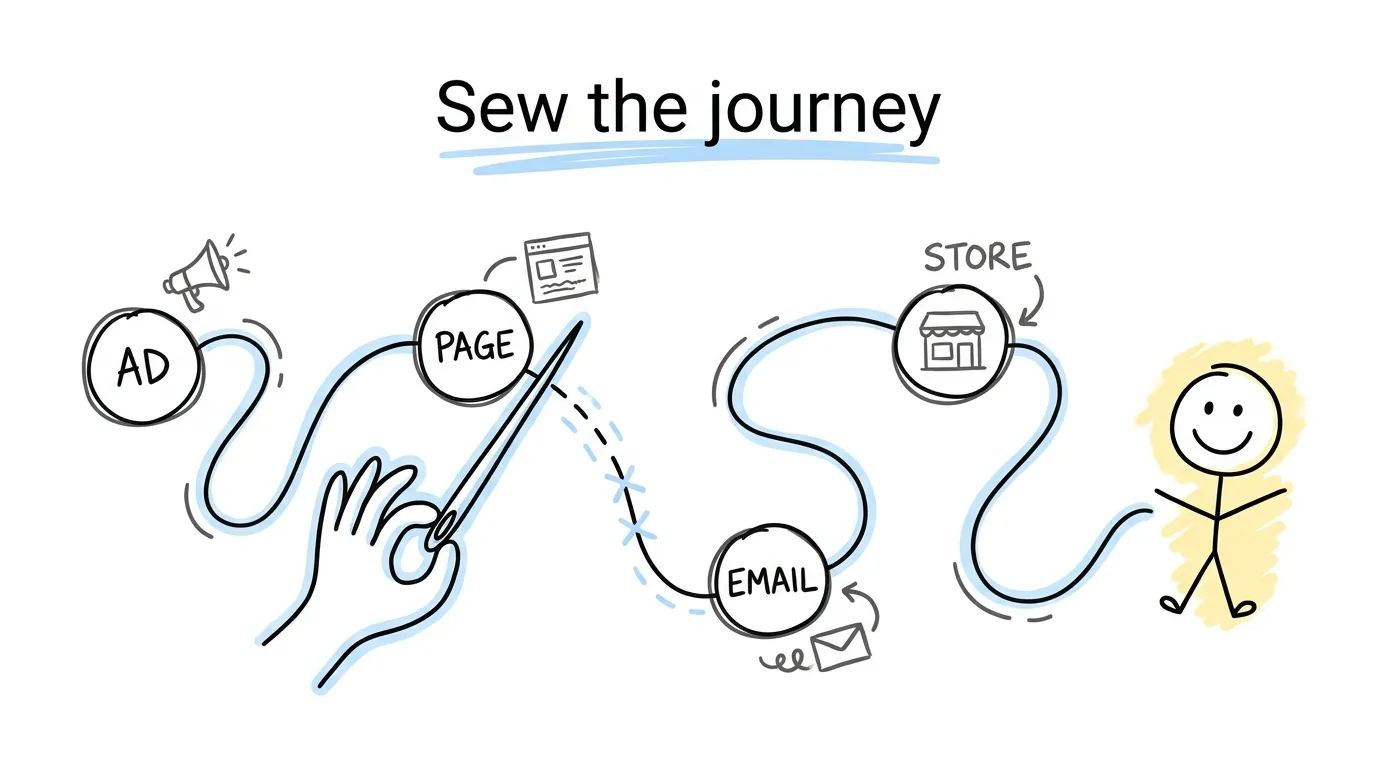
AI's real value is sewing scattered touchpoints into one continuous journey.
The 40% satisfaction lift isn't magic. It's the natural result of closing the gaps.
May every customer's return feel like coming home.
Continue reading
Related articles

What Is AI Marketing Automation? It Starts With a 40-Point Gap
A learn article explaining what AI marketing automation is: how learning-based systems differ from rule-based automation, how AI decisioning optimizes message, channel, and timing choices, what data it depends on, and where it applies across the customer lifecycle.

Marketing Automation Is Shifting from "You Do It" to "You Say It"
This article explains how marketing automation is shifting from rule-based platforms that merely execute toward AI agents that plan, create, publish, and review campaigns, covering delegable tasks, underlying technologies, tool categories, adoption steps, and risks such as privacy and automating without strategy.

Rankings Are Taking a Dive, Customers Are Sprinting Ahead: This November, I Re-Ran the Numbers on AI Search
A learn article on how AI search reshapes marketing measurement, covering reported mismatches between rank-tracking tools and live Google results, ChatGPT's business profile test, single-page visitors as high-intent leads, and CRO plus GA4 tracking verification practices.