
89% of Brands Will Spend More on Influencer Marketing Next Year
A commentary on a Kolsquare survey of 1,123 marketers across 7 markets: 89% of brands plan to raise influencer budgets, rates keep climbing, and the piece covers paid amplification of creator content, platform diversification, ROI tracking gaps, and where AI helps or hurts influencer workflows.
A while back, a friend who runs a consumer brand invited me to dinner. The talk turned to influencer marketing, and he gave a bitter smile: rates are climbing again. Same influencer — last year a video cost him RMB 30,000; this year, the opening ask is RMB 50,000.
I didn't say much at the time.
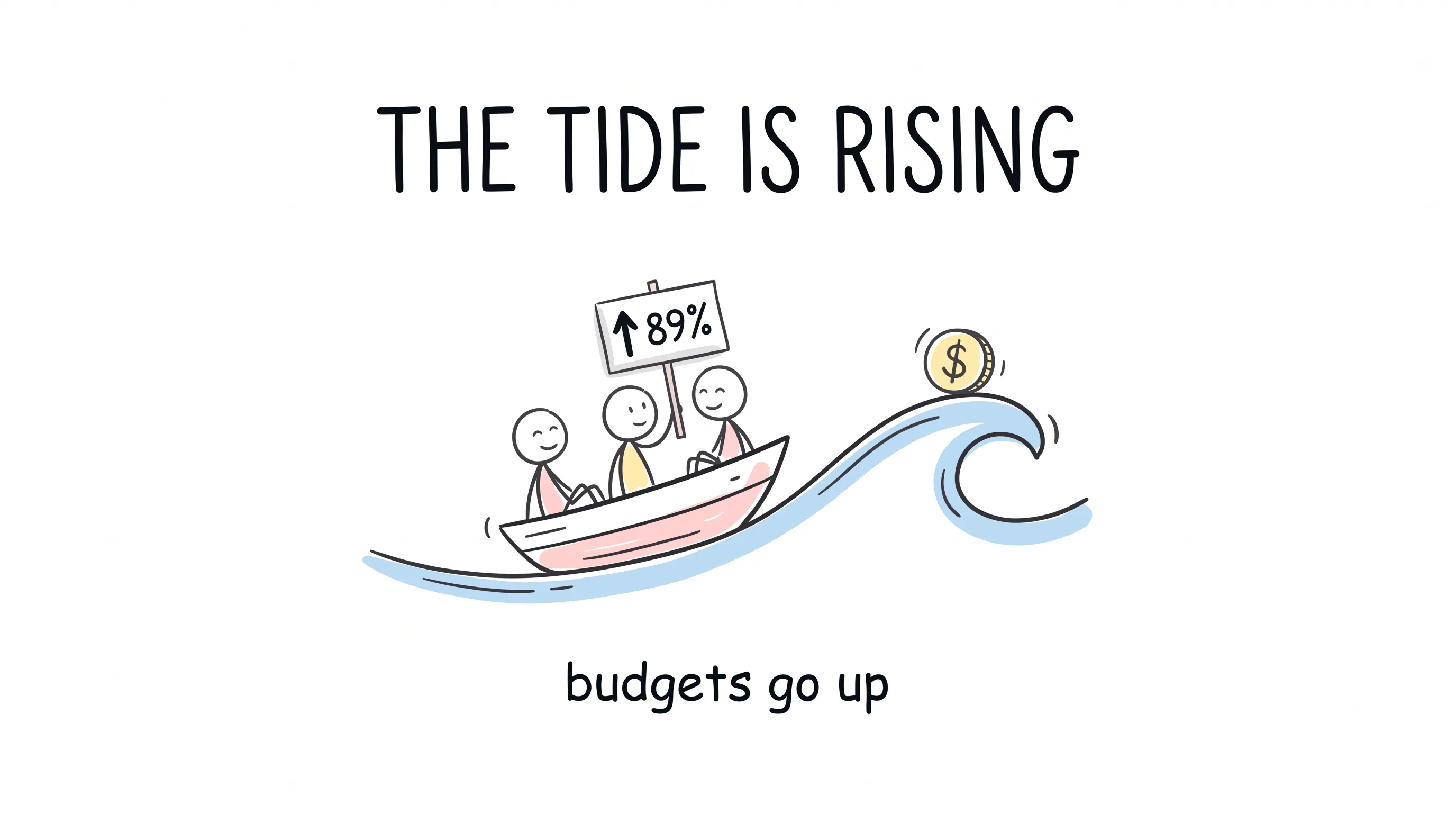
It wasn't until I came across a survey released by Kolsquare that it clicked: what my friend ran into wasn't bad luck. The tide is rising across the whole industry.
The survey covers 7 markets and 1,123 marketers. The numbers are fascinating. Let me walk you through a few of them.
The first number: 89%
The survey asked brands and agencies: over the next year, will you increase your influencer marketing budget?
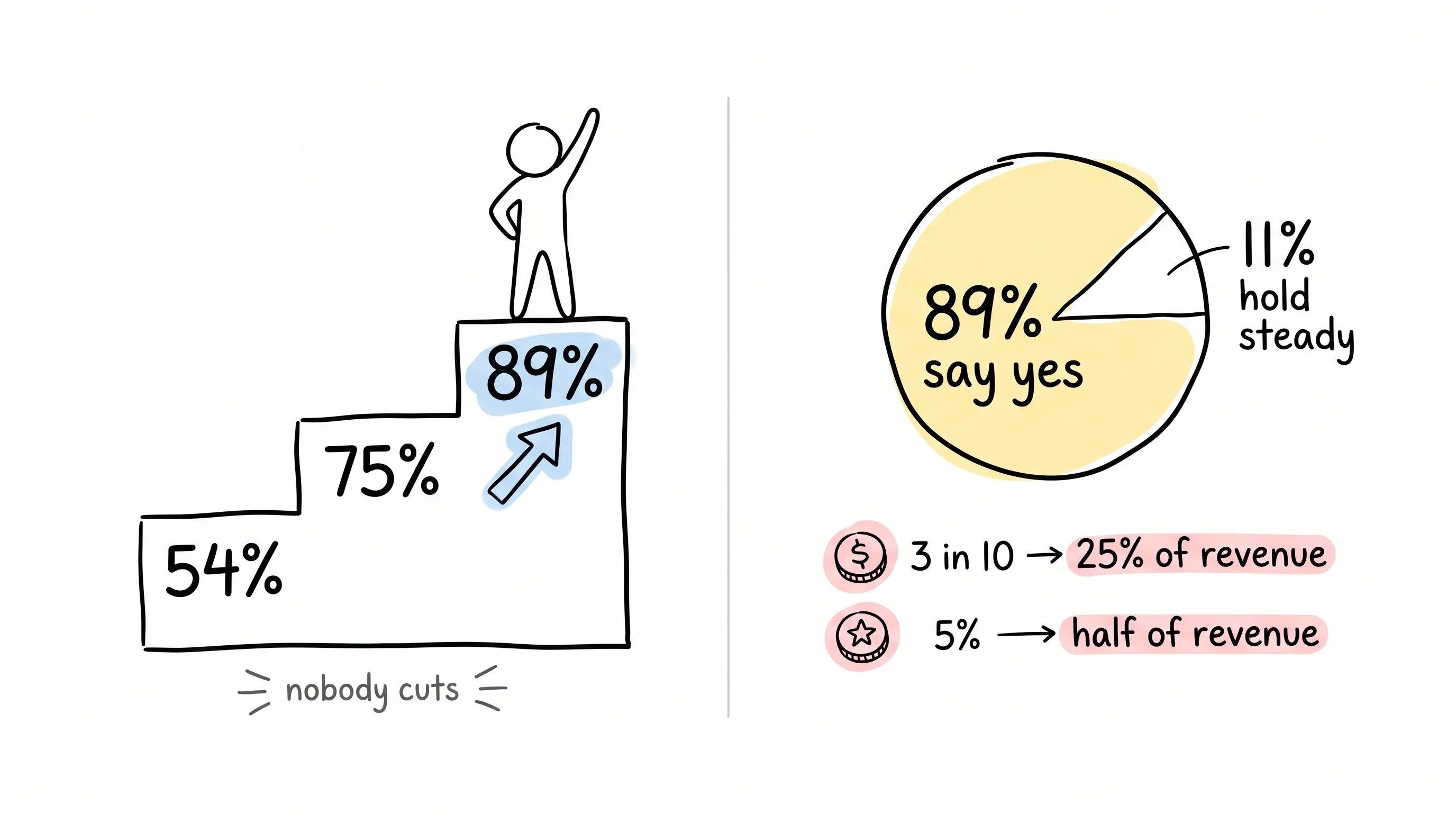
89% said yes.
In the previous edition of the survey, that figure was 75%. One edition before that, just 54%. Two years, a 35-point climb.
What about the remaining 11%? Their answer: "hold steady." Note: not a single respondent said they would cut budgets.
For large companies with over a thousand employees, median annual spend already runs in the hundreds of thousands of euros. The bigger the company, the more it pours in.
You might feel happy for influencers: a rising tide lifts all boats, so rates will keep climbing. Exactly. Which brings us to the next topic: influencer inflation.
Influencer inflation
What is influencer inflation? Everyone is adding budget, everyone is chasing the same top influencers, and prices get bid up accordingly.
But rising rates aren't all opportunistic price-gouging. The way brands work with influencers has genuinely changed.
It used to be: publish one post, add a hashtag, collaboration over. Now, influencers are expected to join product co-creation and content planning, signing long-term contracts. What brands are buying is no longer a post — it's a relationship. A heavier relationship costs a bit more. Fair enough.
There's another number in the survey that stings: three in ten brands draw more than 25% of their revenue directly from influencer marketing. And sharper still: 5% of brands rely on influencers for more than half of their revenue.
Half. Picture this: for every two dollars your company takes in, one came from an influencer.
Where does the money flow?
So where does the extra budget go?
67% of brands answered: put more into paid media to amplify influencer content. Add UGC and long-term influencer relationships to the list, and these are the places budgets tilt hardest toward.
Why insist on using paid media to amplify influencer content? Because the very same material converts better in the influencer's version than the brand's own. One subscription company switched its ad creative to influencer content and cut its customer acquisition cost clean in half.
The logic is simple: when an influencer posts content first, it's a free test round on your behalf. Which pieces take off is plain from the data. Take the winner, put paid media behind it, and your odds improve naturally. Some watch a single metric: completion rate. Above 70% or 80%, the content holds attention — amplify it, and you can hardly go wrong.
But note: not every piece of content deserves paid spend. Let it run organically first, wait for a champion to emerge, then amplify. Throwing money behind every single post is just scattering cash.
TikTok dropped 12 points?
On the platform side, there's an eye-catching number: TikTok, down 12 points versus the previous survey.
Does that mean TikTok is finished? Quite the opposite.
The truth is, brands have spread their eggs across more baskets. LinkedIn, Facebook, WhatsApp are all up. The influencer roster a brand keeps has doubled in two years.
Look at the platforms that are climbing and you'll spot a common trait: content and a purchase link connect directly. One tap and the viewer is on the product page — a short path to purchase, the kind a boss grasps instantly.
Another reason is risk management. How high can influencer rates climb? Here's a real case: one influencer quoted a price for a single Story so high that even if the product sold out completely, after costs the brand would still lose money. So what do you do?
Use more small ones, fewer big ones.
A hundred small influencers often beat three big ones on ROI, with the risk spread thinner besides. Doubling the roster is, in essence, a brand buying itself insurance.
Of course, don't get the wrong idea — TikTok still packs a punch. For discovery within organic traffic, it has almost no rival. When budgets are tight and the product needs to educate the market, TikTok remains the first choice. But if what you sell is a T-shirt, getting 50 influencers to post Stories with affiliate links beats chasing a single viral hit.
A dose of cold water
The survey also touches on gifting: send samples to influencers in exchange for a bit of exposure.
People in agency circles put it bluntly: in most cases, it's a waste of money.
Ship the package and pray? Prayer is not a strategy.
Sending 100 jars of cream to 100 influencers is last century's playbook. Today, only one kind of gifting works: you already knew each other, and she was already using your product. But is that still gifting?
That's relationship management — the part you were supposed to be doing anyway.
The most ironic number
Budgets are climbing, playbooks are shifting — but "doing the math" has fallen badly behind.
Only about three in ten marketers are actually calculating ROI. What is everyone else looking at? View counts, engagement numbers — the free metrics platforms hand out.
And here's the interesting part. They trust the platform-reported views more than industry buzzwords like sentiment analysis or media value — and even more than the sales data sitting in their own e-commerce dashboard.
Ignoring the numbers in your own wallet to trust the platform's vanity metrics. The platform says you're good, so you're good? Worth a thought for every marketer lying awake at 2 a.m.
The UK is the exception. That market is performance-driven and does the ROI math down to the finest detail. Wherever the competition is fiercest, the accounting gets sharpest — the saying holds.
AI is here, but don't let AI make friends
The survey made a point of asking about AI.
Companies using dedicated platforms for influencer management have grown sharply, mainly for discovery and audience-quality vetting. But those using AI to predict campaign performance? Pitifully few. This may be the single most wasted capability.
The reverse use case, though, is already everywhere: AI churns out outreach emails and blasts them at influencers en masse. What do agencies think of these emails? Direct quote: straight into the trash. They don't even specify which influencer they mean or what the budget is — one glance and you know a machine sent them.
What are machines good for? Both ends. The front end: screening and data hygiene. The back end: analysis and prediction. The stretch in the middle — talking with people, kicking around creative, refining proposals — must stay human.
In influencer marketing, the word that matters is "human."
And it goes deeper: AI influencers. Virtual creators like Lil Miquela and Aitana Lopez boast follower counts that look impressive. But someone checked on the Kolsquare platform — about 90% of their posts hide their like counts. The visible numbers are suspiciously pretty; most likely bought. And genuine collaborations where brands actually pay? Nearly impossible to find.
McDonald's, for its part, ran the first fully AI-generated ad in Japan, and it performed at the top of the pack. A virtual face is flawless, the motions precise, and if you're unhappy, you tweak it — no reshoots needed. Sit with this one for a second and it gets unsettling: we are apparently more willing to buy from a "perfect face" than from a real human one. That runs directly against the logic of UGC outperforming polished advertising.
A new threshold for three in ten brands
The survey also raised a new question: do you require the influencers you partner with to hold a "responsible influence" certification?
About three in ten brands do. In Belgium, the Netherlands, and Luxembourg, that figure reaches 40%. What does the certification teach? How to label ads in compliance, how to handle sensitive content. The certification systems in the UK and US both landed just this year.
The industry is professionalizing. An influencer is no longer just "someone who can shoot video" — it's a professional role that knows advertising law and disclosure rules.
Back to that dinner
Back to my friend from the opening. He complained about rising rates. I've thought about it since, and that complaint hides a piece of good news: with 89% of brands doubling down, it's precisely proof that this channel genuinely works.
What he should really worry about isn't the price — it's whether he knows how to use the channel: go small, test content, do the math, nurture the relationships.
The dividend of a channel never belongs to those who arrive first. It belongs to those who use it best.
May every dollar you spend be a dollar you can account for.
Continue reading
Related articles
Is Investing in Influencers Actually Worth It? I Broke Down These Dozens of Numbers and Ran the Math for You
A learn article that compiles industry data on influencer marketing, covering market size, ROI measurement practices, nano versus mega creator pricing and engagement, platform budget allocation, AI tooling, and ad disclosure compliance.
The EU Is Handing the Pause Button Back to You
The EU's draft Digital Fairness Act targets dark patterns, addictive design, undisclosed influencer ads, silent subscription renewals, and game spending by minors, while keeping dynamic pricing legal but banning drip pricing; fines could reach 6% of annual turnover.
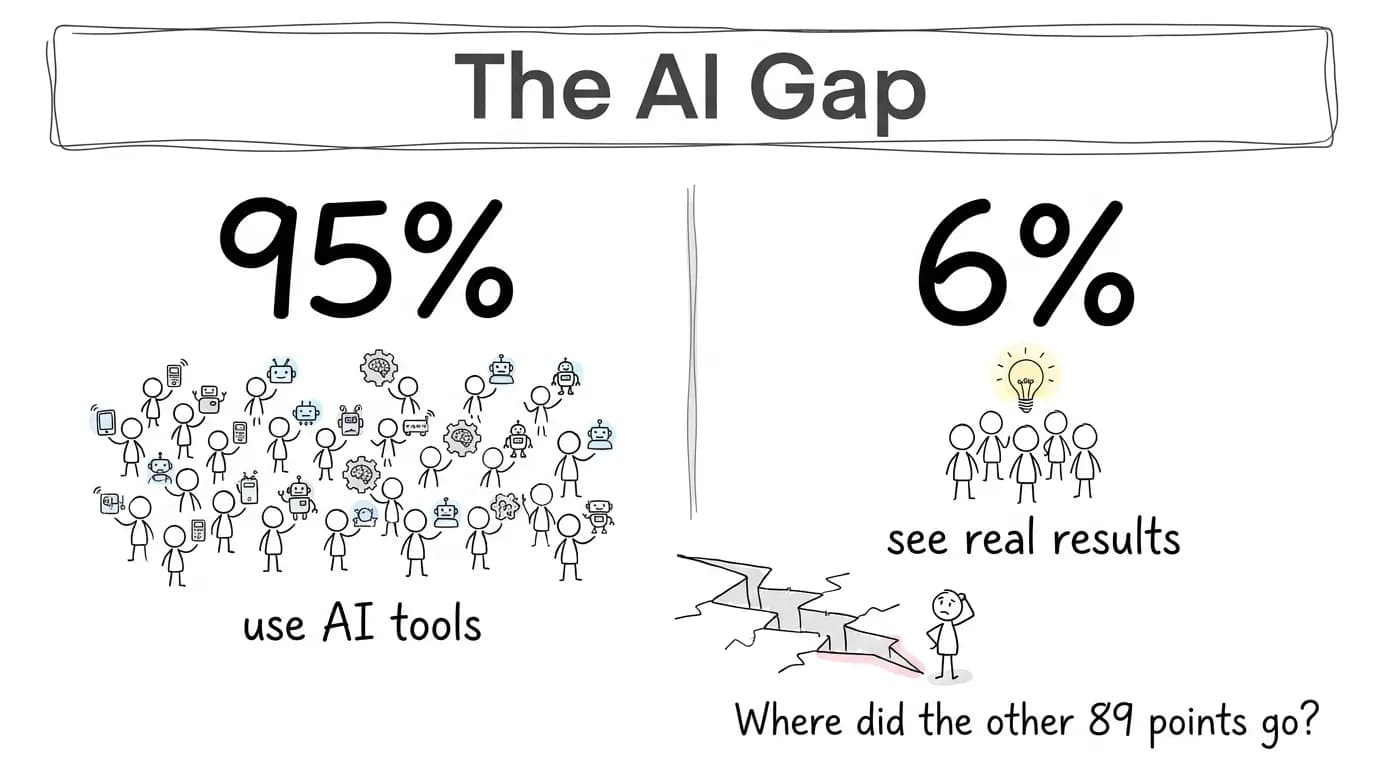
95% of Companies Use AI. Only 6% See Real Results. What's the Gap? Kolsquare's New Report Nails the Answer
A recap of a Kolsquare webinar on AI in influencer marketing, covering adoption gaps, AI-labeled content engagement, AI influencer limits, and generative engine visibility. It also outlines four practical moves for 2027 planning.