
78% of Consumers Want to Save Money — So Why Are Your Discounts Losing You Money?
A learn article drawing on Deloitte Digital's customer experience personalization research, covering data-driven offer depth, customized loyalty rewards, in-app experiences, faster content cycles, and the gap between brands' personalization spending and what customers actually feel.
A few days ago, over a meal, an old friend who runs a retail business unloaded his frustrations on me.
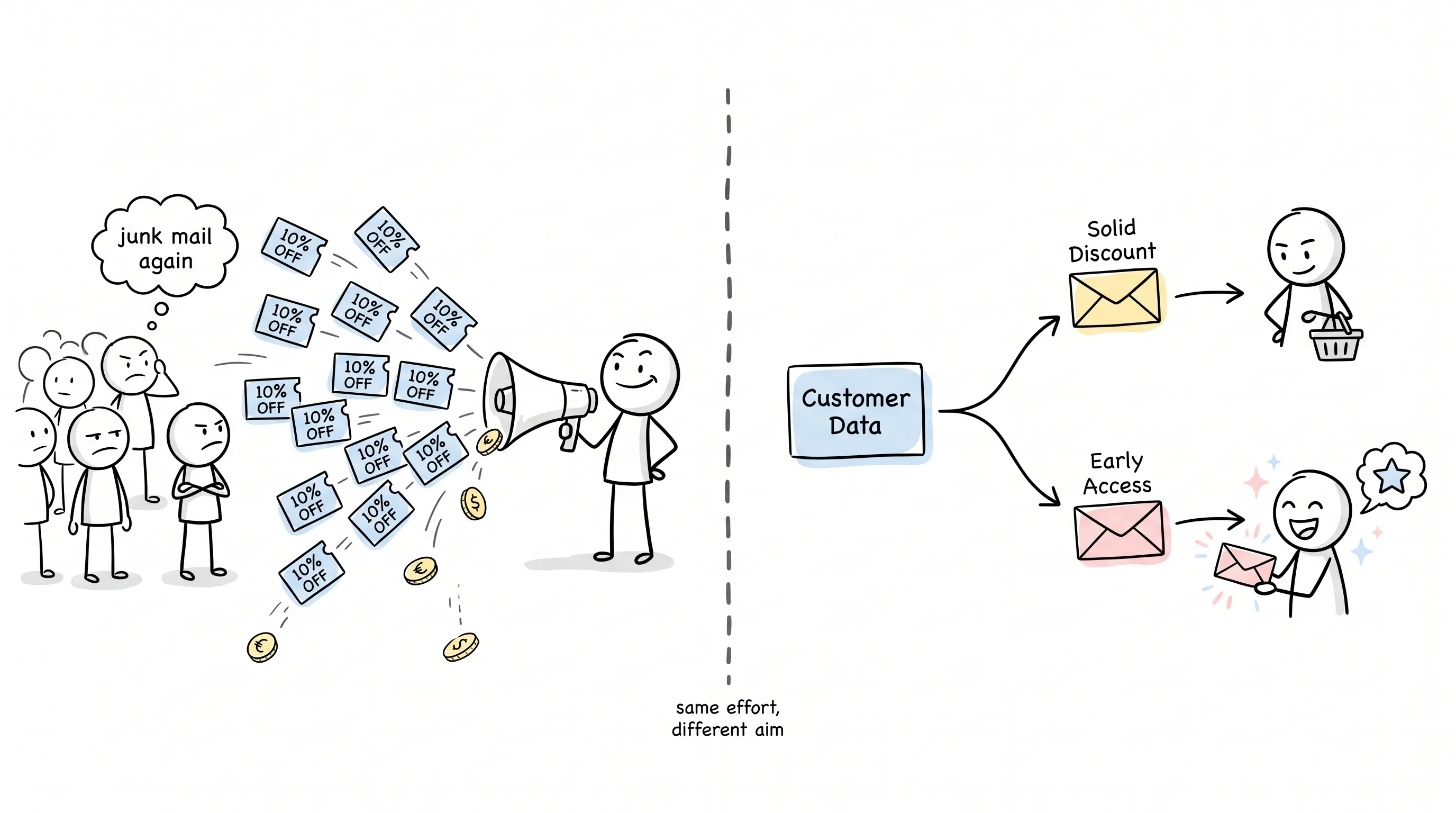
He said that doing personalized marketing these days feels like walking a tightrope. If you don't send offers, users ignore you. If you do send them, every user gets the same standard 10%-off coupon — it chews a big chunk out of your gross margin, and users still find you annoying: "another one of those junk texts."
I said: that's not personalization. That's a mass blast.
He froze for a second.
Seriously. Plenty of companies talk about personalization with their mouths while their hands are renaming the same coupon and sending it to a hundred million people. That's not personalization. That's a scattershot giveaway.
A while back, I read carefully through a research report from a consulting firm (the Deloitte Digital series on customer experience personalization). The more I read, the more I felt that many brands have this exactly backwards. Today, let me break down what I found, piece by piece.
So What Is Personalization?
First, let's get the concept straight.
What is personalization? Personalization means using the customer data you already have — their age group, the channels they prefer, what they've bought — to figure out what they actually care about, and then putting your effort into the few touchpoints they genuinely care about.
Note: it is not sprinkling sugar over every single step of the customer journey.
One number from that study stuck with me: 78% of consumers expect to get real, tangible savings out of personalization.
Good grief, 78%. That's practically saying it outright: what users want is not that you can call them by name — it's that you can put real money back in their pocket.
But — and here's the but — 78% of users wanting savings doesn't mean you should slash your margins and feed them to everyone.
The right approach: let the depth and type of your offers follow the data. For price-sensitive regulars, give a solid discount. For customers who care about new arrivals and experiences, give them early access, give them exclusive content. Two offers can both be called "personalized offers" — and the playbooks behind them are completely different.
Use data to decide who gets how sweet a deal — not an indiscriminate clearance sale.
Loyalty Programs: A Disaster Zone
That covers offers. Now, loyalty programs. This field is a disaster zone.
Think about the membership programs on your phone: points, tier upgrades, redeem a mug. Do they all look pretty much the same?
The study's numbers: 73% of consumers want loyalty rewards customized for them. In reality, only 45% of brands deliver.
More than half of brands still owe their customers on this one.
What does that mean? In a world where "points for a mug" is on every street corner, all it takes is one serious attempt at rewarding people as individuals to be remembered. Everyone else is handing out identical rewards; yours actually relates to the person receiving it. That feeling of being seen — that's where loyalty starts.
And the math is there. The study compared brands: those more mature in personalization clearly outpaced the weaker ones on improvement across key metrics — engagement, satisfaction, average order value, customer lifetime value (CLV).
In other words: personalization maturity converts directly into money.
The App: An Underrated Home Field
Third topic: the app.
Many people think an app is just a shopping entry point. It's more than that.
One number surprised me: 57% of consumers want post-purchase support handled in the app too, ahead of web chat and phone support.
Yes — even "contacting support" is something users want to solve inside the app. They don't want to call and wait for an agent, or copy-paste an order number into a web chat box. They want to open the app and find the problem already sitting there, waiting to be solved.
Purchase behavior tells the same story: 51% of consumers shop through apps regularly, and the preference is stronger among the young — Gen Z and millennials will avoid a website whenever they can.
So if your users are young, the app is your main battlefield for personalization. The wish list needs to be effortless; recommendations need to be based on what they've bought, not wild guesses. These features aren't hard to build. What's hard is treating the app as the core of your personalization strategy — instead of an afterthought shopping cart.
Content: One Step Slow and It Goes Cold
The fourth thing is content.
There's a number in that study that left me silent for a moment: for most brands, a single piece of personalized content takes at least two weeks from creation to delivery.
Two weeks. The trending topic has long gone cold, and the user's situation may have changed entirely. By the time your content reaches them, all they'll think is: this brand has no idea who I am.
The counter-data: two-thirds of consumers say they're more drawn to content from brands that "understand me — and can even anticipate what I need."
Two weeks and two-thirds: on one side, your production speed; on the other, your users' expectations. That widening gap is why so much brand content spending goes down the drain.
The fix, once you say it out loud, isn't complicated: use tools and process to compress the content production cycle, so your content both sounds like your brand and still lands inside the user's window of attention. Slow is the mortal enemy of content personalization.
The Spend Is There. The Feeling Isn't.
This section is, to me, the part of the whole study that stings the most.
According to the study, brands have sunk 51% of their marketing budgets into personalization, and 62% of brands have deployed CRM systems specifically to deepen their understanding of customers.
Sounds impressive, right?
Now for the consumers' side: users say that of the customer experiences they encounter, only 43% feel "made for me."
And the brands themselves? They claim they've personalized 61% of experiences.
61% versus 43%. An 18-percentage-point gap in between.
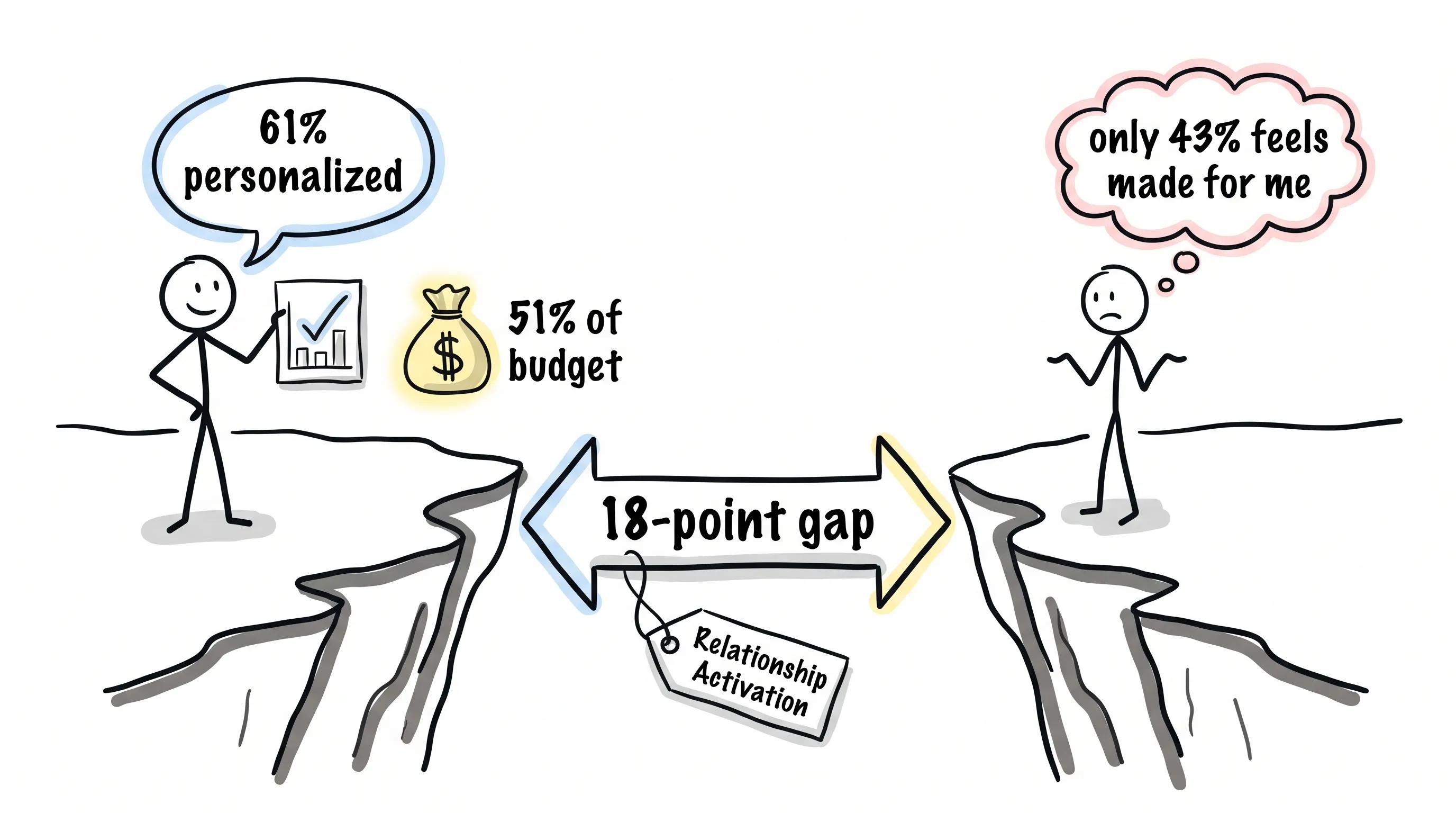
In other words: the platforms are bought, the budgets are spent, the reports are full of "personalized" — but on the user's side, more than half of that investment never lands as a felt experience. This gap has a proper name: relationship activation.
What is relationship activation? Simply put: stop treating personalization as software you buy, and start treating it as a playbook you run — customer insight, creative strategy, execution and delivery, and all three have to pull in the same direction. Miss any one of them, and what you've bought is an expensive reporting system, not customer relationships.
B2B, Don't Snicker
At this point, friends in B2B may be thinking: this is a B2C problem, none of my business.
Quite the opposite.
The person making a company's buying decisions is a procurement director by day and an ordinary online shopper by night. The expectations the consumer market has trained into them walk into the office untouched: why am I being pitched things that have nothing to do with me?
Some macro context from the study: between 2022 and 2024, consumer demand for personalized experiences rose 20%. B2B buyers were not left out — not a single one.
But the reality is that B2B companies broadly lag B2C on personalization. Not surprising when you think about it: multiple decision-makers, long procurement cycles, someone has to answer for a botched call — the chain is too long, and personalization genuinely is hard to do.
But precisely because it's hard, whoever cracks it first gets remembered first. Some B2B companies in the study have already found the way in. That window is still open today.
Media and Entertainment: Miles Ahead
Finally, one industry that's doing it right: media and entertainment.
In this industry, 75% of users say personalized experiences have significantly raised their satisfaction with brands. And 92% of media and entertainment companies plan to double down on personalization — aiming their spend squarely at data management and technology.
Put plainly, this industry's users were spoiled by feeds long ago: they simply assume you should know what they want to watch. How accurate your recommendation feed is directly determines whether they renew.
Brands in other industries can borrow the playbook here: the endgame of personalization isn't a marketing tactic — it's the product itself.
A Few Last Words
Back to that worried friend at the start.
I told him later: first, kill that "universal 10%-off coupon." Look at your data: who cares about price, who cares about new arrivals, who buys once a year but buys a lot each time. Then spend your money and your offers only on the people they're meant for.
With personalization, the starting point was never the system. It's whether you're willing to treat every user as one specific human being.
The data is already in your hands. It just depends on how you use it.
Here's hoping you say goodbye to that universal coupon soon.
Note: The data in this article comes from Deloitte Digital's customer experience personalization research series.
Continue reading
Related articles
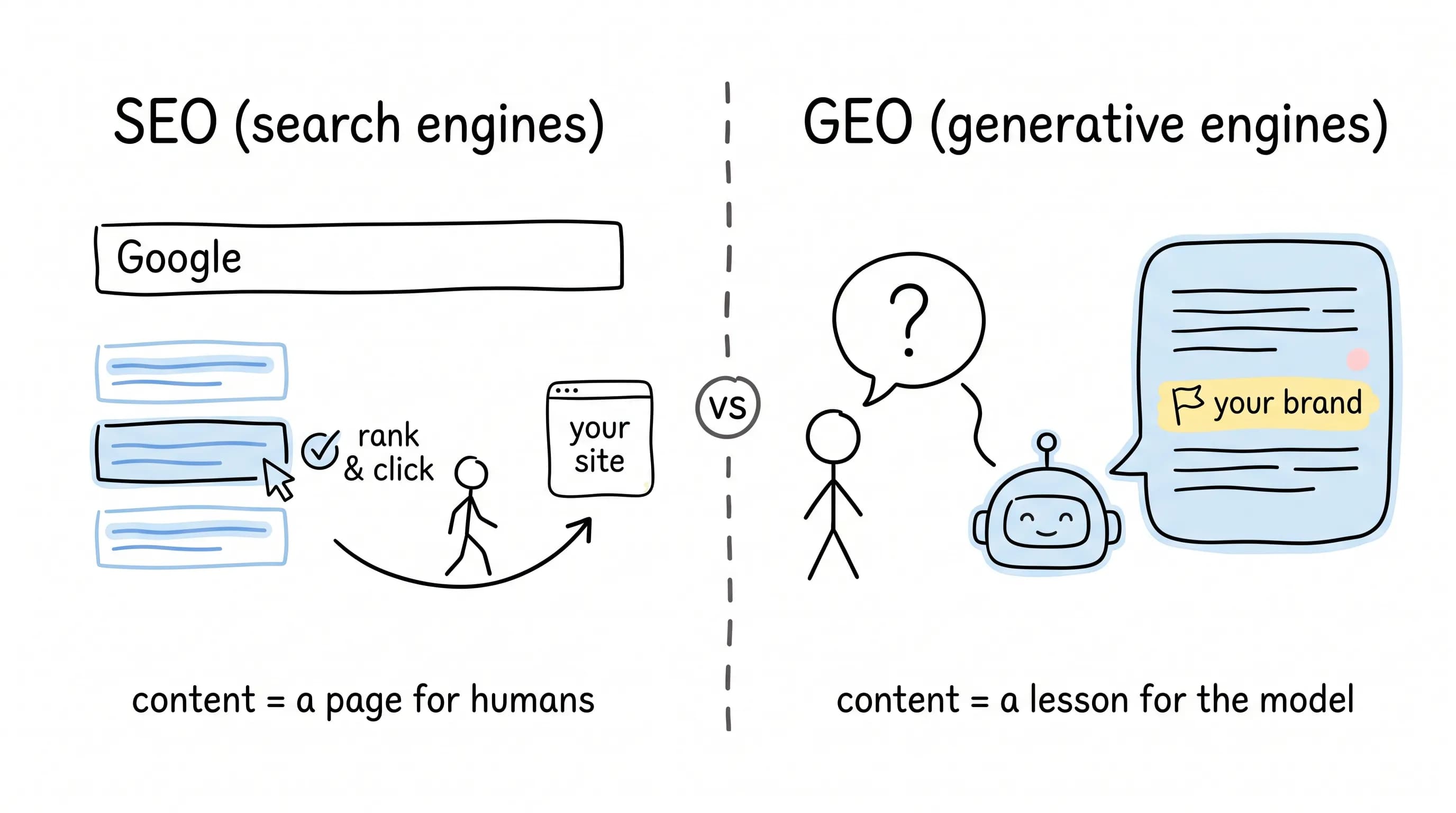
Does AI Know Your Brand? A Look at GEO, the New Craft
An explainer on GEO (Generative Engine Optimization): how AI engines like ChatGPT, Perplexity, and Gemini differ, how GEO goals and metrics diverge from SEO, and which SEO skills still carry over.
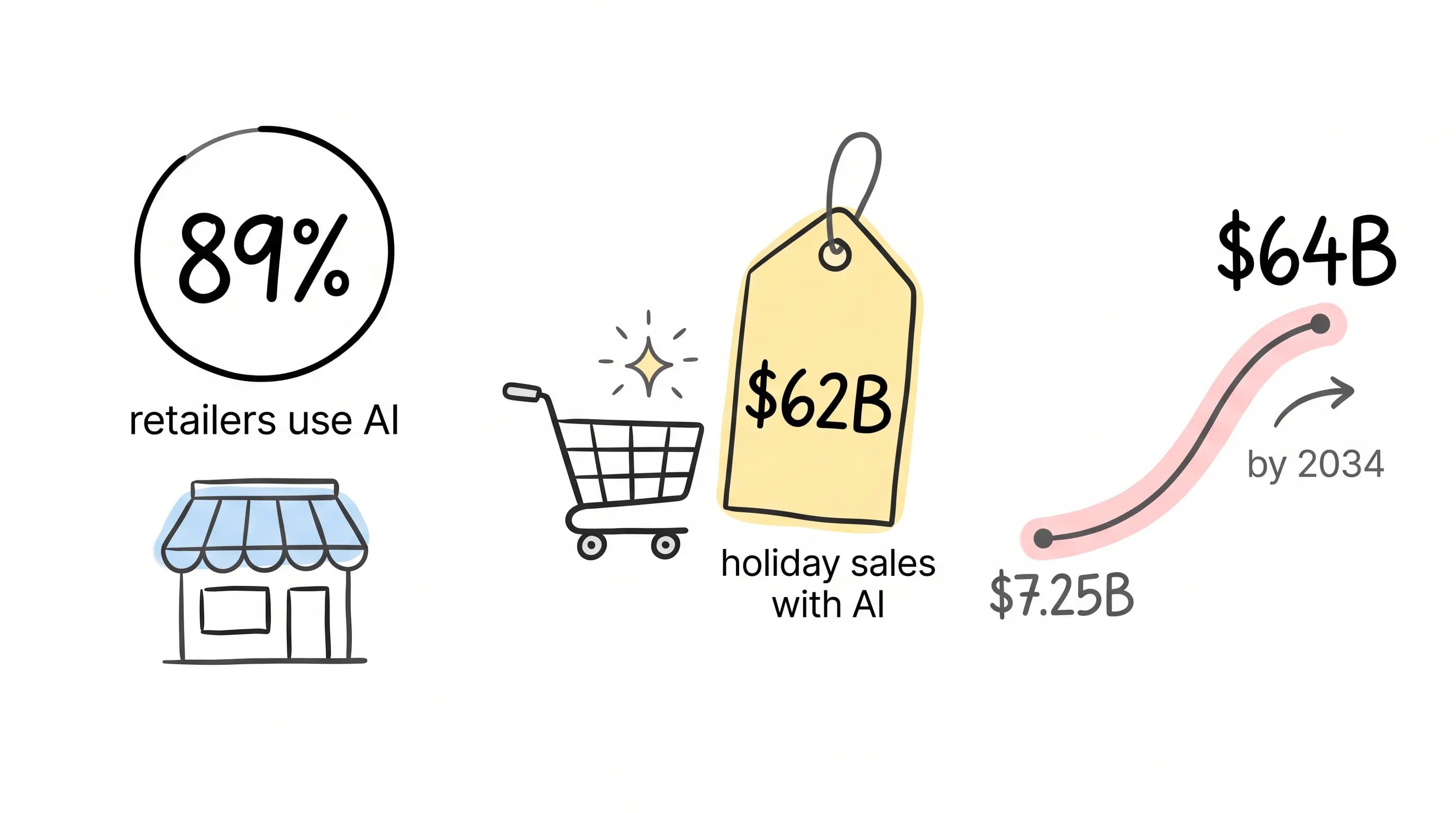
89% of Retailers Are Already Using AI. The Playbook for E-Commerce Has Changed
A learn article on AI in e-commerce: adoption context, use cases from recommendations, search, dynamic pricing, customer service, inventory, and fraud control, plus B2B applications, generative AI content, tool examples, pitfalls, and a six-step adoption path.
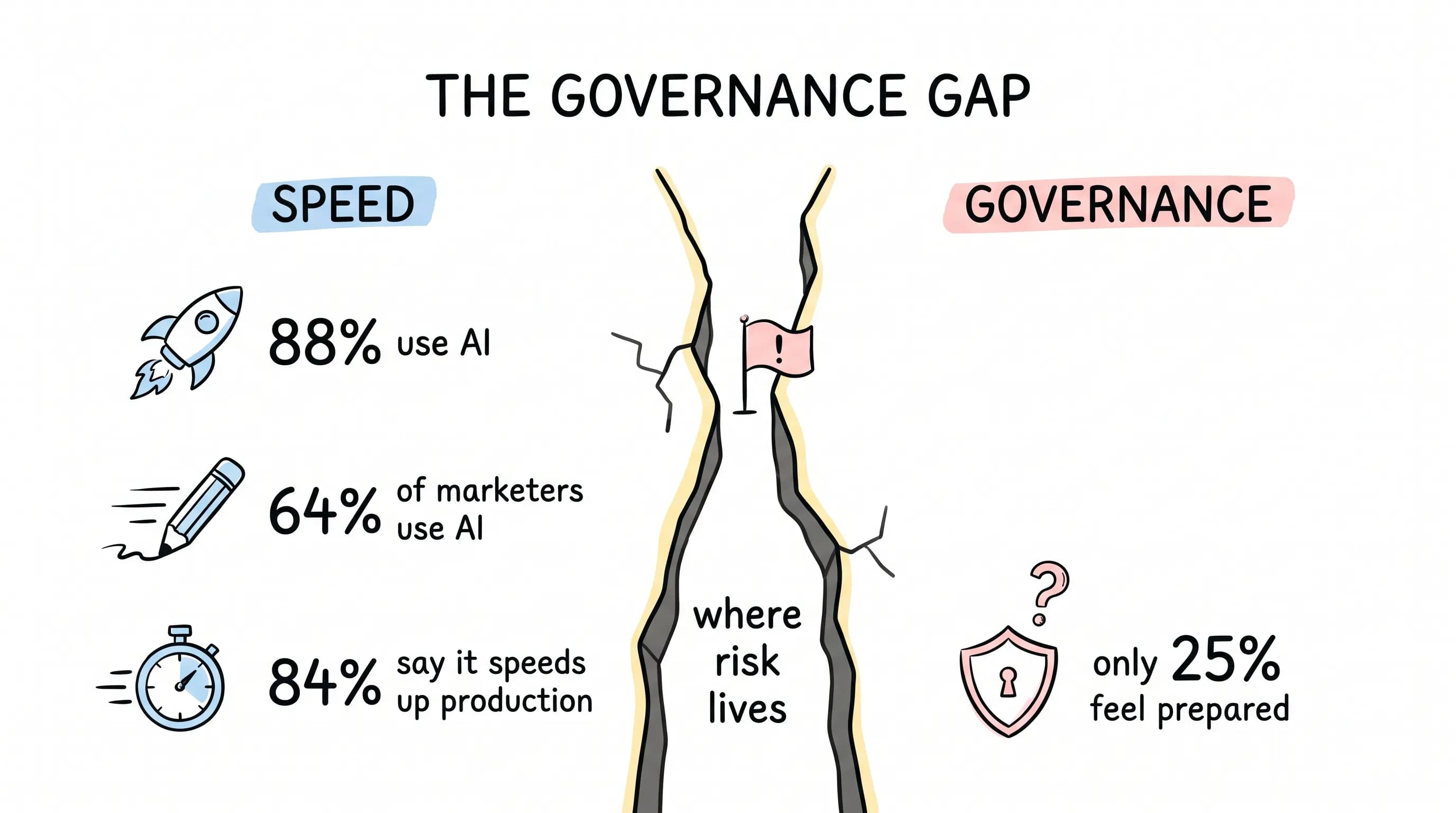
AI Makes Content at Lightning Speed — But Can You Answer "Who Approved This?"
This article looks at the gap between AI content speed and governance readiness in marketing teams, and outlines nine control points — prompt validation, brand guardrails, permissions, approval workflows, human review, versioning, IP checks, audit trails, and asset reuse — for brand-safe AI content.