
AI Marketing Daily · 2026-10-14
Daily digest of 20 AI marketing items: copy-ready prompts for content strategy, AI Overviews traffic statistics, GEO optimization guides, conversational analytics tools, and industry data including a Forrester TEI study.
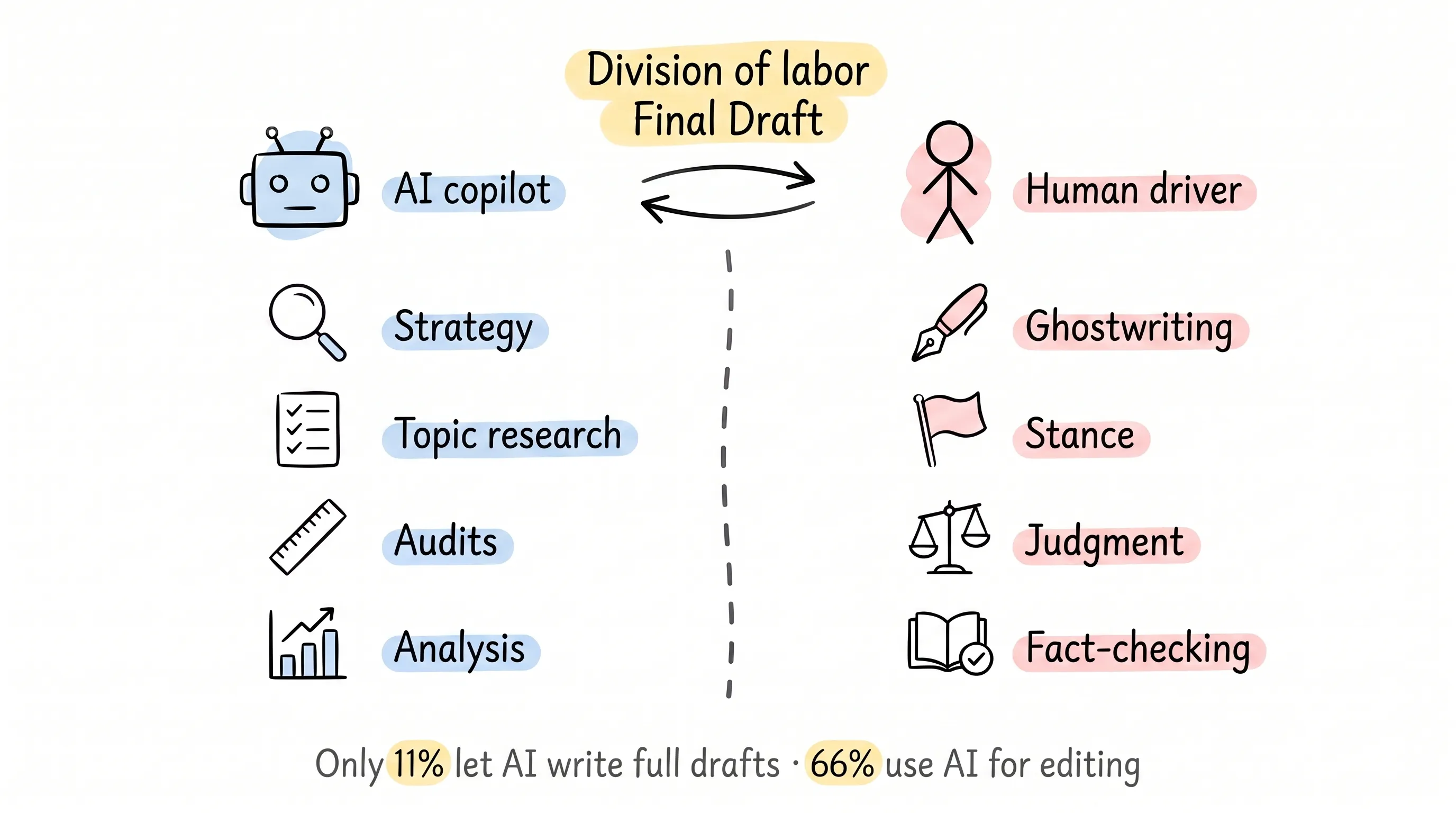
Today's throughline is division of labor. A content marketing veteran says AI should own strategy, not ghostwriting — and attaches a complete set of copy-ready prompts; the search-side data keeps getting worse, with organic traffic down roughly 35% wherever AI Overviews appear; the tools side is turning "talking to your data" into an entry point everyone can use. Two kinds of things in today's 20 items are worth saving: copyable prompts, and data you can quote straight into your reports. Read on, item by item.
🎯 Today's Headline
Andy Crestodina publishes a long-read: AI should own strategy, not ghostwriting
What happened. Andy Crestodina of Orbit Media has published a hands-on guide on how AI should be used in content marketing. He opens with his annual survey data: only 11% of content marketers use AI to write full drafts, 66% use it for editing, and most people's usage clusters around topic selection and editing. He doesn't switch on AI when he writes, and this piece was handwritten too. The body of the article is ready-made prompts for five workflows: a blog homepage subscription CTA audit, topic research, first-draft editing, finding guest-posting and outreach targets, and analyzing content performance by channel. Every prompt comes with a full template. The CTA audit prompt carries an 8-point scoring rubric and outputs a four-column table — each row scored, with a concrete fix — and ends by forcing the AI to name the single highest-leverage change. He ran it on his own blog: the AI called the homepage article layout a chronological pile of tiles, and he owned it, saying he couldn't argue with that. The topic-research section has three prompts, one of which mines the industry for claims everyone repeats but nobody has tested — find the gap, run original research, and produce new data journalists can cite. The article also borrows Liza Adams' watering holes prompt, which gets the AI to list the communities, podcasts, trade shows, and publications where a target audience gathers — going from zero knowledge of an industry to an outreach list in an afternoon.
Why it matters. Plenty of content out there is still debating whether AI will replace writers; this piece skips the debate and hands over a workflow retrofit instead. Its stance is explicit: AI is the strategy copilot, and ghostwriting is not its job. The human voice remains the differentiator — and this time the claim has data behind it, since nine in ten marketers keep AI away from full-article ghostwriting. Method-wise, the five prompts happen to cover the most labor-hungry stages of content operations, from conversion audit to topic selection to distribution. Take them and use them; no figuring it out yourself.
What it means for marketers. Content teams can move hours from writing to strategy. The article names three topic directions with the highest payoff: original research, strong opinions, and topics nobody has written. Generic how-to content performs worst — anything any brand, or any AI, could write gets bookmarked by no one and shared by no one, and he suggests simply not writing it. Strong-opinion content is something AI can't produce; AI has no stance, and that is the human moat. Original research gets cited by journalists and editors, the backlinks feed search rankings, and they also shape the answers AI engines give, because AI engines call search engines when they answer questions. The GA4 analysis prompt feeds your own data to the AI and matches topics to channels. His judgment: search users are busy and social users are idle — the former want long-form answers, the latter want visual impact, and different topics belong on different channels.
How to use it. The actions for this week are concrete. Step one: screenshot your blog homepage and feed it into the CTA audit prompt to see where the subscription funnel leaks — focusing on whether the CTA copy names a specific topic and whether there are trust signals next to the subscribe box. Step two: run the topic-research prompt once on a topic list for your own target role, and try that provocative-but-mundane question: which trivial things does your role hold strong opinions about? Pick one and dare to write it. Step three: export your blog report from GA4 (by page title plus session source), delete the low-traffic rows, upload it, and let the AI produce 10 new topics matched to channels. All three actions together take an afternoon.
My take. This playbook suits teams that already have a content backlog — the audit and data-analysis prompts presuppose traceable data. Cold-start teams should first lay down topics with the topic-research prompts. Of the five prompt families, I'd back two: the CTA audit pays back fastest — you can watch the subscriber count the same day the change goes in — and original research is worth the most, because one exclusive dataset can feed a year of backlinks. As for ghostwriting: the time AI saves on full drafts will be paid back double in fact-checking and brand voice. The genuinely scarce resource is still people who dare to make judgments and dare to be contradicted — the stronger the tools, the more that is worth.
🔗 Further reading: Read the full article
🏷 AI Search & GEO
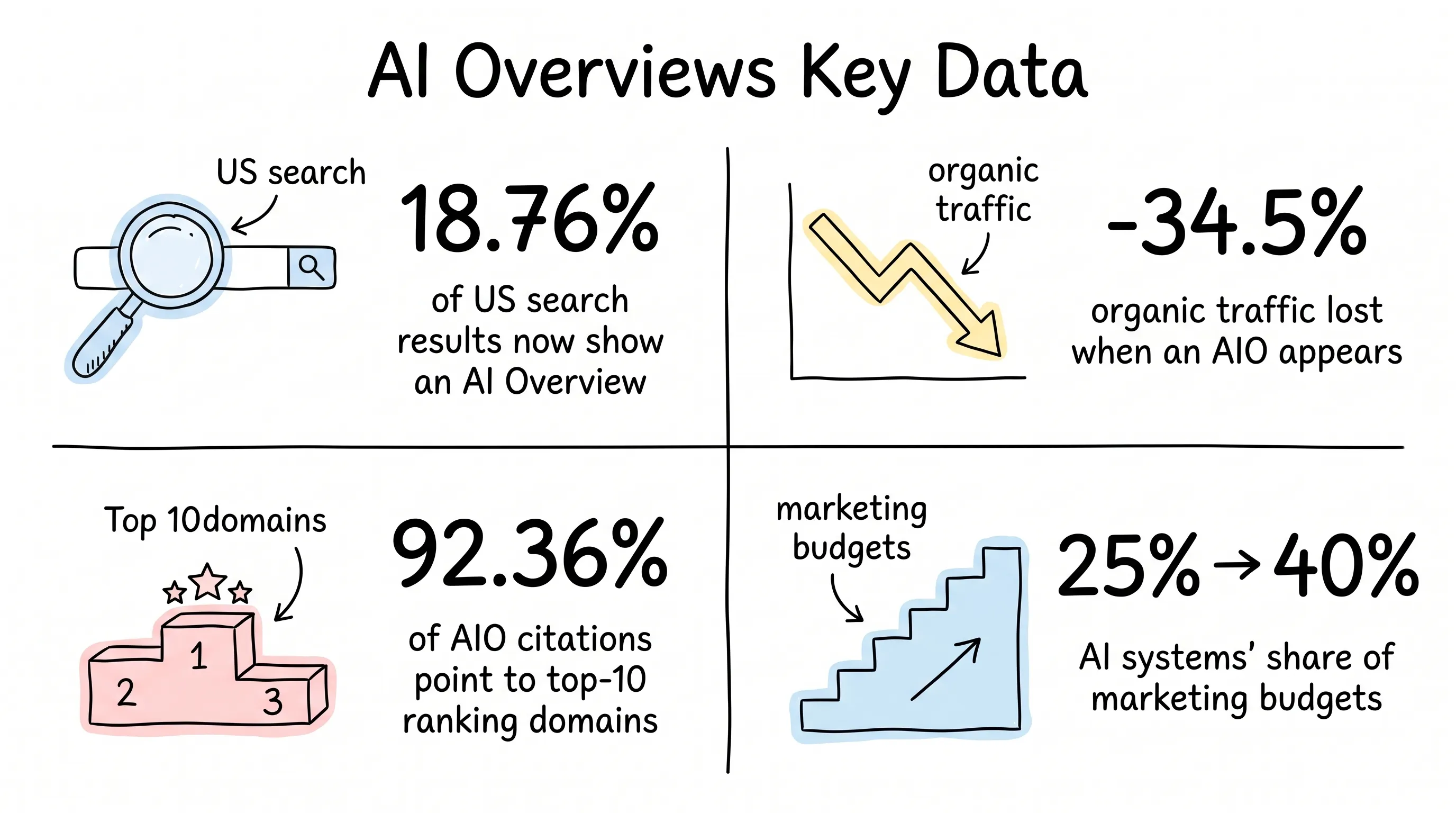
AI Overviews in 50 stats: pages with an AI Overview lose 34.5% of organic traffic
Genesys Growth has compiled 50 key statistics on AI Overviews in 2026, each with its source attached — SE Ranking, Semrush, and Pew among them. A few sets of numbers deserve a place in your reports: AIO now appears in 18.76% of US search results and has 2 billion monthly active users worldwide; when an AIO appears, the top-ranked page loses 34.5% of its organic traffic; traditional search volume is projected to fall 25% by 2026. The citation mechanics follow a pattern too: the average AIO carries 6.82 links, 92.36% of which point to domains in the organic top 10, and 88% of AI summaries cite three or more sources. Budgets are moving with it: AI systems' share of marketing budgets has risen from 25% to 40%, while human creative talent budgets have fallen from 40% to 25%. Industry forecasts put the AI marketing market at $107.5 billion by 2028.
💬 Don't rush to cut the SEO budget. The fact that 92% of citations still come from the top 10 says your existing SEO investment is still supplying the AIO. The real move is to raise the AIO citation density of your content pages: multi-source citations, data entities, structure. This week, pull the five pages whose traffic has dropped hardest and run them against these 50 stats.
🔗 Further reading: Read the full article
GEO 101: search is turning from a list of links into conversational answers
TechBooz explains the fundamentals of GEO (Generative Engine Optimization) in 2026. How information gets discovered is changing: search engines used to match keywords and return a list of websites; now users ask conversational AI assistants for answers directly. GEO is defined as optimizing content for generative search engines so that brands get discovered, understood, and cited by engines like ChatGPT, Gemini, and Perplexity. With AI search assistants going mainstream in 2026, brands' content distribution logic has to be rebuilt. The piece is training-company explainer material: it gives you a framework, but no first-party data.
💬 Framework pieces don't need a close read, but the conclusion belongs in next quarter's planning: the traffic entrance is splitting into the search box and the chat box. One thing to do this week: drop your brand name, product name, and founder's name into three AI engines and ask a round of questions, recording who got cited and who didn't — that gap list is your GEO starting point.
🔗 Further reading: Read the full article
The five pillars of GEO: steal it as a per-page scoring checklist
Indian agency Digital Series lays out five strategic pillars of GEO: content depth and relevance; conversational structure (FAQ and Q&A formats); entity-based optimization and structured data; credibility signals (citations, expert bylines, multimedia); and continuous iteration. They stress that GEO is a complement to SEO, not a replacement — the object of optimization shifts from keywords and backlinks to content quality, contextual depth, and intent relevance in AI scenarios. The execution advice is to run an AI-readiness audit over your existing content, then rework blogs and landing pages. AI engines favor citing sources that demonstrate credibility and expertise.
💬 The value of this piece is a directly copyable execution checklist. How to run it: pick your top 20 pages by traffic and score each against the five pillars — missing conversational structure, add an FAQ module; missing entities, add schema markup; missing credibility, add data sources and author backgrounds. One content editor can clear it in a week, which beats waiting for the next algorithm update.
🔗 Further reading: Read the full article
GEO by engine: ChatGPT runs on Bing, Claude wants long-form, Perplexity loves fresh pages
Buried in Dubai agency Digital Gravity's services page is the most concrete piece of substance in this category: how the citation mechanisms of each AI engine differ. ChatGPT draws on Bing's index and favors brands already mentioned by Wikipedia and mainstream media; Claude, shaped by its Constitutional AI training, prefers long-form, logically clear, well-documented content and distrusts unsupported promotional talk; Perplexity quotes almost line by line and favors recently updated pages and active communities like Reddit; Gemini relies on multimodal assets while also reading Google's live local and shopping data. The services framework also includes AIO (AI Overviews optimization), SXO (post-click experience), and ORM (AI repetition of web word of mouth).
💬 With a limited budget, don't spread effort evenly across four engines. B2B brands should take the ChatGPT path first — sort out Bing indexing and the Wikipedia entry. Those serving developers and research audiences should prioritize Perplexity: update pages often and cultivate community reputation. Write engine choice into the content calendar: one piece of content targets one engine's preferences.
🔗 Further reading: Read the full article
🏷 AI Content & Use Cases
Coupler.io assembles the 2026 AI marketing use-case landscape: agents patrol campaigns overnight
Coupler.io has systematically mapped out AI marketing use cases for 2026. Baseline data: 90% of marketers using AI say it helps them make decisions faster, and marketing and sales departments are adopting faster than other departments. The AI agent's signature skill is around-the-clock watch duty: monitoring overnight CPC spikes, recommending budget shifts in real time, anomaly detection. Predictive use cases include churn prediction and LTV modeling, conversion probability and lead scoring; the research it cites shows companies using churn prediction cut churn by 13% to 31% and lifted conversion by 9% to 20%. Broken down by channel: PPC manages bidding and creative, email manages send times and personalization, search marketing manages adapting to AI search. One premise is repeated throughout the piece: data silos mean AI sees only fragments — a clean, centralized data pipeline is the backbone of AI marketing.
💬 Adoption order matters more than tool choice. Fix the data pipeline first, then bring in agents — otherwise AI makes budget decisions on dirty data and loses money faster. This week's action: take stock of whether data is connected across ads, email, and CRM; if it isn't, wire it up first with a pipeline tool like Coupler, and put agent patrols in phase two.
🔗 Further reading: Read the full article
85% of marketers already use AI for content — the 2026 question is whether your brand gets cited
Clustox reviews the progress of generative AI in content marketing. 85% of marketers are already using AI tools in content creation, a figure from CoSchedule's State of AI in Marketing report. The tech stack splits into four blocks: machine learning for audience behavior, Transformers for long-form content, NLP for human-like text, and RAG (retrieval-augmented generation) for accurate content backed by data. The article's judgment: the key question of 2026 has shifted from "can AI write content" to "is your brand recognized and cited by AI engines." The tool map is zoned by capability: ChatGPT, Jasper, and Copy.ai handle text; Synthesia and Runway handle video; DALL·E 3 and Gemini handle images and multimodal.
💬 It's worth noting that this piece puts RAG into the content marketing context. Connect your brand content library to RAG and AI-generated product copy has something to stand on — the hallucination rate comes down. Recommended action: content teams should first organize product manuals, pricing pages, and FAQs into a searchable knowledge base. That is the foundation of all AI content work, and it's cheaper than buying new tools.
🔗 Further reading: Read the full article
Coca-Cola and Nestlé are already running generative AI in live campaigns
Young Urban Project rounds up real-world landing cases of generative AI in marketing. Big brands like Coca-Cola and Nestlé are already running real campaigns with AI — GPT-4 generating ads, AI visuals localizing video — no longer stuck in the experiment phase. The technical principle is told plainly: LLMs handle text — emails, headlines, blogs; diffusion models handle visuals and video — Midjourney and Runway belong to this class. Small and mid-size teams use Jasper, ChatGPT, and Midjourney to replace an entire team's output, one person doing the work of ten. The article sums up the main gains in two: saving time, and speeding up the cadence of creative testing. Real cases also include Sephora.
💬 Big-brand-validated usage can be copied directly: AI does localization and variants first, humans keep creative judgment. An action small teams can start this week: have AI draft five subject-line versions of your next marketing email and have a human pick — compressing the test cycle from a week to a day. Don't expect AI to produce a finished product in one shot; expect it to produce 10 options to choose from.
🔗 Further reading: Read the full article
MGid weighs the pros and cons of AI content: efficiency up 50%, 60% of marketers fear wrecking the brand
MGid's long article sets the gains of AI content against the risks. On the gains side: over 80% of marketers are already using some form of AI; AI content production time falls by up to 50% and content costs by up to 30%. On the risk side: 60% of marketers using generative AI content worry that bias, plagiarism, and misaligned values will damage brand reputation; Google's algorithm carries a penalty risk for low-quality AI content, and human oversight cannot be skipped. The article also specifically debunks AI detection tools, clarifying the limits of their reliability — a detector's verdict cannot serve as grounds for punishment.
💬 Suggested policy for every team: write the risk side into the rulebook — AI drafts must pass human fact-checking, and medical, financial, and children-related categories get an extra legal pass. Don't buy detection tools; they produce more false positives than escapes. This week, add one line to your content guidelines: AI first drafts and human final drafts leave separate traces in the system, so when something happens you can trace it.
🔗 Further reading: Read the full article
🏷 Tools & Workflows
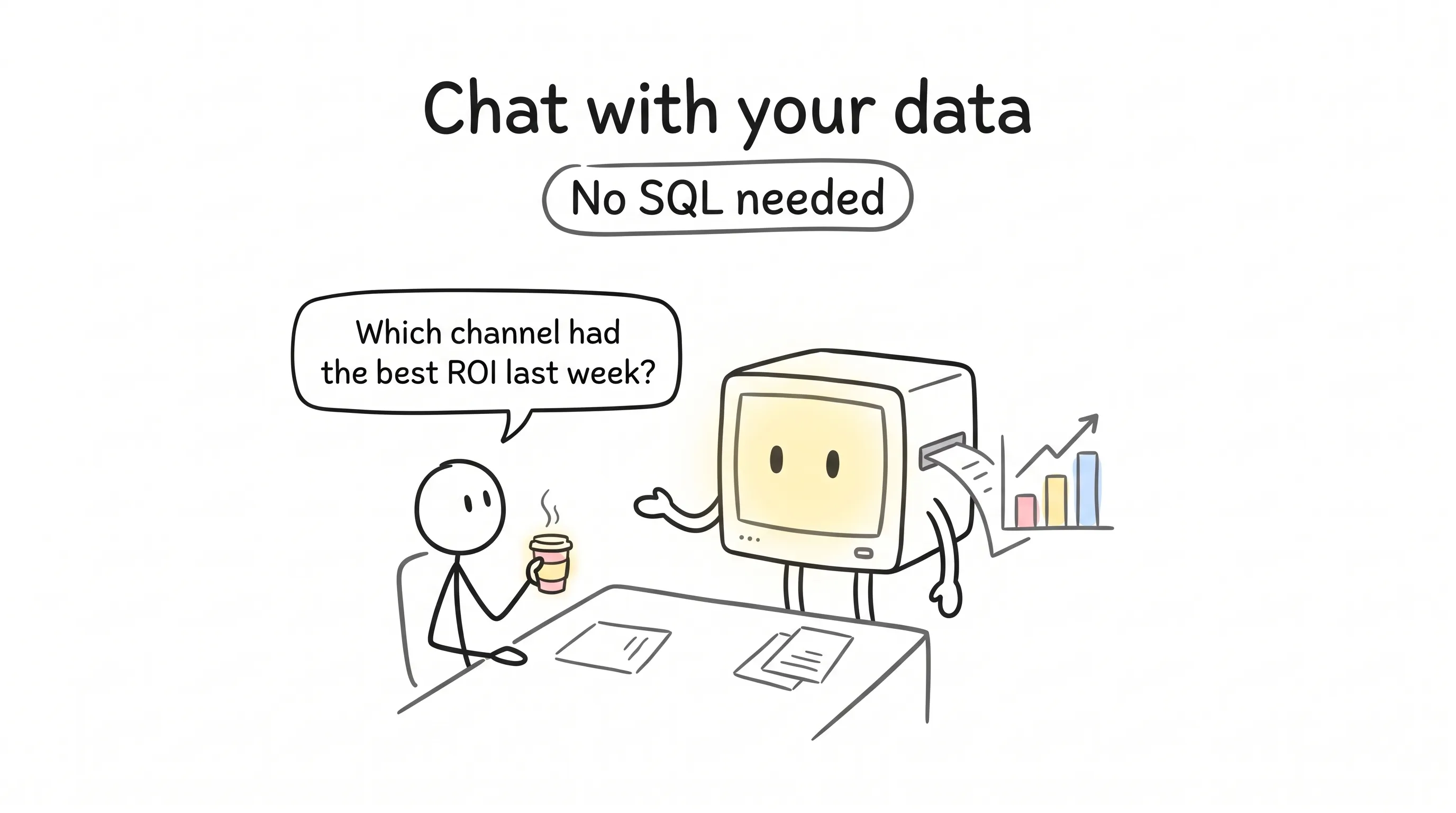
Mapp AI Chat launches: marketing data, now queried through conversation
Marketing Tech News reports on Mapp AI Chat, a new tool from MarTech vendor Mapp. Built on GPT-4o, it lets marketers analyze marketing data in natural language and extract actionable insights; the selling points are talking to your data plus end-to-end data confidentiality. Features cover answering questions, providing explanations, and simplifying the understanding of complex information; it is part of the Mapp AI Assistant suite, aimed at campaign optimization scenarios. The shared pitch of this category of products is lowering the barrier to using data, so operators who don't know SQL can pull numbers themselves. This is a representative product of conversational BI in the marketing-data space; it's a vendor press release, with no independent review.
💬 The real value of conversational analysis is cutting out the wait for the weekly report. Recommended action: teams already using Mapp should first use it to replace the prep work before weekly data meetings — pull the numbers by conversation before the meeting, discuss decisions in the meeting. Teams not using Mapp should still use this category to test the waters internally: let operations pull their own numbers, freeing analysts to work on attribution. Have legal look over the data confidentiality clause before signing.
🔗 Further reading: Read the full article
WEbrand's division-of-labor list: which AI tools to assign to each role
WEbrand Agency's blog reviews AI's everyday uses in digital marketing. Repetitive tasks get faster: writing copy, analyzing consumer data, producing visual assets — work once billed by the hour is now billed by the minute. On hyper-personalization it points to the recommender systems of Netflix, Spotify, and Amazon: marketing is turning from reactive to predictive, with algorithms analyzing customer interactions in real time. The tool lineup lists four: ChatGPT handles content and strategy; Copilot and Gemini handle drafts and automation; NotebookLM does knowledge Q&A grounded in your own documents. The conclusion borrows an industry oldie: your job won't be replaced by AI, it will be replaced by someone who uses AI — and the biggest challenge is the absence of AI education and strategy.
💬 No new data in this piece, but the tool-division thinking lands directly. Recommended action: each person on the team picks two AI tools and writes them into their weekly workflow; after a month, review which steps genuinely saved time. Configuring fewer and fewer tools is maturity; configuring more and more is anxiety. Training budget should arrive before tool budget.
🔗 Further reading: Read the full article
🏷 Industry Data & Markets
Zappi publishes its Forrester TEI numbers: 243% ROI over three years, payback in 6 months
Zappi released a Total Economic Impact study that Forrester conducted at its commission. The model company was set as a global consumer goods company with $5 billion in annual revenue, 7,000 employees, and 15 internal insight staff. The line items: ROAS up 5% to 6.5%, worth $3.3 million; new-product revenue up 4% to 7%, worth $4.1 million in incremental profit; research costs down 40%, saving $2.6 million — from shifting budget away from traditional research agencies and reinvesting it in more testing; insight-team time savings of 10% to 15%, worth $472,000 in labor costs. Combined NPV is $7.5 million, with payback in 6 months. A comparable case: PepsiCo used Zappi to lift creative effectiveness by 30%. Commissioned research — the numbers represent a composite model, not a guaranteed average.
💬 Take the numbers at a discount; steal the framework. When you defend a marketing-automation-platform budget, report along this TEI structure: media efficiency, new-product speed, research cost, and team hours as four separate ledgers. Use this template for next week's purchase request — far more persuasive than chanting "cost down, efficiency up."
🔗 Further reading: Read the full article
AI social media market to hit $10.33 billion by 2029; influencer marketing segment grows fastest
Research and Markets published its AI in Social Media market forecast: $2.2 billion in 2024, $10.33 billion by 2029, a 36.2% CAGR. Segment scopes include social media management, content generation (text, video, image, creative), and reporting and analytics. The fastest-growing segment is influencer marketing, where AI tools let brands automate influencer selection and optimization in a data-driven way. Two growth drivers: deepfake detection going live on social media platforms, and demand for highly personalized content and recommendations. The main-player list: Google, Meta, IBM, Sprout Social, Sprinklr, AWS, HubSpot, Adobe. Announcement-grade report, no methodology detail.
💬 A macro data point for planning: 36% compound annual growth means this budget pool more than quadruples in five years. Teams doing influencer buys should try AI influencer-selection tools this year — filtering people by audience overlap and historical performance, replacing manual leaderboard scrolling. And put deepfake detection on the procurement list: verify authenticity before brand partnerships.
🔗 Further reading: Read the full article
The influencer marketing pie is $21 billion: creative assets decide 70% of ad performance
A Nova white paper summary carried by CNBC offers several influencer marketing data points: the market size is projected at $21 billion; 49% of consumers' purchase decisions are influenced by social media influencers; up to 70% of ad performance is decided by creative assets. Four pain points are listed: restricted platform data access, opaque algorithms, rising ad costs, and measurement distortion caused by third-party tracking limits. The proposed solution is to treat social media as a testing ground — run creative there, then scale the pieces that performed to open-web channels, saving extra creative costs. Note this is an advertorial from Nova, a creative AI company — read it with the vendor's stance in mind.
💬 The data is quotable; the plan has preconditions. Creative reuse saves production costs — the precondition is that the social tests produced a real winner. Suggestion: split a slice of your media budget for open-web creative reuse, start at 20%, run the same creative in two groups and compare ROI, and add more only if it works. Don't let an advertorial walk you into a wholesale migration.
🔗 Further reading: Read the full article
🏷 Industry Moves & Opinions
Bot and AI traffic share keeps rising, and ad measurement is being polluted
Stonne Global News relays a Digiday report: bot and AI-generated traffic keeps rising as a share of online activity, and digital marketers face a dilemma. The three most directly hit areas are audience measurement, data integrity, and campaign performance evaluation. Non-human traffic distorts traditional metrics, and marketers need to re-evaluate the assumptions behind web engagement analytics and digital ad budget allocation. The report itself is extremely short, with no data and no cases, but the issue comes from Digiday's frontline observation and the direction is certain.
💬 This item flags a hidden cost: AI crawlers and bots mixed into your analytics backend can dilute your conversion rate through the denominator, and buying decisions skew along with it. This week's action: have an analytics colleague split traffic sources once by UA and behavioral characteristics, mark out the obvious bot traffic, then look at the real conversion rate. If measurement isn't clean, every AI decision afterward is building on sand.
🔗 Further reading: Read the full article
Jung von Matt CIO: AI finally makes scale and personalization true at the same time
Speaking at a FutureWeek Forum event held at BAFTA, Max Lederer, Chief Innovation Officer of Hamburg agency Jung von Matt, said on stage that AI lets marketers, for the first time, achieve high creativity and personalization at global scale simultaneously — output that can expand across markets and still be relevant to individual consumers, something the past could not deliver at once. There used to be a trade-off: multi-market coverage meant sacrificing specificity; specificity meant custom-making by hand. Very short — excerpted on-stage remarks.
💬 The opinion is right; implementation comes in steps. Don't think global yet — use it to solve the immediate problem of segmented copy: fix a campaign's main message, generate 10 variants of the opening and closing per audience, AI makes the variants, humans guard the main message. That a European agency dares to make this judgment says the labor cost of scaled personalization has dropped to a level agencies will commit to delivering.
🔗 Further reading: Read the full article
Going overseas with AI in marketing: Xiaomi and SHEIN's three-piece playbook
A LinkedIn post by Menglei Zhang focuses on Chinese companies going global: generative AI is reshaping cross-border marketing — tools can automate content localization and sharpen ad targeting, with operating costs cut by up to 40%, attributed to McKinsey's 2024 global technology report. The cases named are Xiaomi and SHEIN, both already using AI for three things: scaled generation of multilingual content, prediction of regional consumer preferences, and automation of cross-market compliance checks. The post also raises two unsolved questions: the balance between automation and human creativity, and data ethics safeguards for global campaigns.
💬 Of the three-piece set, compliance checks are the easiest to overlook and the most lethal. Going-global teams should put AI compliance scanning into the publishing workflow — advertising law varies sharply across markets, and one piece of copy that crosses the line can take down an entire store. The 40% cost reduction only arrives with scaled localization; translation tools alone won't get you there.
🔗 Further reading: Read the full article
CMSWire: generative AI has gone from nice-to-have to competitive necessity
CMSWire's industry analysis judges that generative AI is already viewed by major brands as a competitive necessity, across three application fronts: customer service self-service, content creation, and data analytics. The risk list is equally explicit: algorithmic bias, data privacy, hallucinated content. The article also presses its title question: can brands that don't embrace generative AI survive? One thing to flag is timeliness: this piece was published in September 2023 — an early-era industry overview, its views broadly validated by today, its data showing its age.
💬 The value of a three-year-old judgment today is in its validation pace: from optional to necessary took barely over a year. A reminder for teams still watching from the sidelines: the risk list (bias, privacy, hallucination) is the same batch regulators watch today — build the system early, rest easy early. Action: dig out the 2023 risk list, compare it against your current state, and fill in whatever's missing.
🔗 Further reading: Read the full article
MMA Global renames itself Marketing + Media Alliance, betting on AI leadership
On October 13, MMA Global announced a rebrand to Marketing + Media Alliance, repositioning from an association to a CMO-led global marketing ecosystem alliance that tackles the industry's hard problems with evidence, experimentation, and enterprise-level influence. Its Think Tank system has already invested millions of dollars: MATT covers measurement and attribution, MOSTT covers marketing organization strategy, ALTT covers AI leadership, and DATT covers data and customer experience. ALTT focuses on AI-led personalization and the link between marketing and enterprise value; members include Unilever, Nestlé, McDonald's, and other brands, with the Indian market a key rollout focus.
💬 An industry body betting this heavily on AI leadership means measurement standards are due for a new edition. CMOs should watch the AI marketing effectiveness frameworks ALTT produces next — whoever's definitions get adopted first gets the loudest seat at the budget table. Action: have the team watch MATT's attribution framework updates; AI-channel attribution definitions will land in procurement and performance clauses sooner or later.
🔗 Further reading: Read the full article
Brand safety meets AI: BSI turns the topic into a stack of checkable entry points
The Brand Safety Institute's AI-themed knowledge hub collects articles, cases, and videos on brand safety from across the advertising and tech industries, covering content moderation, misinformation governance, ad placement safety, and more. Expert viewpoints collected include Ask-Y.ai's Katrin Ribant on the intersection of AI training data and brand safety, and Brad Berens on brand stewardship in an automated creator environment. The page itself is aggregation and navigation — the information gain depends on the content it links out to. The editor's note even tosses in a line saying this passage was written by ChatGPT — a glimpse of the industry's attitude toward labeling.
💬 Brand safety needs a negative list for the AI era. Suggestion for media-buying teams, modeled on BSI's topics: build three mechanisms — a placement blocklist updated on schedule, manual spot checks of ad slots adjacent to AI-generated content, and brand-safety clauses added to agency contracts. One day to set up; what it saves you is a crisis-comms round.
🔗 Further reading: Read the full article
💡 Today's Big Picture
Read today's 20 items together and the throughline is one sentence: the division of labor for AI in marketing is being finalized — which stage belongs to whom — and today's data and methods both give pointers. On the production side, the 11% full-draft rate shows the industry has voted with its feet: AI handles strategy and variants, humans handle judgment and stance. On the distribution side, the mere appearance of an AI Overview drops organic traffic by 34.5%, yet nine in ten citation opportunities still belong to top-10 domains — legacy SEO isn't dead, it has been re-addressed. On the budget side, AI systems' share of marketing budgets rose from 25% to 40%, and Zappi's TEI numbers hand buyers a language for the business case. The measurement side is the easiest to neglect: bot and AI traffic is polluting analytics backends, and until measurement is fixed, every earlier decision is built on imaginary numbers.
There is also a hidden thread: the infrastructure is quietly changing layers. Coupler.io stresses the data pipeline as the precondition, Clustox lists RAG as the fulcrum of content accuracy, and Mapp and Nova are building conversational entrances — assemble the pieces and one picture emerges: over the next two years, marketing teams will first compete on data foundations, then on AI applications. Teams with uneven foundations won't run fast, however flashy their application layer.
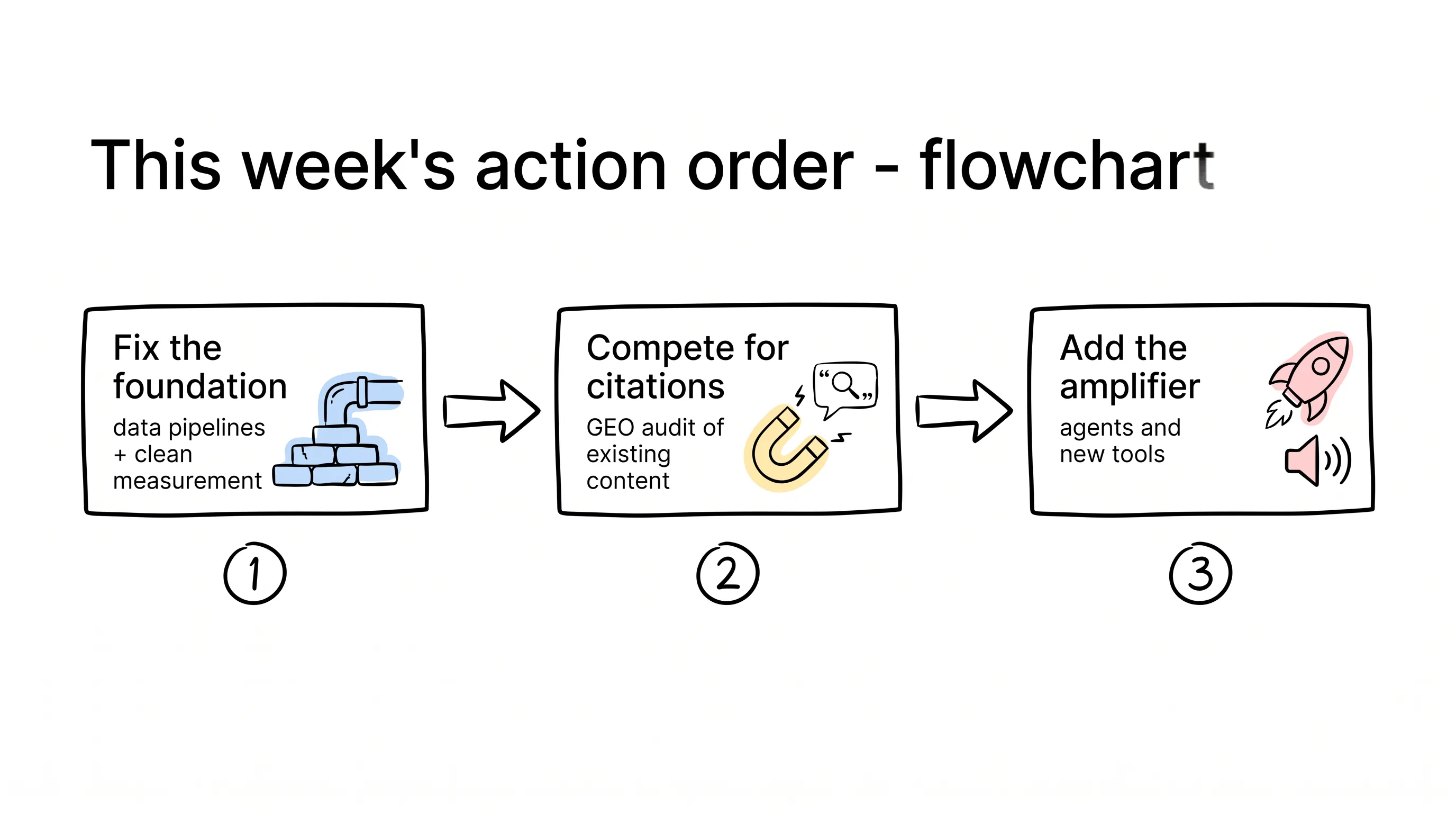
An action ordering for today's reader: fix data pipelines and traffic measurement first (the foundation), then run a GEO audit of existing content (to compete for citations), and only then bring in agents and new tools (the amplifier). Teams that get the order backwards: the more tools they buy, the faster they get things wrong.
The verdict section stays honest as always: vendor pieces and commissioned research make up about 40% of today's 20 — weigh the numbers by their stance before you trust them. What's genuinely worth starting this week: the three prompt actions in the headline story that one afternoon can complete.
Continue reading
Related articles
AI Marketing Daily · 2026-11-22
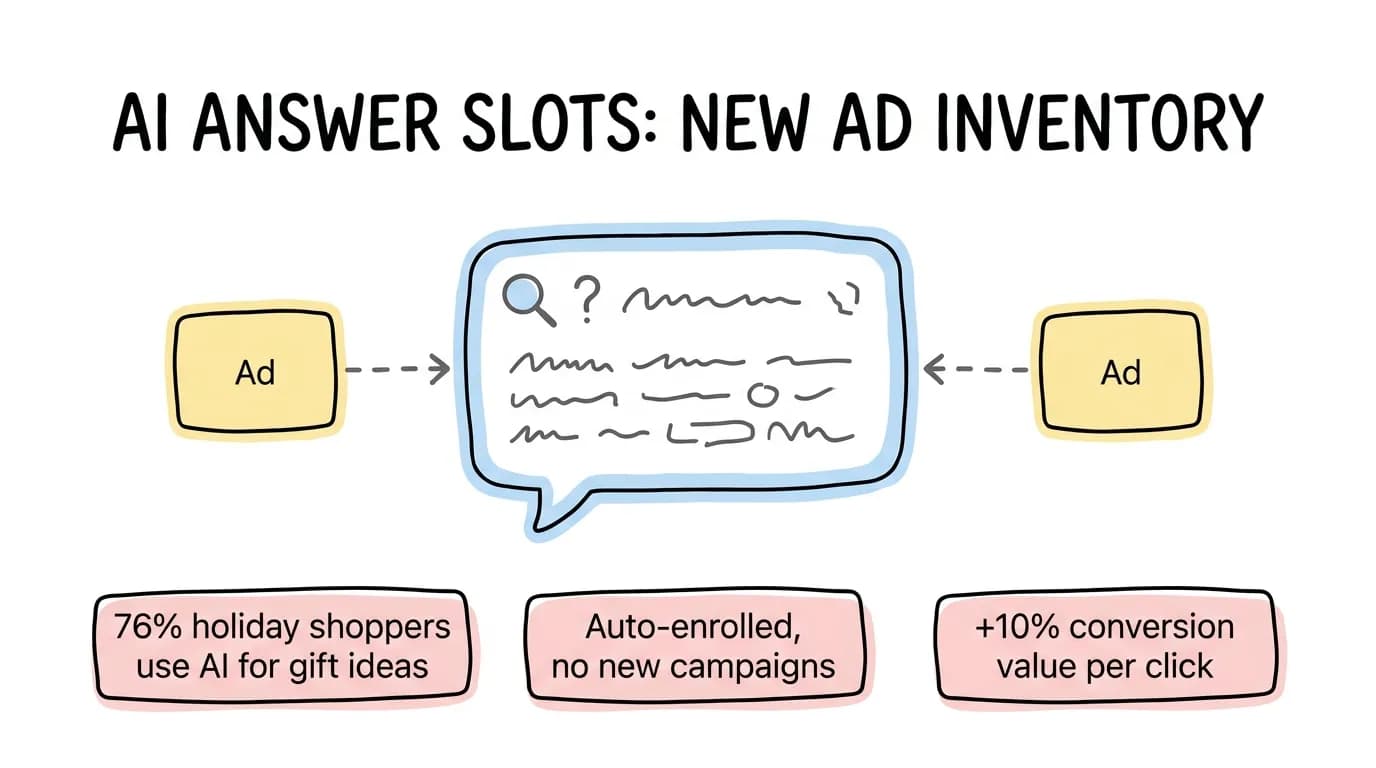
AI Marketing Daily for 2026-11-22 rounds up 20 items led by Microsoft opening Bing AI Overviews to ads and Google expanding AI Mode ads to ten countries, plus GEO guides, ad automation delegation guidance, AI Overviews CTR data, and a legal-risk checklist for AI-generated creative.
AI Marketing Daily · 2026-11-21
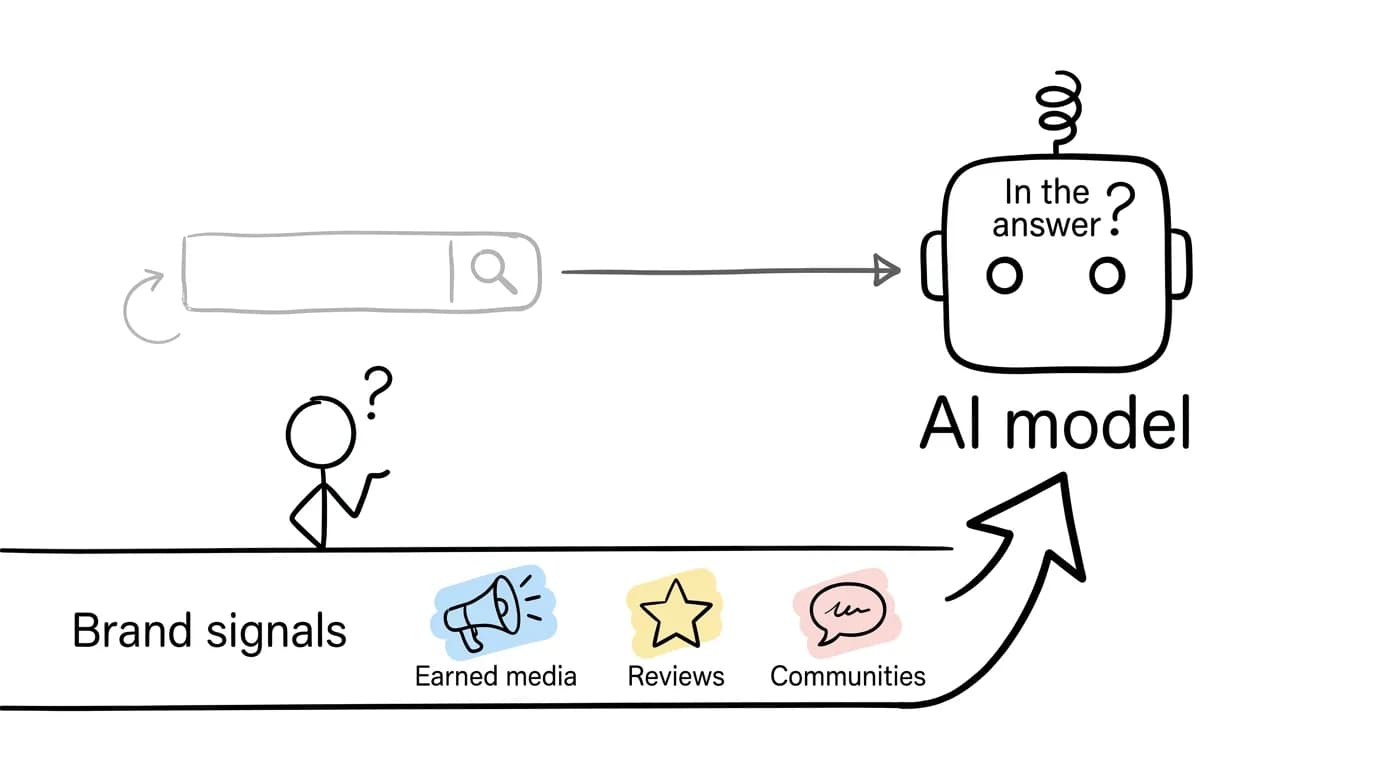
A November 21, 2026 AI-marketing daily covering AI search visibility, GEO methods, Google AI Mode ads expanding to ten countries, Meta's pre-Black Friday changes, agentic shopping, and industry adoption and ROI data.
AI Marketing Daily · 2026-11-20
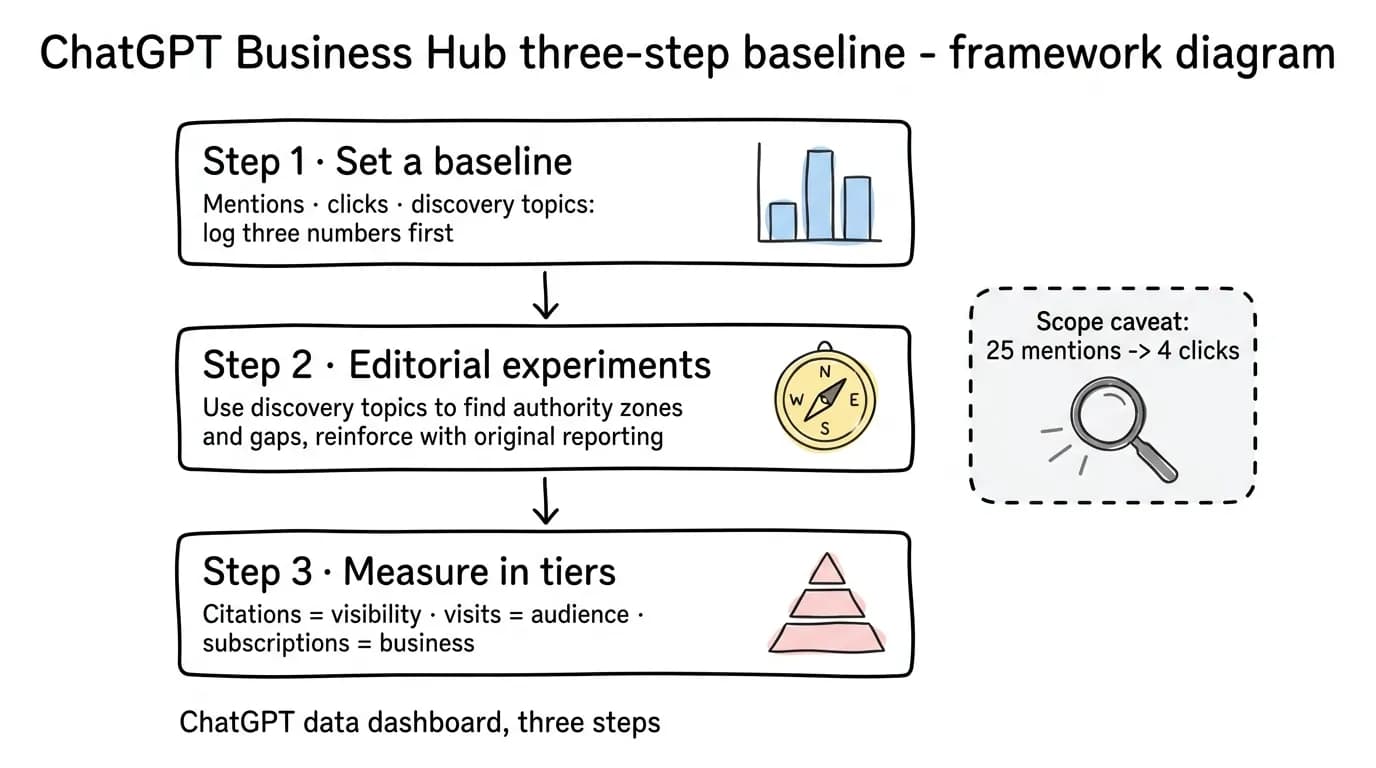
AI Marketing Daily for 2026-11-20 rounds up 19 items centered on measurement: OpenAI's ChatGPT Business Hub dashboard, EU rules for agent-mediated purchasing, Meta pausing four AI terms, and B2B data on shortlists and the dark funnel, each with action advice.