
AI Marketing Daily · 2026-10-08
AI Marketing Daily for 2026-10-08 curates 20 items across AI search visibility (GEO), advertising, platform selection, cross-border e-commerce, and ROI measurement. The headline argues that strategic marketing decisions should stay with humans while AI assists execution.
Today's 20 items carry three threads. The decision-authority thread: MarTech's headline article puts the question bluntly — AI can do the work, but decisions need a human signature. The visibility thread: four GEO-related items appeared the same day; AI search optimization has grown hot enough to start breeding filler content. And there's the ledger thread: platform comparisons, TCO multiples, and ROI worked examples all point to the same move — set up measurement first, then talk about scale. Read this one, and the past 24 hours of AI marketing are all in hand.
🎯 Today's Headline
Stop letting AI make your marketing decisions: don't hand over the steering wheel
What happened
On October 7, US industry outlet MarTech published an opinion piece by the founder of Brick Marketing. He has spent 28 years in digital marketing, founded his own agency in 2005, and served more than 600 B2B and B2C clients. His argument fits in one sentence: AI is for assisting execution; strategic decisions stay in human hands. The article opens with an analogy: buying a dental chair and a full set of instruments doesn't make you a dentist; likewise, being able to prompt AI doesn't mean you understand marketing. He offers a concrete scenario: a report recommending more website traffic sounds reasonable, but if on-site visitors were misaligned with the target audience in the first place, and the pricing page can't explain the offer clearly, adding traffic only makes the same budget spin in circles. Judging whether the recommendation holds depends on knowing who visits and what happens after they arrive — things AI cannot do for you.
Why it matters
The anxiety of handing decisions to AI — almost every marketing team carries it in 2026. The article's response is anything but mystical: knowing how to prompt AI and knowing the business are two different skills. Without business fundamentals, you can't see which premises an AI recommendation leaves out — how long the customer purchase cycle runs, how good audience quality is. The line the article draws is clear: decisions like positioning, priorities, and investment direction stay with experienced marketers; AI fits better at the execution layer — writing ad variants and pitching headline ideas work well — but substantive copy and strategy writing still need a human backstop. For a service with a six-month sales cycle, judging the campaign by a few weeks of short-term data judges it on the wrong terms to begin with.
Impact for marketers
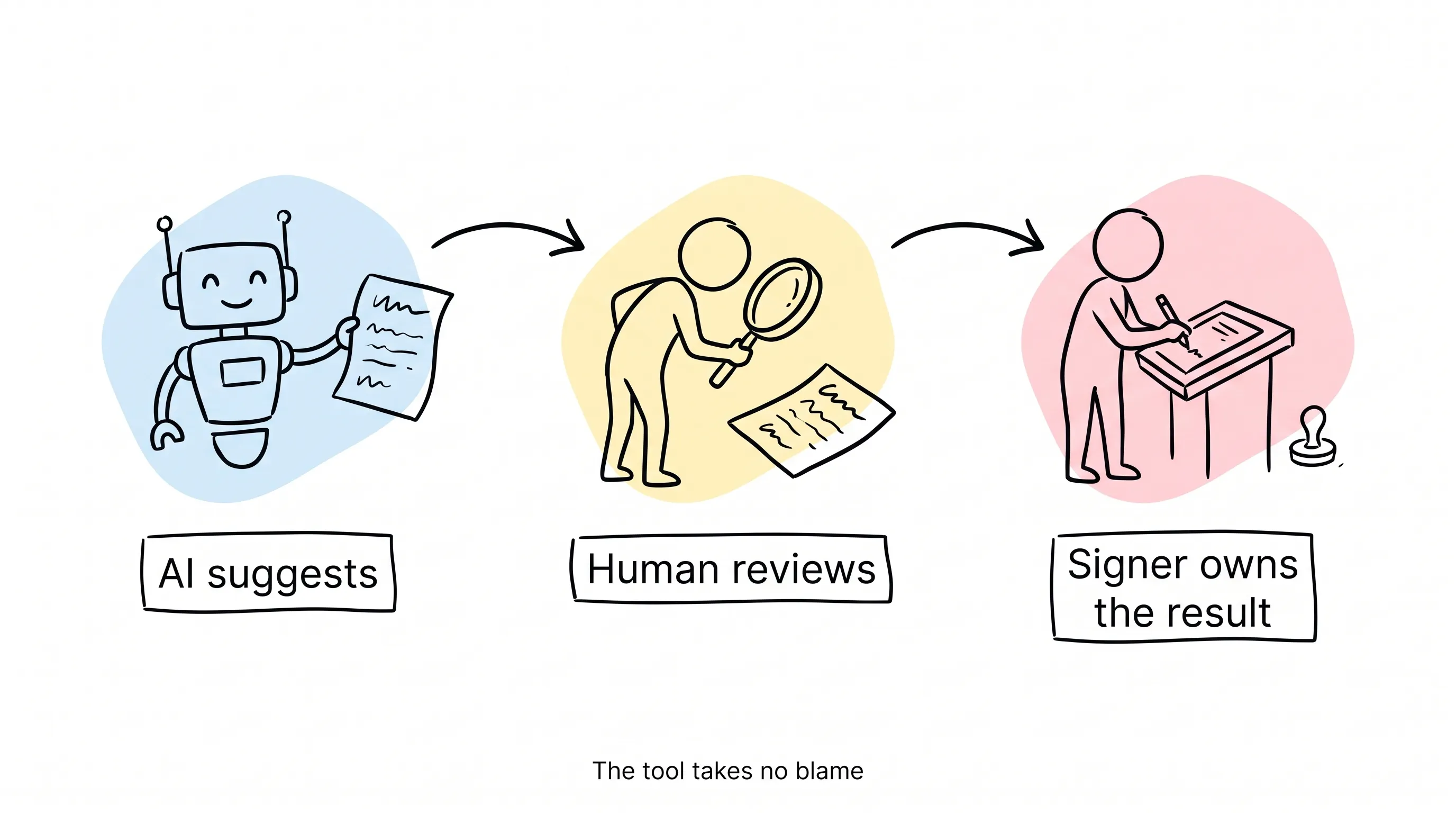
Down at the job level, the article offers a practical, repeatable training routine. When bringing up juniors, have them review a campaign themselves first and spell out what they'd change, then show them the AI's suggestions and compare the reasoning gap between the two sides. Before publishing, a senior person checks accuracy, relevance, and brand voice; junior marketers must be able to explain why they adopted one suggestion and rejected another — if they can't articulate it, they're just ferrying answers. Accountability is stated just as bluntly: when results disappoint, responsibility lies with whoever approved the release — the tool takes no blame. One more warning stings: when counting efficiency gains, include the time spent on review and rework. If drafts come out faster but senior colleagues spend longer fixing them, you've saved nothing.
How to use it
For search-marketing recommendations, the article's process is worth copying outright. When AI suggests publishing more content, ask back first: who do these pages serve, what information is the site missing, and would the added content help visitors decide? Ask AI for the sources behind its suggestions, actually read them, and confirm the source's situation resembles yours — a link plus a confident explanation cannot replace this step. Run changes as a small-scale test first, set expected metrics and a review date in advance, and keep a written record of what changed and why. If you change content, navigation, and contact flows at the same time, you'll never know afterwards which move did the work. The final criterion: when output volume keeps rising but results plateau, go back first — fix pricing, improve existing content, or ask the sales team what customers are asking. Breaking the plateau by having AI produce more usually doesn't work.
My take
Full disclosure: this piece is sponsored content on MarTech, so its stance has a commercial backdrop. But the principles from a 28-year practitioner hold up under scrutiny — the two on accountability and rework cost especially match what teams feel on the ground. Treating the ability to evaluate AI suggestions as a team capability worth investing in is a more valuable direction than arguing over whether AI is any good. An action you can land this week: add one rule to the team's AI usage — every suggestion needs a human signature before execution, and whoever signs owns the result.
🔗 Further reading: Read the full article
🏷 AI Search & Visibility
Google sets the tone: GEO is an extension of SEO, and AI visibility already has an official report
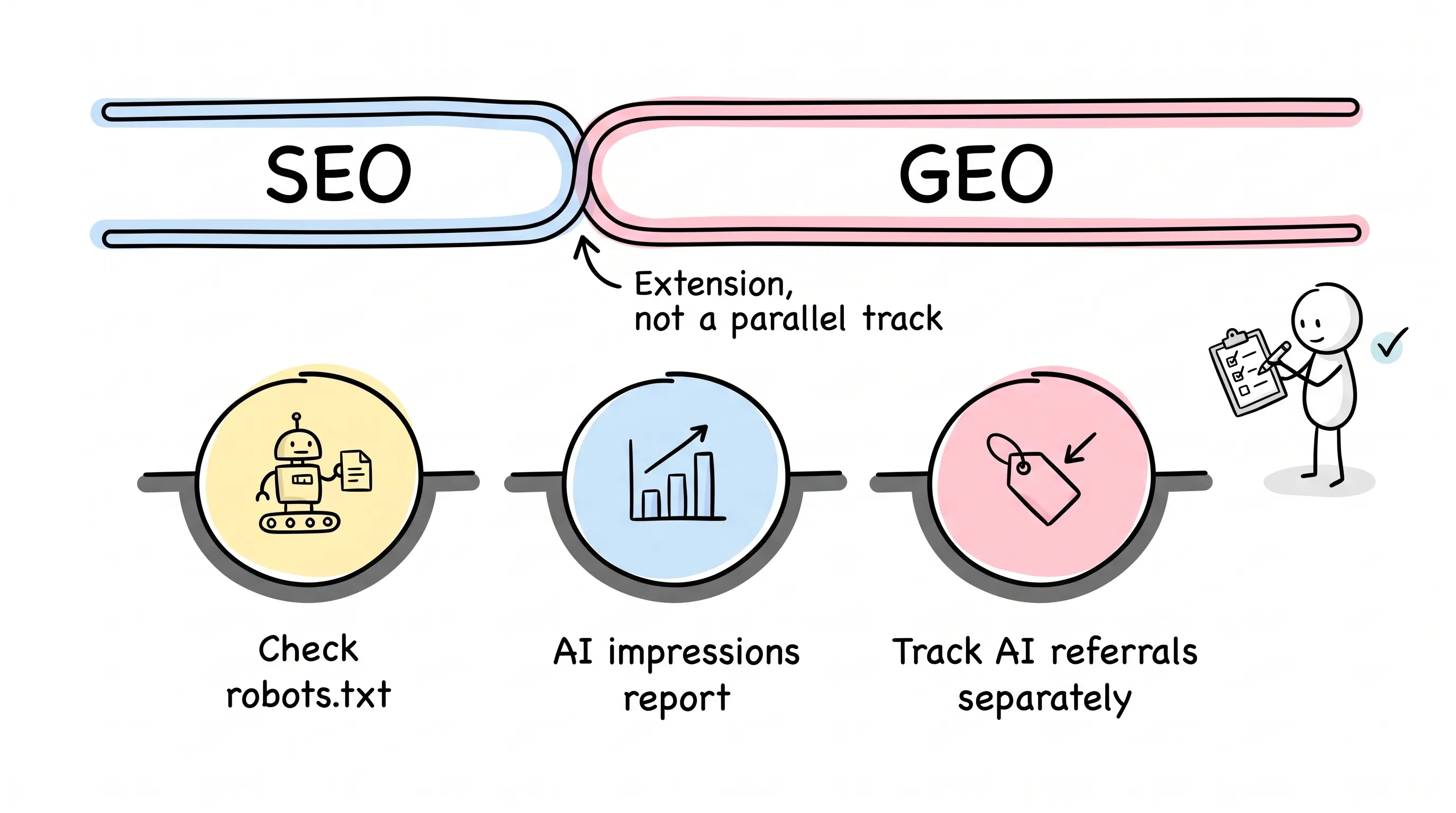
A GEO (Generative Engine Optimization (optimizing content to be cited in AI-generated answers)) practical guide published in September does something rare: it pours cold water first, then gives methods. Citing Google's official documentation, it explains that the AI search experience is built on traditional search's ranking and quality systems, using RAG (retrieval-augmented generation) and query fan-out (spreading one query into many parallel searches) to break questions apart, retrieve from multiple sources, and generate answers — so SEO best practices keep working in AI search, GEO is an extension, not another parallel track. Two items inside are highly time-sensitive: since August 31, Search Console's generative AI performance report is live globally, showing impressions from AI Overviews and AI Mode directly; and to be visible in ChatGPT search, check that robots.txt isn't blocking OAI-SearchBot — referral traffic from ChatGPT carries a utm_source=chatgpt.com tag you can track separately in your analytics tools. The guide also clears up a common misconception: doing GEO guarantees nothing about getting into AI answers; AI visibility must be measured independently, and reusing traditional ranking metrics will mislead.
💬 Three moves for marketing teams this week: check whether robots.txt mistakenly blocks AI crawlers, read the new Search Console report's impression data to set a baseline, and give AI referral traffic its own channel group. For vendors promising guaranteed placement in AI answers, ask one more question before signing: which metrics do you use to verify?
🔗 Further reading: Read the full article
Telehealth's GEO playbook: patients are already using ChatGPT to find doctors
(This item's source has low information density; written from summary and key points.) Tely AI has released a GEO guide for telehealth, and its entry point is the migration of patient behavior: more and more people use ChatGPT and Google AI to find healthcare providers, and healthcare marketing content must stay discoverable and citable by AI engines. The guide unfolds in four steps — understand GEO, implement strategy, measure impact, keep evolving — with the emphasis on content credibility, authority signals, and matching patient intent, for instance having the site answer the high-frequency questions of virtual consultations directly. One cited case claims a clinic lifted follow-up adherence by 30% with personalized SMS reminders; however, the case comes secondhand, retold by a third party, and the original source wasn't given in full.
💬 Healthcare teams can use it as a vertical cross-reference: the patient-intent vocabulary and the authority-signal checklist sections are worth lifting. Tely AI is a content lead-generation vendor, and its methodology is a generic GEO framework applied vertically — don't treat it as an industry standard.
🔗 Further reading: Read the full article
GEO 101 explainer: three signals and a basic action checklist
Spanish digital marketing agency Noergia published a GEO 101 explainer in June 2025, and it's still worth attention today, because many teams have never systematically covered this foundation. The article makes three things clear: GEO targets visibility inside AI-generated answers — a different logic from keyword ranking; when AI engines pick citation sources, they look at three signals — content is understandable, quotable, and the source has authority; and the basic optimization moves are only a few: structured content, building entity and topical authority, and writing in quote-friendly formats. More than a year after publication, some platform details have dated, but the conceptual framework hasn't aged.
💬 People newly taking over SEO or content roles can close their GEO knowledge gap with a twenty-minute read. Teams already doing GEO operations can skip it and go straight to the guide in today's item 3.
🔗 Further reading: Read the full article
A 460-word GEO trends piece: a negative sample for source audits
A GEO trends piece of only 460 words, from signalneural.com. The content is the standard three-piece set: define GEO, claim GEO is the evolution of SEO, advise businesses to start with structured data and topical authority. It cites one data point — a report predicts that in 2027, 65% of queries will be answered by AI-generated content and businesses may lose 40% of organic traffic — but gives no verifiable source. No cases, no operational detail: keyword-bait filler.
💬 Keeping it in the daily report has a use: it makes a negative sample for team source audits. The test is simple — items that can produce sources and data origins go into the bookmarks; conclusions without evidence go on the blacklist.
🔗 Further reading: Read the full article
🏷 Advertising & Agentic Commerce
InMobi co-founder on advertising's next stop: agent-to-agent, and the new KPI is cost per AI interaction
In an ADWEEK conversation, InMobi co-founder Abhay Singhal got concrete about generative AI's next stage in advertising. He expects 2026 advertising to move toward agent-to-agent interactions: AI agents do the research for consumers and filter options by price and style preferences; the final decision is still made by humans, but the entire purchase journey compresses into one interaction layer, and advertising changes from static creative into a conversational interface resembling a sales assistant. Visual AI is another lever: take agentic commerce platform Glance — users instantly see themselves wearing the clothes. For apparel, furniture, home goods, and pet supplies — categories that historically underperformed online — AI-generated visualization removes the imagination cost, and campaigns clearly earn higher returns. He also tempers the enthusiasm: running models on every interaction in a massive-impression environment burns serious money. InMobi's answer is to let ad revenue subsidize token costs; in early tests, this model can be net positive for publishers. Mapped to the marketing side, this adds a KPI layer: cost per AI interaction and token efficiency — creative quality now directly affects the sustainability of the infrastructure.
💬 Paid-media teams should add a cost-per-AI-interaction column to next quarter's report — nobody calculates it yet, so whoever calculates first gets negotiating leverage. Creative teams should move from placement thinking to conversation design and treat creatives as guided experiences; platforms with virtual try-on capability should test apparel and home categories on a small budget first.
🔗 Further reading: Read the full article
AI marketing cases that won in 2026: the commonality is discipline, and what you can copy is the process
A roundup of 2026 AI marketing cases picked ten that genuinely moved business metrics. Coca-Cola customizes creatives to events happening that week in each market, so the same brand carries different relevance in different places; Nike uses predictive targeting, pushing recommendations and offers before the consumer acts; Spotify turned the AI DJ into the marketing itself — users post their listening experiences on social media unprompted, and the product carries part of the reach on behalf of paid campaigns; Heinz invited users to generate images with the word "ketchup," and no matter which tool they used, most images came out looking like a ketchup bottle — generative technology proving brand recognition in reverse; Amazon and L'Oréal show real-time bid optimization and a personalized skin journey from discovery to purchase, respectively. The winners' common traits the roundup distills are worth memorizing: sharp goals, actionable data, humans set strategy and let AI amplify creativity. The piece also admits that most cases' performance numbers lack first-hand sources.
💬 When benchmarking, don't copy the case numbers — copy the discipline: set one measurable goal, confirm the data is available, and only then bring in tools. Small and mid-size brands should start from the smallest move — localize a batch of creatives and run variant tests; the cost stays contained, and you scale after it works.
🔗 Further reading: Read the full article
Are Google Ads and Meta Ads obsolete? What's obsolete is manual bid adjustment
(This item's source argues thinly; written from summary and key points.) A blog post by Indian service provider ClickZap poses the question: are Google Ads and Meta Ads becoming obsolete? Its reasoning: AI advertising can understand intent at scale, personalize in real time, and allocate budgets predictively, while manual optimization can't keep pace with data changes. The whole piece stays at the level of general claims — no first-hand data, no verifiable cases — service-provider lead-gen content. But it hits a real nerve: the media buyer's daily work is being eaten by platform automation.
💬 The platforms aren't obsolete; what's obsolete is the purely manual way of adjusting bids. The time buyers save should go to two places: creative testing and audience structure design — automation can't replace either, and both decide the account's ceiling.
🔗 Further reading: Read the full article
🏷 Marketing Tools & Platform Selection
B2B marketing automation platform comparison: pricing, ecosystem changes, and attribution blind spots explained in one piece
A 2026 comparison of B2B marketing automation platforms (MAP (software that runs email, lead nurturing, and campaign workflows at scale)) is the densest selection article in recent memory, covering both pricing and ecosystem changes. HubSpot Marketing Hub's public pricing runs from Starter at $7 per seat to Professional at $800 per month for three seats plus a separate $3,000 onboarding fee, and Enterprise at $3,600 per month plus a $7,000 onboarding fee; since April, its two Breeze agents price by outcome — $0.50 per resolved service conversation, $1 per recommended outbound lead. Marketo remains solid for enterprise demand generation but requires a dedicated administrator; Pardot's risk is the roadmap — Salesforce is directing new investment toward Marketing Cloud Next and Agentforce Marketing, so new buyers must ask exactly which product's future they're purchasing; Eloqua's native Salesforce connector was retired in November 2025, forcing existing customers to migrate. At the industry level, a survey of 207 practitioners found the MAP replacement rate fell from 31% to 19%, while cost-driven replacements jumped from 23% to 44%; the team's conclusion: swapping the sending platform won't fix the reporting problem. Two attribution cases in the article sting: one company logs 500 to 2,000 outbound-call records per week as MQLs (marketing qualified leads), more than 400 of which nobody ever followed up; another loses attribution on 90% to 95% of ad clicks after landing — all of it showing up in Salesforce as direct website traffic. Note that the end of the article is a RevSure plug — what it sells is a context layer.
💬 For selection, look at your own CRM first, then team size; take the price sheets home and reconcile them against your touchpoint list. One rule matters more: any MAP can only attribute its own touchpoints — don't take its reports to answer the CRO's questions about pipeline; the answer to that question lives in no single platform.
🔗 Further reading: Read the full article
The four pillars of MAP selection: attribution needs 60 to 120 days of data governance, and TCO is two to three times licensing
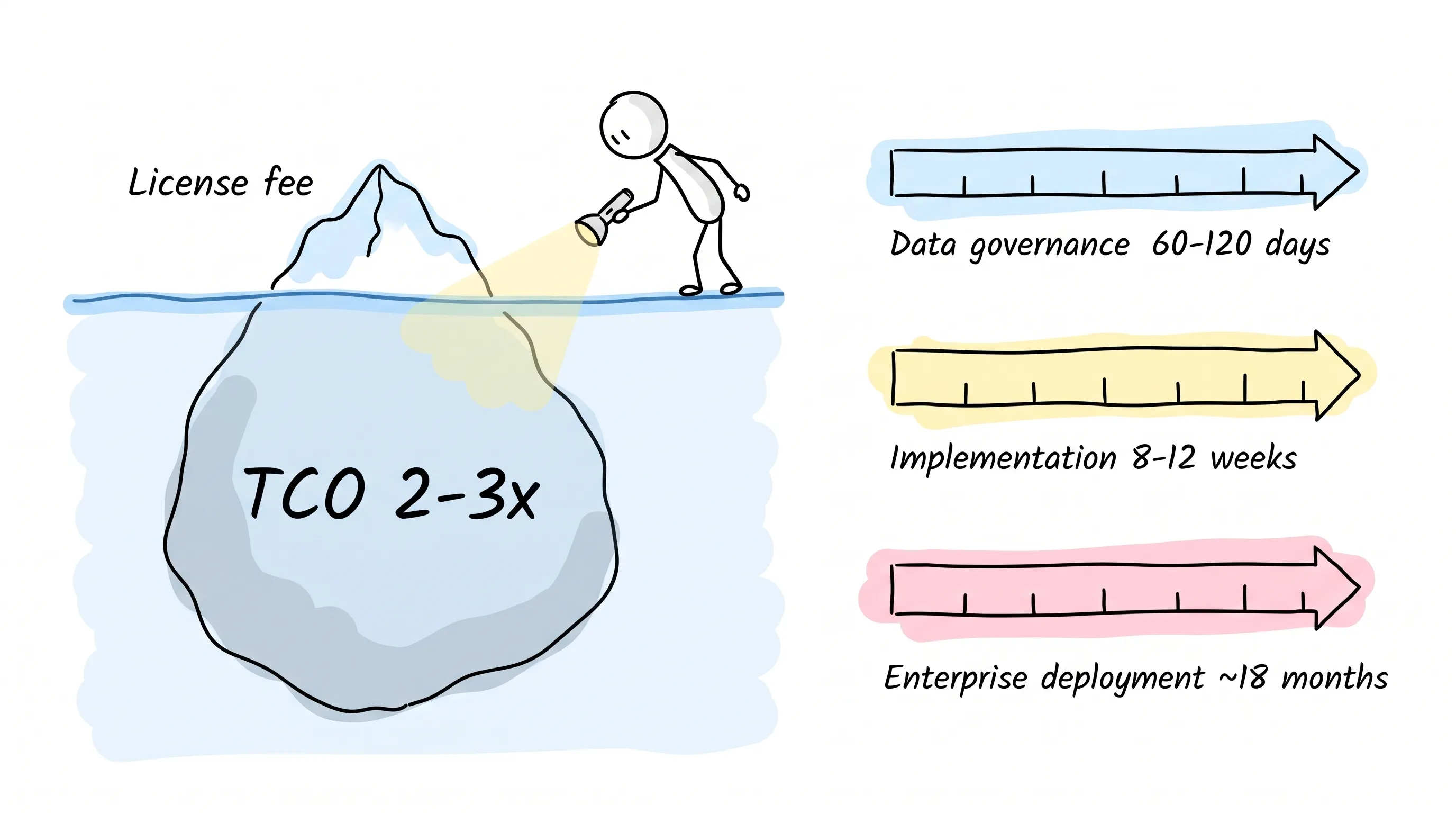
Another MAP selection article takes a different angle, offering a four-pillar evaluation framework. Pillar one is lead scoring, where AI-predictive beats fixed rule-based — the model ingests engagement, profile, intent, and behavioral signals together and keeps learning; pillar two is ABM (account-based marketing) and intent-data capability; pillar three is attribution accuracy, and the numbers here are the sharpest: defensible pipeline attribution requires at least 60 to 120 days of CRM data cleanup, reconciled with finance's revenue-recognition definitions — teams that underestimate this step will overestimate how fast ROI lands; pillar four is AI-search citation visibility, which no existing MAP covers natively and which must be built separately on the content side. The cost expectations are just as blunt: TCO (total cost of ownership) is usually 2 to 3 times licensing fees, mid-market implementation takes 8 to 12 weeks, and the median enterprise deployment is 18 months. The end of the article likewise carries its own product promotion.
💬 Write the 18 months and the 2-to-3-times TCO into next year's budget request, so the boss doesn't read the investment as one year of software fees. When scheduling the attribution project, do two quarters of data governance first — cut that corner, and every report afterwards is vanity numbers on paper.
🔗 Further reading: Read the full article
July e-commerce tool radar: agentic AI enters PIM, and cross-border payments accelerate localization
A batch of global e-commerce tool moves from July deserves a scan. On the product data management side, Akeneo launched the agentic AI assistant Ziggy, which auto-completes product attributes, standardizes catalogs, and generates localized descriptions; the vendor claims it saves 70% of the manual work. On the B2B sourcing side, Alibaba's Accio hands the whole flow — finding suppliers, requesting quotes, comparing prices, negotiating — to agentic AI, lowering the cross-border bar for small and mid-size buyers. On the payments side, Shift4's One platform unifies multi-country processing, and Payfuture connects to India's UPI (India's unified instant-payment system) and Paytm. On platform architecture, a comparison article clarifies two routes: Shopify Markets is one store across multiple markets, automatically handling currency and tax compliance — right for single-brand DTC teams; BigCommerce Multi-Storefront is multiple storefronts sharing one back office — right for companies running independent brands by region. Data points: Shopify's cross-border GMV grew 30% in Q1 2026; after DoorDash and Shopify connected, early-adopting offline retailers saw local sales rise 20% in the first month. Separately, Amazon opened Seller University's courses to the public.
💬 Cross-border teams should pick the platform route by brand architecture first, then talk tools. If your PIM holds a lot of product data, pilot an agent like Ziggy on attribute completion — one week shows how much manual work it saves; if you're selling into India, prioritize connecting local payment rails.
🔗 Further reading: Read the full article
Salesforce's four-layer e-commerce AI framework: a layered self-check is more useful than citing its numbers
Salesforce's 2026 e-commerce AI survey gives the most complete technology layering. NLP handles conversational customer service, sentiment analysis, and virtual shopping guides; machine learning covers personalized recommendations, demand forecasting, and dynamic pricing; generative AI handles product copy and creatives; agentic AI takes on autonomous execution, positioned as an infinite workforce running repetitive operations across systems. Front office and back office benefit at the same time: the front gets upgraded experiences in recommendations, search, and customer service, and the back gets upgraded decisions in forecasting and pricing. One reminder: this is brand content, and much of the industry data it cites comes without source anchors — treat the numbers as reference only.
💬 Use the four-layer framework as a one-time self-check: for each layer, mark what your team runs and where the gaps are; half an hour of diagramming sets next year's priorities. Don't copy its numbers into external reporting.
🔗 Further reading: Read the full article
🏷 Cross-Border E-Commerce & Localization
Hyper-localization has reached the infrastructure layer: the same hardshell jacket talks commuting in Tokyo and mountaineering in Seattle
A 2026 e-commerce hyper-localization guide takes the concept down to the infrastructure layer. Take away one distinction first — translation versus cultural-semantic rewriting (transcreation): for the same jacket SKU, the page for the US Pacific Northwest talks Gore-Tex breathability and mountain layering, while the page for Tokyo's rainy-season users talks light commuting, easy packing, and a look that doesn't clash with office wear — selling points regenerate per market, and language conversion is only a by-product. Trigger variables are now fine-grained down to the weather level: in one example in the guide, a Toronto warehouse sits on a down-jacket backlog after a warm winter, and AI automatically triggers a regional markdown, generates cold-snap stocking copy, and launches regional ads — no human intervention anywhere in the loop. The prerequisite for landing this: the content system must be wired to catalog, inventory, pricing, and regional business rules — otherwise you get accidents like AI marketing goods still sitting on a cargo ship. Two data points: a DHL report finds nearly one-third of consumers willing to hand everyday shopping to AI agents, so brands must serve human buyers and machine buyers that read structured data at the same time; and research from Columbia Business School pegs AI's productivity gains at about 6% of global e-commerce per-capita revenue growth, with small sellers gaining more than giants. Industry practice has shifted from pure generation to controlled generation — the gatekeeper model reviews first, then a human edits.
💬 Cross-border teams should build the regional business-rules library and wire inventory and pricing into the content system before talking about micro-storefronts in the millions. Letting AI draft the first pass of cultural-semantic rewriting is fine, but the final review of idioms and taboos must stay human — one blow-up there costs far more than all the work-hours saved.
🔗 Further reading: Read the full article
Cross-border AI use cases and the numbers underneath: 70% cart abandonment, and AI pricing lifts gross margin by up to 22%
An AI application overview for cross-border sellers carries the densest numbers of today's 20 items. The market base: Precedence Research puts global cross-border e-commerce at about $551 billion in 2025, compounding at 15.44% a year; Capital One's research says cross-border transactions are about 20% of global e-commerce, and 59% of consumers have bought goods from abroad. Friction concentrates at checkout: Baymard measures the average cart abandonment rate at 70.22%, higher still for cross-border settlement — tariff surprises, unfamiliar payment methods, and unclear delivery windows all push churn up; in the survey by PYMNTS and Citcon, 41% of merchants lacking Asia-Pacific local payment methods lost more than 60% of sales. All four of AI's benefit lines come with numbers: content localization delivery speeds up 60% and costs drop 40 to 50%, though cultural idioms still need human review; dynamic pricing adjusts on exchange rates, taxes, and competition, lifting gross margin by 5% to 10%, with an extreme case reaching 22%; automatic HS-code (Harmonized System customs classification) classification plus landed cost calculated clearly at checkout directly cuts abandonment; and one Chinese platform's self-service customs clearance compressed cross-border parcel processing from 72 hours to 18 hours. On the anti-fraud side, 25% of companies lost more than €1 million to cross-border payment fraud in 2023, AI risk control cuts card-testing attacks by 80%, and the false-positive rate in smaller-language markets remains on the high side.
💬 Cross-border teams should set priorities by working backward from cart abandonment: calculate landed costs and connect local payments first — those two claw back several points directly from the 70% abandonment rate — then localize content. Keep idiom review with humans, and validate the pricing model in one market before rollout.
🔗 Further reading: Read the full article
A secondhand retelling of 2026 digital retail trends: generative AI leads, and social commerce becomes a must-win channel
A digital retail media outlet retold Exploding Topics' 2026 business trends report. Generative AI lifting commerce productivity ranks first, with related applications expected to drive more than $10 billion in consumer spending in 2026; on social commerce, TikTok Shop and Instagram Shopping are already unavoidable sales venues for cross-border brands; logistics innovation and sustainability have moved from bonus points to competitive variables. The report also gives regional differences: European and American consumers reward personalization and sustainability more, Asian markets lead on social commerce and live shopping, and e-commerce infrastructure in the Middle East and Latin America is improving fast. Note that the whole piece is a secondhand retelling, with no independent incremental evidence.
💬 Scan it once as a trend radar and move on; when writing proposals, don't forward secondhand numbers — if you want to cite, go back to Exploding Topics' original report and verify the definitions. The regional-differences section is a useful reference for sequencing your overseas market entry.
🔗 Further reading: Read the full article
🏷 Data, ROI & Compliance
The honest way to account for marketing AI: 40% saved on the surface, only 11% after counting rework
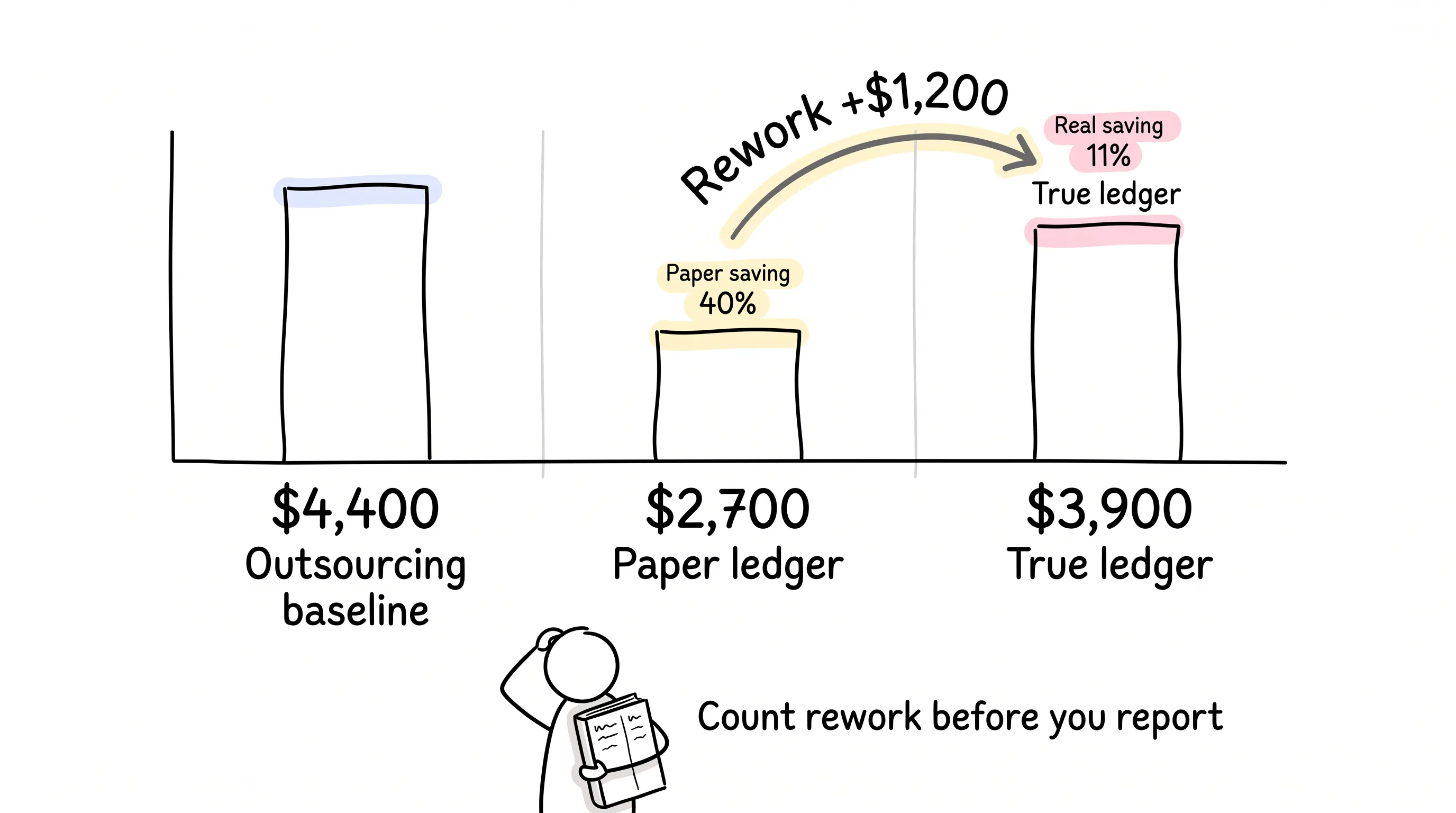
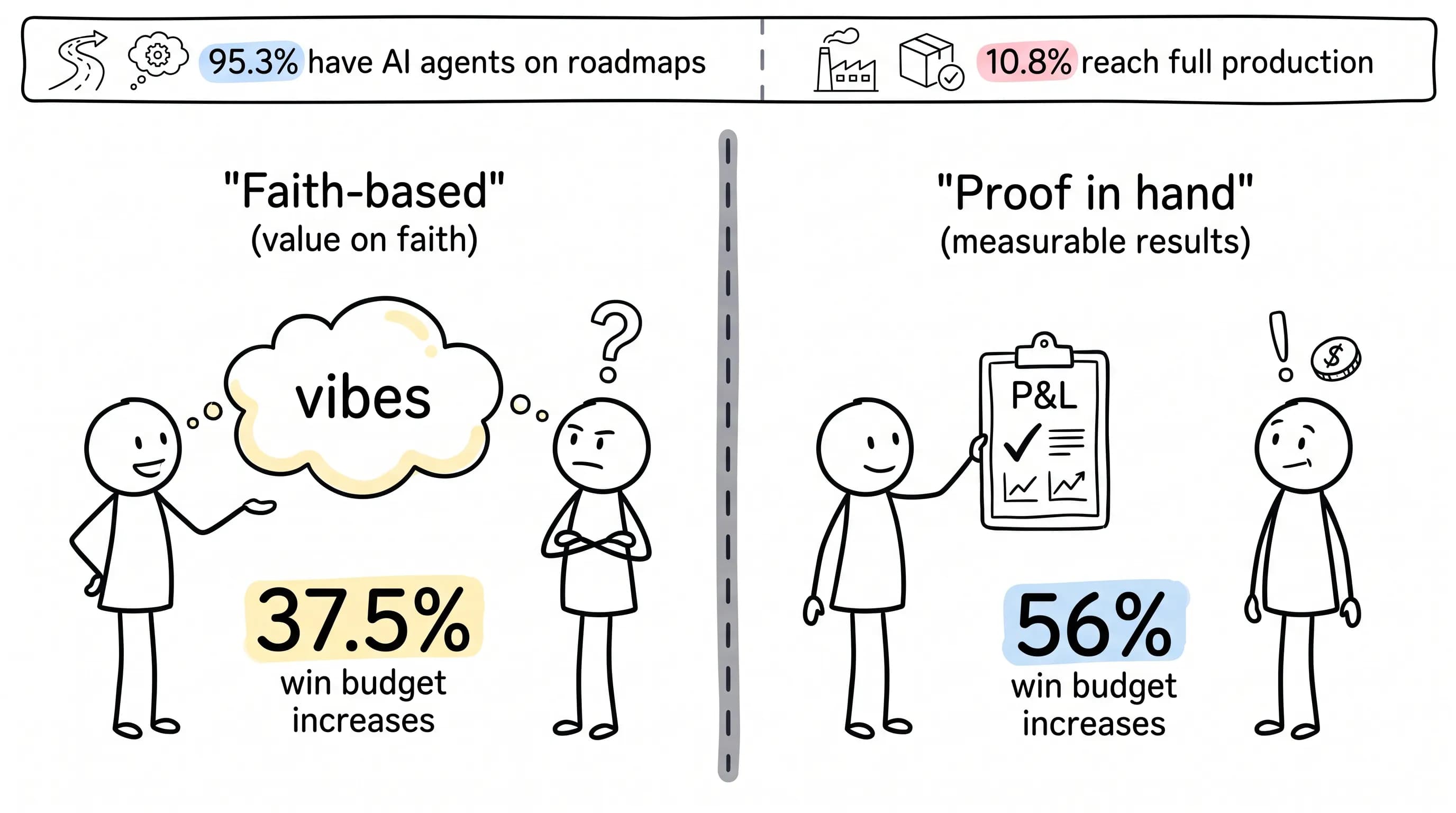
Is the money spent on marketing AI actually worth it? A conference-preview piece delivers math you can run this week. Larridin's 2026 state-of-enterprise-AI report surveyed executives at 365 thousand-person-scale companies: 92% of the C-suite is confident about AI's impact, but 58.2% say unclear ownership or fragmentation is the biggest obstacle to measuring performance, and 62% can't produce a complete list of AI applications in use. Confidence is running ahead of evidence — the most valuable set of numbers in the whole piece. The worked example is worth lifting: a five-person content team produces 8 blog posts a month; outsourcing costs $400 per post plus $150 for editing — $4,400 a month. After switching to AI, the surface ledger reads $300 in tools plus $2,400 in labor — $2,700 total, a 40% saving. Count the $1,200 of human time spent on fact-checking and rewriting, and the true cost is $3,900 — an actual saving of 11%. The narrative shifts from "AI cuts 40% of costs" to "rework is eating the time" — and only the latter points at problems you can fix, like improving prompts and improving briefs. The advice on shadow AI is pragmatic too: don't just ban it. Ask the team what they're using and what friction it removes — the inventory and the good workflows are often hiding in the answers.
💬 Build one table this week: three columns fully listed — tool fees, human time, rework time — replacing the surface accounting with the honest one. At the next budget review, the person who can answer "11%" and the person who answers "40%" command completely different credibility in front of the CFO.
🔗 Further reading: Read the full article
A snapshot of 58 generative AI statistics: the bottleneck has shifted from tools to measurement
Digital Silk compiled 58 public generative AI statistics and distilled eight major trends: market size expanding, tool availability increasing, job listings adding GenAI skill requirements, consumer use concentrated in search and content scenarios, enterprises experimenting widely but lacking formal measurement frameworks, workflow integration accelerating, governance and accuracy still challenged, and search result pages accelerating toward AI summaries. The most actionable is the measurement gap, which corroborates the ROI item above: everyone is using it, nobody can account for it. One reminder: this is a PR Newswire release — secondhand aggregation, no first-hand research — so trace any single figure back to the original study before citing.
💬 Use it as a citation index: when writing internal reports, follow the map back to the primary data. If you need a one-sentence snapshot for the boss: the enterprise AI bottleneck has shifted from finding tools to building measurement.
🔗 Further reading: Read the full article
How to read real-time personalization cases: fix the payment flow first, then talk about mind-reading recommendations
A blog post by WSI covers real-time personalization: AI reads intent, context, and emotion, and adapts recommendations, offers, and content at the moment the touchpoint happens — a different generation of practice from segmenting audiences after the fact. Both case numbers in the article are self-reported: a retail client used real-time personalization to lift engagement by 156%; FMGsuite, a financial-marketing software, revamped its e-commerce experience — a 40% load-speed gain brought a 30% conversion lift, 25% fewer payment errors added 15% more successful transactions, and after connecting to Salesforce, manual entry was cut in half. The method detail is middling and the numbers have no third-party validation — read them for direction only.
💬 The correct way to use self-reported cases is to borrow the sequence: do the deterministic optimizations first — load speed, payment flow — where returns are immediate, then take on a heavy-investment project like real-time personalization. Reverse the order and you're just burning money.
🔗 Further reading: Read the full article
Zappi's Forrester TEI: insight platform returns must be counted on four separate lines
The Total Economic Impact (TEI (Forrester's commissioned cost-benefit study framework)) study Zappi commissioned from Forrester came out in May 2025 and reflects a commissioned methodology, but its line-item structure is still worth borrowing. The composite organization is a global consumer-goods company with 7,000 employees, $5 billion in annual revenue, and 15 insights specialists; over three years it achieves 243% ROI, $7.5 million net present value, and payback in 6 months. Broken down: test-then-scale advertising lifts ROAS by 5% to 6.5%, worth $3.3 million; new-product revenue rises 4% to 7%, worth $4.1 million in profit; research costs fall 40%, saving $2.6 million; and the insights team saves 10% to 15% of its time. Interviewees added gains on the time dimension: a food-and-beverage company said that versus the two-week execution cycles of traditional research agencies, it has cumulatively saved 30 weeks of dead time. Forrester research from the same period says consumer-centric companies grow revenue 41% faster and profit 49% faster.
💬 If you're building the budget case for an insight platform or consumer testing, borrow its line-item structure: count ROAS, new products, costs, and hours on four separate lines — never report a single blended ROI. When citing, note that it's commissioned research, and don't carry the 243% figure straight into your own business plan.
🔗 Further reading: Read the full article
GDPR social media compliance checklist: AI-generated creatives must pass the same review
Sprinklr published a GDPR social media marketing compliance guide in September 2024 — dated in time, but still useful for teams targeting European markets. Three baselines: consent management — collecting and processing user data requires explicit authorization; data minimization — take only the information the purpose requires; purpose limitation — data gathered for one purpose can't be moved to other uses. The article also lists specific moves targeted advertising and user profiling should avoid, such as retargeting without consent. The layer to add today is AI: creatives trained on user data or personalized through generation fall inside the same framework — don't bypass compliance review just because the content was produced by AI.
💬 Teams running European social campaigns should run their existing targeting settings through the forbidden-moves checklist. Add a data-source review to the AI creative process — it costs ten minutes, against fines that run up to 4% of global revenue or €20 million; either figure is more than a team can absorb.
🔗 Further reading: Read the full article
💡 Today's Overview
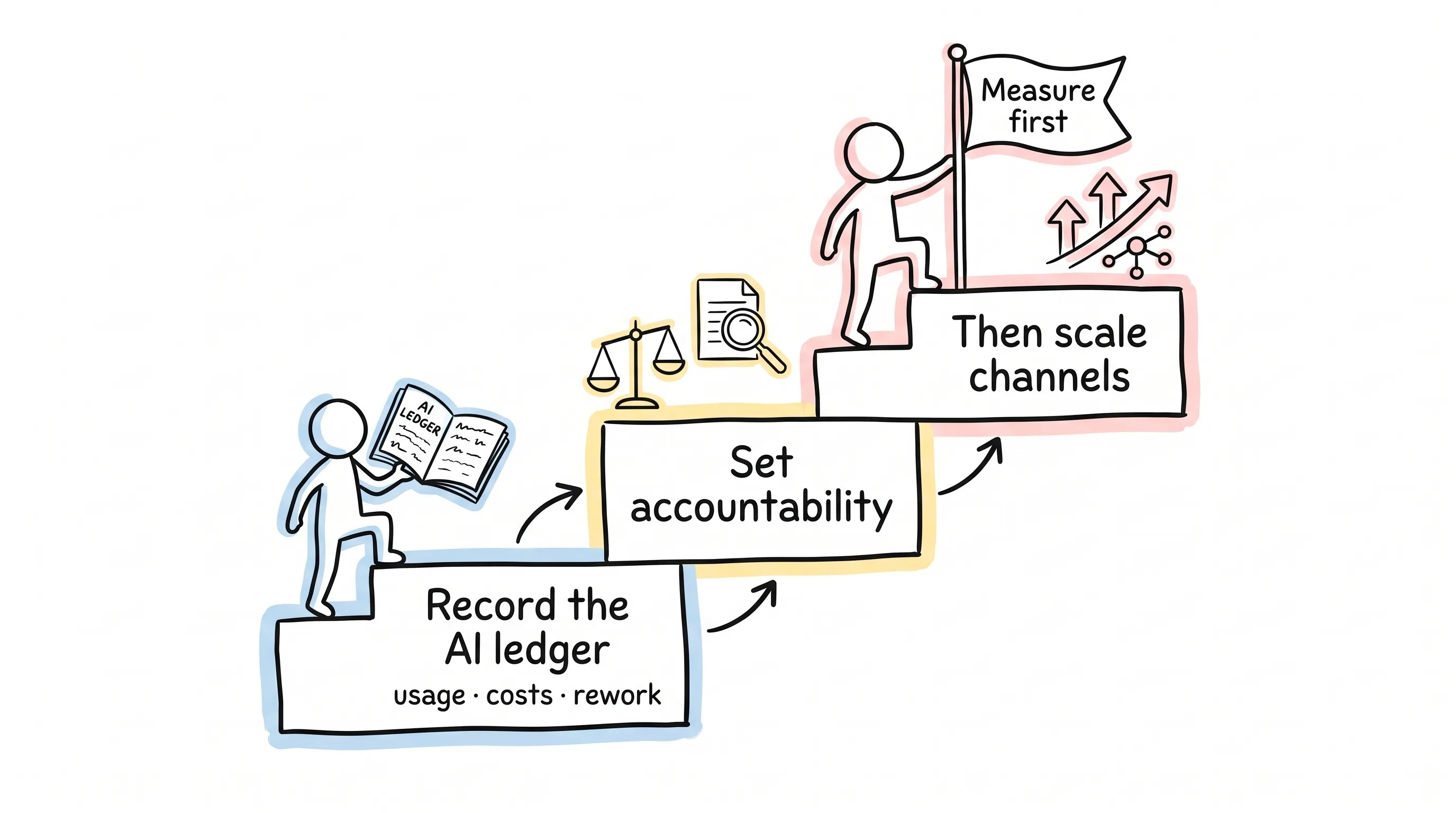
Thread today's 20 items together and one word remains: the ledger. The headline is about the ledger of decisions — whoever signs owns the result; the ROI item is about the ledger of costs — 92% confidence doesn't square with 58% measurement capability; the two MAP items are about the ledger of pipeline — any platform sees only its own touchpoints clearly; Zappi's TEI and WSI's cases are about the ledger of returns — only itemized counting survives questioning. The more AI gets used, the more dangerous the measurement gap becomes — the hidden line running under every item today. Another visible line is touchpoint migration: four GEO items appearing the same day means AI search visibility has entered the hands-on phase — and grown hot enough to start breeding filler content; agent-to-agent advertising and the willingness to hand everyday shopping to AI agents both say machines are becoming a new audience. The advice for marketers converges into one sentence: spend a week first recording AI usage, costs, and rework time clearly; establish accountability and measurement, then expand into new tools and new channels. Reverse the order, and next year's reports will claw back every bit of today's optimism. Continuity points worth watching tomorrow: Search Console's AI impressions report becomes a new monthly-review section; the budget window for MAP selection is opening with earnings season; and peak-season stocking leaves cross-border teams little time on local payments and landed-cost calculation. Today's action list is short — check the crawlers, record the AI ledger, calculate landed costs; all three together take less than a day. What's always been missing is not tools; it's actually putting it on the calendar.
Continue reading
Related articles
AI Marketing Daily · 2026-10-10
Nine stories today, one clear throughline: AI is already on the budget sheet, while most teams still can't produce the evidence.

AI Marketing Daily · 2026-10-09
AI marketing daily for 2026-10-09 covering 11 items: brand measurement moving from survey panels to search, social, e-commerce, and AI prompt signals; GEO and share of model playbooks; safety guardrails for agentic ad buying; and tool roundups for ad platforms, cross-border tools, and social media uses.

AI Marketing Daily · 2026-10-07
Today's throughline is answer engine optimization (AEO — getting your brand quoted in AI answer engines).