
AI Marketing Daily · 2026-09-20
AI Marketing Daily for 2026-09-20 rounds up 11 items on AI marketing maturity, Meta ad automation, measurement methods, personalization tools, GEO, and AI compliance red lines for marketers.
Today's 11 items carry one through-line: the contest in AI marketing has shifted from "who is using tools" to "whose systems can actually run." HubSpot's survey of 1,700 marketers breaks the gap into six moves you can copy; Meta is pushing ad delivery toward full automation while buyers scramble to find the off switches; Windsor and VWO hand you the measurement definitions and the tool shortlist; and on the going-global front, brands are re-running the math on AI. Start with the top story, then pick sections by role. Anyone who touches customer data should jump straight to the compliance item.
🎯 Today's Top Story
90% of marketing teams adopted AI — without results to show. HubSpot's research breaks out six moves
What happened
On September 16, the HubSpot Marketing channel published a 14-and-a-half-minute video built on the 2026 State of AI survey, which covered more than 1,700 marketing professionals. It opens with an uncomfortable number: only 10% of marketing teams are using AI to transform how the business runs; the other 90% are using it too — with unremarkable results. The gap comes down to maturity. The video offers a four-stage self-assessment — early, emerging, established, transformational — and pairs each stage with one starting move.
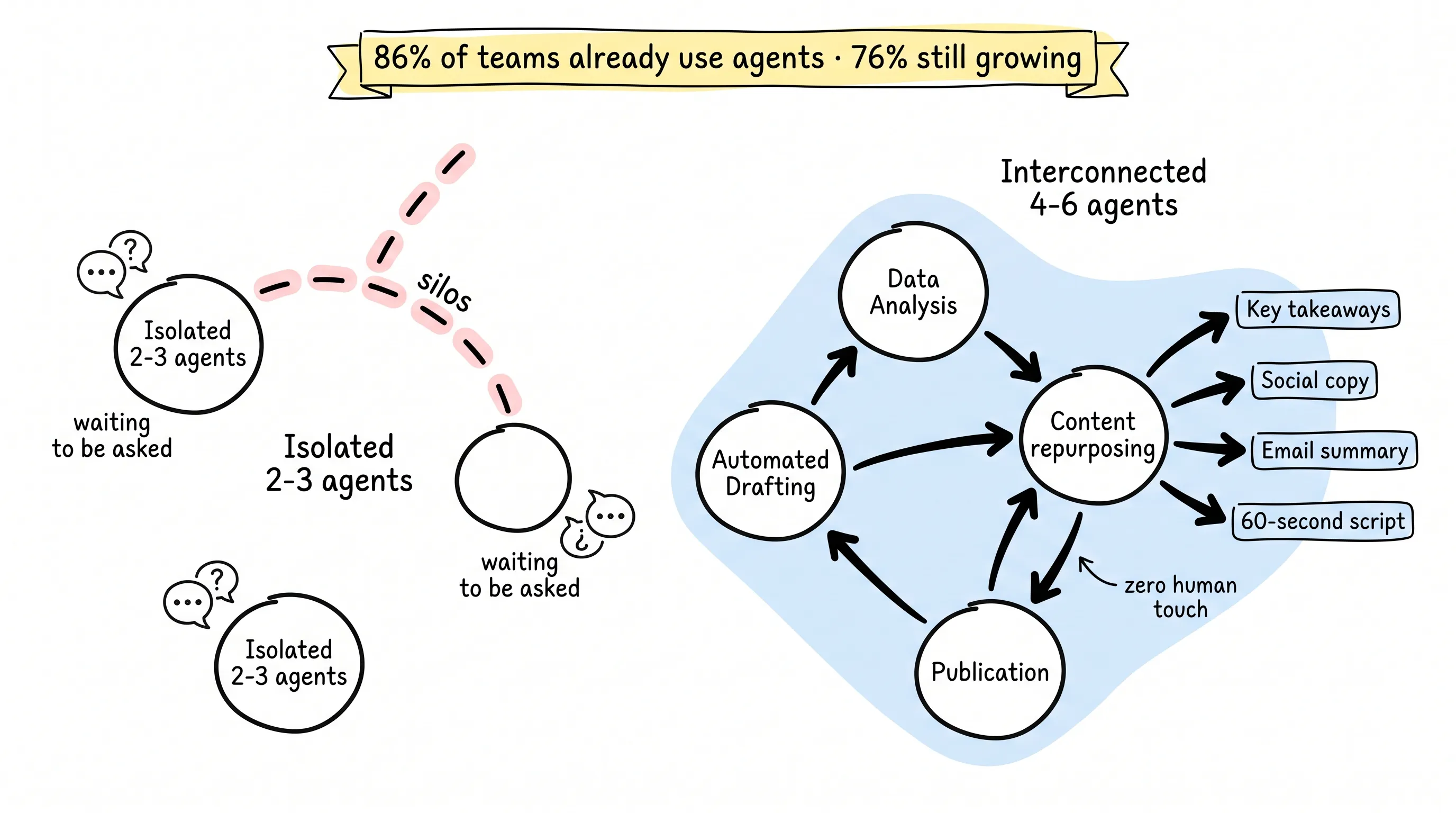
The six trends come dense with numbers. AI agent workflows: 86% of marketing departments already use agents, and 76% say usage has kept climbing over the past six months; top teams run systems of 4 to 6 interconnected agents, while most teams stall at 2 to 3 isolated ones. It also hands you a working definition, almost in passing: a tool waits for you to ask; an agent doesn't wait — it runs the process to completion on its own. Data: only 25% of teams rate their own data quality as excellent. Skills: only 15% of companies have written AI skill requirements into policy, yet 35% already assess those skills implicitly inside hiring, performance reviews, and pay; meanwhile 53% of marketers worry to some degree that AI will affect their jobs. Feedback loops: 27% of marketers name speed and agility as AI's number-one improvement.
Why it matters
Last year everyone asked "are you using AI?"; this year the question is "what results are you getting?" The survey frames the gap as a maturity problem, and a tool list won't fix that. The 25% data-quality figure stings the most: most teams feed AI bad inputs, then complain about mediocre output. The mismatch between 15% and 35% is just as telling — plenty of people are being graded against standards nobody has stated out loud. Among comparable material, what makes this one valuable is that every trend ships with a starting move, so you can copy the playbook directly instead of translating it into an execution plan yourself. One more piece of background: the survey underpins the HubSpot Unbound keynote, and the full report is free in the video description — worth forwarding to the whole team.
What it means for marketers
At the role level, AEO (answer engine optimization, getting your brand cited by AI answer engines) specialists and AI coaches now tie for the most in-demand hire. When your team lacks this role, look internally first — someone is already doing the job unofficially, and what they deserve is a raise. Individuals should keep a log of what AI did and what results it brought, and bring it into the next performance review, because implicit assessment has already begun.
At the workflow level, interconnected agents are the dividing line. The demo case is a content repurposing pipeline: one blog post goes in, and out come key takeaways, social copy, a three-line email summary, and a 60-second script — four streams of output with zero human touch in between. HubSpot built it with Claude skills, no code, and claims it took under an hour. One step further: connect the repurposing agent to a distribution agent, and the human keeps exactly one action — approval.
At the cadence level, 27% cite speed as the primary benefit, and transformational teams review data weekly or even daily, updating live campaigns within hours. Monthly review cycles are already slow motion in 2026.
How to use it
Copy the moves stage by stage. At the early stage, pick one repeatable task and automate it fully — social copy and email subject lines are common starting points. At the emerging stage the problem is process: have AI review your last three campaigns and locate where performance dropped and which data you saw but never acted on. At the established stage, moving up is about feeding data: connect one data source this week — usually the CRM — and clean it before you connect. If brand voice, campaign history, and CRM can't be plugged into your tools, the output will forever be generic templates.
One AEO move you can make immediately on its own: pick a piece of content that gets traffic, move the answer buried mid-piece to the top, and rewrite it short and specific so AI engines can lift it directly. Start feedback loops on a weekly rhythm: pick one live campaign and first ask yourself how long it's been since you seriously looked at it — more than a week and that's your starting point. Check email subject-line A/B results on Friday, apply the conclusions on Monday; small changes compound on live campaigns, and that beats launching a new campaign from scratch. Personalization is a separate step: pick one existing segment — repeat customers or trial users both work — and use AI to write the same message from three angles. Test first, then roll out.
My take
The real value of this survey is the self-assessment coordinates. Most readers will finish it realizing they overrated their stage — which is exactly the effect it's designed to produce. One line from the video is worth writing down: if you can't say which stage you're in, you're almost certainly not transformational. Grade yourself honestly first, then pick your moves — that beats bolting on a fifth agent. Of the four stages, the step from emerging to established is where teams get stuck most easily, and the sticking point is usually data integration and process hardening, not the model. AEO and personalization are the two outward-facing moves; flip outward before the internal steps are running smoothly, and you're just spraying generic output into more channels. The video itself is a marketing funnel — the report is the real artifact. Use the report to cross-check the transcript.
🔗 Further reading: Read the full article
🏷 Industry Data
Going-global marketing re-runs the math on AI: weeks separate LLM exposure from the first order
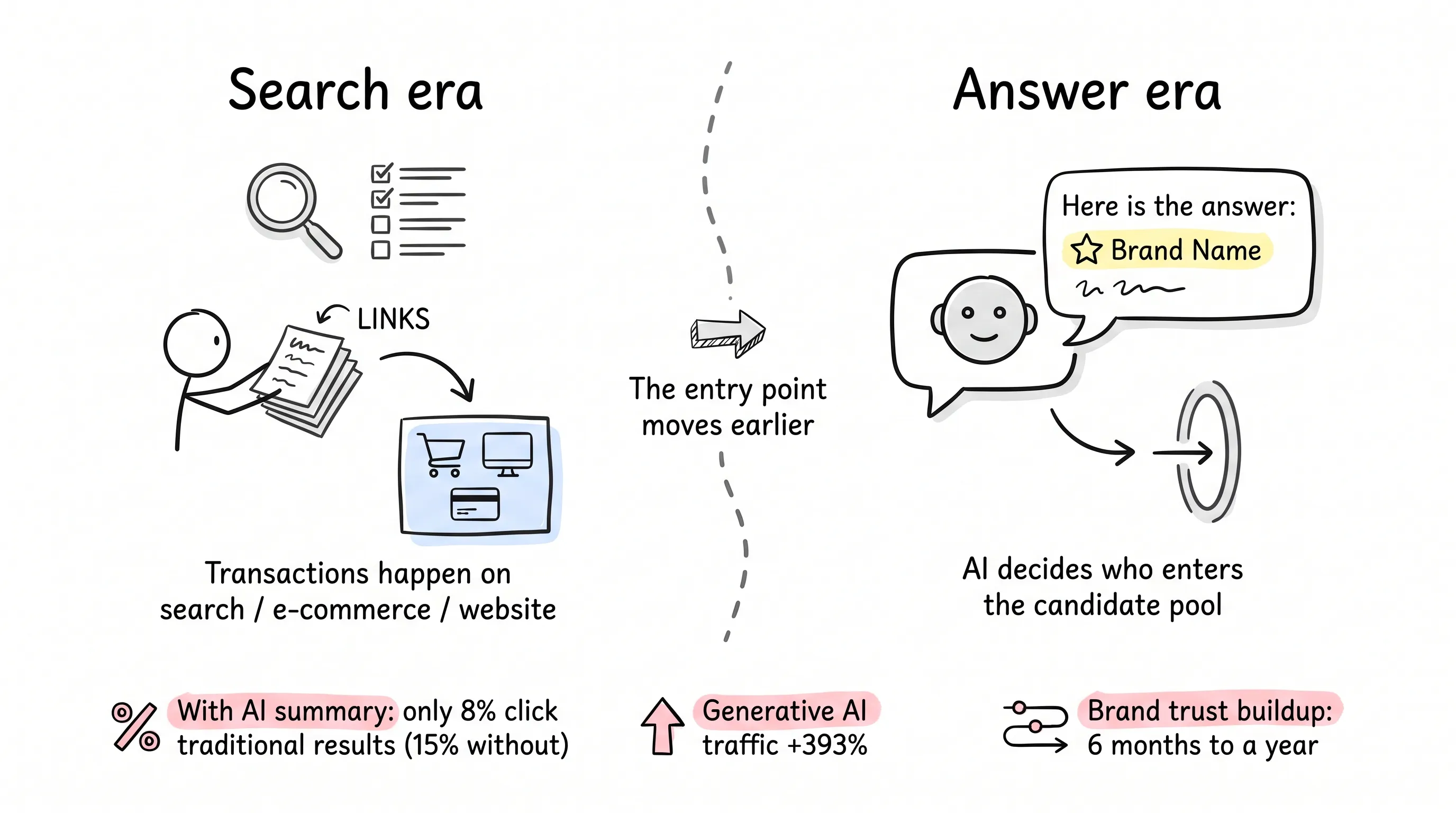
On September 3, impact.com gave an interview after the iPX 2026 China Going-Global Marketing Summit in Shenzhen. CRO Justin Morrison and Greater China President Jennifer Zhang summed up the industry shift as a move from the search era to the answer era. Transactions still close on search, e-commerce, or brand sites, but whether a brand makes the candidate pool is decided earlier in the chain, by AI answers. The backdrop is customs-basis data for the first half of 2026: high-tech product exports up 39%, own-brand exports up 25.4%. Product capability is rising; whether you have made it onto overseas consumers' stable consideration lists is another matter.
The data comes thick. Adobe, drawing on more than one trillion visits to US retail sites: generative-AI-source traffic grew 393% year over year in Q1 2026, and in March such traffic converted at a rate 42% higher than non-AI traffic. Pew's analysis of 68,900 searches: with an AI summary present, only 8% of users click a traditional result; without one, 15%. Over the same period, Google's search revenue still grew 17% year over year in Q2 2026 — the two datasets point to coexistence and reshaping, not one side cannibalizing the other. Evertune's analysis shows that over 40% of the 10,000 sources AI cites most carry affiliate links or sponsored attributes; the report notes this is partner self-collected data, and you cannot infer that paying necessarily buys recommendations.
On measurement: AI mention rate, answer rankings, and reach counts are process metrics; new customers, revenue, CAC (customer acquisition cost), and retention are the business metrics, and the first order typically takes weeks to months. A small brand may need 6 months to a year or more to build market presence. AI raises the efficiency of information analysis and partner matching; it cannot compress the cycle over which brand trust accumulates.
Organizational problems are surfacing. Partner-type boundaries are blurry, and the same people get reached repeatedly by multiple departments. Jennifer Zhang predicts that over the next 3 to 5 years some executive functions will merge — if she were CEO, she would fold the CMO into the CRO. The weak spot for Chinese brands is organizational localization: whether local talent gets into the company's decision-making layer, can participate in decisions and carry accountability, directly determines response speed to the local market. The tattoo-equipment brand example in the piece shows the precondition: first establish that users cluster among tattoo artists, live music scenes, and street communities — then decide on partners and content.
💬 Two things going-global teams can do this week: audit how often the brand appears in answers from mainstream AI tools and set a baseline; split process metrics and business metrics into two tables, and show management only the second one. Don't report LLM exposure counts as achievements — the CFO won't buy it.
🔗 Further reading: Read the full article
Influencer marketing platform market could grow 19x in a decade; micro-influencers take nearly half the spend
The influencer marketing platform market report from market.us (published November 2024, base year 2023) sets the market coordinates: global size of $16.2 billion in 2023, projected to reach $306.9 billion by 2033, a CAGR (compound annual growth rate) of 34.2% from 2024 to 2033; North America leads with a 31.7% share ($5.14 billion), and Asia-Pacific is called out as the fastest-growing region. 80% of companies already have influencer marketing in the budget, and US market spend will reach $4.6 billion, doubling in five years. Structurally, software accounts for 65% of the supply side, large enterprises 76% of the demand side, search-and-discovery applications 35%, and retail e-commerce 59% among vertical industries.
A few quotable numbers on spending behavior. Micro-influencers take 46.4% of brand and agency spend; 60% of marketers consider reaching niche audiences more effective, and HubSpot's 2024 social media report puts it at 47% of marketers reporting the most success partnering with micro-influencers; on Instagram, nano-level influencers account for 65% of creators. Instagram buying leads at about $1.95 billion, with YouTube and TikTok at about $986 million each; TikTok usage intent has risen from 45% to 67%, influencer content averages a 15.86% engagement rate, far above Instagram's 3.21%. Deals paying $100 to $499 per post account for 19% of transactions. Return benchmarks: every $1 invested brings back $5.78 on average, 69% of consumers trust influencer recommendations more, and Revolve attributes more than 70% of its sales to Instagram influencer partnerships.
The risks are stated plainly: only 25% of Instagram influencers comply with FTC disclosure rules; fake followers and engagement fraud, plus the lack of a unified standard for measuring ROI, remain industry pain points, and leading vendors CreatorIQ, Upfluence, and Traackr are responding with AI matching and predictive analytics. One caution: the report is now nearly two years old, and the 34.2% CAGR and $306.9 billion projections are aggressive. When citing, note the data year and the source's stance.
💬 The budget allocation can be copied as is: micro-influencers take nearly half, so with a small-to-mid budget, work the $100-to-$499-per-post tier hard first and build a conversion model before talking about top-tier creators. When picking platforms, use TikTok's 15.86% engagement rate as your reference point — don't spend on faith. When quoting to management, add the data source and year so you're not caught short in front of everyone.
🔗 Further reading: Read the full article
🏷 Platform Updates
Meta pushes ads toward full automation; buyers start playing whack-a-mole hunting for the switches
This edition of Marketing Brew focuses on the AI-fication of Meta ads (issue dated April 7 — mind the timeliness as you read). Zuckerberg's vision: advertisers enter only a credit card number and a business objective, and leave the rest to AI. WSJ previously reported this could arrive as early as the end of 2026; the buyers interviewed say it's nowhere near.
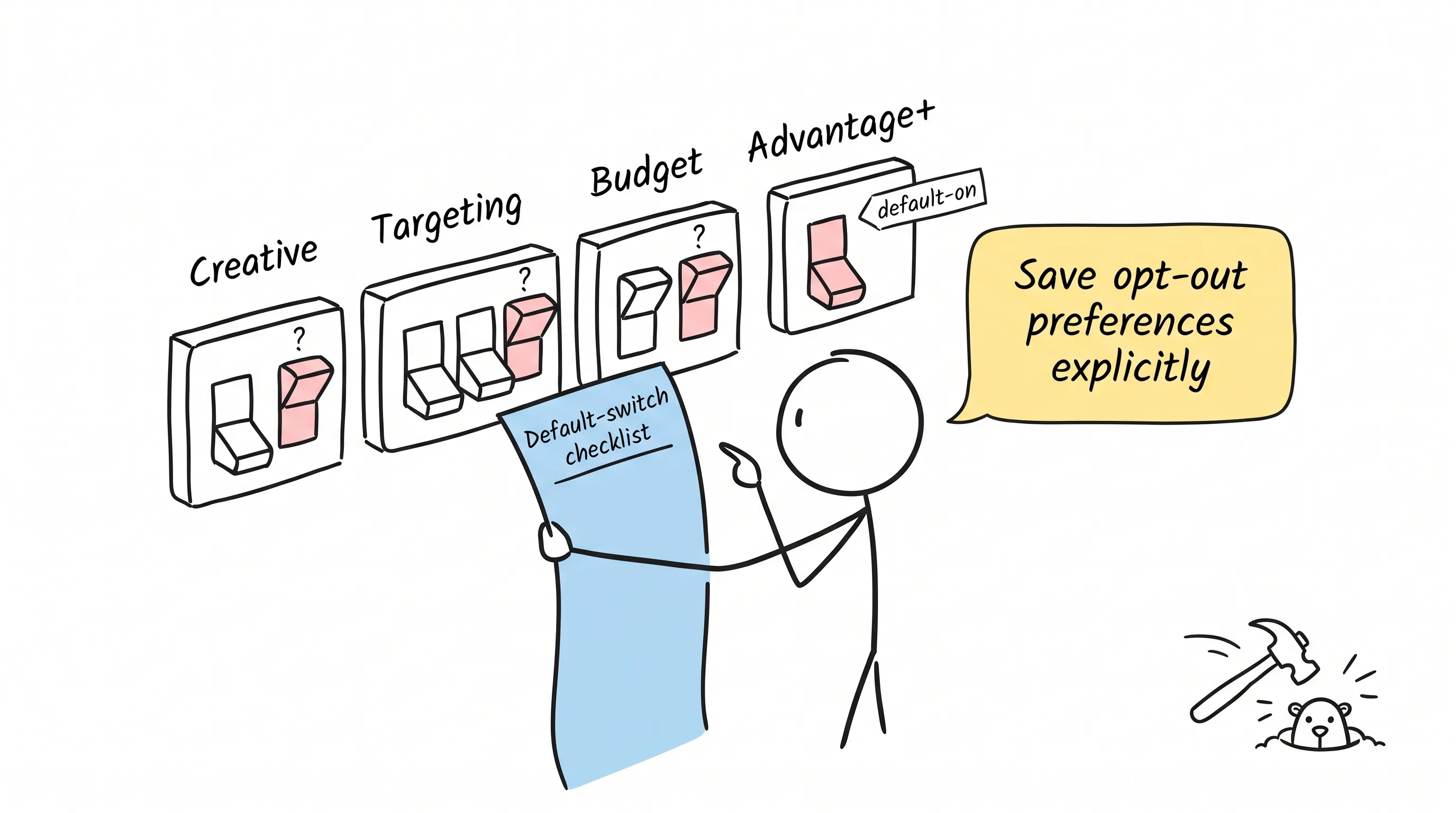
A string of platform moves has already landed. The Andromeda retrieval system has rebuilt how ads match to users; Manus, the AI agent acquired in December, has appeared in Ads Manager; and the Advantage+ suite keeps absorbing decision rights over creative, targeting, and budget. As The Charles Group founder Aaron Edwards puts it, Meta is simplifying buying with fewer ad sets and broader audiences — at the cost of tightened control.
Buyer complaints center on features being switched on by default. Hayley Owen, senior media director at Deutsch, says the team has to keep auditing features that got turned on quietly — like whack-a-mole; only testing reveals what changed. Meta spokesperson Alisha Swinteck offered a response: as of March this year, opt-out preferences for Advantage+ creative persist across campaigns and no longer fall back to default-on. Manus's boundaries are still shifting on a rolling basis; for now, buyers can only treat it as a new unknown.
Two industry coordinates from the same period. WPP's 2025 forecast puts retail media at nearly one-fifth of total ad revenue by 2030; finance and travel are entering under the banner of commerce media, but the growth rates of the past two years will be hard to sustain. Albertsons Media Collective (49.8 million loyalty members) made its first IAB NewFronts appearance leading with a full-funnel story; its VP of media and measurement, Liz Roche, said retail media doesn't belong only at the bottom of the funnel. Walmart brought the product lineup from its merger with Vizio, and Amazon's unBoxed plus Home Depot's InFront show networks building their own venues to compete for budget. The briefing also notes Publicis acquiring 160over90, and Meta pausing its partnership with Mercor over a data breach.
💬 Teams buying Meta should build a default-settings checklist and run through it at every login; save opt-out preferences explicitly — right now that's the cheapest way to hold on to targeting control. Don't accept automation wholesale; keep human review over creative and budget so that when something breaks, you can trace the cause. If retail media is in your portfolio, WPP's one-fifth figure is a ready-made argument when you allocate budget.
🔗 Further reading: Read the full article
🏷 Marketing Tools
Nine ways to track marketing ROI in 2026: MMM, CLV, and cost per result
A long piece from Windsor.ai (bylined by CMO Mary Rybalchenko, updated September 2) lays out nine methods. The backdrop numbers: 85% of marketers consider themselves good at measuring ROI, yet only about 32% unify measurement across online and offline channels — the gap is systemic.
A few of the nine carry the most value. Multi-touch attribution spreads credit back across the whole journey, so ads and emails that vanish from last-click reports re-enter the budget discussion. MMM (marketing mix modeling) fills attribution's blind spots: in the example, organic search and social still contribute about 20% of baseline revenue in zero-spend weeks, while adding 20% budget to Google Ads buys only a 5% revenue lift — the channel is near saturation, and neither kind of signal is visible in click paths. Under the CLV (customer lifetime value) lens, customers from email and loyalty channels spend about $600 over two years, while one-time buyers acquired through discounts spend about $150 and rarely repurchase — channels with cheap acquisition may have worse long-term value. Incrementality testing uses geo tests or holdouts to answer whether that conversion would have happened anyway. For B2B, look at pipeline: a LinkedIn campaign that closed zero deals in a quarter but generated 20 qualified opportunities still deserves funding — track opportunity creation, win rate, and sales-cycle acceleration.
The most easily overlooked move is swapping the metric: replace CPC with cost per result. A campaign at $2 CPC but a 0.5% lead-to-demo rate can have a higher actual cost per demo than one at $5 CPC converting at 4%. The remaining three methods: run financial ROI in parallel with non-financial indicators like branded search volume — a brand campaign lifting branded search volume the following quarter is trackable, real value; real-time dashboards support immediate pause-and-reprice moves; and feed data into an LLM for conversational analysis. The FAQ completes the three-layer tool stack: data integration, an attribution or MMM engine, and dashboards — connecting data always comes before analyzing it. Stay alert that the whole piece carries vendor placement: the 350-plus connectors and MCP (Model Context Protocol) are Windsor's own selling points, and the example numbers are illustrative constructs.
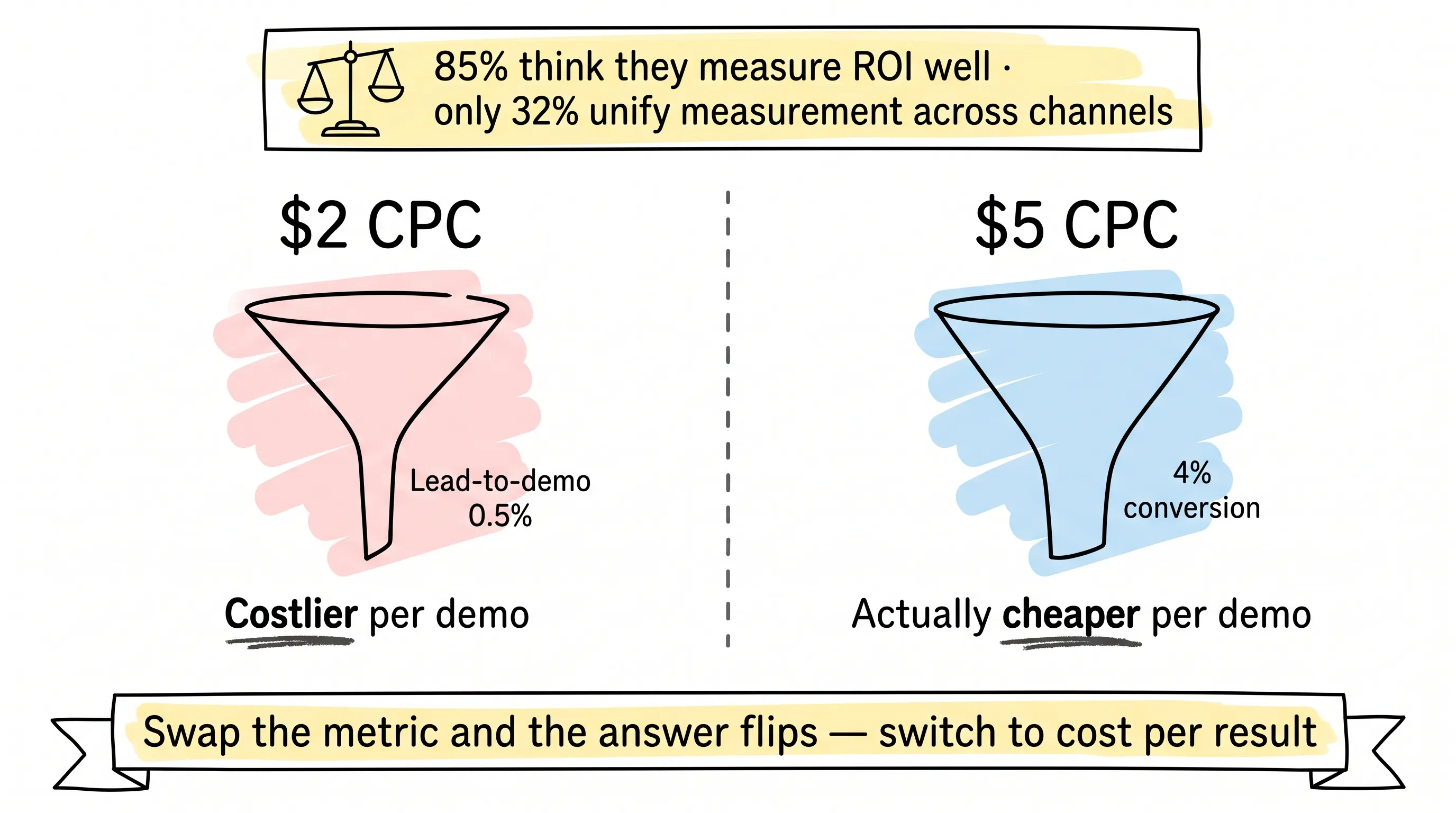
💬 Reporting to the CFO, start with just two of these: switch the reporting metric from CPC to cost per result, then run one geo test so the data can account for where the budget went. Both can be done within a week — more effective than deploying all nine methods at once. Offline ROI can only be given as a range; don't report decimal points in the meeting.
🔗 Further reading: Read the full article
Eight AI personalization tools compared: from $75 a month to custom quotes
An August 5 roundup on the Wingify official blog puts the pricing, trials, and features of eight tools on the table. Adobe Target leans on Adobe Sensei for Auto-Target and a real-time CDP (customer data platform), custom pricing, no trial; Braze's BrazeAI covers AI copywriting and predictive targeting, 14-day trial; Dynamic Yield's Experience OS comes with the e-commerce shopping assistant Shopping Muse, 14-day trial; CleverTap's Clever.AI does predictive segmentation and generative copy, starting at $75 a month with a 30-day trial; Insider's Sirius AI generates journeys with intent search, custom pricing; Monetate's Orchid AI blends machine learning with large models; Personyze starts at $250 a month and has a free tier at 5,000 page views; Webflow Optimize (formerly Intellimize) uses AI Content Studio to generate landing-page copy — officially custom pricing, but with starter plans.
The methodology section is just as useful: citing McKinsey, fast-growing companies derive 40% more revenue from hyper-personalization than their competitors; the nine selection capabilities (behavioral tracking, advanced segmentation, recommendation engines, predictive targeting, real-time personalization, dynamic delivery, omnichannel, analytics insight, privacy compliance) convert directly into a procurement scorecard. Six categories of deployment scenarios are listed: smart product recommendations, dynamic site content, next-step guidance, timing prompts (cart-abandonment recovery), automatic segmentation, and personalized messaging. Two observations from G2 user feedback are worth noting: Adobe Target is complex to integrate with non-Adobe products, and Braze is strong on journey orchestration but unfriendly to newcomers in its advanced features. In the FAQ the vendor itself admits the boundary: models run on historical data, and when the market shifts abruptly, there's no answer.
Mind the stance: this is Wingify's own blog, and the closing section is entirely a pitch for the VWO all-in-one solution. The pros and cons of each tool are noted as coming from third-party reviews like G2, which partially hedges the bias but doesn't make it fully trustworthy.
💬 Don't evaluate the whole list in procurement; set budget tiers first: at a monthly budget in the low four figures, start with trials from CleverTap or Personyze; if you're already bound into the Adobe or e-commerce ecosystem, then talk Target and Dynamic Yield. Turn the nine capabilities into a weighted scorecard and reach a conclusion within two weeks — drag it to quarter-end and the evaluation is wasted.
🔗 Further reading: Read the full article
Get AI to recommend you, not your competitor: a GEO starter checklist
Fasturtle's GEO service page (updated September 10) has an FAQ section that is effectively a practitioner-oriented starter methodology. The premise: customers have shifted to asking ChatGPT, Gemini, and Perplexity for recommendations and tend to trust the first answer they get — what brands compete for is the named spot.
GEO (generative engine optimization, getting cited and recommended by AI answer engines) builds on SEO and doesn't replace it: most AI citations come from pages that already rank well traditionally, Google has said plainly that optimizing for AI features is still SEO, and most GEO hacks have limited effect. The signals AI uses to decide whom to recommend fall into four types: traditional rankings, clear fact passages that can be lifted standalone, third-party mentions (directories, review sites, forums like Reddit), and authority signals. What works: answer questions directly, give concrete facts like statistics and dates, provide original data or expert quotes, make every paragraph stand alone as a block, and keep content fresh. Princeton's GEO research tested nine strategies on roughly 10,000 queries: adding citations, statistics, and quotes lifts AI visibility by about 30% to 40%.
Skip the technical mysticism: Google has stated explicitly that llms.txt and special machine-readable markup aren't needed — clean site structure, loading speed, and mobile-friendliness matter more. Measure with citation rate, mention rate, and share of voice, and regularly run real customer questions through the major AI tools; results take 3 to 6 months, and the effects compound. For local businesses, spell out service plus city plus service area plus genuine reviews, with NAP (name, address, phone) consistent across platforms. To the zero-click anxiety, the answer: visitors pre-briefed by AI arrive with higher intent.
💬 This week's actions are concrete: pick two or three revenue-generating pages, move the answers buried mid-page to the top, add numbers and dates, then claim and complete your listings in industry directories. Don't buy llms.txt or mystic plugins — save the money and time and watch third-party mentions instead. Set the team's expectations at 3 months minimum; calling it off after one quiet month is a friendly-fire mistake.
🔗 Further reading: Read the full article
🏷 Methodology & Organization
After 95% of AI pilots fail: a path to marketing AI ROI
A 36-minute webinar by Jeremy Lyon, director of strategic AI consulting at Uniphore (uploaded January 16; vendor content — treat the benefit numbers as reference). The entry point: 95% of AI pilots fail, mainly because they never attach to business strategy and degenerate into shadow projects. AI hype is characterized by redundant spending, side projects lacking governance and compliance, and high input with low return.
The path has four steps. Step one: run a baseline self-assessment with a five-level maturity scale (from exploration to orchestration) plus seven dimensions (people, process, technology and governance, compliance, AI security, traceability) to establish where you are today; organizational momentum comes from maturity, and tools are only one piece of it. Step two: crystallize the North Star, so AI investment simultaneously covers revenue growth, marketing ROI and CPA (cost per acquisition), customer lifetime, and brand KPIs — and secure C-level support; what executives talk about has already shifted from solving pain points to seizing opportunities. Step three: screen use cases with a two-dimensional matrix — scalability times business impact, plotted against implementation cost; the quick wins in the bottom-left corner pay off within weeks and build credibility, the strategic bets in the top-right corner include things like agentic end-to-end campaign orchestration; the science projects in the top-left corner that eat resources without producing output should be cut deliberately — they burn the team's momentum. Step four: sequence the roadmap against the respective KPIs of marketing, the CEO, and the CIO; if it clashes with QBR (quarterly business review) reporting, send it back for rework.
The showcase ladder in the marketing domain is clear: ad-copy variant generation is a low-cost quick win, verifiable within weeks; agentic orchestration needs specialized agents for audiences, attribution, product, and the like as the foundation first. Vendor-quoted returns: payback in about 4 months, operational impact of nearly $10 million in a single process-automation case, and domain-tuned SLMs (small language models) speeding up idea-to-execution by 70%. These numbers come from the vendor's own account — apply your own haircut before they go into a business case.
💬 Don't let the 95% scare you — use it to ask for resources internally: draw the matrix for your boss and pick one bottom-left use case that can produce results in two weeks and get it running end to end; that wins budget better than a 60-page plan. When writing the business case, align the KPIs to the QBR rhythm, and the review is less likely to bounce it. The seven questions of the maturity self-assessment can be walked through at next week's team meeting.
🔗 Further reading: Read the full article
WPP's chief AI officer's six-category framework: first decide which type of AI solves which type of friction
A talk by WPP Chief AI Officer Daniel Hume at Google Cloud Next 2024 (uploaded July 2024; read it as a background framework — the numbers and cases reflect their time). It opens with three questions: is AI for raising productivity, for dissolving supply-chain friction, or for disrupting the industry? The organizational end state is described as three digital twins — business model, talent and resources, back-office processes — converging and merging within ten years.
The body is six categories of application, mappable to any supply-chain friction point: task automation (even simple algorithms create big value in the right spot), content generation (brand brains), human representation (audience brains), machine-learning prediction (performance brains), decision optimization (channel brains), and human augmentation. The brand brains section stings the most: a general-purpose LLM only produces generic content — ask it to make an ad for Milka and all it knows is purple; brand-specific, mass-producible content takes weeks of fine-tuning, and RAG (retrieval-augmented generation) is compared to handing a book to a drunk graduate. Audience brains simulate, for the first time, how audiences perceive content: Coca-Cola used them to validate known segments and discover new ones, and they can also serve as focus groups for isolated test campaigns; separate crowd brains were built for politics, media, minority groups, and food compliance to pre-screen ads for ethics and compliance, and synthetic audiences can even produce image prompts in reverse for the brand brain — the two brains talk to each other.
The value of performance brains is explaining the prediction: the model doesn't just say how many clicks this ad will get, it can also say why swapping a black cat for an orange one performs better. Channel allocation is operations research work, done with optimization solvers — generative AI has no seat at that table: the number of combinations of 60 pieces of content across 60 channels exceeds the number of atoms in the universe, and WPP allocates thousands of pieces of content across thousands of channels every second; the rule of thumb is that beyond seven combinations, don't use humans. The close showcases the WPP Open platform, and personal LLM digital twins trained on employee email and calendars do collaboration matching — admittedly a bit creepy, but employees buy it.
💬 Use the six categories as a checkup sheet: classify every AI project on your plate first and ask which type of friction it solves. Most teams' common failure is piling everything into the content-generation category while prediction and optimization go unclaimed. Whether to spend weeks on brand fine-tuning depends on your content production volume — if you produce a few dozen pieces a day, don't bother; RAG is enough.
🔗 Further reading: Read the full article
BCG ran the numbers on the personalization budget: move 25% and triple the ROI
A BCG Platinion treatise on omnichannel personalization (published March 2023; fine as a methods reference — note the year when citing numbers). The backdrop: Adobe's digital price index showed electronics prices down 13.4% year over year in November 2022 while groceries rose 13.7%, and this commerce deflation is pushing companies from pure online selling toward end-to-end omnichannel experiences.
The data chain is complete. Satisfied customers are 80% more likely to spend more; in Salesforce's research, 74% of customers are already used to starting and completing transactions across multiple channels, and 60% expect companies to understand their needs proactively — in customer journeys stretched out after the pandemic, single-channel experiences don't hold people; companies that master personalization can lift overall growth by about 10%. The most eye-catching calculation: shifting 25% of the mass-promotion budget into personalization can raise ROI by 200%, corresponding to a global growth opportunity of over $70 billion a year.
On method, it proposes just-in-time personalization: don't chase quarterly reports; use high-frequency leading indicators like foot traffic, search trends, and consumer spending forecasts to catch shifts in macro purchasing patterns at the segment level, and adjust on the spot the moment a turn appears. The implementation skeleton is the MIDAS touch framework, organized in five steps — measurement, innovation, delivery, activation, synchronization — with data management called out as the precondition for seamless cross-channel switching. Five priorities: data collection and privacy, unlocking AI as the personalization engine, digitizing the end-to-end customer journey, a modular content ecosystem that can be dynamically assembled, and a next-generation architecture that connects systems and channels. The second half is BCG promoting its own services — filter as you read.
💬 You don't need to wait for annual planning to move budget: test the waters with 5% first — carve the worst-converting quarter of your mass promotions into a personalization test and run it for a quarter to see the increment. Don't get drunk on the 200%; that's a consultancy's modeled figure, and only what your own data produces counts. In omnichannel overhauls, rank privacy and consent management first — they carry the highest rework cost.
🔗 Further reading: Read the full article
🏷 Compliance Red Lines
Four legal red lines of AI marketing: memorize the fine caps before you start
A compliance rundown from Analytics Vidhya (updated February 9; author David Abraham is a technology lawyer). Three regulatory items — memorize the fines first: GDPR requires companies to explain why, how, and with which AI tools customer data is processed, and to support deletion at any time; violators face fines up to €20 million or 4% of global turnover. CAN-SPAM requires email subjects, headers, and bodies to be truthful, with easy unsubscribing; a Litmus survey shows 34% of marketers already use generative AI to write email copy, and AI raises the risk of deceptive subject lines slipping into email — the fine is up to $53,088 per violating email. The EU AI Act requires clear disclosure when customers interact with AI tools or synthetic media; synthetic media covers generated images, cloned voices, deepfakes, and virtual influencers.
On the ethics side, three types of bias: data bias (if the training data skews male, the output skews male only), algorithmic bias, and human-factor bias. Transparency requires disclosing AI-generated content and explaining why a user is seeing a particular targeted ad.
Four hands-on practices are the most useful: explicit consent plus double confirmation — IAPP's 2023 research shows 68% of consumers worry about online privacy and 57% see AI as a significant threat; switch to paid or self-hosted AI platforms and opt out of data sharing — free LLM tiers by default take the data you paste in for training, and fragments can surface in replies other people receive; establish human review and an SOP (standard operating procedure) for AI output, with banned words and brand voice spelled out; track regulatory updates quarterly — US states have their own privacy laws too. The FAQ names the two biggest risks: pasting customer data into insecure tools, or publishing unreviewed AI content directly. The article's closing suggestion to assess vendor reliability via search rankings is weakly argued — take its caution, not its method.
💬 Knock out two things this week: have the whole team stop using free LLMs on customer data — switch to paid plans and manually opt out of data sharing; and add a human review pass to every AI-drafted email. These two steps cost almost nothing and block a €20-million-scale exposure. On synthetic media disclosure, teams working with virtual influencers and digital humans need to close that gap today.
🔗 Further reading: Read the full article
💡 Today in Review
Laying today's 11 items side by side, the through-line is clear: competition in AI marketing has moved from "who knows how to use tools" to "whose systems can run." The top-story survey says only one in ten teams uses AI systematically; the Uniphore webinar traces the 95% pilot failure to the same place — never attached to business objectives; Windsor's nine methods and BCG's budget math answer the same question — marketing has to account for its results to the boss in business terms. Tools are no longer scarce; what's scarce is the data wired into the tools, the definitions you can pin down, and the processes solid enough to catch the output.
The second shift is the entry point changing. Meta has pushed buying automation far enough to claw back targeting control; the impact.com interview says whether a brand gets named in AI answers now comes before which channel closes the deal; Fasturtle's checklist gives the concrete moves for getting named. The work of search teams, buying teams, and content teams is starting to bleed into one another's, and organizations structured by channel will hit the wall first — which also explains why that prediction about folding the CMO into the CRO showed up.
Two reminders. Some items on today's list are older material (the WPP framework, the BCG treatise, the influencer market report) — the frameworks still work, but discount the numbers inside when citing, especially the CAGRs and consultancy estimates. The other: platforms clawing back control and regulations tightening are two faces of the same thing — part of the hours automation saves you will be paid back as compliance costs and lost control. Connect a data source first, pin down the measurement definitions first, hold on to the switches first — that matters more than adding three more agents. Personalization, attribution, and compliance each picked up a coordinate today; what's worth watching next week is whether Meta's switch checklist becomes a standard buyer move.
Continue reading
Related articles

AI Marketing Daily · 2026-10-09
AI marketing daily for 2026-10-09 covering 11 items: brand measurement moving from survey panels to search, social, e-commerce, and AI prompt signals; GEO and share of model playbooks; safety guardrails for agentic ad buying; and tool roundups for ad platforms, cross-border tools, and social media uses.

AI Marketing Daily · 2026-10-08
AI Marketing Daily for 2026-10-08 curates 20 items across AI search visibility (GEO), advertising, platform selection, cross-border e-commerce, and ROI measurement. The headline argues that strategic marketing decisions should stay with humans while AI assists execution.

AI Marketing Daily · 2026-10-07
Today's throughline is answer engine optimization (AEO — getting your brand quoted in AI answer engines).