
AI Marketing Daily · 2026-09-18
AI Marketing Daily for 2026-09-18 rounds up 14 items spanning Meta's removal of ad-set-level placement controls, Google Ads changes moving into approval queues, and Adobe's acquisition of Semrush. It also covers GEO expert rankings, monitoring market maps, and agency lists for brand visibility in AI answers.
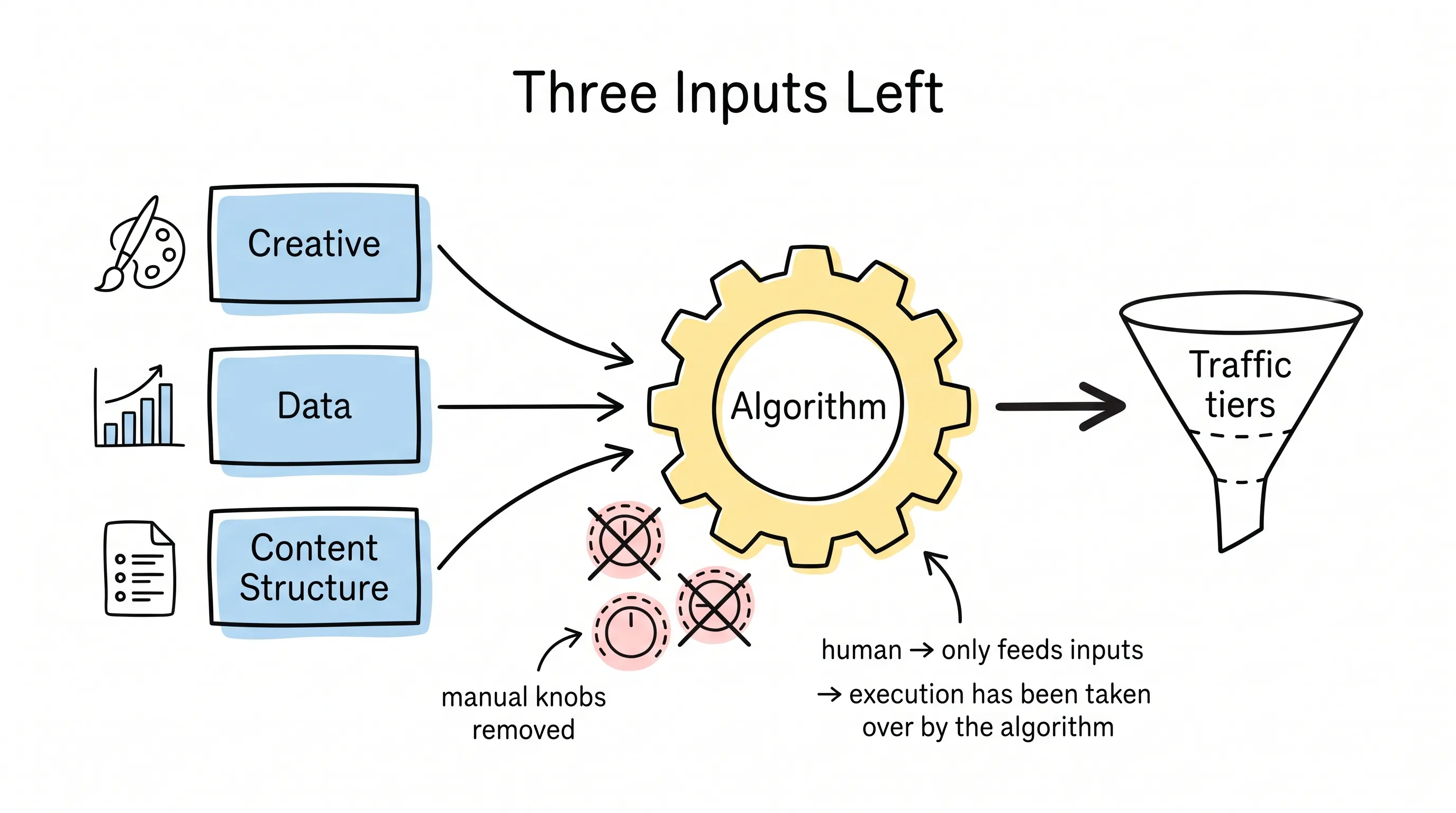
Today's ledger is easy to settle. Meta has taken placement control off the table, Google Ads account changes have started lining up in approval queues, and Adobe has swallowed Semrush. The manual knobs are being removed one by one, and what marketers can still control has narrowed to three things: creative, data, and content structure. Visibility inside AI answers also formally reached institutional scale today — an expert leaderboard, monitoring market maps, and an agency list all landed on the table together. The 14 hot items below each point to the same move: put your effort into the inputs the algorithms actually consume.
🎯 Today's Headline
Meta wants to run more of your marketing for you — before you hand over control, think it through
Meta is systematically taking over the delivery decisions advertisers used to control by hand. This long-form piece from Social Media Examiner was co-written by founder Michael Stelzner and Tara Zirker, founder of Successful Ads Club, among others, and draws on test results from multiple live accounts. The changes concentrate in five areas: placement control, the delivery algorithm, Pixel data, meta.ai diagnostics, and the cross-platform Business Agent.
Start with placements. Meta is removing manual placement exclusions at the ad-set level. Operations like targeting only iPhone users, or desktop only, will no longer be possible; the change is already live in Ads Manager for some accounts and is expected to roll out across the board. Under Advantage+ Placements, roughly 60% of spend flows to Instagram, with Facebook taking the lion's share, Audience Network left with the scraps, and Threads, WhatsApp, and Messenger picking up ads automatically whenever the format is compatible. Zirker's real-world testing produced a counterintuitive finding: manually excluding placements — even placements that are obviously wasted spend — actually raises costs and drags down lead quality. Meta's detection system can already judge whether an ad renders properly in a given placement, and it skips on its own the placements where fonts are too small or the format doesn't fit.
On the delivery-algorithm side, the new algorithm Andromeda has been in effect worldwide since October, and every ad account now runs under its influence. It carries the quality logic of organic content into the paid system: creative quality determines which tier of traffic an account can reach, and at what cost. The end point is Meta's generative delivery model, GEM, where the advertiser inputs a single image and a budget, and AI handles asset generation, iteration, and delivery optimization from there. Real-world cases have already surfaced: in a beta feature inside one client's account, Meta AI produced two complete video ads from nothing but the static images already sitting in the account — AI avatars, no script — covering pain-point explanation, objection handling, and the offer, with nothing visibly amiss on screen.
The data side is changing too. The Pixel code hasn't been swapped out, but inside it is now an AI-powered version that automatically reads a website's product information and SEO data for audience matching; the product catalog becomes an input to every sales campaign, with a new featured-product control added on top. meta.ai can connect directly to your ad account, Facebook Page, and Instagram for free to run diagnostics. The last puzzle piece is Meta Business Agent, which will take up residence in WhatsApp, Messenger, and Instagram DMs, handling customer Q&A, product recommendations, bookings, and lead qualification all the way through to closing an e-commerce sale — with merchants retaining control over when to take over manually.
Why does this carry enough weight to lead the daily? Because the ground rules of paid media have changed. Spending used to buy exposure directly; now Andromeda has inserted a quality gate in the middle. Piling budget onto a single asset hits a wall — creative diversity decides which tier of traffic you can buy, and at what price. Meta has its own calculus here: it is stockpiling training data for GEM. The more varied the creative formats advertisers provide, the more the algorithm learns, and the stronger its gravitational pull on the whole industry becomes. For the industry at large, the value of campaign-execution roles will shift, faster and faster, toward two poles: creative strategy and data governance.
At the level of specific jobs, here is the impact. Media-buying teams need to rewrite their task lists: fine-grained operations like placement tweaking and device-level bidding are disappearing, replaced by three new jobs — feed the algorithm diverse-enough creative, keep the Pixel and product catalog clean, and learn to read the diagnostics meta.ai hands you. Small and mid-sized businesses actually come out ahead: they could never afford a senior optimizer, and the algorithm has now taken over most execution decisions. Teams in compliance-sensitive verticals — finance, healthcare, credit — take note: ad-set-level control is gone, but account-level placement exclusions remain. Health and wealth categories can keep their placement restrictions; that brake has been left for you.
How to act on it? Four steps. Step one: clear out Pixel errors this week. Ads Manager flags configuration issues at every login — missing permissions, broken event-tracking links, incomplete installations all need fixing. How clean your Pixel is directly determines how much data the AI features get to eat, and this task has never carried a higher priority. Step two: treat creative diversity as a budget line. For any single selling point, produce at least four variants — static image, short video, carousel, UGC-style — so Andromeda has something to choose from. Step three: log into meta.ai, connect your ad account, and first ask it what's working and what isn't; then switch to thinking mode and have it analyze the past 30 days of Reels performance, and while you're at it, set up a recurring Monday-morning briefing. Step four: switch on every AI asset-generation feature in the account — a human review before launch is all that's needed. The review interface differs from account to account; Meta is still testing it.
My read: handing over the controls doesn't mean coasting. Once the algorithm takes over execution, the game moves upstream — whoever has the more complete structured data, the more varied creative library, and the cleaner product catalog gets the cheap traffic. For compliance-sensitive industries, the account-level exclusion in your hands is the last brake; do not hand it over. There is still a window before GEM fully lands, and the creative diversity and data cleanliness you bank now are next year's bidding advantage. This wave hits big teams and small teams differently — work out first which side you're on.
🔗 Further reading: Read the full article
🏷 AI Search & GEO
Profound Names 2026's Seven Top GEO Practitioners, Bundling in the Macro Data
In late July, Profound released its 2026 GEO (Generative Engine Optimization) expert leaderboard, screening candidates from 102 practitioners who write publicly, build tools, or do research. Four weighted signals: original thinking at 35%, empirical results at 25%, peer and AI citation recognition at 20%, and educational impact at 20%. The weighting deliberately steers around titles and follower counts — only evidence and originality count. Seven people, including Kevin Indig, Mike King, Aleyda Solis, and Lily Ray, cleared the 80th percentile on all four signals. The macro data that ships with the leaderboard deserves to be copied wholesale into your strategy docs: Google AI Overviews has more than 2.5 billion monthly users, AI Mode has passed 1 billion, G2 research shows 51% of B2B buyers increasingly begin their research with AI chatbots, and 68% of US Google searches in the first four months of 2026 ended in zero clicks.
The behavioral evidence is even more concrete. Kevin Indig's experiment had 56 people run 221 ChatGPT shopping tasks: brands whose answers made the cut took a 24% share, while those that didn't got only 11%, and 92.8% of the tasks ended without a single web page opened — the shortlist itself becomes the new shelf. His statistics across 1.2 million AI answers show that 44.2% of ChatGPT citations come from the front 30% of a page's content: direct evidence for the answer-first structure. Josh Blyskal's classification of more than 50 million ChatGPT prompts found generative intent on top at 37.5%, navigational intent fallen to 2.1%, and transactional intent running 9 times that of traditional search; earlier, he was the first to confirm at scale that Reddit citations had surged 4x, and Reddit went on to cite his data in its shareholder letter. The technical standard-bearer is Mike King, who has explained query fan-out and passage-level retrieval inside out and open-sourced the first query fan-out tool, using routing, retrieval eligibility, and chunking structure to explain whether a brand gets cited at all. On this leaderboard, GEO is no longer an extension of SEO tricks; it straddles several trades at once — information retrieval, content architecture, brand authority, digital PR, structured data, measurement, and agent readiness.
💬 Rewrite the top 30% of your homepage into an answer-first structure — you can start this week, at close to zero cost. Add one line to your KPIs: your brand's appearance rate on target prompts. Don't stare only at the traffic report. One caution: the leaderboard comes from Profound itself, which sells GEO monitoring services, so give its conclusions seven parts trust out of ten.
🔗 Further reading: Read the full article
CB Insights Market Map: the GEO Content Platform Track — Semrush Folding into Adobe Is the Biggest Signal
CB Insights defines the GEO content platform category as optimization solutions that help brands earn citations and visibility inside AI answer engines, listing Semrush, HubSpot, and AirOps among its representative companies. The category is growing out of standalone tools and into suite features: legacy marketing clouds and emerging workflow platforms are all squeezing into this box. Content optimization and monitoring are split into two separate maps — proof that the division of labor in this industry is now fine-grained enough to be valued separately. The heaviest entry on the page is an M&A signal: Semrush was acquired by Adobe in April 2026 at a $1.9 billion valuation. The track map and the execution-capability ratings sit behind the paywall. For buyers there is a second use: treat the map as a competitive-intelligence radar and watch who else is squeezing into this box — every new arrival is a candidate to be next year's price benchmark.
💬 A legacy SEO tool being absorbed and reorganized by a marketing-cloud giant says the buyer demand for AI-visibility tools has grown big enough that Adobe paid up. Teams currently selecting SEO or GEO tools: add vendors' M&A trajectories to your evaluation checklist, and don't bind critical workflows to a product line that might get restructured.
🔗 Further reading: Read the full article
The GEO Monitoring Platform Map: Legacy Data Companies and Native Newcomers on the Same Field
The other map defines the monitoring side: tracking a brand's mentions, citation frequency, share of voice, and sentiment across answers in ChatGPT, Perplexity, Google AI Overviews, Claude, and Gemini, and tying AI-search performance to traffic and revenue metrics. The page's typical use cases are prompt-level performance tracking, competitor benchmarks, and visibility alerts — an alarm goes off when a brand vanishes from the answers. What these tools solve is a question that never used to be quantifiable: exactly how large is your brand's share inside AI answers. The players come in two waves: one of legacy data companies like Semrush and Similarweb, the other of native newcomers — Profound (founded 2024), Searchable (2025, London), AthenaHQ, and Bluefish — with founding dates clustered in the last two years. The in-depth comparisons are likewise pinned behind the paywall.
💬 Don't rush to pay up. The manual version of monitoring costs nothing: list 50 prompts your target customers would actually ask, run them on a fixed weekly schedule, and record your brand's appearance rate and competitor rankings. A month later you have baseline data, and only then decide whether the paid tools are worth it. When you do select, hold out for two capabilities: prompt-level tracking and competitor benchmarks.
🔗 Further reading: Read the full article
A Top-Ten GEO Agency List Is Out — Read Its Self-Promotional Skew Carefully
Minuttia's 2026 list of the ten best GEO agencies was published on January 28 and updated in early April. It reviews ten providers one by one — Chilli Fruit, Intero Digital, Omnius, Onely, and others — and gives fit recommendations across three client types: startups, enterprise, and B2B SaaS. Within the same list, the right provider differs from segment to segment, so match yourself to the right segment before you shortlist. The list also untangles the differing emphases of three terms — GEO (Generative Engine Optimization), AEO (Answer Engine Optimization), and LLMO (Large Language Model Optimization) — each optimizes a different object, so get everyone speaking the same language before you write the requirements doc. It also lays out this trade's standard capability stack: AI-optimized content, authority building, entity positioning, technical structuring, and GEO-specific measurement. Measurement is the scarce item — most providers are still at the stage of handing over citation counts as the deliverable. The list's publisher, Minuttia, ranks itself first.
💬 Do the fundamentals yourself: structured data and answer-first rewrites need no outsourcing — an internal team can finish them in a week. If you really must issue an RFP, require the agency to show verifiable case data and its measurement methodology, ask the conflict-of-interest questions about the list, and cross-quote at least three agencies before you sign.
🔗 Further reading: Read the full article
🏷 Industry Data
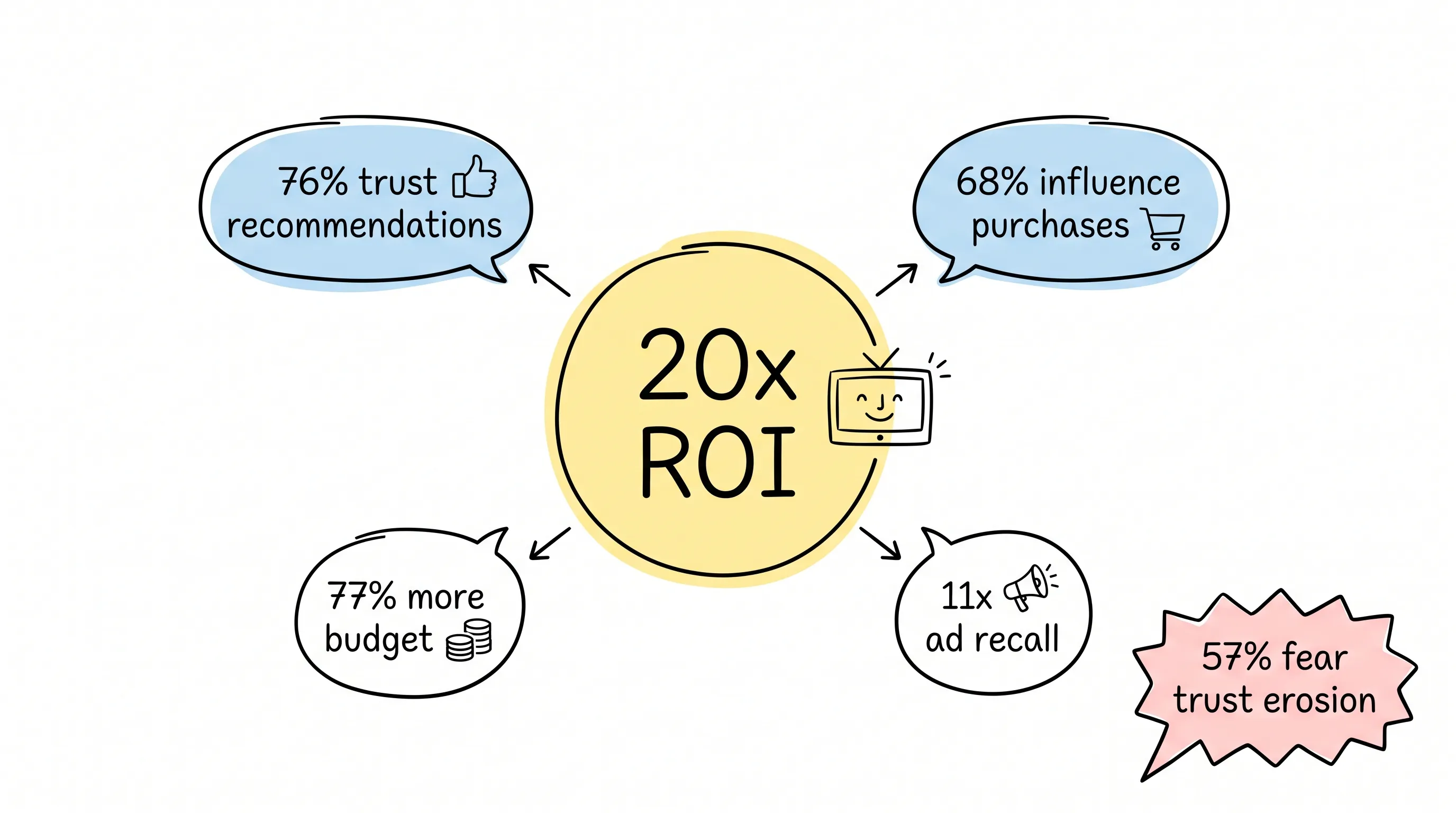
AI Influencers Deliver Real Money: Hyundai's Kona Collaboration Posts a 20x ROI
A Marketing Week deep dive turns AI influencers from a talking point into numbers on a financial report. When Hyundai launched the Kona in Morocco, it partnered with the virtual influencer Kenza Layli — ads plus a chatbot supporting 8 languages and 2,000 concurrent conversations — and took home a 20x ROI, which the brand calls its most successful influencer product launch to date. Billion Dollar Boy's survey shows 76% of consumers trust product recommendations from virtual influencers, and 68% let them influence purchase decisions; 77% of marketers plan to put more budget into AI creator content, up from 65% in 2023. L'Oréal's virtual influencer Kyra pulled 100 million views from just 3 pieces of content, with 90% of the audience concentrated between 18 and 30. H&M built AI digital twins with 30 models, lifting ad recall 11x, with the models keeping ownership of their avatars and free to license them to other brands. The digital-twin agency Pixelz works mainly in fashion and retail, replicating real models one-to-one into e-commerce and lookbook assets; what clients value is the efficiency and the cost savings. On timing, practitioners' read is: the brands that charged up the wave in 2023 moved before thinking it through, and now everyone is entering with a strategy.
The negative data sits in the same report: 57% of respondents believe AI digital twins erode creator trust, and only 31% of consumers support brands partnering with creators on digital twins. Small-sample field tests are happening too: Dubai's WooHoO restaurant ran a New Year campaign with a virtual influencer, totaling 105,000 views, 46,000 people reached, and more than 1,300 interactions. Kelsey Farrant, a lawyer specializing in AI, cautions that likeness rights and disclosure obligations remain a legal gray area — the industry itself doesn't know where the boundaries lie.
💬 Multilingual customer service and e-commerce Q&A are the safest entry point for virtual influencers — Hyundai's 2,000 concurrent conversations is the answer. Before starting a project, write two things into the contract: mandatory labeling of AI content, and an audit trail for the likeness-licensing chain. Do compliance up front, and what you save is the PR fees and legal fees later.
🔗 Further reading: Read the full article
McKinsey: Personalization Is Stuck at Having Data but Not Acting on It
McKinsey's baseline numbers keep getting cited because nothing has replaced them yet: 71% of consumers expect personalized interactions, 76% get frustrated when they don't get them, and 65% rank targeted promotions as the number-one driver of purchase. The report boils the levers of personalization at scale down to two: AI-driven targeted promotions and generative AI content production. The disconnect at most companies is that data, insight, and execution run in three disconnected segments — they hold the data but can't land it; AI targeted promotions handle the first half, and GenAI's content capacity fills the execution end. The roadmap has four blocks: data foundation, use-case prioritization, measurement, and governance. Top players that personalize well see revenue lifts well above those of the followers.
💬 Hold off on the platform purchase. Draw up a use-case list, pick two, and get them working end to end first — say, churn win-back and abandoned-cart reminders. Add a personalization-coverage metric to your measurement system, and each quarter check its correlation with conversion rate. No correlation means your personalization is just repackaged batch-and-blast.
🔗 Further reading: Read the full article
Empirical Study: When GenAI Writes Product Descriptions, Length Drives the Differentiation
A peer-reviewed study published in the ScienceDirect journal Computer Standards & Interfaces proposes a reusable framework: embed AI-generated descriptions into a multivariate UI experiment architecture, write audience-segment traits into the prompts, have the large model produce differentiated product copy for different segments, then use a modified cosine similarity to quantify how distinguishable the texts are from one another. Two conclusions. Segment-specific information does drive the large model to produce statistically significantly different descriptions; but in 26.7% of cases the differences fell short of the significance threshold, and only when descriptions are given enough length can the segments be fully distinguished. The authors also point out that the specificity of AI text imposes adaptation demands on existing text-similarity measures — the old-school duplicate-content checkers will misjudge it.
💬 Both conclusions can be copied directly: don't scrimp on word count in product descriptions — write them longer or the differentiation won't be enough; and pack the segment prompts with the vocabulary and concerns specific to that segment. Before launch, sample a batch of descriptions and run a similarity check, so your so-called personalization doesn't ship as one-size-fits-all.
🔗 Further reading: Read the full article
Deloitte 2026 Trends: AI Becomes the Marketing Operating System — Cut the Bottom 20% of Budget Every Quarter
Deloitte Digital's 2026 marketing trends, released in late February, opens by stating its premise plainly: with AI, economic pressure, and shifting consumer behavior stacked together, the old proven playbooks stop working. Of the five trends, several tie directly to execution. Discovery behavior has changed: 60% of consumers find new brands through social content and communities, with search retreating to a verification step. Wallets are tightening: 40% of consumers are cutting non-essential spending. The felt experience is colder: only 43% of brand interactions are perceived by consumers as personalized. The action advice for CMOs is specific: pick the workflows that can be fully automated end to end (email copy, ad creative testing) and hand them to AI, keeping human approval only at the risk points; share a single ROI model with the CFO and cut or fix the bottom 20% of spend every quarter; lock in 3 must-win channels per audience and adapt one narrative across platforms; make brand purpose a quantified commitment — cutting packaging plastic 20% by 2027, for instance — and go easy on the slogans. The organization trend lands just as concretely: first let the team understand the opportunities and risks of agentic AI, then pick the processes to act on; if skills are missing, retrain internally instead of rushing to hire new people.
💬 Cutting the bottom 20% of budget every quarter is the harshest line and the most worth copying — move the money you cut into experiments with fully automatable workflows. This quarter, start with a channel audit: circle the must-win channels by audience, demote the rest to test slots, and give them their own line in the report.
🔗 Further reading: Read the full article
🏷 Marketing Tools
Google Ads Automation Enters the Agent Era: What You Can Hand Over, and What Not to Touch
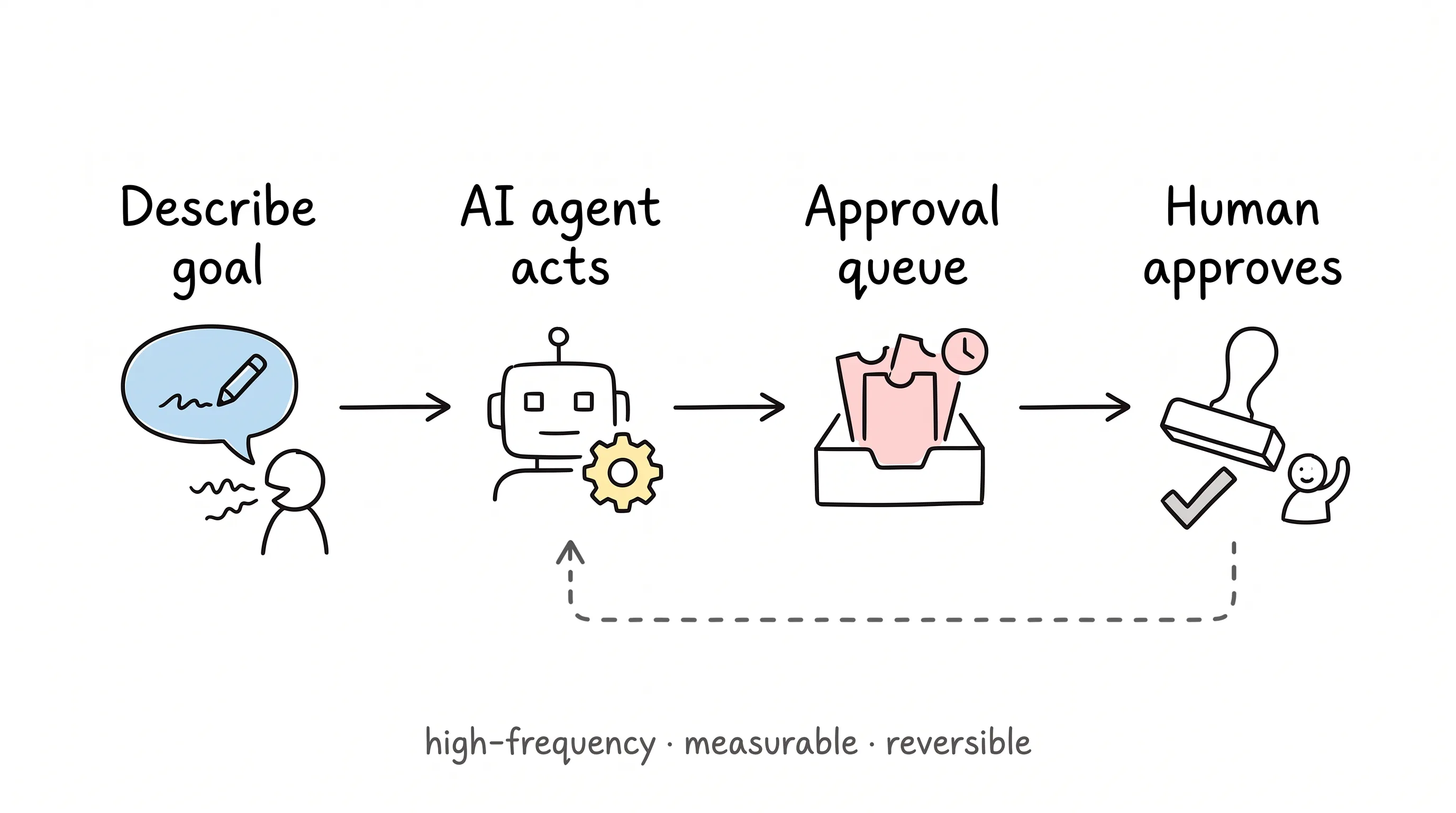
A long-form piece from Adspirer divides Google Ads automation into four eras: scripts, native rules, third-party platforms, and — starting in 2025 — AI agents (connecting directly to ad accounts via MCP (Model Context Protocol)). The fourth-generation workflow is a chain: you describe the goal in natural language, an AI client like ChatGPT, Claude, or Cursor calls the platform's interfaces through a secure gateway, and analysis and action happen in a single session. The division of labor is clear: deterministic, repeatedly-run tasks belong to scripts and rules — the shortcoming of scripts is that behind the old-and-stable exterior, someone has to write them, test them, and watch for updates — while judgment-type tasks like multi-signal diagnostics and building campaigns from a brief belong to agents. The list of what can be handed to automation includes wasted-spend audits, search-term harvesting, campaign creation, budget adjustments, conversion-tracking audits, and Q&A-style reporting; the first two are the widely agreed best-value starting points, with audit results delivered the same day. The standard for judging whether something should be automated: high-frequency, measurable, reversible — and the rule must carry an evidence threshold. A rising CPA by itself is not a rule; CPA 30% over target, at least 20 conversions, and healthy tracking — that comes close to an executable rule. Two 2026 developments are worth recording: the update_campaign extension lets network settings, bidding strategies, and campaign budgets be modified conversationally; and autonomous Ad Ops agents now place changes into an approval queue instead of executing silently.
💬 Hand two things over this week: wasted-spend audits and search-term harvesting — together they save several hours of manual digging every week. Keep bidding strategies and brand safety with humans. Every automation rule must come with a rollback path, and leave the approval queue switched on.
🔗 Further reading: Read the full article
ZoomInfo's 2026 B2B Marketing Tool Comparison — and the #1 Spot Is Its Own Ad Slot
ZoomInfo Pipeline compares 12 B2B marketing tools across four pillars — data intelligence, marketing automation, ABM (account-based marketing), and analytics & attribution — and those four pillars are also the right order of questions for selecting: first work out which pillar your team's weakness sits on, then pick products by pillar. Its own GTM platform ranks first: the GTM Context Graph claims 500 million contacts, 100 million companies, and 1.5 billion-plus signals processed daily, paired with an AI agentic workspace and open API and MCP access — the idea being to turn the tool into a foundation that AI agents can call. The Smartsheet case it cites reports MQLs (marketing-qualified leads) up 84% and opportunity win rate up 26% after deployment — vendor-reported figures. The remaining entries are profile-style comparisons of familiar platforms like HubSpot and Salesforce, two or three sentences per tool on features and fit scenarios; it wins on completeness of structure and loses on its stance.
💬 Use it as a tool map, not a ranking — the top slot was always going to be its own ad space. Work backward from your weak spot when selecting: dirty data means fix the intelligence layer first; leads leaking fast means bring in automation. Discount every vendor case number by 30% before it enters the comparison table, and talk to at least two tools in the same category before deciding.
🔗 Further reading: Read the full article
CB Insights: A Quick Read of the Marketing Automation Personalization Track
CB Insights defines the marketing automation personalization category as solutions that use AI and data analytics to deliver personalized experiences across channels, covering email, CRM, e-commerce marketing, and CX automation. Representative vendors include Braze (customers include Whataburger and Snowflake), Oracle, and Bloomreach; the page carries each company's customer and partnership information, so who is supplying whom can be scanned at a glance. For initial shortlisting, the customer lists carry more information than the feature descriptions — look at who is serving brands of a scale similar to yours. It belongs to the same series as the day's other two maps: CB Insights uses one framework to slice martech into box after box of tracks. In the adjacent-market comparison, the boundaries between this category, marketing automation, and CDPs (customer data platforms) are also drawn; the details require a subscription. The market map sits behind the wall — good enough for a first screen, not enough for a decision.
💬 An index page for shortlisting — 10 minutes shows you the whole track. Write AI decision granularity into the RFP: vendors that can do prompt-level personalization and vendors that can only segment-and-blast differ by an order of magnitude in both price and effect. Recover the depth behind the wall with a free trial — two weeks is enough to learn what's really there.
🔗 Further reading: Read the full article
🏷 Policy, Compliance & Funding
Academic Research Sets the Standard: Eight Ethical Conditions for Brands Using GenAI
A peer-reviewed study published in Frontiers in Communication in June 2025 used Qualitative Comparative Analysis to compare 33 global AI ethics guidelines against the ethical concerns of the content-marketing context, and distilled eight conditions: transparency, privacy, intellectual property, fairness, accuracy, accountability, compliance, and discrimination prevention, with deontology (rule- and duty-based ethics) as the theoretical framework. The output takes the form of combined necessary-and-sufficient condition tests — closer to a usable decision tree than the usual principle checklist. The study found that intellectual property (copyright, attribution, the legality of training data) is the most commonly overlooked item in general AI ethics guidelines, yet the one that damages brand reputation most directly. The authors' judgment: the 84 international general-purpose guidelines fall short of applicability in real business contexts and need to be customized against content-marketing workflows; insufficient ethical awareness and guidelines that contradict one another are the two stumbling blocks on the road to implementation. The paper closes with a four-piece operational checklist: disclosure rules, a copyright audit trail for assets, human editorial fact-checking, and a bias-review process.
💬 Copy the eight conditions into your content SOP. Do three things this week: set your AI-content disclosure rules, build a copyright ledger for your assets, and add a human fact-checking step to the publishing workflow. Have legal walk the audit-trail process once — it costs half a day, and what it saves you is potentially astronomical copyright disputes.
🔗 Further reading: Read the full article
A Springer Review Maps GenAI's Risk Landscape — the Deepfake and IP Chapters Are Must-Reads
The open-access review appeared in Archives of Computational Methods in Engineering, online since September 2025 and collected in volume 33 (2026), pages 1763–1793. The article systematically surveys the three great generative model families — GAN, VAE, Transformer — and their cross-industry applications, with deployment scenarios covering medical imaging, drug discovery, and personalized medicine; general industries get more space than marketing. The risk landscape is organized into five items: ethics, misinformation and deepfakes, intellectual property, cybersecurity, and bias and discrimination, with a list of future research directions attached at the end. This is not marketing-specific literature, and the first half of the review is friendly enough even for readers without a technical background. The deepfake and IP chapters map directly onto brand content compliance and ad-asset governance, while the bias-and-discrimination chapter corresponds to demographic stereotypes in creative assets — worth giving it its own checkpoint at review time.
💬 Background reading for legal and marketing to read together — use it as the base text for GenAI internal training. Circle the deepfake and intellectual property chapters in particular, then check your own asset library's licensing ledger against them and patch whichever gaps you find.
🔗 Further reading: Read the full article
💡 Today's Big Picture
Lay today's 14 items side by side and there is only one throughline: decision-making power is being pulled into the hands of algorithms and platforms. Meta removed placement control, Google Ads changes now queue for approval, Adobe bought Semrush, and ZoomInfo opened MCP access to AI agents. Automation of the execution layer is irreversible. The manual knobs in marketers' hands are disappearing one by one, and the human role is changing from operator to reviewer.
Where did the confiscated power go? It turned into new demands on inputs. Andromeda allocates traffic tiers by creative diversity; AI answer engines decide whom to cite by answer-first structure and entity clarity — which is how GEO came to have an expert leaderboard, monitoring market maps, and an agency list. Measurement goes first, and budget follows: that is the fixed order in which a new channel grows up. What you feed the system is what the system hands back to you — paid media and content converge on that one sentence.
On the consumer side, the forces pull against each other. 76% of people get frustrated when personalization is missing, and 57% worry that digital twins erode trust. Expectations are rising while tolerance falls, and only disclosure and real product strength can fill the gap in between — Deloitte's quantified commitments are precisely that filling. It calls trust an economic asset, and set against brand authority inside AI answers, that sentence carries more weight, not less.
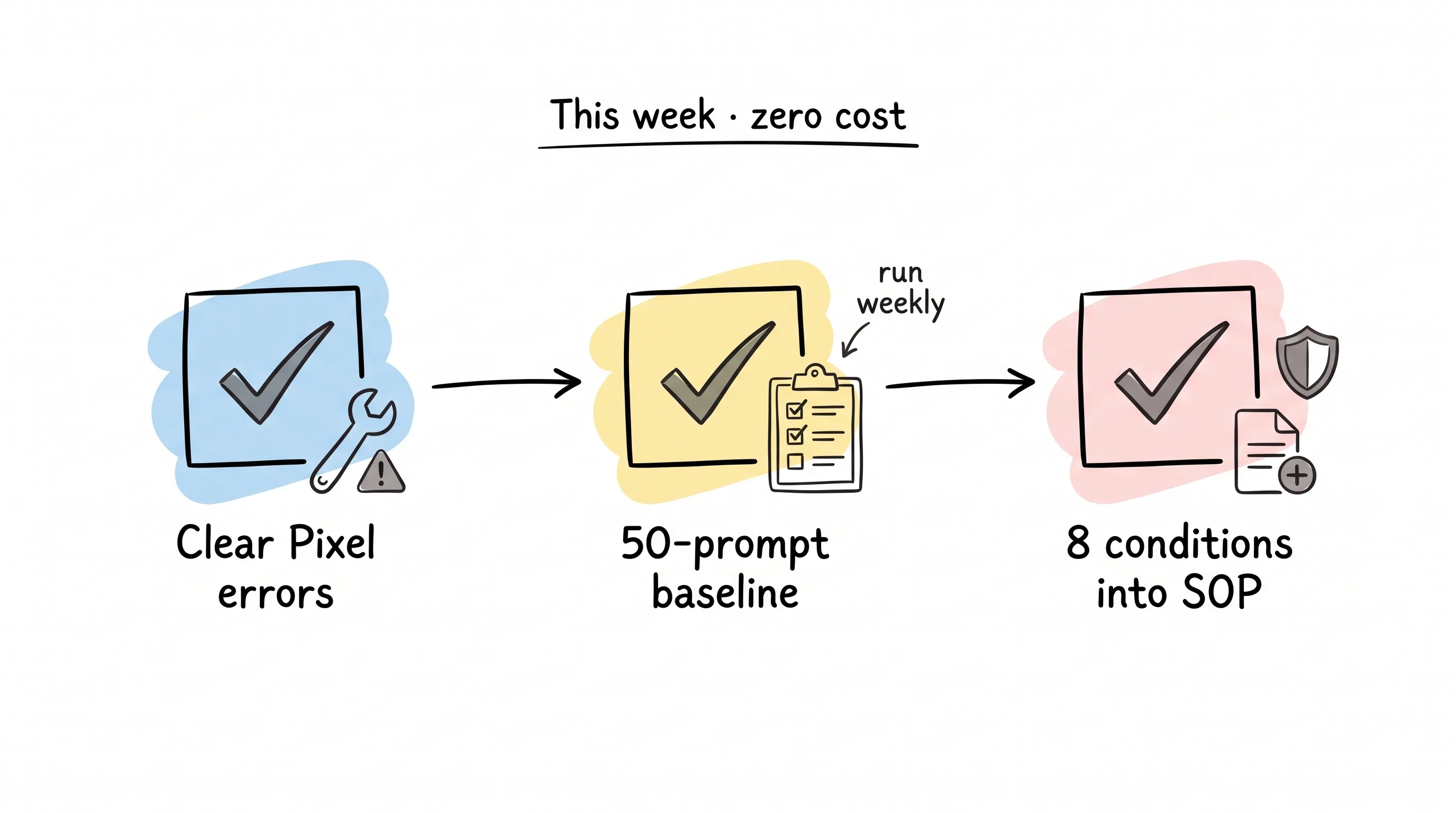
My closing: this year's marketing organizations are splitting into two kinds — one treats AI as a tool that saves time, the other treats AI as the basis for reallocating budget and roles. Deloitte's line about cutting the bottom 20% of budget every quarter is the watershed move. Three things you can do this week: clear the Pixel errors, run a 50-prompt AI-visibility baseline, and write the eight ethical conditions into your content SOP. None of the three costs money, and once they're done, your bargaining power with the algorithms is already a step ahead.
Continue reading
Related articles

AI Marketing Daily · 2026-10-09
AI marketing daily for 2026-10-09 covering 11 items: brand measurement moving from survey panels to search, social, e-commerce, and AI prompt signals; GEO and share of model playbooks; safety guardrails for agentic ad buying; and tool roundups for ad platforms, cross-border tools, and social media uses.

AI Marketing Daily · 2026-10-08
AI Marketing Daily for 2026-10-08 curates 20 items across AI search visibility (GEO), advertising, platform selection, cross-border e-commerce, and ROI measurement. The headline argues that strategic marketing decisions should stay with humans while AI assists execution.

AI Marketing Daily · 2026-10-07
Today's throughline is answer engine optimization (AEO — getting your brand quoted in AI answer engines).