
AI Marketing Daily · 2026-09-10
Daily briefing covering a HubSpot guide to AI search (AEO/GEO) optimization, a three-tier framework for reporting AI ROI, data pipeline advice from a MarTech panel, a supervised browser agent test that reads LinkedIn comments, and two pieces on AI-era talent and organization.
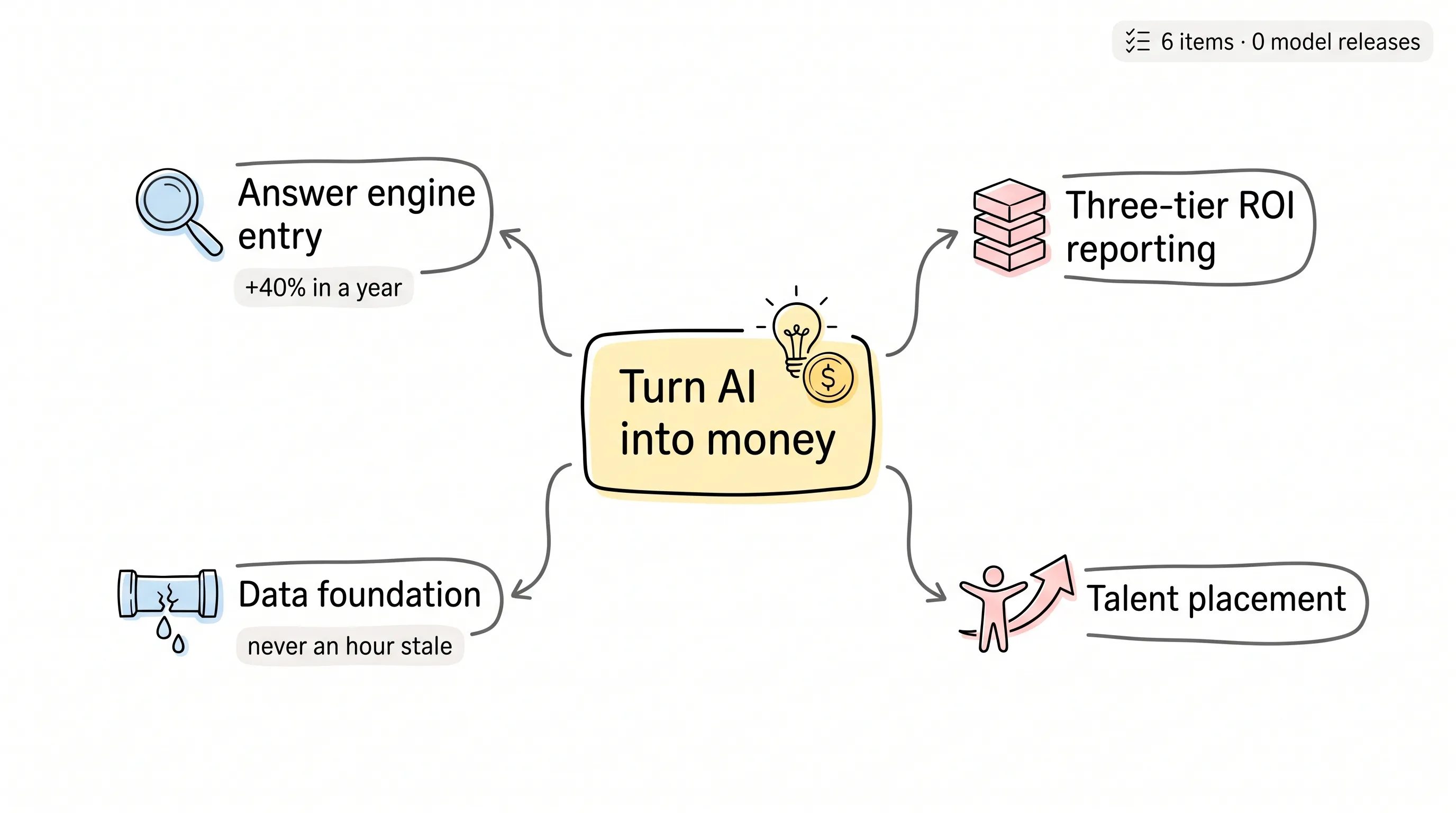
Of the six items in today's briefing, not a single one is a model release — every one of them points at the same thing: how to turn the AI you already have into money. HubSpot has laid its AI search optimization playbook on the table. MarTech published two pieces back to back — one teaching you how to explain AI's value to your boss, the other urging you to fix your data foundation before you talk about intelligence. Marketing AI Institute used a browser agent to read through hundreds of comments in a few minutes, and the remaining two items are doing the math on where the people should go. By the end of this briefing, you will hold an AEO (answer engine optimization) playbook, a set of ROI reporting language, a data self-audit checklist, and two talent-deployment case studies.
🎯 Today's Headline
AI Search Monthly Visitors Up 40% in a Year — HubSpot Breaks Down the Full Optimization Workflow
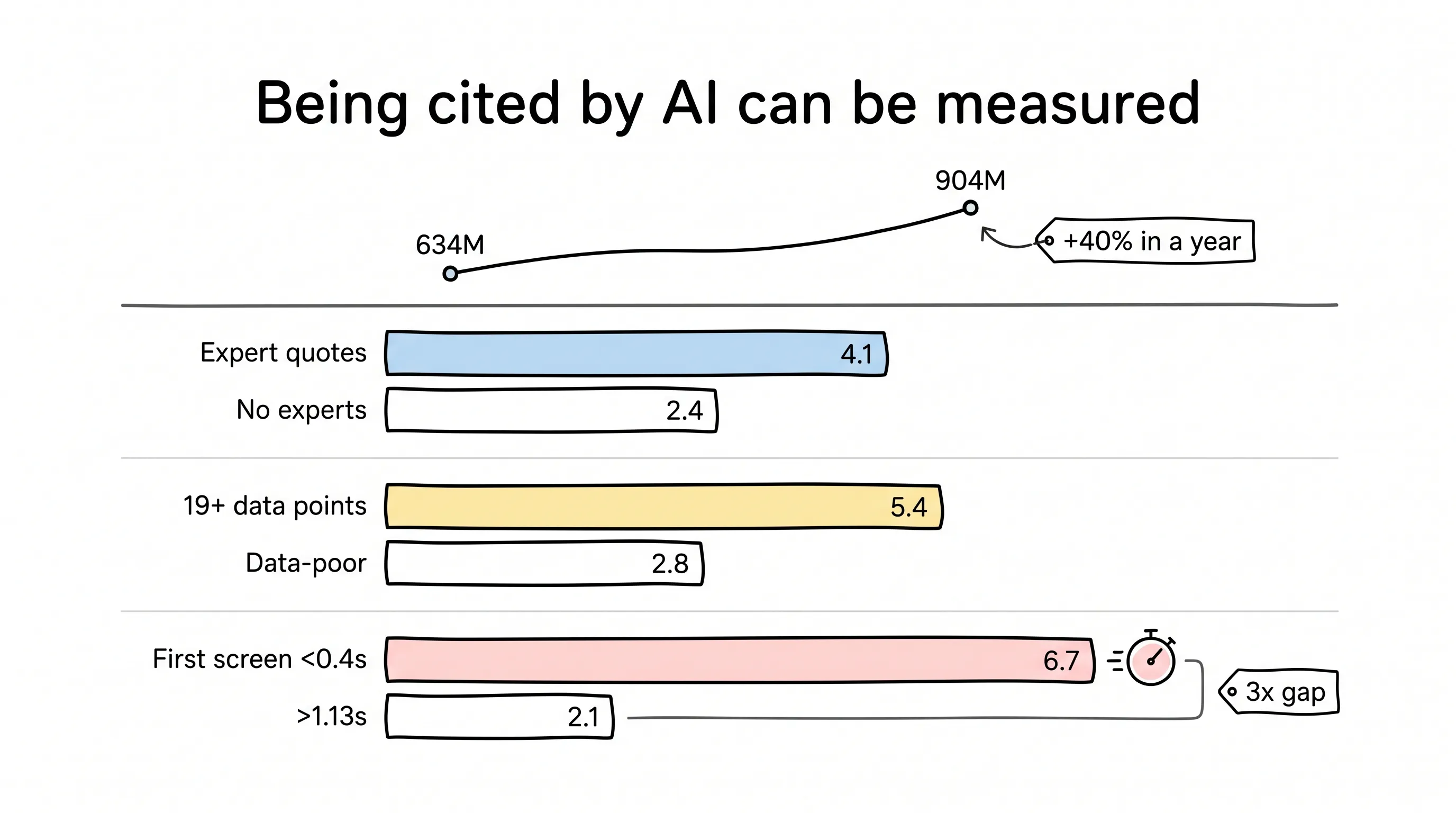
A long-form guide on AI search optimization, updated on the HubSpot blog on September 9, opens with a basic judgment: AI search hasn't built itself a separate house — it stands on the infrastructure of traditional search. Google's AI Overviews runs on a customized version of Gemini, sharing the same signals as the existing search system; ChatGPT search pulls Bing results directly in some scenarios. In other words, a page has to be crawlable, indexable, and snippet-eligible before it even qualifies for AI answers. The growth numbers are blunt: per Wix Studio, monthly unique visitors across major answer engines climbed from 634 million in Q1 2025 to 904 million in Q1 2026 — up 40% in a year. At that scale, answer engines have graduated from novelty channel to a serious battleground.
AEO and GEO (generative engine optimization) have been talked up for a year, and most of the advice has stayed in mysticism territory. The value of this long read is that it argues with data. SE Ranking analyzed 216,524 pages: pages quoting expert content were cited by ChatGPT an average of 4.1 times, versus 2.4 for pages without expert quotes; pages carrying 19 or more data points averaged 5.4 citations, while data-poor pages got only 2.8. Speed is a variable too: pages that render above the fold in under 0.4 seconds average 6.7 citations, while pages slower than 1.13 seconds get only 2.1 — a threefold gap.
The technical side has an easy pit to fall into: most AI crawlers read raw HTML and don't execute scripts, so client-rendered content may look like a blank page to ChatGPT and Perplexity. Snippet control is another gate: a single nosnippet in the robots meta, or max-snippet set to 0, pulls a page out of both classic snippets and AI answers; set the character ceiling too low and the model has too little context to cite. If you only want to protect one sensitive passage, use element-level data-nosnippet for a single-point block while the rest stays quotable. Multimedia is an entrance too — generative results can mix text, images, and video, and Fan Out's off-site research shows YouTube is the second most-cited platform, with 1,531 citations, 13.7% of which point to specific timestamped segments; adding captions, descriptions, and timestamps to your videos creates a fresh batch of citation opportunities. Local and product data work the same way: Google has named Merchant Center and Google Business Profile the admission tickets for getting products and stores into AI answers, and an expired feed amounts to forfeiting by default. Citability can be decomposed and quantified — that is the dividing line between it and mysticism.
Two things have to change in how content teams write. First, answer-first drafting: HubSpot recommends answering the question within the first 40 to 60 words of every subsection; CXL's citation analysis shows most cited passages fall in the top third of the page, with only about one-fifth coming from the bottom 40%. Second, format: the payoff of question-style subheadings is backed by measurement. Kevin Indig's research found that question marks are twice as likely to appear in cited text as in ordinary text, and headlines carry 78.4% of question-related citations; a 2026 preprint measured lists and tables at 43% higher extraction accuracy than prose saying the same thing. Write each conclusion as a single assertion that can stand on its own, and an engine can lift the whole passage away.
The second layer of impact concerns your channel strategy. Perplexity cites an average of 10.8 sources per answer, while ChatGPT cites only 3.3; Perplexity is friendlier to community discussion content — 96% of LinkedIn citations on B2B SaaS queries come from it. Meanwhile, Fan Out's data shows only 7.7% of cited URLs appear across multiple engines. The same page's fate on two engines is essentially independent: run them as two separate channels, and don't expect one draft to win everywhere.
The order of operations matters too: first cluster buyer questions and map the entity relationships among your brand, products, and topics; then draft answer-first and add structured data; before launch, verify that pages are crawlable, that main content ships as server-side HTML, and that schema validates; record your baseline position on publish day; then refresh on a fixed cadence.
Move on a 90-day rhythm. Days 1–30: name an owner for AI visibility and use the free AI Search Grader to snapshot where your brand stands in ChatGPT, Perplexity, and Gemini — keep a baseline on file. Days 31–60: put the refresh cadence on the calendar; pages where data and case studies go stale fastest get updated first, evergreen pages can wait. Days 61–90: bring in governance — unify sources, naming, and schema standards, and add a fact-check gate before publishing health, finance, or legal content. At the same time, skip four pieces of wasted effort: llms.txt showed zero correlation with citations in an analysis of nearly 300,000 domains — removing it from predictive models actually made them more accurate; standing up a separate Markdown mirror page for crawlers is cloaking (showing crawlers different content than users see), which Google has explicitly condemned; a dedicated AI schema does not exist — Ahrefs ran controlled experiments across 1,885 pages and measured no lift; and fabricating mentions can buy short-term visibility — in SE Ranking and Search Engine Land's fake-brand experiments, a fictional brand all but swept the unanswerable branded-query visibility across five engines within 30 days, yet made zero headway on competitive generic topics. Google has already classified manipulating generative answers as spam, so the trade was never worth it.
The truly valuable judgment in this guide comes down to one word: non-commoditization. A model cites you on the condition that it cannot generate that passage itself. Original data, first-hand experience, and clearly argued independent positions — those three are the model's blind spots. Chasing citation traffic also means watching the right scoreboard: Microsoft Clarity's statistics across 1,200+ sites show AI referrals account for under 1% of visits, but signup click-through rate runs 1.66%, 11 times the search channel's 0.15%; WebFX's analysis of 2.3 billion sessions puts generative AI visitors' conversion rate at roughly 1.2 times organic search. Small in volume, high in quality, growing fast — that is the reason to start now. My recommendation fits inside one week: take the baseline snapshot this week, rework your homepage and your three highest-earning pieces into answer-first structure, then look again at the same time next month and let the data decide whether to double down or pivot.
🔗 Further reading: Read the full article
🏷 Putting AI to Work
How to Report AI's ROI: An Expedia Director Supplies a Three-Tier Script
On September 9, MarTech ran a methodology piece by Angela Vega, Director of Capabilities and Operations at Expedia Group, offering a new answer to "how do you calculate AI's ROI?": stop forcing every AI project into a revenue metric and report it in three tiers. The Base tier is the foundation — unified data sources, written brand and policy standards, a stable platform, decision logic that leaves an audit trail; the reporting language for this tier is stability. The Builder tier is the systems you have built — workflows, agents, routing logic, automation — reported as reliability and scope discipline. Only the Beneficiary tier talks business outcomes: faster turnaround, higher throughput, lower cost to serve, and only occasionally incremental revenue.
Why does the author fight for this precision? Because revenue attribution is a muddy ledger to begin with — AI's contribution is multi-cause, downstream, and lagged, the same hard problem as the multi-touch attribution marketers have argued about for years. The data makes the case even more forcefully: MIT's 2025 State of AI in Business report found that 95% of enterprise generative AI pilots show no measurable return on the P&L; in McKinsey's survey, 88% of enterprises have put AI to use, only 39% can point to a profit impact, and just 5.5% attribute more than 5% of EBIT to it; BCG's numbers show 75% of executives rank AI among their top three priorities while only 25% believe their organization has actually captured value. The revenue column looks ugly; the productivity column, though, is solid: NBER research found generative AI assistants lift the number of support tickets resolved per hour by 14%; GitHub reports Copilot speeds up coding tasks by 55%; Stanford's 2026 AI Index gives a range running from 14% in customer service to 50% in marketing output.
Vega's answer is the lab-factory model: a lab for fast experimentation where output is not held to production standards, and a factory with strict quality gates that scales validated workflows. The key is being clear about what a workflow must satisfy to graduate from lab to factory — for example, the underlying platform hitting stability targets, or accuracy holding steady over a defined period. Without that gate, teams oscillate between two extremes: experiments that never leave the lab, or half-finished work charging straight into production — both burn through the team's trust. Once you have layered things, the reporting script falls into place too: the Base tier talks stability, the Builder tier talks reliability gains and scope discipline, and only the Beneficiary tier talks business results. Another BCG study adds a number: companies focused on an average of 3.5 use cases see 2.1 times the ROI of companies that sprinkle investment everywhere. The piece also rounds up a full set of positive examples: Adobe spent two years first building a content supply chain, unifying brand standards, metadata, and review workflows into a system agents can invoke; Coca-Cola built the Create Real Magic generation platform with OpenAI and Bain; Duolingo grew its quarterly course units from 7,100 to 20,500 and tied that speedup directly to double-digit revenue growth in its investor communications.
On where to invest resources, the piece also sets an order: first establish unified data definitions and sources, since every agent and workflow ultimately draws from them; then build a layer of shared context for information used across teams, or the same knowledge base will get rebuilt five times over; then set an arbitration rule for whose word wins when two data sources conflict — without it, output looks confident but behaves inconsistently, and debugging costs far more than prevention. As you scale, raise agents like products, with owners, version numbers, and decommission plans. She once offered this contrast: a narrow agent at 98% precision is more trustworthy than a generalist scoring 80% across five domains — when a pipe leaks you call a plumber, not a jack-of-all-trades. Same logic.
💬 Marketers can put this language to work this week: rearrange the AI progress section of your weekly report into the three tiers — Base tier reports data and standards, Builder tier reports reliability and scope, Beneficiary tier reports turnaround and cost — and stop stretching productivity stories to fill revenue numbers. One template change fends off two kinds of penalty at once: inflated revenue claims getting exposed, and real, hard-won speedups being undervalued.
🔗 Further reading: Read the full article
One Hour of Stale Data and Your Marketing Is Permanently on the Back Foot
A panel at this September's MarTech conference delivered a stinging diagnosis: marketing teams don't lack AI ideas — they lack data pipelines that can feed AI. The session, titled "Built for Yesterday," brought in Courtney Adams, Head of Content and Product Marketing at MessageGears; Jacqueline Freedman, founder of Monarch Advisory Partners; and Mike Maynard, Chairman of Napier, with Kevin Haag, SVP of Data Strategy at Qualify Digital, moderating.
Adams put it bluntly: the moment data goes more than an hour stale, your execution is stuck reacting. Her example: activating a single customer attribute shouldn't require a dedicated data science sprint, custom integrations, and complex SQL — if it does, a simple request balloons into a months-long project. Her other warning belongs on a memo board: AI is only as good as what you feed it. If key behavioral signals, purchase dynamics, and service interactions never reach the model, the blind spots will wreck the output outright. She also cautioned that switching marketing automation vendors won't cure the disease — if the rigidity of the underlying architecture doesn't change, the same latency follows you intact onto the new platform. Maynard drove the point home with his agency's mantra: ideas are easy, execution is hard. Nowhere is that more true than in B2B, where complex buying committees need sufficient contextual data — underfed, AI simply mass-produces ever more generic copy, and you end up discovering that what has been blocking you all along is data availability, not the model. Freedman aimed at system design: new tools can't fix old problems that live outside the tools; before buying software, map out how information flows between systems and how people actually use those tools day to day.
The most easily overlooked item in the discussion was write-back. Most teams pull data from the warehouse to run marketing but forget to write engagement data back, leaving marketing, BI, and data science each clutching conflicting customer records, with no one holding a true single view. Architecture has no standard answer either: Freedman champions composable, posing the question "Do you want a stack of best-of-breed components, or a monolith you can move?" She likens the monolithic platform to an old house where every small renovation may expose hidden structural problems; the real virtue of composable is that components can be swapped — AI vendors iterate this fast, and swapping out one component doesn't mean tearing up the whole system. Maynard poured cold water on that: small teams lack the engineering muscle to maintain dozens of point integrations, and an all-in-one suite that is good enough is often the more practical choice. Freedman also left behind a warning destined to travel far: AI can't fix your broken wiring — it only makes bad processes run faster and fail more thoroughly.
The three panelists' self-audit moves are concrete. First, run a data footprint audit: find out which repositories customer data is scattered across, who owns it, and whether a true single customer view exists. Next, trace the broken feedback loops: locate the points where engagement data fails to flow back into the central warehouse. Finally, watch the high-value signals — Maynard reminded the room that a single critical data point, like how many years a buyer plans to keep a car before replacing it, often carries more leverage than dozens of low-value behavioral metrics. Closing advice, one line each: Adams said get AI activation working end to end on a single campaign first — don't try to swallow the whole feast in one bite; Freedman said walk your customer journey from start to finish, experiencing every touchpoint from signup through after-sales yourself; Maynard said spend less time admiring how shiny the new tools are and more time asking what data your customers need.
💬 Three things MarOps can start next week: map where customer data lives, mark the breakpoints where it can't be written back to the warehouse, and pick one decision-moving signal to add to your model context. Do those three steps before evaluating a platform switch — odds are you'll save yourself one money-burning migration, and the business case for your next AI project will stand on much firmer ground.
🔗 Further reading: Read the full article
🏷 Marketing Tools
A Browser Agent Reads Hundreds of LinkedIn Comments in Minutes
On September 9, Marketing AI Institute published a hands-on field test of a browser agent. Founder Paul Roetzer had posted a comment on New York City public schools' decision to ban generative AI in classrooms, and hundreds of comments came pouring in, ranging from earnest discussion to sharp confrontation. The manual options were only two: copy-paste everything into a document and spend hours organizing it, or give up on the analysis entirely. The team took a third path — hand the job to AI. They used GPT-5.6 Sol's browser-operating capability, executed through the ChatGPT/Codex desktop client inside an already-logged-in browser session, with no human navigation required.
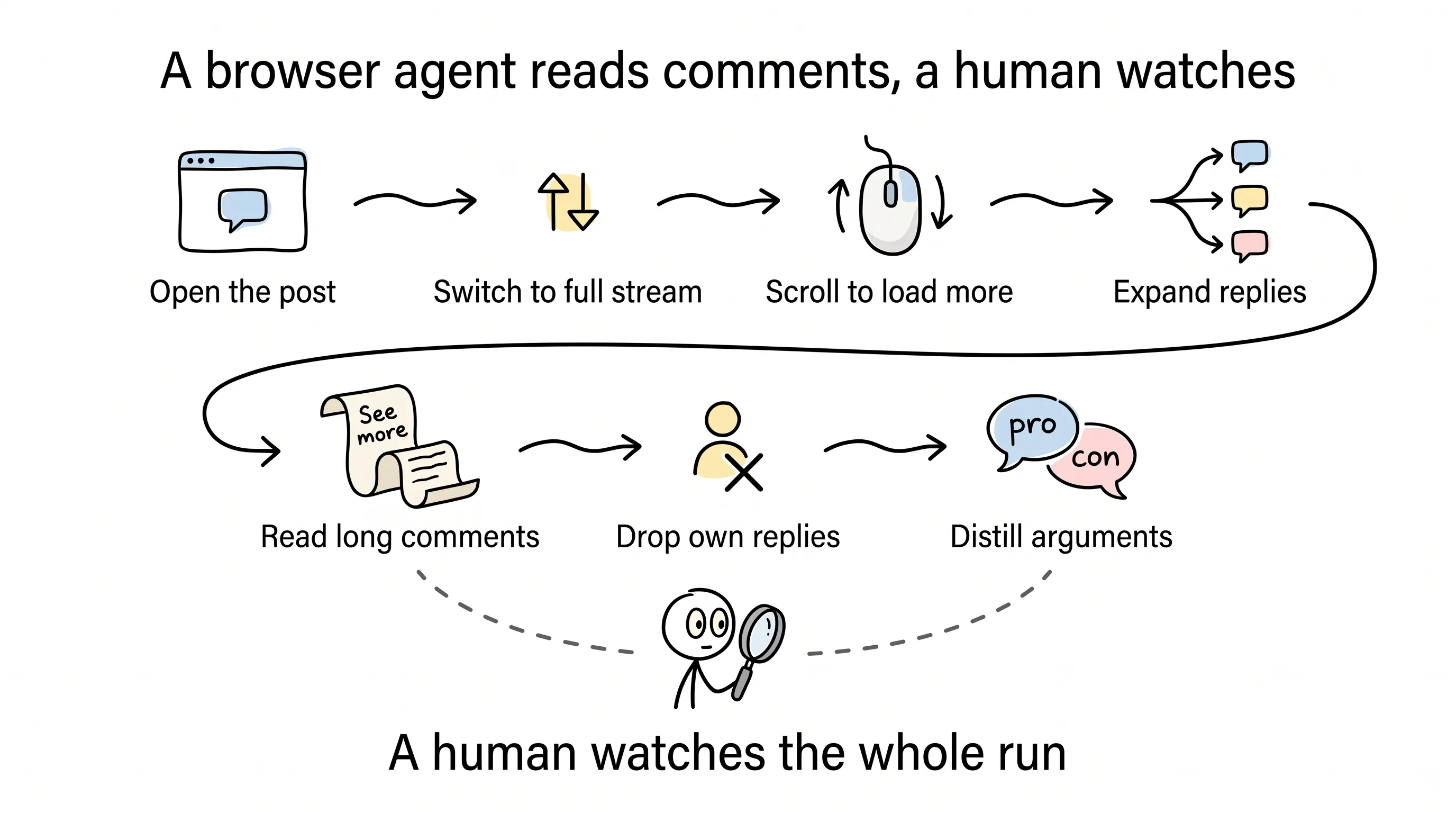
Across the whole run, the AI did finer-grained work than you'd expect: after opening the post it switched the default "Most Relevant" sorting to the full comment stream, advanced comment by comment in order, scrolled to trigger "load more," proactively expanded replies nested inside threads, clicked open long comments collapsed behind "See More" and read them in full, removed Roetzer's own replies from the audience comments, distinguished multiple comments by the same person so no one gets counted twice, and finally grouped everything into supporting and opposing camps, distilling the arguments and representative examples that recurred across threads. One person watched the entire run. The team's explicit reminder: never let an agent work unattended inside your logged-in account.
On results: sentiment split roughly even between positive and negative, which was no surprise; the interesting finding was that the loudest comments do not represent the majority. Once weighted by person instead of by comment count, the moderate middle ground drowned out by both extremes surfaced, and the shape of opinion suddenly gained real dimension. The team ported the pattern to four scenarios: real-time sentiment on product launch posts, with no more waiting for formal surveys; recurring objections in competitors' comment sections, fed straight into messaging optimization; community reaction after a campaign goes live, with the data deciding whether to amplify or adjust; and the mainstream views ignored in industry debates, finding the brand a safe position. The principle is one line: anywhere you'd copy-paste content out of a browser to analyze it, a browser agent can take over.
The risks are spelled out plainly too. A browser agent runs inside a real logged-in state, so it belongs in a controlled environment, under human supervision throughout, with the task scope narrowed to a single objective — the correct posture right now is supervised use, deliberate use. Platform terms of service on LinkedIn and elsewhere can mean bans, and scaling up unattended runs amounts to gambling with your account; the team deliberately kept this to a small-scale trial, precisely with that boundary in mind. The piece closes with a preview: OpenAI's latest GPT-6 Astra brings a major upgrade specifically in the speed, accuracy, and reliability of computer use, and teams practicing under controlled conditions now will be a full step ahead when the capability becomes table stakes. This test comes from the use-case segment of episode 237 of their podcast, The Artificial Intelligence Show, with every step documented and reproducible.
💬 This week, pick one non-sensitive post for a trial run: your own account, single-post scope, a human watching start to finish — practice first on a product launch post or a competitor's post. One run saves two to three hours of manual comment reading, and when reading sentiment, remember to weight by person so highly-liked extreme comments don't pull you off course. Don't touch compliance red lines, and don't turn the company's main account into a testing ground.
🔗 Further reading: Read the full article
🏷 Organization & Talent
IKEA Retrained 8,500 Customer Service Reps as Design Advisors, Earning $1.7 Billion in a Year
On September 9, MarTech ran a column by Steve Petersen, a marketing technology specialist at Wyndham hotel group, using the WYSIWYG editor's 50-year history to talk about AI and employment: technology changes the role; it doesn't erase the profession. WYSIWYG traces back to 1974, and once CMS went mainstream the people who wrote web pages were not discarded — the center of gravity shifted from writing code to editing and maintaining. The earlier example comes from music: when MTV launched in 1981, its promo song was "Video Killed the Radio Star." Nearly 45 years later, radio is doing fine, and podcasts and audiobooks have turned audio into a bigger business. Software engineers in the vibe coding era are living through the same displacement, from writing to reviewing. The Guardian's Varsha Banal has described the mood of this group: the value of their skills suddenly uncertain — some go back to rebuild fundamentals, some chase new skills, some seek collective action, and some are simply considering leaving the industry.
At the societal level, the structural gaps are being patched. Raise U.S., a cross-partisan organization led by former Commerce Secretary Raimondo and former Indiana Governor Holcomb, wants to avoid replaying the social costs of last century's manufacturing exodus; What Will We, a mutual-aid community founded by software engineer Kaitlin Cort, offers affected knowledge workers a community job board, layoff crisis support, shared learning tools, and application progress tracking, and as of mid-July 2026 was still preparing a basic income pilot and a mutual-aid fund.
The company-level samples are even more persuasive. IKEA analyzed the user requests its bots couldn't answer and found a big gap in interior design consultation, so it retrained 8,500 customer service reps as design advisors — that new business brought in $1.7 billion of revenue in 2024, 3.3% of the total, projected to reach 10% by 2028. Best Buy walked the same road: training store staff to help customers through complex purchases, using real-human expertise to differentiate from online-only rivals. What the two share: once repetitive Q&A was absorbed by websites and AI, people were moved into positions that command a premium. There are negative samples too — Gartner found many companies that cut staff in AI's name are regretting it and predicts that half of those layoffs will be reversed before 2027, the reason being that AI is broad in knowledge but lacks human judgment. The author's advice for marketing technologists comes down to habits: mid-career practitioners should handle a few small tasks every day with company-approved AI tools until the new habit takes root; proactively publicize your own results — he has quoted a former VP's reminder that syncing upward isn't selfish and that your boss will remember your value; and use the platform to solve real problems. Fundamentals are newly valuable again: US federal government systems still run on COBOL from the 1950s — people versed in old knowledge still eat just fine, and old knowledge occasionally ignites new technology. His transformation sample is Michael Rueckert, marketing director at the ski resort Snowbasin, who — after discovering that AI chatbots wouldn't recommend his resort — built a solution with Claude and rode the momentum into founding Centium, a company selling AEO and GEO services.
💬 Before you reshuffle your team, look at two things: which roles are filled with repetitive Q&A all day, and whether you can follow IKEA's lead by moving those people into selling professional services; and which judgment calls AI can't make — that is where the budget should go. On the personal level, use AI on one piece of real work every day, without fail, turning "have used it" into "use it fluently," and while you're at it, log your results and sync them upward — don't wait for the organization to arrange it for you.
🔗 Further reading: Read the full article
A BCG Partner's TED Talk from Three Years Ago Nailed Today's AI Marketing Dilemma
The item bestdaily picked up today is evergreen content: BCG partner Jessica Apotheker's December 2023 TED talk, now at 930,000 views. The set of judgments she offered back then looks, in hindsight, almost entirely on target. BCG-Harvard research measured that ChatGPT has already lifted marketers' right-brain output by about 40%; but that productivity won't become leisure — it will become more content, the same way word processors didn't shorten anyone's workday, they just turned six-page reports into fifty-page decks. The fully personalized email she described is coming true: the model in the image matches your age and gender, the clothes are printed with the band you love, every product lands on target. For the brand that's efficiency; for the inbox it's a disaster.
From there she extrapolated two risks. First, content overload: the volume of personalized pushes explodes and users get chased by the same content over and over. Second, content homogenization: generative AI trains on existing content and compresses the variance of what it produces; research shows that after people over-rely on generative AI, the divergence of collective opinion drops 40%, new ideas can't surface, and genuine innovation is smothered. For an industry that lives off difference, this is a more expensive problem than efficiency.
Her prescription has three steps. First, grow a left AI brain for the marketing organization: she worked with a consumer goods company to build a marketing data science team of 30-plus, pushing forecasting tools out to every marketer so that sales outcomes per channel can be estimated before every campaign launch, forming a positive feedback loop; which creative set is actually running, where the funnel is evolving — every marketer sees the answer before starting work, with no more waiting for the quarterly review. Second, don't train your models only on your own content. A brand that is strong with millennials will never crack Gen Z on its own data; go find data partners outside your ecosystem — her example: a construction company marketing to architects can co-build federated learning (training models across partners without sharing raw data) models with financial institutions and insurers, bypassing the direct peer data wall. Third, identify and protect right-brain talent, and the identification method for this group is plain: they always disagree with you. Teach them to use AI to find inspiration and prototype fast, and once a good idea takes shape, use AI to amplify its impact — but block them from using AI to originate ideas directly; that part must stay in human heads, or the brand's distinctiveness will leak away drop by drop into averageness. Her closing advice for every marketer: pick a side. The creative ones should forge originality into a moat; the data-minded should go deep on forecasting skill. Right now, everyone has to first choose their own brain.
💬 The organizational moves can be copied nearly as written: take stock of your marketing data science strength — if you can't muster 30 people, stand up a team of 3 first and push forecasting into campaign decisions; take data partnerships outside your ecosystem, since peers are rivals while cross-industry partners in finance and insurance are, ironically, cleaner. The most urgent line of all: protect the resident contrarian on your team, and don't let the model do the original thinking on their behalf.
🔗 Further reading: Read the full article
💡 Today's Big Picture
Put today's six items side by side and the picture is clear: no model releases, no funding news — every one of them a different face of the same thing: turning the AI you already have into money. The headline covers the traffic entry point migrating toward answer engines, up 40% in a year; the ROI piece covers how to explain this investment to your boss; the data architecture piece covers whether the foundation can feed the machine; the browser agent field test demonstrates that AI has started doing the work in your place; and the IKEA and TED pieces do the math on where the people should go.
Threaded together, a watershed is opening. The gap in model capability is narrowing — everyone can call the same GPT-5.6 Sol, everyone can read the same optimization guide. What actually separates winners is everything beyond the model: whether your data pipeline is real-time or an hour stale; whether your reporting language can be exchanged for budget; whether your content has the density of originality a model cannot generate; and whether your organization protects the resident contrarian. Each of these four questions has a news item today answering it. MIT's verdict that 95% of pilots show no measurable return, set against the headline's visitor curve from 634 million to 904 million, reads especially well on the same day: capability is spreading, cashing in depends on foundations — and what sits between those two curves is exactly these four questions.
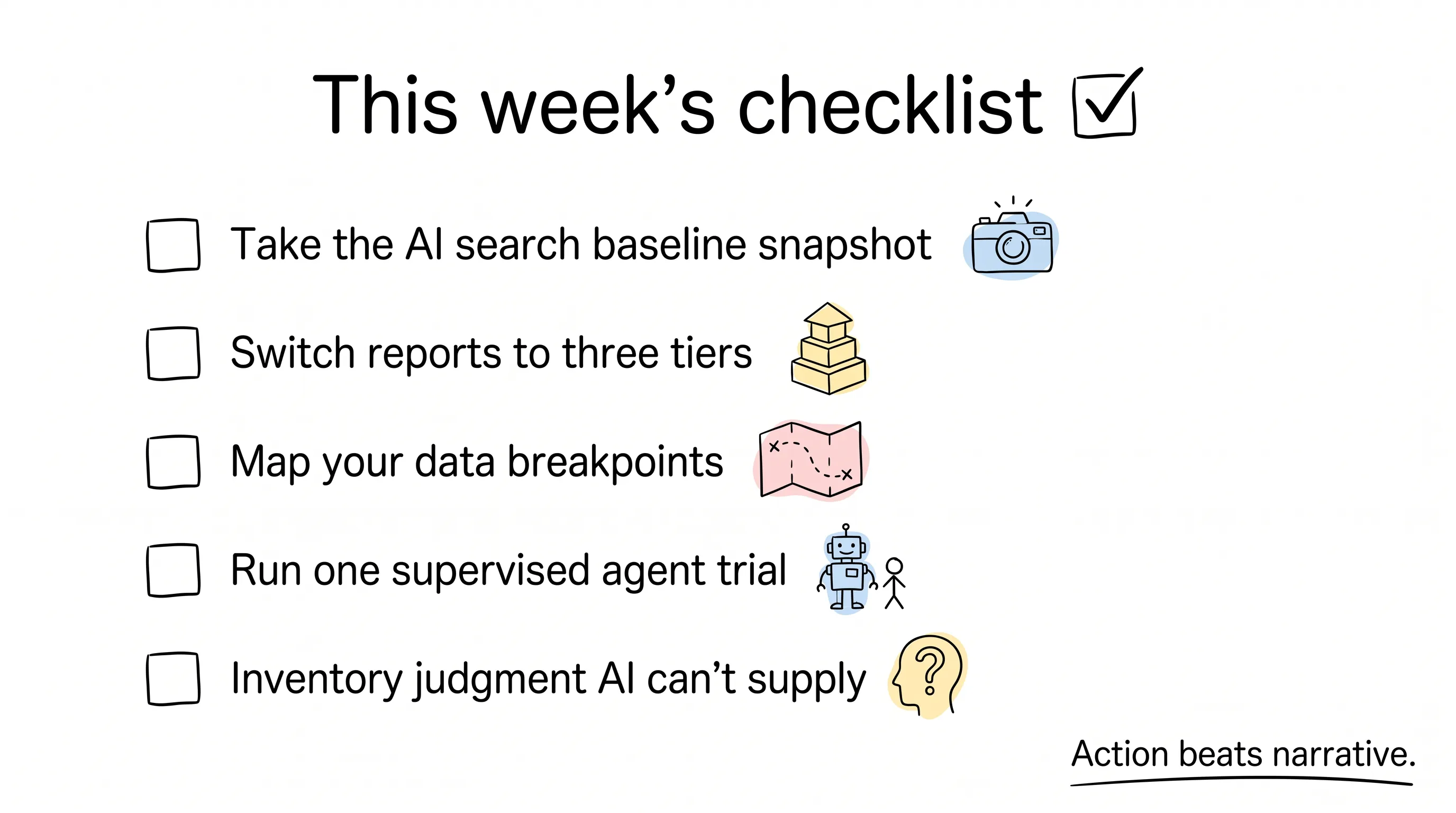
Left for the reader is an action checklist: take your AI search baseline snapshot this week, switch your weekly report to the three-tier reporting language, draw the map of your data breakpoints, open one supervised agent trial run, and take stock of who on your team holds the judgment AI can't supply. The trend has been talked up for a year; this day's keynote has shifted from storytelling to arithmetic — action beats narrative.
Continue reading
Related articles

AI Marketing Daily · 2026-10-09
AI marketing daily for 2026-10-09 covering 11 items: brand measurement moving from survey panels to search, social, e-commerce, and AI prompt signals; GEO and share of model playbooks; safety guardrails for agentic ad buying; and tool roundups for ad platforms, cross-border tools, and social media uses.

AI Marketing Daily · 2026-10-08
AI Marketing Daily for 2026-10-08 curates 20 items across AI search visibility (GEO), advertising, platform selection, cross-border e-commerce, and ROI measurement. The headline argues that strategic marketing decisions should stay with humans while AI assists execution.

AI Marketing Daily · 2026-10-07
Today's throughline is answer engine optimization (AEO — getting your brand quoted in AI answer engines).