
Zeta Global Just Launched a "Superintelligent" AI Agent: Marketers Can Now Just Talk to It
Zeta Global launched Athena, a natural-language AI agent that lives inside its Zeta Marketing Platform and can answer questions, adjust dashboards, and execute tasks via companion tools like Zeta Answers, Advisor, Workflows, and Simulator. The article contrasts Athena with its predecessor ZOE and notes built-in guardr
A video from a product launch scrolled past my feed, and I watched it several times over.
On stage was Zeta Global's VP of product. He leaned into the microphone and, casual as if chatting with a colleague, asked: how much did this campaign spend? How did it perform? What should we do next?
Every time he asked, the marketing dashboard on the big screen behind him changed on its own.
No clicking a mouse. No exporting data.
The thing answering his questions — and adjusting the dashboard while it was at it — is called Athena, Zeta Global's newly launched natural-language AI agent. The modifier the company gave it is a bold one: superintelligent.
That's a big claim.
So what exactly is Athena?
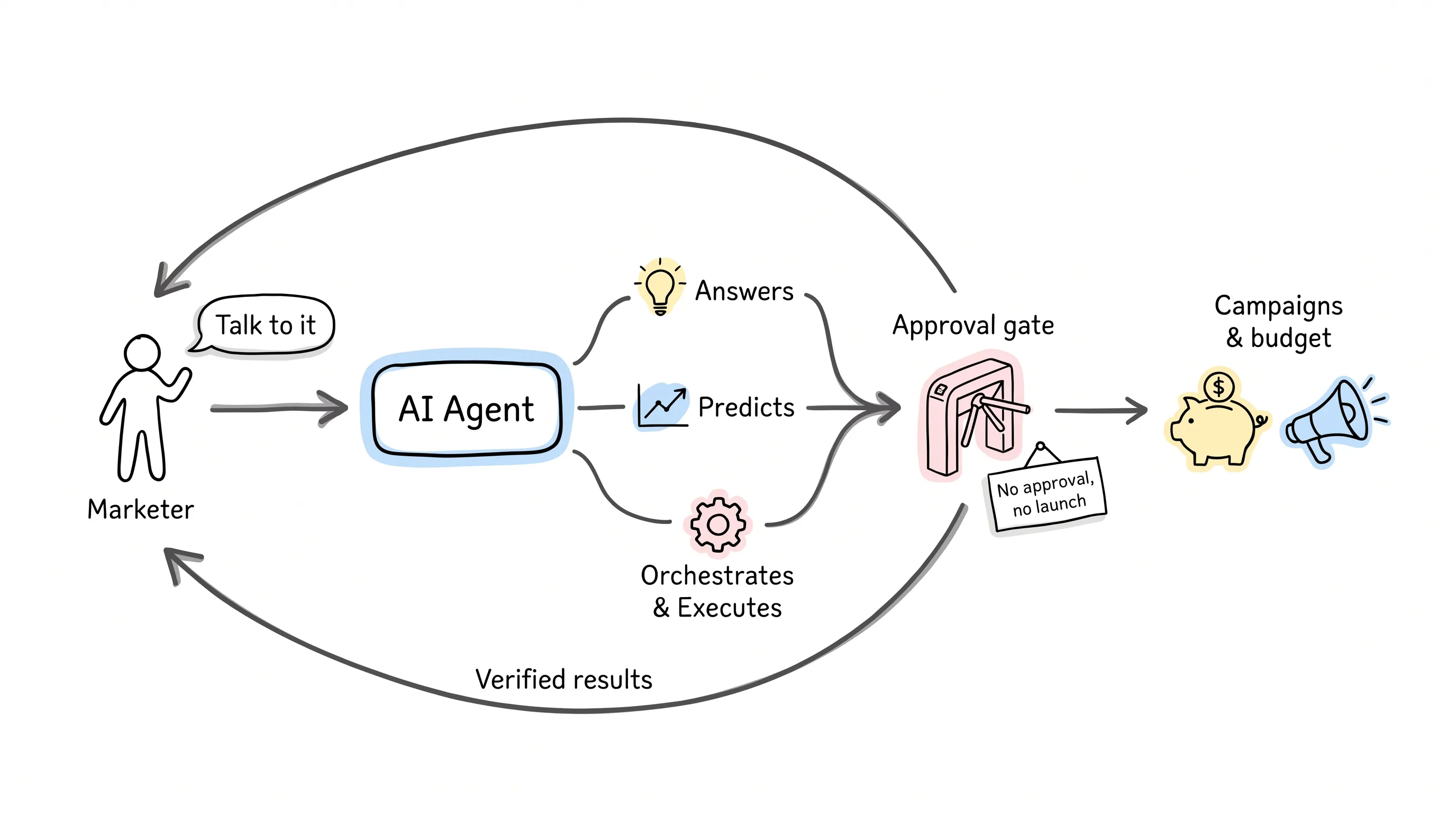
Simply put: a conversational agent that lives inside your marketing system. Plugged into Zeta's data cloud and contextual intelligence, it adapts to your goals, your style, and the way you make decisions. You speak in natural language — out loud, even — and it gives you answers, and predictions, right inside Zeta Marketing Platform.
It still sounds a bit abstract. Let me offer an analogy.
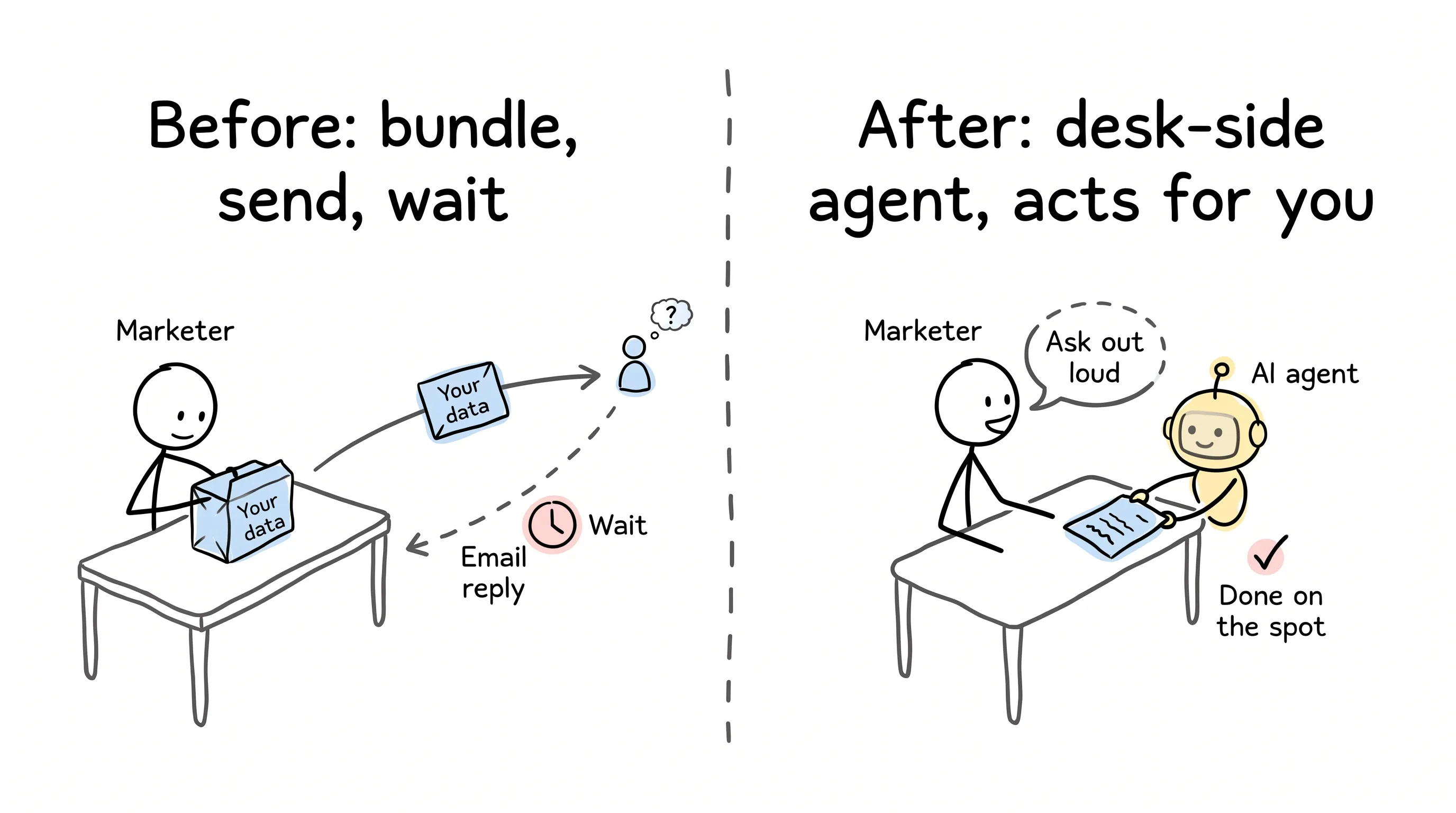
What did using AI tools feel like for marketers before? Like hiring a brilliant consultant who doesn't sit in your office. Every time you wanted to ask him something, you had to bundle up your data, send it over, and wait for his email reply. Want to ask again next round? Bundle it all up again.
What Athena does is move that consultant to the desk next to yours. You ask for something, he delivers it on the spot — and gets the work done while he's at it.
In industry speak, this is called removing the friction between marketers and AI tools. In plain English: less hassle.
Here's the interesting part: this isn't Zeta's first attempt at this.
Athena's predecessor was called ZOE, the company's first conversational assistant. ZOE understood plain language, but the interface was static: it talked with you, you watched from the side, and the actual work was still yours to do.
Athena goes one step further. It doesn't just answer — through a full suite of agentic applications (AI software that acts on its own, not just answers), it can orchestrate and execute.
There's one detail I really want to point out.
Zeta says security and governance are built into Athena. It can respond to new security challenges in real time, it verifies AI-generated results, and it makes sure that nothing gets into production without passing the guardrails and a marketer's approval.
You might read this as boilerplate. I don't.
The most essential difference between AI agents and the analytics tools of the past is this: agents have the authority to act. When an old tool miscalculated, worst case, you just didn't use its conclusions. Now it touches your campaigns and your budget directly. So "no approval, no launch" is not a selling point — it is the bottom line.
On launch day, Zeta also released a whole suite of companion pieces. Let me pick a few.
Zeta Answers, an intelligence framework grounded in Zeta's own data assets and identity graph, turns insights into action. Advisor translates your goals into AI-driven plans — with recommendations, automated processes, and real-time KPI optimization. Workflows lets marketers team up multiple agents, orchestrating everything end to end, from data ingestion to campaign launch. Simulator is my favorite: before you spend money, it first simulates your cross-channel strategy, with results you can align to your own attribution model.
Simulate first, spend later. Those four words are worth real money.
Insights also got an upgrade, adding conversational analytics. Ask one question, and out come the trends, the opportunities, and dashboards ready to take straight into your report.
Zeta isn't hiding its ambition either: they hope Athena will eventually coordinate multiple agents and grow into the intelligent operating system of modern marketing.
That phrase — operating system — carries a lot of weight.
Whether it gets there, I don't know. But one thing I'm fairly sure of: competition in marketing software is shifting from "who has the most features" to "who sits closest to the marketer."
How close?
Close enough that you say one sentence out loud, and it gets the job done.
Look back at the opening scene again: the person on stage asking questions into the microphone, the big screen shifting with every answer.
That may be what mornings look like for marketing teams from now on: open the laptop, and just talk.
As for whether "superintelligent" holds up, the market will give the answer. What stuck with me is a different word: always on call.
Continue reading
Related articles

It's 2026: Stop "Buying" AI Tools for Your Marketing Team — Start "Hiring" AI Agents
This learn article explains how AI agents differ from standalone AI tools in marketing, outlines three agent categories — build-your-own platforms, CRM-native agents, and vertical tools — and covers use cases across SEO, social media, advertising, and reporting, plus criteria for choosing one.

Did the Money You Spent on AI Marketing Ever Come Back?
A guide to measuring AI marketing ROI across three layers: ad reports, sales pipeline, and the financial ledger. Covers metrics such as ROAS and CPA, eight dashboard metrics, industry benchmarks, and common measurement mistakes.

How to Pick a Creative Automation Platform: First, Figure Out What These Eleven Actually Do
A learn article sorts eleven creative automation platforms — including Bannerflow, Celtra, Smartly.io, and Storyteq — into four functional groups and proposes five evaluation questions covering publishing reach, automation depth, ease of adoption, team fit, and verifiable evidence.