
How to Pick a Creative Automation Platform: First, Figure Out What These Eleven Actually Do
A learn article sorts eleven creative automation platforms — including Bannerflow, Celtra, Smartly.io, and Storyteq — into four functional groups and proposes five evaluation questions covering publishing reach, automation depth, ease of adoption, team fit, and verifiable evidence.
A while back, an old friend of mine who runs brand marketing at his company invited me to dinner. The dishes had barely landed before he started sighing.
His team had just been running a global campaign across forty-plus markets. Once the master ad was done, the real nightmare began: a different set of sizes for every channel, a different language for every market. Change one price mid-flight, and a designer had to reopen forty-plus files one by one.
He asked me: isn't there a less dumb way to do this?
There is, I told him. This category of tool goes by the industry name "creative automation platform." The ones worth naming, over and over, come down to these eleven: Bannerflow, Celtra, Smartly.io, Storyteq, Brandeploy, Cape.io, The Brief, Viewst, Wireflow, Atria, Abyssale.
But don't rush to compare specs. After that dinner, I dug through all eleven of them and found something worse:
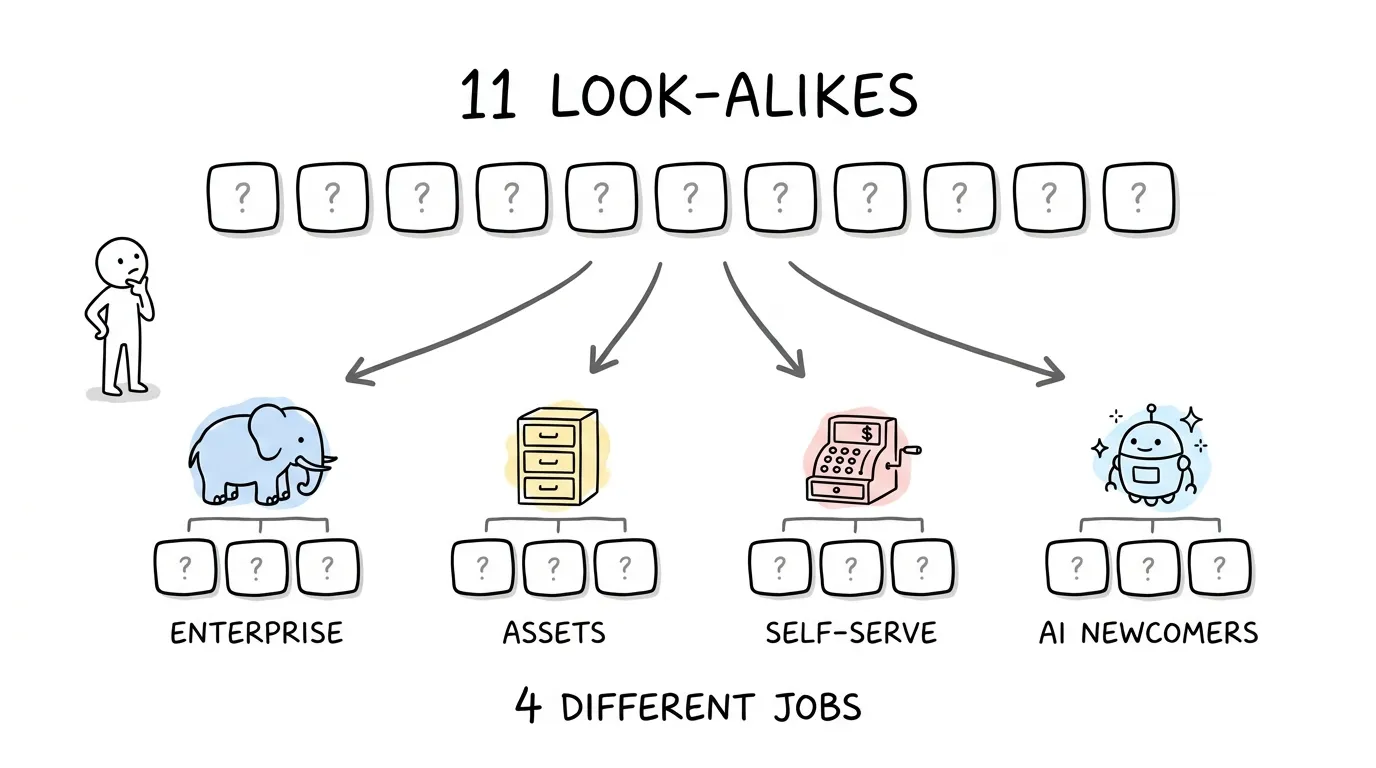
These eleven look alike, but they don't do remotely the same job.
Pick the wrong brand, and you waste one round of evaluations. Pick the wrong type, and you usually don't realize it until six months after signing — with most of the contract still to run.
What Is Creative Automation?
What is creative automation, exactly?
Think back to mail merge. One template, one list, and the machine generates a hundred letters, each with a different recipient. Creative automation is mail merge for advertising.
You build a master ad first, leaving slots open for copy, images, price, and so on, then hook it up to a data sheet or data feed. The platform automatically produces every size and every language version you need — then pushes those ads straight into your delivery channels.
And note — pushed into the channels, not exported as a pile of files for you to upload yourself.
So when the master changes in one place, every live ad follows. Got the price wrong? Fix one row of data.
Change the master in one place, and every in-flight ad moves with it. That's the dividing line between creative automation and manual production.
By the way, here's a term that's easy to confuse: creative intelligence. It's not the same thing as creative automation. Automation handles production — turning one master into a thousand variants. Intelligence adds a layer of judgment on top: predicting which creative will perform before launch, then using attribution data after launch to prove what worked and tell you what to do next. One is the production line; the other is the feedback loop.
From Manual to Automated: Four Routes
Getting one ad into many channels and many markets — there are four common ways to do it today. Their differences aren't about better or worse; they're about where each one breaks down.
The first route: hand-editing inside a design tool. Photoshop, Figma, Canva — all fine. Up to a handful of sizes, no problem at all. But every size is a separate file, so one price change means reopening them all, and every additional market multiplies the file count all over again. That's exactly where my friend was stuck.
The second route: outsource to an agency or a production studio. The work moves out; the bottleneck doesn't. You get billed per version, and once the ad is live, any change waits in someone else's queue. Same-day change, same-day live? Basically unthinkable.
The third route: self-serve ad builders with automatic resizing. That much, to be fair, they do solve — a small team may well be fine stopping here. But they stop at export: someone still has to upload the file package to each platform one by one, and once you're live, changing a single line of copy means doing the whole thing over again.
The fourth route: a creative automation platform wired to data feeds and delivery channels. It fills in exactly where the first three break: the master updates, the variants update, the live ads update on the spot.
Of course, the fourth route has its own price of admission. Platforms at this tier basically only quote after a sales conversation, and you need enough media spend to carry the subscription.
Eleven Platforms, Really Four Kinds of Animal
I sorted the eleven by what they actually do. You'll find that ranking them on a single scoreboard is, in itself, not quite fair.
Pile One: Enterprise-Grade Creative Production Platforms
Celtra, Smartly.io, Cape.io, and Bannerflow all sit in this pile — but their jobs differ a lot.
Celtra is the heaviest of the bunch. Its own website reports: 450-plus enterprise clients, more than 10.4 billion impressions served per year, and a client list that includes Nike, Spotify, Unilever, and McDonald's. It's built for the global giants that have a dedicated creative-ops team.
Smartly.io does something else: it bundles creative production and media buying into one system, focused on paid social channels like Meta, TikTok, Pinterest, Snap, and Google. It's closer to a buying platform with creative capabilities, built for big budgets. If you want creative and buying to never split up, it's the right fit.
Cape.io spreads itself widest of the eleven: display, social, video, print, email — even broadcast TV and CTV (connected TV). Its public case studies include KLM running one campaign across 67 markets, and Ubisoft. If even your TV ads answer to the creative department, this one belongs on your shortlist.
Bannerflow is also in this pile, somewhere in the middle: batch production of display and social ads for mid-to-large brands and agencies. It's confident enough to name its integrations one by one: 100-plus delivery platforms, including The Trade Desk, Amazon DSP, Google DV360, Meta, and TikTok; for digital out-of-home (DOOH), five named partners like JCDecaux and Clear Channel; and as of November 2025, it's an Amazon Ads certified third-party ad serving partner. On G2, third-party reviewers score its ease of use 8.8 versus Celtra's 8.3, and quality of support 9.3 versus 8.8; against Smartly.io, it leads on all three of ease of use, configuration, and admin. One more thing worth calling out: it has AI image and video generation built into the platform, and once something is generated you can scale it, localize it, review it, and launch it in the same system — no shuttling files between a generation tool and a production tool. Its website also says 2,000-plus brands use it; one hotel group client runs localization across 43 markets in a single workflow and lifted production by 50%; one game publisher cut its production cycle by two-thirds.
Pile Two: The Two That Grew Out of Asset Management
Storyteq and Brandeploy aren't ad-production tools at the core.
Storyteq shows up on every comparison list, but you need to see its real trade. In April 2026, the company itself announced its fourth consecutive year as a Leader in Gartner's Magic Quadrant for Content Marketing Platforms. Its structure is a content portal built on DAM (digital asset management) plus an adaptive studio, and its strongest skill is multi-market localization management. In other words, it's first-rate at managing your assets; but "keeping live ads updated in real time" is not its home turf. One job is managing your asset library; the other is getting your ads out the door. Those are two different jobs.
Brandeploy is French, positioned as a brand portal: headquarters sets the templates, local teams and partners apply them inside the portal, and it connects via API to a DAM or PIM (product information management). Its client list includes Nuxe, Bayard, Groupe SEB, and Air France, with its footprint mostly in France and continental Europe. Its signature output is print collateral and e-commerce product detail pages. But to be honest, it's the thinnest of the eleven on public information: no published integrations with any DSP (demand-side platform), ad network, or social platform, no DOOH partners, no pricing, and thin review data on G2. If print and product pages are the bulk of your output, take a look. If you're purely running ads, it doesn't even have enough comparison points to rank.
Pile Three: The Self-Serve Small-Team Camp
The Brief, Viewst, and Abyssale share one trait: published pricing, no sales calls required.
The Brief used to be called Creatopy, renamed in October 2025, and along the way turned from a banner-making tool into an "AI ad agency" model: discovery, creation, launch, optimization, end to end. From $29 a month, billed annually. It names more than 25 ad networks itself. Good fit for small teams on a budget who want to do it themselves.
Viewst is an HTML5 ads tool for independent designers and small teams, and its signature feature is automatic resizing: the whole layout re-flows, one master stretching into the full set of IAB standard sizes. Feed it a CSV or a PIM sheet and it batches out a pile of variants. Per-seat pricing: $110, $210, or $400 per person per month, billed annually, with a 14-day trial. But once the ad is built, you still export the files and upload them to each platform by hand; CSV batch generation happens at the production stage, and after launch, there's no such thing as dynamic optimization.
Abyssale is the closest of the three to classic creative automation: templates plus spreadsheets plus an API, one design becoming a pile of banners and social ads. $12, $36, or $60 per seat per month, billed annually. It connects to Airtable, Zapier, Make, and n8n, has a REST API plus SDKs for Node.js and Python — quite developer-friendly. But it doesn't publish to ad platforms; once the files are done, delivery is still on you.
Pile Four: The AI Newcomers
Wireflow and Atria are the two that surfaced most recently.
Wireflow is a shared canvas that calls on models like Google, OpenAI, and Kling to generate images, videos, even voice ads. It can push directly to LinkedIn; YouTube goes through upload; Meta and TikTok files have to be downloaded and uploaded manually. From $36 a month. If all that sounds like too much hassle, there's also a done-for-you service starting at $5,500 a month. It's for dreaming up new ideas, not for mass-producing localized variants from a master.
Atria revolves around Meta and TikTok. It has an AI teammate called Raya that analyzes your ads and your competitors', writes briefs, turns winning patterns into new ads, and bulk-uploads them back to Meta — and it's an official Meta partner. No DSP or broader display network integrations.
How to Choose? Five Rules I Set for Myself
When evaluating these platforms, I don't recommend looking at who has the highest total score. A self-serve tool and an enterprise platform on the same ruler was never a fair fight. Instead, test each candidate against five questions:
First, publishing reach. Which channels can it actually push to, directly? Don't buy "supports all major platforms" — look for a named list. On this count, Bannerflow's 100-plus named integrations are the longest public list in this bunch.
Second, depth of automation. Master plus data feed — does it drive all the way to "live ads updating in real time," or does it stop at "export the files"? The former is automation; the latter is batch processing.
Third, how easy it is to get started. Can your designers and marketing teammates run it themselves on day one? Teams that bring creative in-house usually don't have dedicated ops staff, and at times like that, third-party reviews like G2's are more honest than the vendor's website copy.
Fourth, who it matches. Are you a global enterprise, a mid-size brand, an agency, or a solo designer? Is your budget negotiated or published? Is the team in-house, hybrid, or agency-run?
Fifth, how hard the evidence is. Integration lists, pricing pages, certifications, client numbers you can verify — all checkable. "Industry-leading" doesn't count.
For transparency, here's what this article is based on: each vendor's integration list and pricing comes from its own public website pages around October 2026; comparison scores come from G2's public review data. Numbers vendors report about themselves deserve a discount when you hear them; third-party numbers are comparatively harder.
And there's one name that keeps getting dragged into these lists by mistake: Innovid. It was acquired by Mediaocean in February 2025 and merged with the veteran display ad server Flashtalking, which is why it keeps getting filed here. But its actual trade is CTV and video ad serving — its old NYSE ticker was literally CTV. If what you want is display and social creative automation, it's not your species. Interestingly, Bannerflow can actually connect to Flashtalking as an ad server — those two are partners, not rivals.
Finally, Back to That Dinner
By the end of that meal, here's the advice I gave him:
First, get the problem straight. Do you want to "get ads out faster and in more volume," "manage your creative assets well," "come up with more new ideas," or "analyze and mass-produce for social campaigns"? Those four jobs map to the four piles above.
Then get the channels and scale straight. Social only? Smartly.io and Atria know that game. Display plus social plus out-of-home screens? Bannerflow and Celtra are the serious enterprise answers: the former is friendlier to teams that just brought creative back in-house, the latter is built for giants that already have a large creative-ops team. TV ads in the mix too? Look at Cape.io. Tight budget, small scale? Pick from The Brief, Viewst, and Abyssale — while being clear-eyed that all three stop at "export."
One more thing to flag: of these eleven, only five publish their pricing — The Brief, Viewst, Abyssale, Wireflow, and Atria. The other six all require a sales conversation. So before you sign, every extra hour spent clarifying your requirements is worth more than another page of website copy.
There is no platform that fits every team. Anyone who tells you otherwise is probably just trying to close the deal faster.
Here's wishing your team gets there one day sooner: change one price, hit Enter once.
Continue reading
Related articles

It's 2026: Stop "Buying" AI Tools for Your Marketing Team — Start "Hiring" AI Agents
This learn article explains how AI agents differ from standalone AI tools in marketing, outlines three agent categories — build-your-own platforms, CRM-native agents, and vertical tools — and covers use cases across SEO, social media, advertising, and reporting, plus criteria for choosing one.

Did the Money You Spent on AI Marketing Ever Come Back?
A guide to measuring AI marketing ROI across three layers: ad reports, sales pipeline, and the financial ledger. Covers metrics such as ROAS and CPA, eight dashboard metrics, industry benchmarks, and common measurement mistakes.
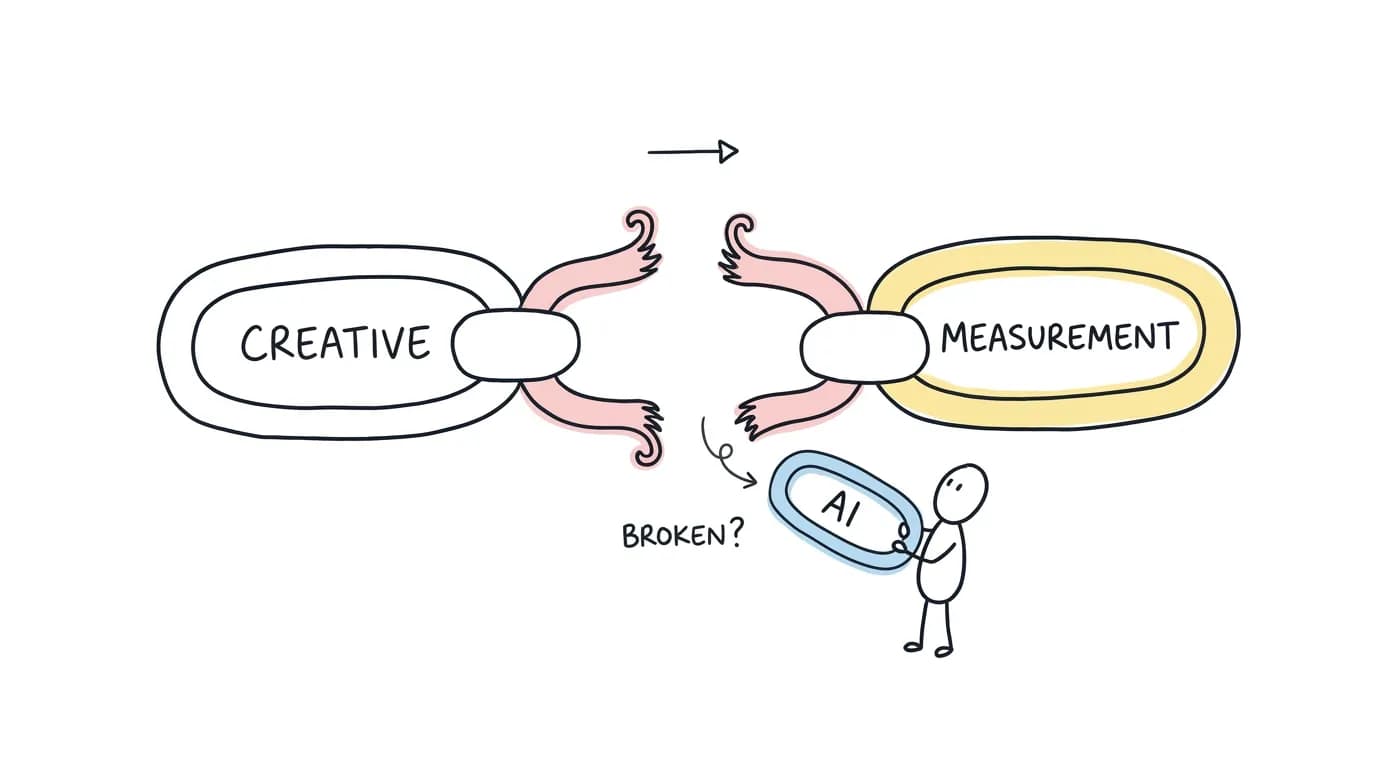
How to Choose a Creative Ad Tech Platform: Put 8 Side by Side, and the Gap Isn't Features — It's How Far the AI Actually Goes
This article compares eight creative ad tech platforms—Innovid, Smartly, Clinch, Jivox, Celtra, Bannerflow, Google CM360, and VidMob—on channel coverage, creative production, ad serving, measurement, and AI agent capabilities. It suggests matching the platform to the broken link in the creative-to-media chain.