
Your Customers Have Started Asking AI. Are Your Tools Keeping Up?
A learn article comparing HubSpot, Customer.io, Marketo, and ActiveCampaign by sales motion, CRM fit, and cost, then discussing AI search visibility and how a dedicated content engine like AI Growth Agent aims to earn citations in AI answers.
A few days ago, an old friend of mine who runs a SaaS company asked me out for coffee. Before he even sat down, he slid his phone across the table, the screen packed with a dozen-odd browser tabs: HubSpot's website, Customer.io's website, Marketo's pricing page, an ActiveCampaign comparison review. His company had just crossed $10M in annual recurring revenue (ARR), he said, and he wanted to roll out a marketing automation platform. He'd read a few dozen articles, and the more he read, the more tangled it got. If he couldn't pick one soon, the budget was going to end up funding a team offsite instead.
I told him: don't start by comparing features.
Answer me one question first: what exactly do you want this thing to do for you?
He froze.
That day I talked for the better part of an hour. Today I've written it down for you. By the time you finish reading, you'll know where the traps are in choosing this kind of tool in 2026 — and where the new road runs.
What Is Marketing Automation, Anyway?
Let's crack one basic concept open first.
What is marketing automation?
Put simply, it's about greeting the people already sitting in your database — automatically, and by rule: a user downloads a whitepaper, and three days later a follow-up email goes out; they open the pricing page, and an in-app message pops up on the spot; their lead score hits 80, and they get routed to sales automatically.
Notice the key phrase: "already in your database."
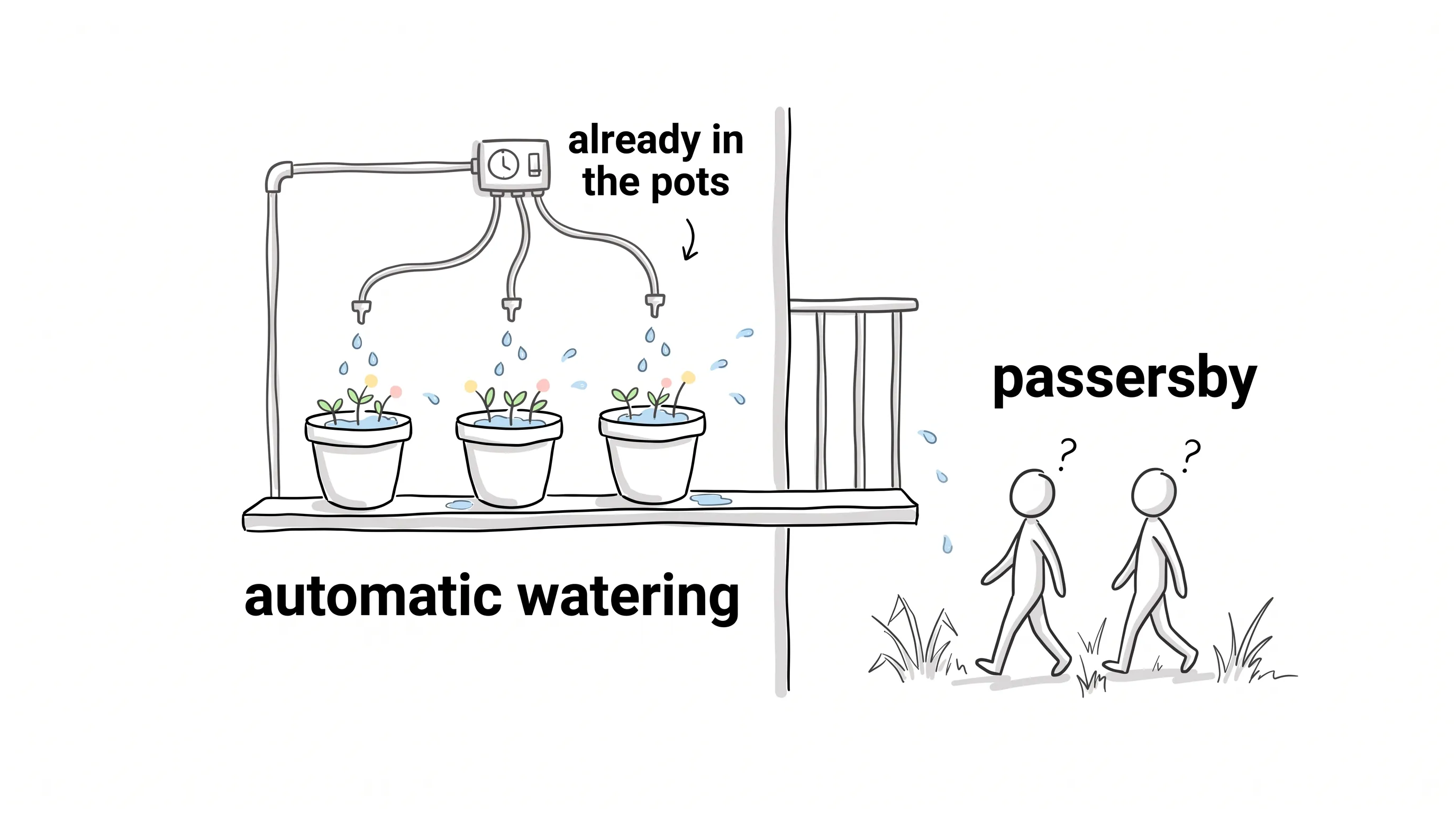
However flashy these tools get, they all tend to the same thing: the contacts you already have. It's like the automatic watering system on your balcony — timed, measured, triggered by humidity. Genuinely convenient.
But a watering system has a built-in limitation: it only waters the flowers already in your pots. It can't make passersby stop.
Hold onto that line — everything that follows depends on it.
Four Established Players, Each Covering a Different Stretch
The four most often thrown into the same comparison are HubSpot, Customer.io, Marketo, and ActiveCampaign. None of them crushes the others; there is only which one fits. The criteria come down to two: your sales motion, and how deep your pockets go.
One at a time.
HubSpot: The Low-Hassle Pick for Sales-Led Teams
What does sales-led mean? It's the model where sales closes deals one conversation at a time — meetings, quotes, contracts.
HubSpot has built its business on exactly this. One number from G2's mid-market CRM report: in the $10M to $50M ARR band, HubSpot is the most widely deployed marketing automation platform.
Why? Because it's low-hassle.
Its CRM and its marketing automation share one database, so there's nothing to sync by design — and none of that "the two sides don't match" misery to manage.
The money checks out too. Run the numbers: add up admin salaries, integration fees, and consulting costs, and the total cost of HubSpot for a mid-market team lands 30% to 60% below Salesforce. It also goes live faster — no need to keep a dedicated Salesforce admin on the payroll. The Enterprise edition starts at $3,600 a month, and climbs as you add modules.
But three buckets of cold water first.
First, once you're past 50 workflows, the branching logic tangles into a knot — change one thread and the whole web moves. Second, once more than 200 reps are carrying quota, its territory and commission tools give out. Third, and most important: it has built-in AI content features, but the prompt cap sits around 50, and what it generates often doesn't even carry your brand name — AI search gives it essentially no ranking.
It does, to be fair, ship an AEO (answer-engine optimization) feature that tracks when your brand gets cited in ChatGPT, Gemini, and Perplexity.
Monitoring. Only monitoring.
Customer.io: The Darling of Product-Led Growth
Now, Customer.io.
If your growth doesn't come from sales pounding the pavement but from the product itself — users sign up, try, and pay entirely on their own — that model is called product-led growth (PLG). And Customer.io may be exactly the tool for you.
Its approach travels a completely different road from HubSpot's: event-driven. A user finishes onboarding, usage crosses a threshold, someone pulls a teammate into the workspace — these actions stream in live and fire messages automatically. In-app, email, push, SMS, all orchestrated on one canvas. It connects natively to Segment, Snowflake, and BigQuery, which means it plugs straight into your data foundation.
Why is it worth a dedicated tool for PLG? Do the math: PLG companies grow at a median of about 35%, versus 26% for their sales-led peers; they spend 39% less on sales and marketing; and with users onboarding themselves, acquisition costs can run 50% to 80% lower. Higher growth, lower spend — pair that with a tool tailor-made for the model, and the advantage is real.
The price is just as blunt: you need engineers. Feeding product events in takes code and data pipelines. There's no native CRM either, so a purely sales-led team has no use for it. Pricing follows the number of tracked people and message volume — typically $300 to $1,000 a month.
Marketo: Heavy Machinery for the Big Operations
The third, Marketo — full name, Marketo Engage.
It serves mid-size and large organizations that run on Salesforce. SaaSHero's comparison review puts it plainly: for Salesforce-centric companies above $15M ARR with a dedicated RevOps team, this is the first choice.
Its signature strength is two-way sync with Salesforce, and right now nothing else comes close: multi-dimensional lead scoring, multi-touch attribution, and account-based marketing (ABM) flows built for buying committees all map directly onto Salesforce opportunity stages. One more set of numbers: companies where sales and marketing work in tight sync see 36% higher customer retention and 38% higher win rates. That alignment is precisely what Marketo's depth of sync exists to tighten.
But feel the weight of that heavy machinery first.
It's expensive — quote-based pricing, with mid-market deployments typically starting between $1,500 and $6,000 a month, before professional services. It's slow — just standing up full multi-touch attribution between Marketo and Salesforce usually takes 6 to 12 weeks. And it tracks contacts and customer data, not product events, so for a pure PLG team, running it is like running a marathon in a suit.
ActiveCampaign: The Pragmatist of the Middle Ground
The last of the four established players: ActiveCampaign.
It sits right in the middle: far less engineering than Customer.io, a lot cheaper than Marketo, plus a lightweight CRM of its own. Behavioral triggers, email, SMS, and in-app messages all on one canvas, and it connects to Salesforce and HubSpot too. The entry plan starts at $15 a month; enterprise configurations run past $1,000.
For teams between $8M and $15M ARR on a hybrid motion — half self-serve, half sales-assisted — it's a pragmatic starting point.
But "light" is also its ceiling. That built-in CRM buckles under multi-stakeholder purchases and sales cycles longer than 90 days, and its Salesforce sync maturity still trails Marketo by a step. It does the job. It just won't grow.
Put the Four Together, and One Thing Is Still Missing
That's all four. By the usual script, I should now say "just find your row and pick."
I won't.
Because no matter how you choose, or how you combine them, all four are missing the same thing.
Back to the watering system. Everything these four do happens inside the pots — tending to people you already know.
But what are your prospective customers doing right now?
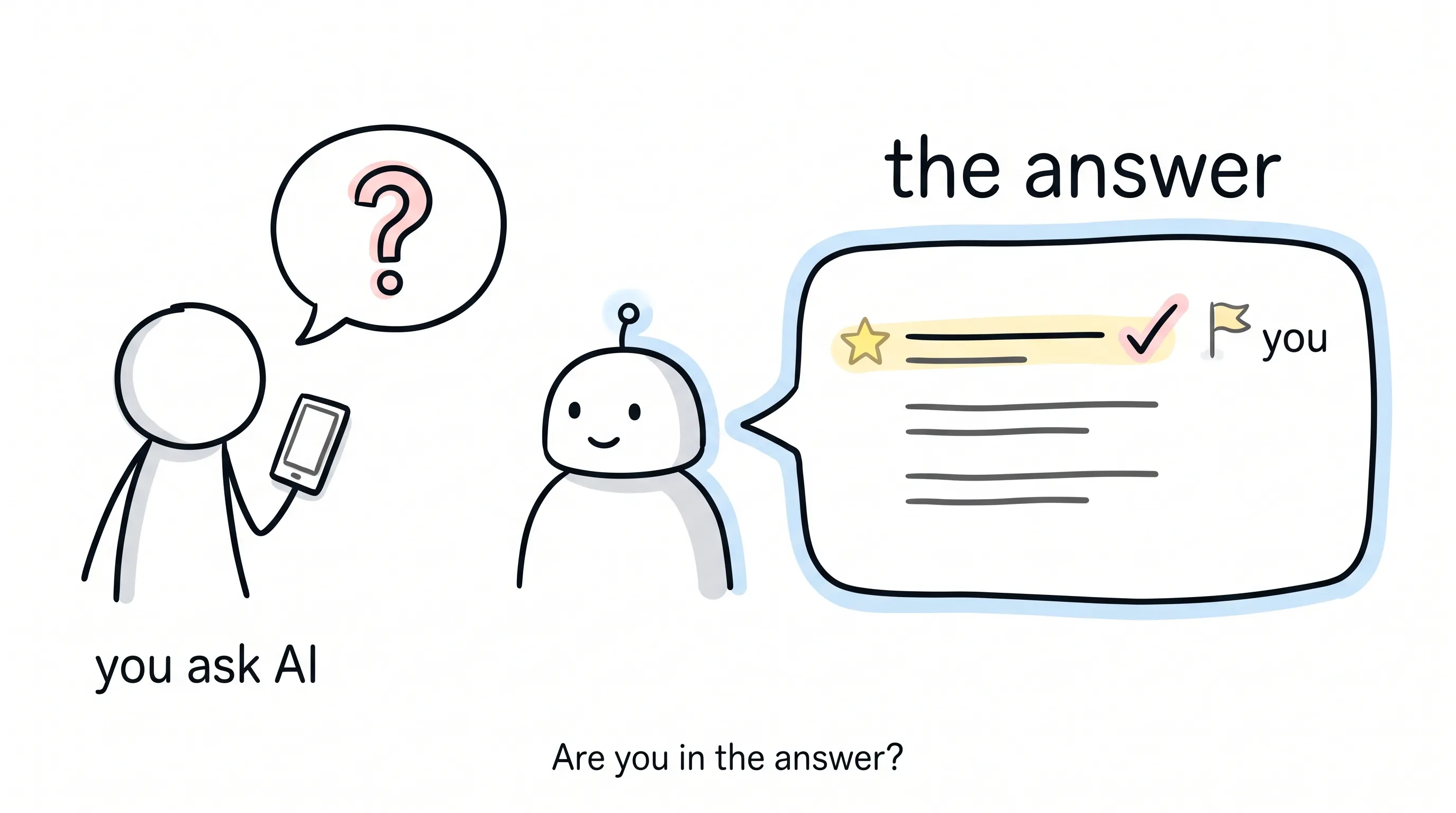
They're asking AI. Asking ChatGPT, asking Perplexity, asking Google AI: "Recommend a few marketing automation tools for mid-market companies," "How do I choose between platform A and platform B?" AI hands them an answer on the spot.
Are you in that answer?
This has a name: AI search visibility. When a buyer asks AI, do you show up in the answer? Are you cited? Does it say good things about you — or good things about your competitor?
How much does that matter? Gartner has projected that by 2026, as AI chat siphons off informational queries, traditional search volume will fall by 25%. The traffic you used to scoop out of search engines is being eaten by AI, one bite at a time.
Someone will say: doesn't HubSpot have AEO monitoring?
Right — monitoring. And that's the easiest trap to step into: mistaking "seeing the problem" for "solving it." A checkup can flag high cholesterol, but the report itself can't lower it.
Backlinko analyzed 50 B2B SaaS websites: sites whose content is organized systematically by topic (pillar pages with clusters) earned a 41% AI citation rate; loose standalone pages, just 12%. A gap of more than three to one. Pages with properly structured data earn even higher citation rates.
Think about it: maintaining that kind of systematic content across hundreds of long-tail questions, keeping it self-updating, keeping it smooth for AI crawlers to read — that does not fit inside any marketing automation platform as a feature.
It has to be a standalone engine.
The Fifth Contender: AI Growth Agent
So this comparison has a fifth contender, one many people haven't heard of yet: AI Growth Agent.
It isn't in the same lane as the four above. Those four automate the existing contacts in your CRM; what it does is make AI know you — and cite you.
How? Let me pick out a few key moves.
Drawing the map. Using live Google and ChatGPT data as its yardstick, it lays out the entire query universe around your brand: hundreds of seed terms, countless long-tail questions, refreshed every week. What your buyers will ask, and on which questions you're nowhere to be found — one map shows it all.
Writing content. It keeps publishing against every long-tail question in that universe, 2 to 50 pieces a day. And the content is "alive": updated when it ages, corrected when it's wrong, with fact-checks at every step to keep the machine from making things up.
Handing over the menu. It sets up every technical signal meant for AI eyes in one pass: llms.txt, llms-full.txt, Blog MCP, a full schema suite, and Markdown built specifically for agent crawlers. Here's a way to picture it: you've prepared a menu for your human customers — and a separate, even clearer one for the robot waiters.
Counting the gains. It reports increments every week: how many new AI citations, how many crawler visits, how many impressions. The key is that it strips out the visibility your brand already had and counts only what it newly contributed.
The first time I saw this report card, I read it three times over. Averages across customers' first 12 weeks: 12,000-plus new AI citations and mentions, more than 100,000 additional crawler visits, and impressions up 20% or more.
Two specific names. One brand, Breadless, ran this engine for six months; its Google impressions grew roughly 30-fold, and ChatGPT now cites its website more than 45,000 times a month. Another, Leva Sleep, had been live less than three weeks when a buyer, following the AI content, showed up and signed a $40,000–$50,000 deal.
Why does it work? The underlying logic isn't complicated: a site whose pages link to each other and weave into a net is easier for AI to cite. Its content topology and internal-linking architecture are laid out along exactly that pattern.
The pricing model is just as blunt: a single flat price. No per-article fees, no quotas, no metered prompts — and all the content it produces belongs to the customer. The site can be live in the first week, connected to your main site through a reverse proxy. Your main site stays the one you've carefully polished; the engine quietly works behind it.
The shortcomings? There are some, and they need to be spelled out.
It is not a CRM. No deal pipelines, no lead scoring, no in-app messaging. It replaces none of it — not HubSpot's pipeline, not Marketo's scoring, not Customer.io's messaging. It stands only at the very top of the funnel, pouring organic traffic and AI-search traffic into the CRM and automation system you already have. If you sit in the $8M to $30M ARR band, your automation foundation is built, and what you're missing is an engine that funnels AI traffic in — that is exactly the job it does.
How to Choose: One Straight Line
Back to my friend's question from the start: how do you actually choose?
My advice: work through it in one straight line.
First, name your sales motion. Deals closed by reps? Look for mature CRM sync — HubSpot or Marketo. Growth through self-serve product? Look for event-driven tools — the Customer.io type. A foot in both camps and want to keep it simple? ActiveCampaign will do.
Next, take stock of your CRM. On Salesforce, Marketo pairs most smoothly; on HubSpot CRM, the full HubSpot suite runs with zero sync lag. The cost of a mismatch is sync lag, fields that won't line up, and endless RevOps overtime. One aside: whichever stack you choose, these fields are non-negotiable — email, lifecycle stage, lead score, source, last activity date, opportunity owner, unsubscribe status. Miss one, and the data drifts quietly — and your attribution drifts with it.
Then count the full bill, and stop staring at the subscription price. Add implementation and operations to year one, and total cost often runs to twice the subscription: implementation alone takes dozens to a hundred-plus hours, a single integration runs thousands to ten thousand dollars, and maintenance takes a few to a few dozen hours every month after that.
Finally — the most important step of the day: search your own brand name in ChatGPT and Perplexity right now, then search the core questions of your category. Does AI mention you? Does it get you right?
If the answer is that you're nowhere to be found, or what it's describing isn't you at all — no marketing automation platform can fix that for you.
The only thing that can is a content engine built specifically for AI visibility.
Finally, Back to That Cup of Coffee
That day, when I finished, my friend wrote two lines on a napkin. I'm copying them out for you.
Marketing automation tools solve "how do I have better conversations with people who already know me."
AI search engines solve "letting people who don't know you yet hear your name for the first time when they ask AI."
However many existing contacts you hold, they will never fill up AI's answers. Brands that moved early and are already being cited seriously by AI are training the next generation of models on their own story; brands that wait will be described by whatever AI happens to scrape off the open web.
Your customers have already started asking AI. The only difference is whether the answer includes you.
Here's to becoming the brand AI takes seriously enough to cite.
Continue reading
Related articles

Cross-Border Business: Time to Upgrade Your AI Toolbox
A learn article explaining how AI tools help cross-border e-commerce sellers clear five hurdles: language, regulation, logistics, payments, and fraud. It outlines a five-compartment toolbox, a five-step adoption path, and metrics such as conversion rate and CLV, while cautioning against over-reliance on AI.

AI Is Taking Over the Dirty Work of Social Media Marketing, One Task at a Time
This learn article outlines four social media marketing tasks AI can handle — audience analytics, content drafting and design, ad targeting and creative testing, and spam moderation — and cautions that taste, judgment, and data security remain human responsibilities.

AI Is Already This Good — Why Is Your Social Media Marketing Still Pure Manpower?
An overview of 18 AI tools for social media marketing, organized into six categories covering audience research, content creation, scheduling, comment and DM handling, ad management, and visual production, plus notes on personalization, prediction, and emerging trends.