
Why Is Domaine, the World's Largest Shopify Store-Building Agency, Getting Into Keeping Customers for Brands?
An analysis of why Shopify agency Domaine is expanding into CRM and customer lifecycle marketing services, including its leadership hire and Klaviyo partnership. The piece frames retention as the key to offsetting rising customer acquisition costs.
A while back, a friend of mine who runs a brand stopped me to vent.
He'd built the store. He'd run the ads. The customers came. And then what? They bought once and left. He had no idea whether any of them would ever come back for a second order.
He described his store as a leaky bucket: pouring water in as fast as he could, while it kept draining out the bottom.
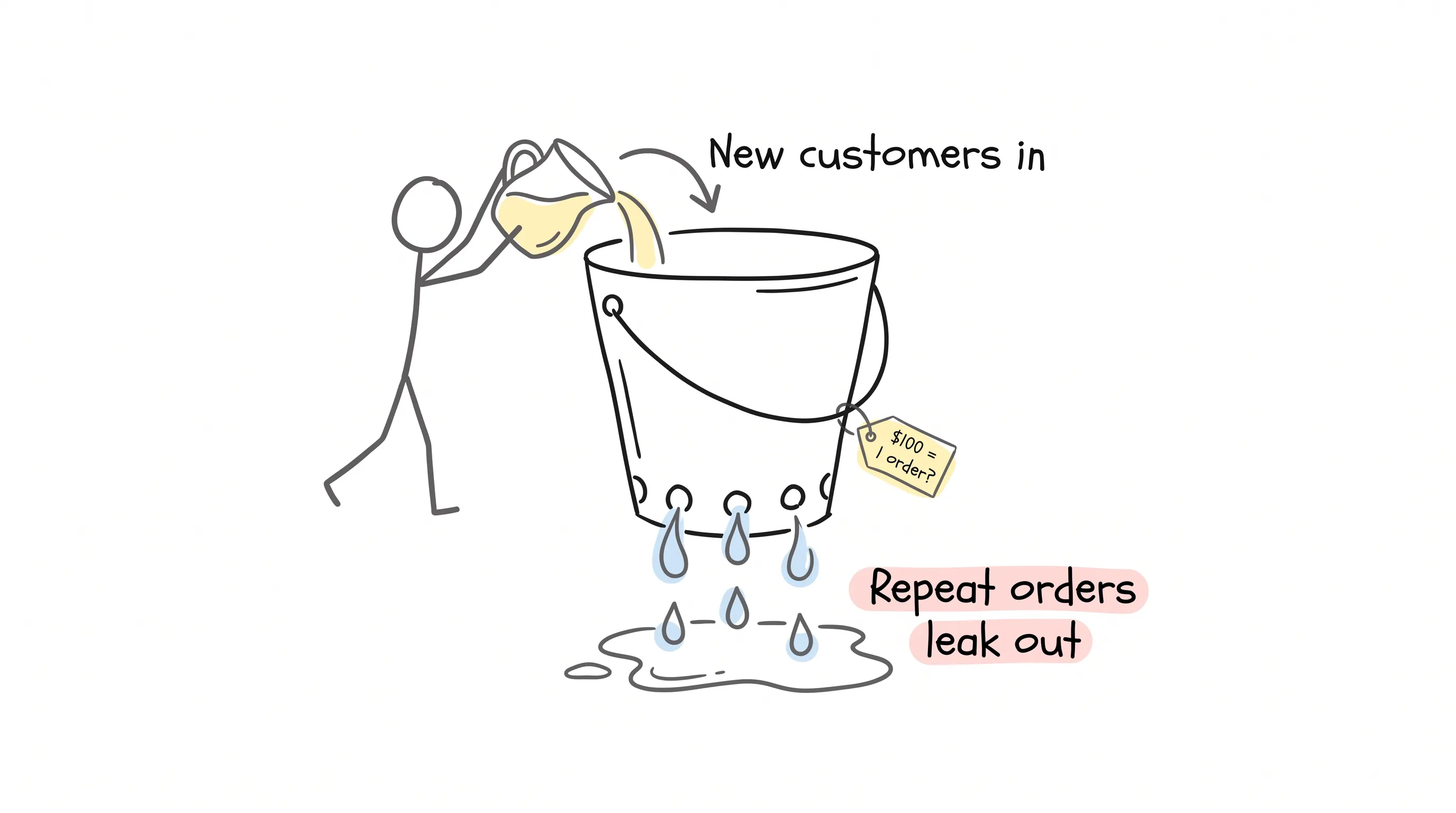
I recently came across a piece of industry news, and that bucket immediately came to mind.
Domaine, by its own description, is the world's largest Shopify design and development agency. Recently, they announced they're doubling down on a new line of business: CRM and customer lifecycle marketing services.
A company that builds stores, getting into customer management?
This is worth unpacking.
There's a Missing Piece Between Building Stores and Running Customers
What is customer lifecycle marketing, exactly?
Put simply: don't treat a customer as a one-off transaction. The first purchase is just the opening of the relationship. How you get them to a second and third order, how you keep them around for three years — that's what lifecycle marketing handles.
So what did Domaine do before? It helped brands build stores on Shopify. Design, development, strategy — all its home turf.
Put these two things side by side, and you'll notice a piece missing in between.
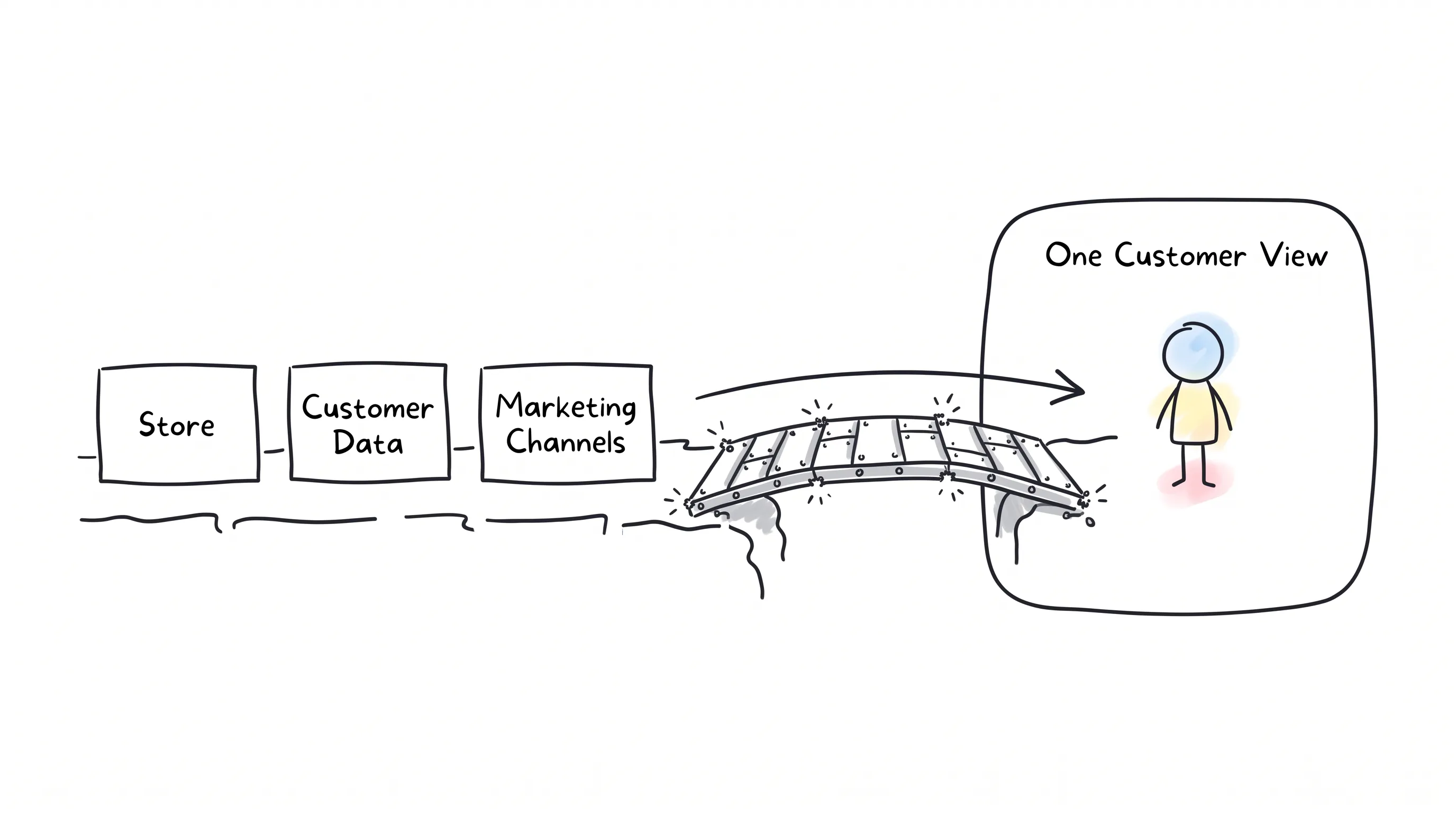
No matter how beautiful the store, it's still just a container. Customer data sits in the backend, the marketing calendar lives in another tool, and the creative campaigns live in a third. Three things that never talk to each other — and personalization is empty talk. If you don't even know what a customer bought yesterday, how can you guess what they'll want next?
What Domaine is setting out to do is bridge that gap: weld the ecommerce platform and the marketing channels together, so brands can personalize across the customer's entire journey.
The centerpiece of the service is pulling the marketing calendar, creative campaigns, and customer data into one place, so brands can finally see their customers clearly in a single view.
Domaine President Marko Bon says much the same: the business is about delivering personalized experiences across the full customer journey, and producing incremental conversions.
See — they haven't switched tracks. They've dug one level deeper into the business they already had.
If You Want to Know Whether They're Serious, Look at Who They Sent
To tell whether a company is serious, don't listen to what it says. Look at who it sends.
Leading this push is Stacy Strom, Director of CRM and Customer Lifecycle Marketing. She joined Domaine a little over six months ago and is hiring and building out the team.
Her background is solid: more than 15 years in agency marketing services, including more than five at Tinuiti, the largest independent full-funnel performance marketing agency in the US.
What does full-funnel mean? From making people aware of you, to getting them to buy, to keeping them buying — she's worked the entire chain.
What does that tell us?
That Domaine didn't just shuffle some internal person into the role to fill a seat. It brought in a genuine veteran of customer management from the industry, specifically to build this out. And the team is still growing — which most likely means the demand is real. Brands have to be willing to pay before an agency adds headcount.
Why Klaviyo Is Willing to Vouch for It
There's one more layer to this, and I find it more telling than the official announcement.
Domaine has been a Platinum consulting partner for Klaviyo, the email and customer data platform, for many years.
This time, as Domaine expands its marketing services, Eddie O'Brien, Senior Vice President of Global Partnerships and Alliances at Klaviyo, spoke up directly: the two companies see the customer journey the same way, and he's glad to see Domaine doubling down.
Think about it — why would Klaviyo vouch for this?
Because in the Shopify ecosystem, Klaviyo is the engine of customer data. The store builders understand stores; Klaviyo understands data. Put the two together, and personalization finally has something to stand on.
When the core players in the ecosystem are willing to back you, it confirms you're not walking this road alone.
Patch the Bucket, or the Water Is Wasted
Back to my friend.
His problem and Domaine's bet are really the same question: traffic keeps getting more expensive, and acquiring new customers alone is no longer enough. You have to run the people already in the door well.
I once did the math for him. You spend $100 on ads to bring in one customer, he buys and leaves — that $100 bought you exactly one order. If he comes back on his own three months later for a second order, that $100 has paid for itself twice. Every return trip after that keeps diluting what you originally spent to acquire him.
So when the world's largest store-building agency puts its chips on the customer lifecycle, the move itself is a reminder:
If you don't patch the bucket, no amount of pouring will help.
The store is the entrance; the customer is the asset. However impressive the entrance, if the asset doesn't stick around, it's all for nothing.
If you're building a brand too, ask yourself one question: how long does it usually take for your customers to place a second order?
If you can't answer, the bucket is still leaking at the bottom.
Patch the bucket first. Then talk about pouring.
Continue reading
Related articles

Cross-Border Business: Time to Upgrade Your AI Toolbox
A learn article explaining how AI tools help cross-border e-commerce sellers clear five hurdles: language, regulation, logistics, payments, and fraud. It outlines a five-compartment toolbox, a five-step adoption path, and metrics such as conversion rate and CLV, while cautioning against over-reliance on AI.

AI Is Taking Over the Dirty Work of Social Media Marketing, One Task at a Time
This learn article outlines four social media marketing tasks AI can handle — audience analytics, content drafting and design, ad targeting and creative testing, and spam moderation — and cautions that taste, judgment, and data security remain human responsibilities.

AI Is Already This Good — Why Is Your Social Media Marketing Still Pure Manpower?
An overview of 18 AI tools for social media marketing, organized into six categories covering audience research, content creation, scheduling, comment and DM handling, ad management, and visual production, plus notes on personalization, prediction, and emerging trends.