
Where Do B2B Deals Go to Die?
An article on why B2B deals often stall in the handoff between marketing and sales, and how marketing automation platforms, ABM, multi-channel orchestration, AI, and RevOps practices aim to address it.
A while back, I had dinner with a friend who works in enterprise software. He's the CMO of a company that does several hundred million yuan in revenue a year. Somewhere between courses, he started venting.
He said: every month, marketing hands sales a few hundred leads. Sales combs through the spreadsheet, picks a few to follow up on, and the rest just lie there in the sheet. Forever.
I told him I knew the story well. Plenty of B2B companies live exactly like this.
So what does marketing think?
He said marketing cares about exactly one thing: next month's lead count, up another 10%.
And there's your problem. Marketing churns out leads at full speed; sales cherry-picks what to follow. The stretch in between? Nobody truly owns it.
Plenty of deals aren't lost for lack of demand. They die at the handoff.
What handoff?
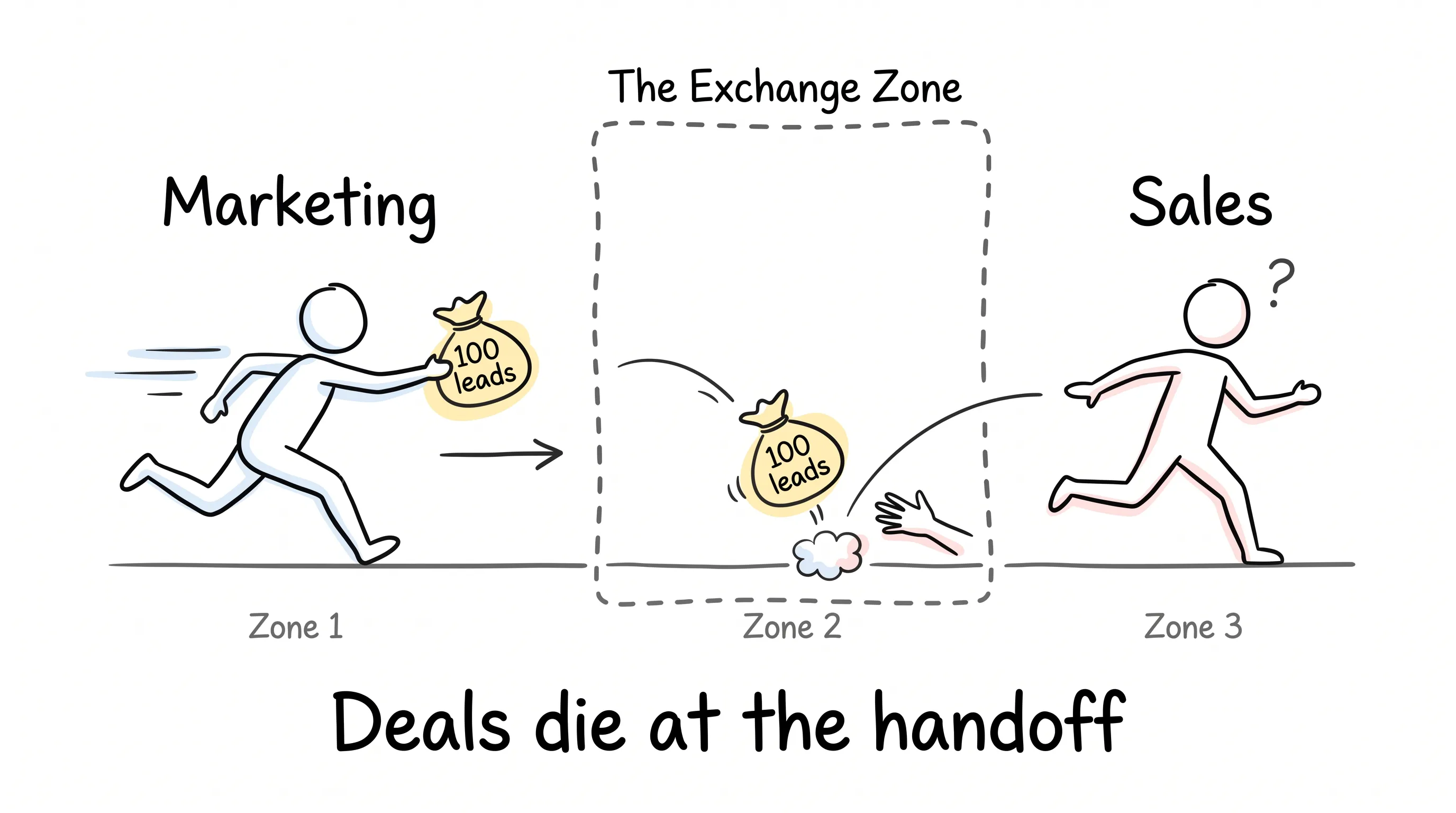
Think of the 4x100 relay. Four runners, every one of them a flyer. But the exchange zone is only 20 meters. Drop the baton there, and no matter how fast the legs ahead of you ran, the scoreboard reads zero.
The space between marketing and sales is exactly that exchange zone.
So — is there a way to fix the exchange zone? My recent observation: more and more B2B companies are placing their bets on the same kind of thing — the B2B marketing automation platform.
What Is a Marketing Automation Platform?
First, let's be precise about what a B2B marketing automation platform is.
Put simply, it's the system that plugs marketing and sales into the same data pipeline. A lead — from the first click, to the first phone call, to the final signature — lives in one pool the whole way through. Who touched it, when they touched it, what was said, how the customer reacted: all of it, crystal clear.
Its mission comes down to one sentence: make sure a lead never hits the ground between the two departments.
Time Is the Number One Killer of Deals
Why do I say that? Run the numbers.
Say you run the sales team at a B2B company. This month, marketing hands you 100 leads; experience says 30 are worth chasing. But you have only 5 salespeople, each already carrying a stack of live deals. By the time they clear their desks and remember to dig into the lead pool, three days have gone by.
Three days, and the customer has long gone cold.
The request he raised on Friday might be signed away to someone else by Monday. A B2B buyer has never had only you to choose from.
Time is the number one killer of deals.
What a marketing automation platform does is make "waiting" disappear. The moment a lead comes in, the system catches it: what content to send, when to send it, through which channel, how to follow up afterward — all automatic. What the customer read, what they clicked, how long they lingered on which page — all of it, logged.
Layer account-based marketing (ABM) on top, and the play turns even more aggressive. In plain terms, ABM means you stop casting a wide net and lock onto a few dozen high-value accounts instead, nurturing them like a stocked pond: whatever they care about, that's what you feed them. How long do you keep feeding? Until they know you well and the timing is right — then hand them to sales, and every handoff lands.
By the time sales steps in, what they receive is a fully nurtured customer, ready to pay. That cold list? He won't touch it again.
That's how the sales cycle gets shortened — stage by stage.
What Buyers Want Is the Same Story
One more thing — and this one is a killer.
Today's B2B buyer was raised on consumer-grade (B2C) experiences. He scrolls past your ad on LinkedIn. Then he finds your whitepaper in his inbox. Then he goes to your website and reads your case studies.
Three places, three stories. Suspicion kicks in immediately.
It's like paying a matchmaker to set you up on a blind date. The matchmaker talks you up like a prize catch; you show up in flip-flops, contradicting yourself with every other sentence. Is that date going anywhere?
So the mature play is multi-channel orchestration: email, social, ads, website — all running off the same customer journey map. Wherever the buyer is on that journey, that's the chapter of the story you tell.
Only when the world he sees is consistent can his trust in you be consistent.
The Math Finally Adds Up
By now you might be saying: I get the logic, but this stuff isn't cheap. How do I justify it to the boss?
That's exactly where it makes the most sense: every dollar you put in can be traced all the way to revenue.
Marketing reports used to be about impressions, clicks, and — at best — lead capture. All intermediate metrics. The boss listens, nods, and thinks one thing: and then what?
Now, from an email open, to a website signup, to a phone call, to the closed deal — the whole chain is connected. Which channel brought the customer, how much it cost, how long to break even, how much repeat business followed: laid out to the penny.
At the budget meeting, the head of marketing can pound the table for the first time and say: every dollar I spent turned into exactly this much revenue.
When the ROI is clear, the budget holds.
This Year, AI Is Table Stakes
One more thing deserves a section of its own.
AI.
By now, AI in marketing automation is no longer icing on the cake. It's table stakes.
What can it actually do? Let me give you the two most practical answers. First, prediction. The system tells you ahead of time which customers are about to slip away, while you still have a chance to talk them into staying. Second, scale. There was a time when one person carefully serving a hundred customers was the ceiling. Now, one person with AI can put individually tailored content in front of ten thousand customers.
And when a salesperson is sitting across from a customer with no idea what to do next, the system tells him straight: here is your next move.
In one sentence: AI has turned gut-feel marketing into marketing with foresight.
Back to That Dinner
Now, back to the opening question: where exactly did my friend's deals die?
The product was fine. The price was fine. They died in the crack between marketing and sales.
Then he did one thing: he pulled marketing and sales into the same data, and gave both teams the same metric. Revenue from closed deals. Not the number of leads. Not the number of deals.
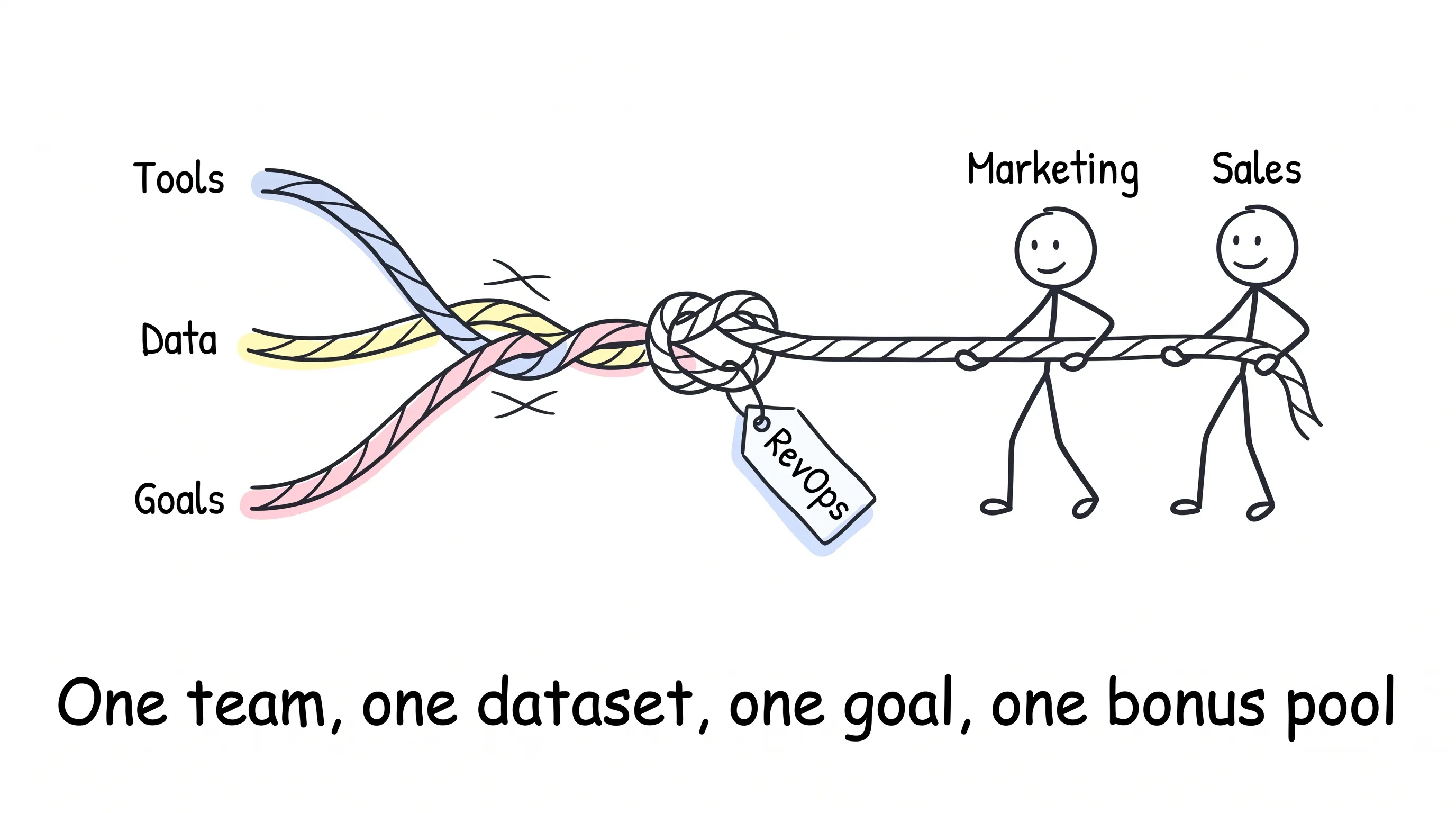
A pile of disconnected tools, no matter how many you buy, will never piece together into growth. What actually works is the playbook that ties tools, data, and goals into a single rope. The industry now calls it RevOps — revenue operations. The name doesn't matter. What matters is the sentence:
Make marketing and sales truly one team.
One team, one dataset, one goal, one bonus pool. From that moment on, efficiency stops being black magic.
Near the end of that dinner, I asked him: what's the first thing you'll do when you get back?
He said: pull up the lead pool from the past two years, and count how many deals actually died in there.
And here's a wish for you: may every deal in your hands live to see the signature page.
Continue reading
Related articles

Cross-Border Business: Time to Upgrade Your AI Toolbox
A learn article explaining how AI tools help cross-border e-commerce sellers clear five hurdles: language, regulation, logistics, payments, and fraud. It outlines a five-compartment toolbox, a five-step adoption path, and metrics such as conversion rate and CLV, while cautioning against over-reliance on AI.

AI Is Taking Over the Dirty Work of Social Media Marketing, One Task at a Time
This learn article outlines four social media marketing tasks AI can handle — audience analytics, content drafting and design, ad targeting and creative testing, and spam moderation — and cautions that taste, judgment, and data security remain human responsibilities.

AI Is Already This Good — Why Is Your Social Media Marketing Still Pure Manpower?
An overview of 18 AI tools for social media marketing, organized into six categories covering audience research, content creation, scheduling, comment and DM handling, ad management, and visual production, plus notes on personalization, prediction, and emerging trends.